Strange Engine Noises - What a Knock, Tick, Rattle, Whine, Grind or Squeal Can Mean
Learn what common boat engine noises often point to, which ones mean shut down now, and the safe checks you can do yourself before describing the problem to a mechanic.
Time
45 min
Applies to
Outboard, Sterndrive (I/O), Gas inboard, Marine diesel
Safety first: Shut the engine down right away for a deep knock, metal-on-metal grinding, a loud bang, any noise with smoke or a burning smell, or a warning horn. Never put your hands, hair, loose clothing or a tool near belts, pulleys or a spinning flywheel to "find" a noise. If you are stuck on the water, anchor if needed and call TowBoatUS or Sea Tow; in an emergency use VHF channel 16 or dial 911.
Owners often ask
- My engine started ticking. Is that serious or normal?
- What does a squealing noise from my inboard engine mean?
This guide walks you through it. Still stuck? Ask the AI Mechanic about your engine.
Tools
- Phone to record video with sound
- Flashlight
- Length of garden hose (about 3 ft) to use as a listening tube
- Rag for checking the dipstick
Parts & supplies
- None for diagnosis
Before you start
A noise is a clue, not a diagnosis. The same sound can have several causes, so the aim here is to sort noises into "stop now," "check soon" and "normal," and to gather details a mechanic can use.
First, rule out the alarm. A steady or beeping horn is the engine's warning system, not a mechanical noise. It usually means overheating, low oil pressure or a sensor fault. See Engine Warning Alarms.
Then note:
- When: at start, idle, in gear, under load, at one rpm, only when cold or hot?
- Does it follow engine speed (gets faster as rpm rises) or boat speed?
- Does it change in neutral? A noise that stops in neutral usually lives in the drive, prop or gearcase, not the engine.
- Where: top of the engine, front belts, lower unit, under the boat?
Record a short video with sound at idle and while revving in neutral. It is the most useful thing you can bring to a shop.
Steps
Before chasing any noise, look at temperature, oil pressure and voltage, and check for warning lights. On outboards, look for a strong telltale (pee stream). On inboards and sterndrives, check water flow at the exhaust. Check the oil level on the dipstick with the engine off. Tohatsu, for example, says to shut down right away if the oil warning lamp comes on or blinks while running. Low oil or overheating turns many small noises into big damage.
A dull, heavy knock that gets louder under load or with rpm can point to worn bearings inside the engine, a damaged piston or connecting rod, or low oil pressure. It can also come from water in a cylinder. Shut down. Check oil level and look for milky oil (see Water in Engine Oil). Do not keep running it to "see if it goes away." A mechanic may do a compression test or oil analysis; see Compression Test.
A typical owner story: an older two-stroke runs fine for months, then starts knocking at the end of a long, hot day, heavily loaded and at high throttle, and still knocks the next time out, even at idle. That pattern often means heat or lubrication damage inside. Stop running it, check the oil mix or oil injection and the telltale, and let a shop decide whether it is worth opening up. See Two-Stroke Smoke Troubleshooting.
A light, metallic pinging or rattling when you accelerate or climb onto plane can be detonation (knock): fuel igniting at the wrong time. Common causes are fuel with lower octane than your engine needs, overheating, or carbon buildup. Ease off the throttle and stop running it hard. Mercury Racing, quoted by Boating Magazine, warns that running fuel below the required octane on an engine without knock protection can lead to engine failure, and it does not recommend octane-booster additives as a substitute. Use the octane in your manual.
The prop can cause it too. BoatUS explains that a prop with too much pitch makes the engine "lug," like pulling away from a stoplight in third gear, which loads the pistons and bearings and can lead to detonation and internal damage; in one claim, a surveyor blamed wrecked wrist pins on props that were overpitched. If your engine can't reach its rated wide-open-throttle range with a normal load, have the prop checked (see Boat Slower Than It Used to Be?).
A light ticking that speeds up with rpm is often normal or minor:
- Fuel injectors make a steady ticking on many EFI and diesel engines. It is normal if it was always there.
- Valves on four-strokes can tick if they need adjustment. This is a scheduled service item on many engines; check your manual.
- Exhaust leaks at a manifold or riser can tick or puff, and they can let carbon monoxide into the boat on inboards and sterndrives. Treat an exhaust leak as urgent. See Exhaust Manifold and Riser.
A tick that is new, getting louder, or comes with rough running needs a mechanic.
Rattles that come and go with vibration are often harmless parts: a loose heat shield, cowling latch, fuel line clip, or bracket. Some props also rattle at low speed. Mercury notes that "shift clunk," the noise when gears engage as you shift into forward or reverse, is normal and not damaging, and that prop rattle can happen at some low speeds. A rattle that gets worse, or appeared after hitting something, needs a closer look at the prop and hub. See Spun Prop Hub.
A squeal at start or when you rev, especially on inboards, sterndrives and larger outboards with a belt, usually means a loose, worn or glazed belt. BoatUS explains that a squeal can also come from extra electrical load on the alternator, so check whether a big load is on. With the engine off and cool, look for cracks, fraying and black dust. Boating Magazine's rule of thumb is that a belt should not deflect more than about half an inch between pulleys; check your manual. Never spray anything on a belt to quiet it. BoatTEST warns that lubricant on belts makes them slip. See Serpentine Belt and Tensioner.
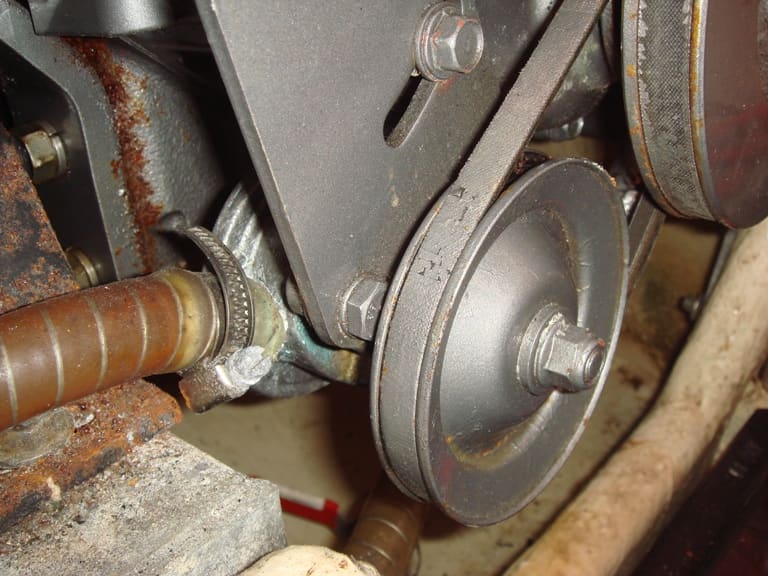
A V-belt and its slotted adjusting bracket. Cracks, fraying and black dust around a pulley point to the squeal. Look only with the engine off. Photo: PHGCOM / Wikimedia Commons · CC BY-SA 3.0 - From the lower unit, rising with boat speed: worn gearcase bearings or gears, often with low or water-contaminated gear oil. Check the gear oil; see Lower Unit Oil Change.
- From the front of the engine: an alternator or power steering pump. A power steering whine that gets louder when you turn the wheel can mean low fluid. See Sterndrive Power Steering.
- A steady hum when you turn the key: usually the electric fuel pump priming. That is normal on many EFI engines.
- At start: a grinding as you turn the key often means the starter gear is not meshing with the flywheel, or it keeps spinning after the engine starts. Stop cranking. See Starter and Solenoid Test. A rapid clicking with no crank is more often a weak battery or a loose or corroded cable; Saltwater Sportsman recommends cleaning the battery terminals with a wire brush.
- When shifting: a hard crunch rather than a normal clunk can mean the idle is too high or the shift cable needs adjustment. See Shift Cable Adjustment.
- While running, metal-on-metal: stop. It can be a failing bearing, gear or something loose inside.
A clunk when shifting is normal within reason. A loud clunk when you shift, accelerate or let off can also come from worn motor mounts or engine mounts. BoatUS notes worn mounts can make a distinct metallic sound. See Outboard Motor Mounts. A single loud bang, especially with a loss of power, means stop and inspect.
- Hissing with steam from the engine area means a coolant or hose leak, or overheating. Stop and let it cool; never open a hot pressure cap. See Overheat Alarm Response.
- Whistling can be an air or vacuum leak around the intake.
- Popping or backfiring through the intake or exhaust often points to a fuel or ignition problem. See Loss of Power.
With the engine idling in neutral, hold one end of a short length of garden hose near (not touching) the area and the other end to your ear. Keep the hose and yourself away from belts, pulleys and the flywheel. Move slowly between areas to find where the sound is loudest. Stop if you need to reach anywhere near moving parts; let a mechanic do it.
Share your video and notes: when it happens, what it sounds like, which rpm, in gear or neutral, and what you already checked. Mechanics can diagnose faster, and you avoid paying for hours of searching.
Common mistakes
- Turning up the stereo and running it anyway. Knocks and grinding rarely get better on their own.
- Spraying belt dressing or lubricant on a squealing belt instead of adjusting or replacing it.
- Treating the warning horn like an annoying noise and not checking temperature and oil.
- Running cheaper, lower-octane fuel than the manual requires, then hearing pinging.
- Reaching near a running belt or flywheel to find a noise.
- Ignoring a ticking exhaust leak on an inboard or sterndrive, which can let carbon monoxide aboard.
When to call a pro
- A deep knock, metal grinding or a bang: shut down and do not restart until checked
- Milky oil, metal in the oil or gear oil, or low oil pressure
- A new tick or knock with rough running or power loss
- Gearcase whine that gets worse, or grinding from the lower unit
- An exhaust leak on an inboard or sterndrive, or any noise with fuel smell, smoke or burning smell
- You are on the water and cannot safely continue: call TowBoatUS or Sea Tow, and in an emergency VHF 16 or 911
Tips
- Record a short video of your engine's normal sound each spring. Comparing with a baseline helps more than any description. BoatUS's technical editor gives the same advice for feel: learn how your engine normally sounds and vibrates (feeling it only at safe spots, well away from belts, pulleys and hot parts), because every engine is different and only a change means something.
- Carry a spare belt and the tools to change it on boats that use belts.
- If a noise only appears in gear, test in neutral at the same rpm. That one check tells you engine vs drive.
- Keep fresh fuel of the right octane; it prevents a lot of pinging and rough running.
- Give the engine a short warm-up before you load it. Mercury's service team suggests letting a fuel-injected engine reach operating temperature, usually a minute or two (longer in very cold weather), so oil reaches the internal parts; carbureted engines need a few minutes more in the cold. Note whether a noise changes once the engine is warm; that detail helps your mechanic.
Official references
We read these to write this guide. Your engine's own manual always wins.
- Boating Magazine – Don't Knock It! (Mercury Racing on detonation and octane)
- Mercury Marine – Prop Bite, Quiet the Clunk (shift clunk and prop rattle)
- BoatUS – How To Tighten Your Boat Alternator Belt
- Boating Magazine – Midseason Inboard Engine Maintenance Tips
- BoatTEST – 10 Most Common Boat Engine Problems
- BoatUS – Troubleshooting Boat Vibrations
- Saltwater Sportsman – 10 Common Solutions for Boat Engine Problems
- Tohatsu Outboards – FAQ (oil warning lamp)
- BoatUS – Bad Vibrations (know your engine's normal sound and feel)
- BoatUS – Five Reasons You May Need To Change Your Prop (lugging and engine damage)
- Mercury Marine – Ask the Pro, Should I Warm Up My Boat Engine? (Dockline)
Safety: BoatMend is for information only and does not replace a certified marine technician. You are responsible for your safety and your boat. Read the full disclaimer.
Last updated 2026-10-25
Related guides
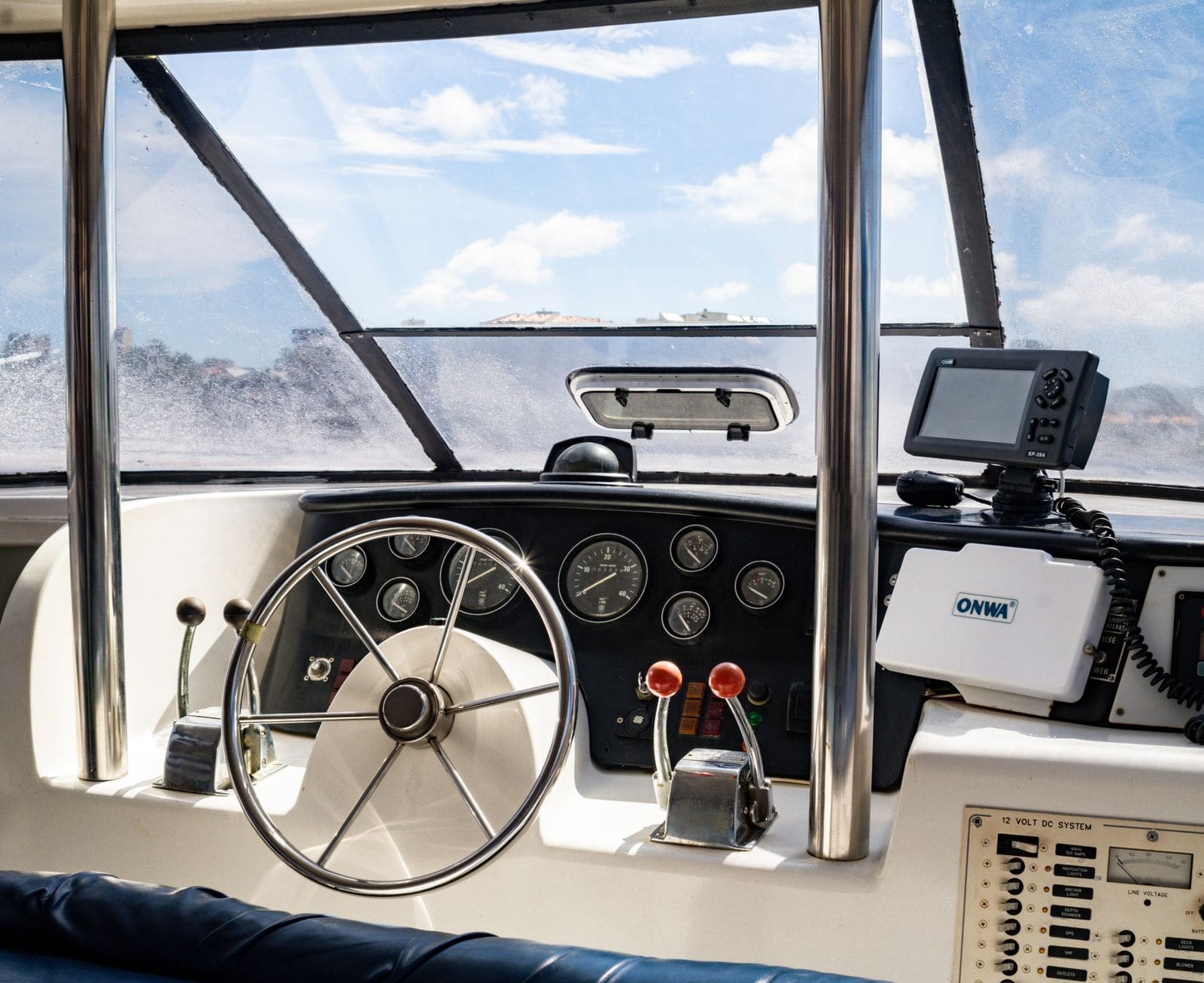
Engine Warning Horn and Dash Lights: What They Usually Mean and What to Do
Learn what a warning horn, beeps or a dash light usually mean on a boat engine, from overheating and low oil pressure to water in the fuel and reduced-power (limp) mode. Find out what to do right away and when to stop the engine. Patterns differ by brand, so match what you hear and see to your owner's manual.
Overheat Alarm: What to Do in the First 60 Seconds
A short, practiced routine for the moment the temperature alarm goes off: take the load off, look for cooling water, shut down if it isn't there, and check every space the exhaust runs through for heat or fire. Based on a June 2026 Coast Guard safety alert about a fatal fire that started with an overheat alarm.
Outboard or Sterndrive Vibration - Troubleshooting Guide
Track down a new shake or buzz by noting when it happens (neutral or in gear, which rpm), then check the prop, hub, shaft, mounting bolts, motor mounts, engine height and misfires in order, from the simplest to the most serious.
How to Inspect Engine Belts and the Tensioner on Sterndrives, Inboards and Diesels
On many inboard, sterndrive and diesel engines, one belt runs the water pump, the alternator and often the power steering. If it breaks or jumps off, the engine overheats and the steering goes heavy at the same moment. Learn how to inspect the belt, tensioner and pulleys, check tension, and carry the right spare.
Engine Clicks but Won't Crank - Testing the Battery, Cables, Neutral Switch, Solenoid and Starter
A click (or nothing) when you turn the key is usually a power delivery problem, not a dead engine. Work from the battery and cables through the neutral switch, start relay and solenoid to the starter motor using simple voltage-drop tests, and learn how to jump-start safely when gasoline vapor may be around.
Spun Prop Hub - How to Tell, Quick Marker Test and Repair Options
If the engine revs up but the boat barely accelerates, the rubber or plastic hub inside your propeller may be slipping. Learn how a spun hub feels, how to confirm it with a simple marker test, the difference between pressed rubber hubs and replaceable hub kits, and your repair options.
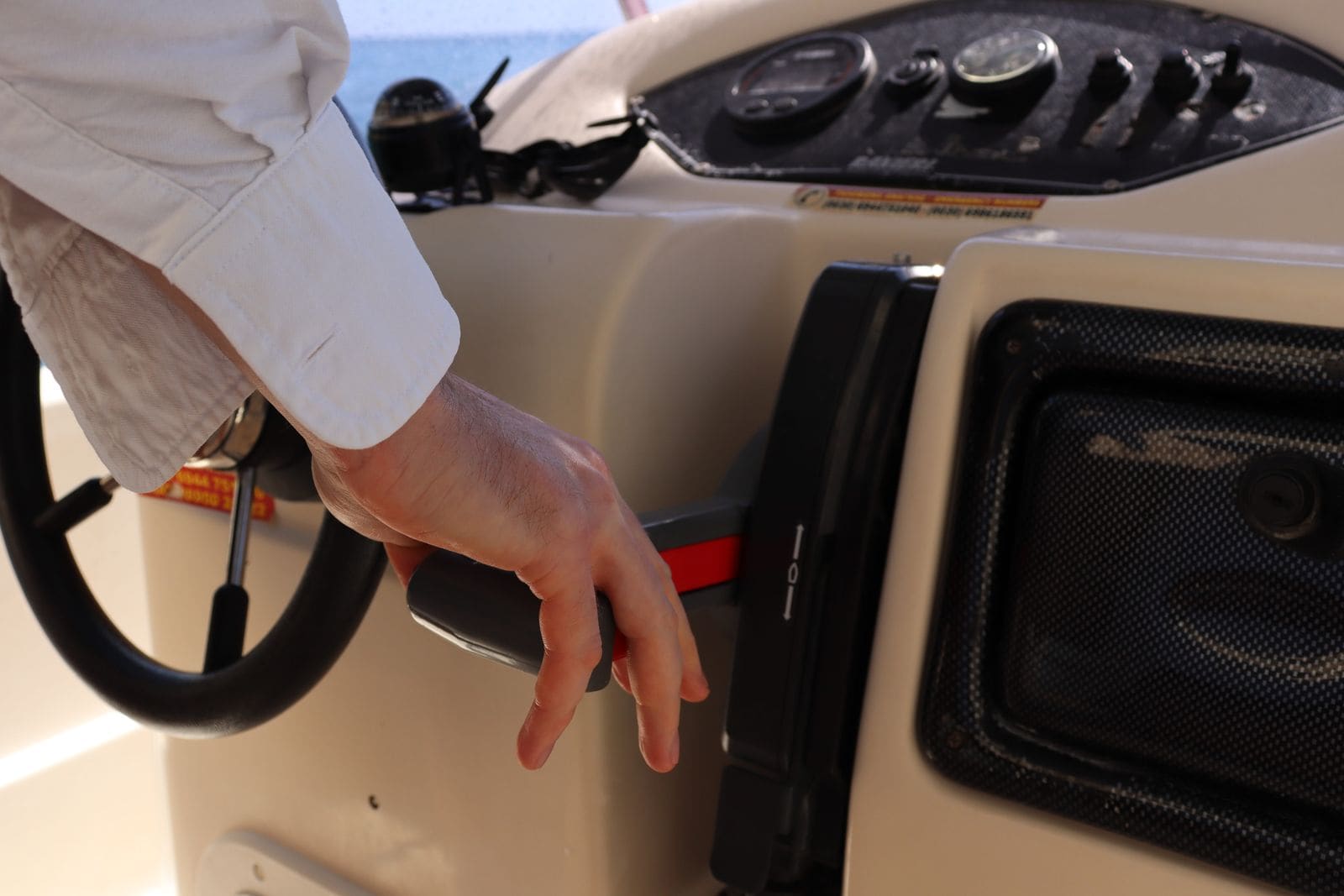
How to Check and Adjust Boat Shift and Throttle Cables
Hard shifting, a lever that will not go fully into gear, or a gear that lands in a different spot every time usually point to the control cables. Learn how to find out whether the problem is the cable, the control box or the engine, how to adjust the cable ends, and when it is time to replace both cables.
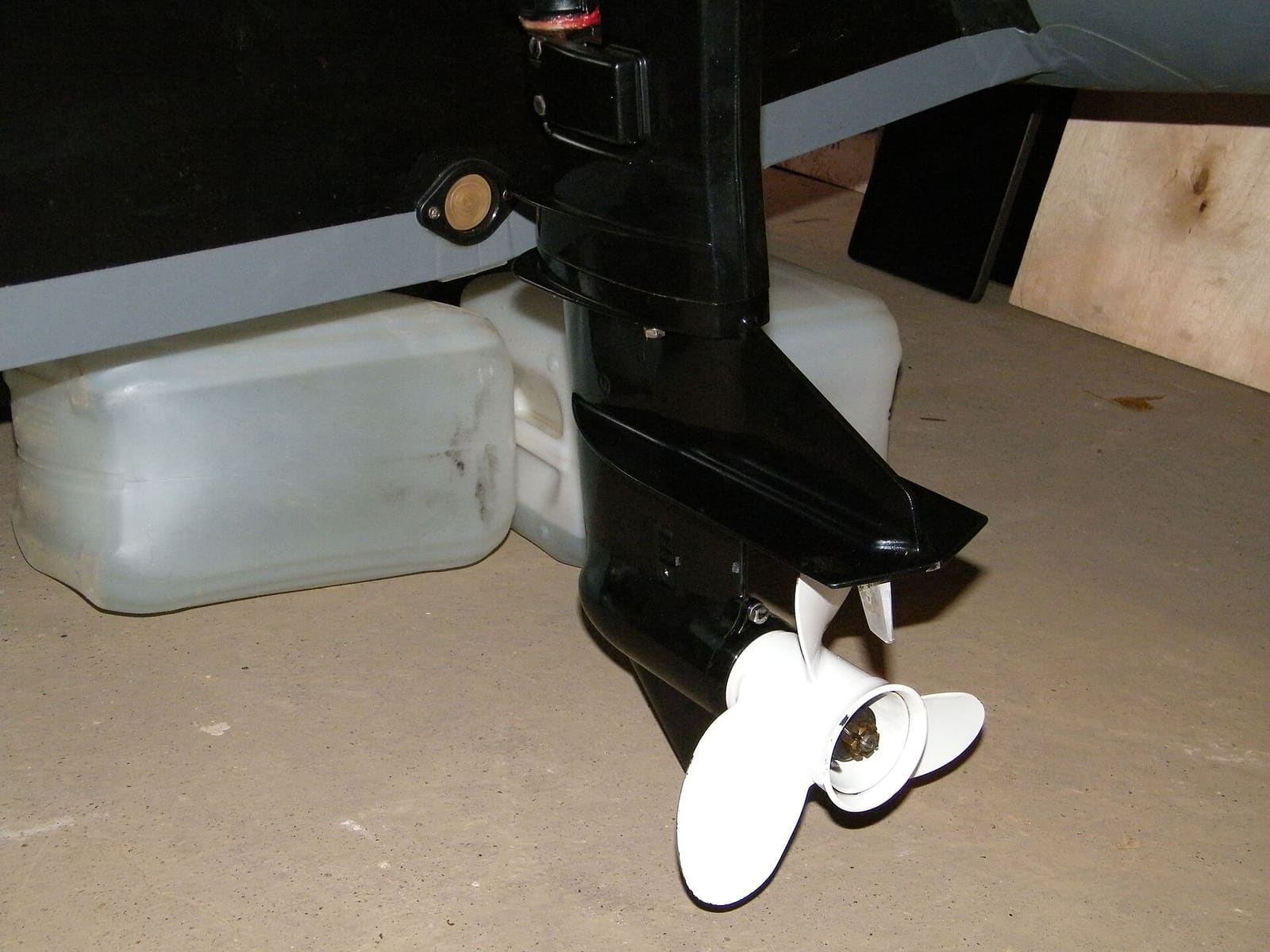
How to Change Lower Unit (Gearcase) and Sterndrive Oil
Drain and refill the gear oil in your outboard lower unit or sterndrive, and learn to spot water intrusion before it destroys the gears. It is a 30-minute job that protects a gearcase costing thousands to replace.
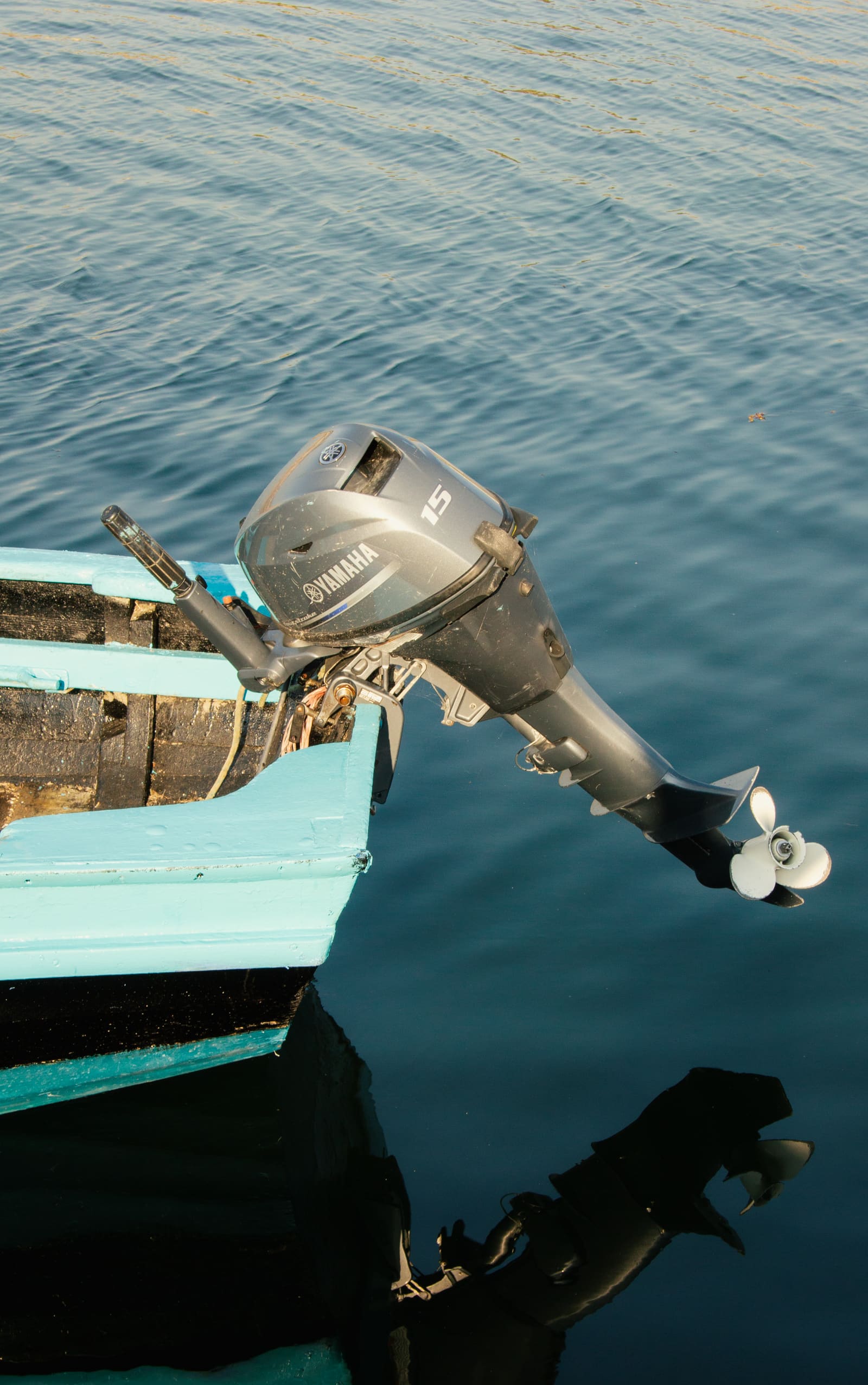
How to Check for Worn Outboard Motor Mounts
A clunk when you shift, buzzing vibration at idle or a motor that wobbles side to side can mean the rubber mounts between the outboard and its bracket are worn out. Learn how to rule out the cheap causes first, check the mounts yourself and know when replacement belongs in a shop.
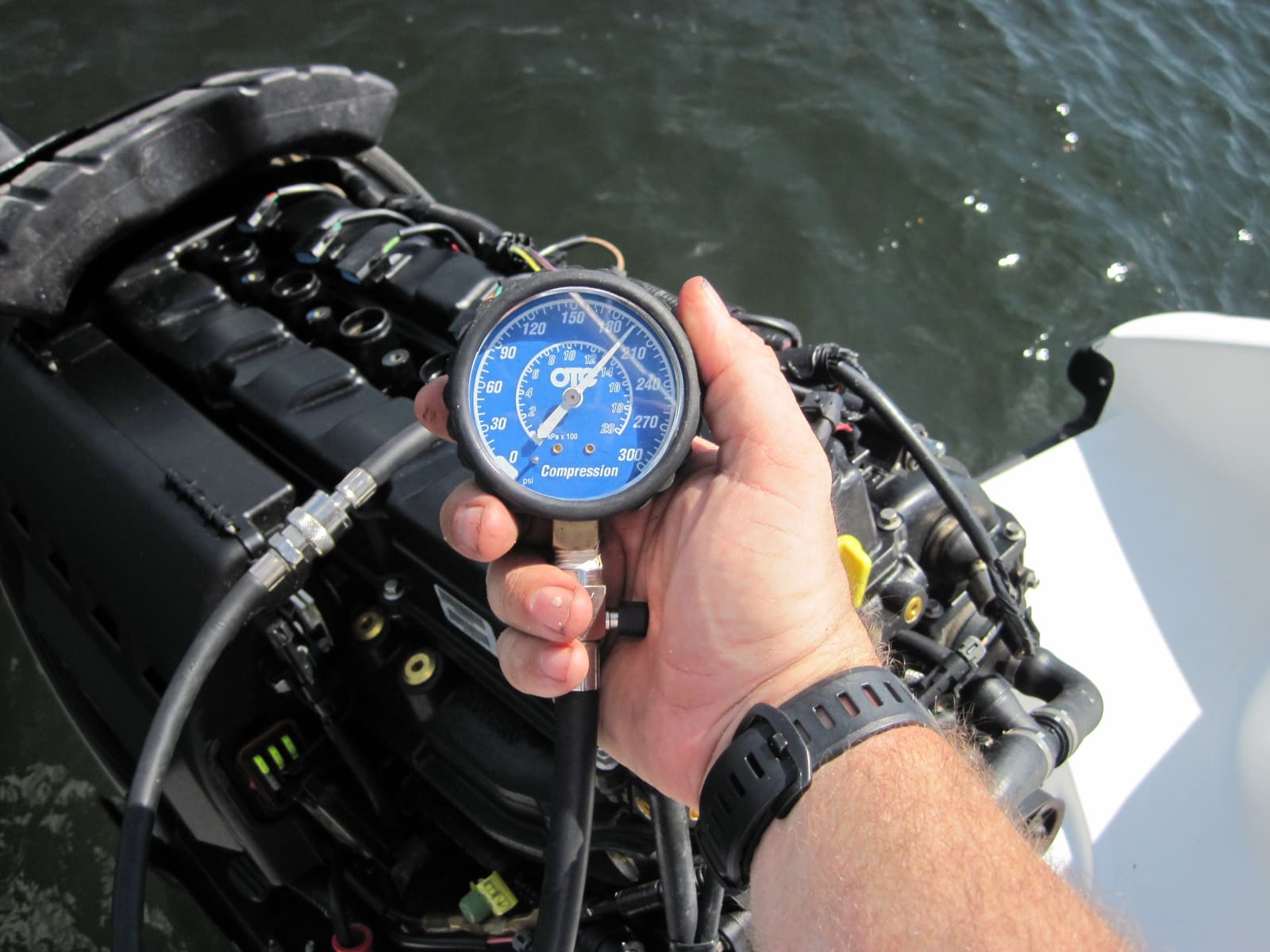
How to Do a Compression Test on an Outboard, Sterndrive, Inboard or PWC
A compression test tells you whether the pistons, rings, valves and head gasket in each cylinder are sealing. Learn when to do one, how to do it safely, how to read the numbers by comparing cylinders, and what a wet test and a leak-down test add.
Milky Engine Oil or Water in the Oil - What It Means and What to Do
Milky, creamy or rising engine oil usually means water is getting into the engine. Learn why you should stop running it right away, how to tell harmless condensation from a real leak, and which parts are the usual suspects: head gaskets, exhaust risers and manifolds, intake manifold gaskets, oil coolers and freeze cracks.