Wet Exhaust and Waterlift Mufflers: Stop Water Flooding the Engine and Catch Leaks Early
On most sailboats and many power boats, cooling water is sprayed into the exhaust and pushed out through a waterlift muffler. Learn how the system works, why long cranking can flood the engine with seawater (and when to close the seacock), and how to inspect the muffler, hoses, clamps and siphon break, including the scorch marks that tell you the exhaust once ran dry.
Time
1 h
Shop would charge
$150-1500
Applies to
Marine diesel, Gas inboard
Safety first: A leaking exhaust can fill the cabin with carbon monoxide. Test your CO alarms before running the engine, and if one sounds or anyone feels sick, shut down, get everyone into fresh air and call 911 or the Coast Guard on VHF 16. Exhaust parts get hot enough to burn; inspect only with the engine off and cool. The exhaust hose and muffler often connect to a through-hull, so if a hose or fitting is loose below the waterline and water is coming in, close the seacock if you can and call TowBoatUS, Sea Tow or the Coast Guard. If the engine won't turn over, or stops with a clunk while cranking, stop cranking at once: it may have water in a cylinder.
Owners often ask
- Should I close the raw-water seacock while cranking my diesel to bleed the fuel system?
- How often should I replace the exhaust hose to my waterlift muffler?
- Can I flood my diesel with seawater by cranking it too long when it will not start?
This guide walks you through it. Still stuck? Ask the AI Mechanic about your engine.
Tools
- Flashlight or headlamp and an inspection mirror
- Nut driver or screwdriver for hose clamps
- Bucket, sponge and absorbent pads
- Tape measure (to check heights above the waterline)
- Notebook or phone for photos
Parts & supplies
- Marine wet-exhaust hose of the correct size and rating, if replacing
- All-stainless hose clamps sized for the exhaust hose
- Muffler drain plug gasket (if your muffler has a drain)
- Vented loop valve or rebuild kit for your model
Before you start
How a wet exhaust works: West Marine explains that water-cooled inboard engines spray their used cooling water into the exhaust right after the manifold, at a mixing (or injection) elbow. The water cools the exhaust gas and quiets it, so the rest of the system can be rubber hose and fiberglass or plastic instead of hot metal. The engine's exhaust pressure then pushes gas and water out of the boat together.
What the waterlift muffler does: when the engine sits low in the boat, below or close to the waterline, the exhaust has to climb uphill to get out. A waterlift (lift) muffler is a canister mounted low, below the exhaust elbow. West Marine describes how cooling water collects in its chamber until exhaust pressure blows it up and out through a hose that leaves from the top. The chamber must be big enough to hold all the water that collects while the engine is being started; if it's too small, water backs up toward the engine before there's enough exhaust pressure to clear it.
The danger: water in the cylinders. Water can't be compressed. If it reaches the exhaust ports and drops into a cylinder, the next start attempt can bend a connecting rod (a "hydrolock"). It usually gets there in one of three ways:
- Long cranking without starting. SAIL Magazine calls this the most common cause: while the starter turns the engine, the raw-water pump keeps pumping water into the exhaust, but without firing there's no exhaust pressure to push it out. The muffler fills, then the hose, then the elbow, and water runs into the engine.
- Siphoning of seawater through the cooling system after shutdown when the siphon break fails (see the vented loop guide).
- Seawater running back in through the exhaust outlet, from following seas, heavy rolling at anchor, or a boat sitting low at the stern.
Steps
Trace the system from the raw-water seacock to the exhaust outlet: seacock, strainer, raw-water pump, heat exchanger (on most diesels), vented loop if fitted, mixing elbow, exhaust hose, waterlift muffler, the hose up to a high loop or gooseneck, and the outlet through the hull. Take photos and note where each piece is. Mark the seacock handle so anyone aboard can find and close it quickly.
If the engine doesn't start after a couple of tries, SAIL Magazine's advice is to close the raw-water intake seacock before cranking any more. Boating Magazine adds: don't just keep cranking, because the engine can't make enough exhaust pressure to clear the water. BoatUS gives the same instruction for bleeding a diesel: if you have to crank the engine to push fuel through the lines, close the engine's cooling-water seacock so water can't back up into the muffler, and open it again before the engine is started. This matters most when you'll be cranking for a long time, such as while bleeding a diesel's fuel system (see the fuel system bleeding guide), or after running out of fuel. Many engine manuals give the same instruction; follow yours.
Cranking with the seacock closed runs the raw-water pump impeller dry for that time. For a long bleeding session, BoatUS also describes two alternatives: take the impeller out until the job is done, or leave the seacock open but disconnect the water-injection hose at the exhaust elbow and let the water run into the bilge (then pump the bilge). Whichever you choose, put the impeller or hose back and reopen the seacock before the engine runs.
A closed seacock with a running engine destroys the impeller in seconds and lets the exhaust run dry, which can melt hose and muffler. As soon as the engine fires, reopen the seacock and check that water comes out of the exhaust. West Marine says you should see cooling water at the exhaust outlet within 30 seconds of starting. Hang a tag on the ignition or the throttle whenever the seacock is closed so nobody forgets.
Signs include a starter that clicks but won't turn the engine, a sudden clunk or bang, or the engine stopping partway through a turn. In the SAIL Magazine account, the owner's mechanic said that stopping at the first click would have saved the engine; the starter alone rarely bends anything, but if the engine fires on the other cylinders, it can. Do not try again. Close the seacock and call a diesel mechanic, who will remove the injectors (or spark plugs) and clear the water before turning it over. Milky oil afterward also needs a mechanic (see the water in engine oil guide).
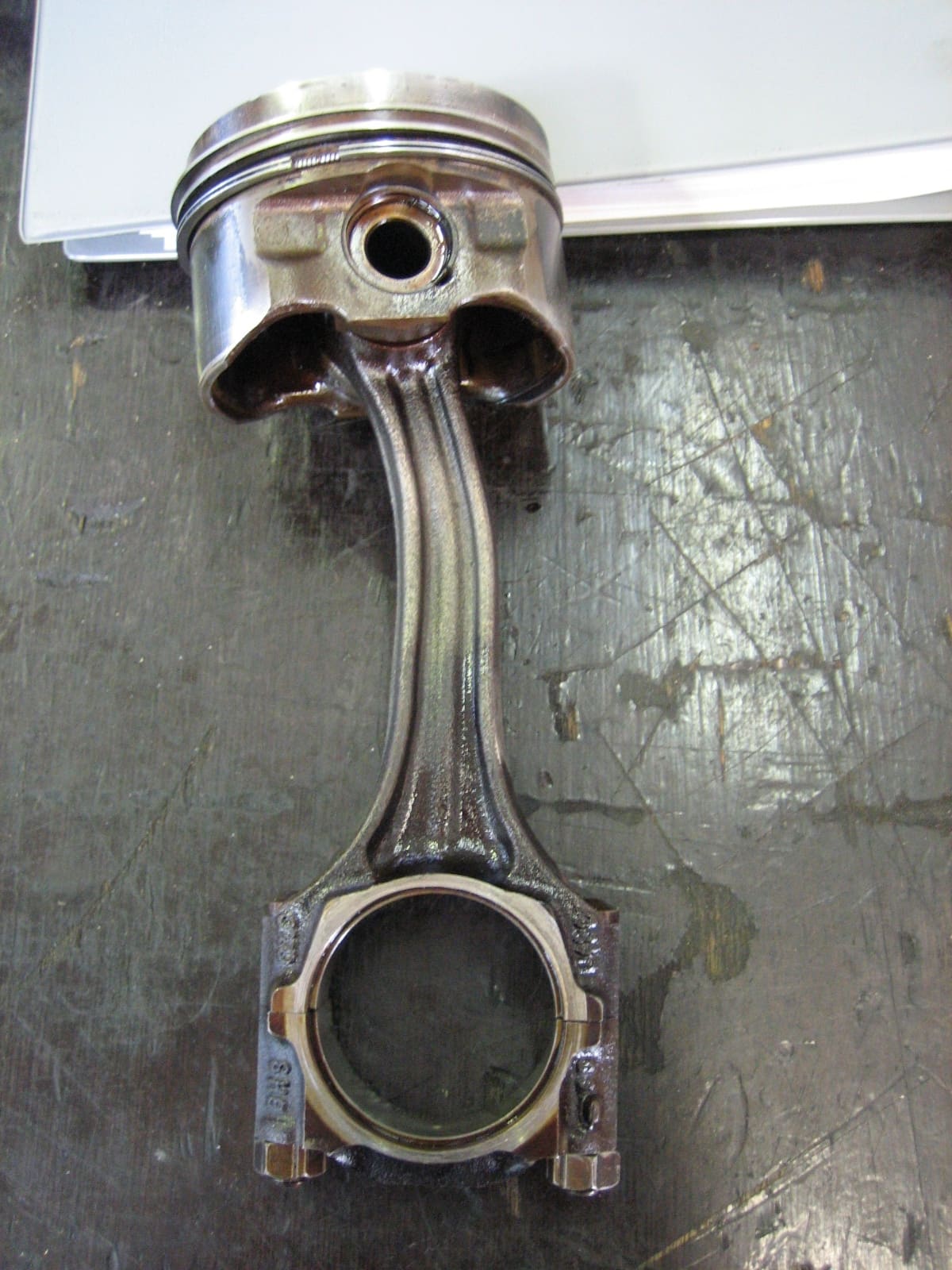
What hydrolock does: a connecting rod bent by trying to compress water. Photo: MichaelXXLF / Wikimedia Commons · CC BY-SA 3.0 With the engine off and cool, work along every inch of exhaust hose. West Marine's checks: squeeze it along its length, and replace any section that feels spongy, brittle, swollen or cracked. It warns that exhaust hose gives little outside warning because the inside wears faster than the outside, and suggests replacing hose older than about 5 to 7 years regardless of looks. Use only hose rated for wet marine exhaust.
Hard, shiny, blistered, cracked or discolored hose near the elbow, or a muffler that is warped, discolored or has soft spots (West Marine lists heat discoloration and soft spots as signs the material is breaking down), tells you the exhaust has run hot without enough water at some point. That usually means a closed seacock, a clogged strainer or a failed impeller. Replace the damaged parts and find the cause before running again (see the raw-water strainer and impeller guides). Westerbeke notes that steam at the exhaust also points to too little seawater flow.
West Marine says every exhaust connection at the manifold, elbow and muffler should have two stainless clamps. Look for rust stains, cracked bands and loose screws, and check that clamps sit on the fitting, not over its end. Snug loose ones with the engine cool; replace rusty ones with all-stainless clamps (see the hose clamp guide).
Look the canister over with a light and mirror: cracks, weeping at the seams or fittings, salt crust, soot stains, or a muffler that has moved on its mounts or is rubbing against something. West Marine says it should be securely mounted and not vibrating against structure. A plastic or fiberglass muffler with any crack needs replacing; don't try to patch it.
West Marine says exhaust hose runs must avoid low points where water can pool and should rise steadily to the muffler inlet and from the muffler outlet to the overboard fitting. A sagging hose holds water the exhaust can't push clear. Re-support any section that has dropped since it was installed.
If your cooling system has a vented loop between the heat exchanger and the mixing elbow, it is what stops seawater from siphoning into the exhaust after you shut down. BoatUS explains how it works, and West Marine says the loop must sit at least 12 inches above the waterline at all angles of heel and trim, should be taken apart and inspected annually, and replaced every 3 to 5 years. A stuck or salted-up valve fails silently (see the vented loop guide).
At the hull outlet, look for a cracked fitting, a loose hose, or a flapper valve that has gone stiff. West Marine says the rubber flap should flex freely and seal when pushed closed. On sailboats, SAIL Magazine suggests that routing the exhaust hose high near the middle of the boat, and crossing it to the side opposite the manifold, reduces the chance of seawater getting back in when heeled or rolling (see the exhaust flapper guide). Those are installation changes for a pro.
Boating Magazine lists everyday habits that push water up the exhaust: chopping the throttle so the wake hits the transom, too much weight aft (crew on the swim platform, full rear ballast), and backing hard into waves. Slow down gradually, let the wake pass, and let the engine idle at least 30 seconds before shutting down. In a following sea or a rolly anchorage, keep an eye on the engine for signs of water.
If your muffler has a drain plug, drain it during winterizing even after running antifreeze through, as the diesel winterizing guide describes, then reinstall the plug right away.
Record hose dates, clamp replacements, siphon break service and any scorch marks in BoatMend. A muffler or hose replaced after a dry-running event should go in the log with the cause.
Common mistakes
- Cranking a stubborn engine over and over with the seacock open.
- Closing the seacock for cranking and then forgetting to reopen it.
- Using heater hose or a single clamp on exhaust connections.
- Patching a cracked muffler with tape or putty.
- Removing a "leaky" vented loop or capping its vent.
- Ignoring a hose that's gone hard and shiny near the elbow, which shows it has already been cooked once.
- Running with a heavy load aft at anchor in a swell and then shutting down abruptly.
When to call a pro
- The engine won't turn over, stops with a clunk, or you see water at the air intake or in the oil
- Any crack, leak or soot stain on the muffler, elbow or exhaust hose
- Exhaust smell or a CO alarm in the cabin
- Scorched hose or a heat-damaged muffler (find the cooling cause too)
- Hose that sags or runs below the waterline in a way you can't correct, or a muffler that may be too small for the engine
- Seawater keeps getting into the engine even though the siphon break and flapper are good
Tips
- Put a laminated card by the ignition: "Didn't start after two tries? Close the raw-water seacock. Reopen when running."
- Check for water at the exhaust every time you start. It takes five seconds and catches most cooling failures.
- Many owners fit an exhaust temperature alarm, which warns of a dry exhaust before the engine itself overheats; ask your mechanic whether one suits your installation.
- Keep a spare length of exhaust hose and a few spare stainless clamps of the right size on board.
Official references
We read these to write this guide. Your engine's own manual always wins.
- West Marine – Marine Exhaust System Basics, Wet Exhaust, Mufflers and Anti-Siphon
- SAIL Magazine – Hydrolock Headache
- Boating Magazine – How to Prevent Hydrolock
- BoatUS – Anti-Siphon Valve Basics
- Westerbeke – Frequently Asked Questions, Troubleshooting
- BoatUS – Bleeding a Marine Diesel Engine (close the cooling seacock while cranking)
Safety: BoatMend is for information only and does not replace a certified marine technician. You are responsible for your safety and your boat. Read the full disclaimer.
Last updated 2026-11-06
Related guides
How to Inspect Exhaust Manifolds and Risers on a Sterndrive or Inboard
Cast-iron exhaust manifolds and risers rust from the inside, and when they fail they can let water into the cylinders and ruin the engine. Learn the warning signs, how often to inspect them in salt and fresh water, how to check a riser yourself, and when replacement is a job for a pro.
Closed-Cooled Gas Engines: Why the Exhaust Elbows Still Need Checking
Closed (freshwater) cooling protects the block, but on gas sterndrives and inboards the exhaust elbows or risers, and on some systems the manifolds, are still cooled by raw water. Learn which parts still see salt or lake water, the warning signs, what the engine makers and BoatUS say about intervals, and how to inspect and look after them.
How to Inspect, Clean and Replace Vented Loops (Anti-Siphon Valves)
A vented loop is a small, easy-to-forget fitting that stops seawater from siphoning into your engine or through your head and into the boat. Learn where they live, why they must sit well above the waterline, how to clean a sticky or clogged valve, when to replace it, and how to spot the hydrolock damage a failed one can cause.
How to Bleed Air From a Marine Diesel Fuel System
A diesel that sucks air after a filter change, a fuel leak or running the tank dry may not start until the air is pushed out. Learn the order that works on most older mechanical diesels, why common-rail engines are different, how to protect the starter and exhaust while cranking, and the high-pressure fuel dangers you must respect.
Marine Diesel Won't Start: Troubleshooting From Battery to Fuel
Work through the usual reasons a Yanmar, Volvo Penta, Westerbeke, Beta or similar marine diesel won't crank, or cranks but won't fire, starting with the free and simple checks. Most no-starts come down to the battery, preheat, air in the fuel or a fuel shutoff solenoid.
How to Inspect and Replace Exhaust Shutters and Flapper Valves
The rubber shutters inside a sterndrive's exhaust and the flappers at an inboard's exhaust outlet are one-way valves that keep water from washing back into the engine. Learn where they are, how they fail, how to check them every year, and why riser service is the perfect time to replace them.
Hose Clamps on Boats: Choosing, Installing and Inspecting Them
A rusted or wrong hose clamp can sink a boat at the dock, leak fuel or let exhaust into the cabin. Learn which clamps belong on a boat (all-316 stainless, embossed band, T-bolt where needed), when to double them, how tight is tight enough, and how to find the ones that are about to fail.
How to Inspect and Exercise Seacocks, Through-Hulls and Hose Clamps
Check every hole in your hull below the waterline, work each seacock open and closed, and inspect the hoses and clamps attached to them. A single failed fitting or hose is one of the most common reasons boats sink at the dock.
How to Inspect and Clean a Raw-Water (Sea) Strainer
The sea strainer is the cheap screen that keeps weeds, shells and plastic out of your engine, generator and A/C pumps. Learn how to clean it safely with the seacock closed, reseal the lid so it can't suck air, spot a cracked bowl before it floods the boat, and winterize it.
Carbon Monoxide on Boats: Where It Comes From, CO Alarms and Warning Signs
Carbon monoxide can build up in cabins, under canvas and around the swim platform, and its first symptoms look like seasickness. Learn the danger zones, where to mount marine CO alarms, how to test and replace them, and exactly what to do if an alarm sounds or someone feels sick.
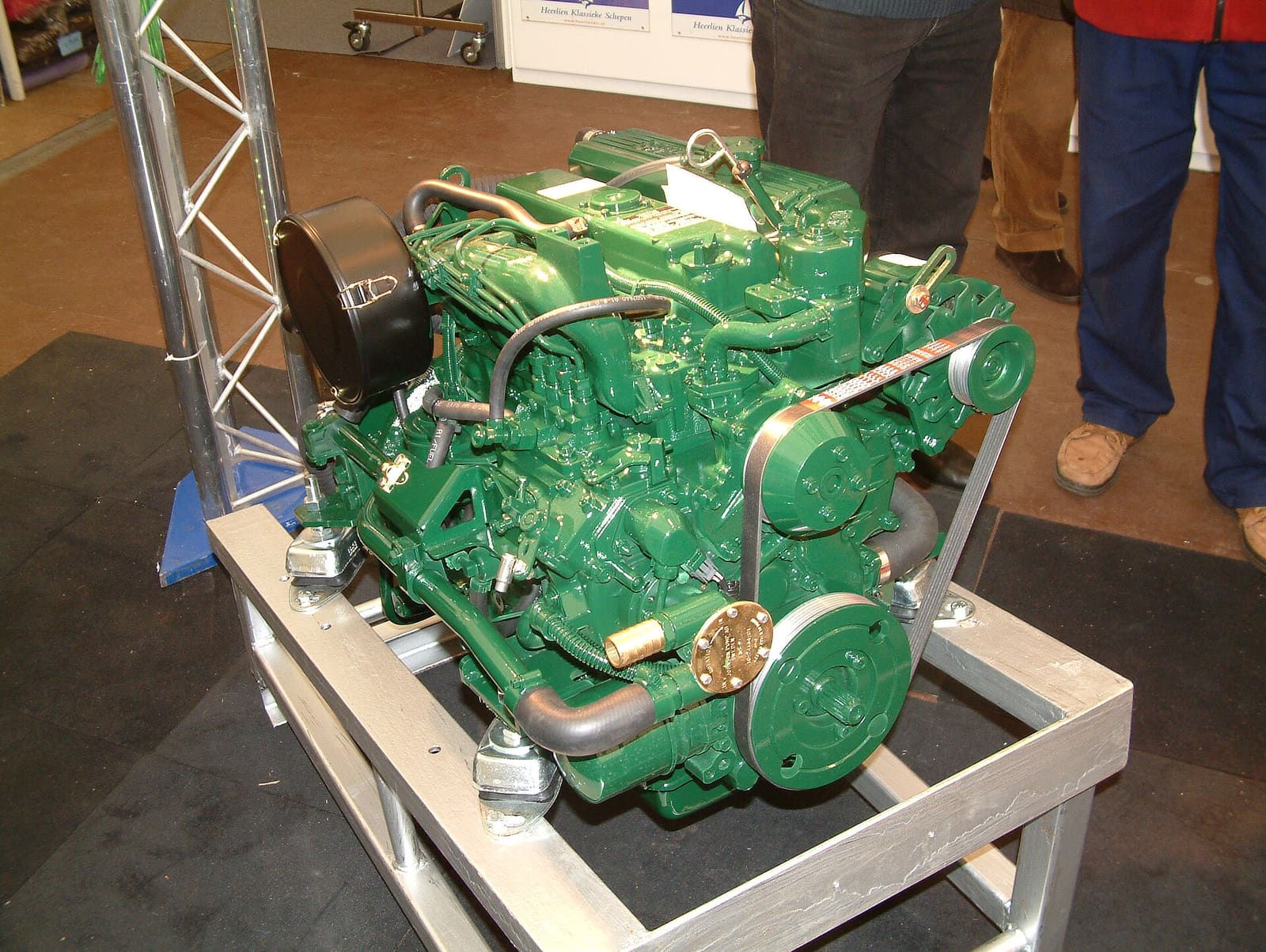
How to Winterize a Marine Diesel Inboard (Sailboat or Trawler)
Lay up a marine diesel for winter the way the engine makers describe it, covering fresh oil, a full and treated fuel tank, antifreeze through the raw-water side, the impeller out, the coolant checked, openings plugged and the battery cared for. Freeze damage to a diesel's raw-water circuit is one of the most expensive and most avoidable winter repairs.
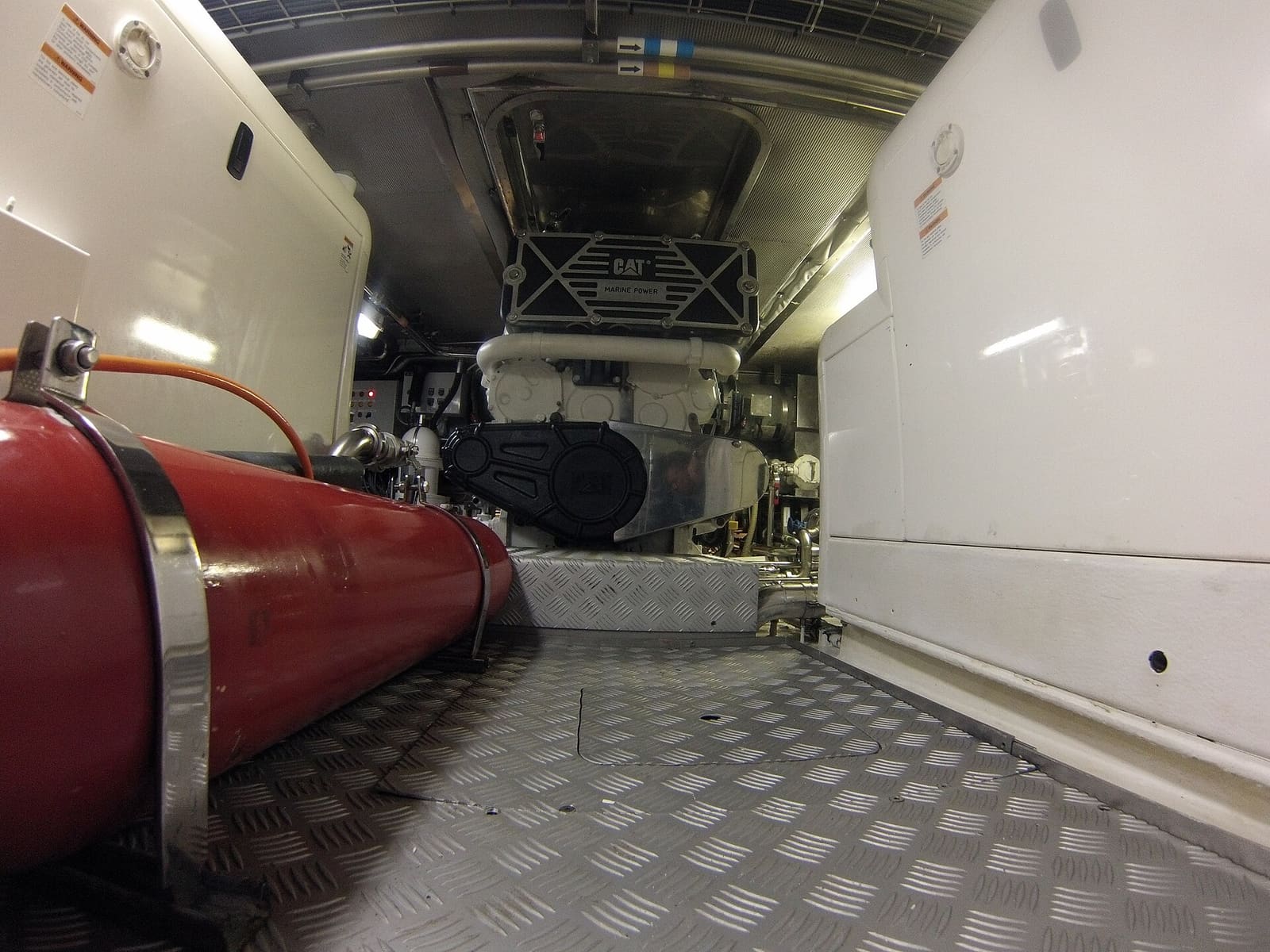
Boat Generator Runs Fine, Then Shuts Down Under Load: Step-by-Step Troubleshooting
A genset that starts and idles happily but quits once the air conditioning or water heater kicks in is almost always protecting itself. Learn how to read what it's telling you and check the usual causes in order, from water flow, the impeller and heat exchanger to overload, oil, fuel starvation and the safety switches, and know when to call a generator technician.
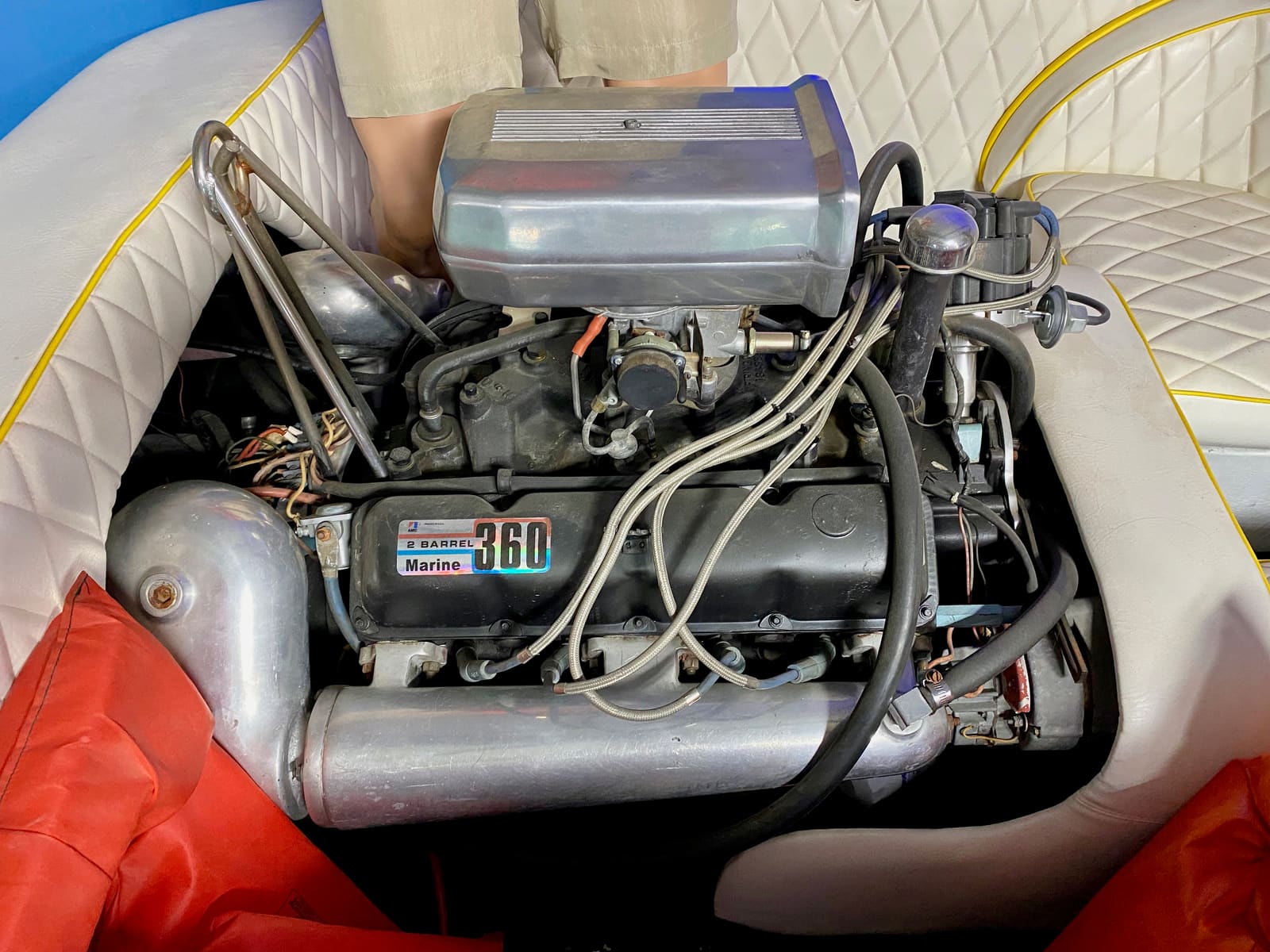
Milky Engine Oil or Water in the Oil - What It Means and What to Do
Milky, creamy or rising engine oil usually means water is getting into the engine. Learn why you should stop running it right away, how to tell harmless condensation from a real leak, and which parts are the usual suspects: head gaskets, exhaust risers and manifolds, intake manifold gaskets, oil coolers and freeze cracks.