Boat Generator Runs Fine, Then Shuts Down Under Load: Step-by-Step Troubleshooting
A genset that starts and idles happily but quits once the air conditioning or water heater kicks in is almost always protecting itself. Learn how to read what it's telling you and check the usual causes in order, from water flow, the impeller and heat exchanger to overload, oil, fuel starvation and the safety switches, and know when to call a generator technician.
Time
1 h 30 min
Shop would charge
$150-1500
Applies to
Marine diesel, Gas inboard · Cabin cruiser, Yacht, Sailboat, Center console
Safety first: A generator that keeps shutting itself down is warning you about something, often heat. Don't keep restarting it to "see if it holds." Make sure your CO alarms work before any test run, and if a CO alarm sounds or anyone feels dizzy, headachy or sick, shut the generator off, get everyone to fresh air and call 911 or the Coast Guard on VHF 16. Work only with the generator off and cool, the AC output breaker off, and the start battery switched off for anything inside the sound shield. If you smell fuel (especially on a gasoline genset) or see water rising in the bilge, stop and call a pro or TowBoatUS / Sea Tow.
Owners often ask
- Why does my boat generator shut down as soon as the air conditioner kicks on?
- My genset runs fine with no load but shuts off after a few minutes with a high temperature code. Where do I start?
- How can I test my boat generator cooling under a full load before summer?
This guide walks you through it. Still stuck? Ask the AI Mechanic about your engine.
Tools
- Flashlight or headlamp
- Your generator owner's manual (fault codes and shutdown list)
- Screwdrivers and nut drivers for the sound shield, strainer and pump cover
- Bucket and a watch or phone timer (for a water-flow check)
- Infrared thermometer (optional)
- Rags and absorbent pads
Parts & supplies
- Raw-water pump impeller and cover gasket for your model
- Fuel filter element(s) for the generator
- Engine oil to your manual's specification
Before you start
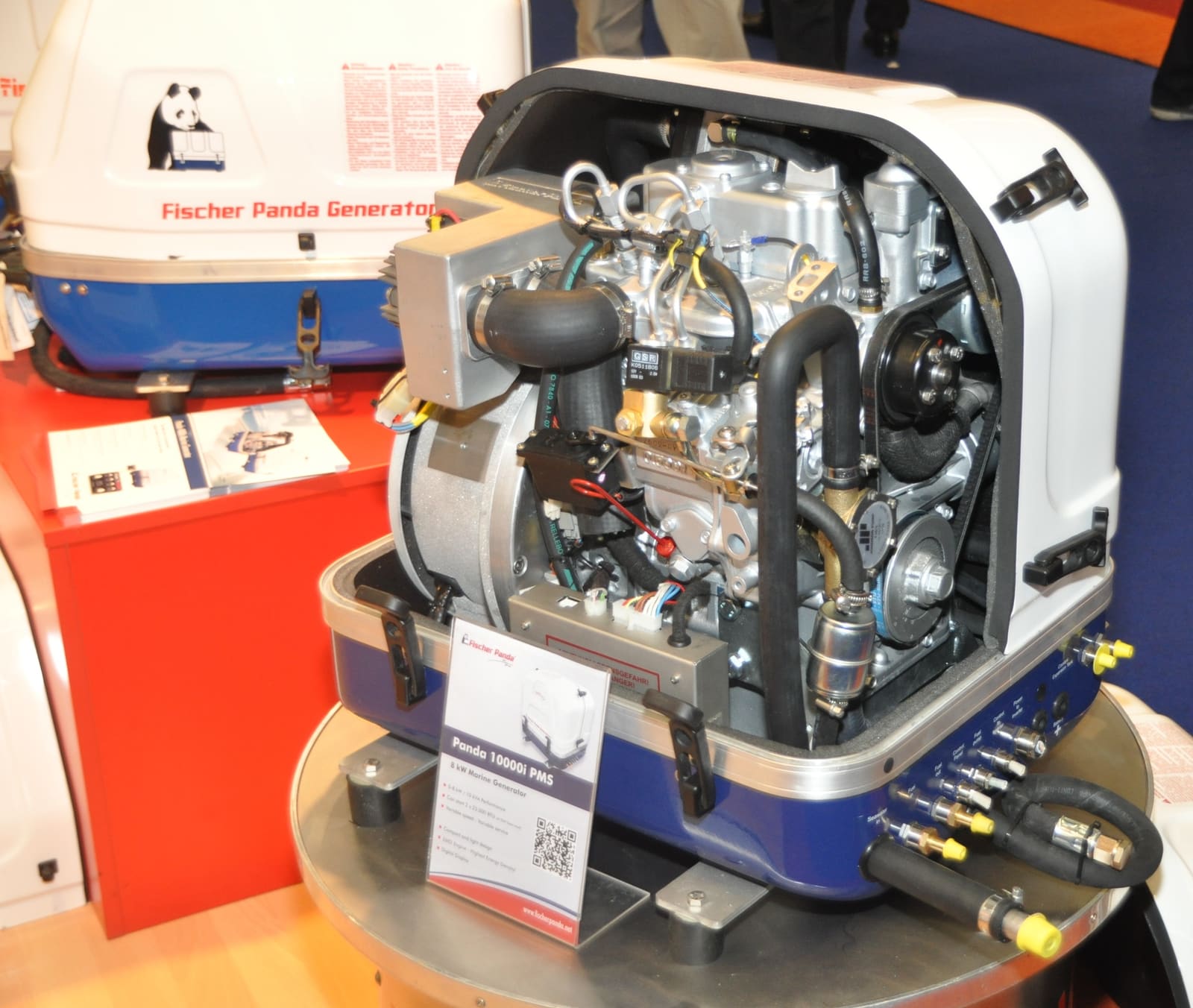
Why it happens: a marine generator has built-in safety shutdowns. Westerbeke lists three common ones: low oil pressure, high engine (coolant) temperature, and high exhaust temperature, which is caused by a loss of seawater flow through the wet exhaust. Many modern controllers also shut down for other faults, such as overload or the output frequency or voltage going out of range; your manual's fault list says which yours has. Under load the engine makes more heat and burns more fuel, so a weak water supply, a tired impeller, a dirty heat exchanger or a half-clogged fuel filter that's fine at idle shows up the moment you add load.
This guide is for a generator that starts and runs but then shuts down, usually after a few minutes or when a big load comes on. If it won't start at all, or dies the moment you let go of the start switch, see the "won't start" guide. To avoid overloading it in the first place, see the load management guide.
Write things down as you go: how long it ran, what was switched on, what the panel showed, and what you checked. It saves a lot of time if you end up calling a technician.
Steps
Most gensets store or display a fault code or light up a shutdown lamp after a safety shutdown. Look at the panel at the generator and the remote panel before you reset anything, and look the code up in your owner's manual. A code that says high exhaust temperature, high coolant temperature, low oil pressure or overload points you straight to one of the steps below. In a BoatUS story, a cruising couple's generator kept shutting down after eight seconds with the same high-temperature code; their unit had two high-temperature sensors, and the failed one was the second sensor they hadn't noticed.
- Shuts down after several minutes, sooner with more load: usually heat, from weak raw-water flow or a cooling problem (steps 3 to 7).
- Shuts down the moment a big appliance starts: usually overload (step 9).
- Stumbles, surges or loses power before quitting: usually fuel (step 10).
- Shuts down right away no matter what: check oil (step 8) and the fault code, and see the "won't start" guide.
With the generator running and no load, look at the generator's exhaust outlet on the hull. You should see a steady flow of water with the exhaust. Westerbeke warns it is very hard to judge flow by eye: what looks like enough water may not be. If you have little or no water, shut down and work through the next steps. Steam or white "smoke" at the outlet can also mean too little seawater, per Westerbeke.
Make sure the generator's seacock is fully open. Yachting suggests that when a boat is sitting still, something like a plastic bag can get sucked against the intake through-hull and held there; if you're anchored, try running the boat a bit or check the intake (only a trained swimmer, in calm water, with all engines off). Then close the seacock, open the raw-water strainer, clean the basket, check the lid seal, reassemble and reopen the seacock (see the raw-water strainer guide). A leaking strainer lid can let the pump suck air instead of water.
If the strainer is clean but you still suspect the intake, a mechanic quoted in PassageMaker checks it this way, with the generator off: close the through-hull, pull the hose off after it, then open the valve briefly and see how strongly water comes in. This lets seawater into the boat, so leave it to the mechanic unless the valve works smoothly and the hose is short and easy to refit; have a bucket ready, close the valve again within a second or two, and refit and clamp the hose before you start the generator. If the valve won't close, plug the opening, call TowBoatUS or Sea Tow, and use VHF 16 if water is gaining.
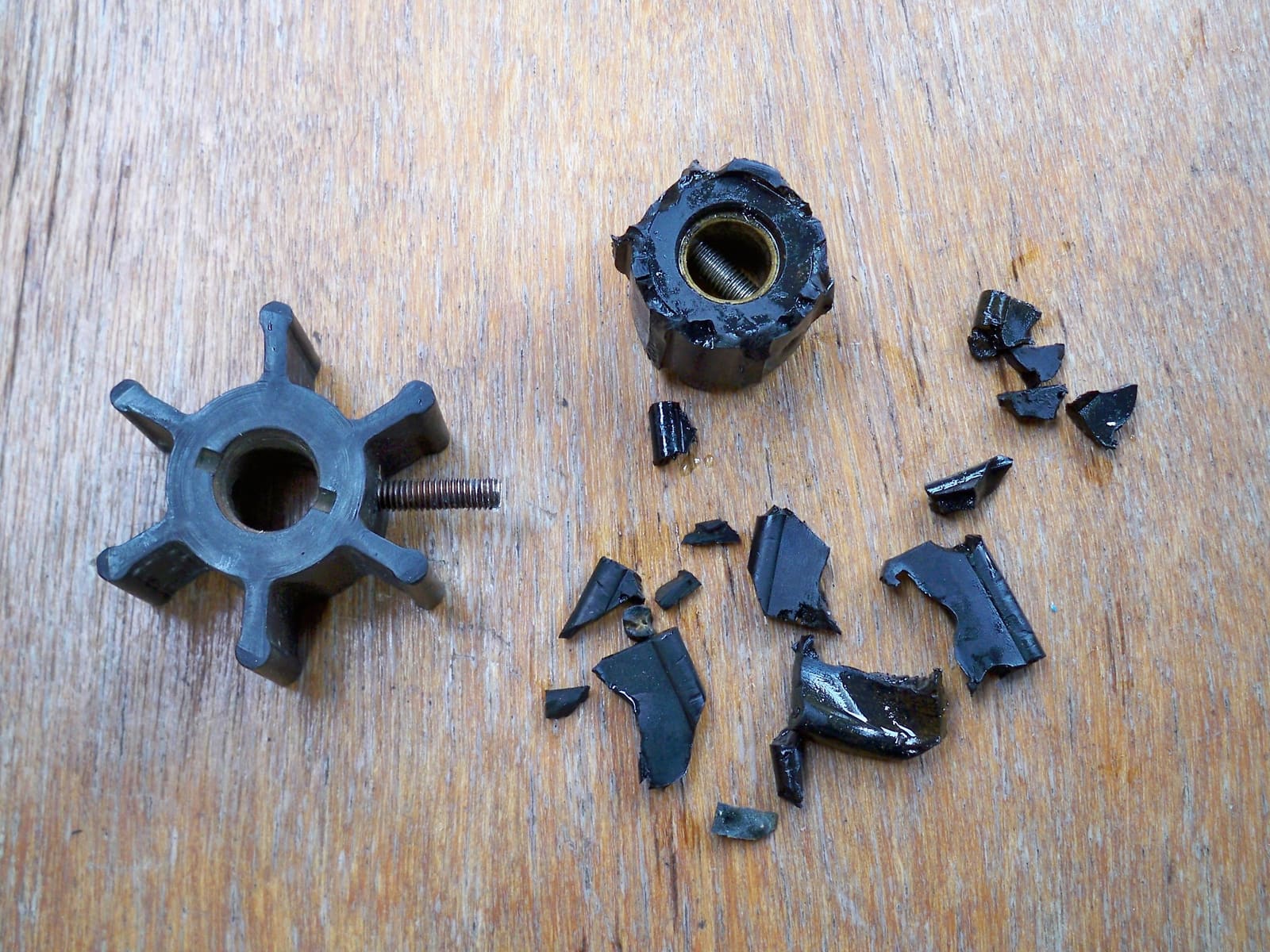
Remove the pump cover and look at the impeller. Missing, cracked or curled vanes, or vanes that have taken a permanent bend, can't move enough water under load. Replace it with the one your manual specifies (see the impeller guide). Westerbeke points out that pieces of a broken impeller often lodge in the end of the heat exchanger or in the fittings after the pump; if vanes are missing, find them before you run the engine again.
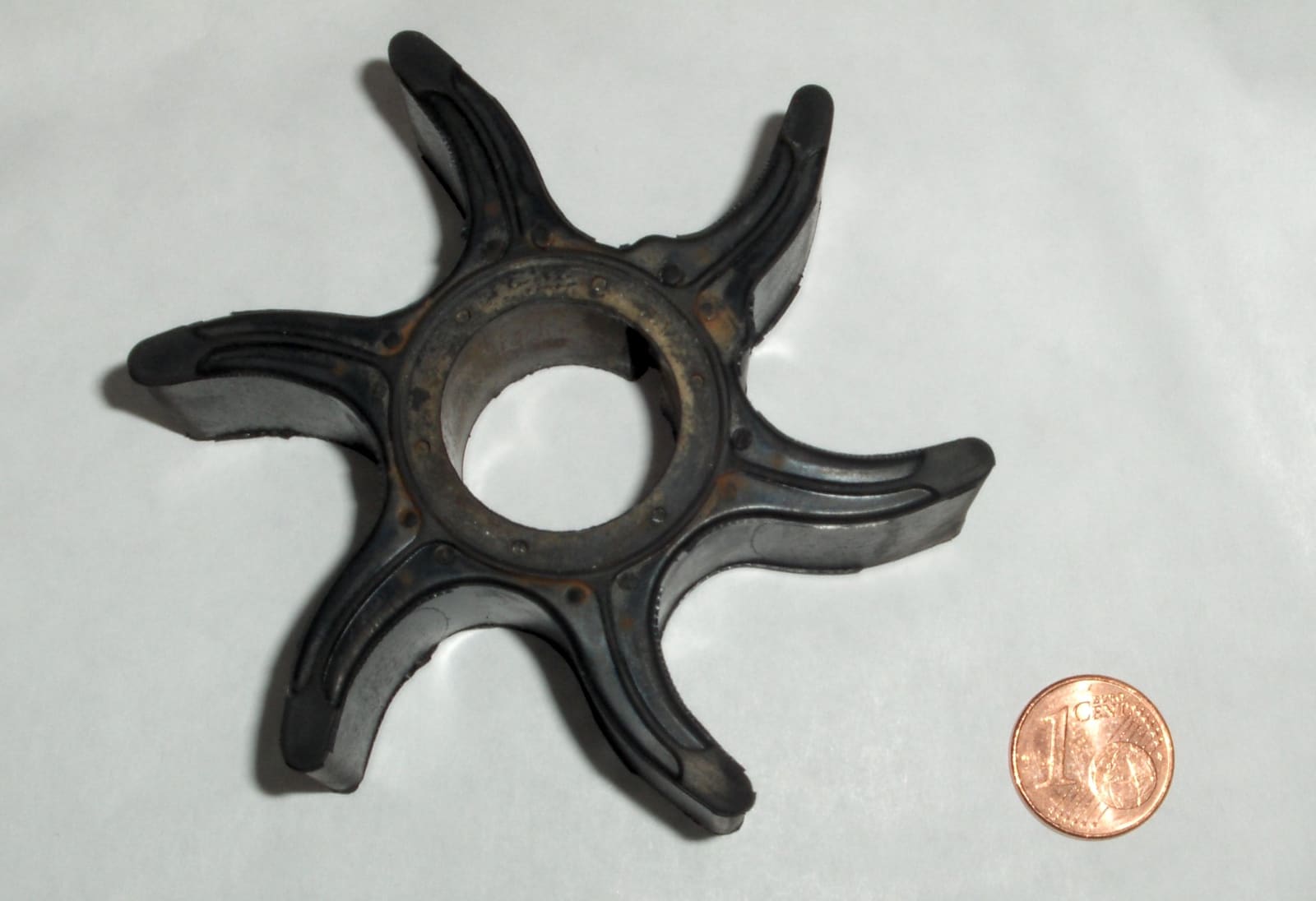
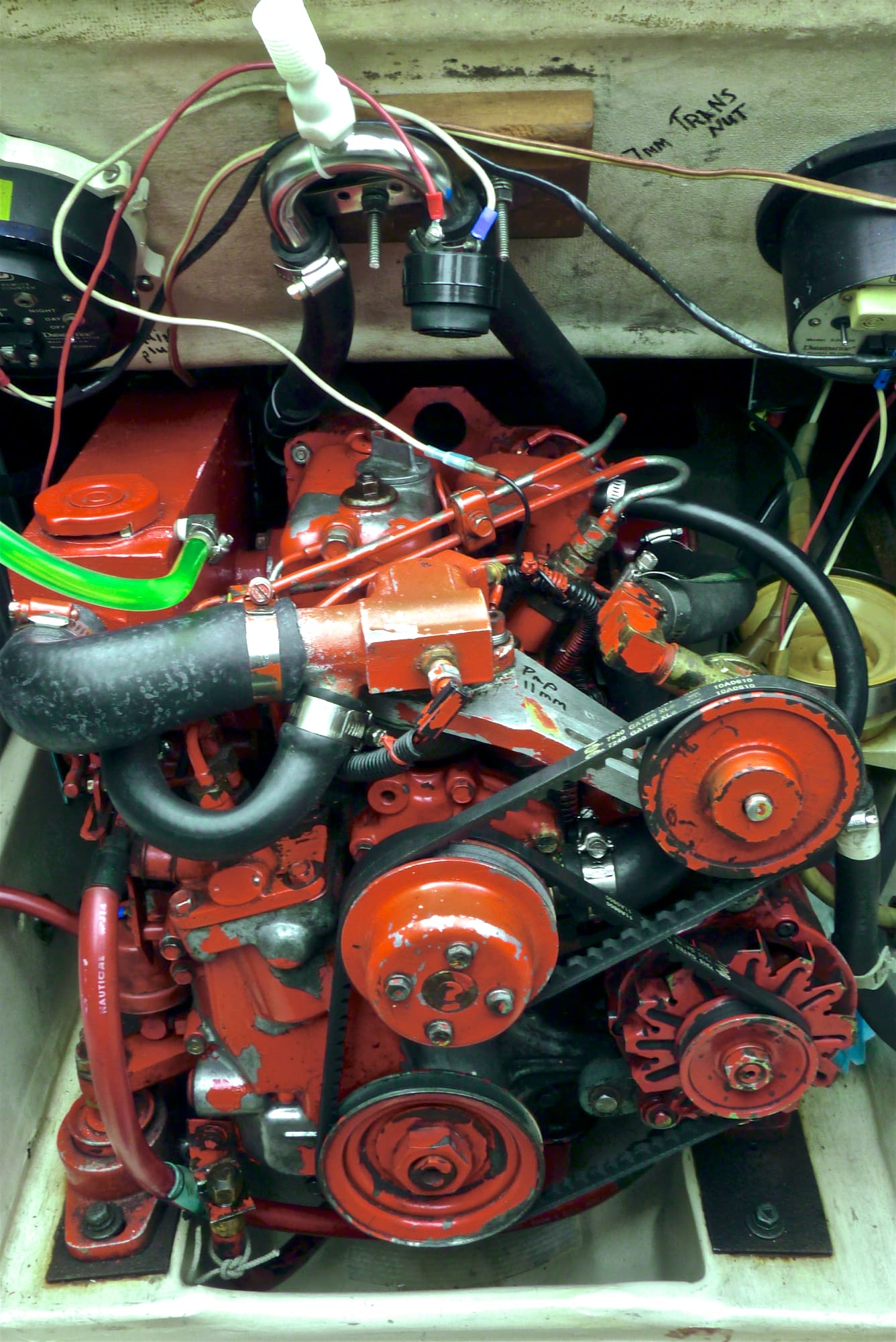
An impeller like this one, with vanes that stay bent, moves less water. Photo: Wualex / Wikimedia Commons · Public domain Westerbeke says the most common restrictions are a clogged strainer, a dirty heat exchanger, or a clogged water injection fitting on the wet exhaust elbow. The heat exchanger has removable end caps for cleaning out scale and impeller bits (see the heat exchanger guide). The exhaust elbow, where water is sprayed into the exhaust, can clog with carbon and scale; Northern Lights says light loads plug the elbow with carbon and recommends inspecting it once a year and replacing it if you see rust, leaks or cracks (see the exhaust elbow guide). A blocked elbow cuts water to the exhaust and trips the high-exhaust-temperature switch.
On closed-cooled (freshwater-cooled) generators, check the coolant with the engine cold. Northern Lights says to check it at the pressure cap, not just the overflow bottle. Low coolant, a loose belt to the coolant pump, or a thermostat that sticks can all cause a high-temperature shutdown under load. Westerbeke notes a sticking thermostat is easy to overlook.
Low oil pressure is one of the standard shutdowns. Check the dipstick with the generator off and level, and top up with the oil your manual names. If the level is fine but it still shuts down on oil pressure, or the oil is milky, overfull or smells of fuel, stop and call a technician (see the water in engine oil guide).
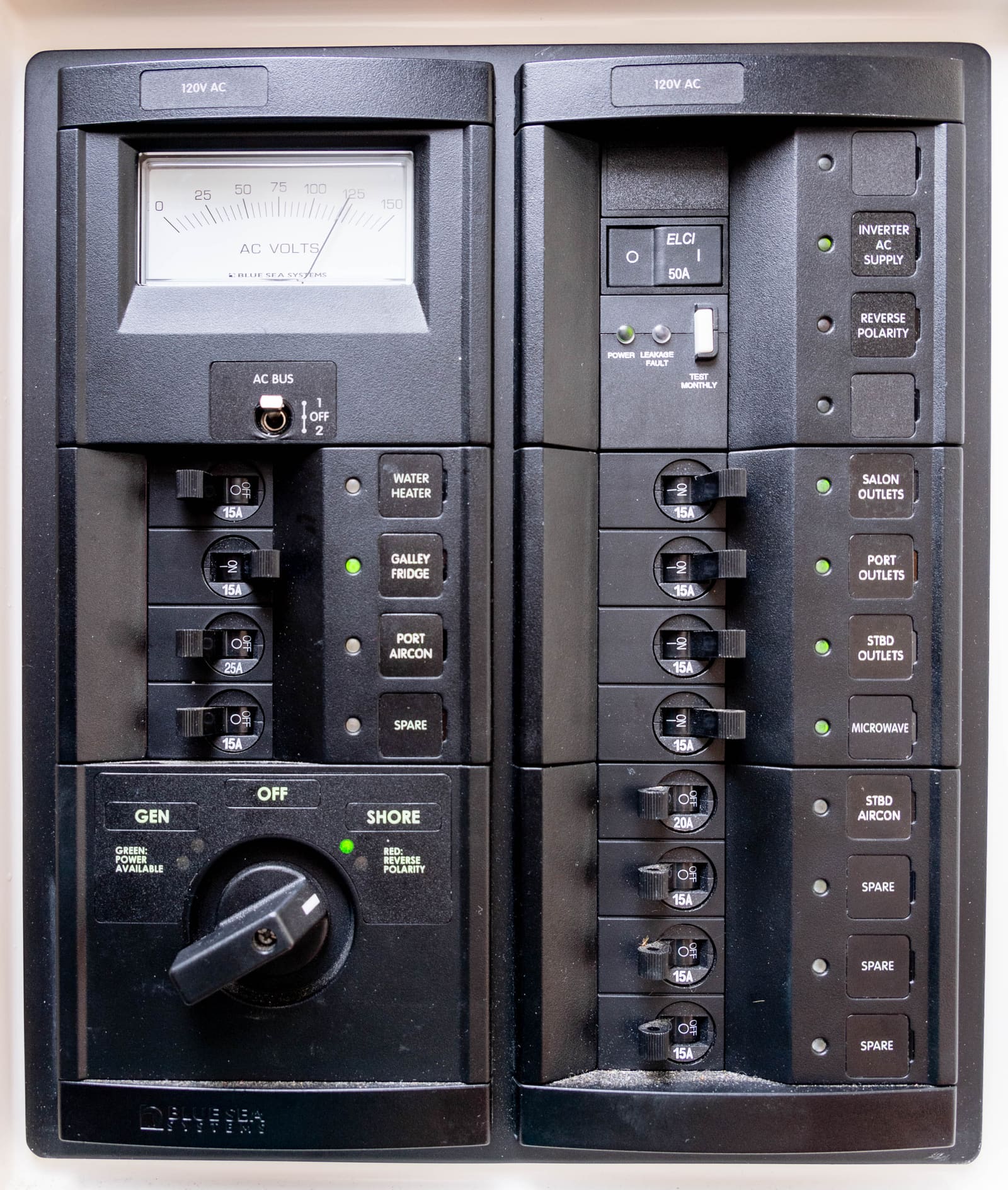
Add up what was running when it quit. Boating Magazine notes you can't expect to run all your appliances at once on most boats. Air conditioners, water heaters, electric cooktops, battery chargers and watermakers are the big ones, and many motors draw a brief surge when they start, so an AC compressor kicking on can be the last straw. Westerbeke links black exhaust smoke with overload. Try this: turn every AC breaker off, start the generator, let it warm up for a minute as Northern Lights advises, then add loads one at a time, biggest first, waiting for each to settle (see the load management guide). If it only quits when a certain combination is on, you've found an overload, not a mechanical fault.
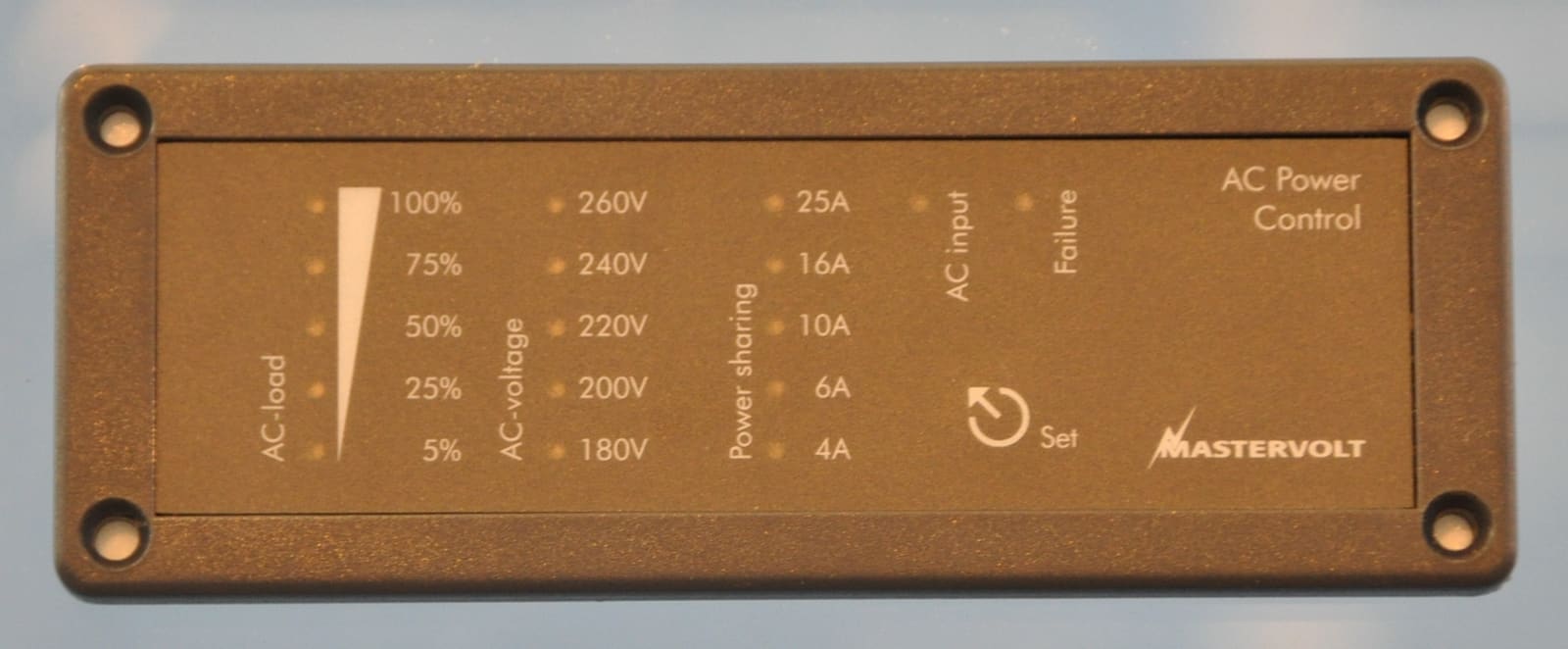
Some boats have a load meter like this one (a European panel, so the voltages differ from US boats). Photo: S.J. de Waard / Wikimedia Commons · CC BY-SA 3.0 Yachting describes a generator starving for fuel: it idles roughly, has trouble picking up, hesitates or sputters to a stop. Gensets often sit unused, so their fuel filter is a common culprit; change it as your manual describes and carry a spare. Also check:
- The tank level. On many boats the generator's fuel pickup sits higher in the tank than the main engines', so the generator can run dry first.
- The fuel valve for the generator is fully open.
- Air in a diesel's fuel line after a filter change; bleed it as your manual says (see the diesel fuel bleeding guide).
- Gasoline gensets with ethanol fuel: Yachting notes they are especially prone to clogged filters and carburetors.
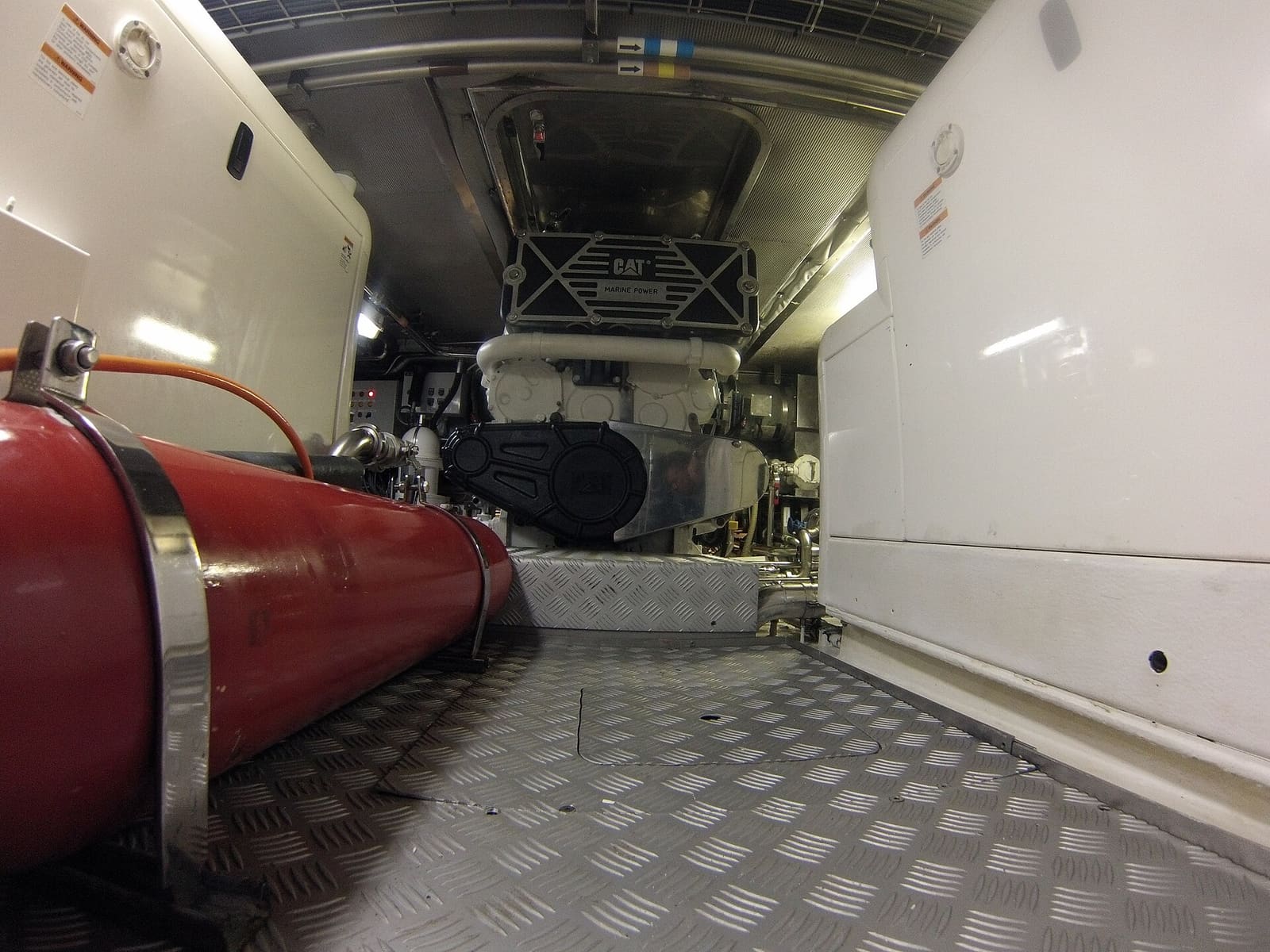
A generator needs enough air for combustion and cooling. Boating Magazine notes installations need enough ventilation airflow. Make sure vents and the sound shield's air openings aren't blocked by gear, and that the engine room isn't extremely hot. An infrared thermometer pointed at the generator and room after a shutdown can help you describe the problem to a tech.
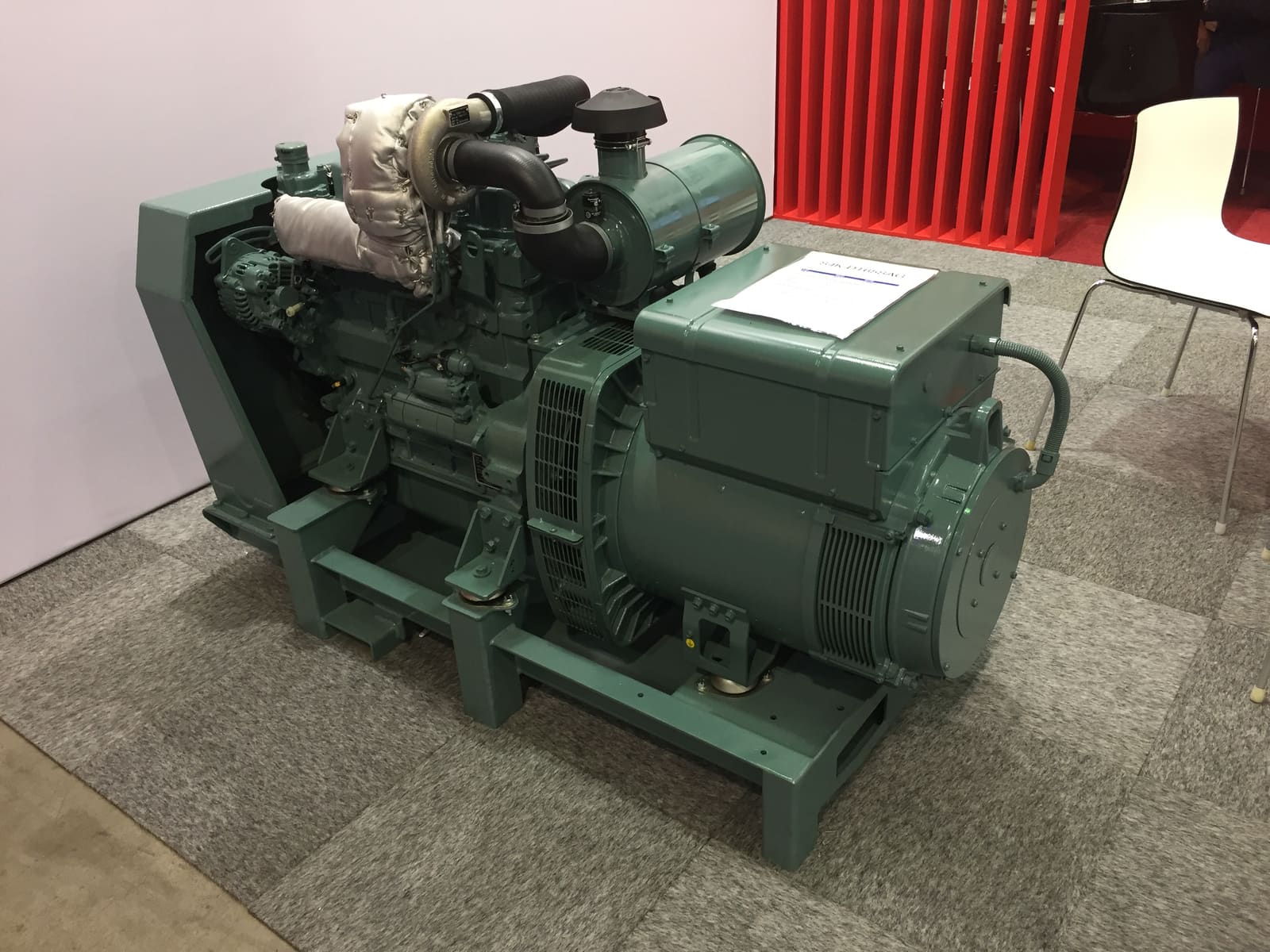
If the cooling, oil, fuel and load checks are all fine, the cause may be the governor or speed control (the engine can't hold its speed under load, so frequency drops), a voltage regulator, or a faulty sensor or switch. BoatUS's surveyor writer recommends testing warning alarms and safety shutdowns during routine inspections. A technician can test each shutdown switch, check the frequency and voltage under load, and use a load bank to load the set in steps. Don't bypass or jumper a safety switch to keep it running.
Once you've fixed a cause, start with the AC breaker off, check water at the exhaust, then add load one item at a time and watch for 15 minutes or more. If it shuts down again, note the time and code and stop.
Record the date, code, what you found and what fixed it in BoatMend. Patterns over a season (for example, shutdowns only in warm water or only with both AC units running) are very useful to a technician.
Common mistakes
- Resetting and restarting again and again without reading the fault code.
- Judging water flow by eye and assuming it's fine.
- Replacing an impeller and not looking for the missing vanes, which then block the heat exchanger.
- Running everything at once, then blaming the generator.
- Turning the generator on or off with the AC load still connected. Northern Lights and Power & Motoryacht both say to connect load only after starting and to remove it before shutdown.
- Jumpering a shutdown switch "just to get home." It removes the only protection the engine has.
- Replacing an expensive sensor before checking the simple things, or replacing one sensor when the unit has two.
When to call a pro
- Any shutdown code you can't trace to water flow, oil, fuel or load
- Oil that is milky, overfull or smells of fuel, or low oil pressure with a full sump
- Repeated high-temperature shutdowns after the strainer, impeller and heat exchanger are clean
- A cracked, rusty or leaking exhaust elbow or exhaust hose
- Voltage or frequency that drops or swings under load, or lights that flicker
- Any fuel smell on a gasoline generator, or water or exhaust leaking inside the sound shield
- Any CO alarm while the generator is running
Tips
- Keep a spare impeller, pump cover gasket and fuel filter for the generator on board. Northern Lights recommends carrying spares, and mechanics interviewed by PassageMaker add a spare pressure cap, the generator's coolant and exhaust temperature shutdown switches, and even a complete raw-water pump if the generator often runs in shallow, silty water.
- Once a season, test under a real load: PassageMaker suggests running the water heater, battery charger and air conditioning together while you watch temperatures, ideally with an infrared thermometer, so a weak cooling system shows up at the dock instead of on a hot night at anchor.
- Clean the strainer before every long run, especially in grassy or jellyfish-filled water.
- Don't run the generator for hours with almost no load. Northern Lights recommends keeping it at 40 to 50 percent of its rated load or more, and Boating Magazine suggests 35 to 70 percent; use the inverter for light loads.
- Take a photo of the panel when a shutdown happens. Codes can clear when power is cycled.
Official references
We read these to write this guide. Your engine's own manual always wins.
- Westerbeke – Frequently Asked Questions, Troubleshooting
- Yachting – Top Five Common Marine Generator Issues
- Northern Lights – Top 10 Marine Generator Tips and Tricks
- Power & Motoryacht – How to Help Your Genset Live Forever
- Boating Magazine – What You Need to Know About Gensets
- BoatUS – Don't Let Neglected Maintenance Sink Your Boat Generator
- BoatUS – Occam's Generator
- PassageMaker – Marine Diesel Maintenance: Prevent Engine & Generator Heat (Vincent Daniello, 2026)
Safety: BoatMend is for information only and does not replace a certified marine technician. You are responsible for your safety and your boat. Read the full disclaimer.
Last updated 2026-11-06
Related guides
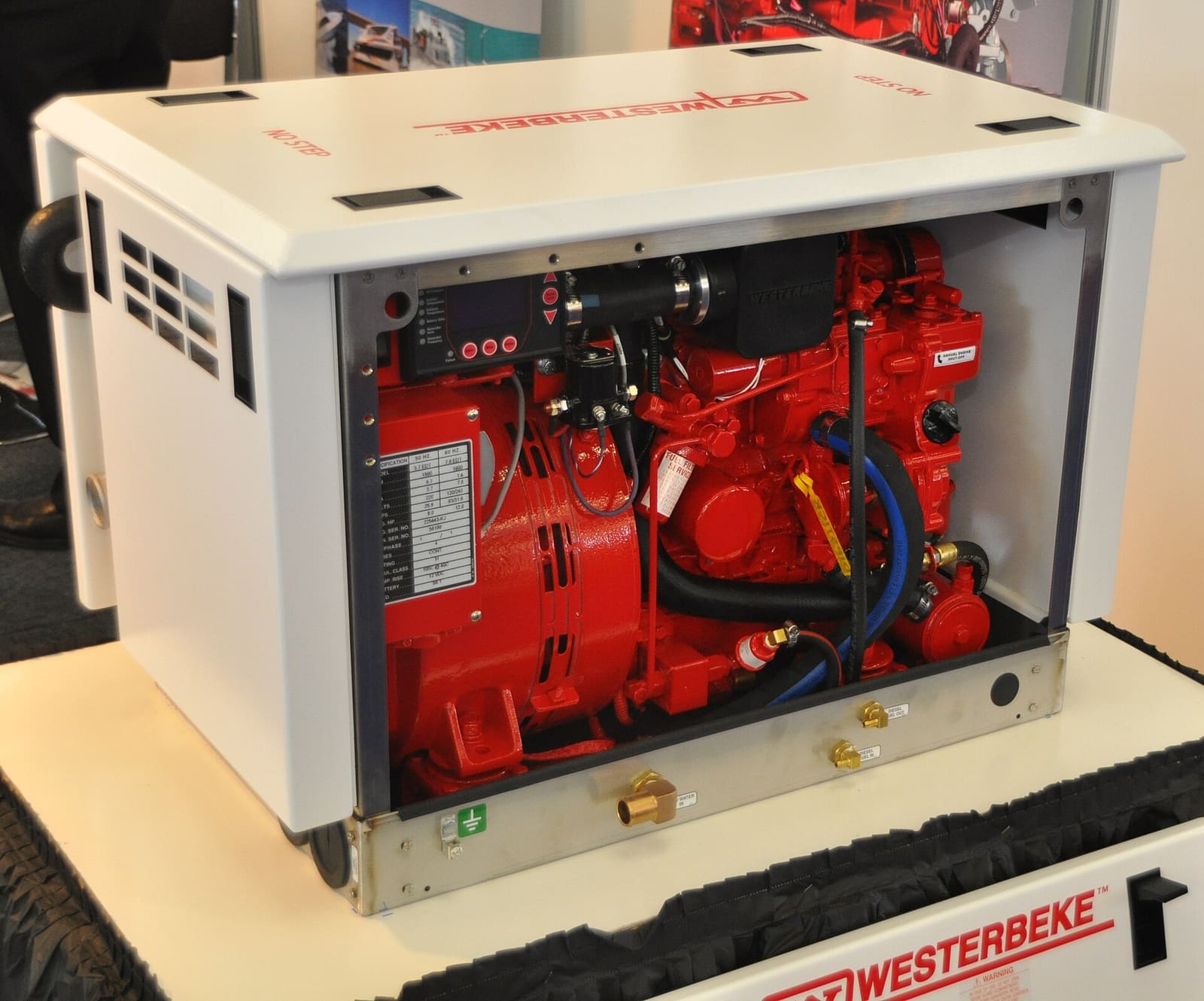
Marine Generator Won't Start or Keeps Shutting Down
A step-by-step troubleshooting guide for a boat generator (genset) that won't crank, cranks but won't start, starts and then dies, or runs without making power. Work from switches, battery and fuel to the safety shutdowns for low oil, high temperature and lost raw-water flow, without flooding the engine or risking carbon monoxide.
Running a Boat Generator at the Right Load: Switching Sequence, Balancing and Avoiding Wet Stacking
Get more life out of your marine generator by starting and stopping it with the AC loads off, switching sources in the right order, keeping it loaded enough to avoid wet stacking and carbon buildup, and moving small loads to the inverter. Includes a simple monthly exercise routine.
Generator Pre-Trip Check: What to Inspect and Test Before a Cruise
A marine generator that quits on the first hot night of a cruise usually gave warning signs at the dock. Use this pre-departure checklist, based on generator makers' own advice, to inspect the oil, coolant, belt, raw-water side, exhaust and CO alarms, run the set under real load, and pack the right spares.
Marine Generator Routine Maintenance and CO Safety
Keep an Onan, Kohler/Rehlko, Northern Lights, Westerbeke or similar marine generator reliable with regular checks of oil, raw-water cooling, fuel, exhaust and the start battery, plus a monthly run under load. Generator exhaust is a leading source of carbon monoxide on boats, so safety checks come first.
Diesel Heat Exchanger Service: Zincs, End Caps, Tube Cleaning and Pressure Testing
Your diesel's heat exchanger moves engine heat into the seawater, and it slowly fills with scale, broken zinc pencils and impeller pieces. Learn how to check the zincs, open the end caps, clean the tubes safely, and when to have the core removed, descaled and pressure-tested by a shop.
How to Clean the Raw-Water Strainer and Replace the Impeller on a Marine Diesel
Clean the sea strainer and swap the rubber impeller in the raw-water pump of a Yanmar, Volvo Penta, Westerbeke, Beta or similar inboard diesel. A worn impeller is one of the most common reasons a diesel overheats, and this job takes about an hour with basic tools.
How to Inspect and Clean a Raw-Water (Sea) Strainer
The sea strainer is the cheap screen that keeps weeds, shells and plastic out of your engine, generator and A/C pumps. Learn how to clean it safely with the seacock closed, reseal the lid so it can't suck air, spot a cracked bowl before it floods the boat, and winterize it.
Closed-Cooled Gas Engines: Why the Exhaust Elbows Still Need Checking
Closed (freshwater) cooling protects the block, but on gas sterndrives and inboards the exhaust elbows or risers, and on some systems the manifolds, are still cooled by raw water. Learn which parts still see salt or lake water, the warning signs, what the engine makers and BoatUS say about intervals, and how to inspect and look after them.
Wet Exhaust and Waterlift Mufflers: Stop Water Flooding the Engine and Catch Leaks Early
On most sailboats and many power boats, cooling water is sprayed into the exhaust and pushed out through a waterlift muffler. Learn how the system works, why long cranking can flood the engine with seawater (and when to close the seacock), and how to inspect the muffler, hoses, clamps and siphon break, including the scorch marks that tell you the exhaust once ran dry.
Carbon Monoxide on Boats: Where It Comes From, CO Alarms and Warning Signs
Carbon monoxide can build up in cabins, under canvas and around the swim platform, and its first symptoms look like seasickness. Learn the danger zones, where to mount marine CO alarms, how to test and replace them, and exactly what to do if an alarm sounds or someone feels sick.
How to Maintain Your Boat's Air Conditioning Seawater System
Keep seawater flowing through your marine A/C by cleaning the strainer, checking the pump and overboard discharge, descaling the condenser coil when flow drops, cleaning the air filter, and winterizing the seawater circuit before a freeze. Most "A/C not cooling" calls are a water-flow problem.
Overheat Alarm: What to Do in the First 60 Seconds
A short, practiced routine for the moment the temperature alarm goes off: take the load off, look for cooling water, shut down if it isn't there, and check every space the exhaust runs through for heat or fire. Based on a June 2026 Coast Guard safety alert about a fatal fire that started with an overheat alarm.