Marine Diesel Won't Start: Troubleshooting From Battery to Fuel
Work through the usual reasons a Yanmar, Volvo Penta, Westerbeke, Beta or similar marine diesel won't crank, or cranks but won't fire, starting with the free and simple checks. Most no-starts come down to the battery, preheat, air in the fuel or a fuel shutoff solenoid.
Time
1 h
Shop would charge
$150-600
Applies to
Marine diesel, Gas inboard
Safety first: Crank in short bursts (about 10 seconds, then rest) so the starter does not overheat. Long cranking on a wet-exhaust engine can fill the muffler with seawater and push it back into the cylinders (hydrolock), which can wreck the engine. If you smell fuel or see a fuel leak you cannot stop, smell exhaust in the cabin (carbon monoxide), or see smoke from wiring, stop, ventilate and call a marine mechanic. If you are in danger near rocks, traffic or bad weather, anchor if you can and call Sea Tow / TowBoatUS, or the USCG on VHF 16 or 911 in an emergency.
Owners often ask
- My diesel won't start after I changed the fuel filters. How do I bleed it?
This guide walks you through it. Still stuck? Ask the AI Mechanic about your engine.
Tools
- Digital multimeter
- Wrenches and sockets (most diesels are metric)
- Wire brush or terminal cleaner
- Flashlight or headlamp
- Clear container for checking fuel from the filter bowl
- Rags, absorbent pads and nitrile gloves
- A helper to turn the key while you watch and listen in the engine room
Parts & supplies
- Spare primary and secondary fuel filters with O-rings (if the filters are the problem)
- Glow plug or preheat relay/fuse only if testing points to it (match your engine)
Before you start
First decide which problem you have, because it points to completely different causes:
- Nothing happens, or just a click: electrical (battery, switch, connections, starter, neutral safety switch).
- Cranks slowly: weak battery, bad connections, or a tired starter.
- Cranks at normal speed but never fires: fuel, air in the fuel, preheat (glow plugs), a fuel shutoff solenoid, or (less often) compression.
Also notice what comes out of the exhaust while cranking. No smoke at all usually means no fuel is reaching the cylinders. White or gray smoke while cranking usually means fuel is getting there but not lighting (cold engine, weak preheat, low compression).
Have your engine's operator's manual handy for the preheat procedure, the bleed points and the wiring diagram. Work in this order: the cheap checks first.
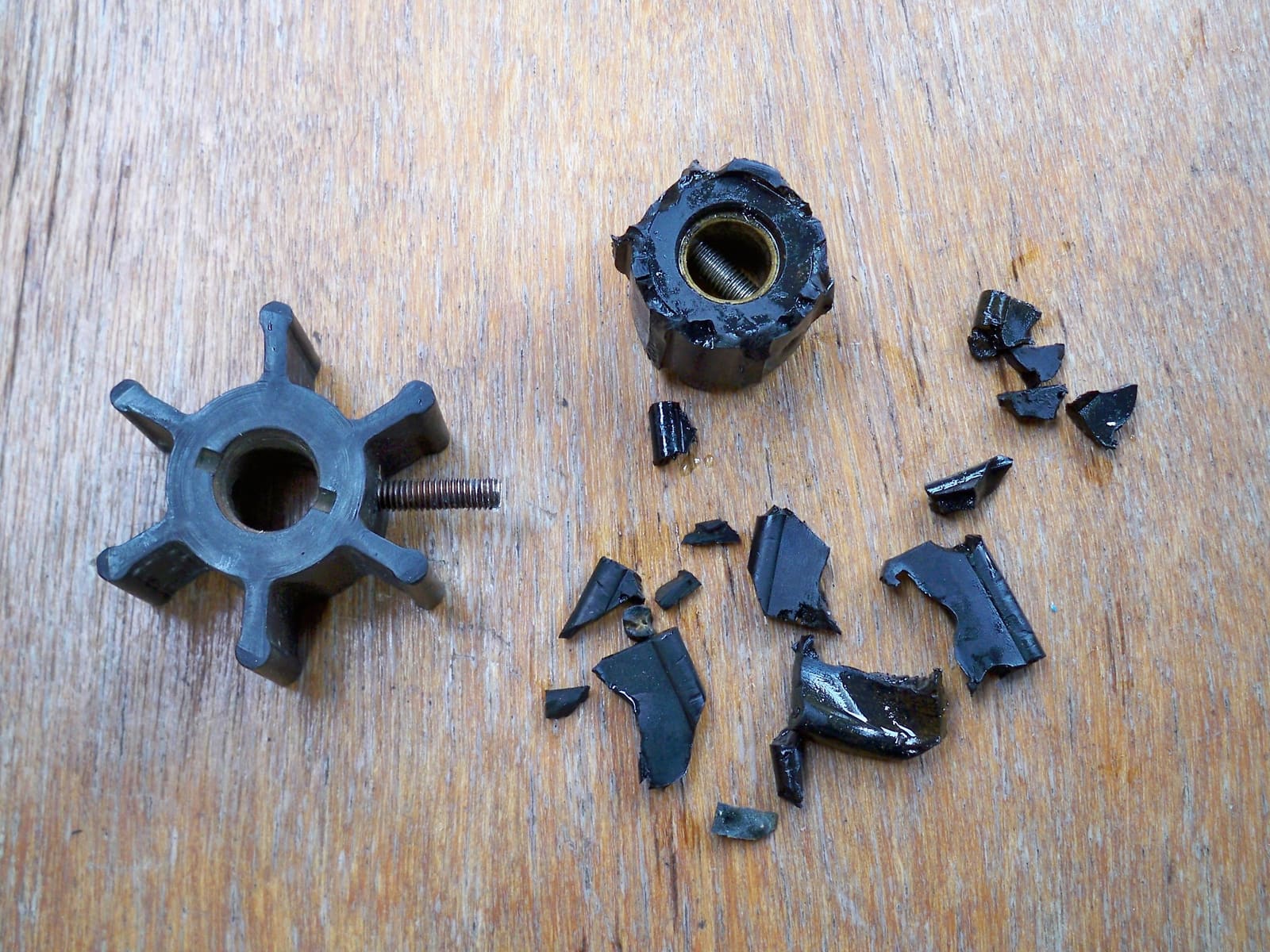
Has the engine sat unused for a year or more? Then don't just keep cranking. Westerbeke explains that stale fuel can varnish and make the injection pump and injectors stick, the raw-water impeller may have taken a set or gone brittle, and moisture can rust the cylinders if the engine wasn't laid up properly. Change the fuel filters and the impeller first, and have a diesel mechanic handle the cylinders and injection system if it still won't fire.
Steps
- Battery switch on, and set to the bank that starts the engine.
- Gear lever in neutral. Many engines have a neutral safety switch that blocks the starter in gear.
- On older engines with a pull-type stop cable, make sure it is pushed fully back in. A stop knob left out is one of the most common "won't start" causes.
- Panel powered up and alarms beeping when you turn the key, if your panel does that.
- Any engine breaker or fuse (often on the engine harness or behind the panel) not tripped or blown.
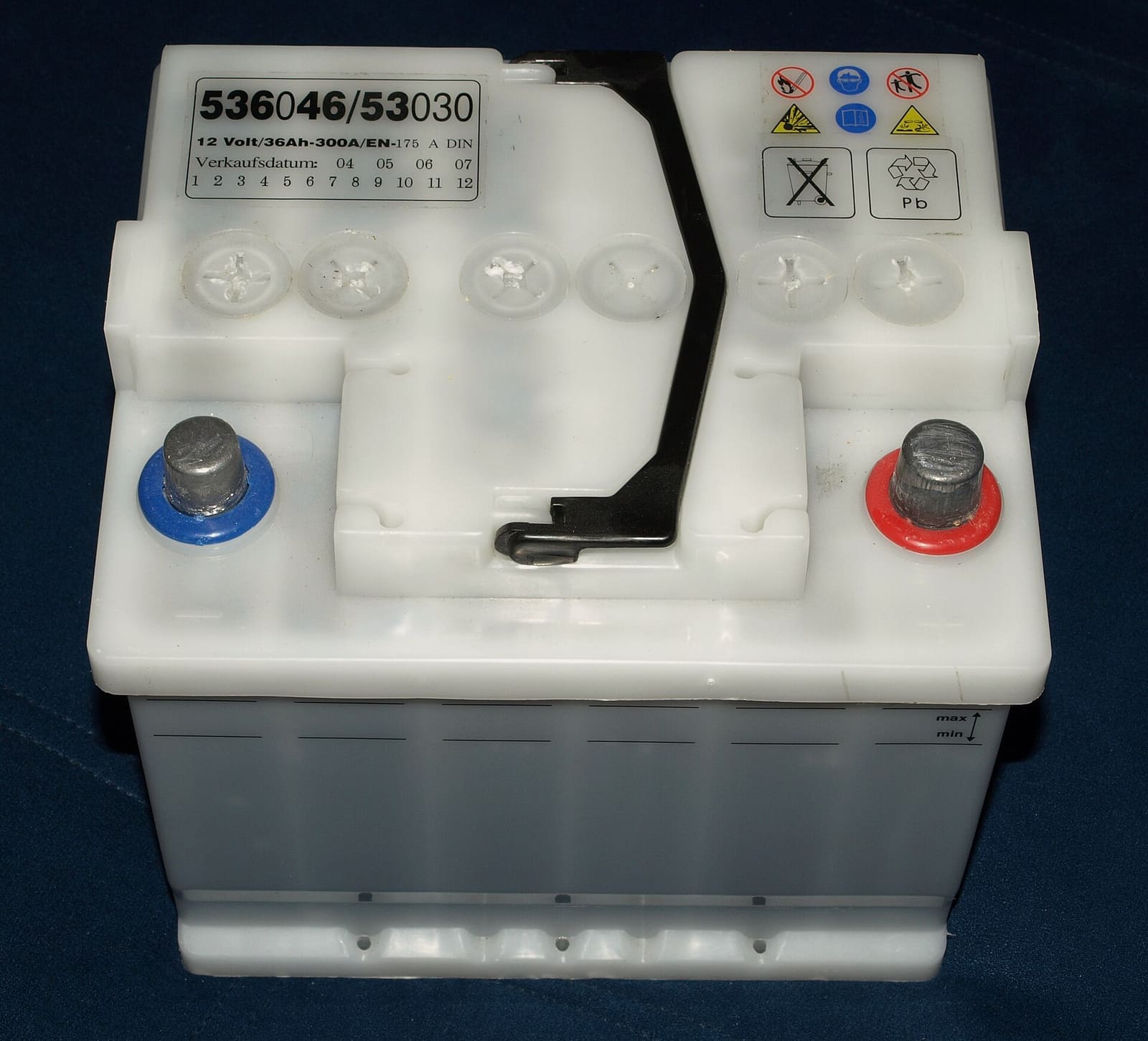
With the multimeter on DC volts, measure across the start battery posts with everything off. A fully charged 12-volt lead-acid battery typically reads around 12.6 volts or a bit more; much lower means it needs charging. Then have a helper crank while you measure. If the voltage drops a lot (a common rule of thumb is below about 10 volts), the battery is weak or a connection is bad. See the battery guide for charging and testing.
Follow the positive cable to the starter and the negative cable to the engine block. Look for green or white corrosion, loose nuts and hot or melted spots. Clean and tighten them with the battery switch off. A bad engine ground causes many mystery no-starts.
If you hear a single click at the starter but the engine does not turn, and the battery is good, the starter or its solenoid may be failing. That is a pro job on most boats.
If you expect to crank a lot (bleeding, testing), close the raw-water seacock so the pump does not fill the muffler with water while the engine is not running and blowing it out. Reopen it the moment the engine starts, or the impeller will burn up. If the engine has been cranked for a long time already, a mechanic may need to drain the muffler first. Northern Lights gives its generator owners a firm limit after a fuel filter change: no more than about 60 seconds of cranking in total, then drain the muffler and repeat the priming procedure rather than keep cranking. It is a good rule of thumb for any small wet-exhaust diesel; your manual may give its own.
Most small marine diesels use glow plugs or an air-intake heater, especially in cool weather. Hold the preheat (key position or button) for the time your manual says, then crank while still holding it if the manual says so. In cold weather you may need longer.
If preheat seems to do nothing: listen for a relay click, check the preheat fuse, and with a meter check for voltage at the glow plug feed wire while a helper holds the preheat. No voltage points to the switch, relay or wiring. Voltage present but still no start in cold weather can mean failed glow plugs. Testing and replacing them is often DIY on small engines, but follow your manual.
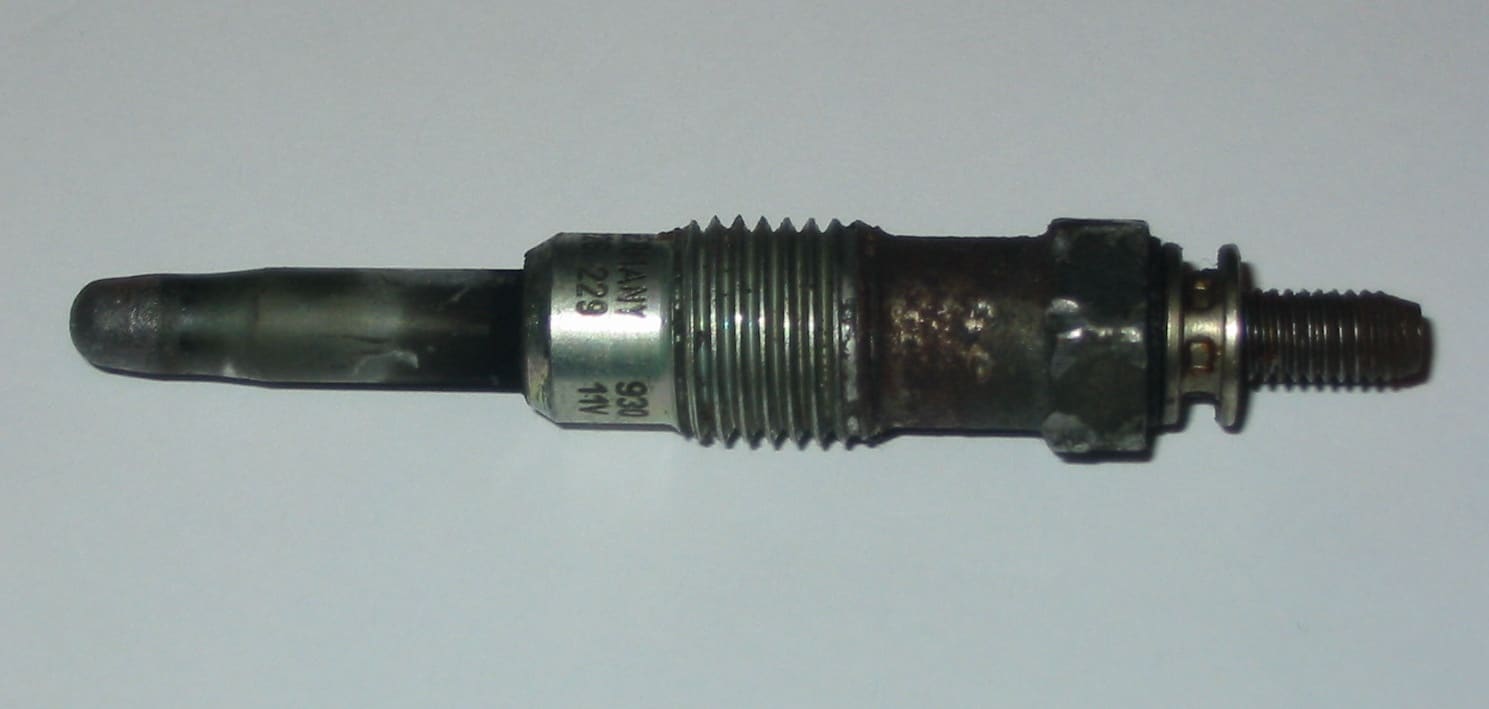
A typical diesel glow plug. Yours may look different; match replacements by engine model. Photo: Donar Reiskoffer / Wikimedia Commons · CC BY 3.0 - Look at the tank gauge, and if in doubt dip the tank. On a sailboat that has been heeling, a low tank can uncover the pickup.
- Make sure the fuel valve at the tank (and any valve at the filter) is open.
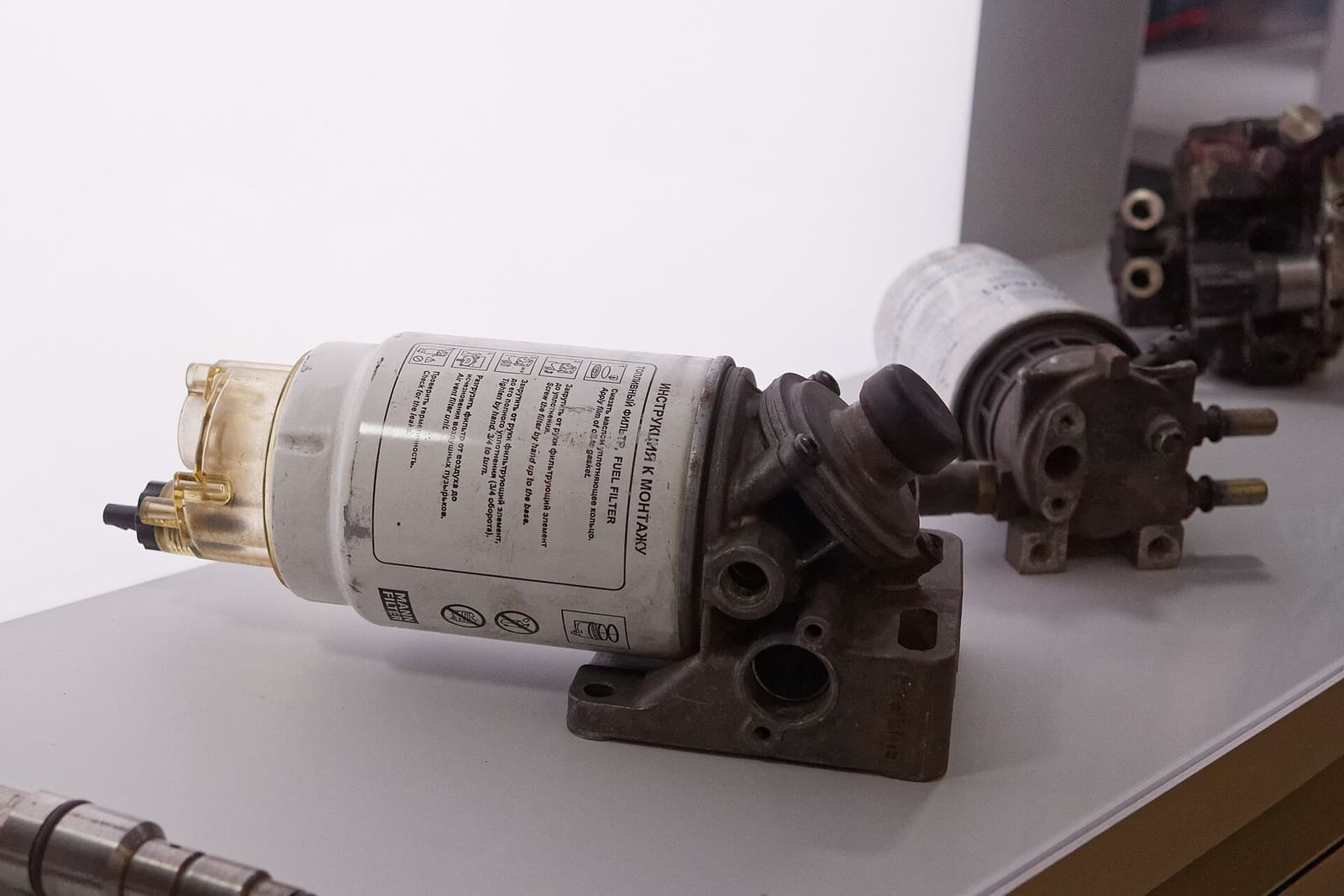
- Look at the primary filter bowl. Water, black sludge or slime means contaminated fuel. Drain the bowl into your clear container and change the filter if it looks dirty.
- A clogged tank vent can starve the engine. Check the vent fitting on the hull for wasp nests or salt.
If you just changed filters, ran the tank low, or the engine died and now won't restart, air in the fuel is the prime suspect. Air gets in where the system is under suction: at the primary filter lid, at loose fittings between the tank and the lift pump, and at the tank pickup when fuel is low. Tighten fittings, then bleed the system following the bleeding steps in our diesel service guide and your manual. Many newer common-rail engines bleed with an electric pump or a key routine: use only the method in your manual and never crack high-pressure fittings on those engines.
Loosen the bleed screw on the secondary (engine) fuel filter about half a turn and work the lift pump's hand lever, or turn the key on if the pump is electric. Fuel with no bubbles should flow.
- Lots of fuel: the low-pressure side is fine; move on.
- No fuel or only bubbles: a blockage, a closed valve, a clogged primary filter, a bad lift pump, or an air leak. If the hand lever feels dead, bump the engine over briefly and try again; the pump's cam may be at the top of its stroke.
Many modern small diesels use an electric solenoid on the injection pump to stop the engine. Depending on the design, it either has to be powered to let the engine run or powered only to stop it. If it sticks or loses power, the engine cranks happily with no smoke at all.
Have a helper turn the key to run (and then to crank) while you watch or feel the solenoid: you should see or feel the plunger move, or hear a clunk. Check its plug and fuse. Your manual's wiring diagram shows which wires should have power and when. If the solenoid does not move with power at its plug, it likely needs replacing. Do not tape it or wire it open permanently: you would lose the ability to stop the engine with the key.
A diesel needs a lot of air. Look at the air intake silencer or filter for a rag, bag or heavy dirt. On the exhaust side, a crushed hose, a carbon-choked mixing elbow, or a closed exhaust seacock (on boats that have one) can stop the engine from firing or keep it from turning fully.
If the engine turned over normally and then stops suddenly as if it hit a wall, or cranks unevenly after long cranking, there may be water in a cylinder. Stop cranking immediately. Check the dipstick: milky or high oil also points to water. Do not try again; a mechanic needs to remove the water before the engine is turned with the starter, or you can bend a connecting rod.
If the battery is strong, the engine cranks at normal speed, preheat works, fuel reaches the injection pump with no air, and it still will not fire, the cause is usually inside the engine: low compression (worn rings or valves), a failing injection pump or injectors, or wrong timing. A diesel that has always needed a lot of cranking may have compression problems. These need a compression test and diesel tools: call a pro.
Reopen the raw-water seacock if you closed it and confirm water comes out with the exhaust right away. Let it idle, check for fuel leaks at anything you loosened, and watch the gauges. Log what you found and fixed in BoatMend so the next no-start goes faster.
Common mistakes
- Forgetting the stop cable is still pulled out, or that the gear lever is not fully in neutral.
- Cranking for minutes on end with the raw-water seacock open, flooding the engine through the exhaust.
- Closing the seacock to crank, then forgetting to reopen it once the engine starts.
- Skipping the preheat or not holding it long enough on a cold morning, then flattening the battery.
- Bleeding the engine again and again without fixing the air leak (often the primary filter lid O-ring).
- Spraying starting fluid (ether) into the intake. On engines with glow plugs or an intake heater, it can cause a violent pre-ignition and serious damage. Most diesel makers warn against it.
- Bypassing a stop solenoid permanently instead of replacing it.
When to call a pro
- The engine stopped suddenly or locks up while cranking (possible water in a cylinder)
- The oil is milky, higher than normal, or smells of fuel
- You have a common-rail electronic engine with fault codes or no clear bleed procedure in the manual
- The starter clicks but will not turn the engine with a good battery
- Fuel reaches the injection pump with no air and the engine still will not fire
- Any fuel leak you cannot stop, burning smell from wiring, or exhaust smell inside the boat
Tips
- Paint the bleed screws and the stop solenoid a bright color so you can find them fast in the dark.
- Carry spare filters, O-rings, a preheat fuse and a small bleed kit on every trip.
- Keep the start battery separate from the house bank so you always have cranking power.
- Practice bleeding the engine at the dock once, so you know where everything is when it matters.
- Keep tanks reasonably full and treat fuel if the boat sits for long periods; dirty fuel and water are the root of many diesel problems.
Official references
We read these to write this guide. Your engine's own manual always wins.
- Cruising World – Troubleshooting a Sailboat's Auxiliary Diesel Engine
- BoatUS – Bleeding A Marine Diesel Engine
- BoatUS – Maintaining Marine Diesel Engines
- Cruising World – How to Read Smoke Signals
- Westerbeke – Troubleshooting FAQs (engine unused for over a year)
- Northern Lights – Top 10 Generator Maintenance Tips and Tricks
Safety: BoatMend is for information only and does not replace a certified marine technician. You are responsible for your safety and your boat. Read the full disclaimer.
Last updated 2026-10-24
Related guides
Marine Diesel Service: Oil Change, Fuel Filters and Bleeding Air
Change the oil and oil filter, replace the primary and secondary fuel filters, and bleed air from the fuel system on a Yanmar, Volvo Penta, Beta, Cummins or similar marine diesel. These three skills cover most routine diesel care and can get you out of trouble when the engine dies on a passage.
Engine Won't Start or Won't Crank - Troubleshooting Guide
Find out why your boat engine will not turn over or will not fire, starting with the simple things owners miss most, like the kill switch lanyard and battery switch. Many no-starts are fixed at the ramp in minutes without a tow.
Marine Battery Care: Test, Charge and Store for Winter
Check your boat battery's health, charge it the right way for its type (flooded, AGM or lithium), and store it so it is ready in spring. Most "boat won't start" calls start with a neglected battery.
How to Replace a Fuel/Water Separating Filter (and Check for Water in Your Fuel)
Swap the spin-on fuel/water separator on your gas boat and learn to spot water and ethanol phase separation before it stalls the engine. It is one of the cheapest jobs on the boat and one of the best protections for a fuel-injected engine.
Diesel Exhaust Smoke: What Black, White and Blue Smoke Mean
Learn to read the color of your marine diesel's exhaust and run the simple checks that go with each color, from a dirty air filter or fouled prop to a worn mixing elbow or head gasket. Catching smoke early can save an engine.
How to Clean the Raw-Water Strainer and Replace the Impeller on a Marine Diesel
Clean the sea strainer and swap the rubber impeller in the raw-water pump of a Yanmar, Volvo Penta, Westerbeke, Beta or similar inboard diesel. A worn impeller is one of the most common reasons a diesel overheats, and this job takes about an hour with basic tools.