How to Bleed Air From a Marine Diesel Fuel System
A diesel that sucks air after a filter change, a fuel leak or running the tank dry may not start until the air is pushed out. Learn the order that works on most older mechanical diesels, why common-rail engines are different, how to protect the starter and exhaust while cranking, and the high-pressure fuel dangers you must respect.
Time
45 min
Shop would charge
$150-400
Applies to
Marine diesel
Safety first: The thin steel lines between the injection pump and the injectors carry fuel at very high pressure. Never loosen a high-pressure line or fitting while the engine is running, and keep hands and face away from any loosened fitting while cranking. A fine jet of diesel can go straight through skin. It may look like a pinprick, but emergency doctors treat a high-pressure injection injury as a surgical emergency, and delays of hours can cost a finger or hand: go to an emergency room immediately and tell them it was a fuel injection injury, even if it barely hurts. On common-rail engines, never open the high-pressure lines at all. No smoking, flames or sparks nearby; catch every drop of fuel with rags or pads and ventilate the space. If you smell fuel in the bilge or can't stop a leak, stop work and call for help (VHF 16 or 911 in an emergency).
Fuel smell, water coming in, CO alarm or smoke? Stop, get everyone in life jackets and call USCG on VHF 16 or 911. For a tow: Sea Tow or TowBoatUS.
Owners often ask
- My diesel won't start after I changed the fuel filters. How do I bleed the air out?
- Do I have to crack the injector lines to bleed my diesel?
- Should I close the seacock while cranking to bleed my diesel?
This guide walks you through it. Still stuck? Ask the AI Mechanic about your engine.
Tools
- Wrenches that fit your bleed screws (often small open-end wrenches)
- Flare-nut (line) wrench to fit the injector line nuts, only if your manual calls for cracking them
- Plenty of absorbent pads or rags and a small drip tray
- Clean container of fresh diesel and a funnel, for pre-filling filters
- Flashlight or headlamp
- Nitrile gloves and safety glasses
- Sealable bag or can for fuel-soaked rags
Parts & supplies
- Fresh diesel
- New filter seals or O-rings if the filter housing was opened (from the filter kit)
Before you start
Why air stops a diesel. A diesel's injection system is built to pump liquid, not air. Air trapped in a filter, the injection pump or the lines can stop it starting, or make it start, stumble and die. Air usually gets in when you change a fuel filter, run the tank dry, open a fuel line, or through a leaking fitting, O-ring or hose. Cruising World notes the most common leak spot is between the tank and the lift pump, because that side of the system is under suction, so a small leak there pulls in air instead of dripping fuel.
The basic rule: start where the air got in, then work downstream toward the engine. After a filter change, Cruising World says you begin at the filter that was changed furthest downstream, usually the engine-mounted (secondary) filter. Air that got past it has to come out at the injection pump next, and only then, if your manual says so, at the injectors.
Know your engine type. This guide describes the usual method for older mechanical diesels (the kind with a lift pump lever and an injection pump with bleed screws), which are common in sailboats, trawlers and generators. Soundings explains that many common-rail electronic diesels largely bleed themselves: you fill the filters, use the hand primer until it's firm, and crank. With those, don't go past the bleed point on the engine-mounted filter. Your engine's operator's manual shows the bleed screw locations and order; read that section first, ideally at the dock before you ever need it.
Steps
If the tank ran dry, refuel. If the engine died on its own, check the fuel filters and fuel-water separator for water and dirt, and make sure the fuel valve is open (see the fuel-water separator and diesel won't start guides). Look along the fuel line from the tank to the engine for wet fittings or loose clamps. Bleeding won't help if air keeps getting in.
Engine off, key out. Put absorbent pads under the filters, the lift pump and the injection pump. Have a sealable bag for oily rags and keep the engine-room hatch open for air. Find the bleed screws in your manual: usually one on top of the engine-mounted filter and one or more on the injection pump.
Soundings suggests filling new filters (or the filter bowl) with clean diesel before you install them. It's far quicker than pulling all that fuel through by hand with the primer. Fill carefully so no dirt gets into the clean side of the filter, and refit the seals and O-rings exactly as the kit shows.
Most mechanical diesels have a lift pump on the engine with a small hand lever, or a separate plunger-style hand primer. Some engines use an electric lift pump. Cruising World's diesel writer Steve D'Antonio explains that turning the key to "on" often runs an electric pump, but on some engines it only runs with the glow plugs on or with the engine running; check your manual rather than improvising wiring.
If the lift pump lever feels stiff or gives only a short stroke, the pump's drive cam may be holding it up. Cruising World's fix is to turn the engine over a little (about half a turn of the crankshaft) and try again; BoatUS describes the same trick, done with a very brief "bump" of the starter. Do this the way your manual describes.
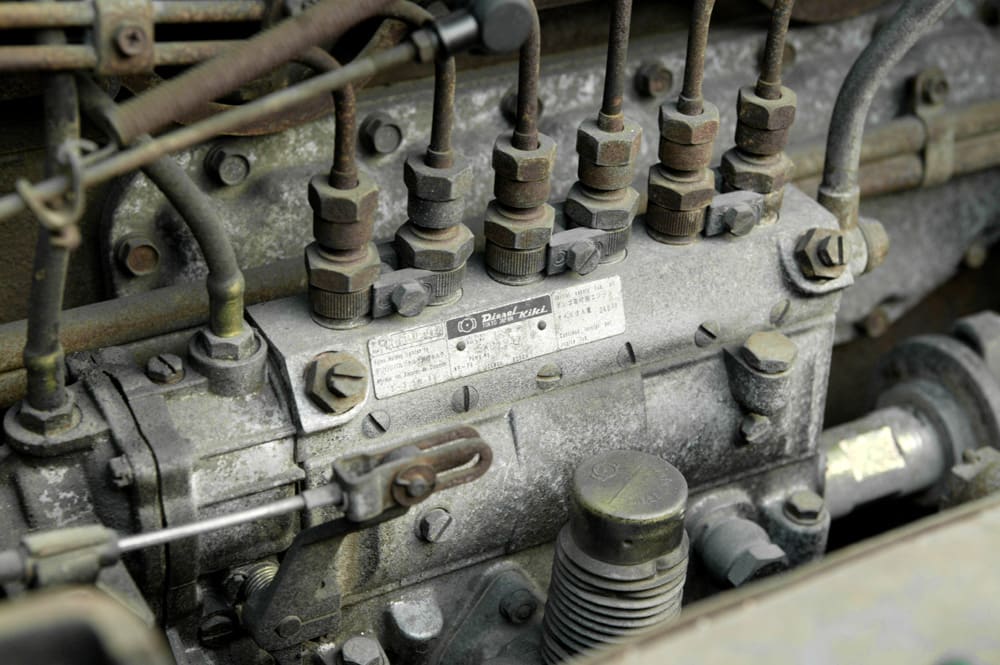
Clean the area around the bleed screw so dirt can't get in. Open the screw about a turn. Pump the primer steadily. At first you'll get froth and bubbles; keep going until a steady stream of fuel with no bubbles comes out. Then, while fuel is still flowing, close the screw snugly. Don't overtighten small bleed screws; they strip easily.
If you changed a primary filter or separator on its own, bleed any vent on it first, then move to the engine filter.
Cruising World says that after a routine filter change, air usually doesn't get past the engine filter, so you're often done at this point. Try starting the engine. If it starts, run it at a fast idle for a few minutes to carry tiny bubbles through, then check every filter and fitting for drips.
Each time you crank a raw-water-cooled or wet-exhaust engine that doesn't start, its raw-water pump pushes water into the exhaust, and with no exhaust gas to blow it out it collects in the muffler. Steve D'Antonio warns that if you crank for more than about 20 seconds in total, you should close the raw-water seacock so water can't back up into the engine, and open it again as soon as the engine starts. He suggests cranking in roughly 10-second bursts with about a minute's rest between them so the starter can cool. Northern Lights gives its generator owners the same kind of warning (also relayed by Southern Boating): don't crank more than about 60 seconds in total after a filter change; if it still won't start, drain the muffler per the manual and repeat the priming.
The trade-off with a closed seacock. The raw-water pump impeller is lubricated by the water it pumps, so cranking with the seacock closed runs it dry. BoatUS's bleeding article handles this two ways: take the impeller out until bleeding is finished, or leave the seacock open and disconnect the water injection hose at the exhaust so the water runs into the bilge instead of the muffler (then pump the bilge). Either way, put the impeller or hose back before you try to start the engine. Keep cranking bursts short whichever method you use, and if you're not sure which suits your engine, ask a mechanic. Watch the battery too; a weak battery cranks slowly and makes bleeding harder (see the marine battery guide).
If air got past the engine filter (common when the tank ran dry), the injection pump needs bleeding. Your manual shows which bleed screws and in which order. Use the same method: open one screw, pump the primer until bubble-free fuel flows, close it while it's still flowing, then move to the next. Then try a start, observing the cranking limits above.
Some older mechanical diesels need the last air pushed out at the injectors. Do this only if your engine manual lists it, and never on a common-rail engine. Soundings warns that common-rail fuel pressure is enough to cut skin, and that a common-rail line that's been opened should be replaced, not reused.
The usual method on engines that call for it, described by both Cruising World articles: with the engine off, loosen the nuts where the steel lines meet the injectors about a half to one turn (not the small return-line fittings). Keep your face and hands back and pads around the injectors. Crank in short bursts with the throttle set as your manual says. Fuel should start to seep out at each loosened nut; Cruising World describes it as a dribble, not a squirt. When it comes out free of bubbles, stop cranking and tighten that nut snugly, then try to start.
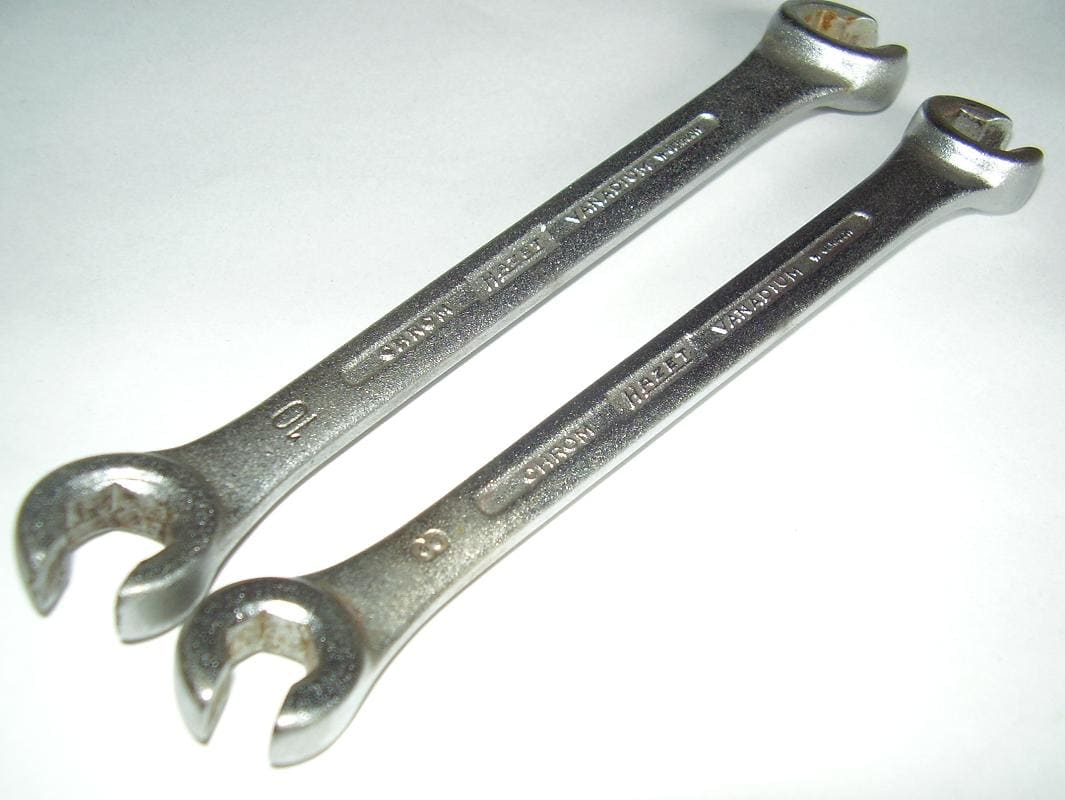
A flare-nut (line) wrench grips the soft injector line nuts without rounding them off. Photo: Gamsbart / Wikimedia Commons · CC BY-SA 3.0 Use a flare-nut wrench, which Cruising World recommends for these fittings because it doesn't round off the nuts. Don't overtighten. And never loosen or touch these lines once the engine is running.
D'Antonio suggests a small amount of throttle for the first start after bleeding. The engine may run roughly for a few seconds as the last air clears; adjust the throttle until it smooths out. Open the raw-water seacock if you closed it and check that cooling water is coming out of the exhaust.
With the engine running, look (don't touch) at every bleed screw, filter seal and line nut for weeping fuel. Shut down and tighten anything that seeps, then restart and check again. Bag the fuel-soaked rags and dispose of them as hazardous waste; never leave them in the engine room.
An engine that needs bleeding again and again has an air leak or a supply problem. Cruising World points to the suction side between the tank and the lift pump: loose hose clamps, a cracked fitting, a bad filter seal, a worn lift pump diaphragm or a partly blocked tank pickup. Mechanics can test with a clear section of hose to watch for bubbles. This is a good point to hand the job to a diesel mechanic.
Cruising World's advice is to learn this at a calm dock, because one day you may have to do it in a hurry offshore. Change a filter, bleed the system, and write the bleed screw locations and order inside the engine-room hatch. Carry spare filters, the wrenches that fit and plenty of pads (see the onboard toolkit guide).
Common mistakes
- Bleeding in the wrong order (injectors first), so air from upstream keeps coming back.
- Cranking non-stop until the starter overheats or the battery dies.
- Cranking a raw-water-cooled engine over and over without closing the seacock, then flooding the exhaust and engine with water.
- Forgetting to reopen the seacock after the engine starts.
- Opening high-pressure lines on a common-rail engine, or touching any loosened fitting while cranking.
- Overtightening tiny bleed screws until they strip.
- Leaving the cause unfixed, such as a loose filter bowl, a leaking clamp or an empty tank.
When to call a pro
- Any skin injury from fuel spray: go to the ER first, not to a mechanic
- A common-rail engine that won't prime with the hand pump and filter bleed point alone
- The engine keeps losing prime, or you see bubbles in the fuel no matter what
- Fuel leaking from the injection pump or high-pressure lines
- Water flooded into the exhaust or engine from long cranking (don't keep trying to start it)
- You've bled everything and it still won't start; see the diesel won't start guide, then call a diesel mechanic
Tips
- Add a note to your filter change routine: pre-fill, bleed the engine filter, run at fast idle, check for leaks.
- A small mirror helps you see bleed screws on the far side of the engine.
- BoatUS suggests dabbing each bleed screw and the lift pump lever with a bright paint so you can find them fast in a dark engine room.
- Not every engine bleeds at the same points: BoatUS notes some larger engines skip the injection pump and bleed only at the secondary filter and injectors. Your manual's order wins.
- If your engine has an electric lift pump that only runs while cranking, ask a mechanic about a proper priming switch rather than temporary jumper wires.
- Keep an eye on how much fuel is in the tank; never run a diesel dry on purpose.
Official references
We read these to write this guide. Your engine's own manual always wins.
- Cruising World – Painless Bleeding
- Cruising World – Open the Fuel Line to Bleed Your Diesel Fuel System (Steve D'Antonio)
- Soundings – Get the Air Out
- Southern Boating – Top Ten Generator Tips
- emDocs – High Pressure Injection Injury
- BoatUS – Bleeding A Marine Diesel Engine
- Northern Lights – Top 10 Generator Maintenance Tips & Tricks
Safety: BoatMend is for information only and does not replace a certified marine technician. You are responsible for your safety and your boat. Read the full disclaimer.
Last updated 2026-10-26
Related guides
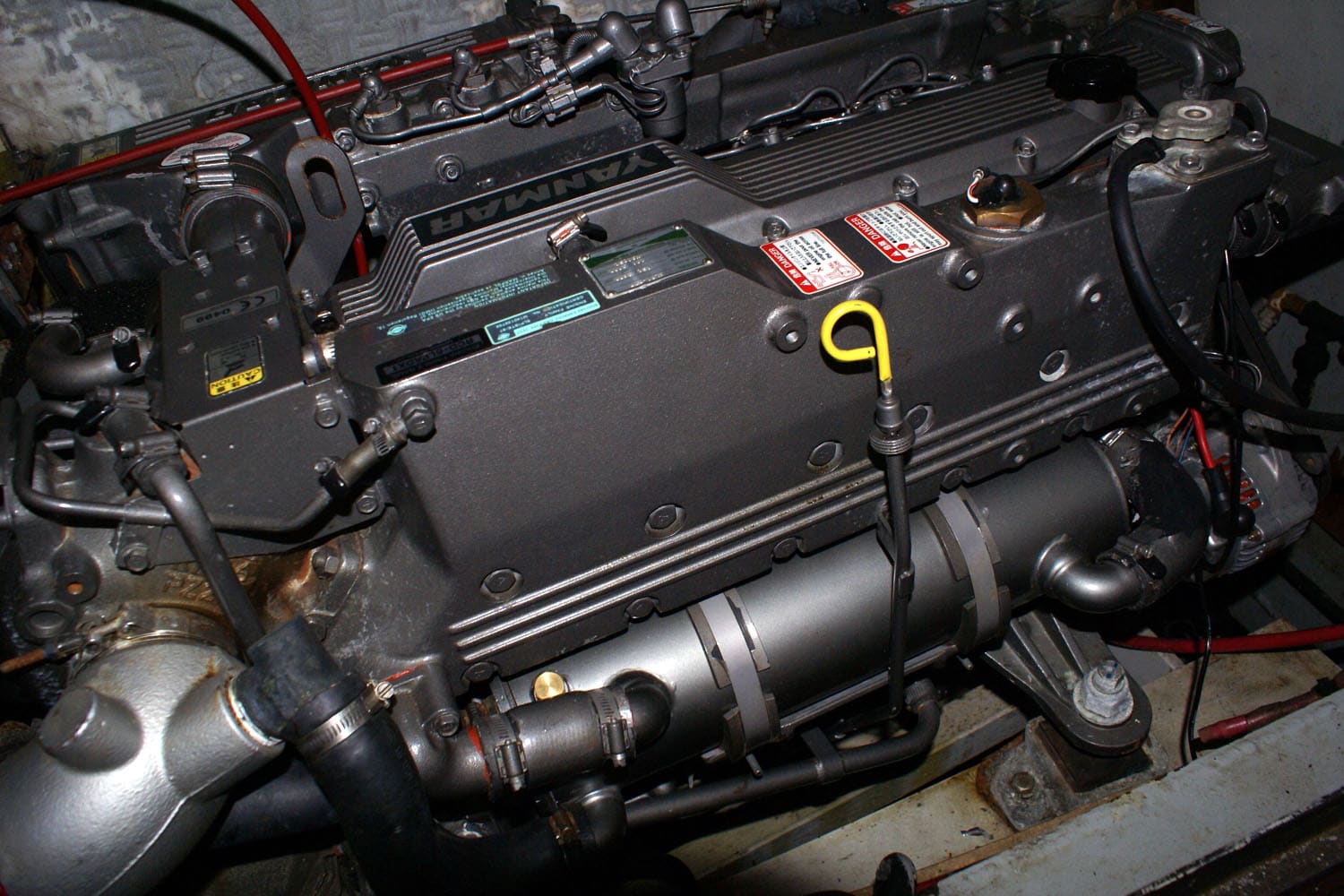
Marine Diesel Won't Start: Troubleshooting From Battery to Fuel
Work through the usual reasons a Yanmar, Volvo Penta, Westerbeke, Beta or similar marine diesel won't crank, or cranks but won't fire, starting with the free and simple checks. Most no-starts come down to the battery, preheat, air in the fuel or a fuel shutoff solenoid.
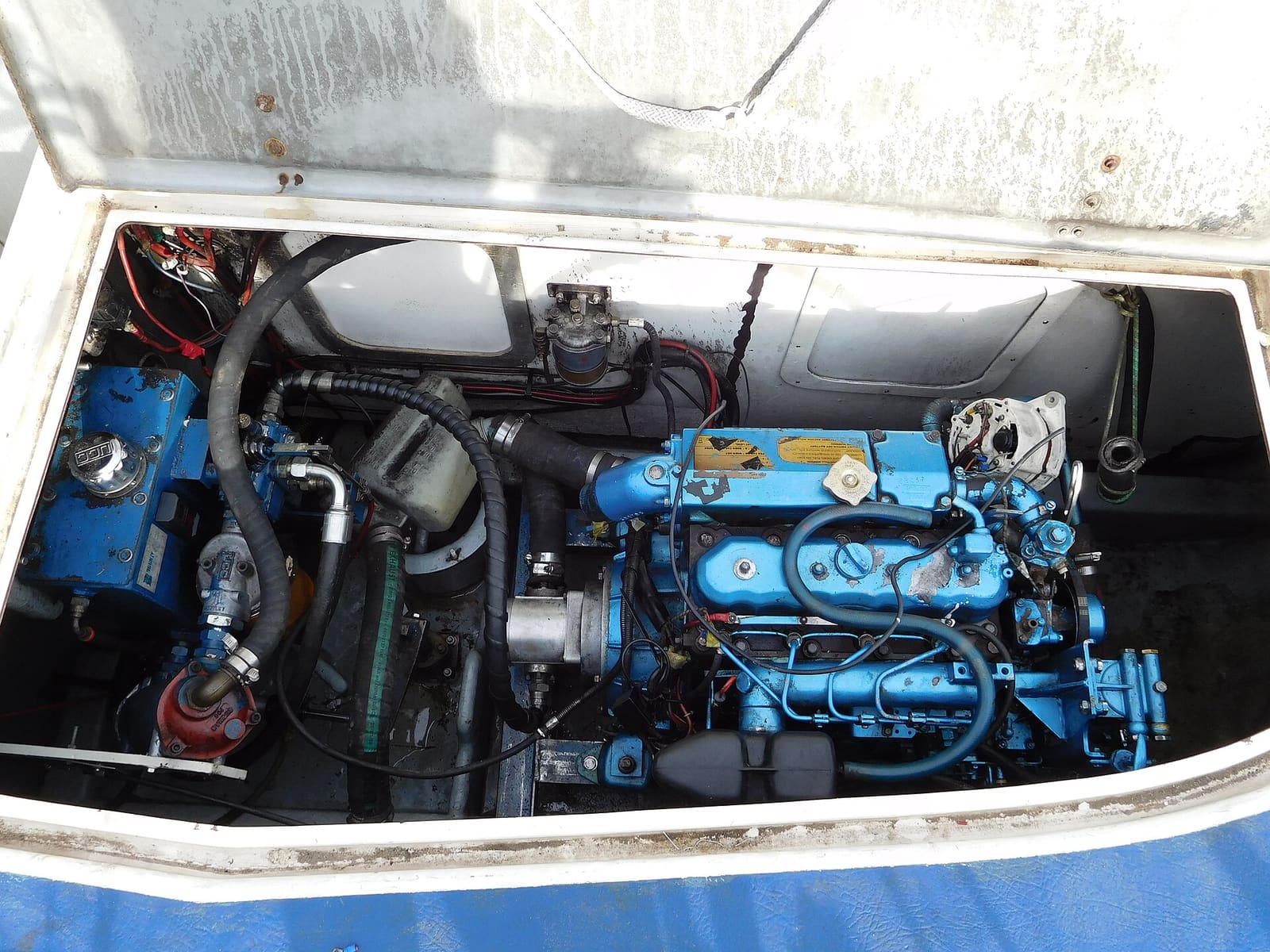
Marine Diesel Service: Oil Change, Fuel Filters and Bleeding Air
Change the oil and oil filter, replace the primary and secondary fuel filters, and bleed air from the fuel system on a Yanmar, Volvo Penta, Beta, Cummins or similar marine diesel. These three skills cover most routine diesel care and can get you out of trouble when the engine dies on a passage.
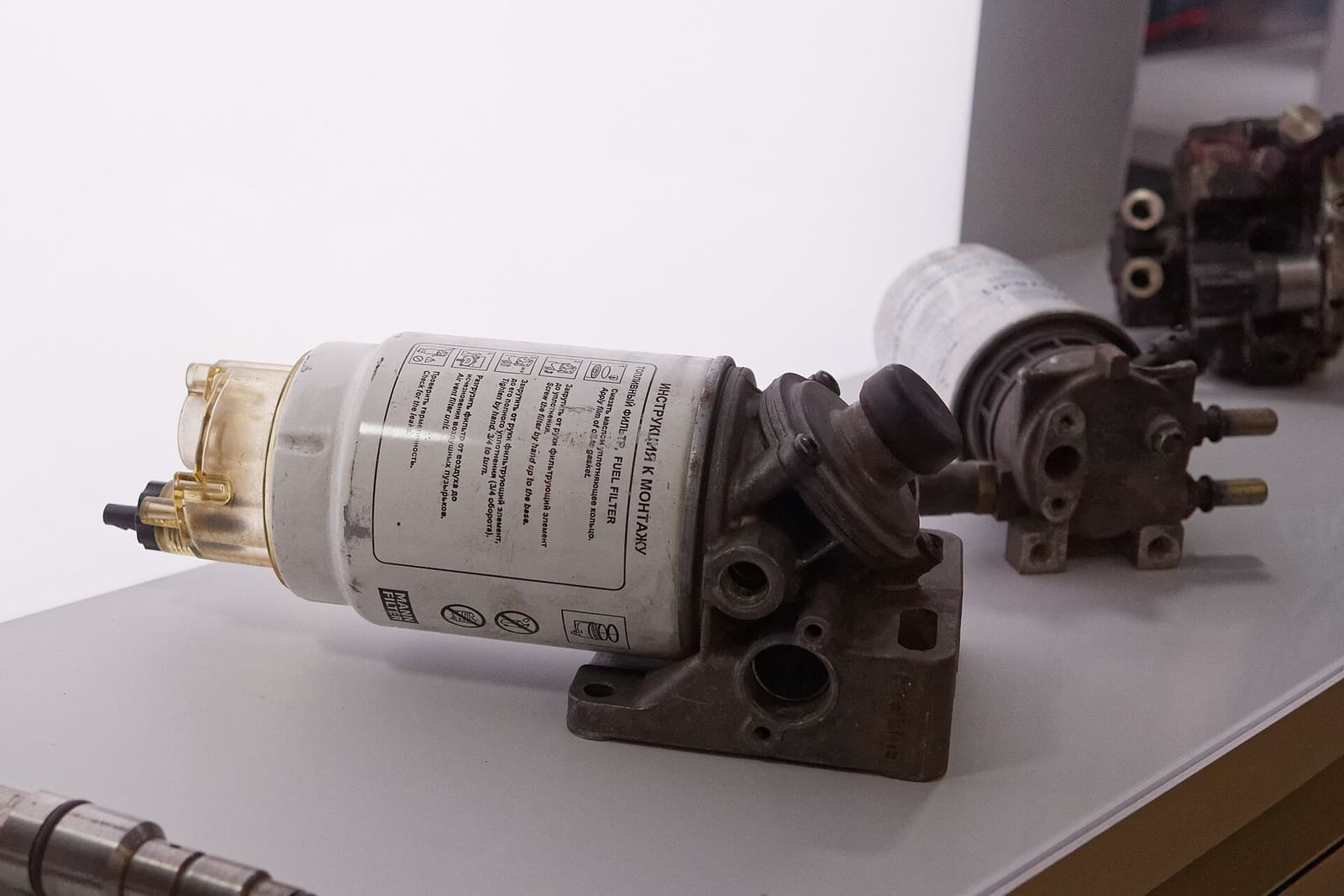
How to Replace a Fuel/Water Separating Filter (and Check for Water in Your Fuel)
Swap the spin-on fuel/water separator on your gas boat and learn to spot water and ethanol phase separation before it stalls the engine. It is one of the cheapest jobs on the boat and one of the best protections for a fuel-injected engine.
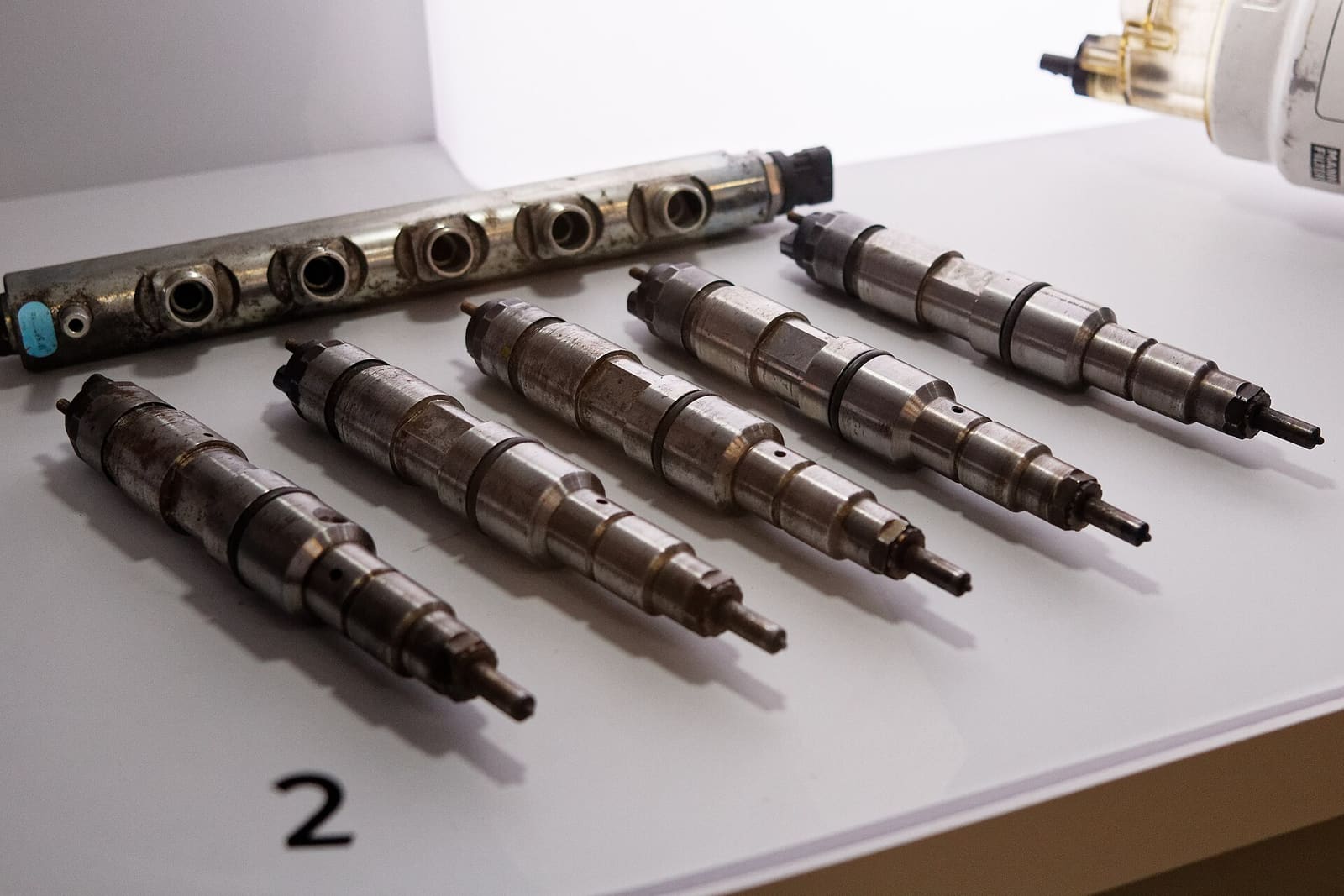
Diesel Fuel Injectors: Symptoms, Checks and When to Send Them Out
Learn the signs of a failing diesel injector (smoke, rough idle, hard starting, knocking), how to rule out the cheaper causes first, why testing and rebuilding injectors is a job for a fuel-injection shop, and how clean, dry, well-filtered fuel keeps them healthy.
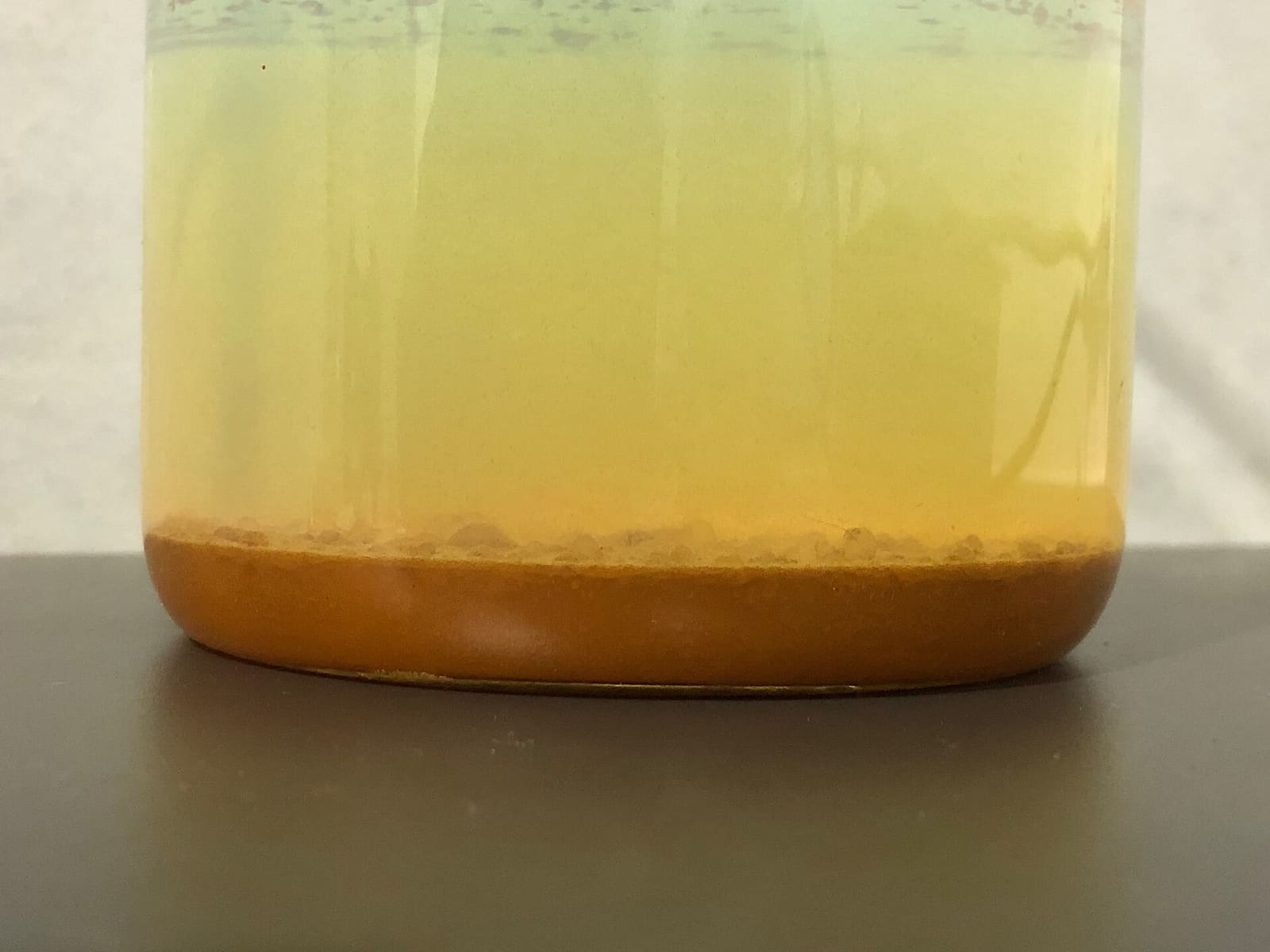
How to Deal with Diesel Fuel Contamination, Diesel Bug and Fuel Polishing
Learn the signs of water, sludge and microbial growth ("diesel bug") in your diesel tank, how to check a fuel sample, when a biocide helps, and when the tank needs polishing or cleaning. Clean fuel prevents most diesel breakdowns.
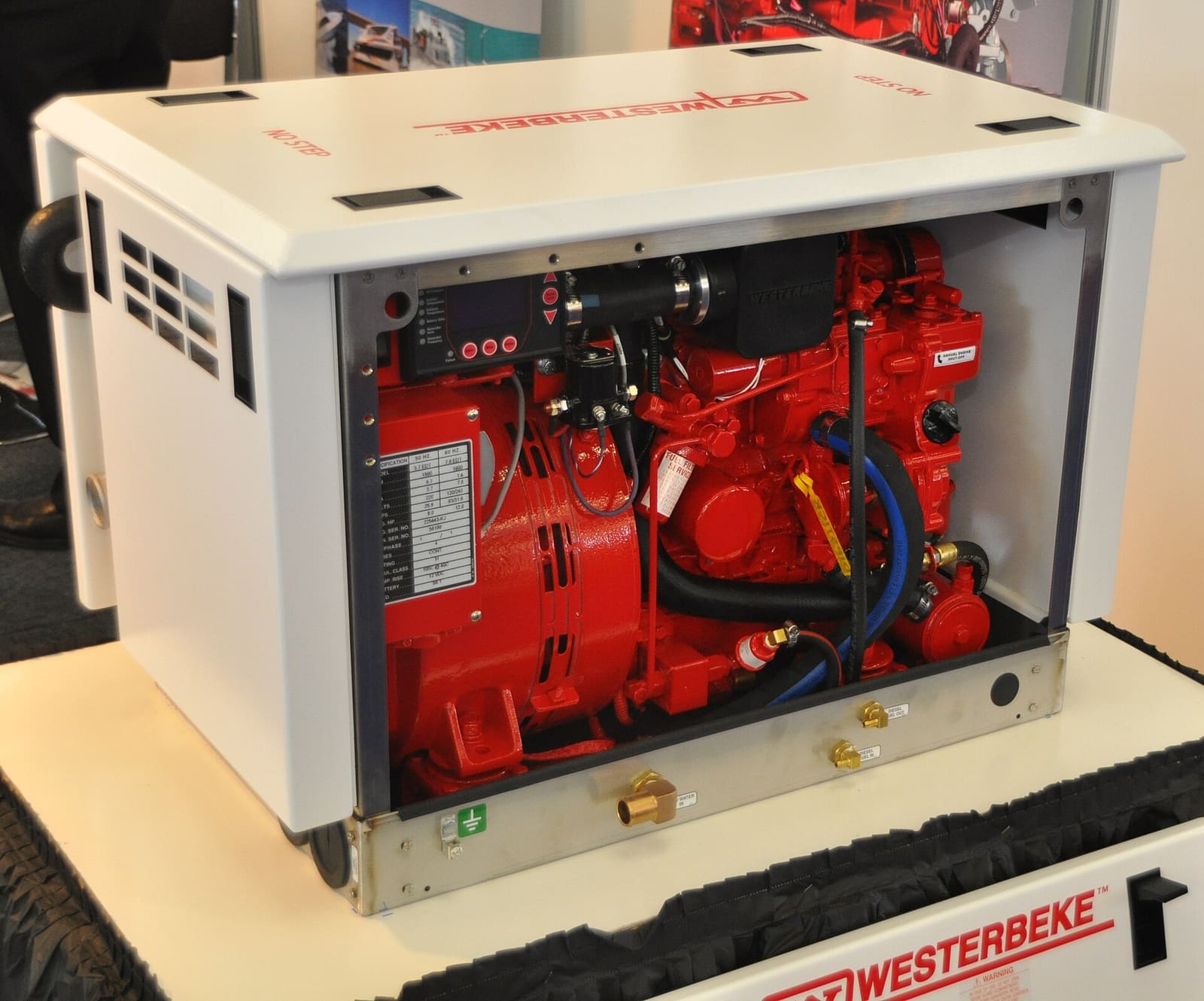
Marine Generator Won't Start or Keeps Shutting Down
A step-by-step troubleshooting guide for a boat generator (genset) that won't crank, cranks but won't start, starts and then dies, or runs without making power. Work from switches, battery and fuel to the safety shutdowns for low oil, high temperature and lost raw-water flow, without flooding the engine or risking carbon monoxide.
Marine Battery Care: Test, Charge and Store for Winter
Check your boat battery's health, charge it the right way for its type (flooded, AGM or lithium), and store it so it is ready in spring. Most "boat won't start" calls start with a neglected battery.
Onboard Tool Kit and Spare Parts: What to Carry on a Day Boat or a Cruiser
Build a tool kit and spares box that fits your boat and how far you go. A blown fuse, a clogged fuel filter or a dinged prop shouldn't end the day or turn into an expensive tow.