How to Inspect a Used Boat Trailer Before You Buy
A worn-out trailer can turn a good boat deal into hundreds or thousands in repairs, or a breakdown on the way home. Walk through the capacity plate and VIN, frame, axle and springs, hubs, brakes, tires, lights, coupler, winch and bunks, and the title paperwork before you hand over the money.
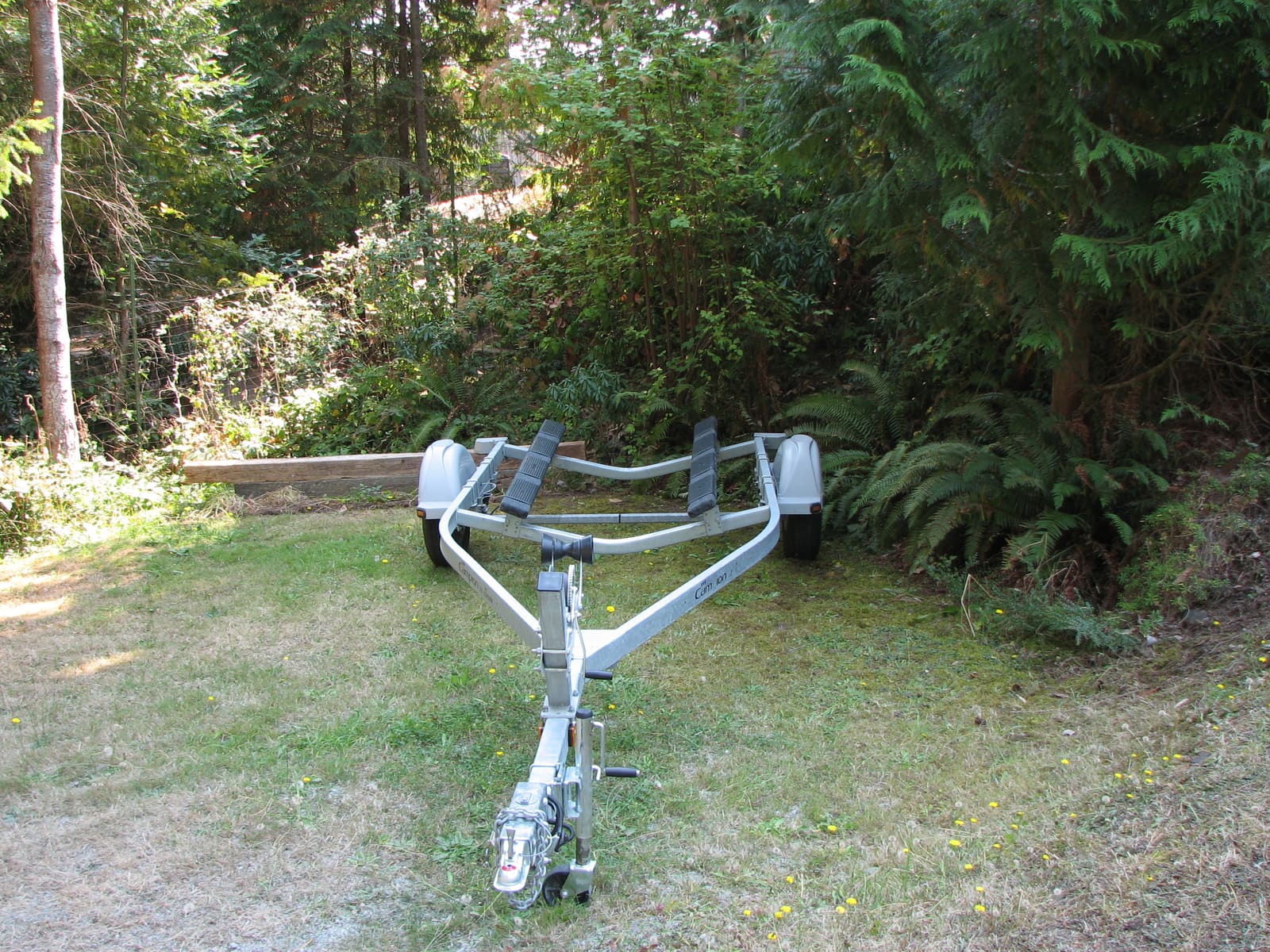
Time
1 h 15 min
Applies to
All engines
Safety first: Never crawl under a trailer, or reach under it, while it's held up only by a jack. Chock the wheels that stay on the ground and set jack stands under the frame first. Don't tow a trailer home if a tire is dry-rotted or bulging, a hub wobbles or smokes, the axle or a spring is cracked, or the lights don't work; have it hauled on a flatbed or fixed on the spot. If you're not sure the trailer and your vehicle are rated for the load, don't tow it.
Owners often ask
- The used trailer I want has no VIN plate and the seller has no title for it. Should I walk away?
- The tires on a used trailer have plenty of tread. How do I tell if they're too old to trust?
This guide walks you through it. Still stuck? Ask the AI Mechanic about your engine.
Tools
- Flashlight
- Tire pressure gauge and a penny (for tread depth)
- Tape measure
- Floor jack or bottle jack rated for the trailer, plus jack stands and wheel chocks
- Phone camera
- Your tow vehicle (to test the lights and the hitch fit), or a trailer light tester
- Old clothes or a mat to lie on
Before you start
BoatUS puts it simply: a trailerable boat needs a good foundation, and a trailer that isn't roadworthy can cost hundreds of dollars or more to fix. Its advice is to inspect the trailer without the boat on it whenever possible, since you can see the bunks, crossmembers and springs much better. If the seller can't unload the boat, look as closely as you can and be honest with yourself about what you couldn't see.
Two homework items before you go:
- Your state's rules. Some states require an official trailer inspection before it can be registered, and brake rules differ by state. BoatUS suggests checking your state motor-vehicle agency's website.
- Your numbers. The loaded weight of your boat, motor, fuel and gear, and your tow vehicle's towing and tongue weight limits from its manual.
Bring this guide, a flashlight and your phone. Photograph every label and problem you find; it helps if you negotiate.
Steps
The capacity plate (or decal) gives the trailer's maximum design weight and the tires it came with. BoatUS notes the VIN is usually etched, mounted or stuck on the trailer, often on that same plate on newer trailers. On older trailers the decal is often faded or missing, which can make registration a hassle.
- Read and photograph the plate and the VIN.
- If either is missing or unreadable, find out from your DMV what it takes to get a replacement before you buy. BoatUS says some states let police or the DMV reissue a VIN plate at the owner's request.
The capacity on the plate is the gross rating, and BoatUS reminds buyers to subtract the trailer's own weight from it to find what's left for the boat, motor, fuel and gear. Discover Boating suggests weighing the loaded rig at a truck-stop scale with a full fuel tank and your usual gear aboard, and checking the trailer and tire ratings against that number, especially on a used package where gear has piled up over the years.
Also check the fit: the bunks or rollers should support the hull along its strakes and keel the way the trailer maker intended, and the boat should sit with the transom close to the end of the bunks. Our bunks and rollers guide covers fit in detail.
Walk around slowly with a flashlight, then get down low.
- Rust and staining: BoatUS says to note anything that looks excessive and investigate further. Surface rust on a painted trailer is common; flaking, swelling or holes are not.
- Welds and joints: look for cracks at crossmember joints, the tongue and spring hangers. Rust bleeding from a weld line can be a crack.
- Straightness: sight down the tongue and frame rails for bends or twists.
- Galvanized trailers: BoatUS warns that acid bottom washes leave white streaks and attack the zinc coating. Patchy or white, powdery areas mean the protection is going.
- Fenders: they should be solid, not torn or loose, and cover the full tread width. People step on them, so push down on each.
- Size: if the axle looks undersized or replaced, BoatUS suggests comparing its cross-section to what the capacity plate calls for.
- Straightness and alignment: uneven tire wear can mean a bent or misaligned axle, according to Discover Boating.
- Hidden rust: BoatUS warns that axles rust from the inside when water can't drain out of the tube, which can lead to sudden failure. Look for heavy scale, pinholes or rust streaks at the ends, and ask whether the axle is sealed or has drain holes.
- A slight upward bow is normal. Dexter explains that many axles are built with a deliberate upward bend called camber, which flattens out under load. Don't mistake it for a bent axle; look instead for one wheel leaning in or out more than its partner and for uneven tire wear.
- Axle ID: Dexter axles made after April 2001 carry a lot (serial) number near the center on the rear side of the beam, under the Dexter name; rubbing chalk over it helps you read it. Photograph it so you can order the right parts later. Ask the seller for the original purchase paperwork too: Dexter's axle warranty is written to the original purchaser.
- U-bolts: the U-bolts that clamp the axle to the springs sometimes rust through first, according to BoatUS's roadside data. Look closely at the nuts and threads.
- Ground clearance: BoatUS suggests at least about four inches at the lowest point of the trailer.
BoatUS notes leaf springs rust long before the frame and are often a sign of age rather than neglect, so plan on replacing them if they're crusty.
- Look for cracked or broken leaves, leaves that have shifted sideways, and springs that sag flat.
- Check the hangers, shackles and (on tandem axles) the equalizer for cracks, elongated bolt holes and bolts worn thin.
- On a torsion axle, look for one wheel sitting noticeably higher or lower than its partner and for cracks where the axle tube mounts to the frame. Look for weld beads on the axle tube or its brackets: Dexter warns that welding on its Torflex torsion axles can damage the rubber suspension inside, so a previous owner's welding repair is a red flag.
Our axle and springs guide explains what each part does.
Wheel bearings and hubs cause more than 21 percent of BoatUS TRAILER ASSIST calls, second only to tires. With the wheel chocked and the trailer safely jacked and on a stand:
- Grab the tire at the top and bottom and rock it. BoatUS says bearings shouldn't show wobble or excess play.
- Spin the wheel and listen for grinding or rumbling; feel for roughness.
- Look for grease slung onto the inside of the rim, which BoatUS says can point to a problem (often a failed seal).
- Note whether there are bearing protectors on the hubs.
Ask the seller when the bearings were last repacked or replaced. Discover Boating suggests inspecting and repacking every three to five seasons even with protectors. If nobody knows, budget for a bearing service before your first long trip.
Brake requirements are set by each state. BoatUS says 35 states require brakes once the trailer is rated for 3,000 pounds or more, while others set the line anywhere from 1,500 to 4,500 pounds; some, such as Florida, require brakes on every axle, and some require a breakaway device. If you're buying out of state, BoatUS warns that retrofitting brakes on another axle can be expensive.
- Identify the type: surge (a hydraulic actuator built into the coupler), electric, or electric-over-hydraulic. Make sure your tow vehicle can run it.
- Surge brakes: check the fluid level and color in the master cylinder on the tongue, as Discover Boating suggests, and look for leaks.
- Look at brake lines for rust, kinks and flattened sections.
- Look through the wheel or behind it at the drums or rotors for heavy rust and scoring.
- Ask when the brakes were last serviced. BoatUS's rule of thumb: if the trailer has brakes, inspect them carefully.
Tire problems are the most common BoatUS TRAILER ASSIST call, at 44 percent.
- Age: read the DOT code on the sidewall. Under federal tire-marking rules the last four digits give the week and year it was made: "3519" is the 35th week of 2019. Discover Boating's checklist says tires more than six years old should be replaced, citing the National Transportation Safety Board.
- Dry rot: BoatUS says dry rot gets most trailer tires long before the tread wears out. Look for cracks in the sidewalls and between the tread blocks, and for bulges.
- Type and rating: Discover Boating says trailer tires should be ST (Special Trailer) type. Compare the size and load range with the capacity plate, as BoatUS suggests.
- Tread: use the penny test BoatUS describes: if you can see the top of Lincoln's head with the penny upside down in the center groove, the tread is done.
- Spare: check it the same way, and confirm the lug wrench fits.
- Cheaper replacements: Boating Magazine warns that tires on a used trailer have often been swapped for less expensive ones with too low a load rating. If the tire-and-load sticker on the frame has faded away, it suggests taking the trailer's model number to the trailer maker and asking for the original tire size, rating and pressure. Inflate to the pressure molded on the sidewall; trailer tires usually run much higher than car tires.
- Tread that looks odd: Boating's writer has had tires with internal ply separation, where the tread bulges and wobbles. Uneven wear on one tire, or tread worn to the cords on one side, can mean a bent axle or spindle, so go back to step 4.
Old tires on a good trailer are a bargaining point, not a deal breaker, as long as you replace them before you tow it any distance.
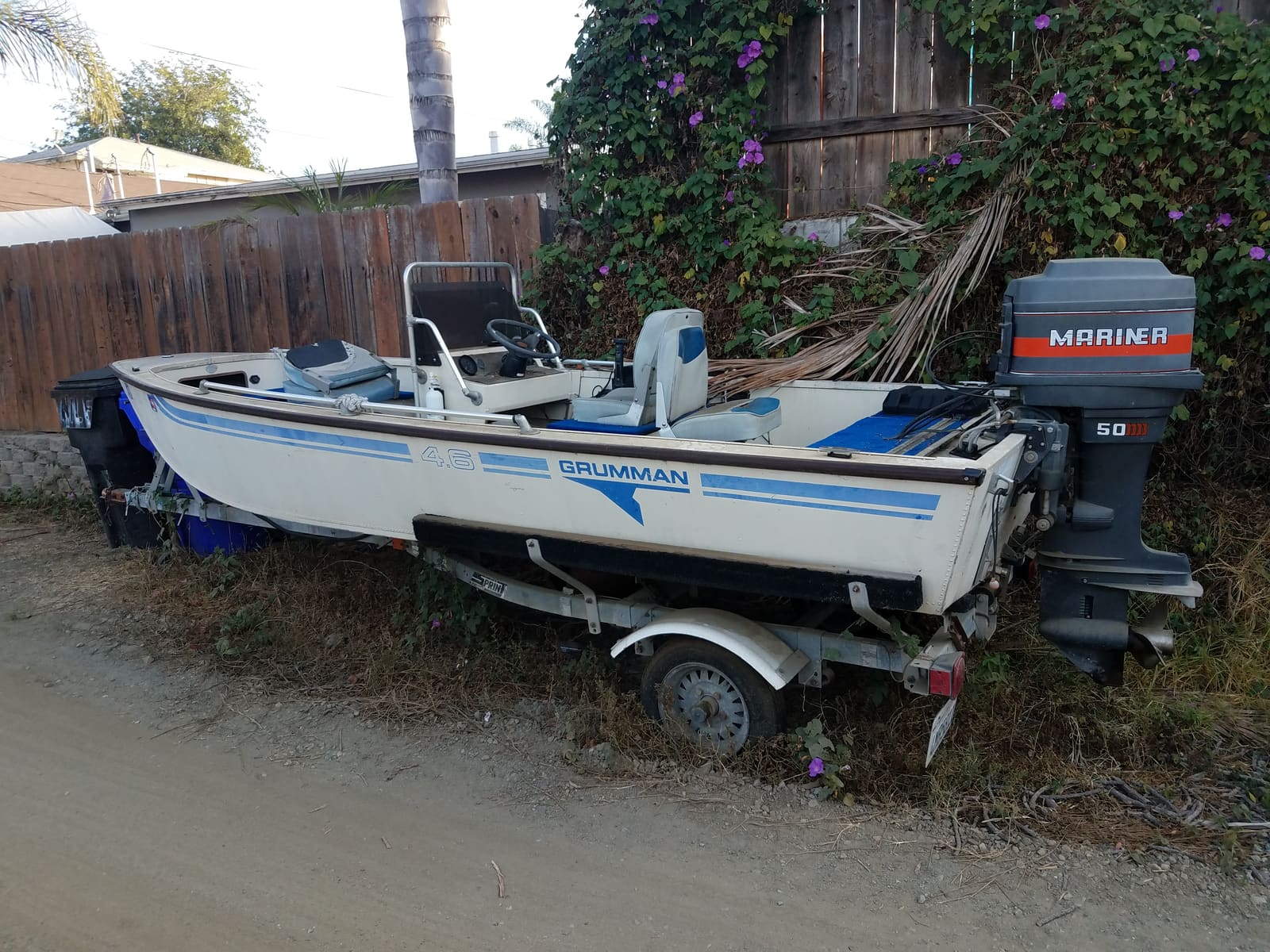
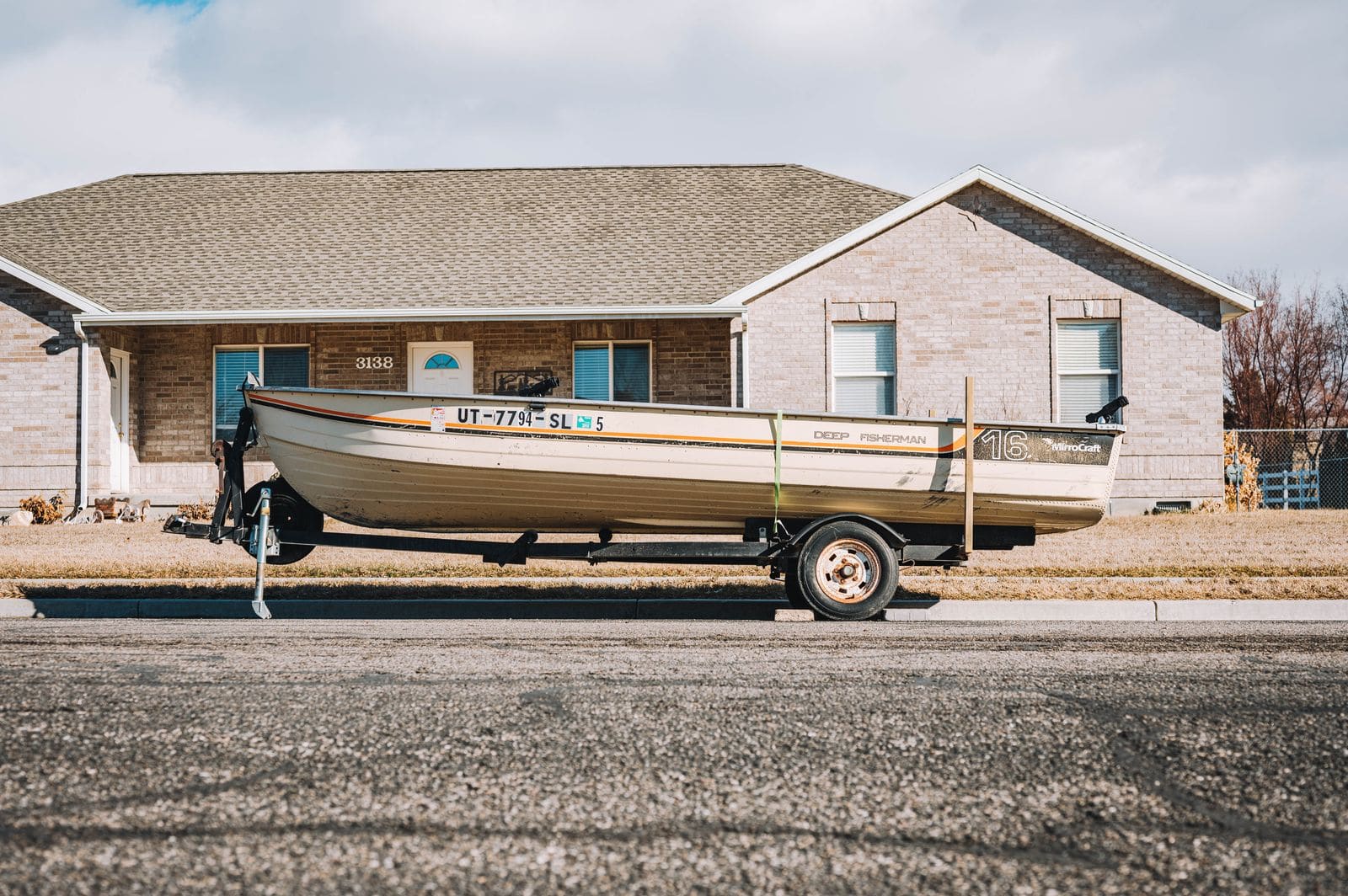
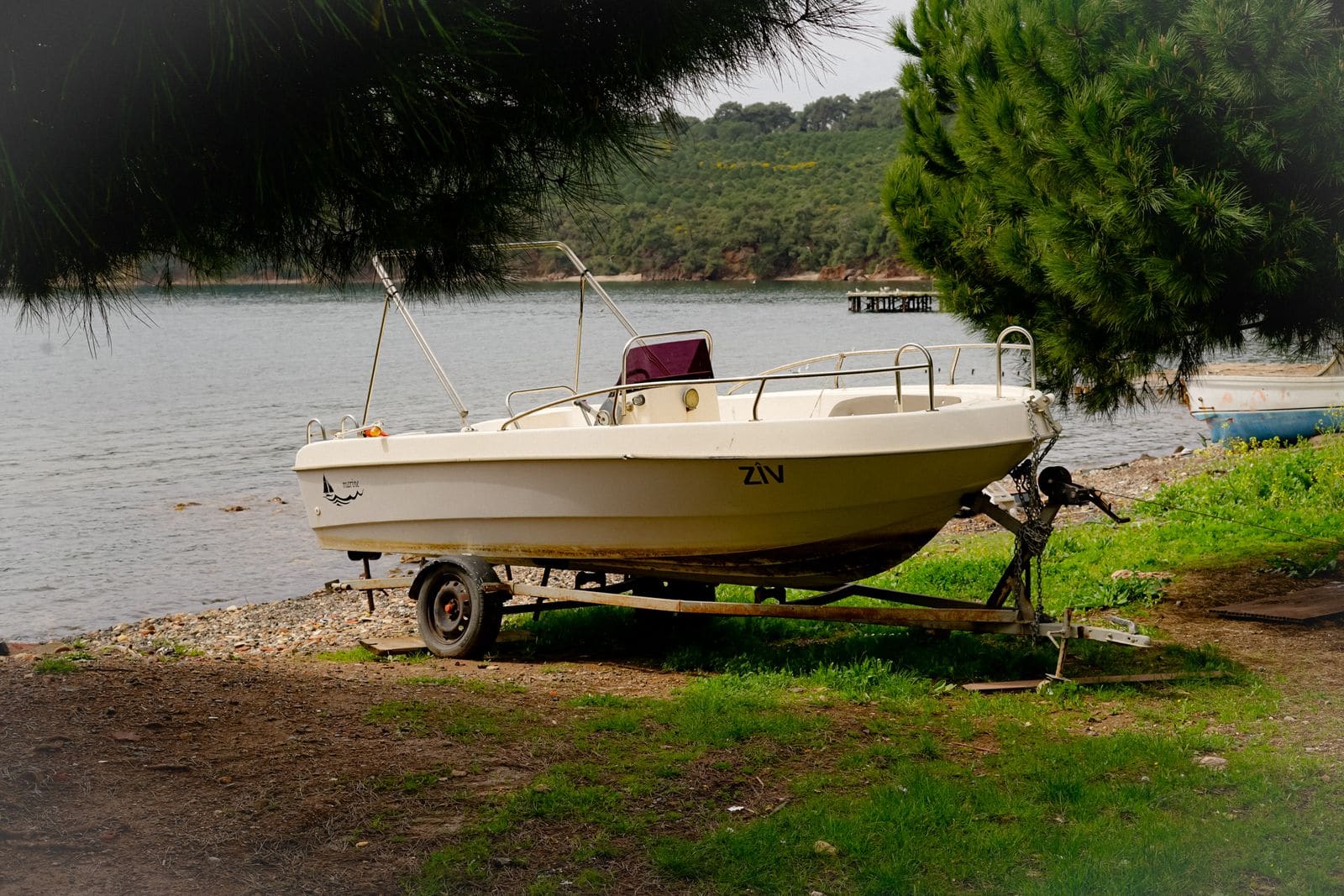
A rig that has sat outdoors for years: look past the boat at the tires, springs, hubs and lights before you tow it home. Photo: RightCowLeftCoast / Wikimedia Commons · CC BY-SA 4.0 Hook the trailer to your vehicle, or bring a light tester, and check running, brake and turn lights with a helper.
- Make sure the trailer plug fits your vehicle's connector, or that you have an adapter for the drive home.
- BoatUS says all wiring should be insulated and secured with supports at least every 18 inches. Look for chafed insulation and scorch marks at bends, the tongue hinge and near moving parts.
- Most boat trailers need red side markers toward the rear and amber markers or reflectors toward the front, according to BoatUS, and trailers wider than 80 inches need three red identification lamps across the rear.
- A dead light is common and usually a cheap fix (bulb, ground or socket), but a trailer with dead lights shouldn't go on the road. See our trailer lights guide.
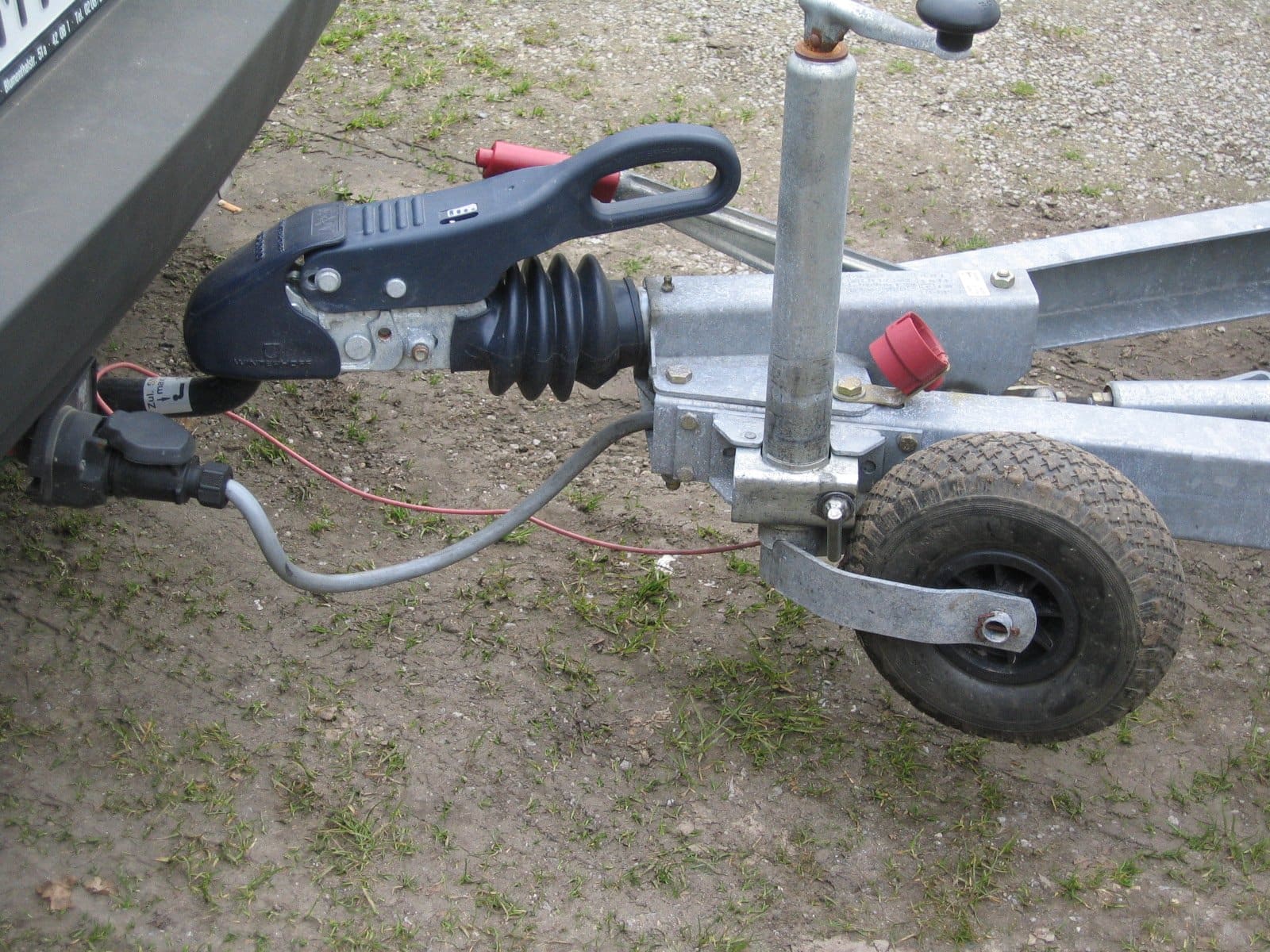
- The coupler should be marked with the ball size and its capacity, and BoatUS says those should match the capacity plate. Check that the latch closes tightly on your ball with no slop and that it accepts a pin or lock.
- Look for cracks around the coupler bolts and the tongue.
- BoatUS says the safety chains should be long enough to cross and short enough that the coupler can't hit the road if it comes off the ball. Check the hooks and links for wear and rust.
- Crank the tongue jack through its full travel and check the wheel and the swivel lock.
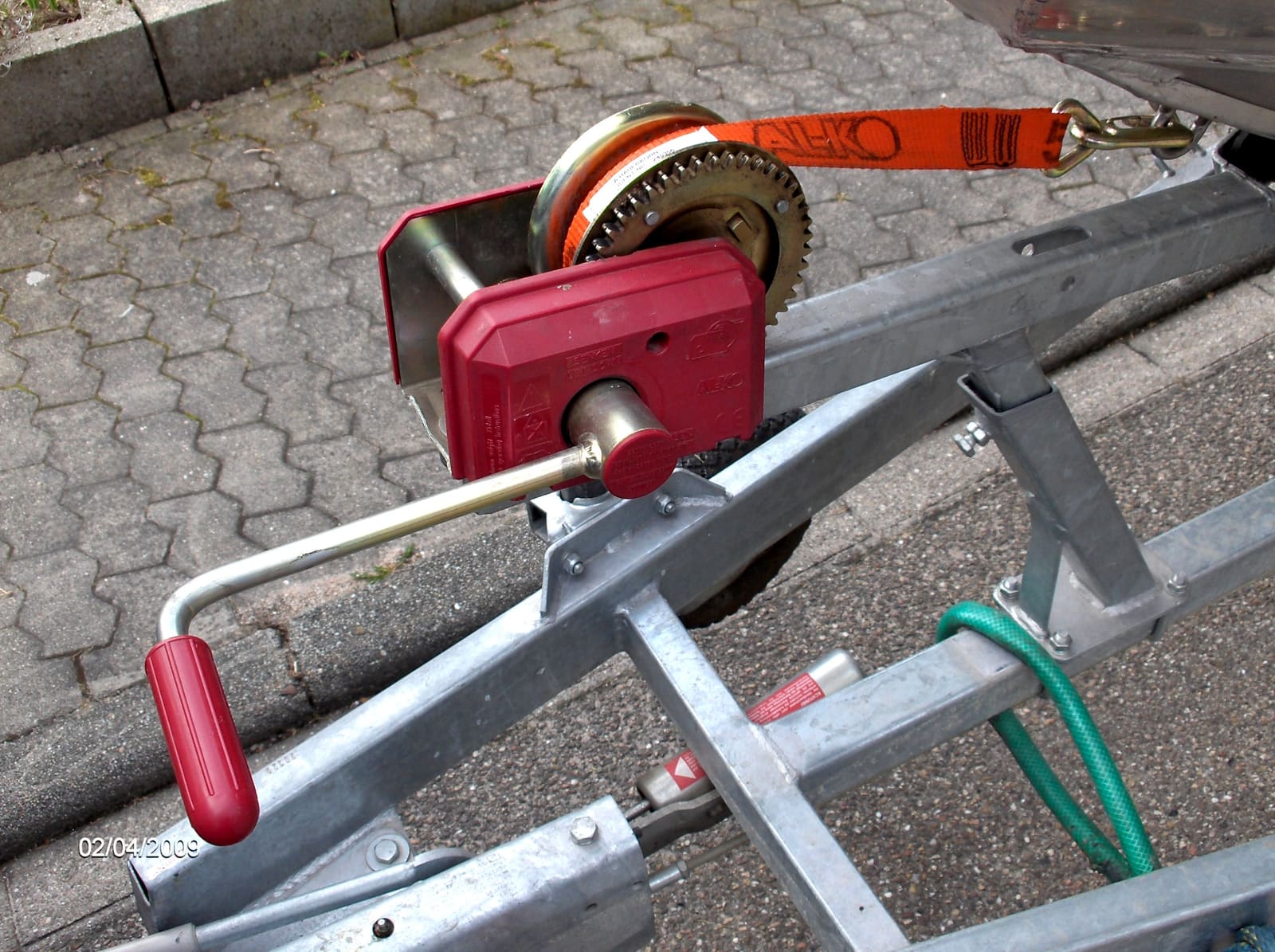
- Work the winch: it should ratchet and lock cleanly, and the handle shouldn't slip. Replace a frayed, sun-faded or cut strap before you load the boat.
- Look at the bow stop and its bracket for cracks and loose bolts.
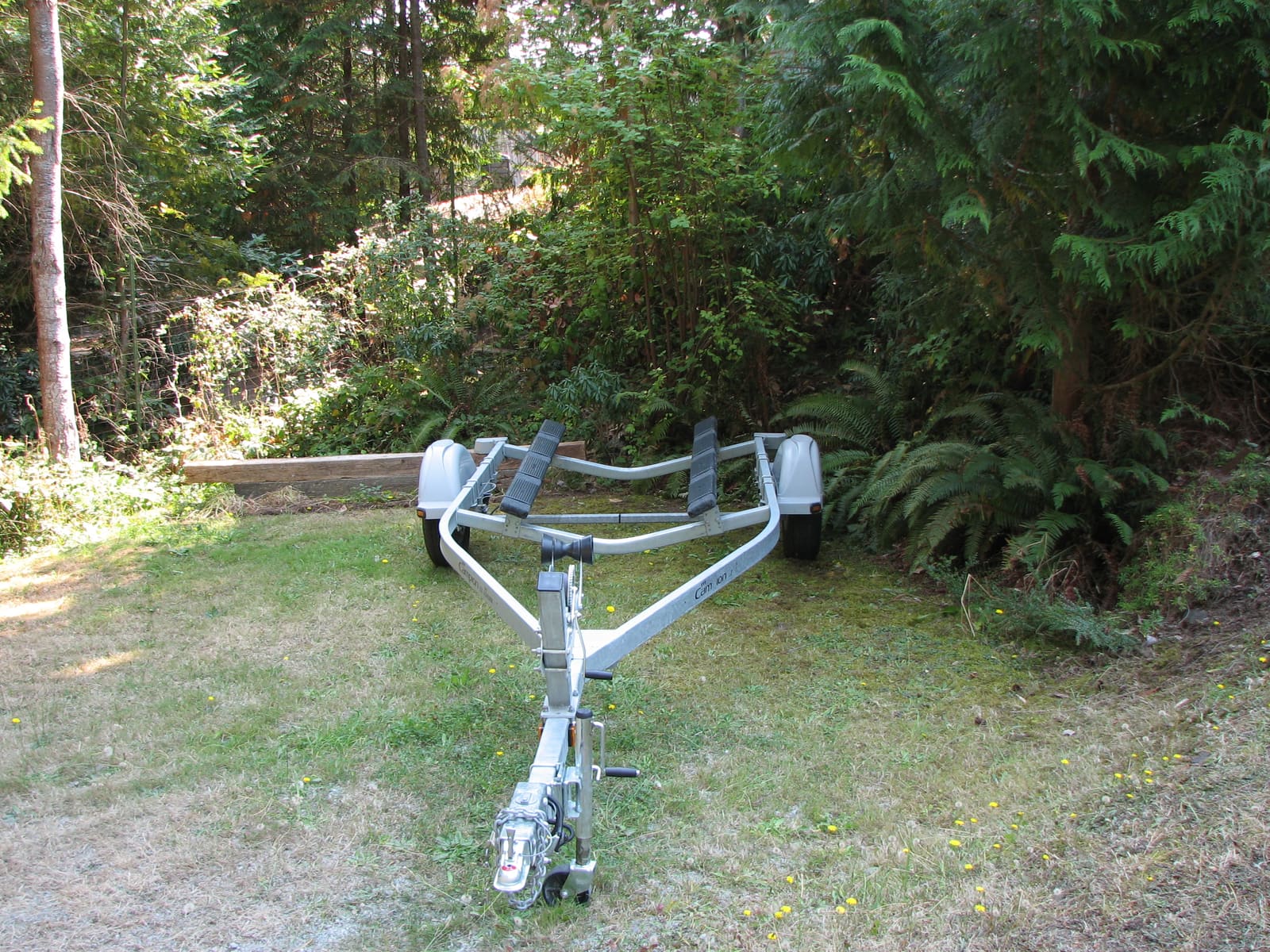
- Bunks: push on the carpet. Rotten wood under worn carpet feels soft or crumbles. BoatUS describes a trailer whose bunk bracket nuts loosened until the boat pressed the fenders onto the tires and shredded one on a long trip, so check every bracket bolt.
- Rollers: they should spin freely without flat spots or cracks.
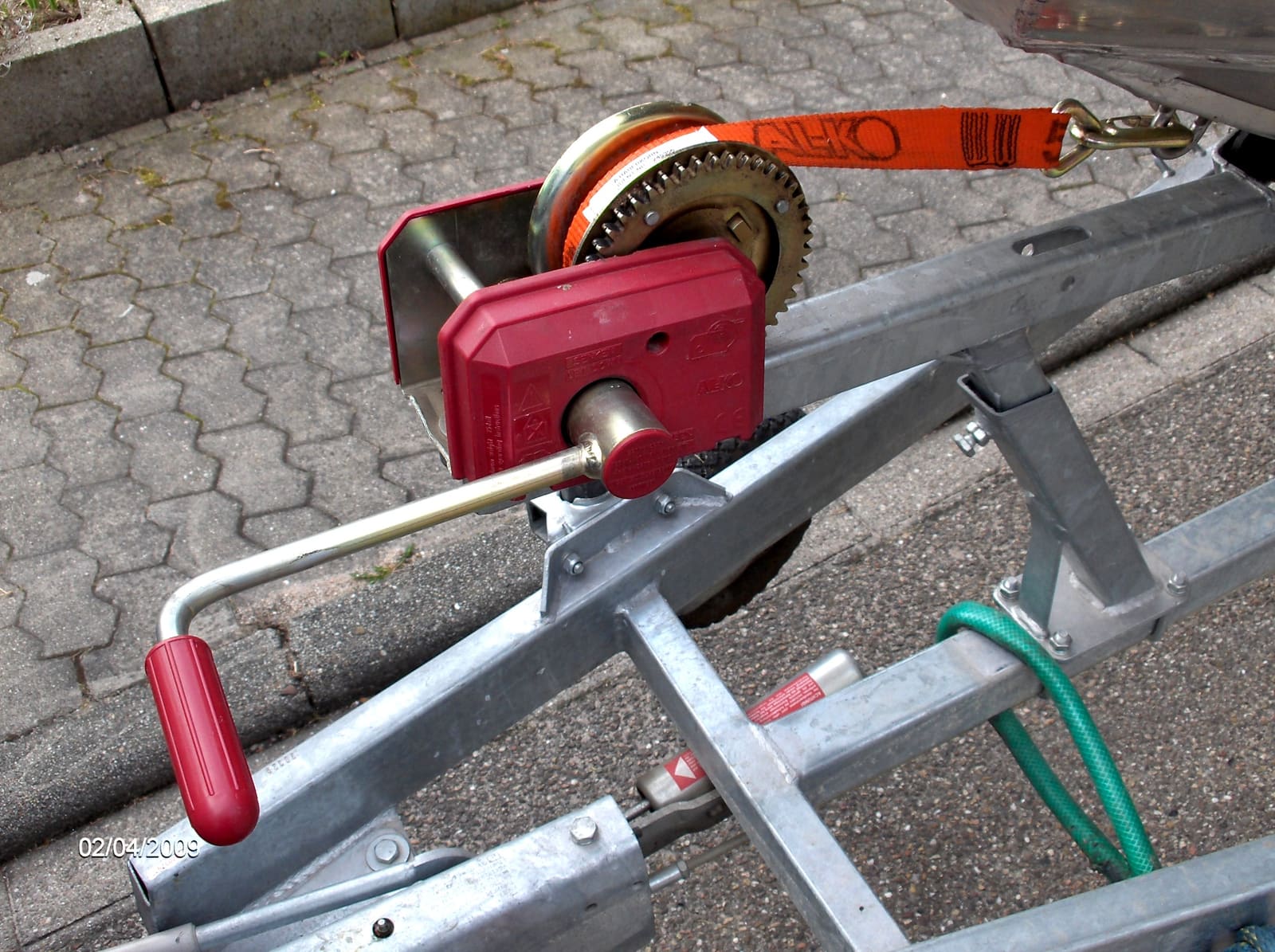
Work the winch through its ratchet and check the strap and hook. Photo: Wualex / Wikimedia Commons · Public domain BoatUS's paperwork checklist:
- The seller should have proper ownership documents for both the boat and the trailer.
- The VIN on those documents must match the trailer. If the VIN is missing, unreadable or doesn't match, expect trouble at the DMV and possibly a replacement VIN process.
- Get the trailer title if your state issues one (some states don't title trailers) and a bill of sale. In some cases you may need a separate bill of sale for the trailer.
If anything is missing, BoatUS warns, you'll spend time convincing state agencies you own it. Our used-boat paperwork guide covers liens and title checks for the boat side of the deal.
With the seller's OK, hitch up and drive a few miles on local roads.
- The trailer should track straight behind you without wandering or swaying.
- Brake gently: trailer brakes should engage smoothly without grabbing or pulling.
- Stop and feel each hub carefully with the back of your hand. BoatUS's roadside crews say a hub that's hot to the touch is a bearing on the verge of failure, and a dragging brake can cause the same heat. All hubs should feel about the same.
- Recheck the lights after the drive.
Add up what you found. Lights, tires, a strap, bearings and springs are routine, affordable fixes. A cracked frame or crossmember, a rotted-through axle, a missing VIN with no clear path to replace it, or a trailer rated below your boat's real weight are much bigger problems. Use your photos to negotiate, or walk away.
Common mistakes
- Looking only at the boat and giving the trailer a glance.
- Judging tires by the tread instead of the date code and sidewall cracks.
- Forgetting to subtract the trailer's own weight from the capacity on the plate.
- Buying an out-of-state trailer without checking your own state's brake and inspection rules.
- Accepting a trailer with no VIN plate and no title, then getting stuck at the DMV.
- Towing an unknown trailer a long way home without checking the bearings and tires first.
When to call a pro
- Cracked welds, a bent tongue or frame rail, or heavy rust through crossmembers
- An axle that looks bent, rusted through or undersized for the load
- Brakes that drag, grab or won't engage, or brake lines that are rusted or leaking
- Wiring problems you can't trace to a bulb, ground or plug
- You want an independent trailer inspection: many trailer and RV shops will do one, and a marine surveyor can look at the boat and trailer together
Tips
- Ask for any receipts: tires, bearings, brakes and springs with dates make a trailer worth more.
- Bring a small spare-parts kit for the drive home: bulbs, fuses, a lug wrench that fits, and a jack rated for the trailer.
- If the boat sits on the trailer, look at the hull where it touches the bunks; badly fitted bunks can leave dents or hooks in the bottom.
- Plan the first big service (bearings, tires, lights) right after purchase so you start with a known baseline.
Official references
We read these to write this guide. Your engine's own manual always wins.
- BoatUS – Buying A Used Trailer
- BoatUS – Causes For On-The-Road Boat Trailer Breakdowns
- BoatUS – Trailer Frame (trailer maintenance tips)
- Discover Boating – Boat Trailer Maintenance
- Discover Boating – Boat Trailer Laws, Rules and Regulations
- Dexter Group – Axles Frequently Asked Questions (lot number, camber, warranty)
- eCFR – 49 CFR 574.5, Tire identification requirements (DOT date code)
- Boating Magazine – Understanding and Maintaining Proper Boat Trailer Tire Pressure
- Boating Magazine – Boat Trailer Breakdowns (tires, bearings and axles)
Safety: BoatMend is for information only and does not replace a certified marine technician. You are responsible for your safety and your boat. Read the full disclaimer.
Last updated 2026-10-25
Related guides
How to Inspect, Inflate and Replace Boat Trailer Tires
Check your trailer tires the way the pros do: the right type (ST), the right load range, the right cold pressure, and an honest look at their age. Tires are the number one reason boat trailers end up on the side of the highway.
How to Inspect and Repack Boat Trailer Wheel Bearings
Check, clean and repack your trailer's wheel bearings so a seized hub does not leave you stranded on the highway. Boat trailers get dunked in water every launch, which makes their bearings fail far more often than those on dry utility trailers.
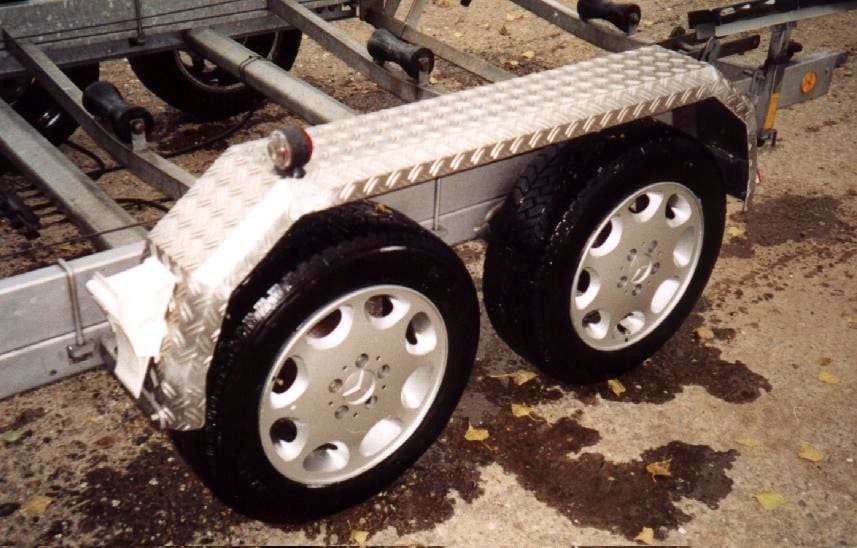
How to Inspect Boat Trailer Axles, Leaf Springs and Hangers
Check the parts that actually hold your boat off the road: the axle tube, leaf springs, hangers, shackles, bushings and U-bolts (or the rubber torsion axle on newer trailers). Learn what rust-through, broken leaves and worn shackles look like, how uneven tire wear points to a bent axle, and when it's time to replace instead of patch.
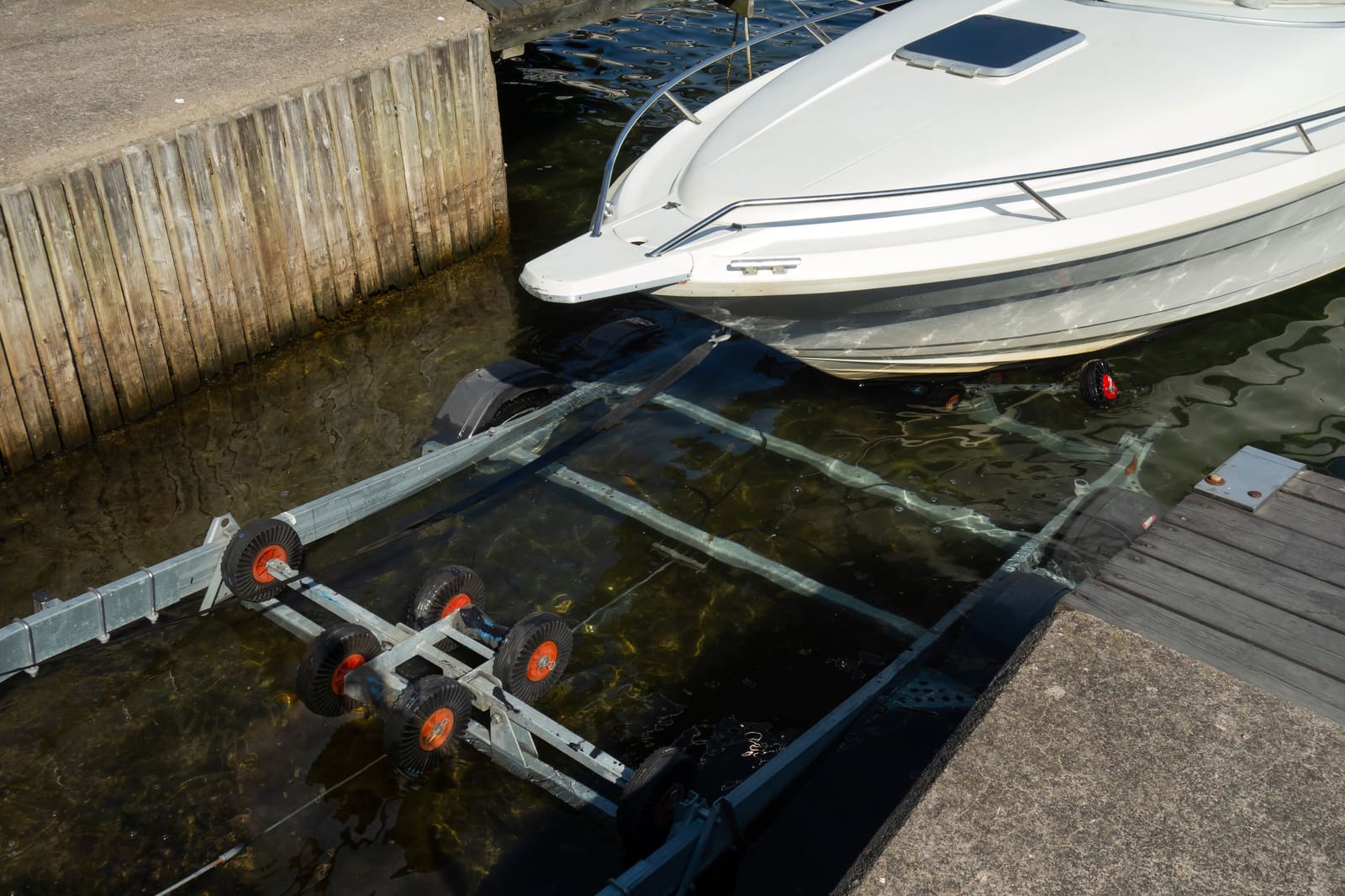
How to Check and Care for Boat Trailer Surge Brakes
Understand how the hydraulic surge brakes on your boat trailer work, check the fluid, use the reverse lockout correctly and rinse salt out of them after every dunk. Simple habits that keep the brakes from seizing, dragging or failing when you need them.
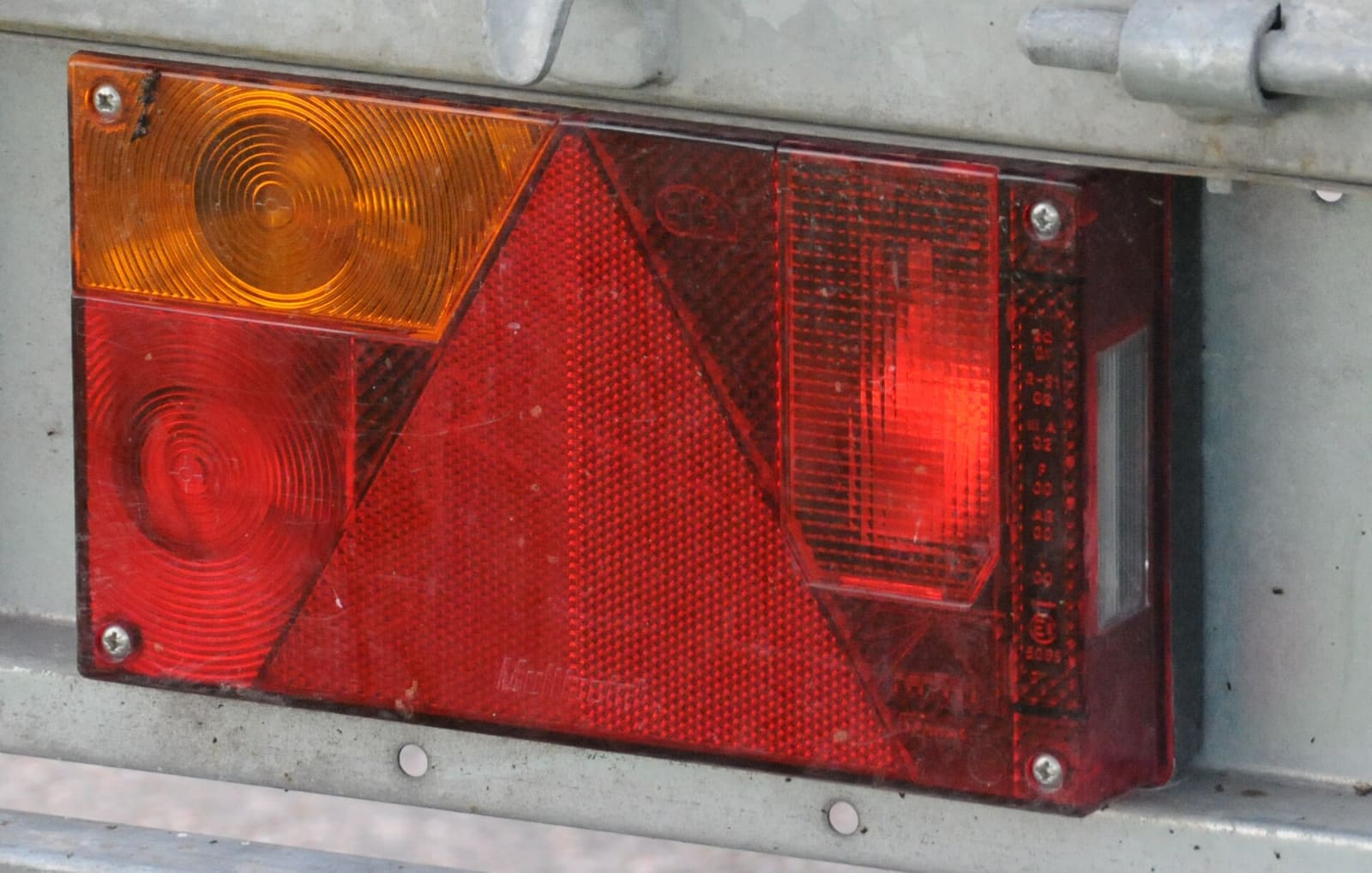
How to Fix Boat Trailer Lights That Flicker, Dim or Don't Work
Track down the real cause of dead or flickering trailer lights, from a bad ground to a corroded plug, and fix it so the repair lasts. Working brake, turn and tail lights are required by law and keep the driver behind you from rear-ending your boat.
Trailer Tongue Jack and Coupler Care: Grease, Adjust and Know When to Replace
The tongue jack and coupler take a beating from weight, road grit and launch-ramp dunking. A few minutes of cleaning and grease a couple of times a season keeps the jack cranking smoothly and the coupler locking tight on the ball, and tells you when either part is worn out.
How to Inspect and Use the Trailer Winch, Strap, Tie-Downs and Safety Chains
Check the winch, strap or cable, bow safety chain, transom tie-downs and the safety chains to your vehicle, and learn how each one is meant to be used. These parts keep the boat on the trailer and the trailer behind your truck.
How to Adjust and Replace Trailer Bunks and Rollers So Your Boat Sits Right
Set up your boat trailer so the hull is supported in the right places: bunks and rollers clear of the strakes, the transom fully supported, the bow snug against the winch stop and the weight balanced on the tongue. Also covers replacing rotten bunk boards and worn carpet or rollers.
How to Inspect a Used Boat Before You Buy
A step-by-step checklist for looking over a used boat, from paperwork and the hull ID number to the transom, engine, compression test, sea trial and trailer. Know what to check yourself, what the red flags mean, and when to pay a marine surveyor.
Used Boat Paperwork: Titles, Liens, HIN Checks, Bill of Sale and Registration
A practical checklist for the paperwork side of buying a used boat: state title or Coast Guard documentation, checking for liens and theft, verifying the hull ID number, writing a proper bill of sale, the trailer's own title, registering in your name, and transferring warranties and checking recalls. Rules vary by state, so confirm each step with your state agency.

Is My Vehicle Rated to Tow This Boat? Towing Capacity, GCWR and Tongue Weight Explained
The towing number in the ad is only one of several limits. Learn which ratings matter (towing capacity, GCWR, GVWR, axle and tongue limits, hitch class and ball rating), how to weigh your real rig at a truck scale, and when you need trailer brakes and towing mirrors.
Replacing a Boat Trailer Axle: When You Need One and How to Order the Right Size
A bent, rusted-through or undersized axle can't be fixed with new bearings. Learn the signs, the difference between straight, drop and torsion axles, the measurements a supplier needs (hub face, spring centers), what to specify for saltwater, and why this is usually a trailer-shop job.