Trailer Tongue Jack and Coupler Care: Grease, Adjust and Know When to Replace
The tongue jack and coupler take a beating from weight, road grit and launch-ramp dunking. A few minutes of cleaning and grease a couple of times a season keeps the jack cranking smoothly and the coupler locking tight on the ball, and tells you when either part is worn out.
Time
45 min
Shop would charge
$75-300
Applies to
All engines
Safety first: Never put your hands, feet or any part of your body under a trailer tongue held up only by the jack. Chock the trailer wheels and support the tongue on a jack stand or solid blocking before you remove, adjust or replace a jack or coupler. A coupler that comes off the ball at highway speed can kill: if the latch will not lock or the coupler is cracked, do not tow until it is fixed.
Owners often ask
- My trailer jack goes underwater at every launch and keeps seizing. How do I keep it working?
- My trailer coupler rattles on the ball or won't latch. Can I adjust it?
This guide walks you through it. Still stuck? Ask the AI Mechanic about your engine.
Tools
- Wheel chocks
- Jack stand or sturdy blocking rated for your tongue weight
- Grease gun with water-resistant (marine) grease
- Light oil or spray lubricant
- Wire brush and rags
- Garden hose with fresh water
- Wrenches or sockets to fit the coupler and jack hardware
- Penetrating oil (for rusted bolts)
Parts & supplies
- Marine grease
- Replacement caster wheel, swivel pin or snap ring (if worn)
- Replacement coupler or jack of the correct size and rating (if worn out)
Before you start
The two parts:
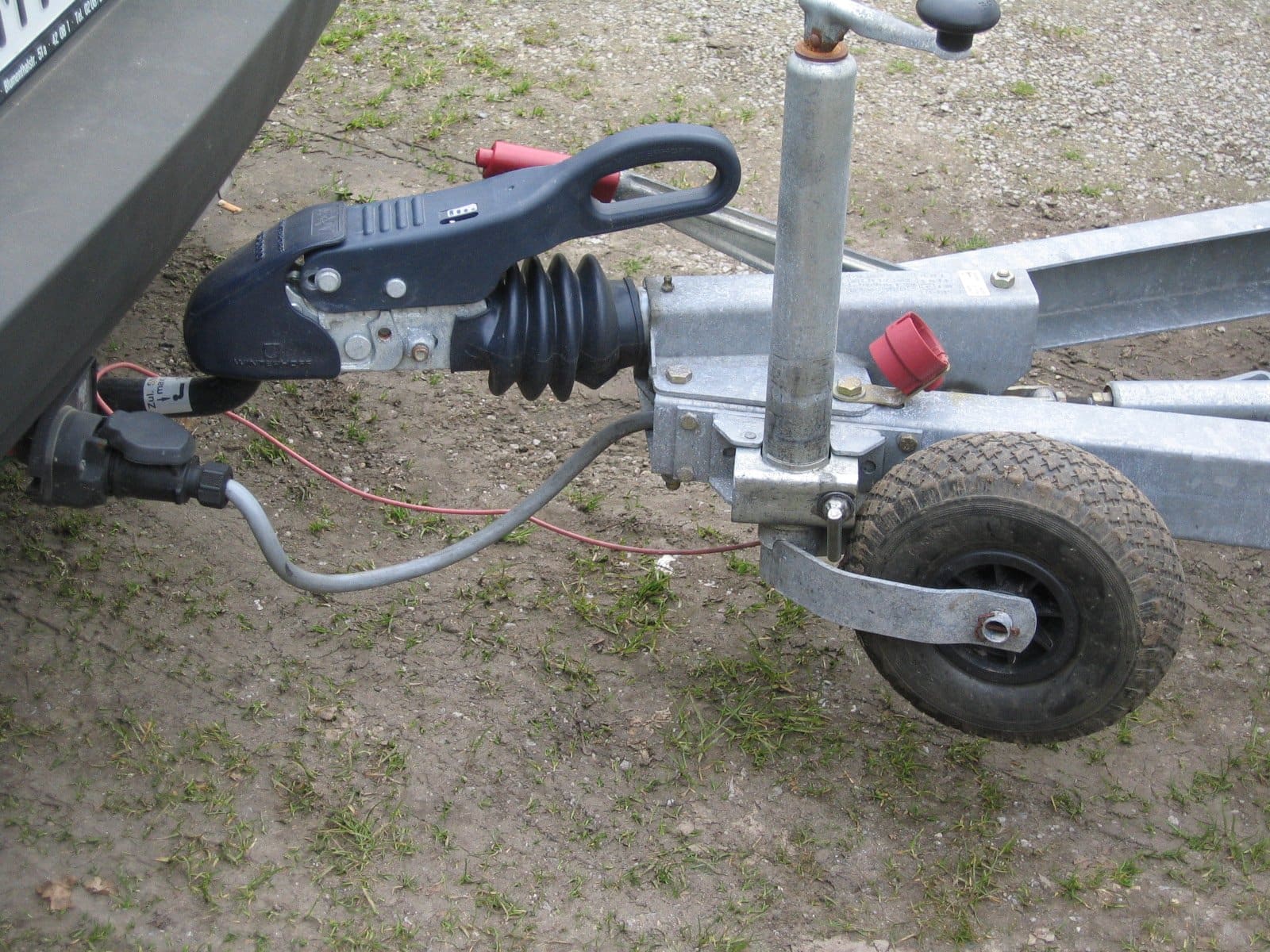
- Coupler: the socket at the front of the tongue that drops over the hitch ball. A latch (lever or trigger style) clamps it on the ball, and a pin or lock goes through the latch so it cannot pop open. On trailers with surge brakes, the coupler is part of the brake actuator.
- Tongue jack: the crank-up stand that holds the tongue when unhitched. Most boat trailers use a swing-away (swivel) jack that pivots flat for towing, often with a small caster wheel so you can roll the trailer by hand. Some use fixed or powered jacks.
Why boat trailers suffer: on many ramps the jack and even the coupler go underwater on every launch. Salt, sand and silt get inside the jack tube and coupler latch, wash out grease and start rust. BoatUS notes that bent, rusted or corroded coupler parts can damage your trailer and tow vehicle and make hookup harder.
How often: check both every time you hitch up (Steps 1 and 2), clean and lubricate a few times a season and after salt-water dunks, and do a deeper inspection once a year. Your trailer, coupler or jack manual may give a specific schedule: follow it.
Read the stamped markings or label on the coupler and jack for ball size and rated capacity before buying any replacement parts.
Steps
- Confirm the ball size stamped on the coupler matches the ball on your hitch. BoatUS warns never to mix sizes: a 2-inch coupler goes only on a 2-inch ball.
- Lower the coupler fully onto the ball, close the latch and put the pin or lock through it.
- Try to lift the tongue with the jack a little: the coupler should stay on the ball. Then lower the weight back onto the hitch.
- Check that the hitch ball's nut is tight with its lock washer. BoatUS points out that many boats are lost when a loose ball lets the trailer separate.
- Raise and swing the jack into its towing position (Step 7), and cross and hook the safety chains (see our safety chain guide).
With the trailer unhitched and the tongue on the jack, look at:
- The socket: cracks, a bent or flared mouth, or a socket worn into an oval shape.
- The latch and its spring: it should snap shut and open without force.
- The mounting bolts to the tongue: tight, not rusted thin, and with nuts in place.
- Rust: surface rust can be cleaned; flaking, pitted or swollen metal around the latch means replacement.
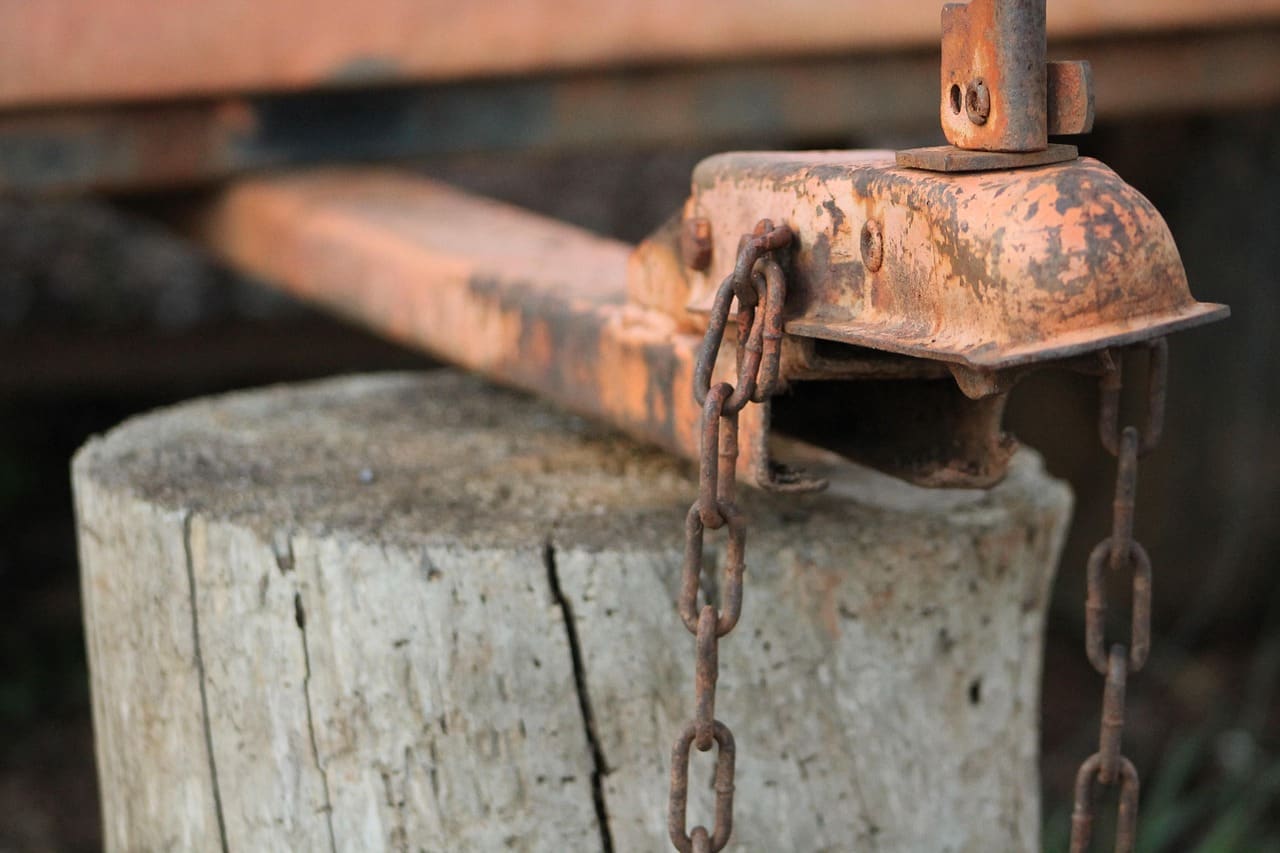
Rust this deep on a coupler, latch and chains means replace, not repair. Photo: PublicDomainPictures / Pixabay Hose off sand and salt, then scrub the latch area with a wire brush. Let it dry. BoatUS's advice is to always lubricate the moving parts of couplers and balls, and Mercury suggests grease or spray lubricant on the ball, draw bar, hitch pin and receiver to make hookup easier and slow rust and wear.
- Put a light coat of grease inside the socket and on the ball.
- Work light oil or spray lubricant into the latch pivot and spring, and open and close it several times.
- Wipe off the excess so it does not collect grit.
If your trailer has surge brakes, the actuator may also need lubrication at specific points. Discover Boating notes this and says to follow your owner's manual; see our surge brake guide.
BoatUS describes the target: the latch should be tight enough to prevent accidental separation but not so tight that it causes undue friction. With the coupler on the ball and latched:
- If you can lift the coupler and hear or feel it clunk on the ball, it is loose.
- If you have to hammer the latch closed, or it will not release, it is too tight or dirty.
MasterCraft's hookup instructions describe a good latch as one that closes with finger pressure and an audible click, with the pin sliding in easily; if the pin won't go in, the latch isn't fully closed. Never force the handle. If the coupler won't open to unhitch, look for the simple causes first: an oversized or egg-shaped ball, debris in the socket, the tongue jack pushing the coupler up against the ball, or the rig parked facing downhill so the trailer pushes on the hitch. Fix that, then try again.
Many couplers have an adjusting nut (often under the front of the coupler or at the base of the latch) that sets how hard the clamp grips the ball. Turn it in small steps, test, and repeat, following your coupler's instructions. Some couplers, such as Fulton's Fas-Lok, are factory adjusted and have no user adjustment. If the coupler is still loose with the adjustment used up, the socket or ball is worn: replace it.
Look for a ball that is flattened, pitted, rusted or no longer round. A worn ball lets even a good coupler rattle. Make sure the shank nut is tight with its lock washer. If you replace the ball, match both the diameter and the rating to the coupler and trailer, and use the correct shank size for your ball mount.
The weakest link sets your limit. The ball, the ball mount (drawbar), the receiver hitch on the vehicle and the coupler each carry their own stamped or labeled weight rating. Your safe towing weight is the lowest of those numbers, and never more than the tow vehicle's rating. Owners often upgrade the trailer or boat and forget that the old, lower-rated ball is still on the drawbar.
Crank the jack all the way up and down and listen. Grinding, binding or a handle that slips means it needs attention. Typical lubrication points (check your jack's instructions):
- Side-crank jacks have internal gears and bushings. Many have a grease fitting near the crank; give it a few pumps of grease, or remove the top cap and add grease to the gears if your jack is built that way. Crank through full travel to spread it.
- Top-crank jacks usually just need light oil on the screw.
- The handle pivot and the caster wheel axle get light oil.
- The swivel: clean and oil the pivot so it turns freely.
After a salt-water launch, flush the jack, its bushings and the swivel with fresh water and put fresh lubricant on. Some newer jacks are sold as sealed or maintenance-free; follow the maker's instructions for those.
Jack goes underwater at every launch? It's a common complaint on shallow, low-slope ramps, and owners report even good jacks seizing in a single season. What helps: grease the gears under the top cap regularly (not just the factory fill), rinse it every time, and swing it up before backing in if the tongue doesn't need it. Some owners mount the jack farther forward or use a taller jack mounted higher on the tongue so it stays out of the water; that changes the trailer, so check clearance and the jack maker's instructions first.
On a swing-away jack, a spring-loaded pin locks the jack in either the down (working) or up (towing) position. Make sure the pin pops fully into its hole each way. Lock the pin before raising or lowering the tongue, because a jack that swings while loaded can drop the trailer. If the pin is bent, sticky or the spring is weak, replace it. On snap-ring style swivel mounts, check the snap ring is fully seated in its groove.
For towing, the jack should be fully retracted and swung up, or cranked as high as it goes on a fixed jack. Mercury's pre-tow checklist includes confirming the jack is all the way up or locked in its tilted-up position. Remove any drop foot or removable caster before you tow.
Spin the wheel. Replace a wheel that is cracked, flat-spotted, wobbly or seized; a seized caster makes the jack skid and puts side load on it. BoatUS notes single wheels turn more easily on hard pavement and dual wheels roll better on grass. If you park on soft ground, use a pad or board under the wheel or foot so it does not sink.
A wobbly jack is often just loose mounting bolts or U-bolts. Support the tongue on a stand first, then check and tighten the mounting hardware to the spec in the jack's instructions. Check the tongue around the mount for cracks or rust-through.
If the jack is frozen from repeated dunking, soak the screw and gears with penetrating oil, let it sit, then work it gently back and forth in short turns. Do not force it with a cheater bar on the handle. BoatUS suggests spraying corroded mounting bolts with penetrating oil the day before you work on them, and notes that an impact wrench or heat may be needed on old salt-water trailers. If the jack still binds or the tube is rusted through, replace it.
Replace the coupler if it is cracked, bent, worn oval, will not hold adjustment, the latch will not lock, or rust has eaten into the latch or mounting area. Use one with the same ball size and a rating at or above your loaded trailer's weight.
Replace the jack if it grinds or slips under load, the tube is bent or rusted through, the swivel pin will not lock, or it is undersized for your tongue weight. BoatUS notes that swing jacks generally top out at 1,000 to 2,000 pounds of tongue capacity, so heavy boats may need a fixed or powered jack. Measure clearance before switching types: some short tongues do not leave room for a swing jack to fold up.
To swap a jack, block the tongue so no weight is on the jack, remove the old mounting hardware and bolt on the new one as its instructions describe.
Uncoupling safely: MasterCraft says to chock the trailer wheels front and rear before you release the coupler, so the trailer can't roll away. It also warns against moving a surge-brake trailer around by hand on a slope: without the tow vehicle attached, its brakes don't work.
Common mistakes
- Using a coupler and ball of different sizes, or towing without the pin or lock through the latch.
- Raising or lowering the tongue with the swivel pin not locked.
- Towing with the jack still down or not fully swung up and locked.
- Leaving a dunked jack and coupler wet with salt water until next weekend.
- Cranking a seized jack with a pipe on the handle until something breaks.
- Working under a tongue held up only by the jack.
- Cranking the coupler latch adjustment so tight that it no longer seats fully on the ball.
- Using the tongue jack to lift the trailer for a tire change or to free a stuck trailer. It is built to hold the tongue, not side loads or the trailer's full weight; use a jack rated for the job under the frame.
When to call a pro
- The coupler is cracked, bent or welded to the tongue and needs cutting off
- The latch will not lock on a matching ball after cleaning and adjustment
- The tongue is cracked or rusted through near the coupler or jack mount
- Surge brake actuators that leak fluid, bind or need rebuilding (a trailer shop job)
- Any welding on the tongue: it must be done by a qualified welder
- A trailer shop, marine dealer or RV and trailer service center can supply the right rated parts
Tips
- Keep a coupler cover or ball cover on when parked to keep rain and grit out.
- Back down the ramp only as far as you need: keeping the jack and coupler out of the water saves them, and sometimes a tongue extension helps.
- A small jar of marine grease and a rag in the tow vehicle make the after-launch rinse and re-grease a two-minute job.
- When parked, a padlock through the coupler latch doubles as theft protection.
- Chock the trailer wheels before you unhitch, as Discover Boating advises; a trailer on even a slight slope can roll as soon as the coupler leaves the ball. Then crank the bow up a little so rainwater runs aft to the drain plug.
Official references
We read these to write this guide. Your engine's own manual always wins.
- BoatUS – Couplers
- BoatUS – Hit The Road, Jack
- Mercury Marine – Basic Boat Trailer Maintenance
- Mercury Marine – Pre-Tow Checklist for Hauling Your Boat
- Discover Boating – Boat Trailer Maintenance Guide
- Discover Boating – How to Tow a Boat
- Fulton – Fas-Lok Straight Trailer Coupler (product page)
- MasterCraft – Knowledge Center, How to Attach the Trailer
- MasterCraft – Knowledge Center, Trailer Parking and Uncoupling
Safety: BoatMend is for information only and does not replace a certified marine technician. You are responsible for your safety and your boat. Read the full disclaimer.
Last updated 2026-10-24
Related guides
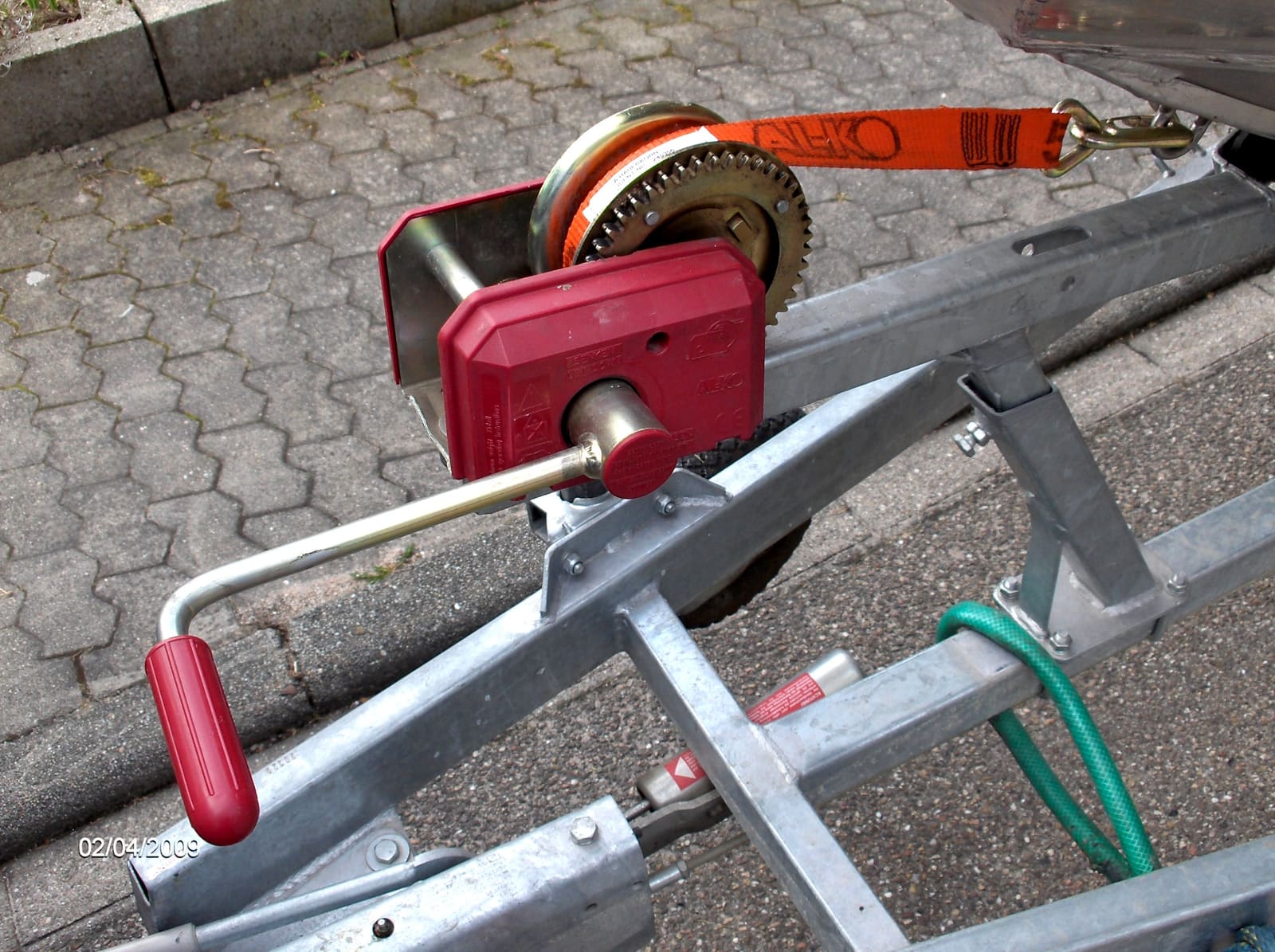
How to Inspect and Use the Trailer Winch, Strap, Tie-Downs and Safety Chains
Check the winch, strap or cable, bow safety chain, transom tie-downs and the safety chains to your vehicle, and learn how each one is meant to be used. These parts keep the boat on the trailer and the trailer behind your truck.
How to Check and Care for Boat Trailer Surge Brakes
Understand how the hydraulic surge brakes on your boat trailer work, check the fluid, use the reverse lockout correctly and rinse salt out of them after every dunk. Simple habits that keep the brakes from seizing, dragging or failing when you need them.
How to Fix Boat Trailer Lights That Flicker, Dim or Don't Work
Track down the real cause of dead or flickering trailer lights, from a bad ground to a corroded plug, and fix it so the repair lasts. Working brake, turn and tail lights are required by law and keep the driver behind you from rear-ending your boat.
How to Inspect and Repack Boat Trailer Wheel Bearings
Check, clean and repack your trailer's wheel bearings so a seized hub does not leave you stranded on the highway. Boat trailers get dunked in water every launch, which makes their bearings fail far more often than those on dry utility trailers.
How to Inspect, Inflate and Replace Boat Trailer Tires
Check your trailer tires the way the pros do: the right type (ST), the right load range, the right cold pressure, and an honest look at their age. Tires are the number one reason boat trailers end up on the side of the highway.
Launch Day and Haul-Out Checklist for Trailer Boats
A step-by-step checklist for getting your boat off the trailer and back on again safely and quickly, from the drain plug and tie-downs to the blower and ramp etiquette. Following it in order prevents the classic mistakes that sink boats and back up the ramp.
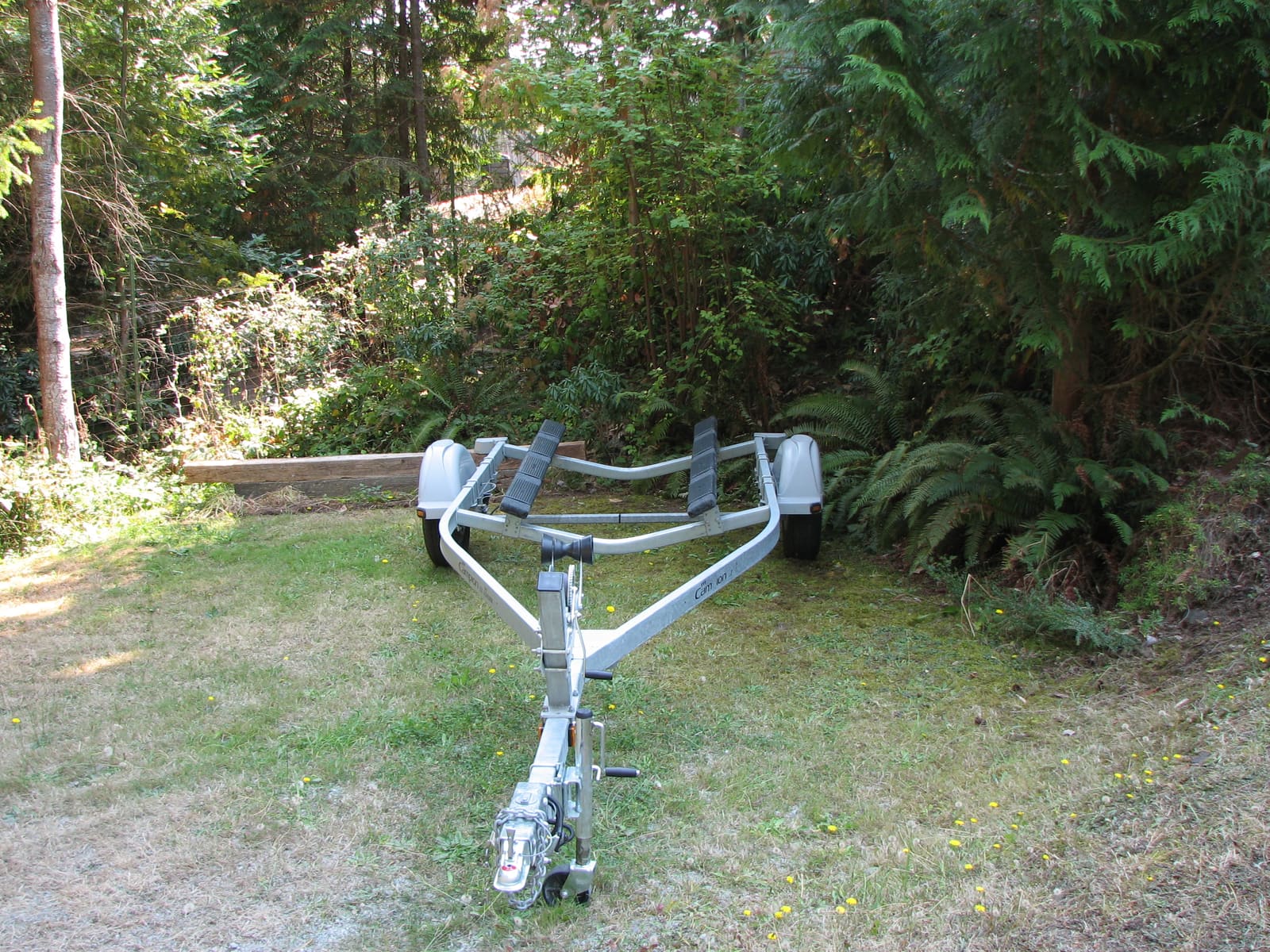
How to Adjust and Replace Trailer Bunks and Rollers So Your Boat Sits Right
Set up your boat trailer so the hull is supported in the right places: bunks and rollers clear of the strakes, the transom fully supported, the bow snug against the winch stop and the weight balanced on the tongue. Also covers replacing rotten bunk boards and worn carpet or rollers.