Boat Insurance Policy Basics: Agreed Value vs Actual Cash Value, Navigation Limits, Storm Deductibles and Exclusions
Learn to read a boat insurance policy before you need it: agreed value versus actual cash value, navigation limits and lay-up periods, named storm deductibles, towing, salvage and wreck removal, liability limits, and the exclusions that cause most claim surprises. General information, not legal or insurance advice.
Time
1 h 30 min
Applies to
All engines
Before you start: This is general information, not legal or insurance advice. Every insurer writes its own policy, and the wording in your policy is what counts. Read it now, while nothing is wrong, and ask your agent to explain anything unclear in writing. If your boat is sinking, on fire or someone is hurt, deal with safety first (VHF 16 or 911), then call your insurer.
Owners often ask
- What is the difference between agreed value and actual cash value boat insurance?
- Does my boat insurance pay for wreck removal if my boat sinks?
This guide walks you through it. Still stuck? Ask the AI Mechanic about your engine.
Tools
- Your policy declarations page and the full policy wording (ask the agent for both)
- Any endorsements or riders
- Your marina contract and loan agreement (for their insurance requirements)
- Highlighter and notebook
Before you start
A boat policy usually has two big halves:
- Physical damage (hull) coverage: the boat, motor, equipment and often the trailer.
- Liability coverage: damage or injury to other people and their property that you're legally responsible for, plus medical payments for people aboard.
BoatUS lists what a good policy should cover: the boat, engine, boating equipment, dinghy and trailer, medical payments for onboard injuries, and liability for property damage or injuries you're legally responsible for. The rest of the policy is the details that decide what you're actually paid: how the boat is valued, where and when you're covered, deductibles, extras like salvage and towing, and exclusions.
You'll need the declarations page (the summary with values, limits, deductibles and navigation area) and the full policy wording. Many owners only ever see the declarations page.
Steps
This decides what you get after a total loss.
- Agreed value: you and the insurer agree on the boat's value when the policy is written. For a total loss, you're paid that amount. Discover Boating notes these cost more up front but don't depreciate on a total loss. BoatUS adds that partial losses still carry the deductible, and some items may still be depreciated.
- Actual cash value (ACV): the payout is the boat's market value at the time of loss. For partial losses, BoatUS says you get the loss minus depreciation and the deductible. Cheaper premium, more out of pocket after a loss.
- Replacement value: Mercury's insurance article notes a few insurers offer full replacement on new boats, usually for only a year or two.
If you financed the boat, Mercury warns that ACV can leave you owing more than the payout after a total loss (our loan add-ons guide covers GAP). If you add electronics or repower, Mercury suggests getting a written appraisal and asking the agent to update the agreed value.
BoatUS explains that insurers may want a survey on older or larger boats, and may not insure a boat at a survey value far above published price-guide values. If something major shows up in the survey, the insurer may bind the policy only on condition that you fix it. Our survey prep guide helps you get ready.
The policy defines the waters where you're covered: inland, coastal, a distance offshore, specific regions, or seasonal limits. Practical Sailor notes underwriters define the covered waters and that you should check before going beyond them. Some policies keep boats out of hurricane-prone areas during part of the year. Discover Boating warns that breaking a policy "warranty," such as going outside your navigation limits, can mean no payment for a loss.
Planning a trip to the Bahamas, Canada, Mexico or farther offshore? Call the agent before you leave and get any extension in writing.
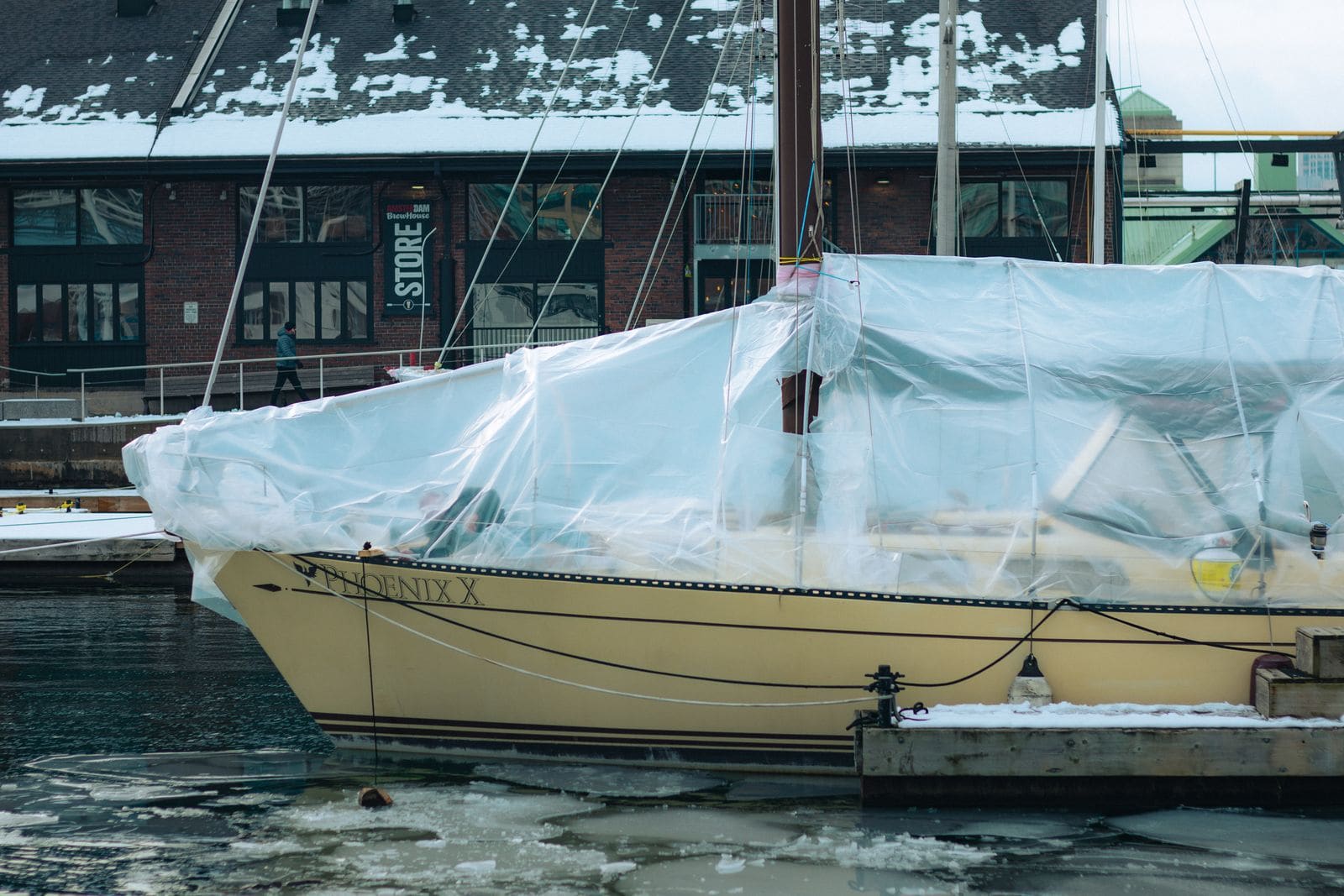
Some policies, especially on larger boats in cold climates, give a discount for a lay-up period when the boat is stored and not used. Discover Boating lists not using the boat during the lay-up period as a common policy warranty. If you want to launch early or use it late, ask the insurer to change the dates first. Also check what the policy says about ice and freeze damage: BoatUS describes freeze coverage as an optional extra in some policies, often tied to professional winterizing.
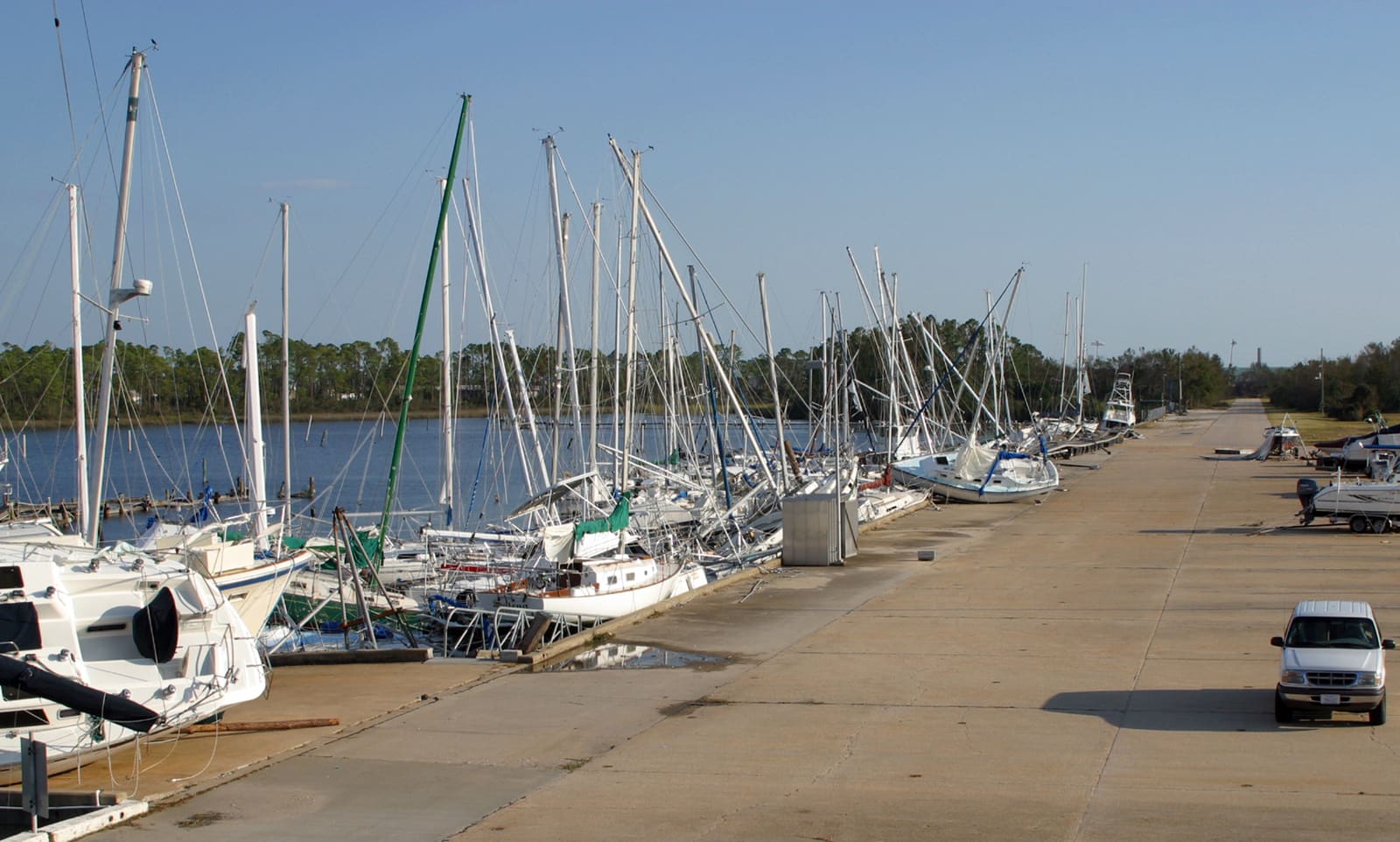
In hurricane areas, look for a separate named storm or hurricane deductible. Discover Boating warns these can be 10% or more, often a percentage of the insured value rather than a flat amount. Also look for:
- A required hurricane plan: BoatUS notes insurers in places like Florida may ask for a short written plan saying where the boat goes in a storm, who looks after it and whether it's hauled.
- Haul-out help: some policies pay part of the cost of hauling or moving the boat ahead of a named storm. One insurer's policy pages, for example, describe paying half the cost up to a set limit.
- Rules about binding new coverage: BoatUS notes insurers may not write new policies when a named storm is approaching.
Our hurricane prep guide covers the practical side.
These are where cheaper policies often fall short. BoatUS describes three tiers:
- Salvage (recovering a sunk or stranded boat) may be deducted from your hull payout, paid separately up to a percentage of the insured value, or (in the most generous policies) paid separately up to the full insured value.
- Wreck removal, when a law or agency requires you to remove the wreck, may be limited to a small percentage of the hull value in some policies, while the most generous pay it out of liability coverage up to the liability limit.
- Towing to safety is often an add-on. Discover Boating notes it can cost hundreds of dollars an hour. Many owners carry a separate on-water towing membership as well.
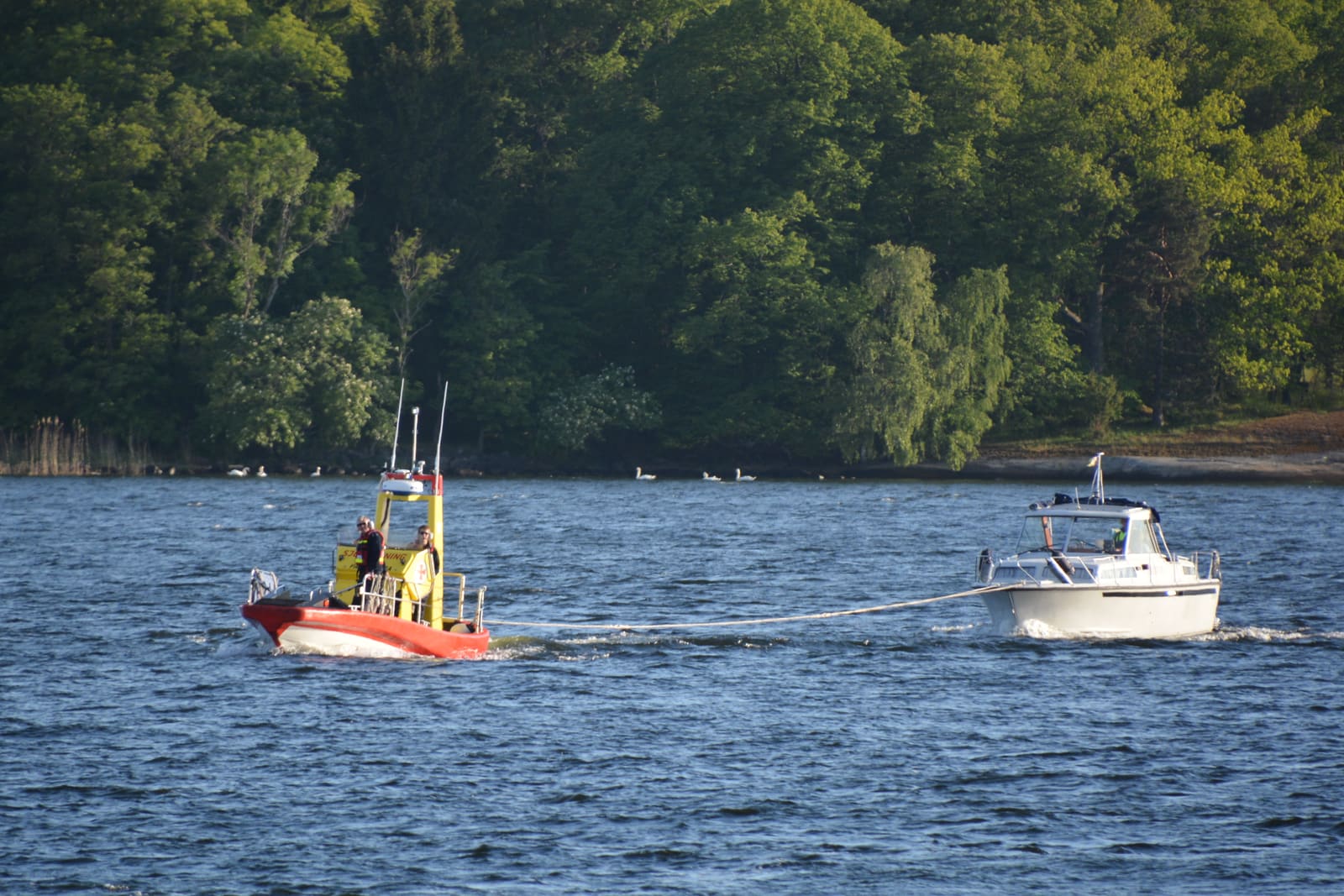
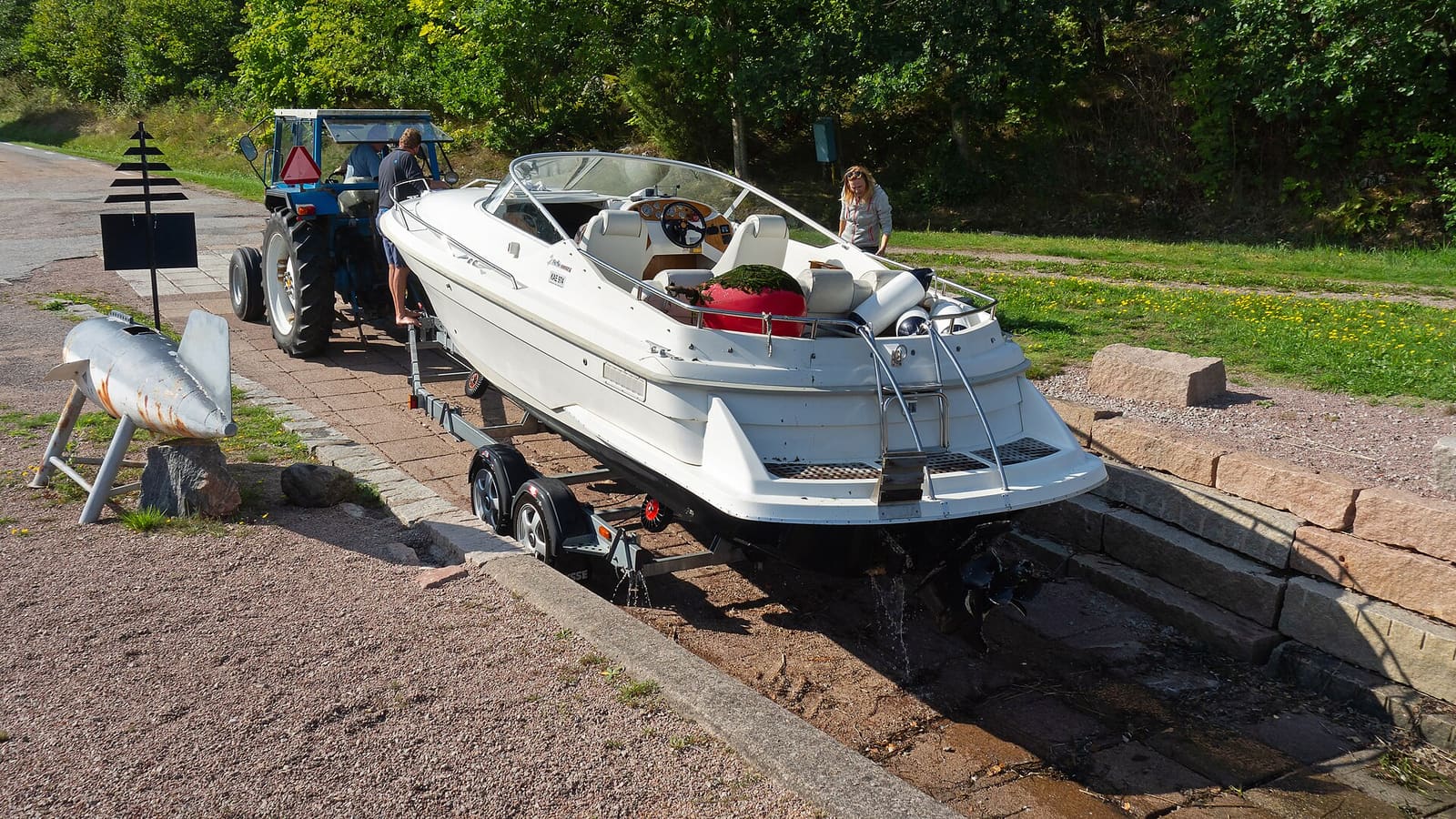
A tow home after an engine failure is a routine call, but who pays depends on your policy or towing membership. Photo: Bengt Oberger / Wikimedia Commons · CC BY-SA 4.0 - Compare your boat liability limit with your auto and home limits. BoatUS notes injury settlements can be very expensive and higher limits usually cost little extra.
- Check fuel-spill liability: BoatUS explains some policies lump it into the general liability limit, while better ones give it a separate limit.
- Uninsured boater coverage protects you if someone without insurance injures you.
- Who can drive: BoatUS says family members and others using the boat with your permission and without pay are typically covered, but renting the boat out removes coverage, and a paid captain or crew isn't covered under liability. A typical pleasure policy isn't written for carrying paying passengers. The Massachusetts Division of Insurance, for example, says its boat insurance information covers private pleasure use and points anyone running a boat commercially to other marine insurance. Separately, federal rules (46 CFR 15.605) require a boat carrying passengers for hire to be run by a Coast Guard-credentialed operator, such as a captain holding an OUPV ("six-pack") endorsement. Ask your agent before anyone pays to ride, and see our passengers-for-hire guide.
BoatUS notes the trailer may not be covered automatically and may need to be added. Physical damage to the trailer can be covered under the boat policy, but injury or property damage caused while towing on the road is usually handled by your auto policy. Ask both agents.
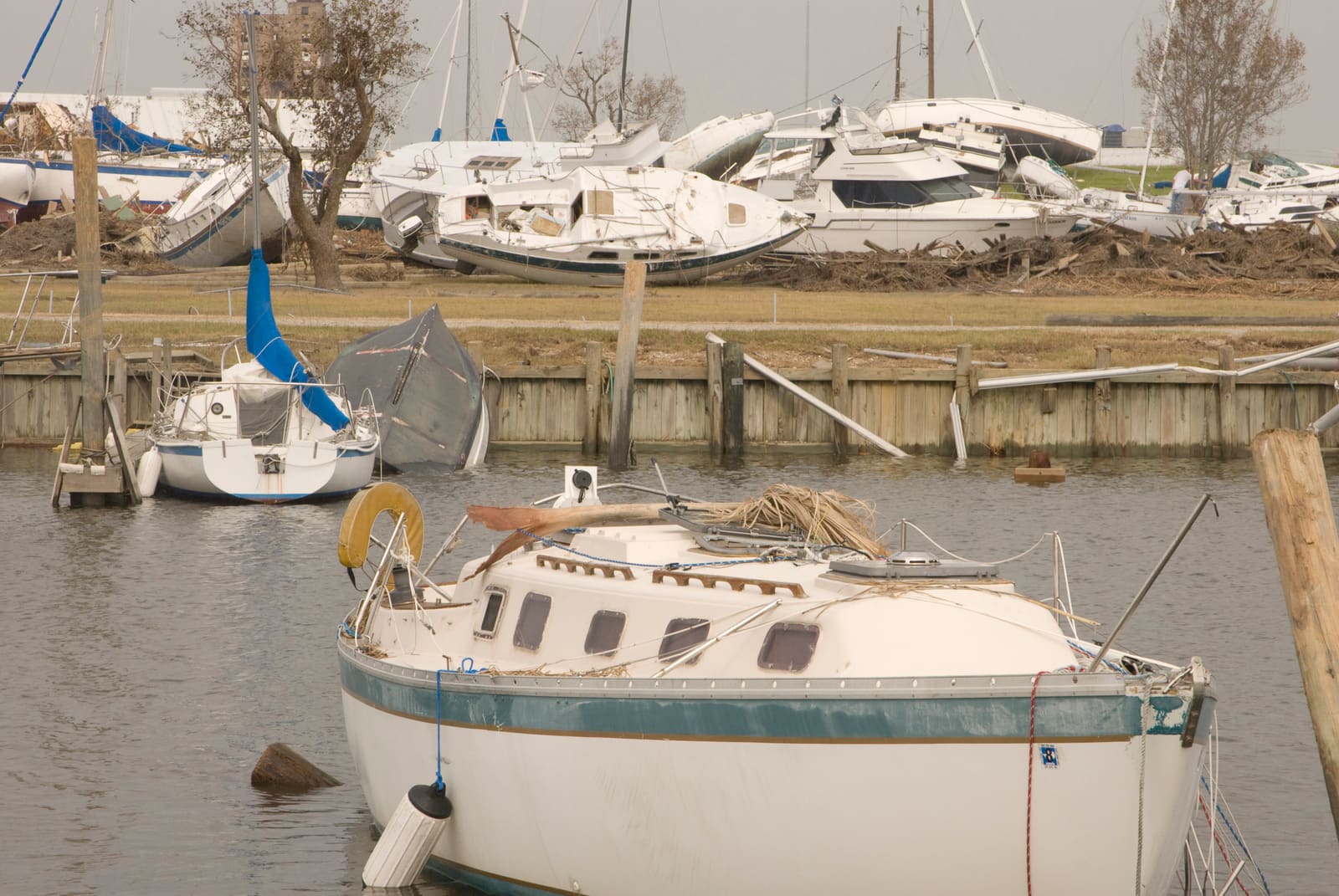
Discover Boating notes even "all risk" policies exclude things such as wear and tear, marring, denting, animal damage and manufacturer defects. The big one is consequential damage: BoatUS explains that half of sinkings at the dock start with a small part below the waterline failing (stuffing boxes, outdrive bellows, hoses or clamps, sea strainers). No policy pays for the worn part itself, but policies differ on whether they pay for the boat that sank because of it. The best ones cover resulting fire, explosion, sinking, collision, dismasting and stranding. Also look for exclusions about ice and freezing, mold, racing, commercial use and operators who aren't listed.
Many policies require you to keep the boat in seaworthy condition, protect it from further damage after a loss, report losses promptly and cooperate with the insurer's surveyor. The Massachusetts Division of Insurance's boat insurance page sums up what's usually expected after a loss:
- Give immediate notice of a possible claim to your insurer or agent, and call the police if it's a theft.
- Protect the boat from further damage. If you make temporary repairs, write down what you did and keep every receipt.
- Give the insurer a list of damaged or stolen property with photos, and keep a copy.
- Don't throw away damaged items until the adjuster says you can.
Your own policy's wording on these duties is what counts, so find that section and read it now. Some insurers require captain training for owners stepping up to a bigger boat; BoatUS describes insurers asking for days to weeks of training with a licensed captain. Write down any such condition and meet it.
- Lenders usually require physical damage coverage on a financed boat. Discover Boating notes most lenders cap the deductible (often at 2% of the insured value) and may require year-round coverage. Ask the lender exactly what it needs and how it wants to be named on the policy.
- Marinas often require proof of insurance and minimum liability limits, and some ask for more. Check your slip contract (our marina contract guide covers this) and make sure your policy matches it.
Compare policies line by line: valuation, navigation area, deductibles (regular and named storm), salvage, wreck removal, fuel spill, towing, liability, medical payments, uninsured boater, trailer and personal effects. BoatUS warns that comparing only the premium can leave you disappointed when you file a claim. Discover Boating notes discounts for boating courses, clean records, freshwater use and bundling. If a quote comes from a surplus lines company (common for boats standard insurers turn down), know what that means: the Massachusetts Division of Insurance explains that these companies aren't licensed or regulated by the state and aren't members of the state guaranty fund, which protects policyholders if a licensed insurer fails. Ask your agent which kind of company you're buying from. Review the policy at every renewal and after any upgrade, move or change in how you use the boat.
Common mistakes
- Reading only the declarations page and never the policy wording.
- Choosing actual cash value on a financed boat without understanding the payout gap.
- Cruising beyond the navigation limits "just this once."
- Launching before the lay-up period ends without telling the insurer.
- Not knowing the named storm deductible until after the hurricane.
- Assuming salvage and wreck removal are fully covered.
- Letting a friend pay you "for gas" to take them fishing, which can turn into a commercial use your policy excludes.
When to call a pro
- You don't understand a term, exclusion or condition: ask your agent or broker to explain in writing.
- You have a large, old, wooden or metal boat, or keep it in a hurricane zone: a broker who specializes in marine insurance can compare more carriers.
- A claim is denied and you think the policy covers it: ask for the reason in writing, and contact your state insurance department (NAIC lists them) or an attorney.
- Your boat is sinking, burning or someone is hurt: call 911 or the Coast Guard on VHF 16 first; then your insurer and a tow or salvage company.
Tips
- Keep a copy of the declarations page and the insurer's 24-hour claims number aboard and in your phone.
- Save receipts and photos of upgrades and equipment in your BoatMend boat file; they help set the agreed value and prove a claim.
- Put your lay-up dates, storm plan and renewal date in your calendar.
- Ask about a boating course discount; it may pay for the course.
Official references
We read these to write this guide. Your engine's own manual always wins.
- Discover Boating – Boat Insurance Guide (coverage types, warranties, storm deductibles, exclusions)
- BoatUS – 5 Things to Know About Boat Insurance (2013)
- BoatUS – Avoiding The Boat Insurance Blues (2019, consequential damage, salvage, wreck removal, fuel spills, liability)
- BoatUS Magazine – Boat Insurance and Financing (2025, hurricane plans, surveys, experience requirements)
- BoatUS – Agreed Hull Value policy description (example of one insurer's features)
- BoatUS – Actual Cash Value policy description (example of one insurer's features)
- BoatUS – Boat Insurance FAQ
- Mercury Marine – How to Insure Your Boat the Right Way
- Massachusetts Division of Insurance – Boat Insurance (valuation, what to do after a loss, surplus lines, pleasure vs commercial use)
- eCFR – 46 CFR 15.605, Credentialed operators for uninspected passenger vessels
- U.S. Coast Guard National Maritime Center – OUPV (6-pack) endorsement
- NAIC – State Insurance Departments (find your regulator and complaint page)
- Practical Sailor – A Sailor's Guide to Marine Insurance (2012)
Safety: BoatMend is for information only and does not replace a certified marine technician. You are responsible for your safety and your boat. Read the full disclaimer.
Last updated 2026-10-26
Related guides
How to File a Boat Insurance Claim: Safety, Mitigation, Documentation and Settlement
What to do from the moment something goes wrong until the check arrives: make everyone safe, stop further damage, report right away, document with photos and your maintenance log, handle towing versus salvage, work with the adjuster or surveyor, and understand agreed value, actual cash value and the common exclusions. Policies differ, so your own policy wording always wins.
How to Prepare Your Boat for an Insurance or Condition Survey
Get ready for a marine survey your insurer or lender asked for: what a SAMS or NAMS surveyor looks at, the common findings you can fix beforehand (hose clamps, seacocks, bilge, fire extinguishers, wiring), the paperwork to have ready, and how to handle the recommendations afterward.
How to Prepare Your Boat for a Hurricane or Tropical Storm
Make a written storm plan before the season, then haul out or secure the boat with doubled lines and chafe gear, strip off everything that catches wind, and check it safely after the storm. Never ride out a hurricane aboard.
Boat Loan Add-Ons: GAP, Service Contracts and Credit Insurance, and How to Cancel Them
Understand the extras offered at the finance desk when you buy a boat (GAP coverage, extended service contracts and credit insurance), when one might make sense, what they really cost once financed, and how to decline, cancel or get a refund. General information, not financial or legal advice.
Financing a Boat: Loan Terms, Survey and Insurance Requirements, Liens and the True Cost of Ownership
Understand a boat loan before you sign: typical terms and down payments, what lenders check, why they want a survey and insurance, how the lien is recorded (Coast Guard preferred mortgage for documented boats, state title for the rest), how the payoff works when you sell, and how to add up the real yearly cost beyond the monthly payment. Practical guidance, not financial advice.
Marina Slip and Storage Contracts: What to Read Before You Sign
Walk through a slip, mooring or winter storage contract clause by clause: insurance and additional-insured requirements, hold-harmless and waiver-of-subrogation language, liveaboard and work rules, DIY and outside-contractor limits, storms, termination, refunds and lien rights, plus the questions to ask the marina and your insurer. Practical guidance, not legal advice.
Winter Layup Master Checklist (Step-by-Step, With Links to Each Job)
One ordered checklist for putting any boat away for winter, from booking storage and treating the fuel to winterizing the engine, water systems, head and batteries, then blocking, covering and securing the boat. Each step links to the detailed BoatMend guide for that job.
Salvage and Branded Title Boats: What They Mean, the Risks, and How to Check Before You Buy
Understand boats that an insurer declared a total loss: what salvage, rebuilt and hull-damaged title brands mean, why flood and storm boats hide expensive problems, how branded titles affect insurance, financing and resale, how to dig into a boat's history, and what a survey should check. Title branding rules differ a lot by state, and some states don't brand boat titles at all.
The Real Cost of Owning a Boat: Building a Yearly Budget and Cutting Costs with DIY
Add up what a boat really costs each year (storage, insurance, fuel, maintenance, winterizing, registration, depreciation and the surprise repair), check it against the common rules of thumb, and find the places where do-it-yourself work and smarter choices save real money. Practical planning help, not financial advice.
After the Storm: How to Safely Inspect Your Boat and Document Damage
Go back to your boat only when it is safe, check for fuel, live power and sinking risk before you step aboard, photograph everything for your insurer, then work through bilge, lines, canvas, electrical, engine, trailer and mold in a set order. Do not run the engine or leave the dock until it has been checked.
When Guests Chipping In Becomes an Illegal Charter: Passengers-for-Hire Rules for Boat Owners
Friends voluntarily sharing the gas money is fine, but if anyone must pay or bring something as a condition of the trip, your boat is carrying passengers for hire and needs a Coast Guard-credentialed captain, and more than six passengers needs an inspected boat. Learn the legal tests, the six-pack (OUPV) license, what a real bareboat charter looks like, the risks of renting through peer-to-peer apps, and the insurance questions to ask. Practical guidance, not legal advice.