After the Storm: How to Safely Inspect Your Boat and Document Damage
Go back to your boat only when it is safe, check for fuel, live power and sinking risk before you step aboard, photograph everything for your insurer, then work through bilge, lines, canvas, electrical, engine, trailer and mold in a set order. Do not run the engine or leave the dock until it has been checked.
Time
4 h
Applies to
All engines
Safety first: After a storm, the dock is more dangerous than the boat. Stay away until authorities allow travel and the marina lets owners in. Never walk on a flooded dock or step into water near a shore-power pedestal: leaking current can electrocute swimmers and waders. If you smell fuel or see a sheen, do not board, do not switch anything on, and call the marina, the fire department or 911. Never climb onto a boat that is sinking, listing, stacked on other boats, or hanging off a piling, and never go aboard a damaged boat alone. If anyone is in danger on the water, call the USCG on VHF 16 or 911.
Fuel smell, water coming in, CO alarm or smoke? Stop, get everyone in life jackets and call USCG on VHF 16 or 911. For a tow: Sea Tow or TowBoatUS.
Owners often ask
- My boat was in a hurricane but looks fine. What should I check before I use it?
- Should I start my engine after it got wet in a storm?
This guide walks you through it. Still stuck? Ask the AI Mechanic about your engine.
Tools
- Phone or camera (with a charged spare battery or power bank)
- Notebook and pen for a damage list with times and dates
- Flashlight or headlamp (switch it on before you go below)
- Rubber boots, work gloves, eye protection and bug spray
- Duct tape, a tarp, spare line and basic hand tools
- Rubber mallet or plastic screwdriver handle for sounding the hull (optional)
- Wet/dry vacuum, buckets, sponges and trash bags
- Fresh water supply and a corrosion-inhibiting spray
Parts & supplies
- Replacement dock lines and chafe gear, as needed
- Fresh fuel filters and water-separating filter elements, if water got into the fuel (have a pro fit them if unsure)
Before you start
This guide picks up where our hurricane prep guide ends. It is for any storm: a hurricane, a tropical storm, a lake squall line or a hailstorm. The order matters. Safety first, then the insurance record, then stopping further damage, then the detailed checks.
Call your insurer early. BoatUS advises calling your insurance company as soon as you know the boat's location and condition, because the company will tell you what to do next and what it will pay for. Most yacht policies cover reasonable costs to stop further damage (pumping out, tarping, drying, pickling a wet engine), so keep every receipt. BoatUS also warns owners not to sign any salvage or wreck-removal contract without the claims staff's approval first.
Expect a hostile marina. BoatUS lists the hazards owners meet after storms: leaking fuel, exposed wiring, sewage backups, missing dock boards, and snakes that moved to higher ground. Leave children, pets and sightseers at home. Don't be offended if you're asked to show proof of ownership; good marinas restrict access to stop looting.
Bring a recovery kit. Duct tape, basic tools, spare line, a tarp, a notebook and camera, trash bags, cleaning gear and corrosion spray cover most first visits, BoatUS suggests. Add boots, gloves and bug spray. The National Weather Service warns that floodwater is often contaminated with sewage and chemicals and can hide sharp debris, so wear waterproof boots and gloves, avoid wading where you can, and wash well afterward. It also lists carbon monoxide from portable generators as one of the leading causes of death after storms: never run one inside a cabin, under a cover or in any enclosed space while you dry the boat out.
Steps
Stand on solid ground and study the boat for a few minutes.
- Afloat and level: you can go on to the next steps, with a buddy.
- Low in the water, listing, or water over the cockpit sole: the boat may be sinking. Don't go aboard. Call the marina, your insurer, and a salvage or towing service (TowBoatUS, Sea Tow).
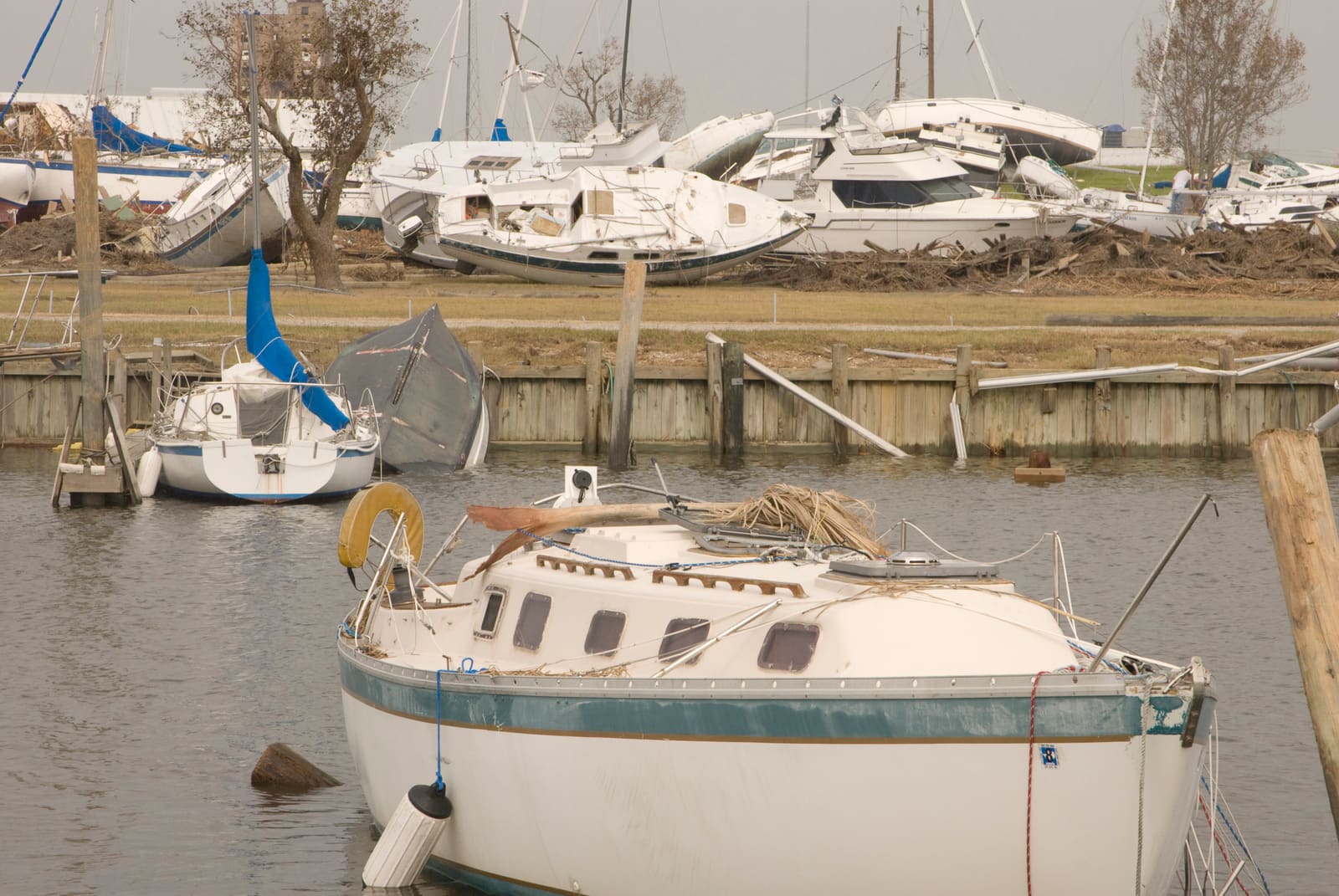
- Sunk, aground, on its side, stacked on other boats or carried ashore: stay off it. Let your insurer arrange salvage; BoatUS notes that inexperienced or poorly equipped salvage crews can cause extra damage.
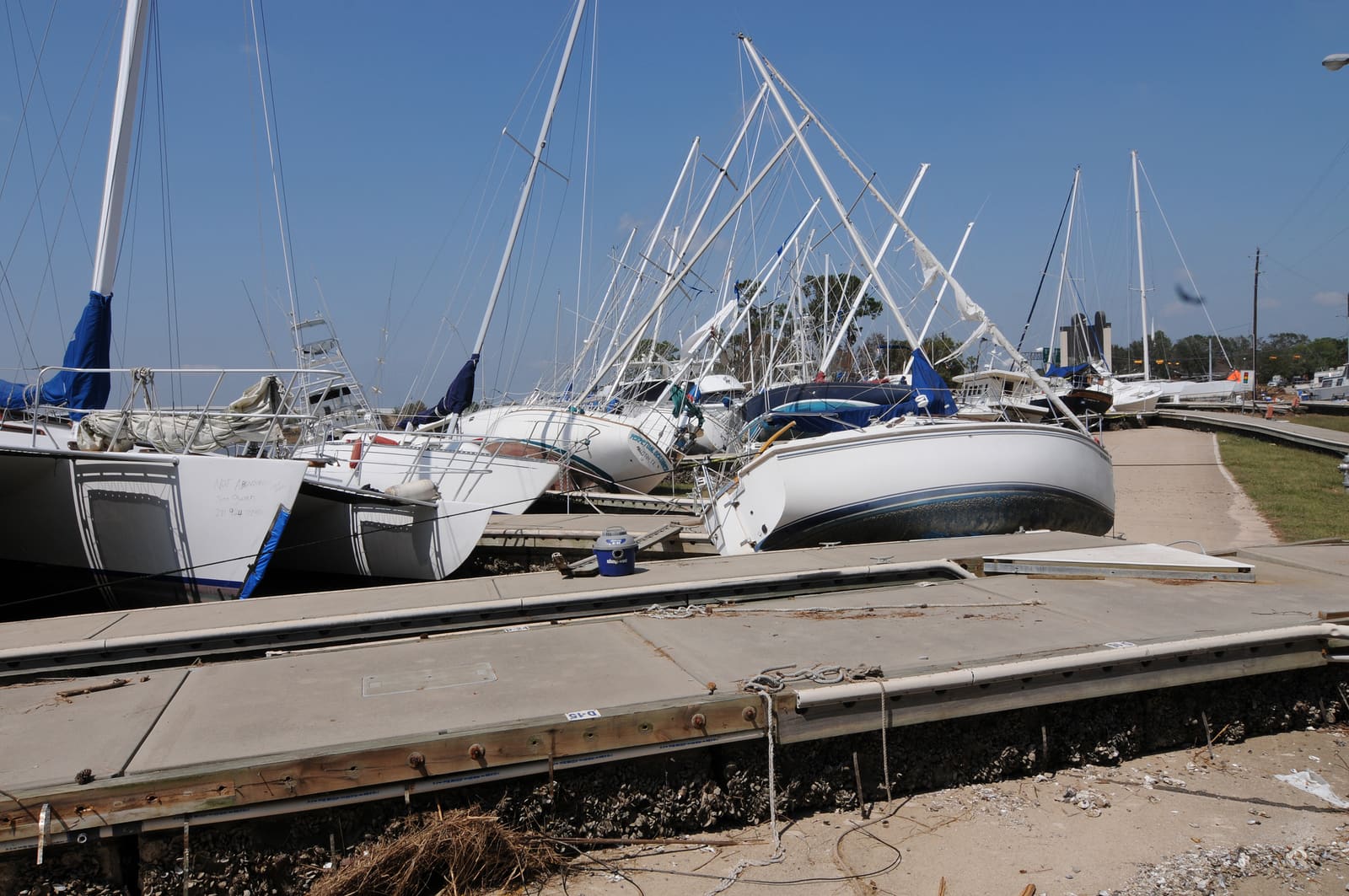
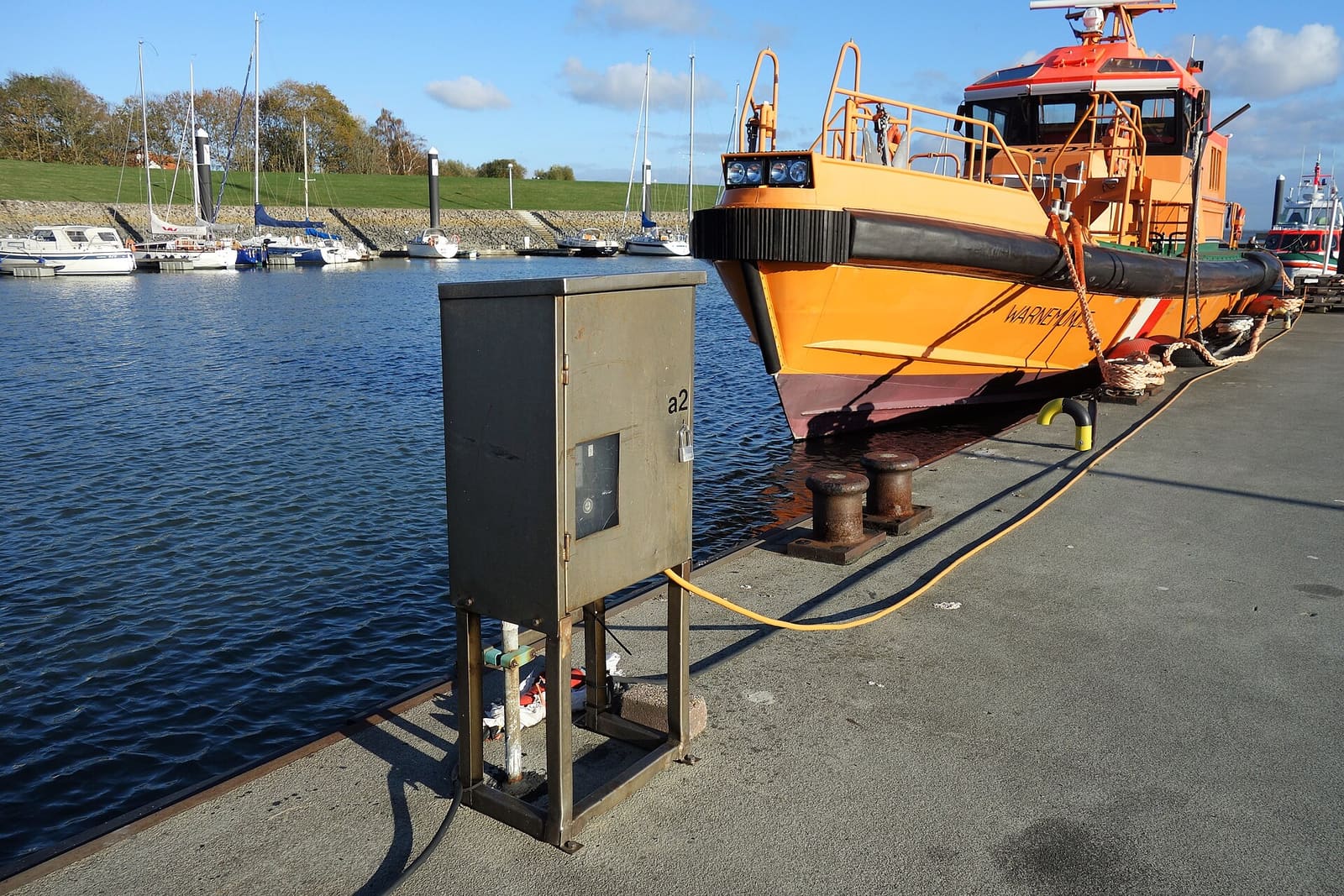
Photo: Walter Jennings / FEMA / Wikimedia Commons · Public domain Ask the marina whether dock power is off before you touch the pedestal. If it is still on and anything is wet, damaged or underwater, leave it alone and tell the marina. Once the dock is safe, unplug the shore-power cord at the pedestal first, then at the boat. On board, switch the main battery switch off unless the bilge pump needs it, and keep it that way until the wiring has been checked. BoatUS's pickling advice for a boat that went under starts with disconnecting all batteries and shore power, both for safety and to stop corrosion from stray current.
Before you open lockers or switch anything on, smell the cabin, the bilge and the engine space. Fuel, exhaust or propane smell means stop: get off the boat, keep sparks and phones away from the vapor, and call the fire department or 911. The same goes for a rainbow sheen around the hull. NWS advice for buildings applies to boats too: turn your flashlight on before you enter a closed space, since a switch can spark. See our fuel smell guide for the follow-up once it is safe.
Take wide shots of the boat and its surroundings, then close-ups of every scrape, crack, broken fitting, torn canvas and waterline mark. Film the water level inside the bilge and cabin. Note the time and date and write a running damage list. Keep wet cushions, electronics and broken parts instead of throwing them away: adjusters often want to see damaged items before they are discarded, so ask your insurer first.
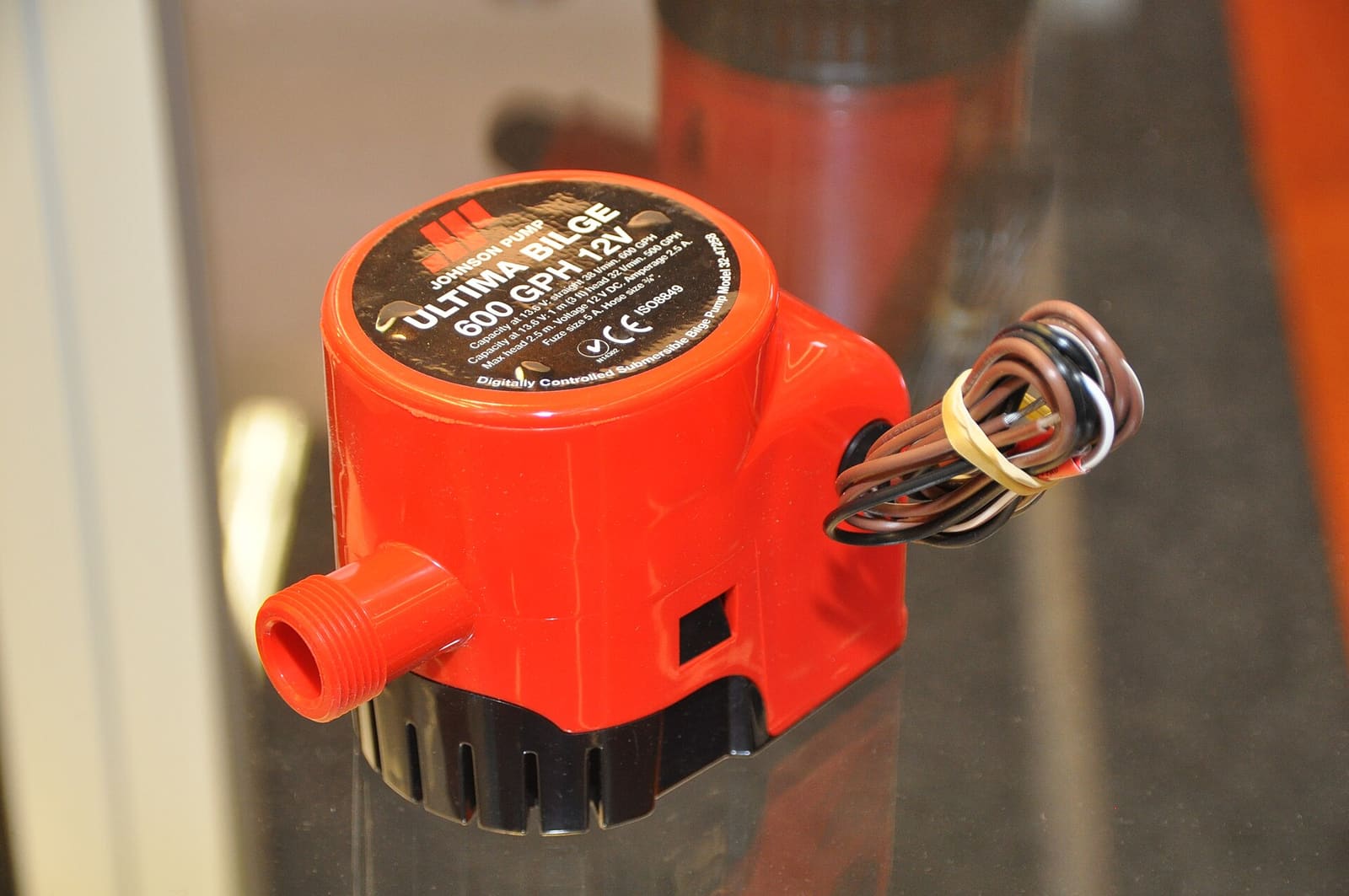
Lift the floor hatches and look at the bilge. Is it dry, a little wet, or full? Rain alone can fill a cockpit and bilge during a big storm. Run the bilge pump (if the electrical system is safe) and watch where the water comes from as the level drops. Then keep watching it for days: BoatUS warns that underwater damage, such as a cracked hull, a loosened through-hull or a damaged drive, may show up only as a slowly rising bilge. If water is coming in faster than the pump can clear it, see our "taking on water" guide and call for help.
Look at every dock line where it crosses a chock, a piling or the dock edge. Replace any line that is chafed, flattened, glazed or partly cut through, and check that cleats haven't pulled loose or cracked the deck around them. Retie the boat with fresh lines and chafe gear before the next blow; storms often come in pairs. Our dock lines guide covers sizing and chafe gear.
- Hull and rub rail: look for gouges, cracks, crushed rub rail and gelcoat "spider" cracks, especially where the boat may have hit pilings or other boats.
- Sound suspect areas: tapping fiberglass gently with a rubber mallet or a plastic screwdriver handle gives a sharp, solid sound on good laminate and a dull thud over delamination or a soaked core. Mark dull spots for your surveyor; don't drill or grind anything.
- Deck hardware, rails, hatches and ports: BoatUS suggests checking for broken ports and hatches where rain can get in. Tape or tarp any opening.
- Sailboats: look up. Check the mast, spreaders, shrouds and furler from the deck. Don't go aloft on a mast that may be damaged; that is rigger work.
Torn bimini tops, enclosures and covers let rain in and can flog themselves (and the frame) to pieces in the next wind. Photograph the damage, then remove or lash down what's left. Bring home electronics and valuables: BoatUS reminds owners that protecting the boat's equipment from theft is the owner's job, and looting is common after big storms. Your policy may also reimburse reasonable costs for security on an exposed boat.
Mold grows fast in a hot, wet, closed boat. As soon as it is safe:
- Pump or vacuum out standing water and bag up debris that could clog the bilge pump.
- Pull wet cushions, mattresses, clothing and carpet out to dry (keep them for the adjuster).
- Rinse salt and mud off surfaces with fresh water before it dries; BoatUS says removing salt, mud and moisture should start as soon as it can be done safely.
- Open hatches on dry days and use fans; tarp the boat if the deck or windows leak.
Our mold and mildew guide covers cleaning products and ventilation.
Look at the battery, battery switch, fuse or breaker panel, and any wiring that got wet. Salt water on connections starts corrosion within days. Signs that a pro needs to go through the system: water inside the panel, white or green crust on terminals, a burnt smell, melted insulation, or batteries that sat underwater. Shore-power inlets, cords, chargers and inverters that got wet should be checked by a marine electrician (ABYC-certified if you can find one) before they are used again. See our shore power safety guide.
- Spray or rain only: check the oil for a milky look, look for water in the fuel filter or water-separator bowl, and dry and spray electrical connections. If anything looks off, have it checked before starting.
- Engine underwater (even briefly): don't try to start it. Cranking a flooded engine can bend parts. BoatUS stresses that a submerged engine must be flushed with fresh water and "pickled" right away, and that corrosion speeds up once the engine is exposed to air, so move fast and let a mechanic do it. Our submerged engine recovery guide explains the process.
- Timing a sunk boat's recovery: BoatUS's insurance technical staff, who have directed the recovery of hundreds of sunk boats, say the boat should come up within a few days, but the machinery is better left underwater until a mechanic (or you) can spend three or four uninterrupted hours on it right after raising, because corrosion speeds up dramatically once it meets air. Within minutes of raising, everything gets hosed with fresh water before mud and salt dry. The starter and alternator usually come off for flushing and drying, and a turbocharger goes to a shop. BoatUS adds that reasonable costs of saving the machinery are normally covered by the policy, so coordinate with your insurer and keep the receipts.
- Fuel: storms can push water into tanks through vents and fill caps. Drain a sample from the water separator. Water in the fuel needs draining and filter changes before the engine runs; on diesels, even a little water is serious.
- Trailer: if the trailer stood in flood water, assume the wheel bearings got water inside (especially if the hubs were warm when they went under). Repack or service them before a road trip; see our wheel bearing guide. Check the tires, lights, wiring, winch strap and tie-downs, and look for the boat having shifted on the bunks.
- Trailered boat full of rain: the weight of trapped water can bend a trailer or crack a hull. Remove the drain plug (on dry land) and let it empty slowly, or pump it out.
- Lift or davits: a boat that took on rainwater on a lift can overload cables and cradles. Don't climb on a lift that looks bent or tilted; call the lift company.
Send your photos and damage list to your insurer and keep notes of every call. Fix items that let more water in first (hatches, ports, canvas), then electrical and fuel, then the engine. Before you leave the dock, remove any storm plugs from exhaust outlets, reopen seacocks you closed, check the steering and shift, test the bilge pumps and watch the bilge closely during a short, careful sea trial. Our sea trial guide has a checklist. Log what happened and what was repaired in BoatMend.
Common mistakes
- Rushing onto a flooded dock while the power is still on.
- Cleaning up before taking photos, which weakens the insurance claim.
- Signing a salvage contract with whoever shows up first, without the insurer's approval.
- Trying to start an engine that was underwater "just to see if it runs".
- Assuming a dry bilge on day one means no damage. Slow leaks show up over days.
- Leaving wet cushions and carpet aboard under a cover, where mold takes over within days.
- Forgetting the trailer: bearings that sat in flood water fail on the highway later.
- Throwing out damaged gear before the adjuster has seen it.
When to call a pro
- The boat is sinking, listing, aground, stacked, on its side or carried ashore: call your insurer and let them arrange salvage
- Fuel or propane smell, a fuel sheen, or a fuel leak: stay off the boat and call the fire department or 911
- Dock power is on and anything is wet or damaged, or you feel a tingle near the water: stay away and alert the marina
- The engine, batteries or wiring were submerged: a marine mechanic or electrician should pickle, test and dry them
- Cracks, soft spots or dull-sounding areas in the hull, damaged through-hulls, or a bilge that keeps filling
- Damaged mast, rigging or a bent lift or trailer frame
- You can't reach the boat: ask the marina or a licensed captain to secure it and document the damage for you
Tips
- Keep a laminated copy of your policy number, insurer's claims phone line and the boat's hull identification number (HIN) in your car and phone, not just aboard.
- Before-and-after photos from your storm prep make claims much faster. Take them every season.
- Watch the bilge level daily for at least a week after a big storm.
- Keep a "post-storm bag" with the kit listed above so you can go to the boat the moment you're allowed.
- If your policy reimbursed a pre-storm haul-out, keep those receipts with the storm file.
- If the insurer declares the boat a total loss, you may be offered the chance to buy it back at salvage value. BoatUS cautions that a boat sunk in salt water should be assumed to need engine work or replacement, possibly a complete rewiring and new soft goods, and that yard repair bills add up fast. Get a surveyor's opinion and a written estimate before you decide.
Official references
We read these to write this guide. Your engine's own manual always wins.
- BoatUS – What To Do After A Hurricane (2019)
- BoatUS Hurricane Center – After the Storm
- BoatUS Hurricane Center – Pickling a submerged engine
- National Weather Service – Staying Safe After a Hurricane
- National Weather Service – After a Flood
- BoatUS – Are Storm-Damaged Boats Trash Or Treasure?
- BoatUS – Pickling Your Engine (2019)
Safety: BoatMend is for information only and does not replace a certified marine technician. You are responsible for your safety and your boat. Read the full disclaimer.
Last updated 2026-10-25
Related guides

How to Prepare Your Boat for a Hurricane or Tropical Storm
Make a written storm plan before the season, then haul out or secure the boat with doubled lines and chafe gear, strip off everything that catches wind, and check it safely after the storm. Never ride out a hurricane aboard.
Outboard Fell Overboard or Engine Got Submerged: What to Do in the First Hours
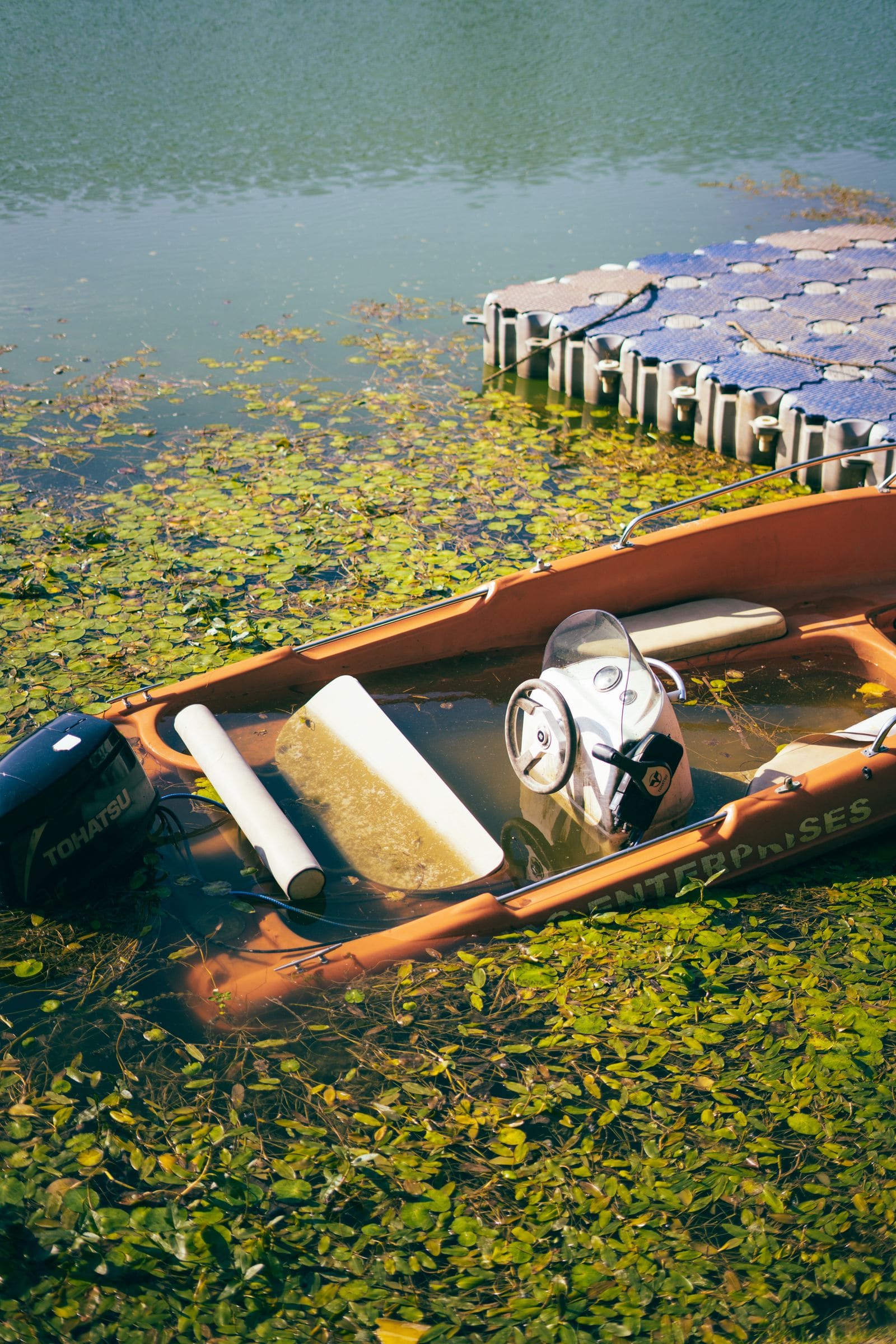
A dunked engine can often be saved, but only if you act fast and in the right order. Learn what to do (and what never to do) in the first hours after an outboard goes overboard or a boat swamps, how to buy time until a shop can take it, and when it is a loss.
What to Do When Your Boat Is Taking On Water: Emergency Steps and Prevention
A step-by-step emergency plan for water coming into the boat - life jackets on, call for help early on VHF 16, find and slow the leak, pump, and head for shallow water if needed - plus the maintenance checklist that prevents most sinkings.
Shore Power Safety: Cords, Inlets, Burned Plugs and Electric Shock Drowning
An owner's inspection routine for your shore power cord, plugs, boat inlet, galvanic isolator and ground-fault protection, plus the right way to plug in and the facts about Electric Shock Drowning. This guide is for looking and testing only; any electrical repair belongs to an ABYC-certified marine electrician.
How to Test and Clean Your Bilge Pump and Float Switch
Make sure your bilge pump actually moves water overboard, both on the manual switch and automatically through the float switch. A working bilge pump is one of the most important safety systems on any boat that stays in the water.
Fuel Smell on Board: What to Do and How to Find the Source
A gasoline smell on a boat is a fire and explosion warning. Learn what to do in the first minutes, the most common sources (fill and vent hoses, tank fittings, fuel lines, carburetors and injectors, overfilling), how to look safely, and when to stop and call a pro.
How to Prevent and Remove Mold and Mildew on Your Boat
Stop the musty smell and black spots before they start. Find and fix the water source, keep air moving, control humidity safely, and clean mold off gelcoat, vinyl and cabin surfaces with products that won't damage them.
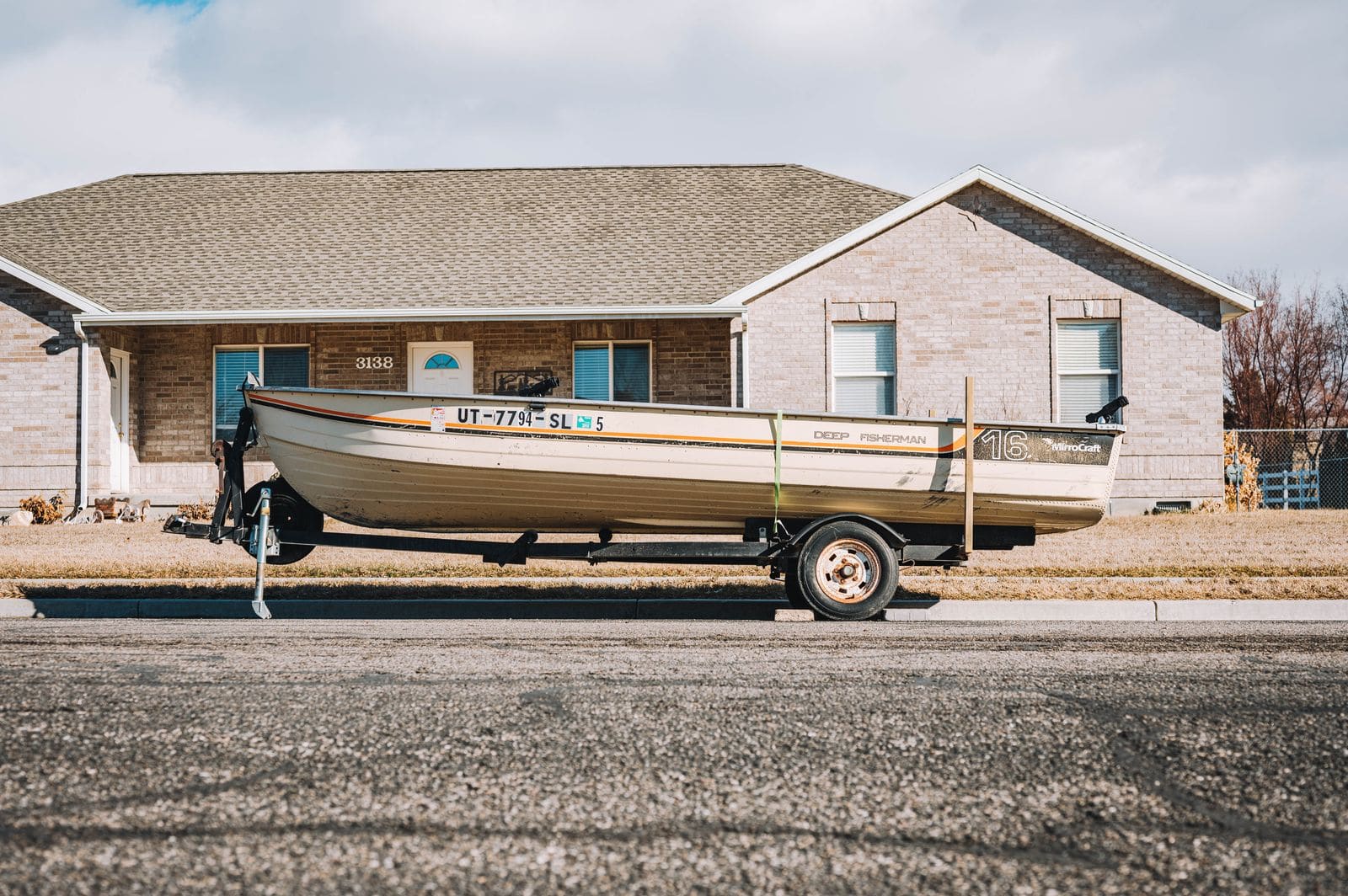
How to Inspect and Repack Boat Trailer Wheel Bearings
Check, clean and repack your trailer's wheel bearings so a seized hub does not leave you stranded on the highway. Boat trailers get dunked in water every launch, which makes their bearings fail far more often than those on dry utility trailers.
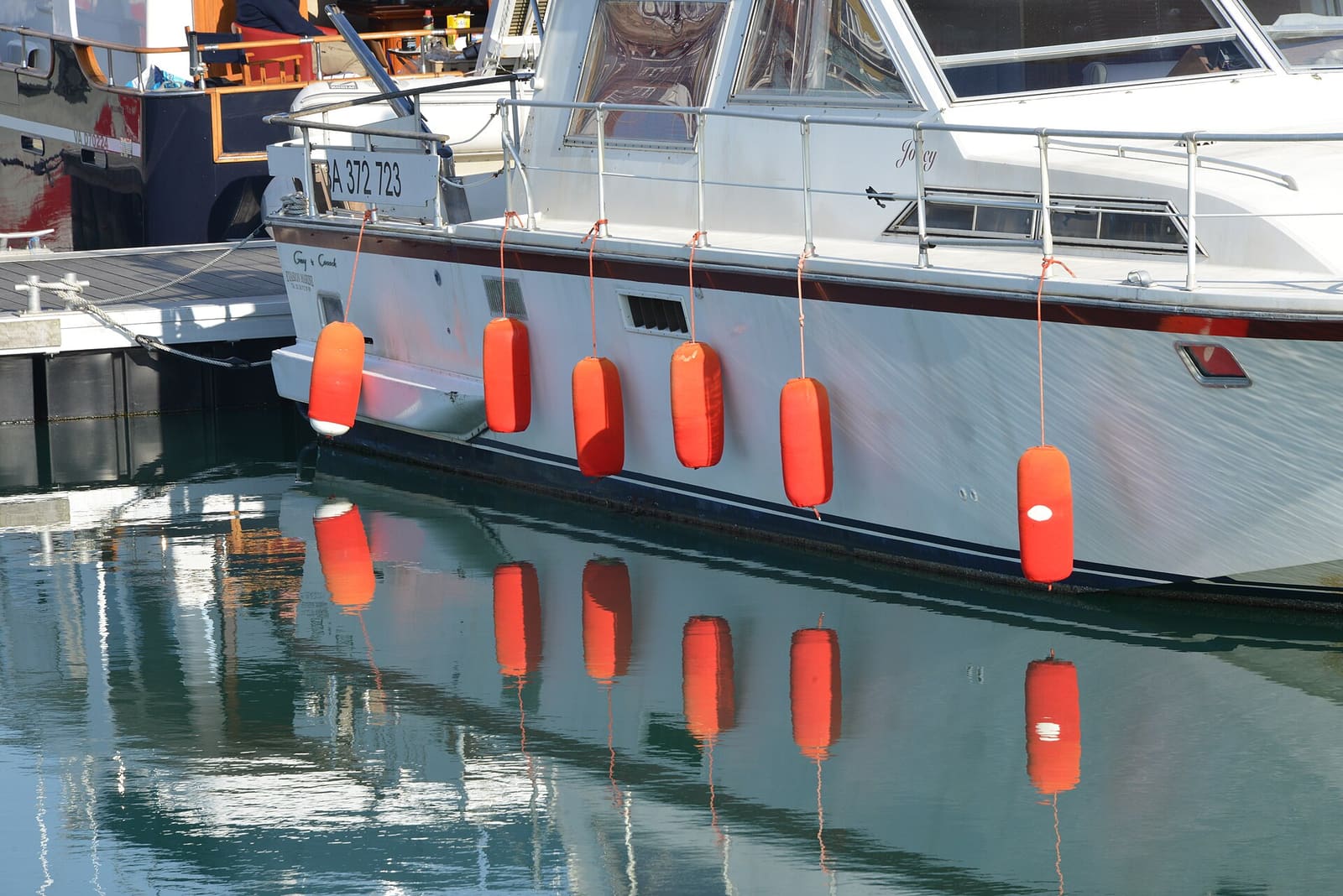
How to Size, Rig and Inspect Dock Lines and Fenders
Pick the right dock line diameter and fender size for your boat, set up bow, stern and spring lines in a slip, add chafe gear, inspect for wear and UV damage, and double everything up before a storm.
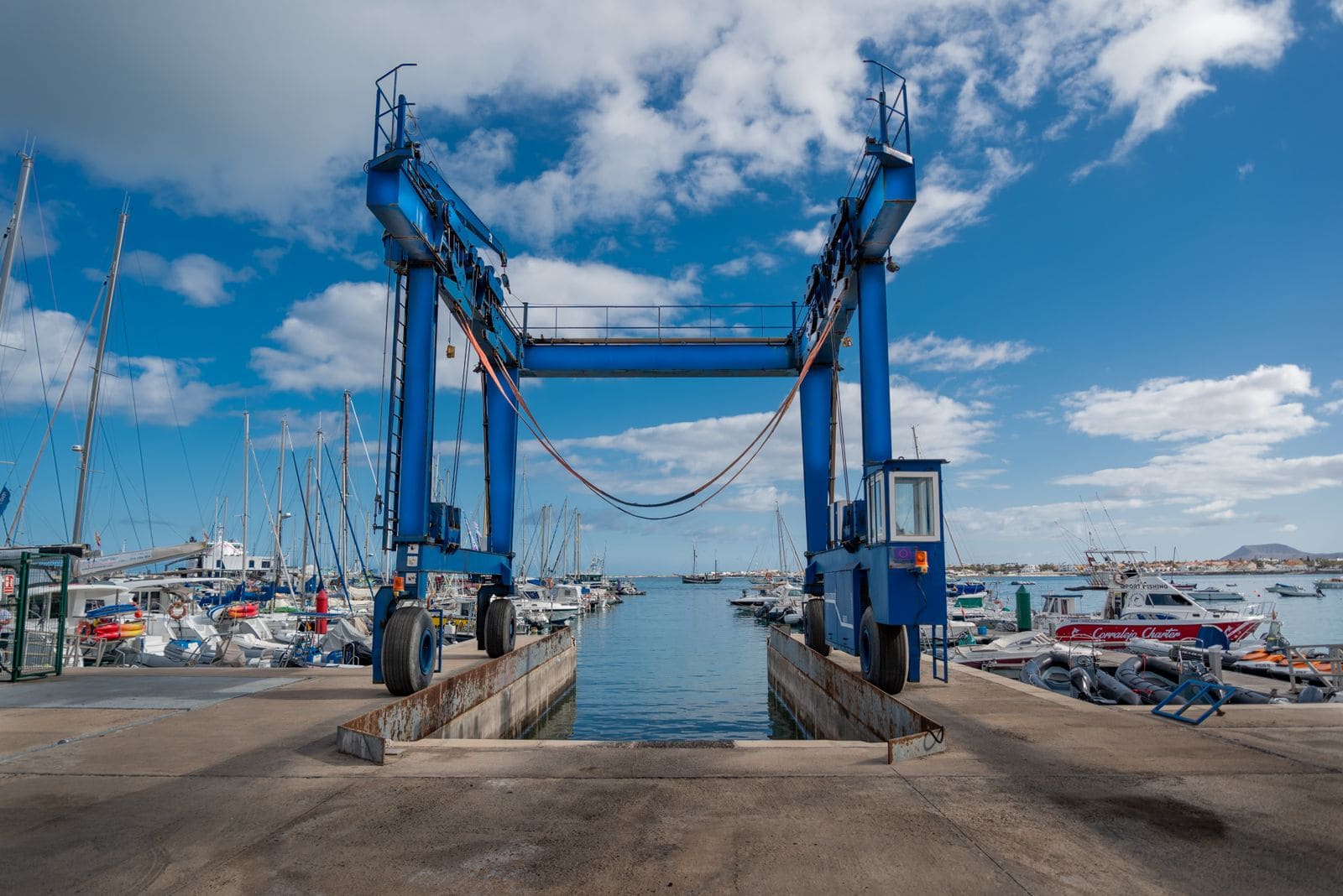
How to Prepare Your Boat for an Insurance or Condition Survey
Get ready for a marine survey your insurer or lender asked for: what a SAMS or NAMS surveyor looks at, the common findings you can fix beforehand (hose clamps, seacocks, bilge, fire extinguishers, wiring), the paperwork to have ready, and how to handle the recommendations afterward.
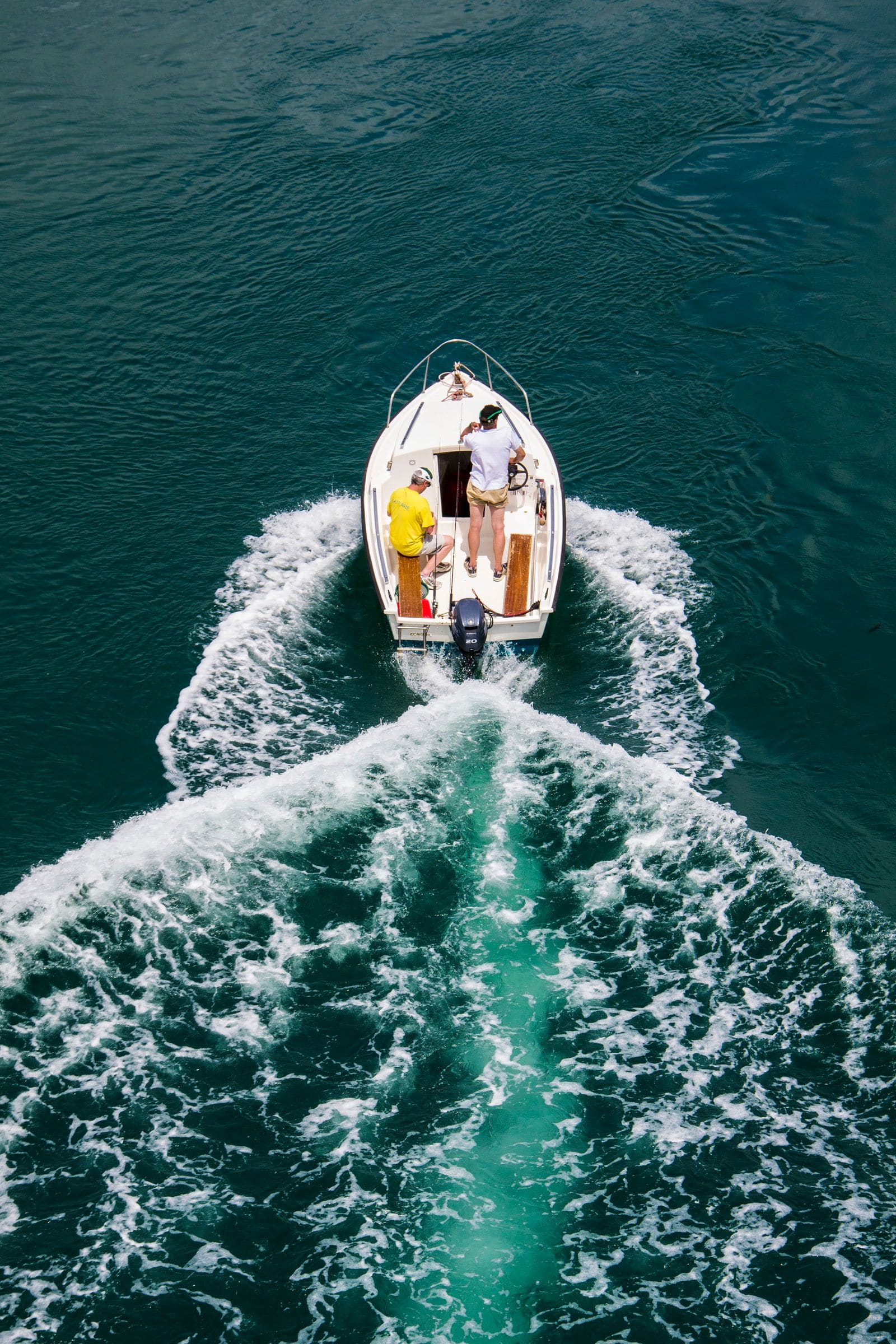
How to Sea Trial Your Boat After Maintenance or Repair
A step-by-step test run after service work: dock checks first (leaks, fluids, steering, kill switch), then a gradual climb through the RPM range while you watch temperature and pressure, a wide-open-throttle check against your engine's spec, shifting and trim tests, and a bilge check afterward. Catch a loose clamp or a missed step at the dock, not miles out.