The Real Cost of Owning a Boat: Building a Yearly Budget and Cutting Costs with DIY
Add up what a boat really costs each year (storage, insurance, fuel, maintenance, winterizing, registration, depreciation and the surprise repair), check it against the common rules of thumb, and find the places where do-it-yourself work and smarter choices save real money. Practical planning help, not financial advice.
Time
1 h 30 min
Applies to
All engines
Safety first: This is planning help, not financial advice. Never "save" money by skipping safety gear, a needed survey, or work you're not qualified to do (fuel systems, high-current electrical, shore power, anything below the waterline). A cheap fix that leaks fuel or water costs far more than the shop bill. If you can't afford the boat with every cost included, a smaller boat, a partnership or a boat club is a better answer than cutting corners.
Owners often ask
- Is the 10% of purchase price rule realistic for yearly boat maintenance?
- How much should I budget each year to own a boat besides the loan payment?
This guide walks you through it. Still stuck? Ask the AI Mechanic about your engine.
Tools
- Spreadsheet or notebook
- Last year's receipts and statements (if you already own a boat)
- Written quotes for storage and insurance
- Your engine's maintenance schedule from the owner's manual
Before you start
The purchase price is only the entry ticket. Discover Boating's cost-of-ownership guide lists what comes after: a trailer and its upkeep, insurance, storage, routine maintenance, winterizing and spring make-ready in cold climates, safety gear and accessories. It also warns not to tie up cost-of-living money in a discretionary purchase.
The rules of thumb, and why they disagree:
- Discover Boating: most people find annual maintenance runs about 10% of the boat's cost or less, and often much less in the first few years.
- Practical Sailor (first sailboat guide): budget 10 to 15% of the boat's value for annual maintenance, adjusted for age, condition and the survey results. An old $5,000 boat will likely need proportionally more; a newer expensive one should need less.
- BoatTEST: about 10% of value on upkeep, closer to 2% for a newer boat; insurance roughly 0.5% of value a year; and depreciation of roughly 10 to 15% in the first year for a new boat.
Use these as a sanity check, not a budget. The percentages break down on very cheap old boats (where one repower can exceed the boat's price) and on boats kept in expensive marinas (where the slip alone can beat 10%). The way to get a real number is to build it line by line, as below.
What drives the total most: where you keep the boat, salt or fresh water, boat and engine size, the boat's age and condition, and how much of the work you do yourself.
Steps
Fixed costs arrive whether you use the boat or not. Write down:
- Storage: slip, mooring, dry stack, rack, yard or nothing (trailer at home)
- Insurance
- Registration, state decals and any boat or property tax (or Coast Guard documentation renewal for documented boats)
- Loan payment, if any (our financing guide covers total interest)
- Towing membership (on-water assistance)
- Club, launch or parking permits
These are the numbers to get in writing before you buy.
Don't skip the tax line. Many owners are surprised by a yearly tax bill. Rules vary a lot by state and even county: some charge personal property tax on boats, some an annual excise tax, some neither, and sales or use tax is usually due when you register a newly bought boat. Washington, for example, charges an annual watercraft excise tax of 0.5% of fair market value on non-commercial boats 16 feet and over, in place of property tax, due each June 30. Ask your state revenue office and county assessor before you buy.
Storage is often the biggest single line. Discover Boating gives rough national guides (your local prices will differ):
- In-water dock space: about $1,000 to more than $5,000 per season, depending on region and waterway; its used-boat page puts marina dockage at roughly $7 to $32 per foot per month.
- Indoor rack (dry stack): typically about 1.5 times in-water dock space for the season.
- Winter, outdoors: shrink-wrapping at roughly $10 to $15 per foot, so a 21-footer runs about $200 to $300.
- Winter, indoors: roughly $50 per foot, about $1,000 for that same 21-footer.
- At home on the trailer: essentially free, if your local rules and HOA allow it.
Ask what the marina price includes (electricity, water, pump-out, launch and haul fees). Our storage guide and marina-contract guide cover the fine print.
Insurance depends on the boat's value, age, size, where it's kept and used, your experience and record, and the deductible. Discover Boating notes it's generally cheaper in northern states with short seasons and most expensive on hurricane coasts, and that lenders usually require comprehensive coverage on a financed boat. Many marinas also require minimum liability limits. A boating safety course may earn a discount; ask.
Get quotes before you make an offer. Older or larger boats can be hard to insure, and a policy that requires a survey or a hurricane plan adds cost.
Skip the internet averages and do the math:
- Find your engine's typical fuel burn at cruise (gallons per hour) from the builder, engine maker or other owners.
- Estimate engine hours per season (your hour meter or last year's log is the best guide; a new owner can count planned trips × hours per trip).
- Multiply: gallons per hour × hours × price per gallon.
Two Discover Boating points help here: much of a typical day is spent idling, anchored or fishing, so many owners burn less than they expect; and dockside marina fuel usually costs more than the gas station, so trailer boaters can fill up on the road. If your engine maker allows ethanol blends, follow its limits; marina ethanol-free fuel costs more but may avoid fuel-system problems. Our fuel-economy guide has more ways to cut the bill.
Open the engine owner's manual and list every service due in a year: typically an oil and filter change, fuel filter, gearcase lube, impeller (on its own interval), anodes, spark plugs, trailer bearings and grease points. Discover Boating says modern family powerboats need very little: basic annual engine service, gearcase lube and a prop check, plus winterizing in cold climates. It puts dealer annual service for a typical small boat at roughly $100 to $300, and servicing and winterizing a 150 hp four-stroke at around $250 plus about another $250 to clean and winterize the boat.
Then add the boat itself: bottom paint if it lives in the water, wax, canvas, batteries every few years, and safety gear that expires (flares, some extinguishers, inflatable life jacket parts). Salt water raises all of it.
In cold climates, budget winterizing and haul-out in the fall and commissioning and launch in spring. Get the yard's rate sheet: haul and block, pressure wash, shrink-wrap, storage, launch. Doing the engine work yourself (our winterizing guides) while paying the yard only for lifting is a common middle ground, if the yard permits DIY.
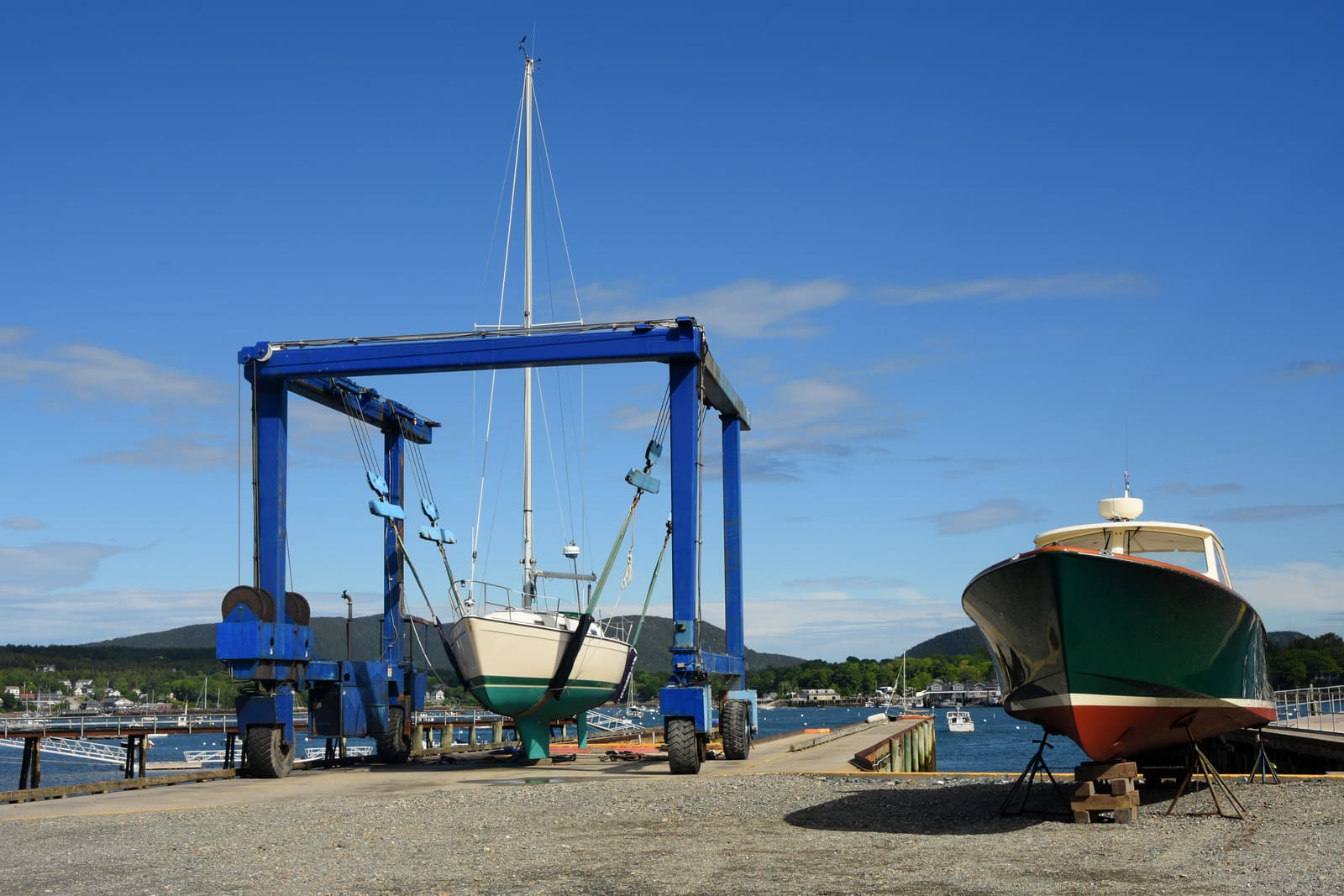
Hauling, blocking and launching are separate lines on most yard rate sheets. Photo: Amaury Laporte / Wikimedia Commons · CC BY 2.0 Depreciation isn't a bill, but it's real money. Discover Boating's used-boat page says a 20-foot boat can lose as much as 20% of its value in the first year; BoatTEST cites roughly 10 to 15% in year one for new boats, slowing to about 5% a year after a decade. Buying a well-kept boat a few years old lets the first owner take the steepest drop, which is why Discover Boating suggests looking at 2- to 10-year-old boats.
Something always breaks: a starter, a trim pump, a bent prop, a lower unit that hit a rock. Pick a yearly reserve and put it in a separate account each month. Older boats and boats bought without a survey need a bigger reserve. If you're considering an extended service contract instead, read our guide first: BoatUS points out these contracts carry deductibles, may not pay for consequential damage, engine removal or haul-out, and usually aren't backed by the manufacturer unless it's a factory plan.
Add every line, then divide by the number of days you realistically expect to use the boat. That "cost per day on the water" is the honest number for comparing with:
- Rentals, which Discover Boating notes get expensive if you go out often
- Boat clubs, with an initial fee plus monthly dues and the club doing the maintenance
- Peer-to-peer rentals, with no membership fees
- Co-ownership, which splits the fixed costs (our co-ownership guide covers the agreement)
If the total makes you wince, adjust the plan before you buy, not after.
Discover Boating says a mechanically inclined owner can tackle most simple maintenance, with two cautions: make sure your work doesn't jeopardize a warranty, and know that home plumbing or wiring skills don't automatically carry over to boats. The usual DIY wins:
- Engine basics: oil and filter, gearcase lube, fuel filter, plugs, impeller on outboards, grease points
- Winterizing and spring commissioning (where the yard allows owner work)
- Washing, waxing, canvas care and flushing after salt water
- Trailer bearings, lights and tires
- Keeping records so service intervals don't slip and resale value holds
Leave these to a pro unless you're trained: fuel system leaks, gas engine ignition-protected parts, shore power and AC wiring, through-hulls and seacocks, steering, and anything requiring engine removal. Keep receipts and a log for every DIY job, with parts used; it helps with warranty questions and when you sell.
- Buy the boat you need, not the one that dazzled you. Discover Boating notes a size or two smaller saves on purchase, fuel, insurance and towing.
- Keep it at home on the trailer if you can.
- Buy fuel away from the water when practical, and treat fuel before storage.
- Pay cash or put more down to cut interest.
- Take a boating course (insurance discounts, fewer accidents).
- Cover the boat and flush after salt water; neglect is the most expensive maintenance plan.
Log every expense by category through the season. At year's end, compare with your budget, raise the lines you underestimated, and reset the repair reserve. After two seasons you'll have a budget built on your boat, not on rules of thumb.
Common mistakes
- Budgeting the loan payment and forgetting storage, insurance, fuel and maintenance.
- Using "10% a year" on a $5,000 project boat, then facing a repower that costs more than the boat.
- Getting insurance and slip quotes after the purchase.
- Assuming DIY is always cheaper: a botched job can cost more than the shop and may hurt a warranty claim.
- Skipping the survey on a used boat to save a few hundred dollars.
- Having no repair reserve, then parking the boat for a season over one breakdown.
- Forgetting trailer costs (tires, bearings, registration) and tow-vehicle wear.
When to call a pro
- Fuel smell, fuel leaks, electrical burning smells or water coming in: stop and call a marine technician; on the water, call TowBoatUS, Sea Tow, or the Coast Guard on VHF 16 / 911 if anyone is at risk
- You're not sure whether a job is within your skills or could affect your warranty
- You're buying a used boat: hire an accredited marine surveyor and get a mechanical inspection
- You're unsure the total is affordable: a fee-only financial advisor can help you look at the whole picture
Tips
- Make a "boat" savings account and pay into it every month, including the off-season.
- Get storage and insurance quotes for two or three options; the spread is often bigger than you expect.
- Buy maintenance parts in the off-season and keep a spare kit aboard (impeller, filters, fuses, plugs).
- Ask the yard for its rate sheet and DIY rules before you commit to a winter spot.
- Keep a simple maintenance log in BoatMend with dates, hours and receipts; it saves money now and adds value when you sell.
Official references
We read these to write this guide. Your engine's own manual always wins.
- Discover Boating – Costs of Boat Ownership
- Discover Boating – Affordable Boating, Budgeting for Your Boat
- Discover Boating – Costs to Expect as a Used Boat Owner
- Discover Boating – Boat Maintenance Tips
- Discover Boating – Go Boating Today (rentals, clubs, peer-to-peer)
- Practical Sailor – A Guide to Buying Your First Sailboat
- BoatTEST – The Real Costs of Owning a Boat
- BoatUS – Extended Service Contracts (2019)
- Washington State Department of Revenue – Watercraft excise tax
Safety: BoatMend is for information only and does not replace a certified marine technician. You are responsible for your safety and your boat. Read the full disclaimer.
Last updated 2026-10-25
Related guides

Financing a Boat: Loan Terms, Survey and Insurance Requirements, Liens and the True Cost of Ownership
Understand a boat loan before you sign: typical terms and down payments, what lenders check, why they want a survey and insurance, how the lien is recorded (Coast Guard preferred mortgage for documented boats, state title for the rest), how the payoff works when you sell, and how to add up the real yearly cost beyond the monthly payment. Practical guidance, not financial advice.

Choosing How to Store Your Boat: Trailer at Home, Dry Stack, Lift, Wet Slip, Mooring or Indoors
Compare the main ways to keep a boat in season and over winter: on a trailer at home or in a lot, in a dry stack, on a lift, in a wet slip, on a mooring or indoors. See what each costs, how it affects growth, corrosion, UV and upkeep, what to check about insurance, HOA rules and security, and how winter changes the choice.
How to Prepare Your Boat for an Insurance or Condition Survey
Get ready for a marine survey your insurer or lender asked for: what a SAMS or NAMS surveyor looks at, the common findings you can fix beforehand (hose clamps, seacocks, bilge, fire extinguishers, wiring), the paperwork to have ready, and how to handle the recommendations afterward.

How to Get Better Fuel Economy From Your Boat
Boat fuel is expensive, but most owners can stretch every gallon further without buying anything. Learn how to find your boat's most efficient cruise RPM, why a clean bottom, the right prop, good trim and less weight matter most, which tune-up items count, how fuel flow data helps, and which fuel-saving myths to ignore.
Winter Layup Master Checklist (Step-by-Step, With Links to Each Job)
One ordered checklist for putting any boat away for winter, from booking storage and treating the fuel to winterizing the engine, water systems, head and batteries, then blocking, covering and securing the boat. Each step links to the detailed BoatMend guide for that job.
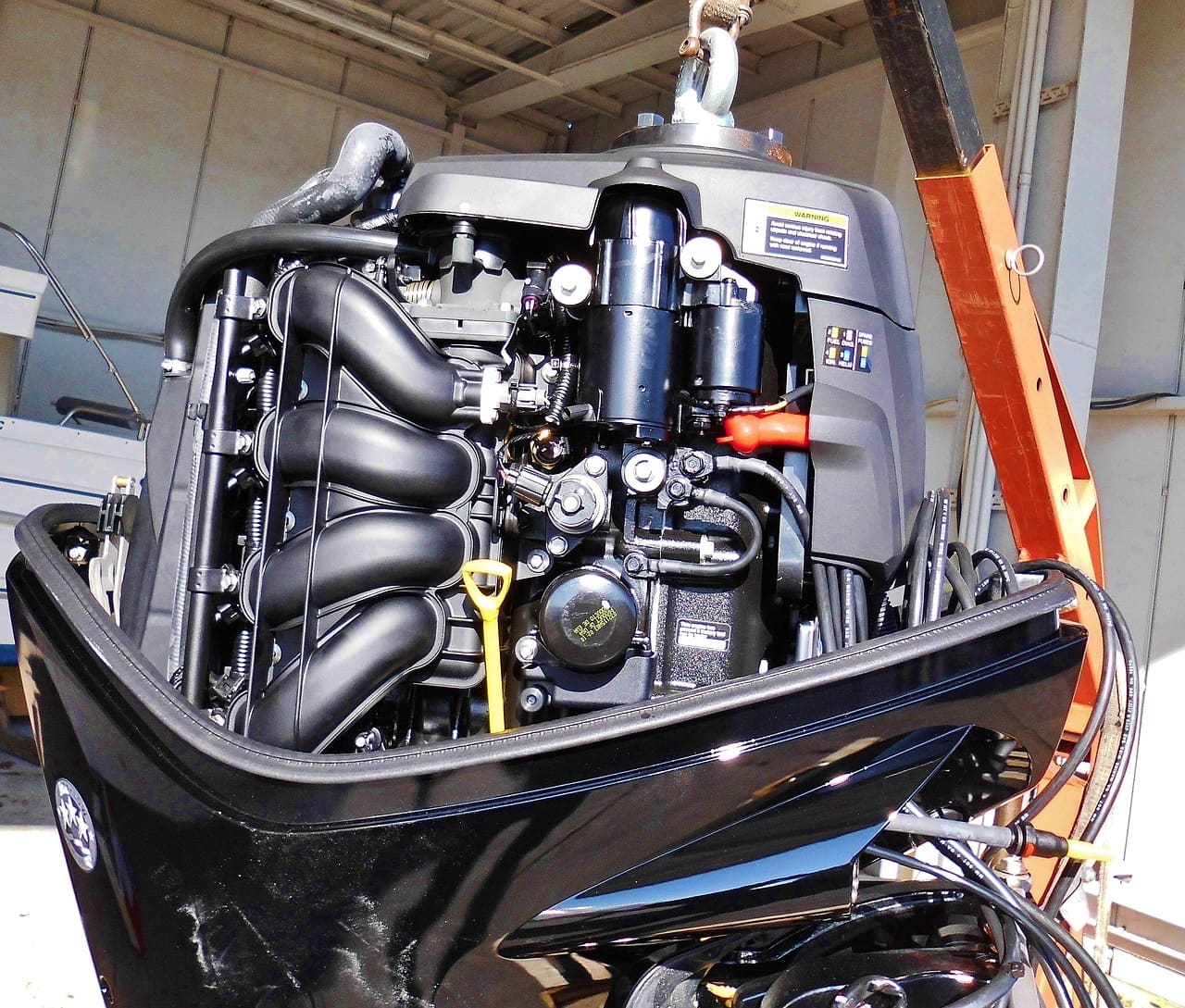
How to Change the Oil and Filter on a 4-Stroke Outboard
Drain the old oil, swap the filter and refill with the right marine oil on your 4-stroke outboard. It is the most common service job, takes about an hour, and costs a fraction of the dealer price.
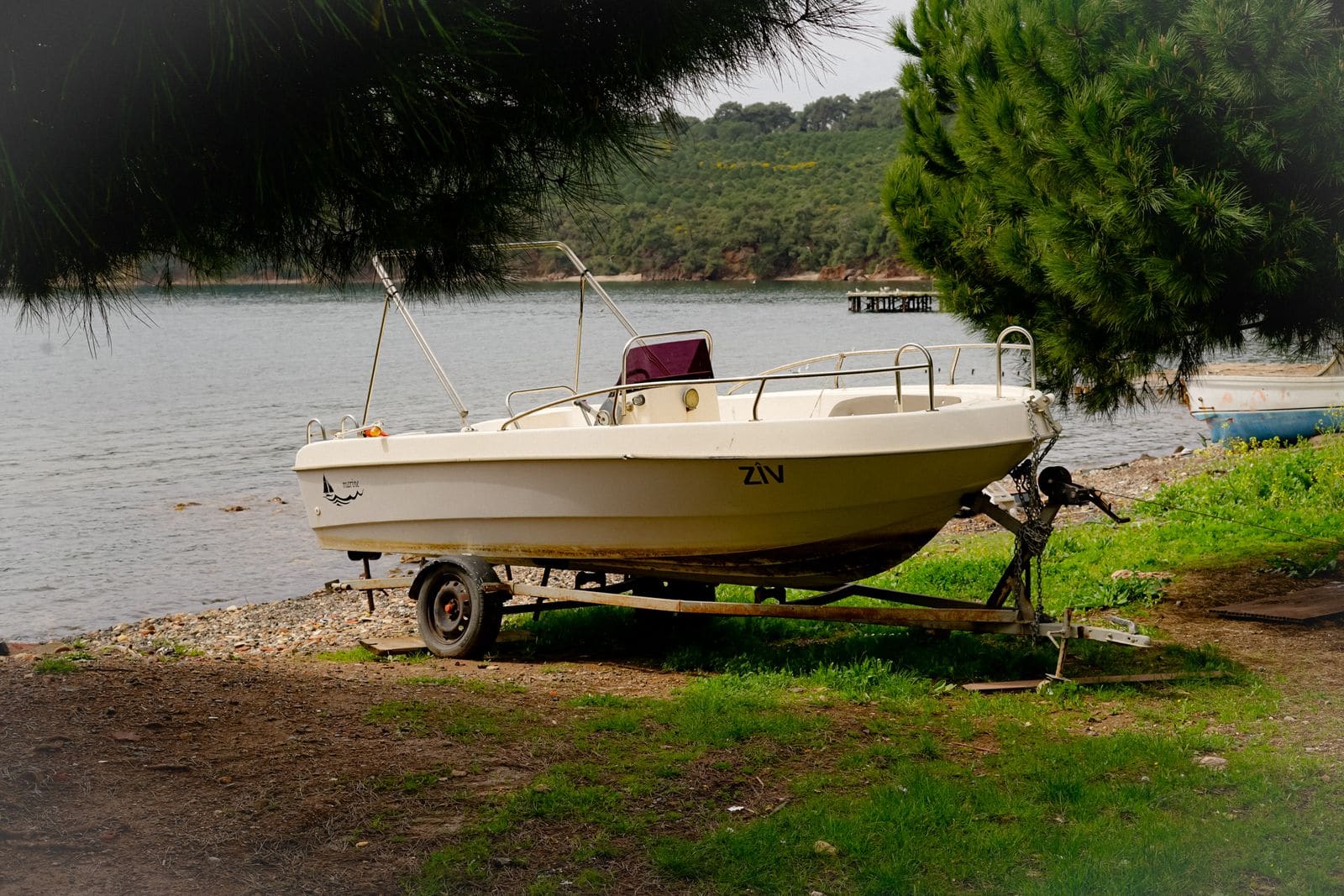
How to Inspect a Used Boat Before You Buy
A step-by-step checklist for looking over a used boat, from paperwork and the hull ID number to the transom, engine, compression test, sea trial and trailer. Know what to check yourself, what the red flags mean, and when to pay a marine surveyor.

Marina Slip and Storage Contracts: What to Read Before You Sign
Walk through a slip, mooring or winter storage contract clause by clause: insurance and additional-insured requirements, hold-harmless and waiver-of-subrogation language, liveaboard and work rules, DIY and outside-contractor limits, storms, termination, refunds and lien rights, plus the questions to ask the marina and your insurer. Practical guidance, not legal advice.

Sharing a Boat: Co-Ownership Agreements, Partnerships and Boat Club Alternatives
How to share a boat without losing a friend: choosing a partner, what a written agreement should cover (shares, costs, scheduling, maintenance standards, insurance, title, decisions and the exit), how to handle the inevitable disagreements, and when a boat club, rental or peer-to-peer option makes more sense. Practical guidance, not legal or tax advice.
Extended Warranties and Service Plans for Boat Engines: Factory Plans vs Third-Party Contracts
Decide whether an extended service plan is worth it: how factory plans such as Mercury Product Protection and Yamaha Y.E.S. differ from third-party contracts, what they usually cover and exclude, why maintenance records decide claims, how deductibles, transfers and cancellations work, and the questions to ask before you sign. Practical guidance, not legal or financial advice.