Financing a Boat: Loan Terms, Survey and Insurance Requirements, Liens and the True Cost of Ownership
Understand a boat loan before you sign: typical terms and down payments, what lenders check, why they want a survey and insurance, how the lien is recorded (Coast Guard preferred mortgage for documented boats, state title for the rest), how the payoff works when you sell, and how to add up the real yearly cost beyond the monthly payment. Practical guidance, not financial advice.

Time
2 h
Applies to
All engines
Safety first: This is practical background, not financial, tax or legal advice. A boat loan puts the boat up as collateral; if you can't pay, the lender can repossess it, and boats often lose value faster than the loan balance drops. Rates, terms and lender rules change constantly. Compare offers, read the whole contract, and talk to a financial advisor or tax pro about your own situation.
Owners often ask
- How long can I finance a used boat, and how much do I need to put down?
- I still owe money on my boat. Can I sell it before the loan is paid off?
- Is it OK to co-own a boat with a friend and split the loan?
This guide walks you through it. Still stuck? Ask the AI Mechanic about your engine.
Tools
- Credit report and score
- Recent tax returns, pay stubs and bank statements
- Personal financial statement (assets and debts)
- Loan calculator or spreadsheet
Before you start
How boat loans work. Discover Boating describes a boat loan as an installment loan like a car loan: you get a lump sum, repay it with interest over a set term, and the boat usually serves as collateral. BoatUS adds that boat loans borrow from both worlds: a lender may want tax returns and proof of assets like a mortgage lender, and uses a loan-to-value limit like a car lender. Its FAQ says marine lending standards are generally stricter than for cars or even homes.
Where loans come from:
- Dealers arrange financing through lender partners every day; convenient, but compare their offer.
- Specialized marine lenders know boats and are often more flexible with older or unusual boats, according to Discover Boating.
- Banks and credit unions can be competitive if you have good credit.
- Online lenders are fast; still compare rates and terms.
- Home equity loans may carry a lower rate but put your house on the line (see step 4).
Typical numbers (2026, they move):
- Term: BoatUS says boat loan terms typically run 5 to 20 years, depending on the amount and the boat. Discover Boating cites 4 to 20 years, with longer terms usually reserved for bigger loans.
- Down payment: both say typically 10% to 20%. Some lenders offer less.
- Credit score: BoatUS and Discover Boating say most lenders prefer 650 or higher; Discover Boating's loan basics page puts it closer to 700 for the best terms.
- Rates: Discover Boating (updated May 2026) lists rates from about 7% to nearly 36%, depending on credit. That spread is why shopping around matters.
Steps
Before you look at boats, work out what you can spend each year to own one. Discover Boating's cost-of-ownership guide lists what comes on top of the loan: a trailer (and its tires, brakes and upkeep), insurance, storage, routine maintenance, winterizing and spring make-ready in cold areas, safety gear and accessories. It also reminds buyers not to tie up cost-of-living money in a discretionary purchase. Our storage guide covers storage costs in detail.
As a rough example from Discover Boating: servicing and winterizing a 150 hp four-stroke outboard might run around $250, plus about another $250 to clean and winterize the boat; outdoor shrink-wrapping is roughly $10 to $15 per foot. Salt water raises maintenance costs. Your local prices will differ, so get quotes.
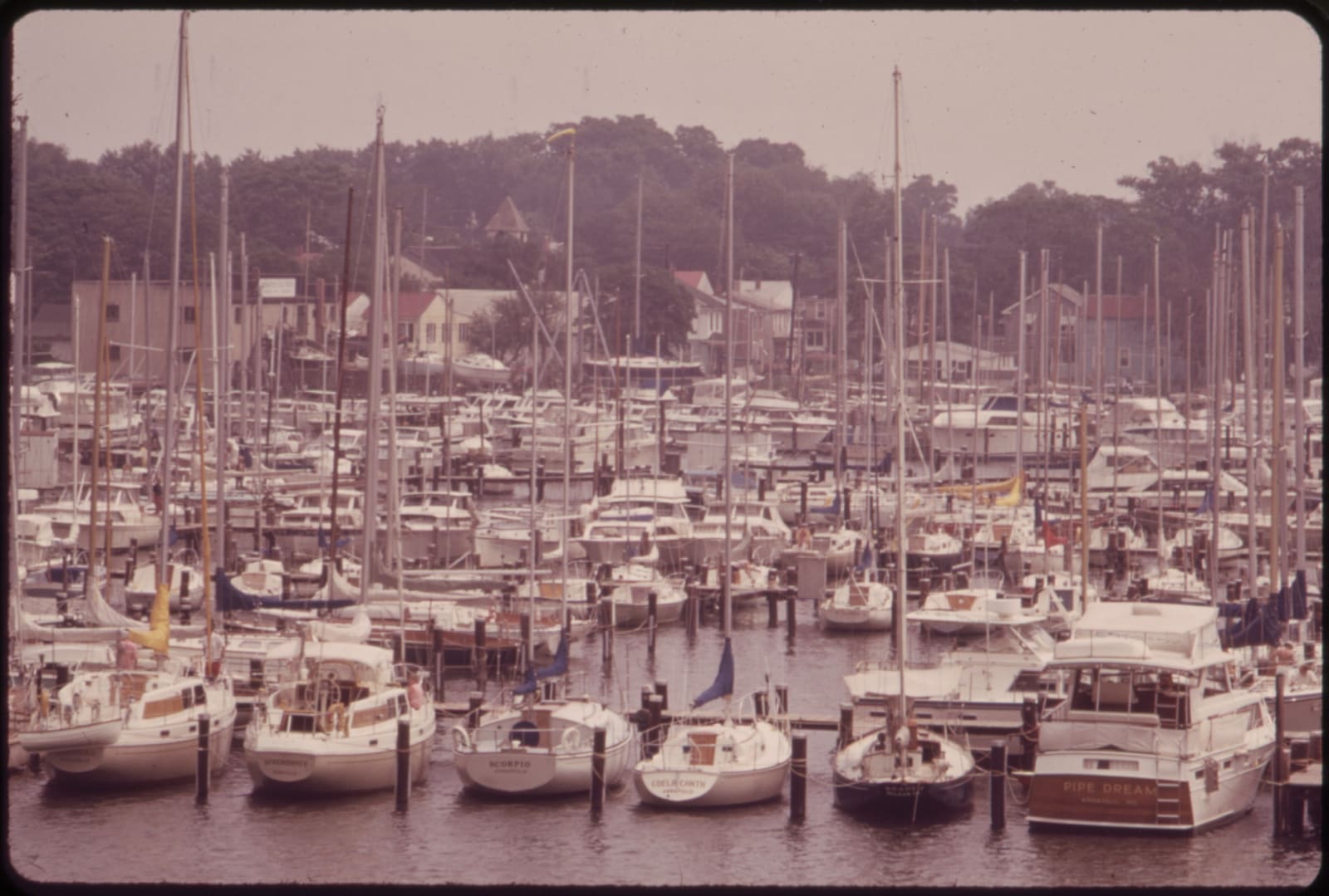
Add up the yearly cost (storage, insurance, maintenance, fuel) before you look at the monthly payment. Photo: Coyau / Wikimedia Commons · CC BY-SA 3.0 BoatUS reminds buyers that sales tax may have to be paid upfront or financed, depending on the state. Add title, registration or documentation fees, the survey, and any dealer prep or delivery charges. Financing these means paying interest on them for years.
BoatUS (2014) noted that the closer your score is to 700 and up, the better the rate. Pull your credit report and fix errors before you apply. Gather what BoatUS's FAQ says lenders typically ask for: tax returns, bank and retirement account statements, a personal financial statement listing assets and debts, and details on the boat. Lenders also check that you can make the down payment without draining your savings, and that your debt-to-income ratio (monthly debt payments divided by monthly income) fits their guidelines.
- Fixed-rate, simple-interest installment loans are the most common, with the same payment for the life of the loan (BoatUS 2014).
- Longer term = lower payment, more total interest. BoatUS's loan page notes shorter terms usually mean higher payments but less interest overall, and that early payments in any loan are mostly interest.
- Watch the fine print on teaser rates. BoatUS (2014) noted low advertised rates often come with conditions, like a short term or newer boats only.
- Compare APR to APR. The Consumer Financial Protection Bureau explains that the interest rate is the cost of borrowing, while the APR adds the lender's fees (such as origination charges), and that the federal Truth in Lending Act requires lenders to disclose the APR before you finalize a loan. Comparing one lender's APR with another's interest rate makes the second look cheaper than it is.
- Ask about prepayment penalties and whether you can pay extra toward principal. The CFPB's advice for loans with a prepayment penalty applies here too: read exactly when it kicks in and how much it is, and ask for a quote on the same loan without one so you can compare total cost. If you might sell the boat in a few years, this matters.
- Home equity loans may cost less in interest, but if things go wrong it's your home at risk, not just the boat.
- Interest deduction: IRS Publication 936 says a home for the mortgage interest deduction can include a boat with sleeping, cooking and toilet facilities, as a main or second home. Whether that applies to you depends on your taxes and the loan; ask a tax professional.
Run the numbers on a loan calculator for several terms and down payments, and look at total interest paid, not only the monthly figure.
BoatUS (2014) noted it's harder to get good rates, or any loan, on older boats, and that the longest terms were usually for larger loans on newer boats. Lenders base the loan on value: BoatUS's FAQ says they use the contract price for new boats and book value for used boats, checking the price against valuation guides such as NADA, BUC and ABOS. If you're paying well over book value, expect a bigger down payment. Some lenders also exclude whole categories of boats; BoatUS's FAQ, for example, says its lending partners can't currently take applications for steel-hull boats. Ask early if your boat is unusual (steel, wood, a home-built or a project boat).
Thinking of splitting the loan with a friend? Owners in forums who have co-owned boats mostly report trouble over who uses the boat, who pays for repairs and who cleans it. If you do co-own, every borrower is usually responsible for the whole loan, and the title or documentation lists all owners, so put a written agreement in place first covering use, costs, insurance and what happens if one of you wants out.
BoatUS's lending partners don't issue house-style pre-approvals, but you can apply listing a boat similar in age, length and type to the one you want, at a realistic price, and you're not locked into that exact boat. Their FAQ says most applicants get a decision in 2 to 4 business days. Discover Boating notes prequalifying usually uses a soft credit check, while a full application involves a hard inquiry.
BoatUS (2025) strongly recommends checking insurance before you fall for a boat. Many insurers have tightened up and won't take boats over about 20 years old or over 40 feet, may not bind a policy when a named storm is headed your way, and may restrict where the boat can be in hurricane season. Lenders commonly require full (comprehensive) coverage on a financed boat, as Discover Boating notes. Insurers may want:
- A survey that values the boat at or above the amount you're insuring
- Repairs completed before you leave the dock or within a deadline ("insure in place")
- A written hurricane plan in storm-prone areas
Ask whether the policy pays agreed value or actual cash value on a total loss; BoatUS explains agreed value tells you exactly what you'd receive, while actual cash value pays current market value. That difference matters if you owe more than the boat is worth.
BoatUS's FAQ says lenders usually require a marine survey on most used boats, plus a signed sales contract, before closing. A survey protects you as much as the lender: it can uncover problems worth renegotiating over. Make your offer subject to survey, sea trial and financing. Our insurance survey and used boat inspection guides explain what surveyors look at.
- Documented boats: BoatUS's FAQ says that if a boat is eligible for Coast Guard documentation, lenders typically require it, and they prepare a First Preferred Ship Mortgage filed with the Coast Guard. BoatUS's documentation FAQ adds that the Coast Guard won't make changes such as a change of ownership without the lender's consent; under 46 CFR 67.145, even a name or hailing port change needs the mortgagee's consent.
- Smaller (titled) boats: no formal ship mortgage is prepared, but the lender records its lien against the state title or equivalent document.
- Either way, the lien is released when the loan is repaid.
Keep your documentation or registration current; your loan contract likely requires it.
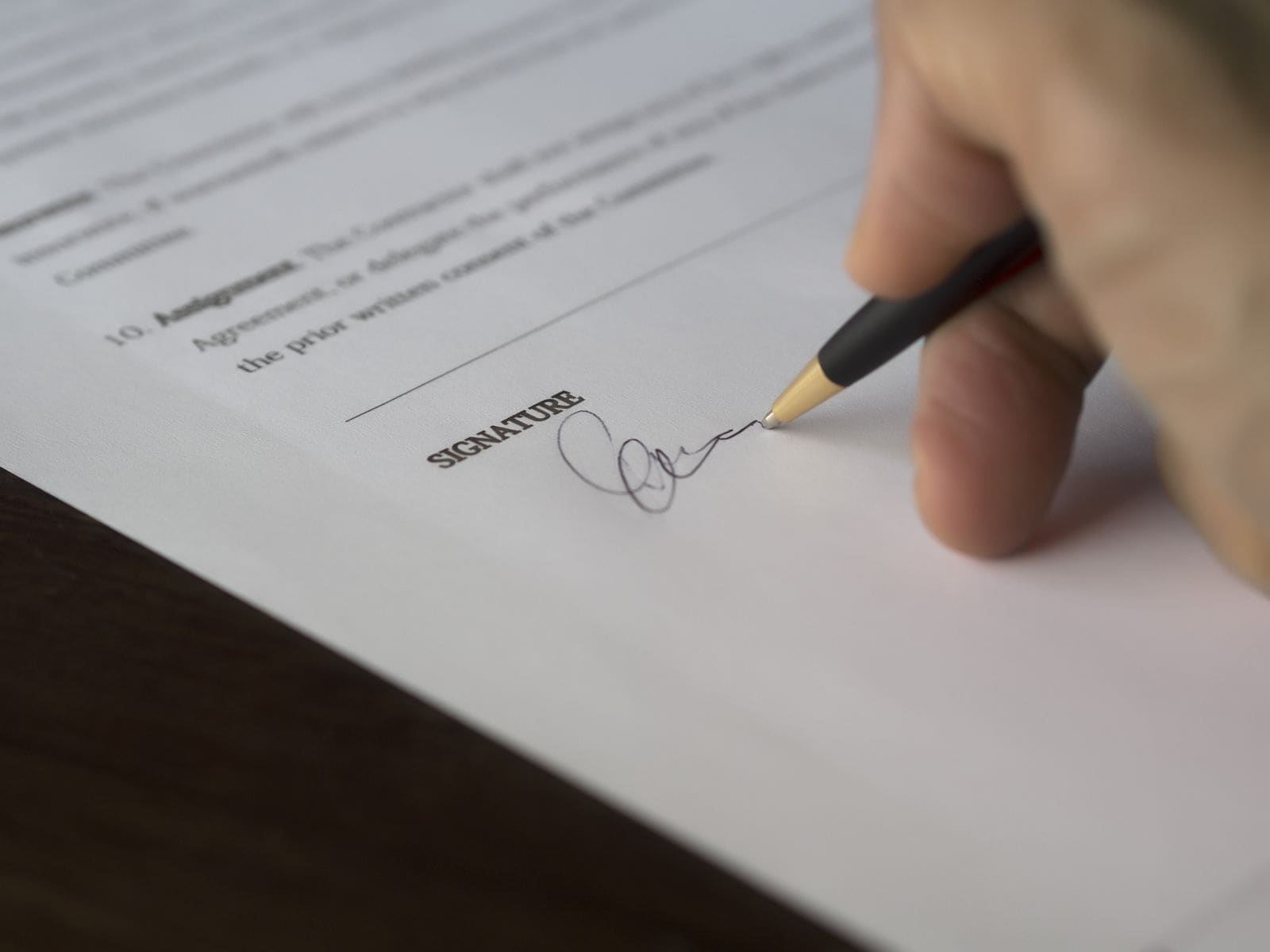
BoatUS describes a typical closing: once the lender has everything from buyer and seller, both sign and notarize the paperwork, and funds go out in a day or two. If the seller still owes money on the boat, the lender pays the seller's lienholder directly; otherwise the seller is paid by check or wire. Buyer and seller don't have to be in the same place. Before you sign:
- Confirm the HIN on the boat, the title or COD and the contract all match
- Ask for an abstract of title on a documented boat (46 CFR 67.301) to see recorded mortgages and liens
- Make sure any accessories, trailer or warranty you're financing are listed; Discover Boating notes you can often roll these in, but you'll pay interest on them for the full term
- Look hard at optional add-ons offered in the finance office (GAP coverage, service contracts, payment protection). The CFPB's guidance is written for car loans, but the same logic applies: GAP is meant to cover the difference between what you owe and what insurance pays after a total loss, prices vary a lot, and your own insurer or lender may sell it for less. If you're told an add-on is required, ask where the contract says so or call the lender; if it really is required, its cost must be part of the finance charge and the APR. Optional add-ons can be declined, and the CFPB says you may be owed a refund on them if you sell, refinance or pay off early
Our purchase-and-closing and scams guides cover the rest of the paperwork.
You can sell a boat that still has a loan, but the buyer needs a clean title. The usual path:
- Get a written payoff letter from your lender with the exact amount and a good-through date.
- The buyer's lender (or an escrow service) pays your lender directly, as BoatUS describes for its own loans. Any remainder goes to you.
- Your lender releases the lien: on a state title, through a lien release or new title from the state; on a documented boat, through a satisfaction or release of the mortgage filed with the NVDC (46 CFR 67.265 covers these instruments).
- Keep copies of everything, and check that the lien really shows as released.
If you owe more than the boat sells for, you'll need to cover the difference at closing. BoatUS (2014) recalled the last recession, when boat values dropped about 35% and many owners owed more than their boats were worth. A bigger down payment and a shorter term protect you from being "underwater."
Once a year, compare your balance with the boat's market value, check whether refinancing makes sense if rates have dropped (BoatUS notes refinancing can lower the payment or the rate), and check that your insurance value still matches the boat. If money gets tight, call your lender before you miss a payment.
Common mistakes
- Shopping by monthly payment and ignoring storage, insurance, maintenance and total interest.
- Making an offer before getting an insurance quote, then finding no one will cover the boat.
- Skipping the survey to save money on a used boat.
- Stretching the term so long that the boat is worth less than the loan for most of it.
- Rolling electronics, warranties, taxes and fees into a 15- or 20-year loan.
- Draining the emergency fund for the down payment.
- Assuming the seller's lien will "go away" without a payoff letter and release.
- Letting Coast Guard documentation or state registration lapse on a financed boat.
When to call a pro
- You're unsure whether you can afford the boat with all costs included: talk to a fee-only financial advisor
- You want to deduct loan interest or the boat may be a second home: ask a tax professional
- The seller has a lien, multiple owners, an estate or out-of-state paperwork: use a documentation service or maritime attorney and an escrow agent
- You're buying a larger or older boat: hire an accredited marine surveyor (SAMS or NAMS) and an insurance broker who knows boats
- You've fallen behind on payments: contact your lender early, and consider a nonprofit credit counselor
Tips
- Get at least three loan quotes (dealer, a marine lender and your credit union) on the same day.
- Ask every lender for the APR, total interest over the full term, any fees and any prepayment penalty, in writing.
- A trade-in can lower the amount you finance; get its value in writing separately from the new boat's price.
- Active or retired military? BoatUS notes there may be financing and insurance programs for veterans and families; ask.
- Put the loan payoff date and the documentation or registration renewal date in the same calendar.
Official references
We read these to write this guide. Your engine's own manual always wins.
- BoatUS – Boat Loans FAQ
- BoatUS – Boat Loans and loan calculator
- BoatUS Magazine – Financing Your Dream Boat (2014)
- BoatUS Magazine – Boat Insurance and Financing (2025)
- BoatUS – U.S. Coast Guard Vessel Documentation FAQs (2020)
- BoatUS Magazine – 5 Things To Know About Boat Insurance (2013)
- Discover Boating – Boat Financing
- Discover Boating – Boat Loan Basics
- Discover Boating – Costs of Boat Ownership
- eCFR – 46 CFR 67.145, Restrictions on exchange; mortgagee consent
- eCFR – 46 CFR 67.265, Requirements for instruments evidencing satisfaction or release
- eCFR – 46 CFR 67.301, Issuance of Abstract of Title
- Consumer Financial Protection Bureau – Loan interest rate vs. APR
- Consumer Financial Protection Bureau – What is a prepayment penalty?
- CFPB – What is guaranteed asset protection (GAP) insurance?
- IRS Publication 936, Home Mortgage Interest Deduction (qualified home)
Safety: BoatMend is for information only and does not replace a certified marine technician. You are responsible for your safety and your boat. Read the full disclaimer.
Last updated 2026-10-25
Related guides
How to Inspect a Used Boat Before You Buy
A step-by-step checklist for looking over a used boat, from paperwork and the hull ID number to the transom, engine, compression test, sea trial and trailer. Know what to check yourself, what the red flags mean, and when to pay a marine surveyor.
How to Prepare Your Boat for an Insurance or Condition Survey
Get ready for a marine survey your insurer or lender asked for: what a SAMS or NAMS surveyor looks at, the common findings you can fix beforehand (hose clamps, seacocks, bilge, fire extinguishers, wiring), the paperwork to have ready, and how to handle the recommendations afterward.
Used Boat Purchase Agreement and Closing: Deposit, Contingencies, Bill of Sale and Who Pays What
A plain-English walk-through of buying a used boat on paper: getting ready before you offer, what the purchase and sale agreement should say, how the deposit is held and when it comes back, survey, sea trial, financing and insurance contingencies, paying off the seller's loan, the bill of sale, closing and transferring the paperwork, and the costs each side usually covers. Practical help, not legal advice; rules vary by state.
Used Boat Paperwork: Titles, Liens, HIN Checks, Bill of Sale and Registration
A practical checklist for the paperwork side of buying a used boat: state title or Coast Guard documentation, checking for liens and theft, verifying the hull ID number, writing a proper bill of sale, the trailer's own title, registering in your name, and transferring warranties and checking recalls. Rules vary by state, so confirm each step with your state agency.
Avoiding Boat-Buying Scams: Fake Listings, Fake Escrow, Overpayment Checks and Safe Payment
How to spot and avoid the scams that target boat buyers and sellers: too-good-to-be-true listings, sellers who are always overseas, look-alike escrow and shipping websites, overpayment checks and fake payment notices. Covers verifying the boat, the title, the HIN and the seller, paying safely, and what to do fast if you already sent money. Practical help, not legal advice.
USCG Documentation Renewal: When, How, What It Costs and How to Avoid Look-Alike Renewal Mailers
Keep your boat's Coast Guard Certificate of Documentation current: how long a recreational certificate lasts (1 to 5 years), the federal fee schedule, renewing directly with the NVDC online, what happens if it lapses, why many states still want registration and a decal, and how to spot the third-party letters that charge several times the real fee.
Choosing How to Store Your Boat: Trailer at Home, Dry Stack, Lift, Wet Slip, Mooring or Indoors
Compare the main ways to keep a boat in season and over winter: on a trailer at home or in a lot, in a dry stack, on a lift, in a wet slip, on a mooring or indoors. See what each costs, how it affects growth, corrosion, UV and upkeep, what to check about insurance, HOA rules and security, and how winter changes the choice.

How to Get Your Boat Ready to Sell (Records, Title and Prep)
Prepare your boat for sale the way buyers and surveyors expect: gather the title, registration and HIN paperwork, organize your maintenance records and receipts, fix the small stuff, detail the boat, get it ready for a sea trial and buyer's survey, and close the deal with the right documents.
Buying a Boat in Another State: Survey, Paperwork, Taxes, Registration and Getting It Home
A step-by-step plan for buying a boat that is hundreds of miles away: checking it remotely with a local surveyor, matching the HIN and VIN to the title, avoiding long-distance scams, paying the right sales or use tax, registering in your home state, the trailer's own paperwork, temporary permits, and legal towing or professional transport for wide boats. Rules vary by state, so confirm each step with the agencies involved.
Is My Vehicle Rated to Tow This Boat? Towing Capacity, GCWR and Tongue Weight Explained
The towing number in the ad is only one of several limits. Learn which ratings matter (towing capacity, GCWR, GVWR, axle and tongue limits, hitch class and ball rating), how to weigh your real rig at a truck scale, and when you need trailer brakes and towing mirrors.