When Guests Chipping In Becomes an Illegal Charter: Passengers-for-Hire Rules for Boat Owners
Friends voluntarily sharing the gas money is fine, but if anyone must pay or bring something as a condition of the trip, your boat is carrying passengers for hire and needs a Coast Guard-credentialed captain, and more than six passengers needs an inspected boat. Learn the legal tests, the six-pack (OUPV) license, what a real bareboat charter looks like, the risks of renting through peer-to-peer apps, and the insurance questions to ask. Practical guidance, not legal advice.
Time
30 min
Applies to
All engines
Safety first: The rules exist because people have died on illegal charters run by unqualified operators on boats without the required safety gear. If you're not sure whether a trip is legal, don't take money or "contributions" until you've asked your local Coast Guard office. As a passenger, if the operator can't show the required credentials, the Coast Guard's advice is simple: don't get on the boat.
Owners often ask
- Is it illegal to let my friends pay for gas when we go fishing?
- Can I rent out my boat on a peer-to-peer app with my regular boat insurance?
This guide walks you through it. Still stuck? Ask the AI Mechanic about your engine.
Tools
- Your boat's registration or Certificate of Documentation
- Your insurance policy (the declarations page and the exclusions)
Before you start
Who this is for: owners who take friends out and split costs, owners thinking about listing their boat on a rental app or "charter" site, co-owners, and anyone booking a boat trip and wanting to know if it's legit.
Federal rules apply on federal waters. The Coast Guard enforces passenger-for-hire rules on navigable waters of the United States (most coastal waters, large lakes and rivers). States may add their own licensing for charters, fishing guides or rentals. Check both, especially on inland lakes.
This is a legal topic. The tests below come from the federal law and Coast Guard guidance we read, but the outcome depends on your facts. When money or business is involved, get a written answer from your local Coast Guard Sector (Investigations or Prevention office) and talk to a maritime attorney.
Steps
Federal law (46 U.S.C. 2101) defines:
- Consideration: an economic benefit, inducement, right or profit, including money, going to a person or company. It does not include a voluntary sharing of the actual expenses of the voyage, whether by money or by donating fuel, food, drinks or other supplies.
- Passenger for hire: a passenger for whom consideration is contributed as a condition of carriage on the boat, whether it goes directly or indirectly to the owner, charterer, operator, agent or anyone else with an interest in the boat.
So the question isn't "did money change hands?" It's "was anything required in exchange for the ride?"
BoatUS explains it with a fishing example:
- "I'll take you fishing if you chip in for gas and bring lunch." The gas and lunch are a condition of the trip, so it's a charter, and the operator needs a Coast Guard credential.
- "I'll take you fishing." Friend: "Great, let me pay for gas and bring lunch." That's voluntary, so it's not a charter.
The Coast Guard's 2025 release says the same: voluntarily sharing actual expenses among friends is fine, but taking passengers in exchange for money or other consideration is not, without the proper license and vessel. Keep it truly voluntary, and only for real trip costs (fuel, food, ice, bait), not a "per person" price, boat payments or a profit.
"Consideration" is broader than cash for the ride. Red flags include: a set price per person or per hour, posting trips on social media or classified sites, payments that go to a friend or a company instead of to you, "donations" that are expected, trading a boat ride for services, or a business taking customers out as part of a deal. If there's any business angle, ask the Coast Guard before the trip.
A boat under 100 gross tons carrying not more than six passengers, at least one of them for hire, is an uninspected passenger vessel (46 U.S.C. 2101). It doesn't need a Coast Guard inspection certificate, but the Coast Guard says:
- The operator must hold a Coast Guard credential. The most common is the Operator of Uninspected Passenger Vessels (OUPV) endorsement, often called a "six-pack" license. The Coast Guard's release says all operators carrying passengers for hire must hold a Coast Guard license, and BoatUS notes you need one even for a single passenger for hire, with the credential aboard.
- Drug and alcohol testing: the operator and crew must be in a drug testing program, even for a one-person business (Coast Guard and BoatUS). BoatUS says proof can be a letter from a third-party administrator or a wallet card.
- Extra safety rules: uninspected passenger vessels have their own equipment rules in 46 CFR Subchapter C (our fire extinguisher guide notes some of the differences).
The licensed captain has to actually run the boat. The manning rule (46 CFR 15.605) says each self-propelled uninspected passenger vessel must be under the direction and control of a person holding a Merchant Mariner Credential endorsed as OUPV (or higher). Having a licensed friend "along for the ride" while you, unlicensed, drive the paying guests doesn't meet that test. Boats on international voyages have extra crew requirements.
The Coast Guard's 2025 release (May 24, 2025) lists a civil penalty of up to $49,848 for operating a vessel carrying six or fewer passengers without a Coast Guard license.
If a boat under 100 gross tons carries more than six passengers, including at least one for hire, it's a small passenger vessel and must be inspected by the Coast Guard and carry a Certificate of Inspection (COI) (46 U.S.C. 2101; the Coast Guard's 2025 release points to 46 CFR Subchapter T). The Coast Guard notes that a legitimate boat carrying more than six passengers for hire typically shows an inspection decal and posts its COI. An ordinary recreational boat can't simply "add more seats"; getting a boat inspected and certificated is a major project.
In a true bareboat (or demise) charter, the renter takes full possession and control of the boat and runs it, or hires a captain of their own choosing. Owners sometimes use a "bareboat" contract to dodge the rules while really providing the captain; the Coast Guard treats that as an illegal passenger operation. A Coast Guard investigator explained in a May 2026 release about a terminated Florida charter: "Once an owner dictates which captain the renter must use, it is no longer a bareboat charter." In that case, the boat carried 11 passengers and was cited for no Certificate of Inspection, no credentialed operator, no drug and alcohol program and no valid Certificate of Documentation.
Also, under 46 U.S.C. 2101, a boat chartered with no crew provided or specified by the owner becomes a small passenger vessel (needing inspection) if it carries more than 12 passengers.
Discover Boating describes peer-to-peer boat sharing as owners renting their boats to others when they're not using them, much like house or car sharing sites. Renting your boat through an app or website doesn't change the law. BoatUS reported in 2020 that many peer-to-peer platforms didn't verify captain credentials, and that a Coast Guard official in Chicago estimated that in summer 2017, 90% of boats offered on one platform didn't comply with federal rules. Before you list:
- Decide whether you're renting the boat bareboat (the renter operates or hires their own captain) or offering a captained trip (then the captain needs a credential and the rules in steps 4 and 5 apply).
- Read the platform's terms on who is responsible for licensing, safety equipment and compliance; usually it's you.
- Check state rental (livery) laws, which may require safety briefings, renter age checks or boater education for renters.
A typical personal (recreational) boat policy is written for pleasure use. Many exclude or suspend coverage when the boat is rented out, chartered or carrying paying passengers, which could leave you personally exposed after an accident. Before any paid use:
- Read the exclusions and "use" sections of your policy, or ask your agent for a written answer.
- If a rental platform offers insurance, find out exactly what it covers, when it applies, whether it's primary, and what your own policy does during the rental.
- Commercial use generally needs a commercial or charter policy.
Our insurance claim guide explains why a denied claim is so costly.
- Get the credential: for an OUPV endorsement, 46 CFR 11.467 requires at least 12 months of experience operating vessels (with at least 3 months on ocean or near-coastal waters for a near-coastal endorsement), plus the Coast Guard's exam, medical, drug test and other general requirements.
- Join a drug and alcohol testing program.
- Equip the boat to the uninspected passenger vessel rules, and consider the Coast Guard's voluntary UPV safety exam and decal, which the Coast Guard and BoatUS say passengers can look for.
- Documentation: if your boat is documented, make sure its Certificate of Documentation is valid and endorsed for the trade (see our documentation renewal guide); the Coast Guard cited a missing valid documentation certificate in the 2026 case above.
- Insurance and business: a commercial policy, and any state or local business or charter licenses.
- Ask the Coast Guard first: the Coast Guard's release invites owners who want to operate commercially to contact their local Coast Guard office for guidance.
The Coast Guard and BoatUS suggest asking the captain for:
- A Coast Guard-issued Merchant Mariner Credential (the captain's license), which must be aboard
- For more than six passengers, the Certificate of Inspection; for six or fewer, the voluntary UPV decal is a good sign
- Proof the operator is enrolled in a drug and alcohol testing program
- A safety briefing and enough life jackets for everyone (see our passenger briefing guide)
The Coast Guard notes that legitimate businesses advertise their compliance; if they don't, treat it as a warning sign.
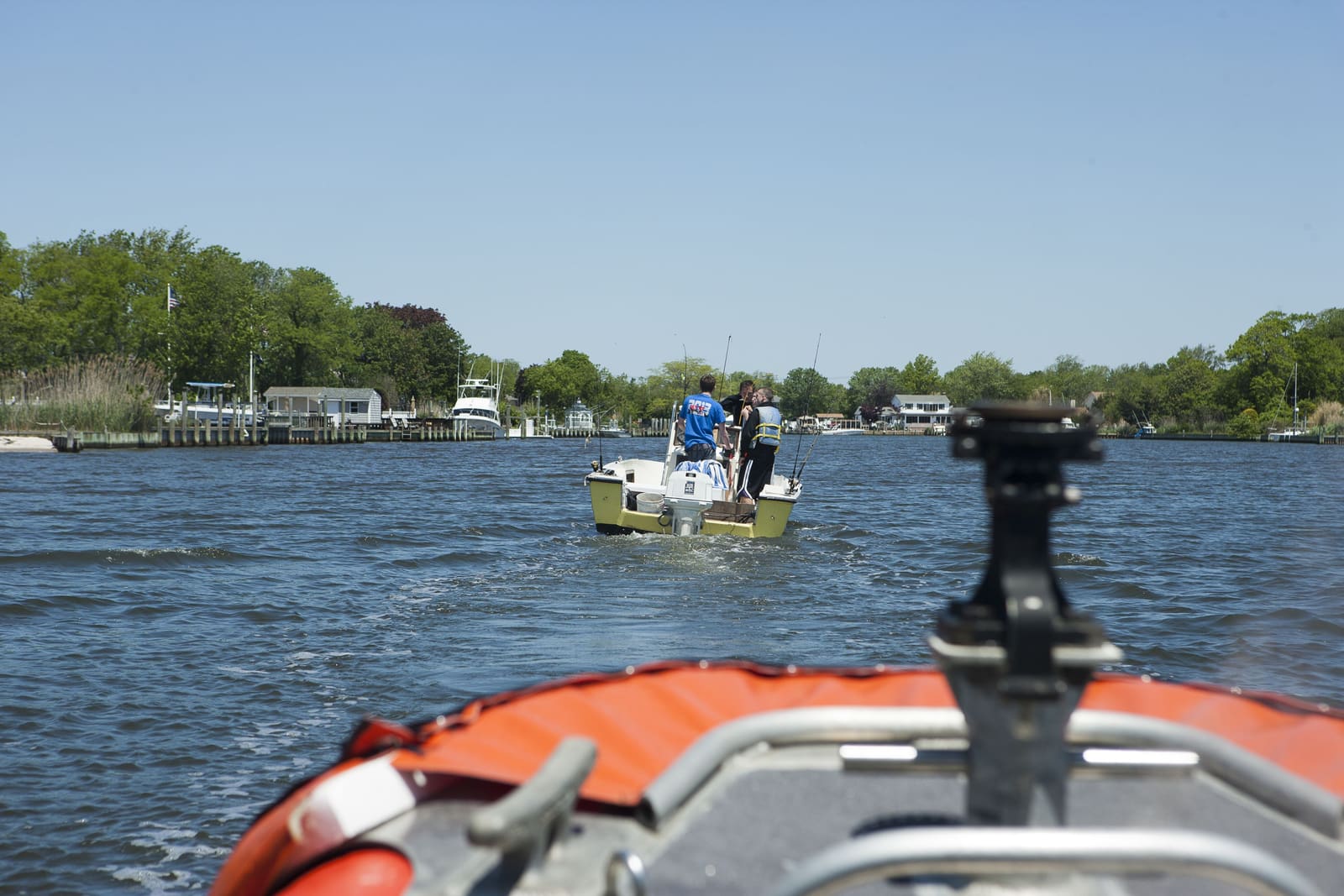
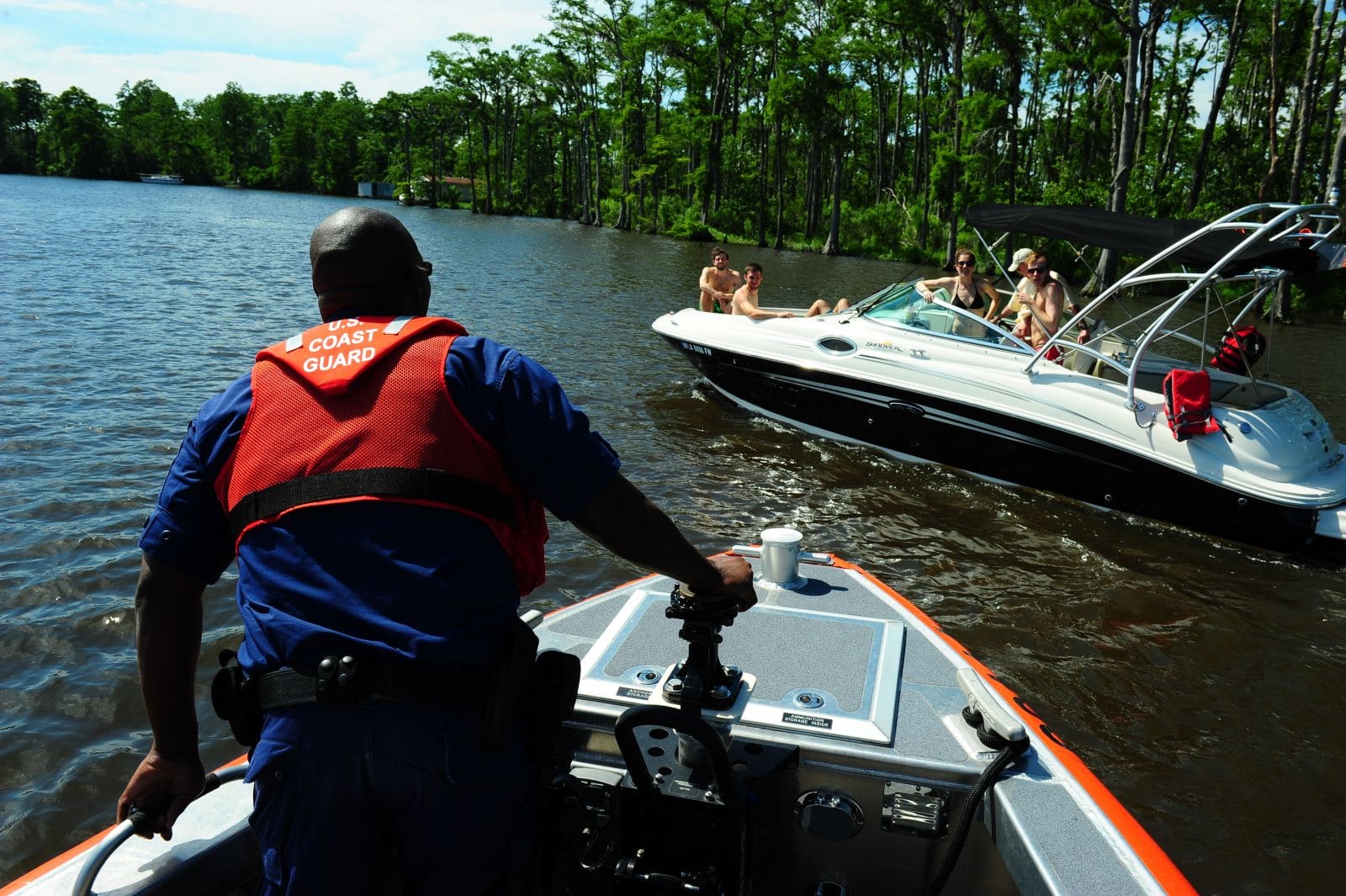
The Coast Guard can terminate a voyage on the spot and escort the boat in. Photo: Coast Guard News / Wikimedia Commons · CC BY 2.0 The Coast Guard can stop and board a boat, terminate the voyage and escort everyone back to the dock. Its releases list civil penalties ranging up to tens of thousands of dollars per violation (for example, no credentialed operator, no Certificate of Inspection, no drug testing program, no valid documentation). The 2025 release adds that violating a Coast Guard order (such as an order to stop operating) can be a Class D felony with jail time and fines. Exact amounts are adjusted for inflation, so check the latest Coast Guard information.
If you suspect an illegal passenger operation, the Coast Guard asks you to contact your local Coast Guard Sector Investigations office or the Coast Guard Investigative Service (CGIS). In an emergency on the water, call VHF channel 16 or 911.
Common mistakes
- Asking friends to "chip in $50 each for gas" as a condition of coming.
- Calling a paid trip a "donation" or "gas money" and assuming that makes it legal.
- Writing a "bareboat" contract but supplying the captain.
- Listing a boat on a rental app without reading the terms or checking insurance.
- Assuming a state boater education card is enough to carry paying guests. It isn't; that takes a Coast Guard credential.
- Carrying more than six passengers for hire on an uninspected boat.
When to call a pro
- Before your first paid trip or rental: your local Coast Guard Sector office for guidance, and a maritime attorney for contracts
- Before any paid use of the boat: your insurance agent, for a written answer on coverage
- To get your OUPV or master credential: the Coast Guard's National Maritime Center and a reputable Coast Guard-approved course provider
- If something goes wrong on a paid trip: see our boating accident report guide and call your insurer right away
Tips
- Keep friend trips simple: invite people, and if they offer to cover fuel or bring food, let it be their idea.
- Co-owners: a written co-ownership agreement that splits real costs is different from selling rides; see our co-ownership guide.
- Booking a trip yourself? Check the captain's credential before you pay, not at the dock.
- Save the Coast Guard's guidance and any written answers you get; rules and penalty amounts change.
Official references
We read these to write this guide. Your engine's own manual always wins.
- U.S. Coast Guard News – Coast Guard encourages the public to avoid illegal operations this boating season (May 24, 2025)
- U.S. Coast Guard News – Coast Guard terminates illegal charter voyage near Ana Maria Island (May 2026)
- BoatUS Magazine – Illegal Charters (2020)
- Cornell LII – 46 U.S. Code 2101, Definitions (consideration, passenger for hire, small passenger vessel, uninspected passenger vessel)
- eCFR – 46 CFR 11.467, Operator of Uninspected Passenger Vessels (OUPV)
- eCFR – 46 CFR 15.605, Credentialed operators for uninspected passenger vessels
- Discover Boating – Go Boating Today (rentals, boat clubs, peer-to-peer sharing)
Safety: BoatMend is for information only and does not replace a certified marine technician. You are responsible for your safety and your boat. Read the full disclaimer.
Last updated 2026-10-26
Related guides
Sharing a Boat: Co-Ownership Agreements, Partnerships and Boat Club Alternatives
How to share a boat without losing a friend: choosing a partner, what a written agreement should cover (shares, costs, scheduling, maintenance standards, insurance, title, decisions and the exit), how to handle the inevitable disagreements, and when a boat club, rental or peer-to-peer option makes more sense. Practical guidance, not legal or tax advice.
How to File a Boat Insurance Claim: Safety, Mitigation, Documentation and Settlement
What to do from the moment something goes wrong until the check arrives: make everyone safe, stop further damage, report right away, document with photos and your maintenance log, handle towing versus salvage, work with the adjuster or surveyor, and understand agreed value, actual cash value and the common exclusions. Policies differ, so your own policy wording always wins.
The Pre-Departure Safety Briefing: What to Tell Every Passenger (with a Printable Checklist)
A five-minute talk before you leave the dock turns guests into a crew that can help in an emergency. Cover life jackets, the engine cut-off switch, the fire extinguisher, how to call for help on the VHF, what to do if someone falls overboard, staying seated, seasickness and carbon monoxide near the stern, then use the printable checklist every trip.
Boater Education Cards: Who Needs One, How to Get It and When It Works in Other States
Most states require some boat operators to complete an approved boating safety course and carry proof. Learn how to find your state's rule (age, horsepower, boat type), pick a NASBLA-approved course, get the card, use it when you visit other states, and what rental and other exemptions usually look like. Practical guidance, not legal advice.
Boating Under the Influence (BUI): The Law, the Limits and How to Plan a Sober Skipper
Operating a boat drunk or high is illegal in every state and under federal law, with a 0.08 BAC standard for recreational boats under 33 CFR Part 95. Learn why the sun, wind, noise and motion make alcohol hit harder on the water, what happens at a boarding (field sobriety tests, chemical tests and implied consent), the penalties, and how to plan a designated skipper. Practical guidance, not legal advice.
USCG Required Safety Equipment Check by Boat Length
Walk through your boat and confirm you carry every piece of safety gear the US Coast Guard requires for your boat's length and type, and that none of it is expired or worn out. Missing or expired gear is one of the most common tickets on the water, and it is the gear you need when things go wrong.
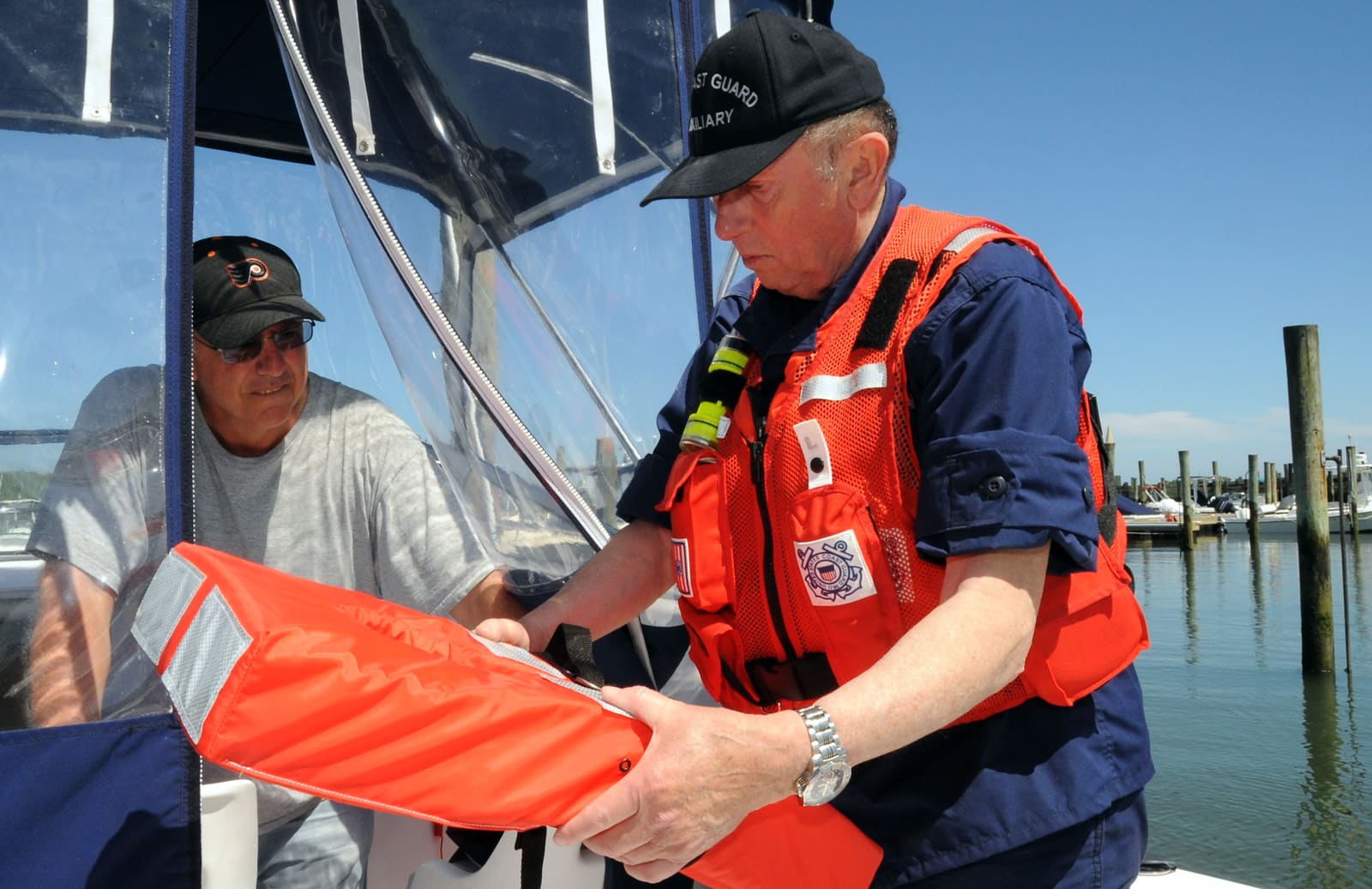
How to Prepare for a Free Vessel Safety Check
Volunteers from the Coast Guard Auxiliary and America's Boating Club will inspect your boat's safety gear for free, with no ticket if something is missing. Learn how to request a Vessel Safety Check, what the examiner looks at, how to get your boat ready and what to do with the fix list.
USCG Documentation Renewal: When, How, What It Costs and How to Avoid Look-Alike Renewal Mailers
Keep your boat's Coast Guard Certificate of Documentation current: how long a recreational certificate lasts (1 to 5 years), the federal fee schedule, renewing directly with the NVDC online, what happens if it lapses, why many states still want registration and a decal, and how to spot the third-party letters that charge several times the real fee.
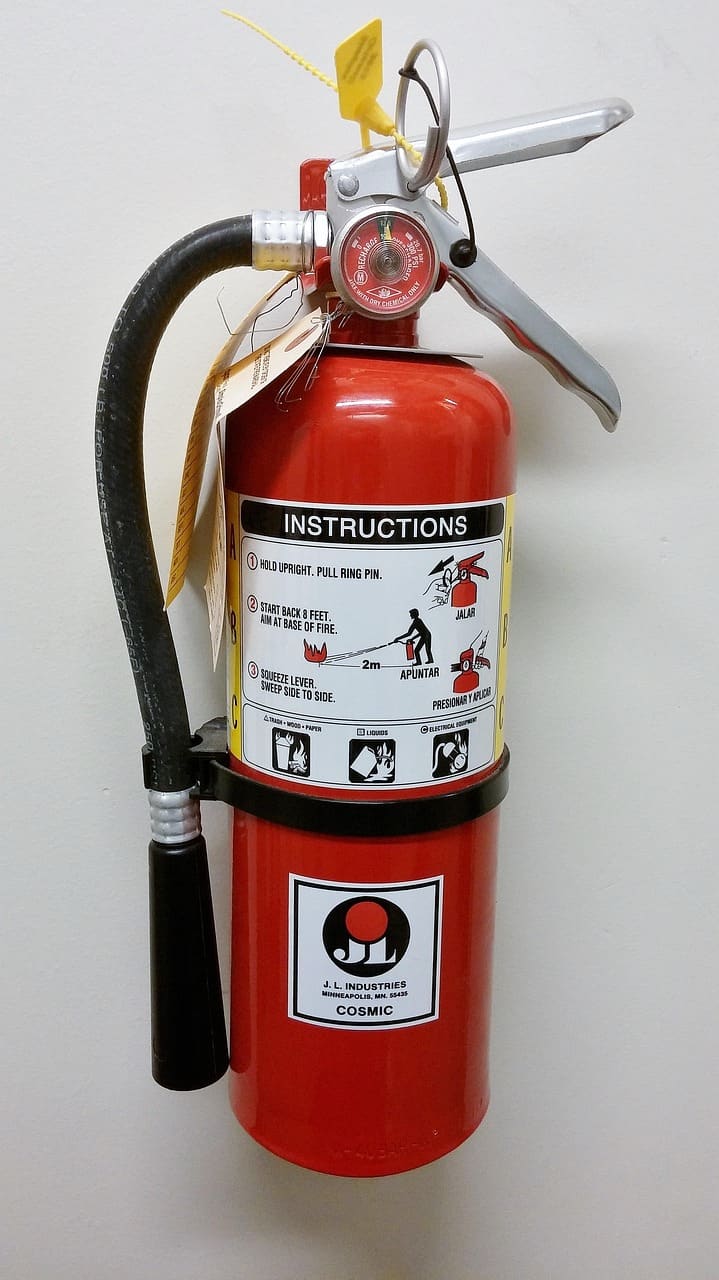
How to Check, Mount and Replace Boat Fire Extinguishers
A monthly five-minute check of every fire extinguisher aboard, plus how the 2022 Coast Guard rule changes affect you, where to mount them, and when to recharge or replace. A boat fire spreads in seconds, and an extinguisher with a dead gauge, missing pin or expired date will not help you or pass a boarding.

How to Load Your Boat Safely: Capacity Plate, Balance and Stability
Too much weight, or the right weight in the wrong place, is behind most small-boat capsizes and swampings. Learn to read the capacity plate (persons, weight and horsepower), add up your real load, balance it side to side and fore and aft, and adjust for rough water, water aboard and towing riders.