How to File a Boat Insurance Claim: Safety, Mitigation, Documentation and Settlement
What to do from the moment something goes wrong until the check arrives: make everyone safe, stop further damage, report right away, document with photos and your maintenance log, handle towing versus salvage, work with the adjuster or surveyor, and understand agreed value, actual cash value and the common exclusions. Policies differ, so your own policy wording always wins.
Time
1 h 30 min
Applies to
All engines
Safety first: People come before paperwork. If anyone is hurt, missing or in the water, or the boat is sinking, on fire or leaking fuel, call the USCG on VHF 16 or 911 first and get everyone off the boat. Never board a boat that is sinking, stacked on other boats or near live shore power, and don't switch anything on if you smell fuel. This guide is practical help, not legal advice: insurance rules, accident-reporting laws and policy wording vary by state and insurer, so read your own policy and ask your insurer or a marine attorney when in doubt.
Owners often ask
- My boat sank at the dock because a hose failed. Will insurance pay, and what do I do first?
- Is it towing or salvage if I run hard aground, and who pays for it?
- My boat was hit by another car while I was towing it. Whose insurance pays?
This guide walks you through it. Still stuck? Ask the AI Mechanic about your engine.
Tools
- Phone camera (photos and video of the damage, the scene and the HIN)
- Notebook or notes app (dates, names, claim number, every call)
- Tarp, duct tape and spare line (to protect the boat from more damage)
- Your policy declarations page and full policy wording
Before you start
Boat claims are not like car claims. BoatUS points out that boats vary hugely, parts aren't standardized, there are fewer qualified repairers, and repairs often cost more than owners expect. That means the insurer usually sends a person (an adjuster or a marine surveyor) to see the damage, and your settlement is based on a marine shop's estimate.
Have these ready before anything ever happens:
- Your policy number and the insurer's 24-hour claims phone number, saved in your phone and on paper aboard.
- A copy of your declarations page (the summary page with your insured value, deductible and lienholder) and the full policy wording.
- Your towing membership card or app, if you have one.
- A recent set of photos of the boat, engines and electronics, plus your maintenance records. BoatUS suggests sending recent maintenance records with your estimate, because some items (canvas, mechanical parts) are depreciated by age.
Two kinds of coverage you will hear about:
- Agreed value (agreed hull value): you and the insurer agree on the boat's value when the policy starts, and a total loss pays up to that amount. Even on these policies, some parts can still be depreciated. The BoatUS agreed-value wording, for example, pays no more than actual cash value for items like sails, canvas, upholstery, outboards, outdrives and generators.
- Actual cash value (ACV): a total loss pays the boat's market value at the time of the loss, and repairs may be paid "less depreciation." ACV premiums are usually lower, but so is the check.
Your policy decides which applies. Don't guess; read the declarations page.
Damaged on the road or on the trailer? Owners often get hit while towing. As BoatUS explains it, the boat policy usually covers physical damage to the boat, and to the trailer only if trailer coverage is on the policy (it isn't always automatic). Damage or injury your rig causes to other people while trailering is normally an auto-policy matter. If another driver was at fault, report it to your own insurer anyway and give them the police report; ask whether you should claim against the other driver's insurer or let your insurer handle it and recover the money from them. Either way, list the motor, electronics and upgrades so the boat is valued as a package, not as a bare hull.
Steps
Account for everyone aboard. Put on life jackets. If anyone is hurt, in the water or missing, or the boat is sinking, burning or spilling fuel, call the USCG on VHF 16 (or 911 from shore) right away. Insurance comes second. Don't take risks to save equipment; a policy can replace a boat but not a person.
Every policy BoatUS describes requires you to take reasonable steps to protect the boat from further loss. Examples:
- A storm tore off the canvas: tarp the electronics and cabin so rain doesn't finish the job.
- The boat took on water: keep pumping, and once it's raised get the engines flushed and pickled quickly so corrosion doesn't set in. See our submerged engine recovery guide.
- Lightning strike: the boat should be hauled so the hull and through-hulls can be checked.
- Theft or a broken hatch after a storm: secure what's left. BoatUS notes that policies should reimburse reasonable security costs for an exposed boat.
BoatUS explains that these reasonable mitigation costs are paid under the policy's "Sue and Labor" provision, in addition to hull coverage. Keep every receipt.
Call or file online as soon as you can. BoatUS's claims managers say: if you're not sure it's worth a claim, call anyway, and call right away. Their reasons:
- Damage that looks minor often costs more than you'd think to repair.
- If the damage ends up below your deductible you can withdraw it; at BoatUS, a report with no loss payment isn't counted as a claim and doesn't affect your premium. Check how your own insurer treats this.
- Waiting can sink the claim. If parts are repaired and thrown away before the insurer sees them, the insurer can't confirm the cause or extent, and the claim can be denied.
- Any possible injury, even to a friend who says "I'm fine," should be reported immediately. BoatUS has seen lawsuits arrive months or years later.
You'll get a claim number and an assigned adjuster, usually within a day or so. Write down the claim number, the adjuster's name and every call (date, who, what was said).
Separately from insurance, federal rules (33 CFR 173.55) require the operator to report a boating accident to the state reporting authority when someone dies, is injured and needs more than first aid, disappears, or when damage to boats and other property totals $2,000 or more (or a boat is a complete loss). Deadlines are as short as 48 hours for deaths within 24 hours, injuries and disappearances, and 10 days for property damage. If the operator can't report, the owner must. Your state boating agency has the form; states may set stricter rules, so check yours. Report theft to the police and get a report number; insurers usually ask for it.
Take photos and video before cleanup, repairs or salvage whenever it's safe:
- Wide shots of the scene (where the boat is, the dock, the weather, other boats involved)
- Close-ups of every damaged area, with something for scale
- The HIN plate, engine serial tags and registration numbers
- Water lines inside the hull, wet wiring, damaged electronics
- The other boat's name, numbers and owner/insurer details if another boat was involved, plus witness names and phone numbers
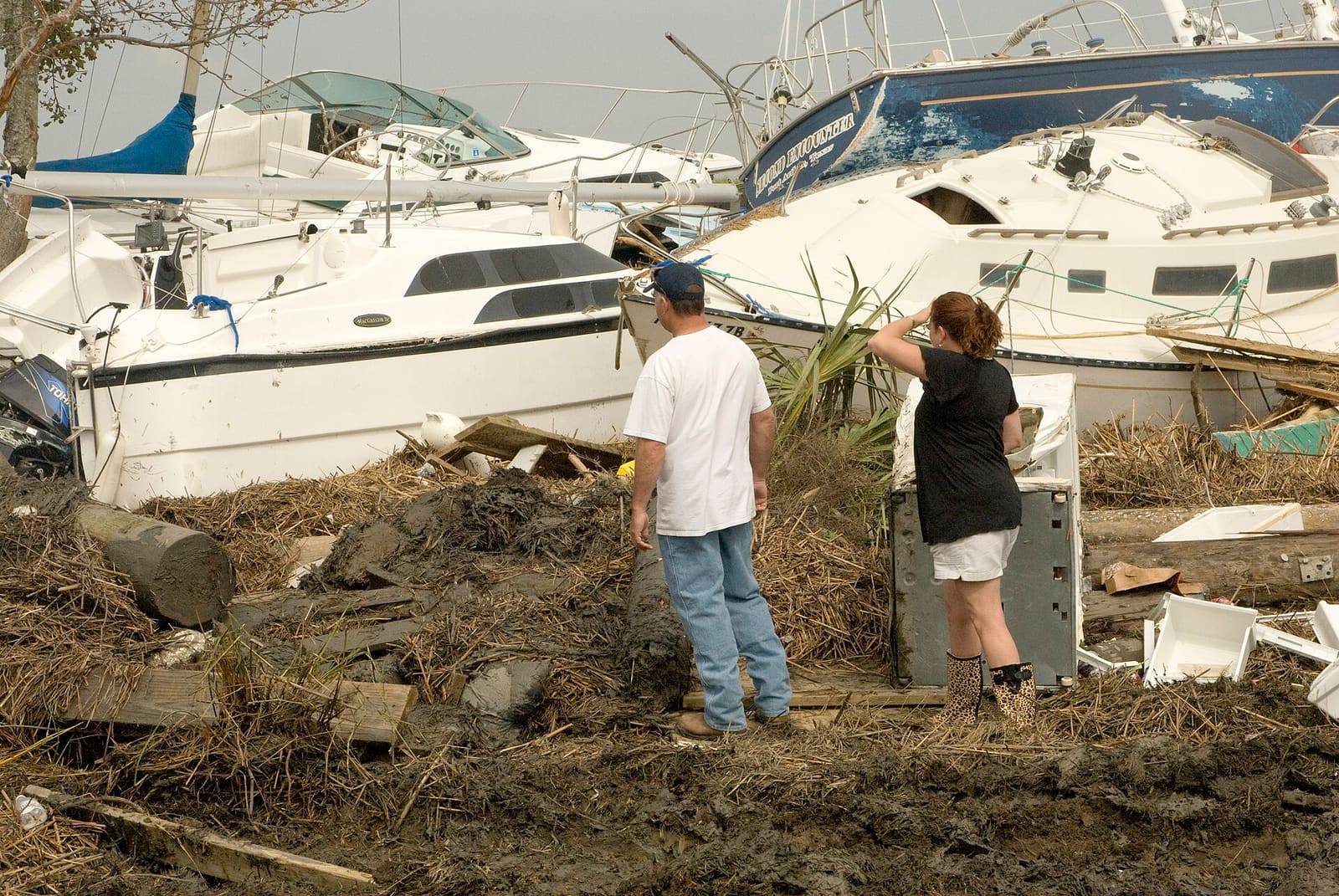
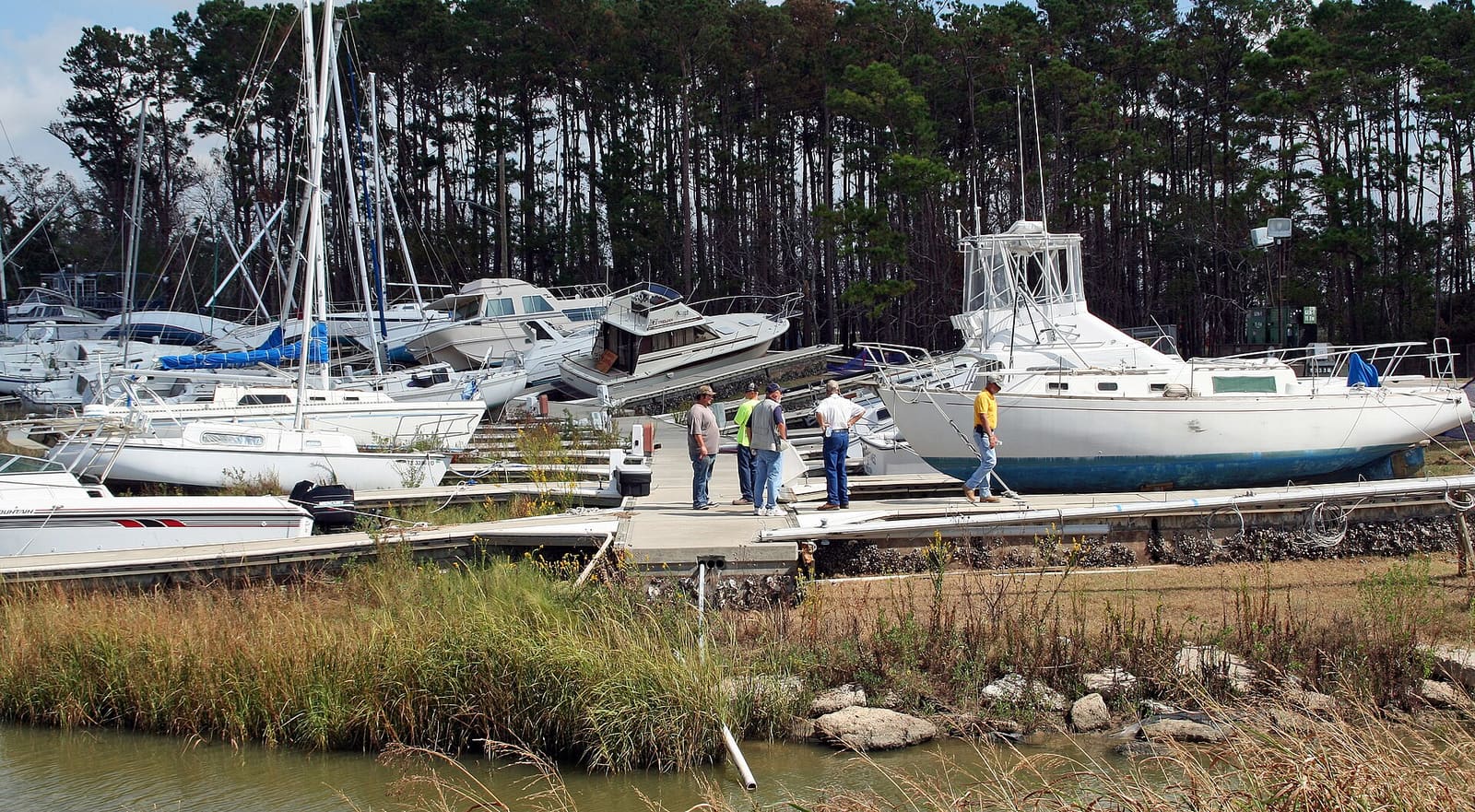
After a big storm, photograph the boat exactly where it ended up before anyone moves it, and keep damaged parts for the adjuster. Photo: Liz Roll / FEMA / Wikimedia Commons · Public domain Keep damaged parts until the adjuster says you can discard them. Tell any yard working on the boat the same thing, in writing.
Insurers may ask for a written statement of what happened, a list of lost or damaged property, ownership papers, witness information or a diagram, according to BoatUS's claims page. Pull together:
- Title or documentation, registration and bill of sale
- Your maintenance log and receipts (impeller changes, hose and clamp replacements, survey reports, winterization invoices). A good log is your best answer if the insurer asks whether the failure was wear and tear or lack of maintenance.
- Receipts for electronics and upgrades, with serial numbers
- Mitigation receipts (towing, pumping, tarps, haulout, security)
Gear and upgrades are where claims come up short. An insurance agent interviewed by Mercury suggests laying out your rods, reels, tackle and other gear once a season, shooting a quick 30-second video and emailing it to yourself, so the list exists even if the boat and phone are gone. He also notes that an agreed value often comes with a time limit, and that after a repower, new electronics or other upgrades you should get a written appraisal of the boat's new value and send it to your insurer; otherwise a claim is settled on the old value. Expensive gear may need its own coverage, and claiming it on a homeowner's policy can raise that premium. Check these before a loss, not after.
BoatUS defines a tow (or ungrounding) as help with no immediate danger to the boat or the environment and no special equipment. Salvage involves immediate peril to the boat or the marine environment, or special equipment like pumps, air bags, cranes or dredging. A sinking or a hard grounding is salvage.
- Towing memberships cover tows, not salvage. Salvage, including the tow from the salvage site, is paid by a boat insurance policy, if it covers it.
- Salvage can be very expensive. BoatUS says it can cost hundreds of dollars per foot after a hurricane, and policies handle it differently: some subtract it from what you get to fix the boat, some cap it at a percentage of the insured value, and some pay it separately up to the insured value.
- Call your insurer before you sign a salvage contract whenever you can. After a storm, BoatUS advises letting the insurer arrange salvage, because inexperienced or overpriced crews can cause more damage and delay. If a marina wants to salvage or move your boat, it should have your permission and your insurer's agreement first.
- If you're in danger right now, accept help and sort out paperwork later. Never risk lives over a contract.
BoatUS's claims page warns not to admit liability, fault or responsibility to anyone, because doing so could jeopardize your coverage. Be polite, share insurance details and facts, and let the insurer handle the other party. Don't sign anything about the claim (including documents from the other boat's insurer or a salvor) without talking to your adjuster first.
For small claims, the adjuster may write the damage appraisal. For bigger ones, a marine surveyor inspects the boat and you'll get repair estimates. Tips from BoatUS:
- Be there for the inspection if you can. You know the boat best, and you may spot damage they'd miss.
- Ask questions. Point out anything you noticed (new vibration, a soft spot, electronics acting oddly).
- Choose a marine repair facility you trust; your settlement is based on its estimate. Avoid auto shops for boat repairs: they may not know ignition-protected parts or proper fiberglass work.
- Ask for estimates that split parts and labor, as BoatUS's claims page describes.
Only you, the owner, can authorize work on your boat. BoatUS recommends waiting until the insurer approves the estimate, so you know exactly what is covered. Once approved, you get a settlement letter, and payment is made minus your deductible and any depreciation. If you have a loan, expect the check to be made out to you and the lienholder unless the lender signs off. Stay involved: BoatUS's surveyors stress that the insurer only writes the check; you (or someone you appoint) have to push the repair forward.
If repairs would cost more than the boat is insured for (or the boat is gone), the insurer may declare a total loss or constructive total loss. Typically you sign settlement papers, get paid the agreed value (agreed-value policy) or market value (ACV policy) minus any deductible, and hand over the title. BoatUS notes that owners usually have the option to buy the boat back at its salvage value, and that totaled boats are often auctioned "as is, where is." If you keep a totaled boat, ask how it affects the title; some states brand the title, and later insurance can be harder to get. See our salvage title guide.
Read the wreck removal section too. BoatUS explains that some policies pay a fixed extra percentage of the insured value and leave wreck removal to you, while others pay removal required by law up to the liability limit.
Every policy is different, but these come up again and again:
- Wear, tear and corrosion. BoatUS says half of sinkings at the dock start with a small part below the waterline failing (stuffing boxes, outdrive bellows, hoses and clamps, sea strainers), and most insurers exclude the failed part as wear, tear and corrosion. Some also exclude the resulting sinking; others cover it.
- Lack of maintenance. Gradual leaks, rot, osmosis and neglected parts are usually not "sudden and accidental."
- Mechanical breakdown. Usually excluded unless you bought an endorsement for it (BoatUS sells a lower-unit breakdown add-on, for example).
- Freeze damage. BoatUS describes ice and freeze damage as usually excluded unless you add coverage, often requiring professional winterization.
- Fuel spill liability may be paid only if the loss itself was covered, according to BoatUS.
- Navigation limits, named-operator rules and lay-up periods. Using the boat outside your cruising area or out of season can void coverage.
Ask the adjuster to explain, in writing, how the amount was calculated and which policy clause applies. Send extra evidence (more estimates, comparable sale listings for value, maintenance records). If you're still stuck, ask about the policy's appraisal or dispute process, and contact your state's department of insurance; every state has one that handles consumer complaints (the NAIC website links to each state's complaint page). You usually don't have to accept the first offer: answer it in writing with your evidence. For large losses, a marine attorney or independent surveyor can be worth the fee.
Common mistakes
- Waiting weeks to report, or letting a yard repair and discard the damaged parts before the adjuster sees them.
- Telling a guest "don't worry about it" after an injury, then not reporting it.
- Admitting fault at the scene or signing a release from the other party's insurer.
- Assuming the towing membership covers a sinking or hard grounding (that's salvage).
- Not tarping or pumping after the first damage, then having the follow-up damage denied.
- Never reading the policy until after a loss, and being surprised by depreciation or a wear-and-tear exclusion.
- Assuming the trailer, fishing gear or water toys are covered. BoatUS notes trailers may need their own coverage and that fishing and watersports gear isn't always "boating equipment" without an add-on. Renting the boat out can void coverage entirely.
- Letting the marina's "we'll take care of it" replace a report to your own insurer. BoatUS warns the marina may change its mind, and by then it may be too late.
When to call a pro
- Anyone is injured, missing or in danger: USCG on VHF 16 or 911 first
- The boat is sinking, aground hard, burning or spilling fuel: emergency services, then your insurer's 24-hour line before signing a salvage contract if time allows
- There is liability to others (injury, damage to another boat or a dock): let your insurer handle it and consider a marine attorney
- The settlement is far from what you expected, or coverage is denied: ask for the reasoning in writing, then consider an independent marine surveyor, a marine attorney or your state department of insurance
- Engines or electronics were submerged: a marine technician should pickle and assess them quickly
Tips
- Take a full "baseline" photo set of the boat every spring, including the HIN, serial numbers and electronics. It makes proving prior condition easy.
- Keep a simple maintenance log (date, hours, what was done, receipts). It helps claims, surveys and resale.
- Before you sign a marina contract, check for "waiver of subrogation" or "hold harmless" clauses. BoatUS warns some can conflict with your insurance policy; ask your insurer about them.
- Ask your agent each year: agreed value or ACV? How is salvage paid? Is wreck removal covered? Is freeze damage covered?
- Store the claims phone number in your phone, in the boat's paperwork bag and with someone ashore.
Official references
We read these to write this guide. Your engine's own manual always wins.
- BoatUS – Claims Information (GEICO | BoatUS Marine Insurance)
- BoatUS – How To Get Your Claim Settled Faster (2016)
- BoatUS – Avoiding The Boat Insurance Blues (2019)
- BoatUS – Agreed Hull Value policy description
- BoatUS – Actual Cash Value policy description
- BoatUS – Boat Towing FAQ (towing versus salvage)
- BoatUS – Boat Insurance FAQ
- BoatUS – What To Do After A Hurricane (2019)
- BoatUS – What's Really In Your Marina Contract (2015)
- BoatUS – Are Storm-Damaged Boats Trash Or Treasure? (2013)
- eCFR – 33 CFR 173.55, Report of casualty or accident
- BoatUS – 5 Things to Know About Boat Insurance (2013)
- NAIC – Insurance Departments (find your state regulator and complaint page)
- Mercury Marine – How to Insure Your Boat the Right Way
Safety: BoatMend is for information only and does not replace a certified marine technician. You are responsible for your safety and your boat. Read the full disclaimer.
Last updated 2026-10-25
Related guides
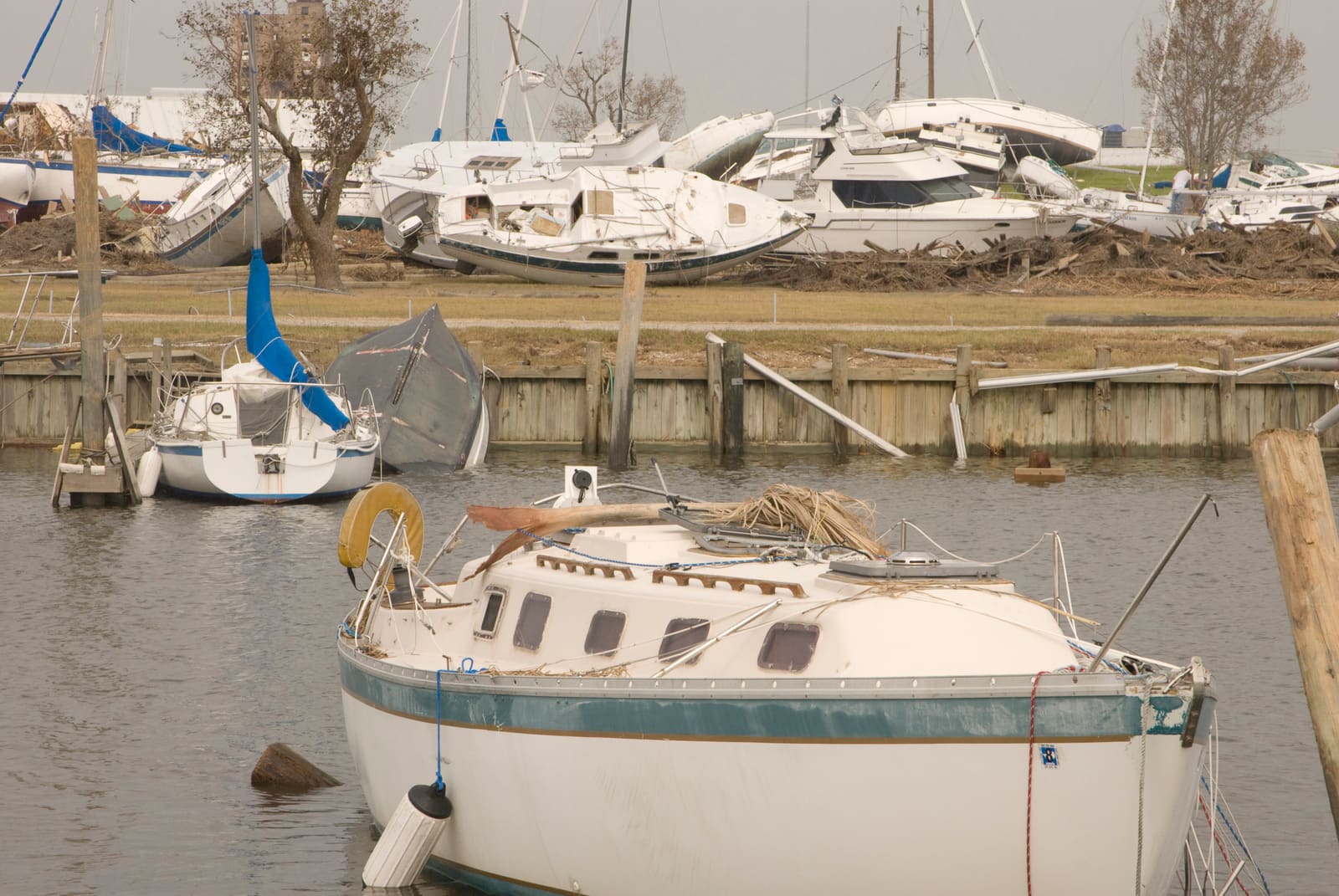
After the Storm: How to Safely Inspect Your Boat and Document Damage
Go back to your boat only when it is safe, check for fuel, live power and sinking risk before you step aboard, photograph everything for your insurer, then work through bilge, lines, canvas, electrical, engine, trailer and mold in a set order. Do not run the engine or leave the dock until it has been checked.
What to Do When Your Boat Is Taking On Water: Emergency Steps and Prevention
A step-by-step emergency plan for water coming into the boat - life jackets on, call for help early on VHF 16, find and slow the leak, pump, and head for shallow water if needed - plus the maintenance checklist that prevents most sinkings.
Outboard Fell Overboard or Engine Got Submerged: What to Do in the First Hours
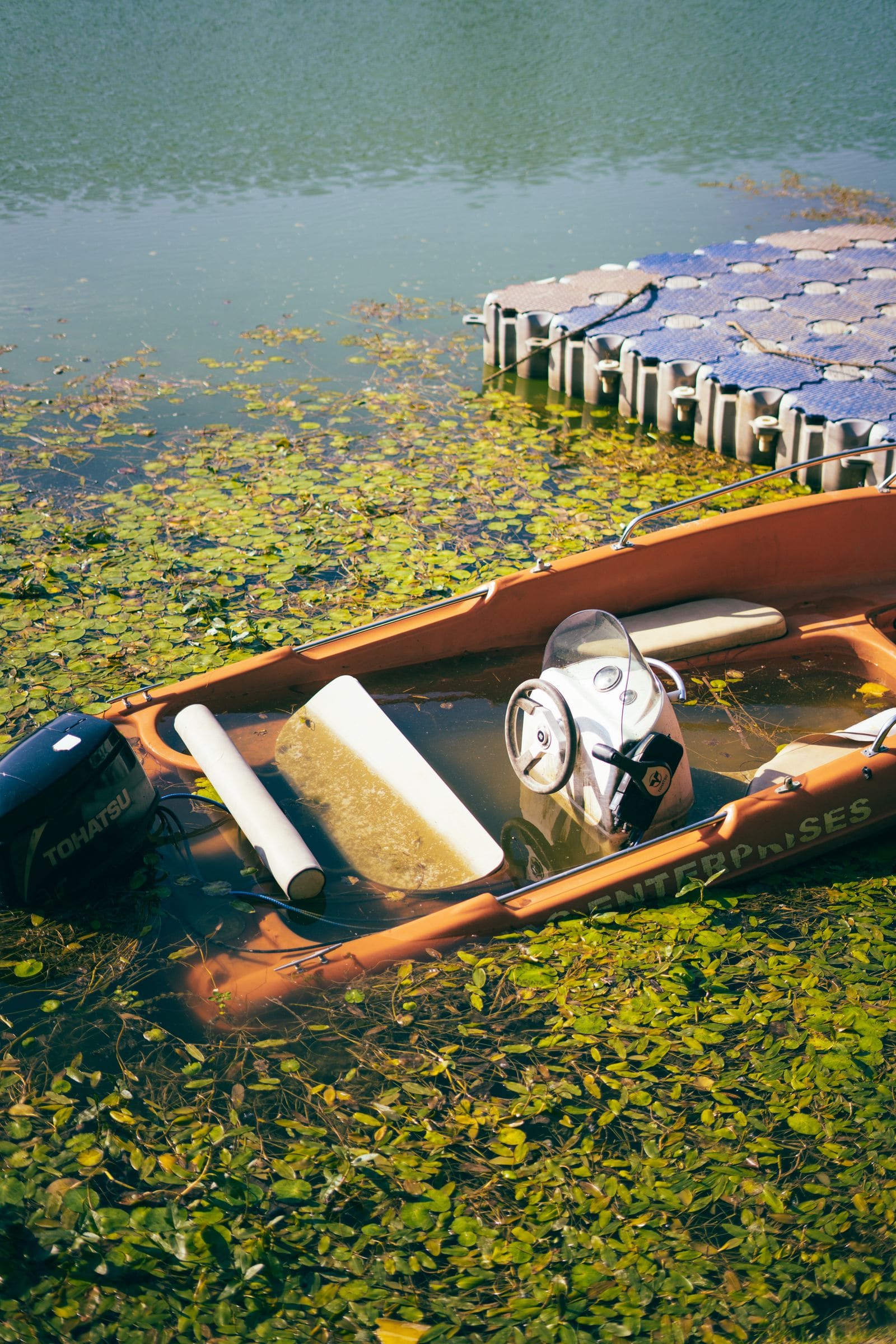
A dunked engine can often be saved, but only if you act fast and in the right order. Learn what to do (and what never to do) in the first hours after an outboard goes overboard or a boat swamps, how to buy time until a shop can take it, and when it is a loss.
How to Prepare Your Boat for a Hurricane or Tropical Storm
Make a written storm plan before the season, then haul out or secure the boat with doubled lines and chafe gear, strip off everything that catches wind, and check it safely after the storm. Never ride out a hurricane aboard.
How to Prepare Your Boat for an Insurance or Condition Survey
Get ready for a marine survey your insurer or lender asked for: what a SAMS or NAMS surveyor looks at, the common findings you can fix beforehand (hose clamps, seacocks, bilge, fire extinguishers, wiring), the paperwork to have ready, and how to handle the recommendations afterward.
Salvage and Branded Title Boats: What They Mean, the Risks, and How to Check Before You Buy
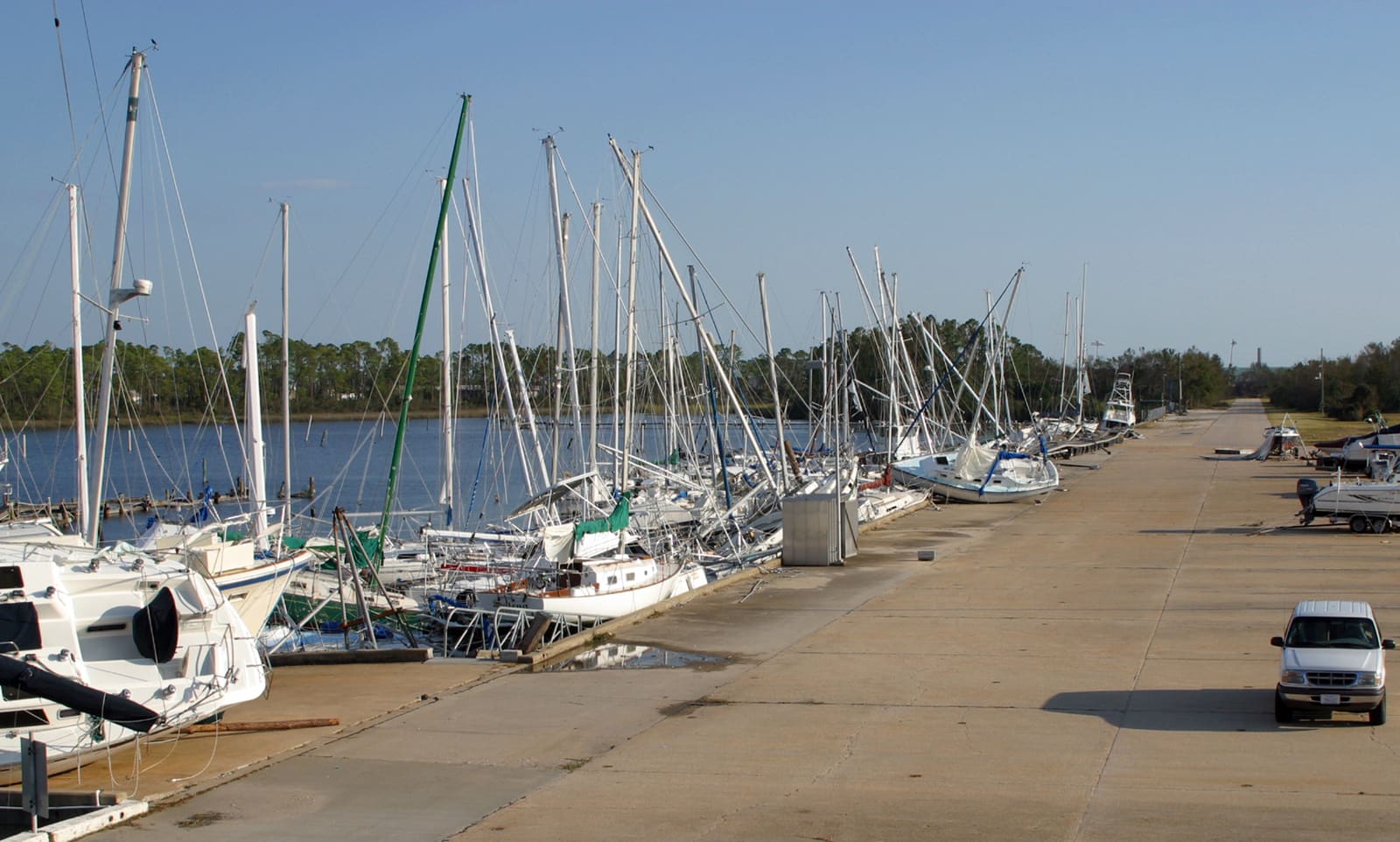
Understand boats that an insurer declared a total loss: what salvage, rebuilt and hull-damaged title brands mean, why flood and storm boats hide expensive problems, how branded titles affect insurance, financing and resale, how to dig into a boat's history, and what a survey should check. Title branding rules differ a lot by state, and some states don't brand boat titles at all.
How to Get Your Boat Ready to Sell (Records, Title and Prep)
Prepare your boat for sale the way buyers and surveyors expect: gather the title, registration and HIN paperwork, organize your maintenance records and receipts, fix the small stuff, detail the boat, get it ready for a sea trial and buyer's survey, and close the deal with the right documents.