Tow Vehicle Maintenance for Boat Owners (Transmission, Differential, Brakes, Hitch)
Keep the truck or SUV that pulls your boat ready for the job: follow the severe-service schedule, protect the transmission from heat, check the rear differential for ramp water, keep brakes, tires, hitch and wiring in shape, and rinse salt off the underside after every saltwater launch.
Time
1 h
Shop would charge
$150-600
Applies to
All engines
Safety first: Never tow over your vehicle's or hitch's ratings; BoatUS reminds owners that you can only tow the lower of the two. Set the parking brake and chock a wheel before anyone gets out at the ramp. Don't work under a vehicle held up only by a jack. If the brake pedal goes soft, the brakes smell hot or the transmission slips while towing, pull over safely and don't continue until it's checked.
Owners often ask
- How often should I change the rear differential oil on the truck I use to launch my boat?
- Should I wash the underside of my truck after launching in salt water?
This guide walks you through it. Still stuck? Ask the AI Mechanic about your engine.
Tools
- Tire pressure gauge
- Flashlight
- Wire brush and dielectric grease (for the trailer plug)
- Trailer light tester or a helper
- Garden hose with an under-car sprayer or a sprinkler
- Tongue weight scale (optional)
- Torque wrench (for hitch and ball mount bolts, to your hitch maker's spec)
Parts & supplies
- Fluids specified in your vehicle owner's manual (transmission, gear oil, brake fluid)
- Limited-slip friction modifier, only if your owner's manual calls for it
- Replacement hitch pin and clip, or a locking pin
- Spare 7-way or 4-way adapter for the trailer plug
Before you start
Towing a boat is hard on a vehicle in ways normal driving isn't. The transmission and brakes work under extra weight and heat. At the ramp, the rear axle often ends up in the water. In salt water, the whole underside gets a corrosive bath. The good news: a few simple habits prevent most of the expensive failures.
Get these ready:
- Your vehicle owner's manual. Find the towing section and the severe-service (or "special operating conditions") maintenance schedule. Most manuals treat regular towing as severe service, with shorter intervals for transmission fluid, gear oil and other items.
- Your vehicle's tow rating, payload, GVWR and GCWR, plus the real weight of the boat, motor, fuel, gear and trailer. See our towing vehicle capacity guide for the math. BoatUS suggests keeping the loaded boat and trailer at no more than 85% of the tow rating.
- The ratings stamped on the hitch receiver, ball mount and ball.
Steps
If you tow a boat regularly, follow the severe-service column in your owner's manual, not the normal one. Ask your shop to log oil, transmission fluid, differential and brake service by date and mileage. Keep receipts in the glovebox; some warranties ask for proof of service on vehicles used for towing.
Heat is what wears out an automatic transmission under load. BoatUS notes that factory tow packages often add transmission and engine cooling, a heavier frame mount and other upgrades that an aftermarket hitch alone doesn't include. To help:
- Use Tow/Haul mode if your vehicle has it. BoatUS explains it keeps the transmission from shifting into overdrive and hunting between gears. On most vehicles it turns off with the engine, so turn it back on after every fuel stop.
- On long grades, downshift instead of riding the brakes, as BoatUS's towing tips suggest; the engine helps hold your speed.
- If your vehicle shows transmission temperature, watch it on hills and at the ramp.
- Check the fluid level and condition the way your manual says (some transmissions have no dipstick and need a shop). Dark fluid, a burnt smell, slipping or harsh shifts mean it's time for service.
- Ask your dealer whether an auxiliary transmission cooler makes sense if you tow often and your vehicle doesn't have the factory tow package.
BoatUS's article on ramp traction explains that water can get into a differential through the vent tube or condensation, and that backing the rear axle into the water doesn't help. Water and heat break down the gear oil and the friction modifier that limited-slip clutches need. BoatUS recommends that owners who back their rear tires into the water drain the rear differential at least at the end of every boating season and look at the oil:
- Milky or yellow-brown: water got in.
- Burnt smell: the limited-slip clutches are worn out.
- Metal flakes on the plug: too much wear inside.
If there's water but nothing else is wrong, refill with the gear oil your manual specifies plus the friction modifier it calls for. Burnt oil or metal means a shop visit. Our 2WD ramp traction guide has more on keeping a limited-slip working.
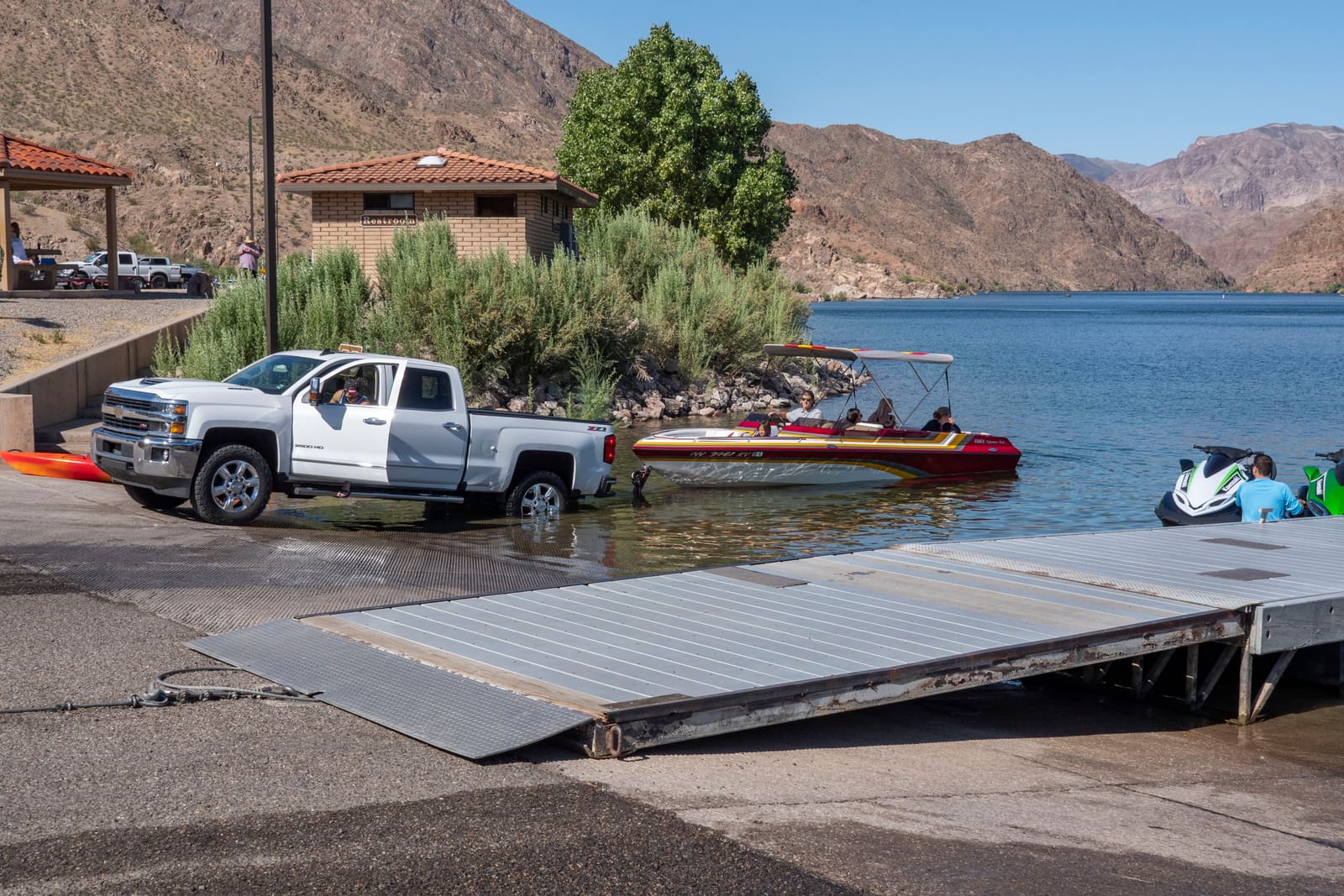
Back in only as far as you need to float or load the boat. If your rear tires are going under water every time, the trailer may need a tongue extension, or the bunks and winch post may need adjusting so the boat loads at a shallower depth. Keep the exhaust tailpipe and rear axle vent out of the water when you can. Set the parking brake before anyone gets out.
Extra weight means extra brake wear and heat. Have pads, rotors, brake fluid and lines checked at the intervals in your severe-service schedule, and sooner if the pedal feels soft or the brakes pulse or squeal. If your trailer has electric brakes, set the brake controller before each trip (Mercury's checklist includes this). If it has surge brakes, the trailer's own system does the work; see our surge brake guide.
Mercury's pre-tow checklist puts tire pressure on the tow vehicle (and especially the trailer) near the top. Many vehicles list a higher pressure for heavy loads on the door-jamb placard or in the manual; use it when towing. BoatUS warns that low pressure overheats the sidewall and leads to failure. Look for cuts, bulges and uneven wear, and make sure the spare is inflated.
BoatUS's checklist says the hitch should be bolted securely to the frame and shouldn't be rusty or otherwise compromised. Each time you hook up:
- The ball size must match the coupler, and the ball, ball mount and receiver must all be rated for the load.
- The hitch pin and clip (or locking pin) are in place and not worn.
- The trailer sits level. BoatUS's hitch setup article recommends choosing a ball mount with the right rise or drop so the trailer frame is parallel to the ground.
- Check the receiver's mounting bolts for rust and tightness at least once a season.
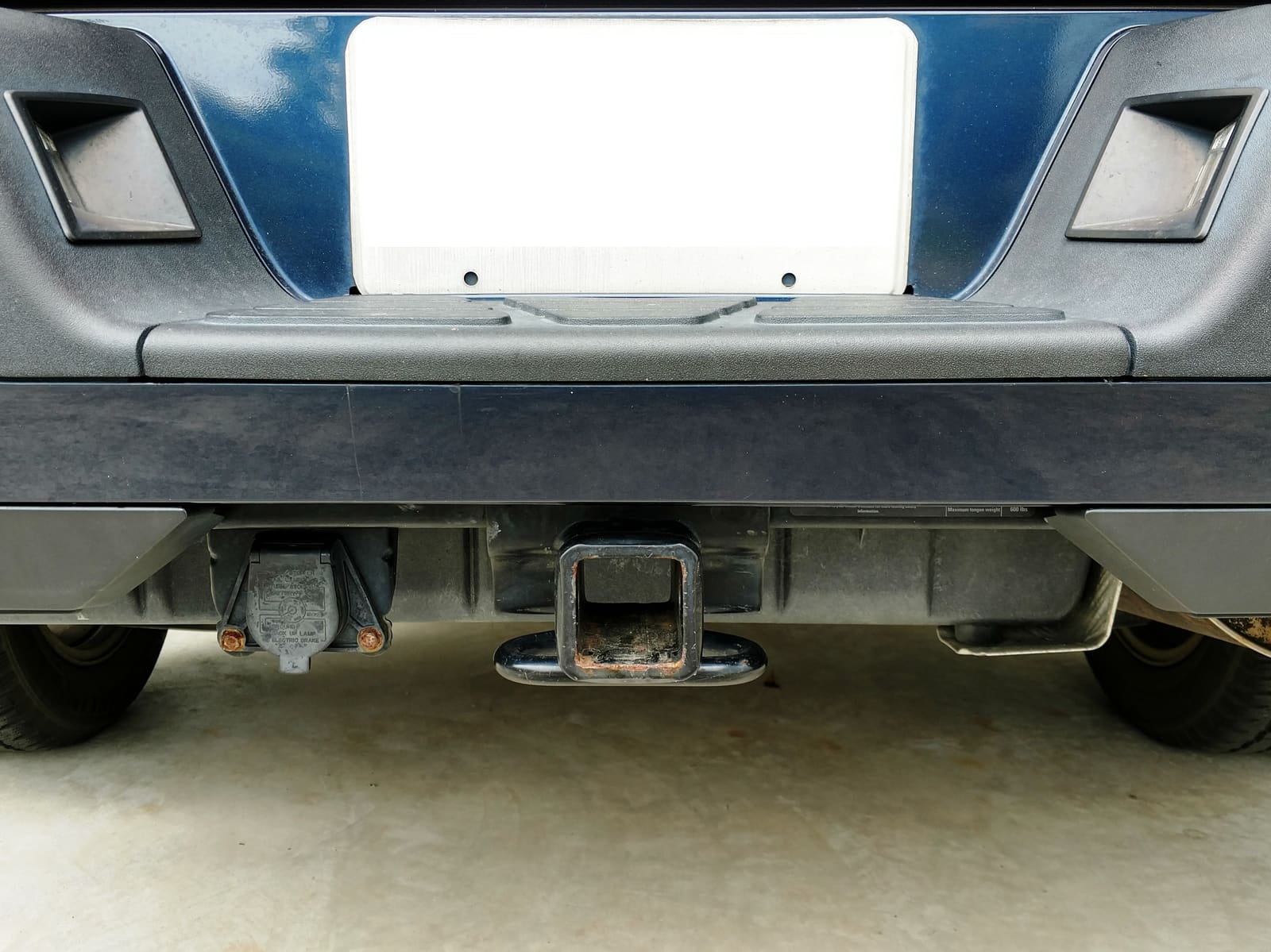
Photo: McChizzle / Wikimedia Commons · Public domain Corroded plugs cause most "the trailer lights quit" moments. Brush out the vehicle's socket and the trailer plug, coat the contacts lightly with dielectric grease, and close the socket cover when you're not towing. BoatUS's connector article notes there's no single plug that fits every rig; you may need an adapter, such as 7-way to 5-flat. Don't use the hitch ball as the ground (BoatUS says so plainly); the trailer needs its own ground wire. Test every light before each trip, as Mercury's checklist suggests.
Cross the safety chains under the tongue and hook them to the vehicle's chain loops, with enough slack to turn but not to drag. If the trailer has brakes, BoatUS says to attach the breakaway cable to the hitch, never to the safety chains. Tongue weight affects how the vehicle steers and brakes. BoatUS's hitch article says most vehicle makers want 10–15% of the loaded trailer weight on the hitch, and that tongue weight counts against the truck's payload. Check it with a tongue scale whenever you change boats or gear.
Salt sitting on the frame, brake lines, exhaust and suspension is what rusts tow vehicles from below. BoatUS suggests stopping at a car wash on the way home from the ramp to use the handheld sprayer, or washing at home within a few hours of leaving. Rinse:
- The receiver, hitch pin, ball mount and trailer plug
- Wheel wells, brakes and the area around the rear axle
- Frame rails and the spare tire carrier
A sprinkler under the vehicle (BoatUS suggests one under the trailer) reaches spots a hose misses. Do it in fresh water too after a muddy ramp.
At the end of the season, or at the shop:
- Change the rear differential oil if it went under water (step 3).
- Have the transmission fluid checked or changed on the severe-service interval.
- Inspect the brakes and brake lines.
- Look under the vehicle for rust on the frame, hitch, brake lines and fuel lines.
- Pull the ball mount, clean the receiver and coat the pin with grease before storage.
- Have the battery load-tested (not just a voltage check) and look at the drive belt, hoses, air filter and wipers. A Bassmaster pro angler's tow-vehicle list includes all of these, since a dead battery or broken belt strands you just as surely as a trailer problem.
Before a long haul, Sport Fishing magazine adds: weigh the loaded rig at a certified scale instead of guessing, check tires (including the spare), brakes, belts and hoses, and make sure your vehicle's jack can actually lift the loaded trailer and your lug wrench fits the trailer's lug nuts. On the road, it suggests pulling over every couple of hours to check the coupler, safety chains, light plug and the boat's straps.
Common mistakes
- Following the "normal" maintenance schedule on a vehicle that tows every weekend.
- Forgetting to turn Tow/Haul mode back on after a fuel stop.
- Riding the brakes down long grades instead of downshifting.
- Backing in until the rear axle and tailpipe are under water, and never checking the differential oil.
- Grounding trailer lights through the hitch ball.
- Hooking the breakaway cable to the safety chains.
- Driving home from a saltwater ramp and parking the truck for a week without rinsing.
When to call a pro
- The transmission slips, shifts harshly, smells burnt or shows a temperature warning
- Differential oil is burnt or has metal particles, or the axle howls or clunks
- Brake pedal feels soft, the vehicle pulls when braking, or brakes smoke after a tow
- The hitch receiver is rusted through, cracked or loose on the frame
- You plan to tow close to your vehicle's limits, or need a weight-distributing hitch
Tips
- Keep a towing kit in the vehicle: tire gauge, spare hitch pin and clip, plug adapter, dielectric grease, wheel chocks, gloves and a flashlight.
- Let the engine idle for a minute after a long, hot climb before shutting it off, if your owner's manual recommends it.
- A hybrid SUV can be a good tow vehicle, but BoatUS points out that small crossovers are often limited to under 2,000 pounds; check the rating before you buy.
- Write the date and mileage of every differential and transmission service on a sticker inside the door.
Official references
We read these to write this guide. Your engine's own manual always wins.
- BoatUS – Ramp Traction
- BoatUS – Tow Package Or Not
- BoatUS – Know Your Tow Vehicle
- BoatUS – Connecting The Truck And Trailer
- BoatUS – Setting Up A Hitch For The Perfect Tow
- BoatUS – Tips For Towing A Trailer
- BoatUS – Preparing To Tow A Boat
- BoatUS – How To Wash A Trailer
- Mercury Marine – Pre-Tow Checklist for Hauling Your Boat
- Sport Fishing – Prep Your Tow Vehicle
- Bassmaster – Frugal Angler: Love Your Tow Vehicle
- BoatUS – Hybrid Tow Vehicles
Safety: BoatMend is for information only and does not replace a certified marine technician. You are responsible for your safety and your boat. Read the full disclaimer.
Last updated 2026-10-25
Related guides
Is My Vehicle Rated to Tow This Boat? Towing Capacity, GCWR and Tongue Weight Explained
The towing number in the ad is only one of several limits. Learn which ratings matter (towing capacity, GCWR, GVWR, axle and tongue limits, hitch class and ball rating), how to weigh your real rig at a truck scale, and when you need trailer brakes and towing mirrors.
Boat Ramp Traction with a 2WD or Front-Wheel-Drive Vehicle: Stop Spinning, Stay Dry
Spinning tires on a slick ramp are embarrassing at best and dangerous at worst. Learn how rear-wheel, front-wheel, AWD and 4WD vehicles behave on a ramp, how to set up weight and tires, when to use 4WD Low, how to keep the vehicle from sliding in, and what to do if you get stuck.
Get Your Boat Ready for the Road: Pre-Trailering Checklist
Most trailering trouble starts in the driveway: an engine left without support, a loose strap, a cover that balloons at 60 mph, gear that blows out or tongue weight that makes the rig sway. Work through this checklist before every trip and do a quick walkaround at each stop.
Electric-Over-Hydraulic and Electric Trailer Brakes: Controller Setup, Breakaway and Care
Why most boat trailers use surge or electric-over-hydraulic (EOH) brakes instead of plain electric drums, how to pick a compatible in-cab brake controller and set its gain, how to test the breakaway switch and battery, and how to keep the system working around saltwater.
How to Check and Care for Boat Trailer Surge Brakes
Understand how the hydraulic surge brakes on your boat trailer work, check the fluid, use the reverse lockout correctly and rinse salt out of them after every dunk. Simple habits that keep the brakes from seizing, dragging or failing when you need them.
How to Fix Boat Trailer Lights That Flicker, Dim or Don't Work
Track down the real cause of dead or flickering trailer lights, from a bad ground to a corroded plug, and fix it so the repair lasts. Working brake, turn and tail lights are required by law and keep the driver behind you from rear-ending your boat.
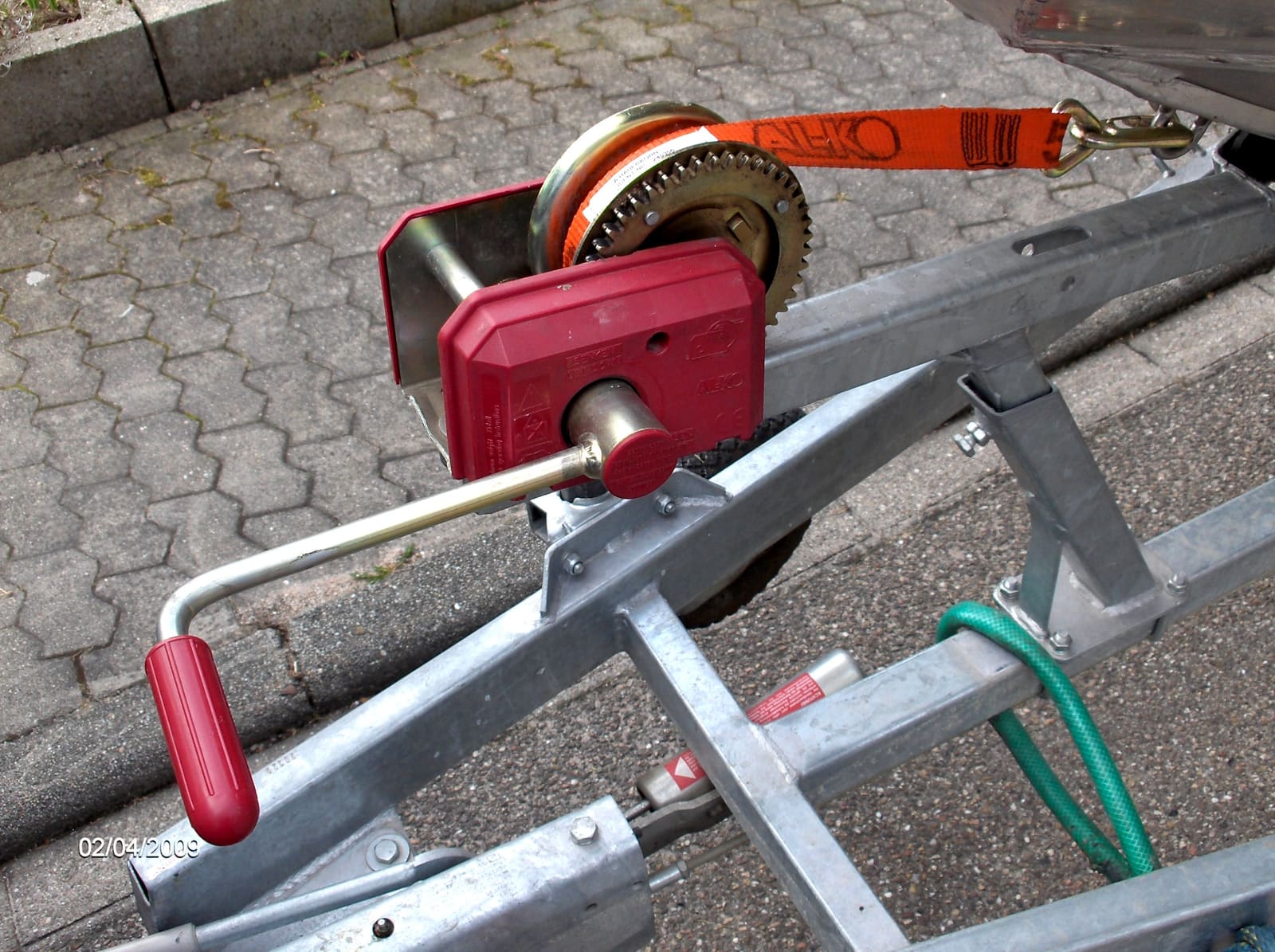
How to Inspect and Use the Trailer Winch, Strap, Tie-Downs and Safety Chains
Check the winch, strap or cable, bow safety chain, transom tie-downs and the safety chains to your vehicle, and learn how each one is meant to be used. These parts keep the boat on the trailer and the trailer behind your truck.
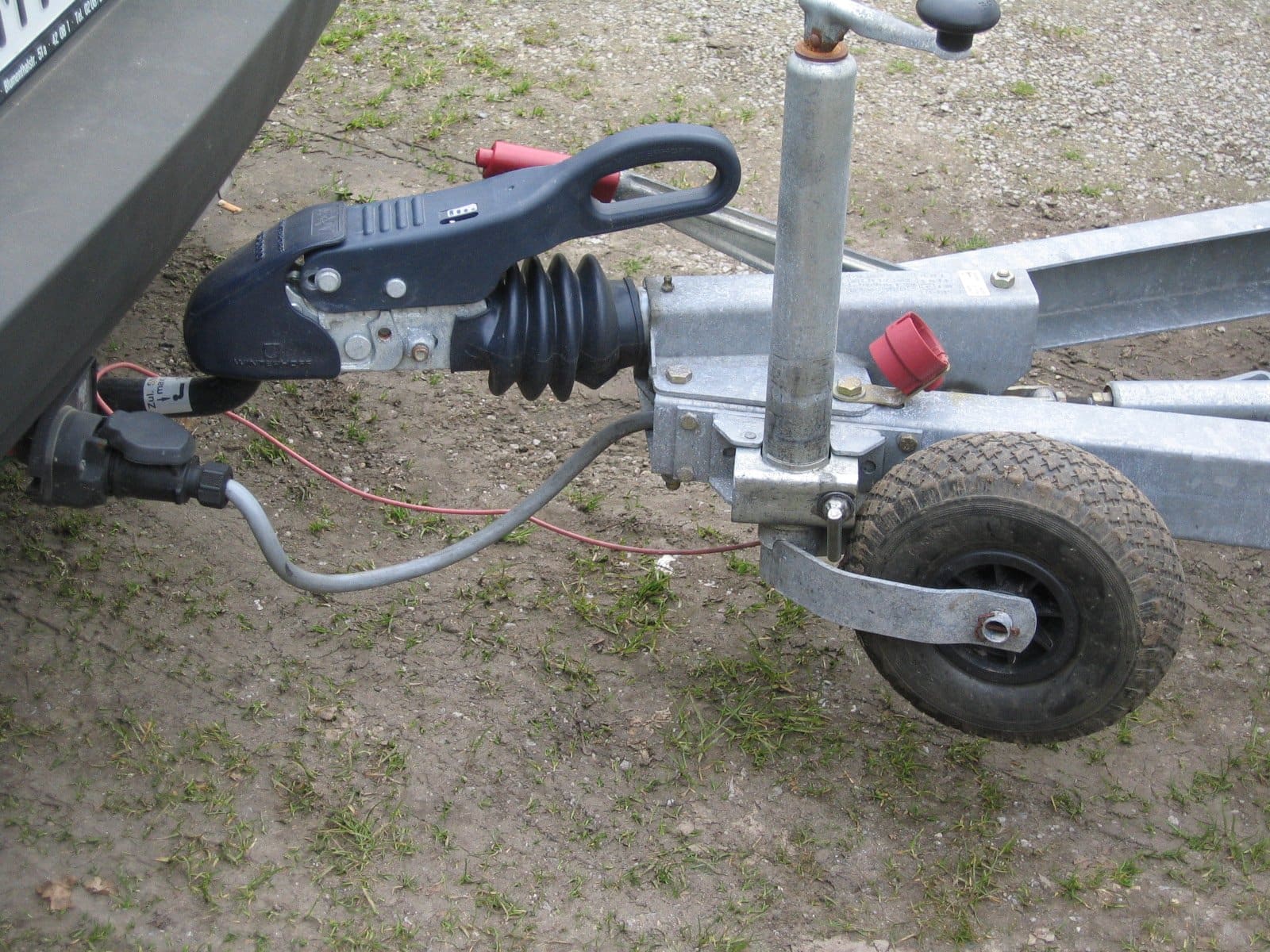
Trailer Tongue Jack and Coupler Care: Grease, Adjust and Know When to Replace
The tongue jack and coupler take a beating from weight, road grit and launch-ramp dunking. A few minutes of cleaning and grease a couple of times a season keeps the jack cranking smoothly and the coupler locking tight on the ball, and tells you when either part is worn out.
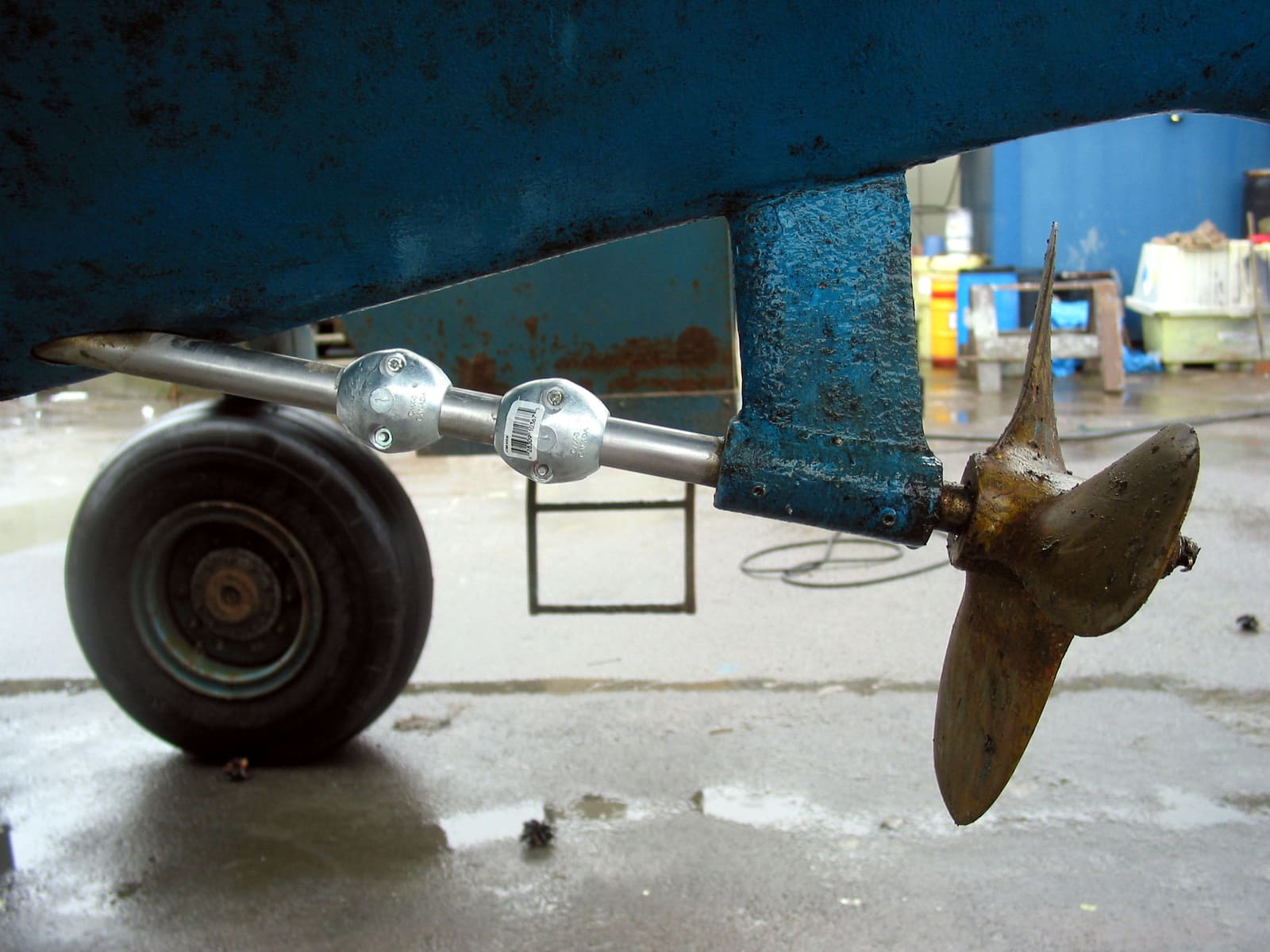
Moving Your Boat From Fresh to Salt Water (or Back): Anodes, Flushing, Corrosion, Bottom Paint and Trailer Upgrades
What to change when a lake boat moves to the coast, or a saltwater boat moves inland: switching anode material, a flush-after-every-trip routine, raw-water and closed cooling parts that wear faster in salt, bottom paint that suits your hull and drive, marine-grade hardware, and trailer upgrades that survive salt dunks. Built from BoatUS, Mercury, Yamaha and Boating Magazine advice.