Generator Pre-Trip Check: What to Inspect and Test Before a Cruise
A marine generator that quits on the first hot night of a cruise usually gave warning signs at the dock. Use this pre-departure checklist, based on generator makers' own advice, to inspect the oil, coolant, belt, raw-water side, exhaust and CO alarms, run the set under real load, and pack the right spares.
Time
1 h 15 min
Shop would charge
$150-500
Applies to
Marine diesel, Gas inboard, All engines
Safety first: A generator's exhaust contains carbon monoxide (CO), which can kill without warning, inside the boat or in the water near the exhaust outlet. Before every trip, test the CO alarms and make sure every cabin has one. Never run the generator with anyone swimming or holding onto the stern near the exhaust, and be careful when rafted up or docked close to other boats. If a CO alarm sounds, shut the generator down, get everyone into fresh air and call 911 or the Coast Guard on VHF 16 if anyone feels ill. Do all inspections with the generator off and its start battery switched off or the remote start disabled, so nobody can start it while your hands are inside.
Owners often ask
- What should I check on my boat generator before a long cruise?
- How do I know if my generator can still carry its rated load?
- Why should my generator run under load before I shut it off for a trip check?
This guide walks you through it. Still stuck? Ask the AI Mechanic about your engine.
Tools
- Flashlight or headlamp and an inspection mirror
- Screwdrivers and nut drivers for the sound shield and hose clamps
- Rags and absorbent pads
- Generator operator's manual and your maintenance log
- Notebook or phone for readings (hours, volts, hertz, amps, temperature)
Parts & supplies
- Engine oil, coolant premix and any filters that are due, per your manual
- Spares kit for the trip (see step 13)
Before you start
Start early. Cummins Onan's advice, as published by Discover Boating, is to review the operator's manual and do any service that's due (oil and filters, zincs, belts) well before you leave, because if something is wrong you may need a factory-authorized shop, and those get busy in peak season. A week ahead is a good minimum for a long cruise.
What this guide covers. This is the pre-departure check and test run. For the full routine service (oil change, impeller, fuel filters and so on), see the generator maintenance guide; for faults, the generator won't start guide.
Plan the hours. Discover Boating relays a useful Onan step: note the generator's hours now, add the hours you expect to run on the trip, and compare with your service intervals. If service will come due while you're away, buy the parts now.
Steps
Open the generator compartment and the sound shield. Discover Boating's Onan list starts here: ventilate the space, remove debris such as oily rags and loose parts, and clean the generator and the area around it. Fischer Panda adds a check most owners miss: press on the sound-deadening foam inside the shield. If it has soaked up liquid, find out what it is (oil, fuel, coolant or seawater) and trace the leak.
With the generator level and stopped, check the oil on the dipstick and top up only with the oil your manual specifies. Look at its color and smell; a milky look or a fuel smell needs a mechanic before you leave. If you're close to an oil change, do it now rather than mid-trip.
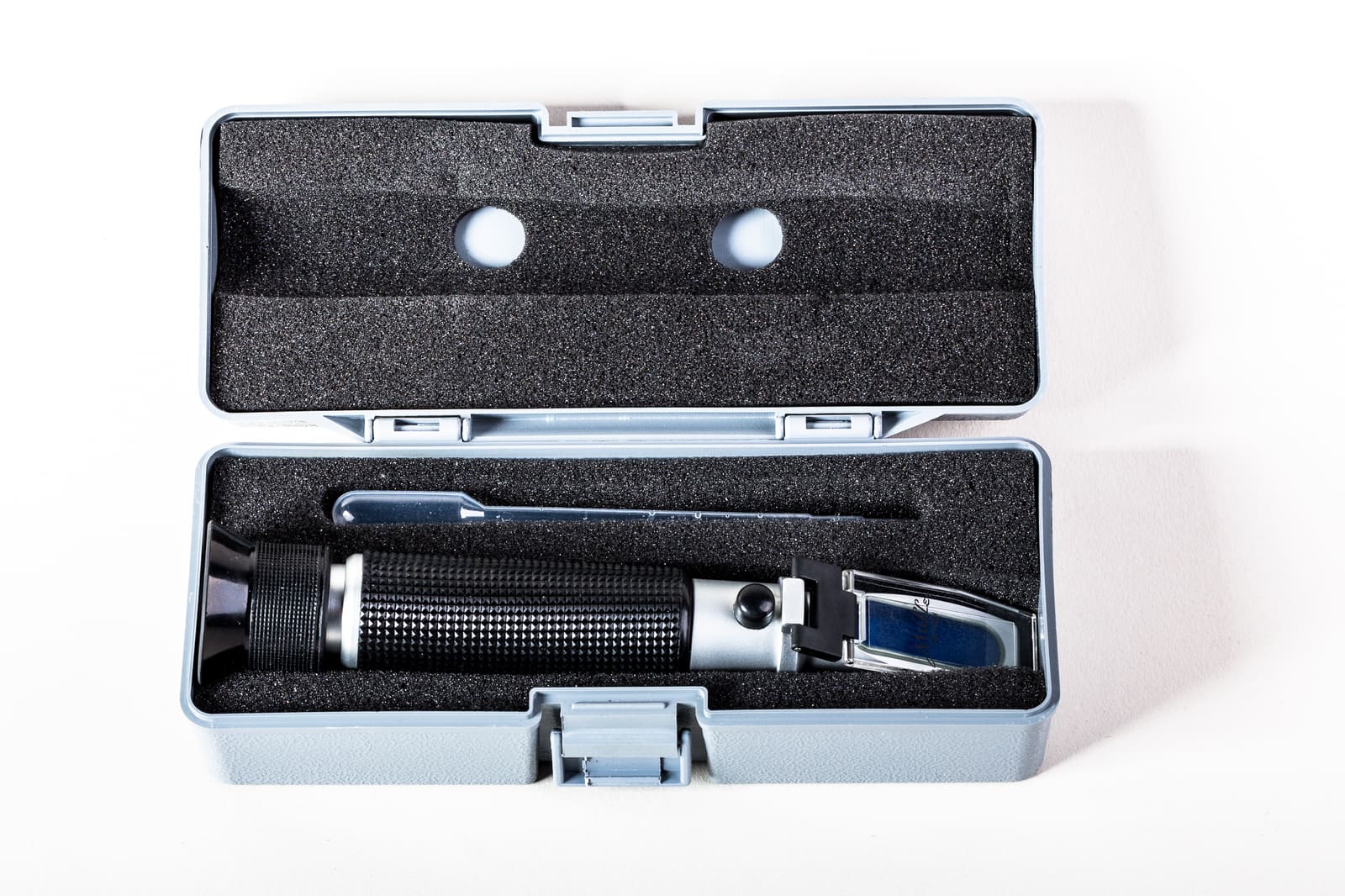
On a cold generator, check the level at the pressure cap as well as the recovery bottle, and top up with the right premix (see the closed cooling coolant guide). Discover Boating's Onan list says to make sure the fluids suit the temperatures you'll be running in. If you haven't tested the coolant this year, do it (see the coolant testing guide).
Look at the belt that drives the water pump and alternator for cracks, fraying, glazing or black dust, and check that it's tight as your manual describes. Southern Boating's tips put the belt on the daily check list once you're cruising. Replace a doubtful belt now and keep the old one as a spare.
Close the seacock, open the strainer, clean the basket and the bowl, and refit the lid with its seal seated. Then open the seacock again. Yachting puts this on every pre-trip check, even if you don't plan to run the generator: the water intake must be clear and the valves open.
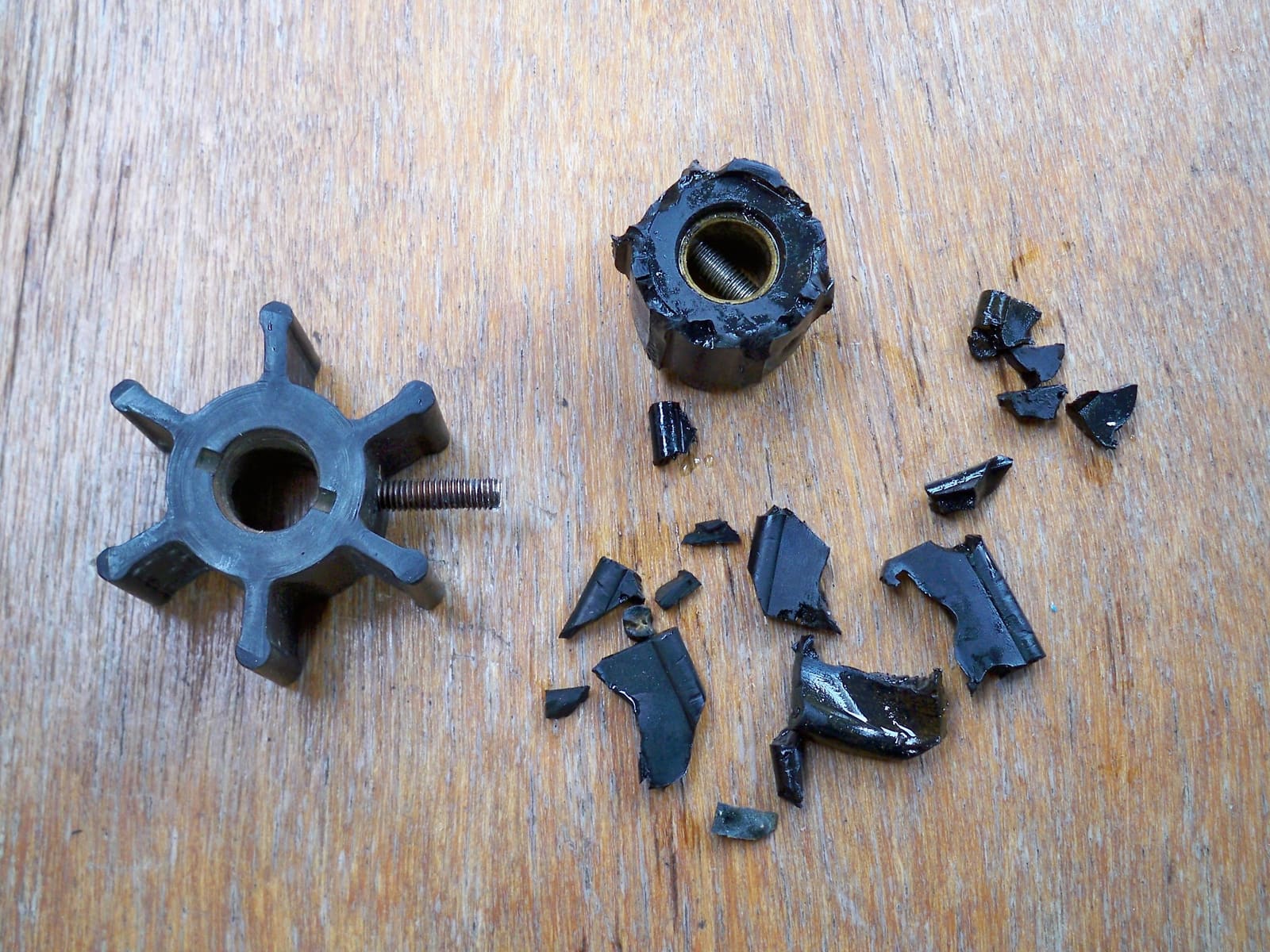
The raw-water impeller wears and fails with age as well as hours. If you don't know when it was last changed, or it's due during the trip, change it now (see the impeller guide). Southern Boating's list says to change the seawater pump annually before the cruising season; follow your own manual for the interval. Fischer Panda also says to check the pump's seals for leaks.
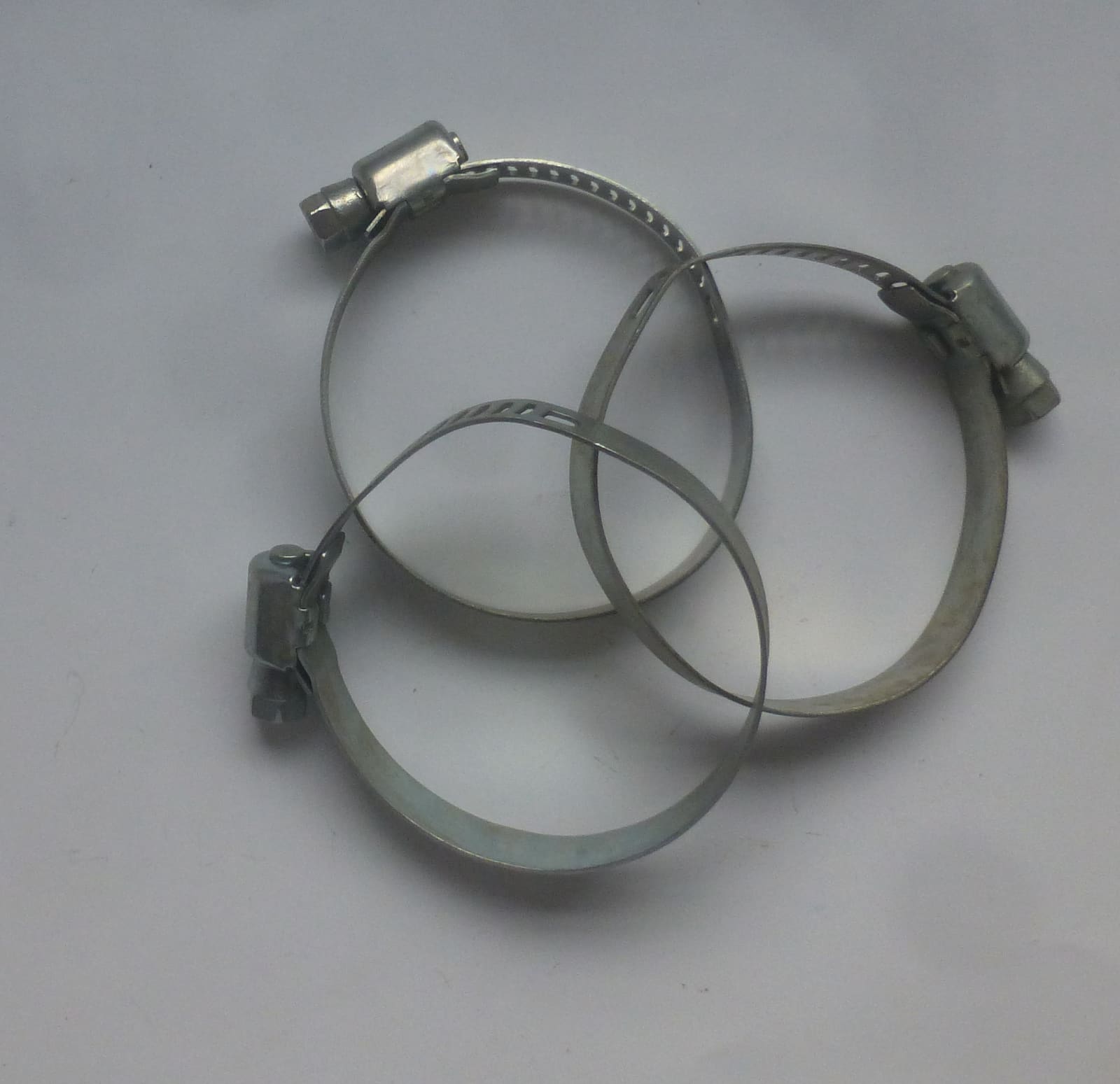
Discover Boating's Onan list says to check and tighten all hose clamps and fittings, especially the exhaust connections. Squeeze the exhaust hose along its length: it should be firm, not soft, cracked or bulging. Look for soot, salt streaks or rust at joints, which point to an exhaust or water leak. Exhaust leaks are a CO risk inside the boat, so fix any you find before you go (see the hose clamp guide).
Look hard at the wet exhaust elbow too, where cooling water is injected into the exhaust. Northern Lights tells its owners to inspect it at least once a year and to replace it right away if it shows rust spots, leaks or cracks, because a failing elbow can spray seawater onto the generator's electrical parts.
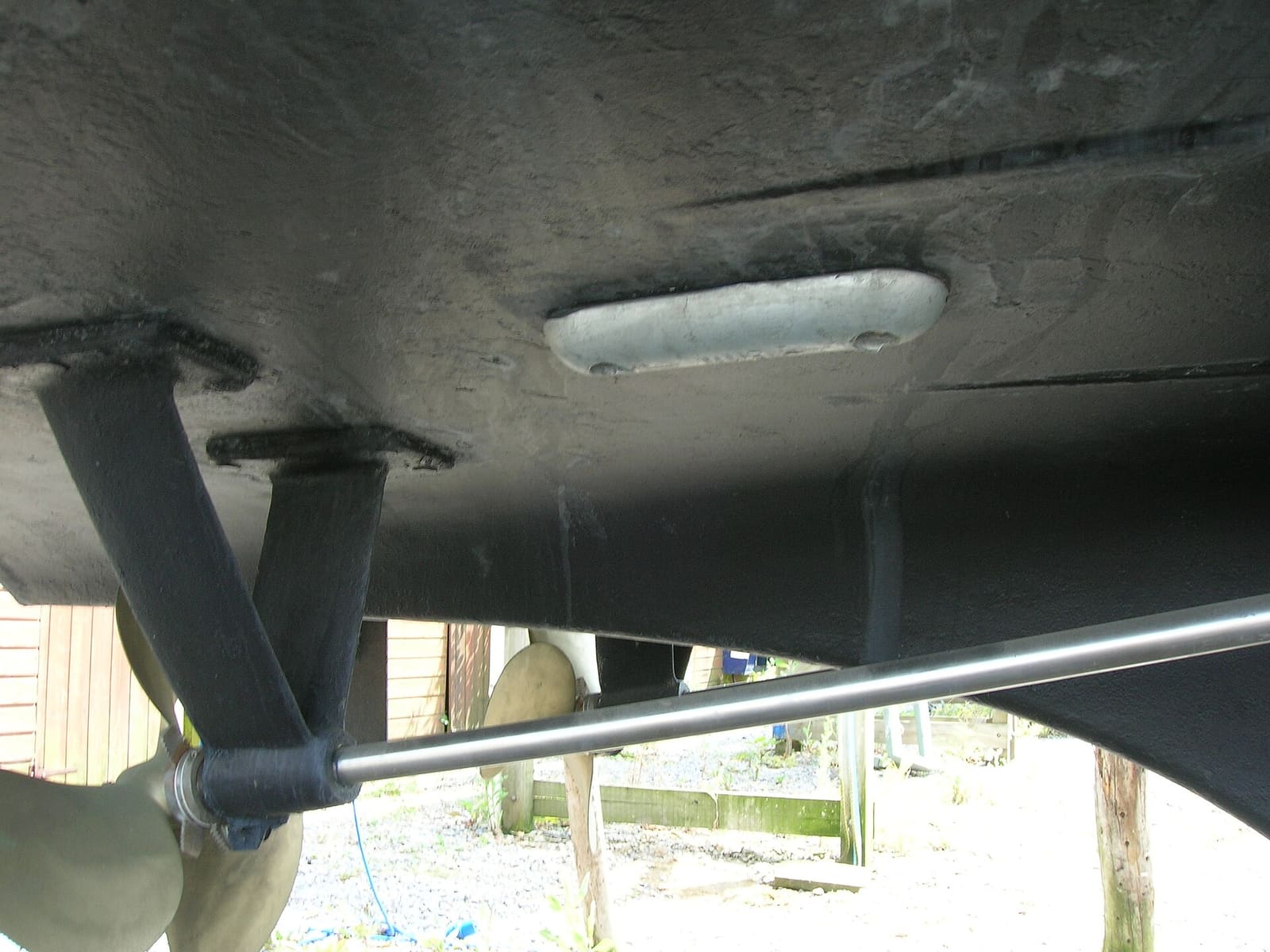
Many generators have one or more zinc anodes in the heat exchanger or cooling system. Close the seacock before removing one. Replace it if it's heavily eaten away. Southern Boating suggests checking generator zincs every 90 days until you know how fast yours wear. Not every generator has them (Northern Lights, for example, says its smaller sets don't use zincs), so go by your manual's parts list rather than hunting for one that isn't there.
Look over the wiring for loose, chafed or corroded connections, and make sure the generator's mounting hardware is tight (both are on the Onan list). Fischer Panda adds pulling and reseating the control fuses and checking that relays are seated. Make sure the start battery is fully charged and its terminals are clean and tight (see the marine battery guide).
Press the test button on every CO alarm aboard and confirm it sounds. Check the end-of-life date printed on each; CO sensors wear out. Every enclosed cabin should have a marine-rated alarm (see the CO detector guide for which kind and where).
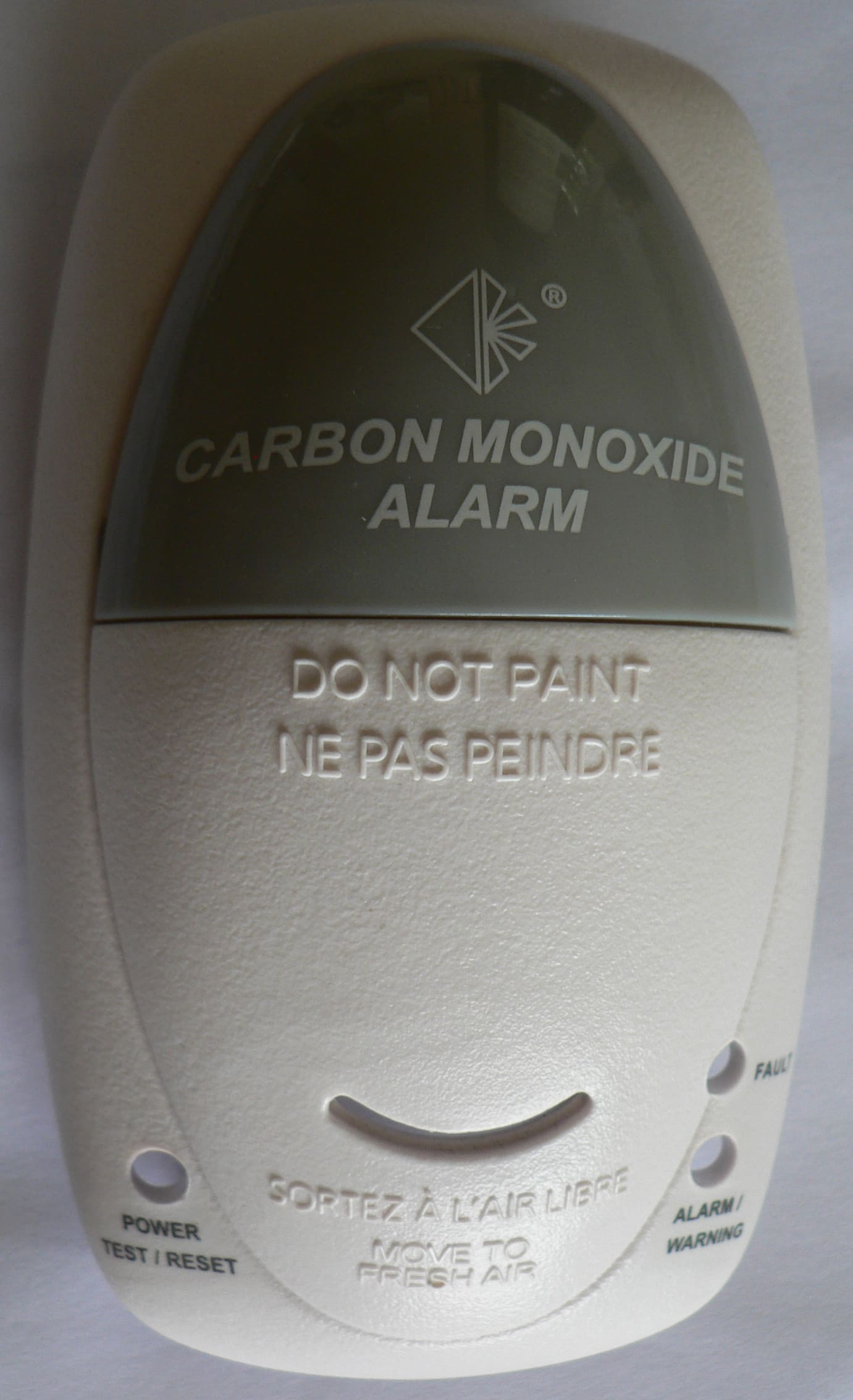
Press the test button on every CO alarm and know what its lights mean. This is a household alarm shown for its controls; aboard, use alarms listed and labeled for marine use. Photo: Sideroxylon / Wikimedia Commons · Public domain Make sure the generator's output breaker and the boat's AC load breakers are off; Southern Boating also says to turn off shore power at the dock before starting the generator. Start the generator and, as Fischer Panda suggests, watch it with the shield off for the first few minutes (keep clear of the belt and pulleys). Check:
- cooling water coming out of the exhaust within seconds
- no leaks at the raw-water pump, hoses or exhaust
- no new rattles, knocks or vibration, and a steady idle
- no warning lights or alarms on the panel, and normal volts and hertz on the meter
Then confirm you can start and stop it from every control station, another item on the Onan list. Refit the shield.
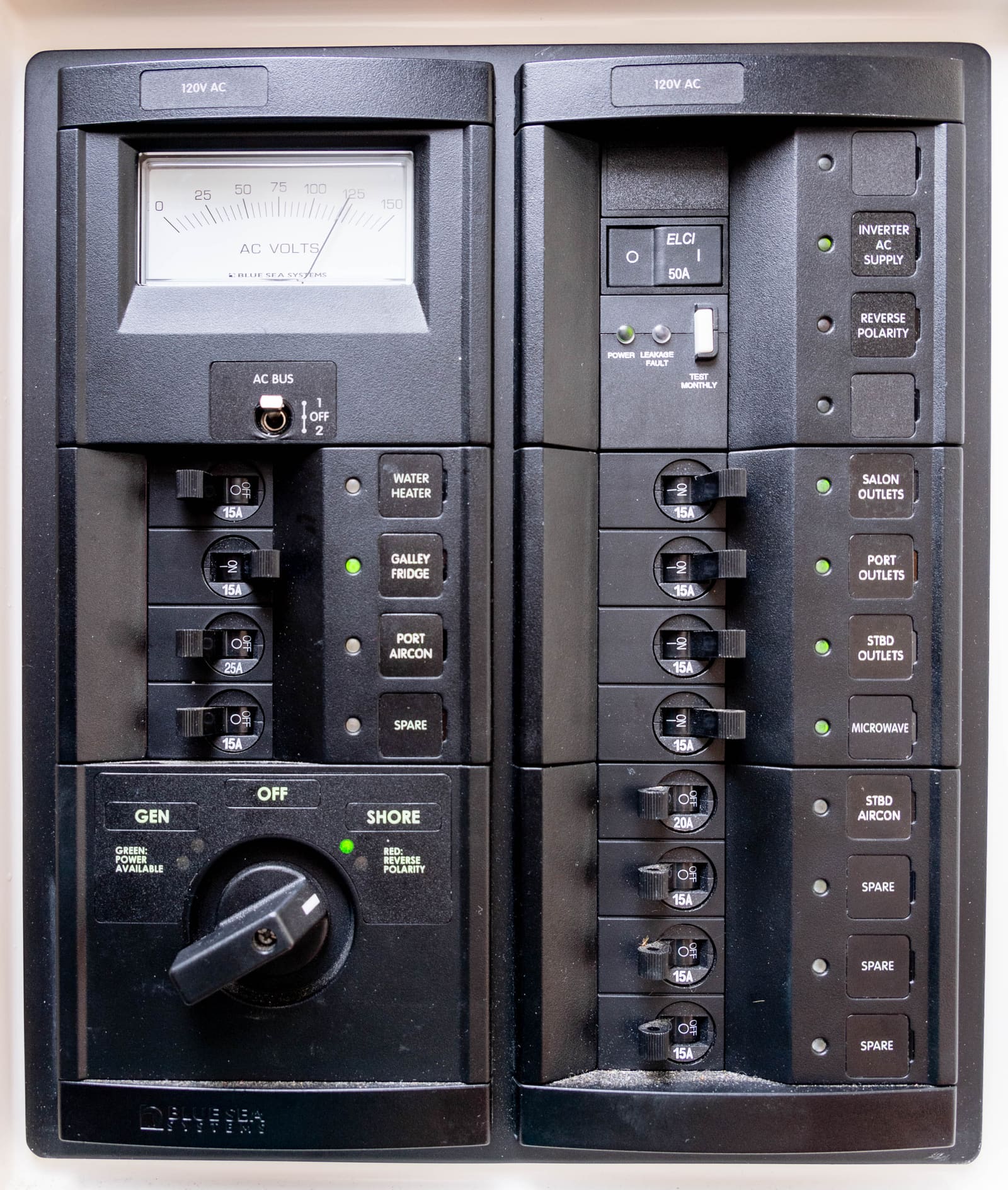
Let it warm up for a couple of minutes before adding big loads (a Cummins spokesman quoted by Southern Boating suggests about two minutes). Then switch on the loads you'll use on the trip, such as air conditioning, water heater and galley, one at a time and without overloading it (see the generator load management guide). The Onan advice relayed by Discover Boating is to run at least 80 percent of rated load for 30 minutes while watching the temperature gauge, and to check that frequency doesn't drop much below 60 Hz as load rises. Listen for the engine bogging down and look for black smoke. Yachting suggests at least 15 minutes under load with steady temperature for a generator that's been sitting more than a week. A generator that can't carry its rated load has a problem that will likely get worse on the trip; find it before you leave.
While it's under load, watch for steam in the exhaust or a temperature reading higher than usual. Northern Lights says that's the moment to check (an infrared thermometer is safer than your hand) whether the muffler and its hoses are running hot: if they are, seawater flow is restricted somewhere, usually a clogged strainer, worn impeller, slipping pump belt, plugged heat exchanger or a carbon-choked exhaust elbow. Shut down and find it before the trip.
When you're done, shut down the way Northern Lights recommends: switch the AC load breaker off first, let the generator run unloaded for about a minute to cool, then stop it. Starting and stopping under load is hard on the voltage regulator and diodes. On the trip, try to keep the generator working at roughly 40 to 50 percent of its rated load or more (typical; confirm in your manual); Northern Lights warns that long runs at very light load carbon up the exhaust elbow.
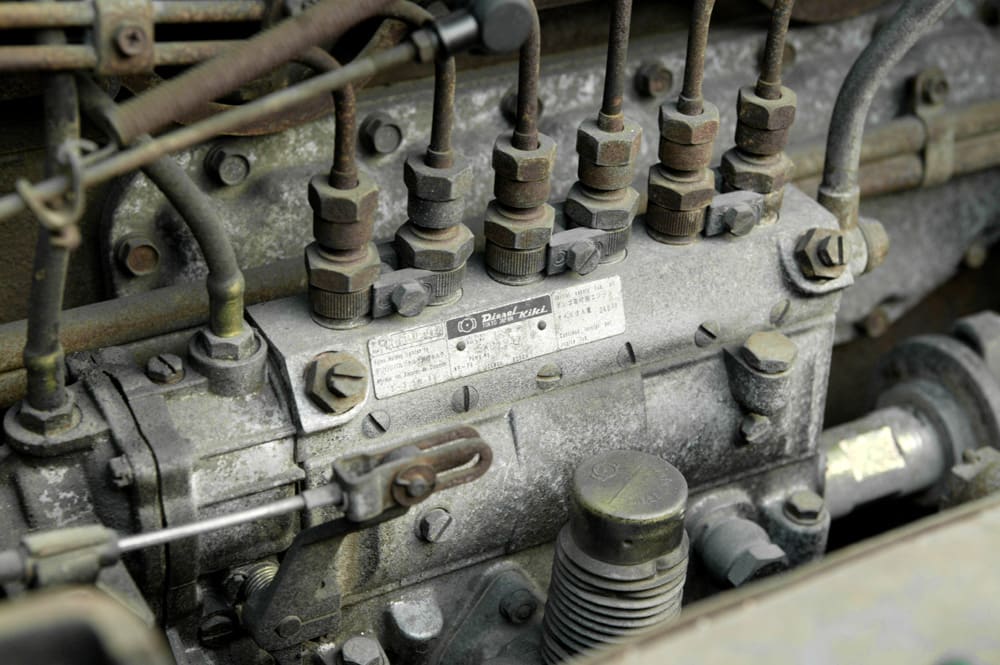
The Onan spares list for traveling boaters, published by Discover Boating, includes primary and secondary fuel filters, oil filters, an air filter, a belt, thermostat and gaskets, a seawater pump impeller and gaskets, and (for diesels) a spare injector and washer. Northern Lights, quoted by Southern Boating, gives a minimum of fuel filters, one belt, one oil filter, oil and coolant. Professional captain Vincent Daniello, quoted in the same article, suggests carrying a complete seawater pump on belt-driven units and a spare shutdown solenoid. Add the wrenches that fit and know how to bleed the fuel system after a filter change (see the fuel bleeding guide).
The Onan advice for cruising days: clear the seawater strainer before it clogs, check that nothing has moved around the generator underway (rags, tools or parts can block air inlets or chafe hoses), and check oil, coolant, belt tension, the primary fuel filter and any leaks. Write the hours in your log each day.
Record the date, hours, what you checked, the load test readings (amps, volts, hertz, temperature) and anything you replaced. Next year's readings are only useful if you have this year's to compare. Discover Boating also suggests writing down service centers along your route.
Common mistakes
- Leaving the pre-trip check until the morning you leave, with no time to fix what you find.
- Starting the generator with heavy AC loads already switched on.
- Only running it at no load, which hides a generator that can't carry its rating.
- Forgetting to reopen the seacock after cleaning the strainer.
- Not testing the CO alarms, or using an expired alarm.
- Packing filters but no impeller, belt or the tools to fit them.
- Ignoring a soft or cracked exhaust hose because it doesn't leak water yet.
When to call a pro
- Exhaust leaks, soot in the compartment or any CO alarm activation
- Oil in the coolant, coolant in the oil, or a fuel smell
- The generator can't hold its rated load, frequency sags, or it smokes black under load
- Overheating during the load test after the strainer and impeller are confirmed good
- Warning lights, shutdowns or alarms you can't explain
- Wiring damage, burnt connections or AC output problems: generator output is high-voltage AC
Tips
- Keep a laminated copy of this checklist inside the generator compartment.
- Run the generator under load once a month in the off season so the pre-trip test isn't its first run in months.
- Buy spares from an authorized dealer before you go; they can be hard to find in remote ports.
- Photograph the belt routing and strainer orientation so a mid-trip repair goes faster.
Official references
We read these to write this guide. Your engine's own manual always wins.
Safety: BoatMend is for information only and does not replace a certified marine technician. You are responsible for your safety and your boat. Read the full disclaimer.
Last updated 2026-10-26
Related guides
Marine Generator Routine Maintenance and CO Safety
Keep an Onan, Kohler/Rehlko, Northern Lights, Westerbeke or similar marine generator reliable with regular checks of oil, raw-water cooling, fuel, exhaust and the start battery, plus a monthly run under load. Generator exhaust is a leading source of carbon monoxide on boats, so safety checks come first.
Marine Generator Won't Start or Keeps Shutting Down
A step-by-step troubleshooting guide for a boat generator (genset) that won't crank, cranks but won't start, starts and then dies, or runs without making power. Work from switches, battery and fuel to the safety shutdowns for low oil, high temperature and lost raw-water flow, without flooding the engine or risking carbon monoxide.
Carbon Monoxide on Boats: Where It Comes From, CO Alarms and Warning Signs
Carbon monoxide can build up in cabins, under canvas and around the swim platform, and its first symptoms look like seasickness. Learn the danger zones, where to mount marine CO alarms, how to test and replace them, and exactly what to do if an alarm sounds or someone feels sick.
Testing Engine Coolant: Test Strips, Refractometer or Lab Analysis
Coolant can look perfect and still be worn out. Learn how to test the coolant in a closed-cooled inboard, sterndrive, diesel or generator with test strips, a refractometer or a mail-in lab kit, what each result tells you, and when the answer is a coolant change or a call to a mechanic.
Running a Boat Generator at the Right Load: Switching Sequence, Balancing and Avoiding Wet Stacking
Get more life out of your marine generator by starting and stopping it with the AC loads off, switching sources in the right order, keeping it loaded enough to avoid wet stacking and carbon buildup, and moving small loads to the inverter. Includes a simple monthly exercise routine.
How to Inspect and Clean a Raw-Water (Sea) Strainer
The sea strainer is the cheap screen that keeps weeds, shells and plastic out of your engine, generator and A/C pumps. Learn how to clean it safely with the seacock closed, reseal the lid so it can't suck air, spot a cracked bowl before it floods the boat, and winterize it.
How to Clean the Raw-Water Strainer and Replace the Impeller on a Marine Diesel
Clean the sea strainer and swap the rubber impeller in the raw-water pump of a Yanmar, Volvo Penta, Westerbeke, Beta or similar inboard diesel. A worn impeller is one of the most common reasons a diesel overheats, and this job takes about an hour with basic tools.
How to Inspect and Replace Sacrificial Anodes (Zincs)
Check the anodes on your outboard, sterndrive or inboard running gear, replace them when they are half gone, and choose the right metal for the water you boat in. Fresh anodes are cheap insurance against expensive corrosion damage to your lower unit, drive and prop.
Hose Clamps on Boats: Choosing, Installing and Inspecting Them
A rusted or wrong hose clamp can sink a boat at the dock, leak fuel or let exhaust into the cabin. Learn which clamps belong on a boat (all-316 stainless, embossed band, T-bolt where needed), when to double them, how tight is tight enough, and how to find the ones that are about to fail.
How to Bleed Air From a Marine Diesel Fuel System
A diesel that sucks air after a filter change, a fuel leak or running the tank dry may not start until the air is pushed out. Learn the order that works on most older mechanical diesels, why common-rail engines are different, how to protect the starter and exhaust while cranking, and the high-pressure fuel dangers you must respect.
Onboard Tool Kit and Spare Parts: What to Carry on a Day Boat or a Cruiser
Build a tool kit and spares box that fits your boat and how far you go. A blown fuse, a clogged fuel filter or a dinged prop shouldn't end the day or turn into an expensive tow.