Running a Boat Generator at the Right Load: Switching Sequence, Balancing and Avoiding Wet Stacking
Get more life out of your marine generator by starting and stopping it with the AC loads off, switching sources in the right order, keeping it loaded enough to avoid wet stacking and carbon buildup, and moving small loads to the inverter. Includes a simple monthly exercise routine.
Time
1 h
Applies to
Marine diesel, Gas inboard · Cabin cruiser, Yacht
Safety first: A generator makes 120/240-volt AC power that can kill. This guide is about using the switches and breakers on your panel the way they were designed; never open the AC panel, the source selector or the generator's electrical box, and leave all AC wiring to an ABYC-certified marine electrician. Generator exhaust contains carbon monoxide: keep working CO alarms aboard, never run the generator with anyone swimming or on the swim platform, and if an alarm sounds or someone feels dizzy or sick, shut it down, get everyone to fresh air and call 911 or the USCG on VHF 16. A burning smell, smoke or a breaker that trips again right after reset means stop and call a pro.
Owners often ask
- Is it bad to run my boat generator all night with only a few lights on?
- What order do I switch from shore power to the generator without tripping breakers?
This guide walks you through it. Still stuck? Ask the AI Mechanic about your engine.
Tools
- Your generator owner's manual (for its rated kW and any minimum-load advice)
- The AC panel's volt and amp meters, or a generator display that shows load
- Notebook or the BoatMend log to write down load readings
- Flashlight
Parts & supplies
- None for routine operation
Before you start
Why load matters: a diesel generator runs at a fixed speed whether you use 5% or 90% of its output. At very light loads it never gets hot enough to burn all its fuel cleanly. Unburned fuel and soot build up in the exhaust and cylinders, which is called wet stacking (you may see black, oily drips at the exhaust outlet or a sooty transom). Northern Lights says light loads plug the wet exhaust elbow with carbon, leading to smoke, overheating and elbow failure. Yachting adds that long runs with no load can also cause a generator to lose its residual magnetism and stop making power.
What "right load" means: there is no single number for every brand. Northern Lights suggests keeping its generators at about 40 to 50% of rated kW or more, with light loads handed to the inverter. Westerbeke's monthly exercise calls for about 70 to 85% of rated output for an hour. Boating Magazine's sizing advice lands in the same area, with a generator ideally working at roughly 35 to 70% of its rating. Your manual is the final word. Find your generator's rating in kW (on its data plate or in the manual) and work out what 40% and 75% look like in amps on your panel; a marine electrician can help you do this once.
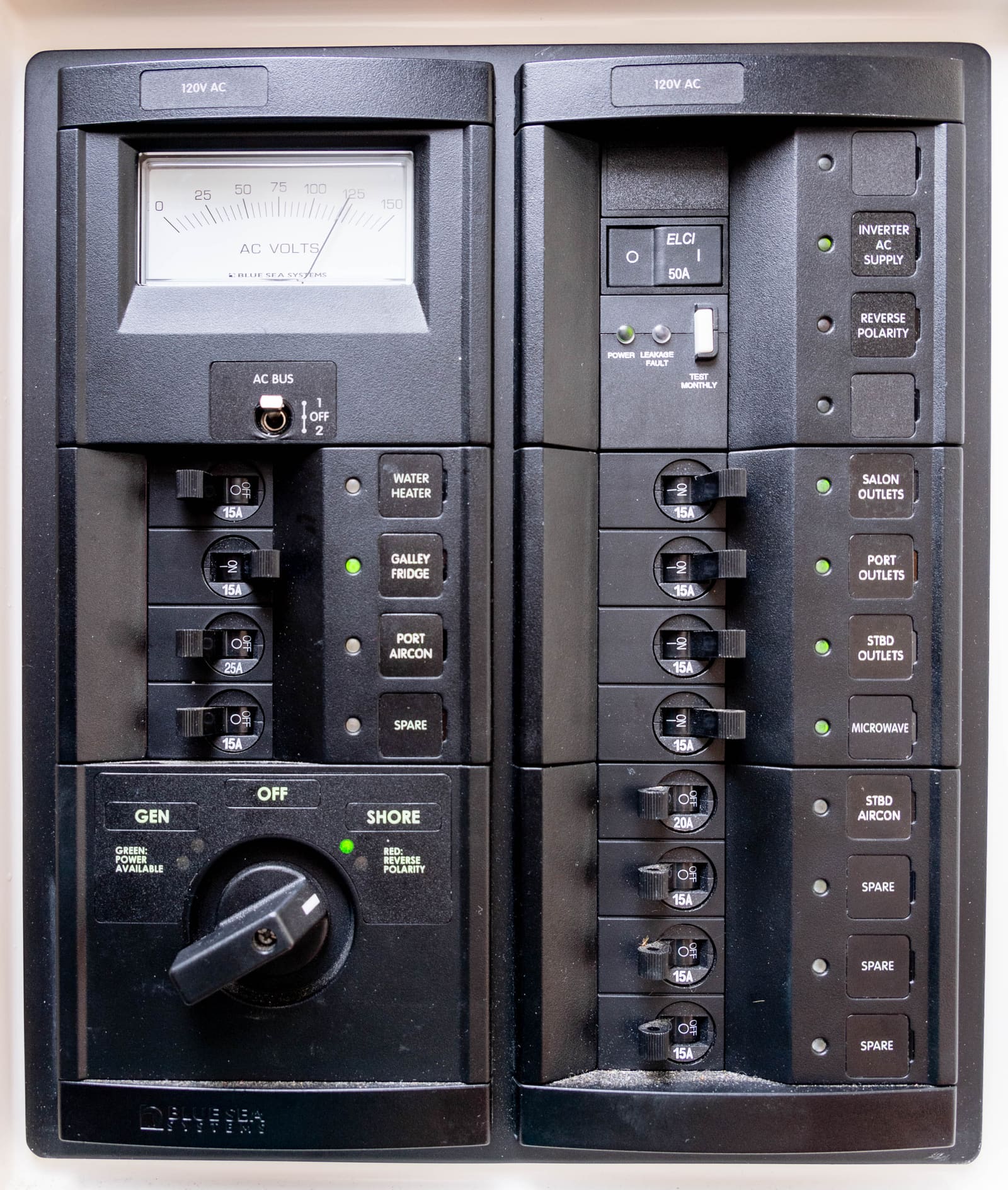
Know your panel: most boats have a source selector (a rotary switch or interlocked breakers) that picks shore power, generator or sometimes inverter, so two sources can never be connected at once. Larger boats with 240-volt or 50-amp service have two "legs" (L1 and L2) that each carry part of the load.
Steps
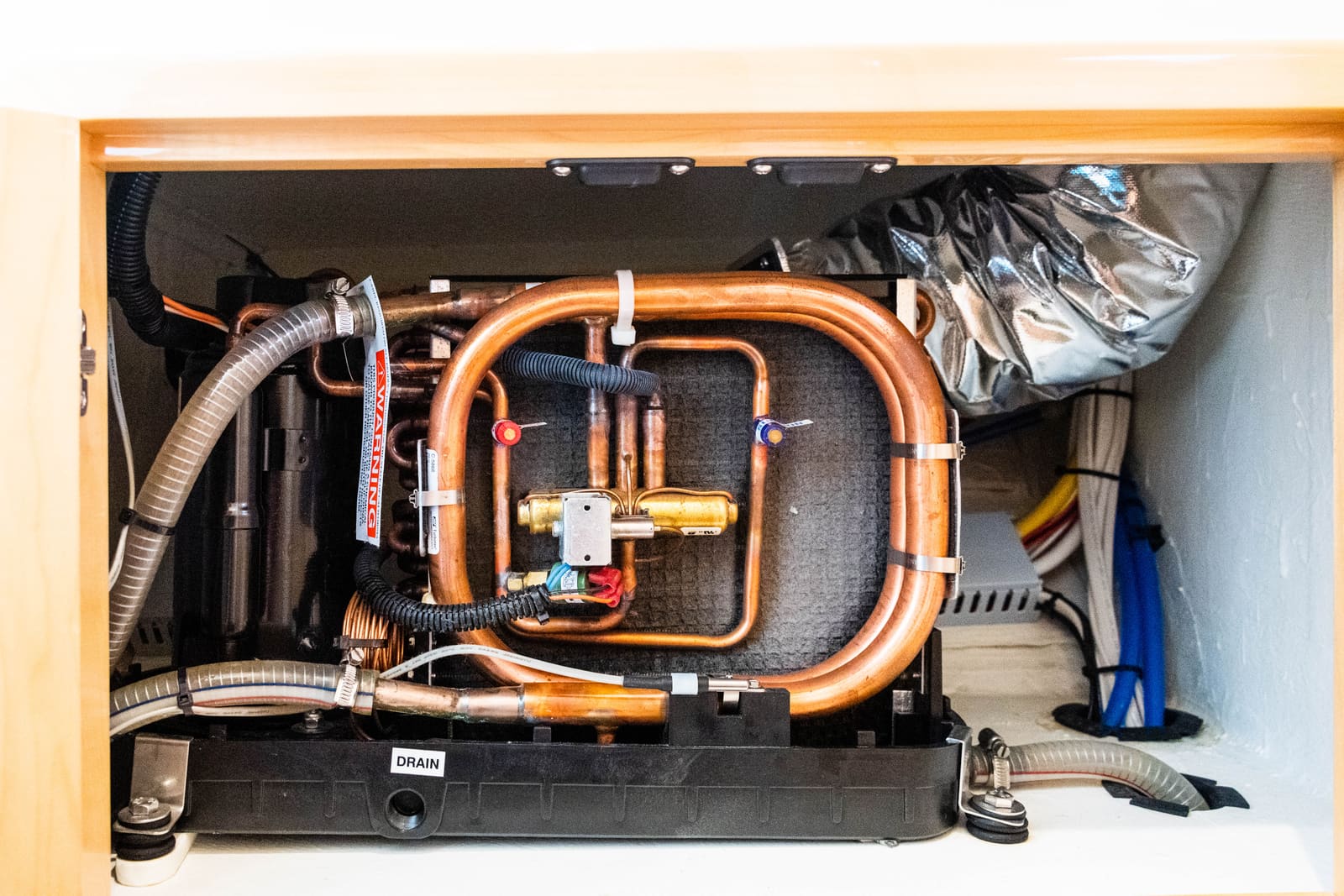
Walk through the boat and list what uses the most AC power. Typical big loads: air conditioning units, the water heater, the electric stove or cooktop, the battery charger when batteries are low, a watermaker, a washer/dryer. Typical small loads: lights, TV, phone chargers, a coffee maker for a few minutes, the fridge once it is cold. Air conditioning compressors also draw a short surge each time they start, much higher than their running current.
Before you change from shore power to generator (or back), switch off the large AC branch breakers: air conditioning, water heater, battery charger, stove. Power & Motoryacht's experts give the same advice: don't start the generator under load, and bring things back on one at a time once it is running.
If you are plugged in at the dock and want to run the generator, turn off the shore power main breaker on the boat first (and the pedestal breaker if you are unplugging). Northern Lights warns that a worn shore/generator selector switch can let the generator connect to shore power, with expensive and dangerous results. Never try to "help" a switch that feels loose or sticks: call an electrician.
Start the generator from its panel with the generator's main AC output breaker off. Confirm cooling water is coming out of the exhaust. Let it warm up for about a minute (Northern Lights) before adding load. Turn on the exhaust blower if your boat has one and keep nearby hatches and ports closed so exhaust doesn't drift inside.
Turn the source selector to GEN (or close the generator breaker on interlocked panels). Watch the AC voltmeter: in the US it should read close to 120 volts per leg, and if your panel shows frequency, close to 60 Hz. If the voltage is far off or jumps around, switch the selector off, shut down and call a technician.
Turn on the largest loads one by one, giving each air conditioning unit time to start and settle (about 30 seconds to a minute) before the next. This spreads the starting surges so the generator isn't hit with them all at once. Watch the voltmeter dip and recover with each one. A voltage that sags a lot and stays low, black smoke at the exhaust or the generator laboring means you've asked for too much. A useful habit from a BoatUS surveyor: write down the voltage with no load and again once a big load such as an air conditioner has settled. The rpm may dip for a moment, but voltage and frequency should come right back; a gap of more than about 5% between the two readings is worth having checked. Frequency matters as much as voltage, since power that is off-frequency can damage sensitive electronics. If your panel has no hertz meter, a technician can check it with a meter, or you can add a panel-mounted one.
On boats with two legs, check the amp meter for each leg if your panel has one. Try to keep the load roughly even, for example one air conditioner on each side, and the water heater on the leg with less on it. Your panel labels show which breakers sit on which leg. An unbalanced generator can trip one leg's breaker even though the total load is well within its rating. If your labels are missing or confusing, ask a marine electrician to label them.
Look at the total amps and compare with the 40% and 75% figures you worked out. If the generator is barely loaded for hours (say, just lights and a TV overnight), you are building carbon. Options:
- Run small loads on the inverter and batteries instead, then run the generator for a few hours with real work to do: charging batteries, heating water, cooling the boat, running the watermaker.
- Batch the big jobs into the generator run: hot water, battery charging and cooling at the same time.
- Shut it down when the big loads are done instead of letting it idle along.
If your boat has an inverter/charger, it's the right tool for small, quiet loads like overnight lights, electronics and a cold fridge. When the generator runs, the charger refills the batteries, which also adds useful load. Never connect the inverter output to the same circuit as shore or generator power unless it's a factory-designed inverter/charger with an automatic transfer switch (see our inverter safety guide).
Turn off the big AC loads, then switch the generator's output breaker or selector off. Let the generator run with no load for about a minute, or the 5 to 10 minute cool-down your manual gives (Westerbeke stresses this for turbocharged units). Then stop it. Northern Lights says this habit protects the voltage regulator and diodes. Switch back to shore power only after the generator is off the line.
A generator that sits suffers. Westerbeke's monthly routine for idle generators: do the daily checks, warm up 5 to 10 minutes, run about an hour at 70 to 85% of rated output, then 5 to 10 minutes at little or no load before shutdown. At the dock, the water heater and air conditioning are usually enough load. Check your manual for your brand's version.
Black, oily soot at the exhaust outlet, a wet sooty transom, more smoke at startup, or a generator that seems to lose power are warning signs. Write down hours, load readings and anything unusual in BoatMend after each long run. If you see these signs, a few hours at a solid load may help, but carbon in the exhaust elbow often has to be cleaned out by a technician (see our generator maintenance guide).
Common mistakes
- Starting or stopping the generator with the air conditioners and water heater switched on.
- Throwing the source selector from shore to generator while loads are running.
- Running the generator all night just for a few lights and a fan, month after month.
- Turning on every air conditioner at the same moment and wondering why the breaker trips.
- Piling all the heavy loads on one leg of a 240-volt system.
- Running the generator at anchor with people swimming near the stern.
- Forcing a stiff or worn selector switch instead of having it replaced.
When to call a pro
- Voltage or frequency that is far from normal, unstable, or drops badly under modest load
- A generator breaker or main breaker that trips repeatedly, or any burning smell, heat or buzzing at the panel or selector
- A selector switch that is loose, sticky, scorched or lets two sources connect
- Black smoke, oily soot or lost power that doesn't clear after a good loaded run
- Adding circuits, rewiring the panel or installing an inverter or transfer switch
- A generator that runs but makes no power (it may need to be "flashed" by a technician)
Tips
- Tape a small card by the panel with your generator's rated amps and your 40% and 75% targets.
- Run the water heater and battery charger during generator runs; they are easy, useful load.
- If your boat often runs a large generator with tiny loads, ask a marine electrician whether a bigger inverter and battery bank, or a smaller generator, would suit how you use the boat. On larger yachts there's a third option: an automatic load bank. Northern Lights, for example, sells one that watches each leg and adds or sheds load when big consumers like stabilizers or thrusters aren't running, to prevent the smoke and soot of light loading. It's a dealer-installed system, not a DIY add-on.
- Do a short load test at the dock before a cruise so problems show up there, not at anchor. BoatUS suggests confirming voltage and frequency, unloaded and under load, before each cruise or at least every quarter.
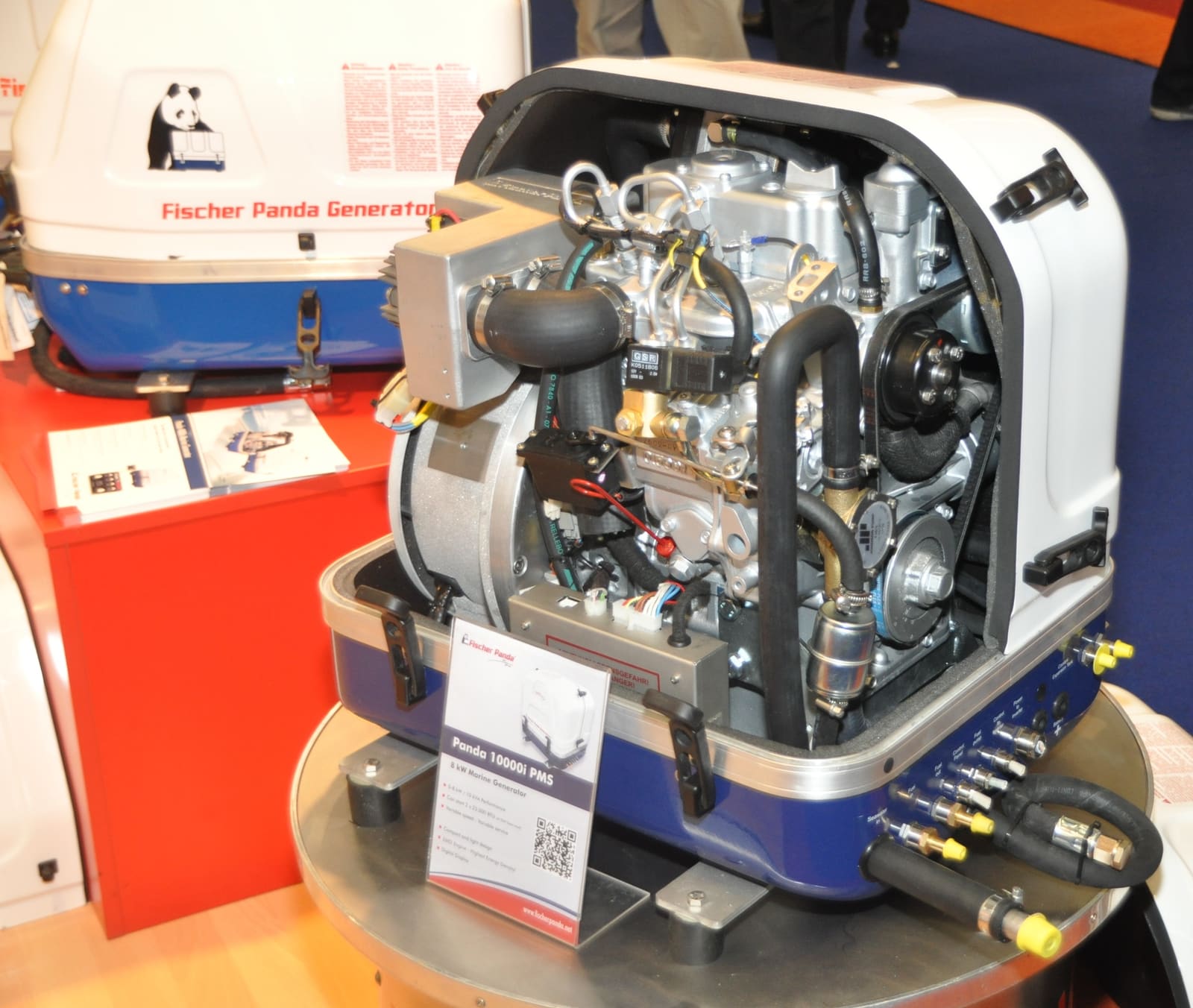
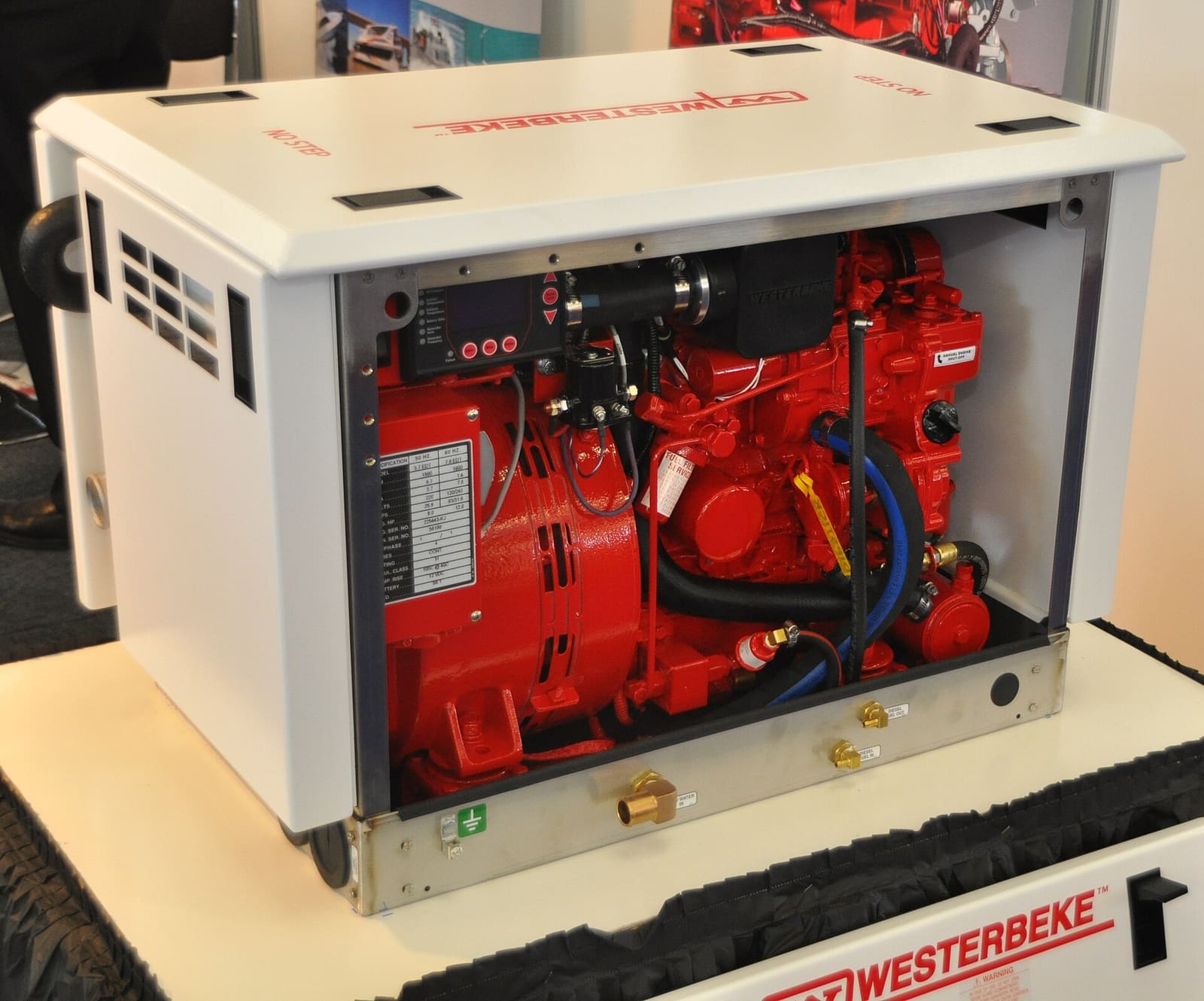
- If the generator sits inside a sound shield, open the inspection panels now and then while it runs (hands well clear of belts and the exhaust) to look and listen for leaks, loose wires and odd noises the box would hide, and confirm its alarms work.
- Most installations give the generator its own start battery so it will start even when the house bank is flat. Keep it charged and its terminals clean like any other battery.
- When it shuts itself down with an error, start with the simplest causes and call the manufacturer's tech line early. One BoatUS writer spent weeks replacing a hard-to-reach temperature sensor, only to learn her unit had a second one right behind the access panel.
Official references
We read these to write this guide. Your engine's own manual always wins.
- Northern Lights – Top 10 Generator Maintenance Tips and Tricks
- Northern Lights – Automatic Load Banks
- Westerbeke – Maintenance and Use FAQs (monthly exercise routine)
- Power & Motoryacht – Extending Your Genset's Life Through Smart Maintenance
- BoatUS – Don't Let Neglected Maintenance Sink Your Boat Generator (2023)
- BoatUS – Occam's Generator (2026)
- Boating Magazine – What You Need to Know About Gensets
- Yachting – Top Five Common Marine Generator Issues
- USCG Boating Safety – Carbon Monoxide Protection
Safety: BoatMend is for information only and does not replace a certified marine technician. You are responsible for your safety and your boat. Read the full disclaimer.
Last updated 2026-10-24
Related guides
Marine Generator Routine Maintenance and CO Safety
Keep an Onan, Kohler/Rehlko, Northern Lights, Westerbeke or similar marine generator reliable with regular checks of oil, raw-water cooling, fuel, exhaust and the start battery, plus a monthly run under load. Generator exhaust is a leading source of carbon monoxide on boats, so safety checks come first.
Marine Generator Won't Start or Keeps Shutting Down
A step-by-step troubleshooting guide for a boat generator (genset) that won't crank, cranks but won't start, starts and then dies, or runs without making power. Work from switches, battery and fuel to the safety shutdowns for low oil, high temperature and lost raw-water flow, without flooding the engine or risking carbon monoxide.
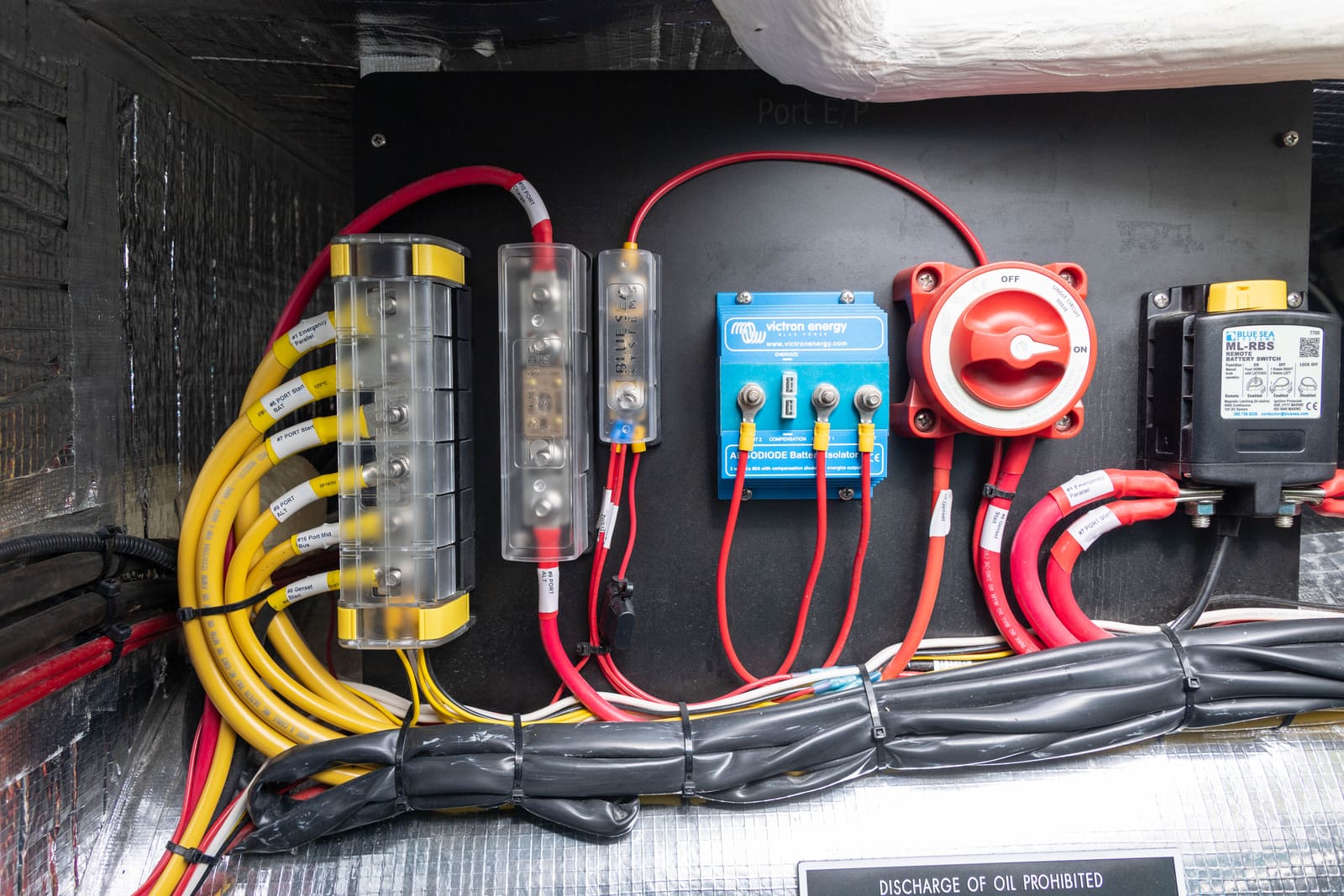
Boat Inverters and Inverter/Chargers: Sizing, Safe Use and What a Pro Must Install
An inverter turns battery power into 120-volt household current, which makes it as dangerous as shore power and a serious fire risk if it is fused or wired wrong. Learn how to size one realistically, what a safe installation looks like, the owner checks to do, and the mistakes (like backfeeding) that hurt people.
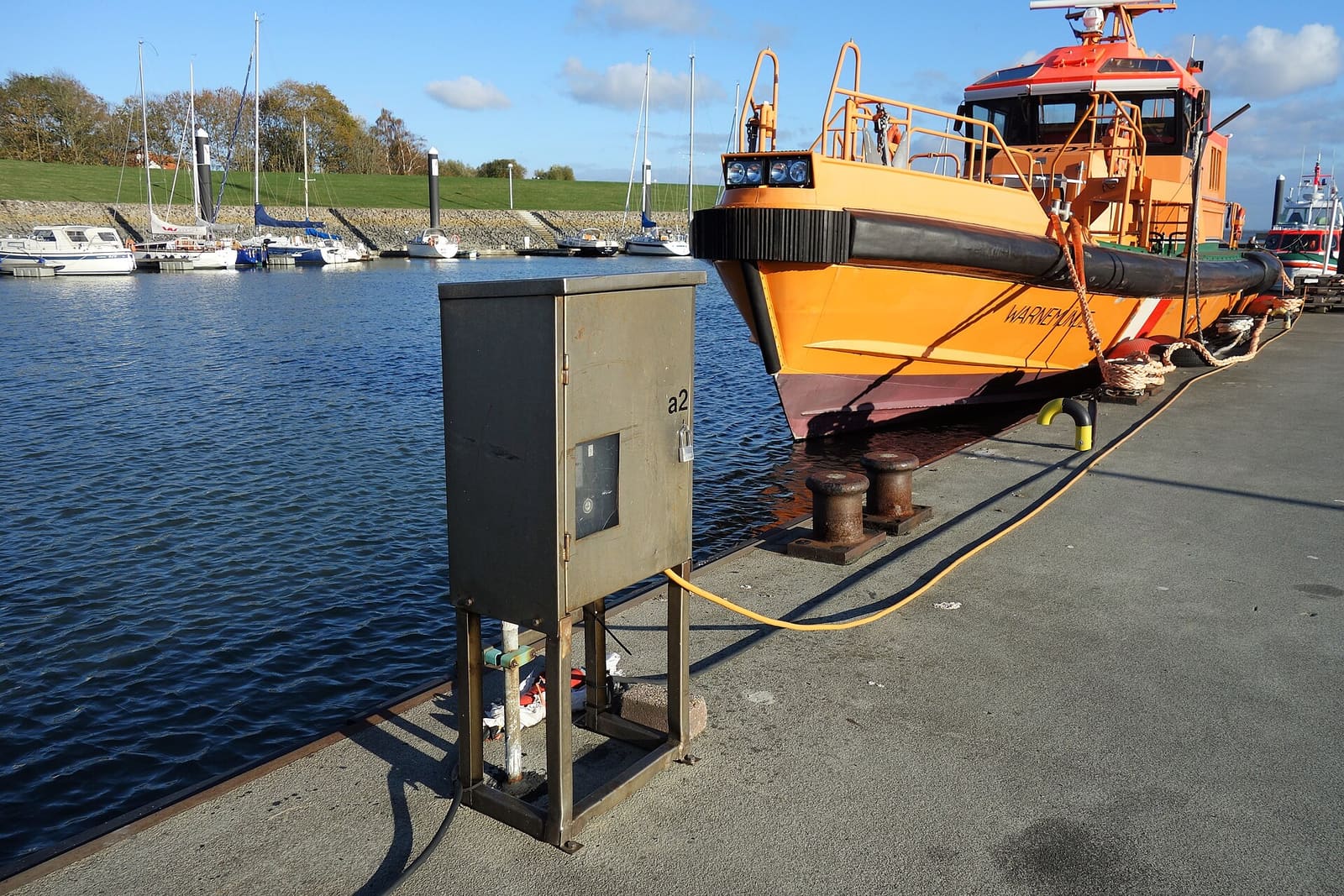
Shore Power Safety: Cords, Inlets, Burned Plugs and Electric Shock Drowning
An owner's inspection routine for your shore power cord, plugs, boat inlet, galvanic isolator and ground-fault protection, plus the right way to plug in and the facts about Electric Shock Drowning. This guide is for looking and testing only; any electrical repair belongs to an ABYC-certified marine electrician.
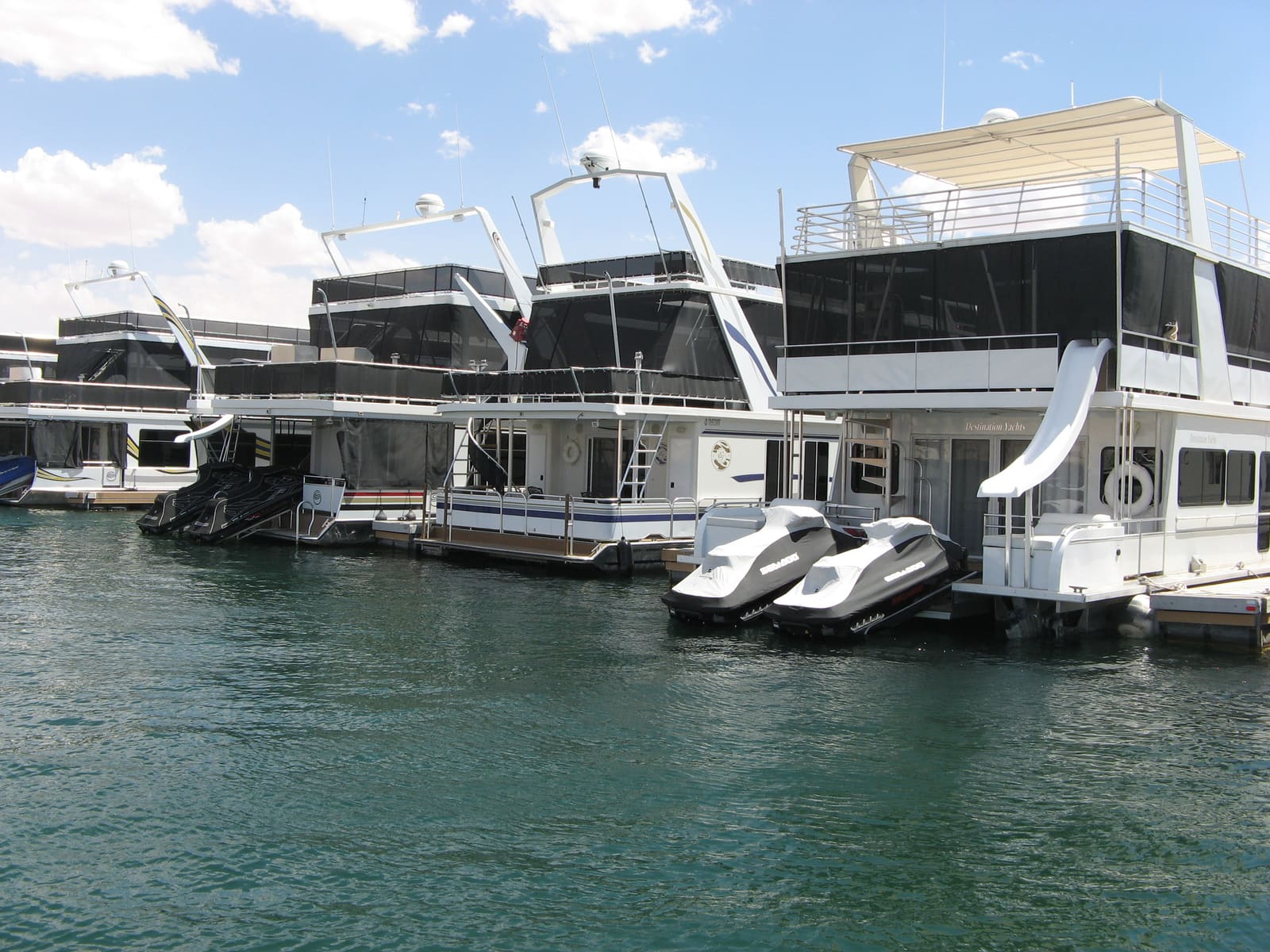
Carbon Monoxide on Boats: Where It Comes From, CO Alarms and Warning Signs
Carbon monoxide can build up in cabins, under canvas and around the swim platform, and its first symptoms look like seasickness. Learn the danger zones, where to mount marine CO alarms, how to test and replace them, and exactly what to do if an alarm sounds or someone feels sick.
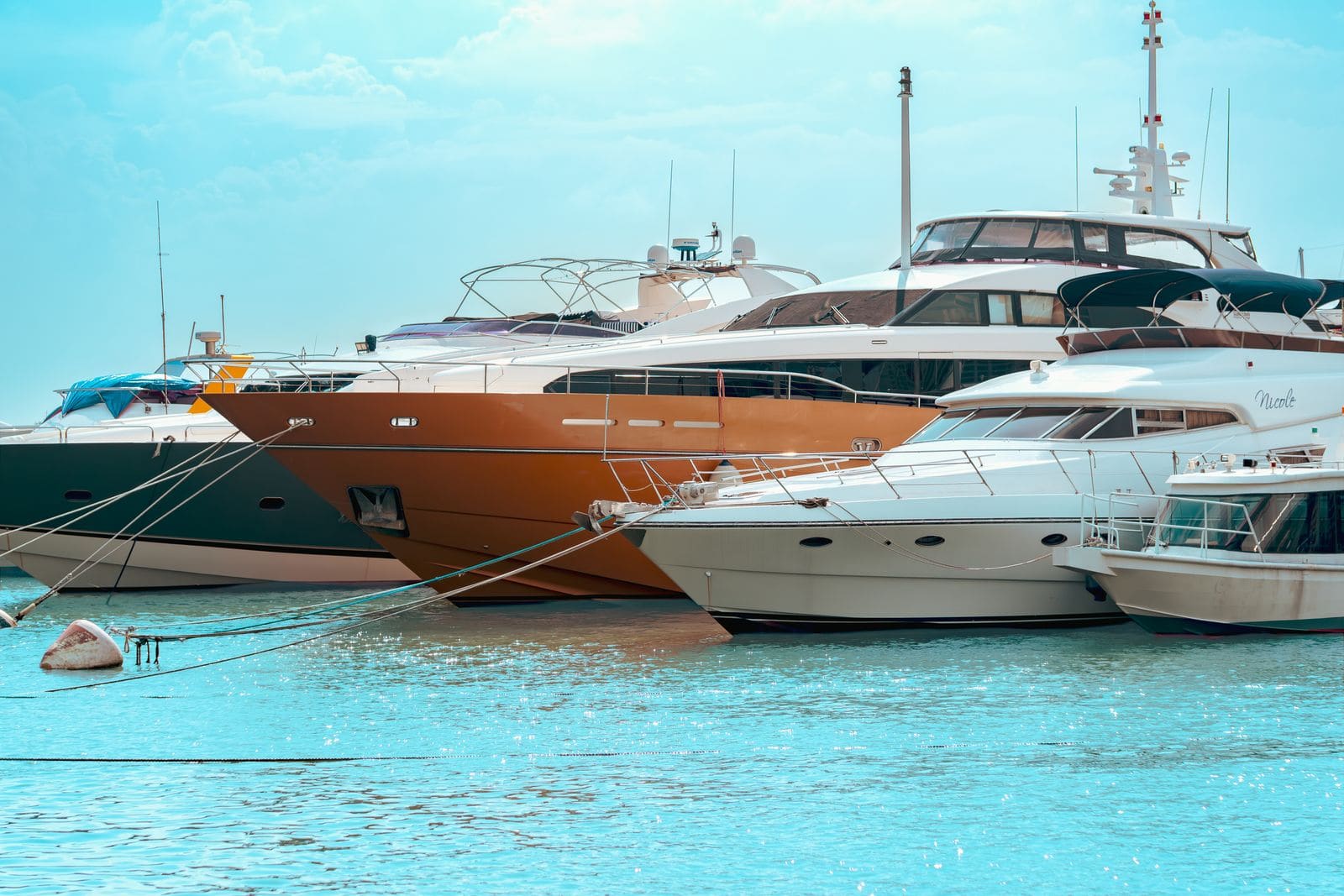
How to Maintain Your Boat's Air Conditioning Seawater System
Keep seawater flowing through your marine A/C by cleaning the strainer, checking the pump and overboard discharge, descaling the condenser coil when flow drops, cleaning the air filter, and winterizing the seawater circuit before a freeze. Most "A/C not cooling" calls are a water-flow problem.