Emergency Drills for Your Crew: Engine Failure, Fire, Steering Loss and Man Overboard
Practice what everyone aboard does when the engine quits, a fire starts, the steering fails or someone falls in. A few short drills each season turn panic into a plan, and teach your crew to anchor, call for help on VHF 16 or DSC, and get a tow.
Time
1 h 30 min
Applies to
All engines
Safety first: These are drills, not real emergencies, so set them up safely: open water, light wind, no traffic, and everyone wearing a life jacket. Never transmit a practice Mayday or press the DSC distress button for a drill; rehearse with the radio off or the microphone unkeyed. In a real emergency, call USCG on VHF channel 16 (or press the DSC distress button) or 911 right away, then call Sea Tow or TowBoatUS.
Fuel smell, water coming in, CO alarm or smoke? Stop, get everyone in life jackets and call USCG on VHF 16 or 911. For a tow: Sea Tow or TowBoatUS.
Owners often ask
- What should I do first if my engine dies and I start drifting?
- How do I practice a man overboard drill with my family?
This guide walks you through it. Still stuck? Ask the AI Mechanic about your engine.
Tools
- Your boat's VHF radio (fixed and handheld, ideally with DSC and GPS)
- Boat cushion or fender with a weight tied on (a stand-in "person" for overboard drills)
- Stopwatch or phone timer
- Notepad or BoatMend notes for the debrief
Parts & supplies
- Printed radio call card (script) to post by the VHF
- Spare engine cut-off lanyard
- Bucket and line (for a makeshift steering drogue), if your boat has no emergency tiller
Before you start
When something goes wrong on the water, people freeze or do the first thing that comes to mind, often the wrong thing. A dispatcher once had to remind a boater drifting toward rocks to drop his anchor; he hadn't thought of it. Drills fix that. The BoatUS Foundation recommends practicing crew-overboard recovery until it's second nature, at the start of every season and from time to time during it.
You don't need to run every drill on every trip. A good routine:
- Every trip: a 5-minute safety briefing for guests (step 1).
- Start of the season: run all the drills below with your regular crew.
- Mid-season: repeat the two your crew found hardest.
Pick a calm day and plan about an hour and a half the first time. Bring someone who could take over if you, the skipper, were the one in trouble. That's the whole point.
Steps
In staged boat fires, the BoatUS Foundation found that a short guest briefing improves fire safety. Before leaving the dock, show everyone:
- Where the life jackets are, and have them put one on or keep it within reach.
- Where each fire extinguisher is and how to use it (pull, aim at the base, squeeze, sweep).
- How to use the VHF radio and where the DSC distress button is.
- How to shut off the engine and the main battery switch.
- Where the anchor is and how to let it go.
- The kill-switch lanyard and where the spare is kept.
In an emergency, each person should know their job without discussion. For most small crews:
- Skipper: controls the boat and makes decisions.
- Spotter/lookout: points at the person in the water or the hazard and never looks away.
- Radio operator: makes the call and gives the position.
- Anchor handler: gets the anchor down when told.
With only two aboard, the non-driver takes spotter and radio. Make sure at least one other person can drive the boat and stop the engine.
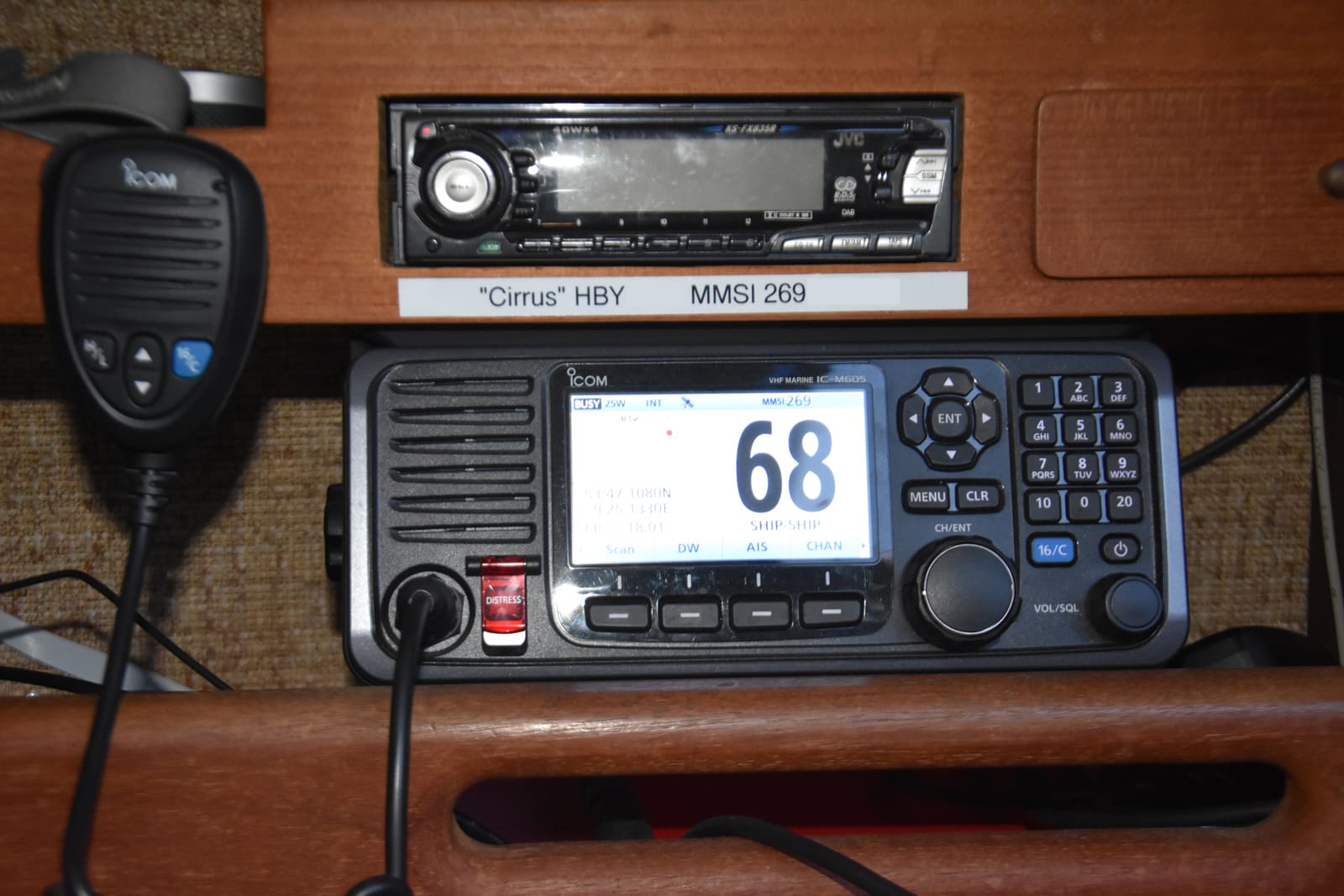
Post a call card by the radio. A DSC radio connected to GPS sends your position and boat identity when you hold the red distress button, which is the fastest way to raise the Coast Guard. After sending the alert, the Coast Guard's guidance is to call on channel 16 with your distress details.
Practice with the radio off. Have each crew member say the call out loud from the card:
- "Mayday, Mayday, Mayday" (life-threatening: fire, sinking, person overboard) or "Pan-pan, pan-pan, pan-pan" (urgent but not life-threatening: disabled and drifting, but safe for now).
- Boat name, position (read it off the GPS), the problem, number of people aboard, and that everyone is wearing life jackets.
Mercury's radio basics are worth practicing too: set the squelch just past where the static stops, hold the mic 2 to 3 inches from your mouth, press the button and wait a second before speaking, and pause again before letting go so the start and end of the message aren't cut off. The Coast Guard will often ask you to switch from 16 to a working channel such as 22.
Also show them how to cancel an accidental DSC alert: the Coast Guard says to use the radio's cancel menu, then announce the cancellation on channel 16, and not to switch the radio off first, because most radios resume the alert when powered back on. Save your tow service's number (Sea Tow or TowBoatUS) in everyone's phone, and know the VHF channel they monitor in your area.
Shut the engine off without warning and let the crew respond:
- Make the boat safe first. Look at what you're drifting toward. Boating Magazine's advice is to drop the anchor as soon as power is lost if the depth allows, even when hazards seem far away, because wind and current close the distance quickly. In water too deep to anchor, a sea anchor or drogue from a bow cleat helps keep the bow into the waves.
- Then troubleshoot the easy things. BoatUS lists the quick checks: is the kill-switch lanyard attached, is the shifter in neutral, is the fuel line kinked, is the primer bulb firm, is the tank vent open, is the battery connection tight, and are the cooling water intakes clogged with a bag or weeds? If it dies when you put it in gear, suspect a line around the prop.
- Call for a tow early. If the quick checks don't fix it, call your tow service while conditions are still good.
Time how long it takes the crew to get the boat anchored. See engine won't start for more checks once you're safe.
The anchor is your emergency brake, but only if it's ready. In this drill, the anchor handler gets it down and holding while you time it.
- Is the anchor stowed where it can be reached in seconds, not buried under gear?
- Is the bitter end of the rode tied to the boat? (Many anchors are lost overboard this way.)
- Is there enough rode for the water you usually boat in? See anchor rode and scope.
- Does everyone know to keep hands and feet clear of the rode as it runs out?
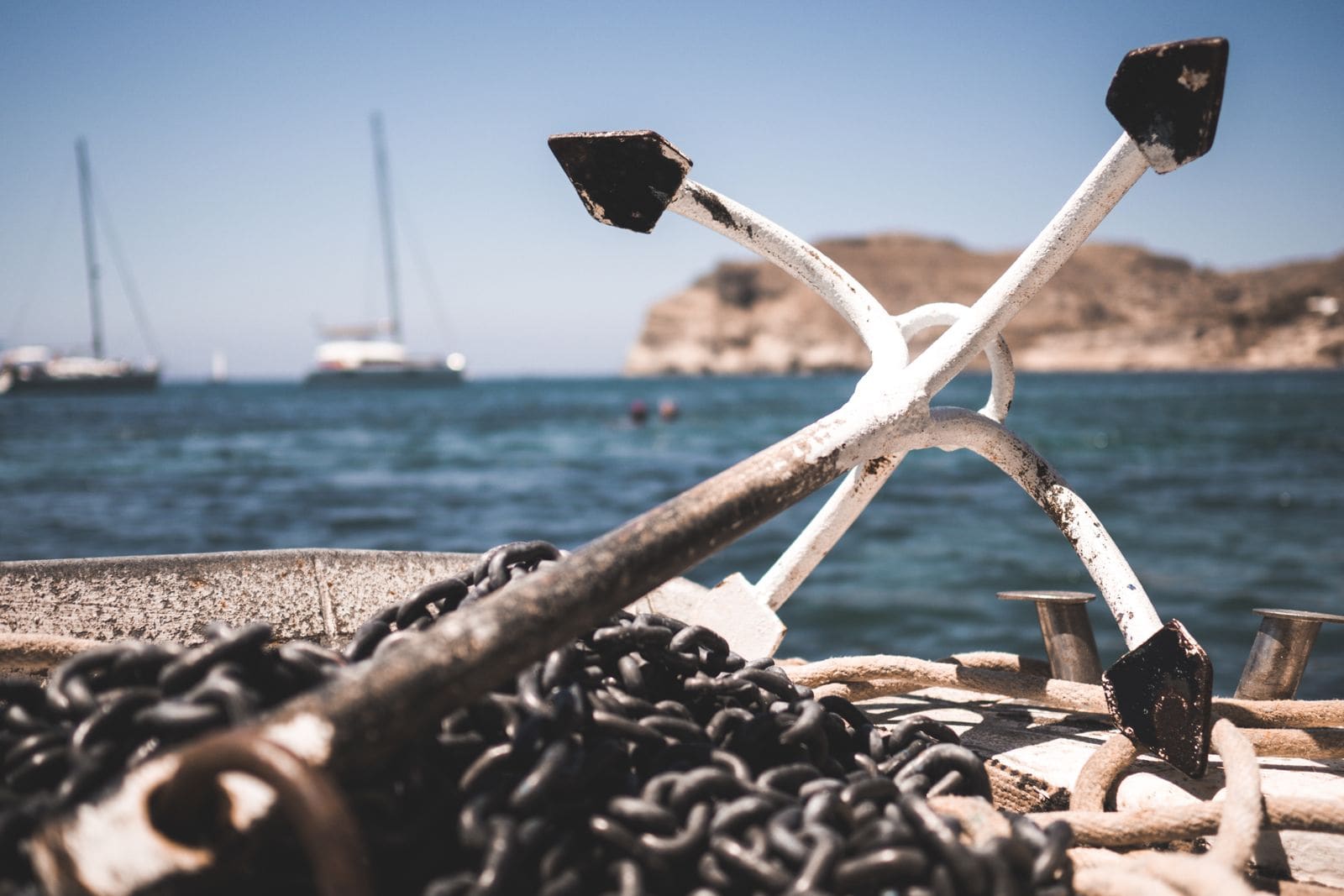
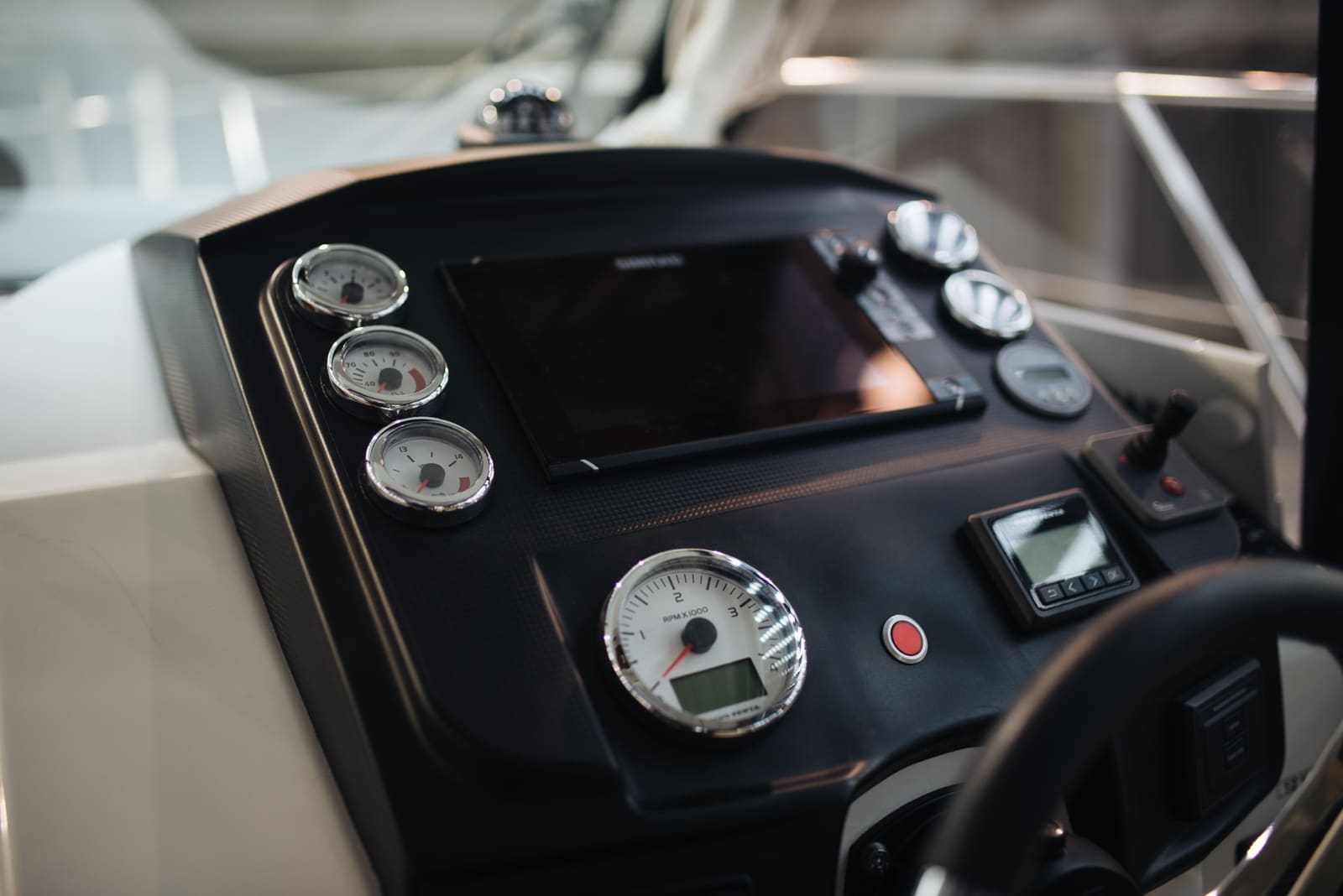
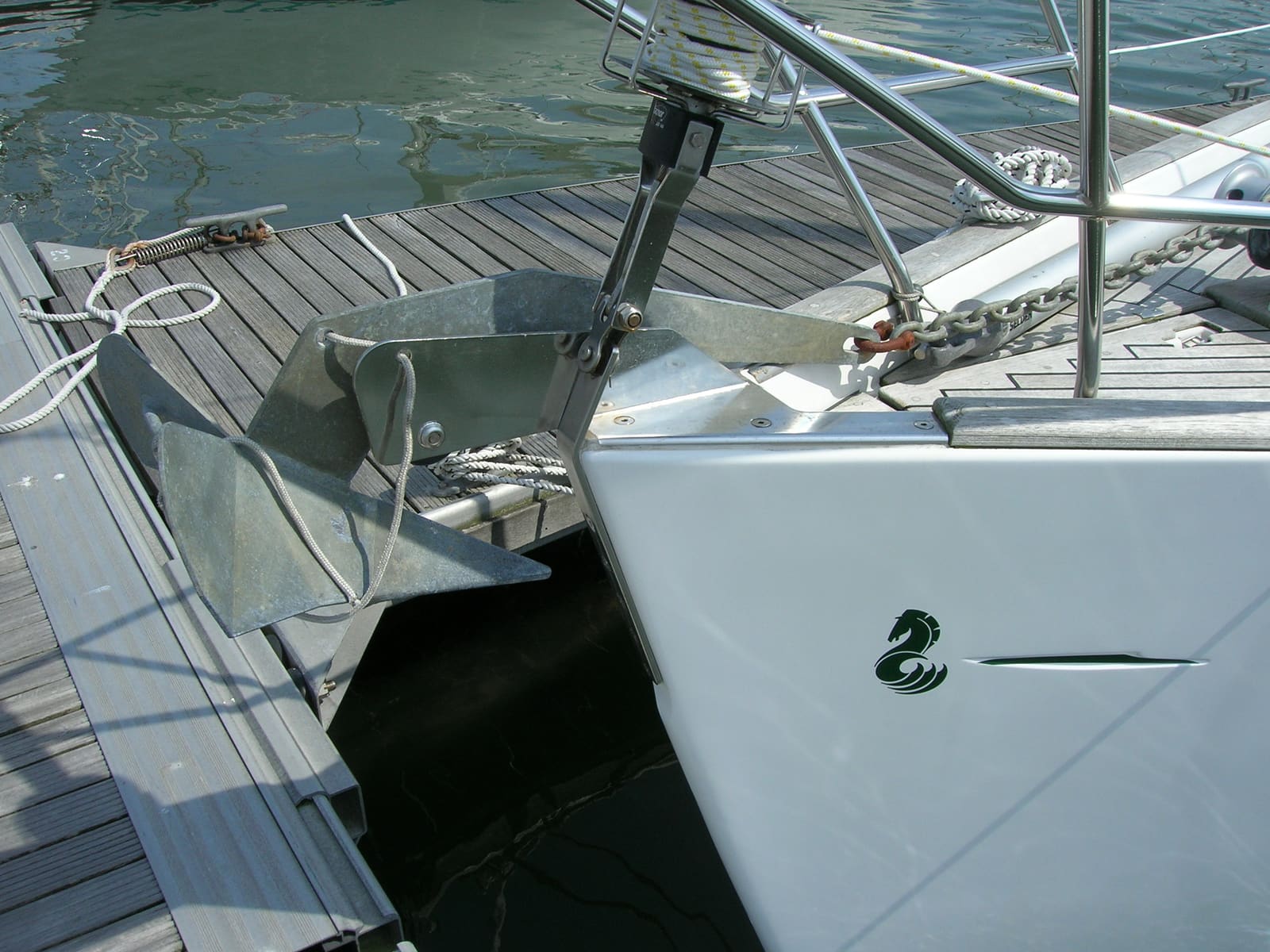
An anchor sitting ready with its chain, not buried in a locker, can be over the side in seconds. Photo: Manuel Keusch / Pexels · Pexels License Have the skipper describe an alarm going off at cruising speed. The crew response: throttle back to idle, check the gauge or display, look for the cooling water stream (telltale) on an outboard, and shut down if it's overheating and the boat is in a safe place. Then follow the steps in overheat alarm response. The key lesson: an alarm means slow down and look, not "push on to the dock."
Pretend the wheel has jammed or gone loose:
- Throttle to neutral right away and look around for hazards.
- If you're close to danger, anchor (step 5).
- If your boat has an emergency tiller, fit it. Practice this at the dock first: many owners have never found the tiller or the access hatch.
- On twin-engine boats, practice steering with the throttles alone at idle speed.
- On outboard and sterndrive boats without a tiller, Boating Magazine suggests a bridled bucket: a bucket with its bottom cut out, tied to the middle of a line about twice the boat's width, with each end on a stern cleat. Shorten the line on the side you want to turn toward. Rig and try it once in calm water so you know whether it works on your boat.
Then call for help. Check hydraulic steering or steering cable replacement for the repair once you're home.
The BoatUS Foundation's staged fires showed you may have only three or four minutes to make a Mayday call, use extinguishers, put on life jackets and get ready to abandon ship. Walk through it:
- Stop the boat, shut off the engine and fuel if you can, and turn the main battery switch off.
- Everyone puts on a life jacket.
- Radio operator sends the DSC alert and Mayday.
- Skipper decides whether to fight it: aim the extinguisher at the base of the flames and sweep. On an engine fire, if you have an engine-compartment fire port, discharge through it rather than opening the hatch and feeding the fire air. If the boat has a fixed engine-room extinguisher with a manual pull handle, show everyone where it is. In a BoatUS Foundation test burn, flames reached the helm seats about six minutes after an engine-compartment fire started.
- If it isn't out fast, abandon the boat upwind of the fire and stay together.
Actually handle the extinguishers during the drill (without discharging them) so everyone feels the pin and handle. In one real galley fire described in BoatUS, the nearest extinguisher was already in the flames and the crew lost seconds fighting the plastic zip-tie on the next one's pin; know how to break that tie, and keep an extinguisher at the helm or in the cockpit, not only below. At a marina, BoatUS's surveyor advice is that if one or two extinguishers don't put it out, get off, call 911 and let firefighters handle it. BoatUS also notes that a waterproof handheld VHF with DSC matters here, because the installed radio may lose power or be unreachable. See fire extinguisher care.
Toss a weighted cushion or fender overboard without warning and shout "Man overboard!"
- Shout and point. The spotter points at the "person" the whole time.
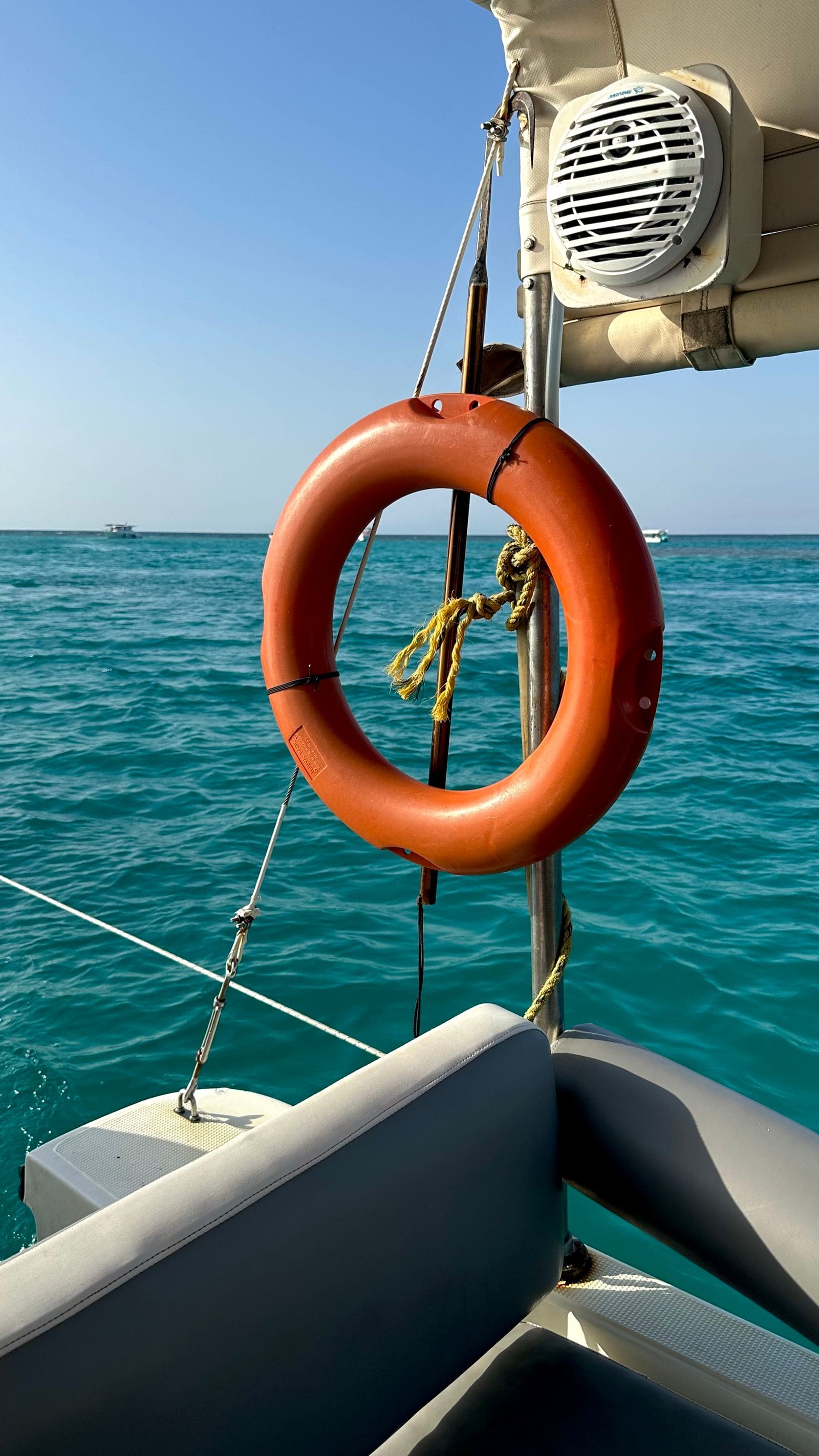
- Throw flotation right away: a ring buoy or cushion.
- Stop forward progress. The BoatUS Foundation notes every second spent moving away makes it harder to get back.
- Turn back going forward. The Coast Guard warns never to back up toward someone in the water: circle around in forward gear, keep the person in sight, and shift to neutral before they're near the propeller.
- Approach slowly, ideally from downwind, and stop the engine before bringing them aboard.
BoatUS suggests practicing first with a cushion, then with a real swimmer only with another boat standing by. Its Foundation found most overboard deaths happen on calm water, from small boats that aren't going fast, so don't skip this drill because "we only fish the lake." Also check your boarding ladder: BoatUS warns many swing-down ladders don't reach deep enough, or lack handholds, for a tired person to climb. Practice throwing the ring buoy from the dock too; it's harder than it looks. Plan how you'd actually lift a heavy, tired person aboard (see MOB recovery gear), and remember the operator should be wearing the kill-switch lanyard so the engine stops if they're the one who goes over. If your crew wears wireless MOB tags, include them in the drill: in the BoatUS Foundation's test of five devices, the alarms sounded within several seconds of a fall, but most units only alarm and do not stop the engine, so someone still has to act.
Have the skipper announce "the bilge alarm is going off." Crew response: life jackets on, turn on all bilge pumps, look for the source (start with through-hulls, hoses and the drain plug), and decide quickly whether to call for help. If the water is gaining, send the Mayday while the radio and batteries still work. Walk through boat taking on water together.
Things BoatUS's damage-control advice adds to this drill:
- Speed matters. Its example: a 2-inch hole just 1 foot below the waterline can fill a 55-gallon drum in well under a minute.
- The easy fix first. Sometimes flooding stops by closing a seacock, so everyone should know where they are and practice turning them.
- A labeled damage-control bag, sized to your boat: soft wooden plugs, rags, rubber sheet, duct tape, underwater-curing caulk, a sharp knife and tools to open up panels. Epoxy and fiberglass kits don't stop water in an emergency; they won't bond to a wet, leaking surface.
- Clues you're taking on water before any alarm: the boat feels sluggish, slower, or steers strangely.
Agree on what goes with you if you have to leave the boat: handheld VHF, phone in a waterproof pouch, PLB or EPIRB if you carry one, signaling devices, a sharp knife (Mercury lists one for cutting a fouled line or a stuck anchor rode), and the first aid kit. Keep these together in a bag near the helm. Practice who grabs it and confirm everyone is wearing a life jacket. Stay with the boat if it's still floating; it's much easier for rescuers to spot than people in the water.
Right after the drills, talk for five minutes: what took too long, what gear was hard to reach, who wasn't sure what to do. Fix those things (move the anchor, add a second extinguisher by the helm, label the battery switch) and write the date and notes in BoatMend. Repeat at the start of each season and when new regular crew join.
Common mistakes
- Trying to fix the engine first while the boat drifts toward rocks, a jetty or a channel. Anchor first, troubleshoot second.
- Burying the anchor under gear, or not tying the end of the rode to the boat.
- The skipper being the only one who knows how to use the radio, stop the engine or drive the boat.
- Backing down toward a person in the water. Always come back in forward gear and keep the propeller away from them.
- Opening an engine hatch on a fire, which feeds it fresh air.
- Switching off the radio to "cancel" an accidental DSC alert instead of using the cancel menu.
- Waiting too long to call for a tow, until the weather or the light turns bad.
When to call a pro
- Any real emergency: USCG on VHF 16 or DSC, or 911, then your tow service.
- After any fire aboard, even a small one, have the electrical and fuel systems inspected before using the boat again.
- If a drill shows your steering, anchor gear or bilge pumps don't work as they should, get them repaired before your next trip.
- If you'd like structured practice, a hands-on boating course or an on-water instructor can run these drills with your crew.
Tips
- Tape a short checklist inside a locker lid by the helm: engine failure, fire, MOB, water aboard.
- Put the boat's name and MMSI on the radio call card so a nervous guest can read them off.
- Kids love the "rescue the cushion" drill; it's a good way to teach them to point and shout.
- Run one drill at dusk sometime: things look very different with less light.
- The same skills let you help others. Mercury points to the federal duty to assist (46 U.S.C. 2304): help someone in danger at sea as far as you can without putting your own boat and people at serious risk. Often that means giving them a stable, dry place to wait and making the radio call with your GPS position.
Official references
We read these to write this guide. Your engine's own manual always wins.
- BoatUS Foundation – Boat Fire Safety Tests
- BoatUS Foundation – Crew Overboard
- BoatUS – 4 Steps To Take If Your Outboard Quits
- Boating Magazine – What to Do if Your Boat's Engine Dies
- Boating Magazine – What to Do If Your Boat's Steering Fails
- U.S. Coast Guard Navigation Center – DSC Distress (sending, cancelling and receiving alerts)
- BoatUS – Facing A Flooding Emergency (damage control)
- BoatUS – How To Handle An Engine Compartment Fire
- BoatUS – Man Overboard Rescue For Powerboats
- Mercury Marine – 14 Safety Items You Probably Don't Have on Your Boat (Dockline)
- U.S. Coast Guard – Engine Cut-Off Switch (propeller safety and recovering a person)
- Mercury Marine – How to Use a VHF Radio (Dockline)
- Mercury Marine – How to Be a Boating Good Samaritan (Dockline)
- BoatUS – Fire Onboard (a real galley fire and the zip-tied extinguisher pin)
- BoatUS – Your Boat's On Fire, Now What?
- BoatUS Foundation – 5 Man Overboard Safety Devices Tested (2020)
Safety: BoatMend is for information only and does not replace a certified marine technician. You are responsible for your safety and your boat. Read the full disclaimer.
Last updated 2026-10-25
Related guides
Overheat Alarm: What to Do in the First 60 Seconds
A short, practiced routine for the moment the temperature alarm goes off: take the load off, look for cooling water, shut down if it isn't there, and check every space the exhaust runs through for heat or fire. Based on a June 2026 Coast Guard safety alert about a fatal fire that started with an overheat alarm.
What to Do When Your Boat Is Taking On Water: Emergency Steps and Prevention
A step-by-step emergency plan for water coming into the boat - life jackets on, call for help early on VHF 16, find and slow the leak, pump, and head for shallow water if needed - plus the maintenance checklist that prevents most sinkings.
Man-Overboard Recovery Gear: Throwables, Lifesling, Ladders and MOB Alarms
Set up and check the gear that gets a person in the water back aboard - a throwable within reach, a floating rescue line or Lifesling-style sling, a boarding ladder someone in the water can pull down, and MOB alarms or AIS beacons - and practice the drill so it works when it counts.
Set Up Your VHF Radio: MMSI, DSC, GPS Hookup and Radio Checks
Get a free or low-cost MMSI number, program it into your DSC radio, connect your GPS so a distress alert sends your exact position, check the antenna, and learn the Channel 16 rules and the right way to do a radio check.
How to Check, Mount and Replace Boat Fire Extinguishers
A monthly five-minute check of every fire extinguisher aboard, plus how the 2022 Coast Guard rule changes affect you, where to mount them, and when to recharge or replace. A boat fire spreads in seconds, and an extinguisher with a dead gauge, missing pin or expired date will not help you or pass a boarding.
Anchor Basics: Choosing the Anchor, Rode and Scope, Setting It and Checking Your Gear
Match your anchor to the bottom you usually anchor in, put together a chain-and-nylon rode, let out enough scope for the depth and weather, set and check the anchor, use an anchor alarm, and inspect the rode, splices and shackles every season so the weakest link isn't hiding in your ground tackle.
Engine Cut-Off Switch (Kill Switch) and Lanyard: The Law, Testing and Daily Use
How the engine cut-off switch (ECOS) and its lanyard or wireless fob work, when federal law requires you to wear it (boats under 26 feet, 3 hp or more, on plane), how to test it before every trip, and why a spare clip aboard matters.
Hydraulic Steering: Check Fluid, Bleed Air and Fix Stiff or Loose Steering
Check the fluid in your hydraulic steering helm, bleed out the air that makes steering spongy, and track down the usual causes of stiff, loose or noisy steering. Includes notes for boats with mechanical cable steering.
Stiff or Seized Mechanical Steering - Lubricate, Inspect and Replace the Steering Cable
Fix hard, notchy or loose cable steering on an outboard boat. Find out whether the engine, the tilt tube, the cable or the helm is the problem, clean and grease what can be serviced, and measure and install a new cable correctly when the old one is done.
Boat First-Aid Kit and Medical Prep: What to Carry, Day Trips to Offshore
Build and maintain a boat first-aid kit that fits how far from help you go, with the extras boaters actually need for seasickness, fish hooks, cuts, burns, sun, heat and cold, plus a crew briefing, expiration-date checks and training. General preparation only, not medical advice.