Man-Overboard Recovery Gear: Throwables, Lifesling, Ladders and MOB Alarms
Set up and check the gear that gets a person in the water back aboard - a throwable within reach, a floating rescue line or Lifesling-style sling, a boarding ladder someone in the water can pull down, and MOB alarms or AIS beacons - and practice the drill so it works when it counts.
Time
45 min
Applies to
All engines
Safety first: If someone goes overboard, shout "Man overboard!", throw flotation, keep pointing at them, and stop or turn the boat right away. Never let a propeller near a person in the water: shift to neutral, and shut the engine off when they're close to the boat. If you can't get them back quickly, can't see them, or they're hurt or unresponsive, call the Coast Guard on VHF channel 16 (MAYDAY) or 911 immediately and press your GPS or radio's MOB/distress button. Don't jump in after them unless you're trained, wearing a life jacket and tied to the boat: two people in the water is worse than one.
Fuel smell, water coming in, CO alarm or smoke? Stop, get everyone in life jackets and call USCG on VHF 16 or 911. For a tow: Sea Tow or TowBoatUS.
Owners often ask
- If someone falls overboard, how do we actually get them back into the boat?
- Is a Lifesling or an AIS MOB beacon worth it on a coastal cruiser?
This guide walks you through it. Still stuck? Ask the AI Mechanic about your engine.
Tools
- A fender and a bucket or milk crate tied together (a practice "victim")
- Flashlight
- Your boat's VHF radio and GPS/chartplotter manual (to find the MOB button)
Parts & supplies
- USCG-approved throwable device (ring buoy or cushion), if yours is worn out
- Throw bag with floating line
- Lifesling-style recovery sling and hoisting tackle (sailboats and larger powerboats)
- Water-activated light for the throwable or ring buoy
- Boarding ladder extension or pull-down strap, if your ladder can't be reached from the water
- Spare batteries for MOB fobs or beacons, as the maker specifies
Before you start
Getting someone back is a three-part job: find them (keep them in sight, mark the spot), connect (get flotation and a line to them), and lift (get them back over the side). A ring buoy alone only does part of that. Boating Magazine puts it bluntly: getting a large, tired, wet or injured person back into a boat is a problem with no easy answer, so the gear and a practice run matter.
Prevention comes first: the USCG says most boating drownings happen on nice days, and a life jacket only helps if it's worn. On boats under 26 feet with an engine cut-off switch, the operator must wear the lanyard or wireless fob; if the driver goes over, the engine stops.
Steps
Federal rules require a USCG-approved throwable on boats 16 feet and longer (except canoes and kayaks). The BoatUS Foundation explains:
- It must be immediately available, near the helm or in the cockpit, not in a locker.
- A ring buoy needs at least 16.5 pounds of buoyancy and a cushion at least 18 pounds.
- It's meant to be thrown and held, not worn, and it's not enough for an unconscious person, a non-swimmer or a child.
- Don't sit or kneel on a throwable cushion or use it as a fender: that crushes the foam and reduces its flotation.
Inspect it: no torn cover, no hard or waterlogged foam, straps and grab line intact, approval label readable. Replace a faded or damaged one.
A ring or cushion floats the person but doesn't connect them to the boat. Tie a length of floating line to the ring buoy or carry a throw bag (a bag of floating line you throw by the handle so the line pays out). Practical Sailor notes that if you can toss a dock line to someone on a fuel dock, you can usually reach a swimmer 15 feet away, which saves you from having to put the boat right on top of them. US Sailing's quick-stop method finishes by getting a heaving line or throwing sock to the person and attaching them to the boat.
At night or in waves a head in the water is almost invisible. A water-activated light on the ring buoy or on the life jackets marks the spot; Practical Sailor points out that a water-activated strobe for a life jacket costs only about $20. Test the light's switch or test button and check the battery date each season.
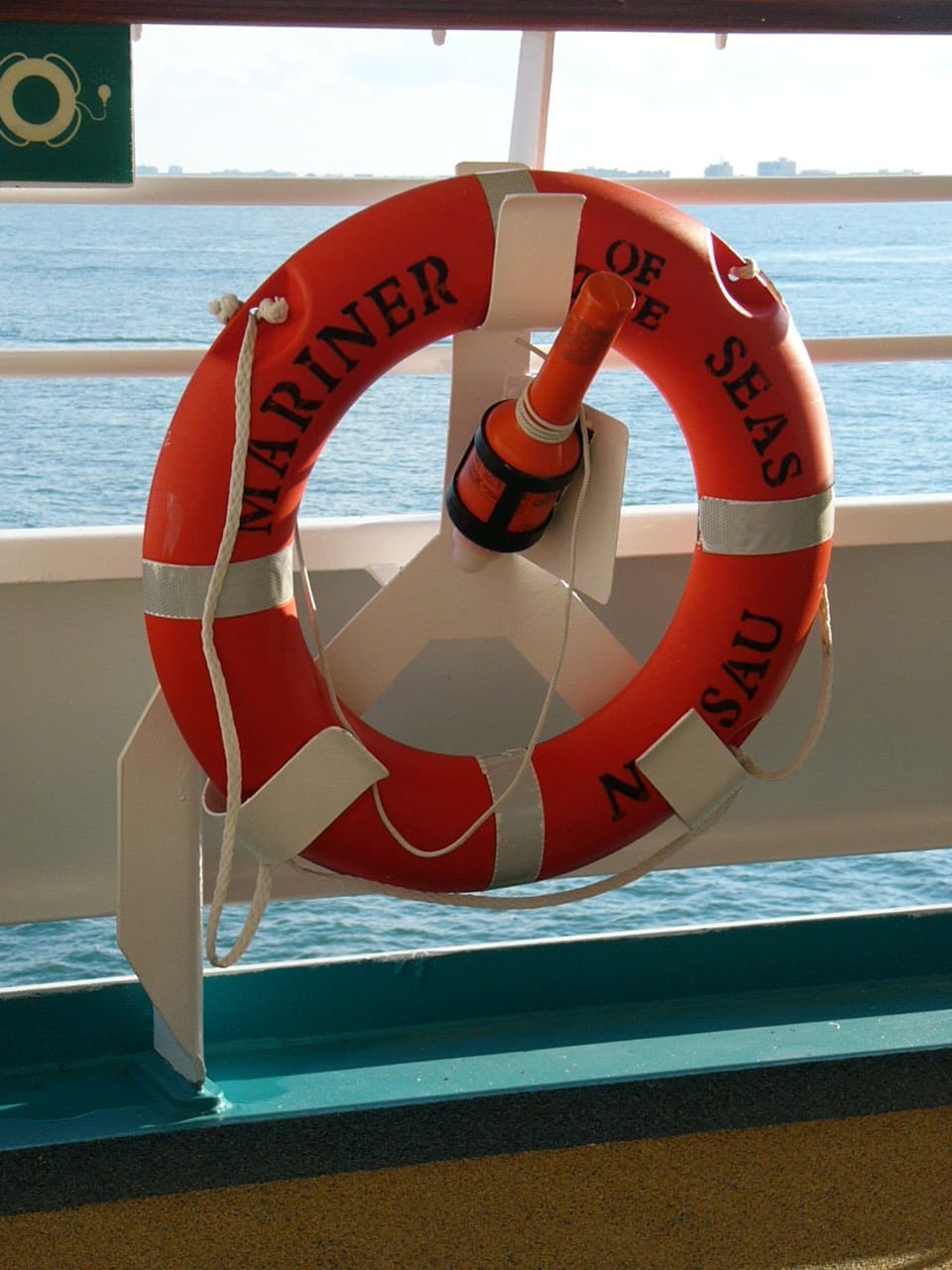
A ring buoy with an attached light and line, ready to throw (cruise ship shown). Photo: Workman / Wikimedia Commons · CC BY-SA 4.0 A Lifesling-type device is a buoyant horseshoe sling on a long floating line (typically well over 100 feet) that stays tied to the boat. You drop it astern and circle the person until the line reaches them; they put the sling over their head and under their arms; you stop the boat and pull them alongside. It was developed by the Sailing Foundation and is especially useful when only one other person is aboard to do the rescue. Boating Magazine notes that with a block-and-tackle it can also be used to hoist the person aboard, and that swim platforms and boarding doors make it easier on powerboats.
Check it each season: the case opens easily and isn't strapped shut by a seized buckle, the line isn't sun-rotted, the sling's foam isn't crushed, and the hoisting tackle is aboard and complete.
Rescuers in Practical Sailor's trials found the hoisting tackle tricky to set up and sometimes too weak for boats with small winches, and delivering the sling took more than 10 minutes for some crews. The fix is practice. Figure out now where the top block goes (a halyard, boom, davit, tower or other high strong point), which winch or cleat you'll use, and keep the tackle where you can reach it fast.
A person in the water must be able to deploy and climb the ladder alone. Check:
- Can it be pulled down from the water? If it folds up out of reach, add a pull strap or a ladder that drops with one tug.
- Does it reach deep enough? Boating Magazine notes that many stock two-step ladders are too short for a tired or older person to climb; extensions add steps below the water.
- Are the steps wide and flat, with something solid to hold at the top? Center-rail dive-style ladders that lean out at an angle are easier for a winded person.
Test it at the dock or anchored in calm water, engine off: have a crew member climb in from the water wearing a life jacket.
Small boats without a swim platform (jon boats, small inflatables, open fishing boats) need extra thought. The BoatUS Foundation notes that most boating deaths happen on boats under 20 feet, and that some victims drowned because they couldn't get back in. In its re-boarding tests on small boats:
- A ladder that worked well on one boat often failed completely on another, so test yours on your own boat.
- Long, floppy rope ladders swung under the hull and pushed the climber off balance; short one- or two-step stirrups worked best, with the bottom step roughly 20 inches below the surface on the small boats tested.
- A plain loop of line with a foot loop, adjusted to the right length, was a favorite with many testers.
- Plan where the ladder clips on (a cleat, D-ring or a line run around the inside of the boat) and stow it where a person in the water can reach it.
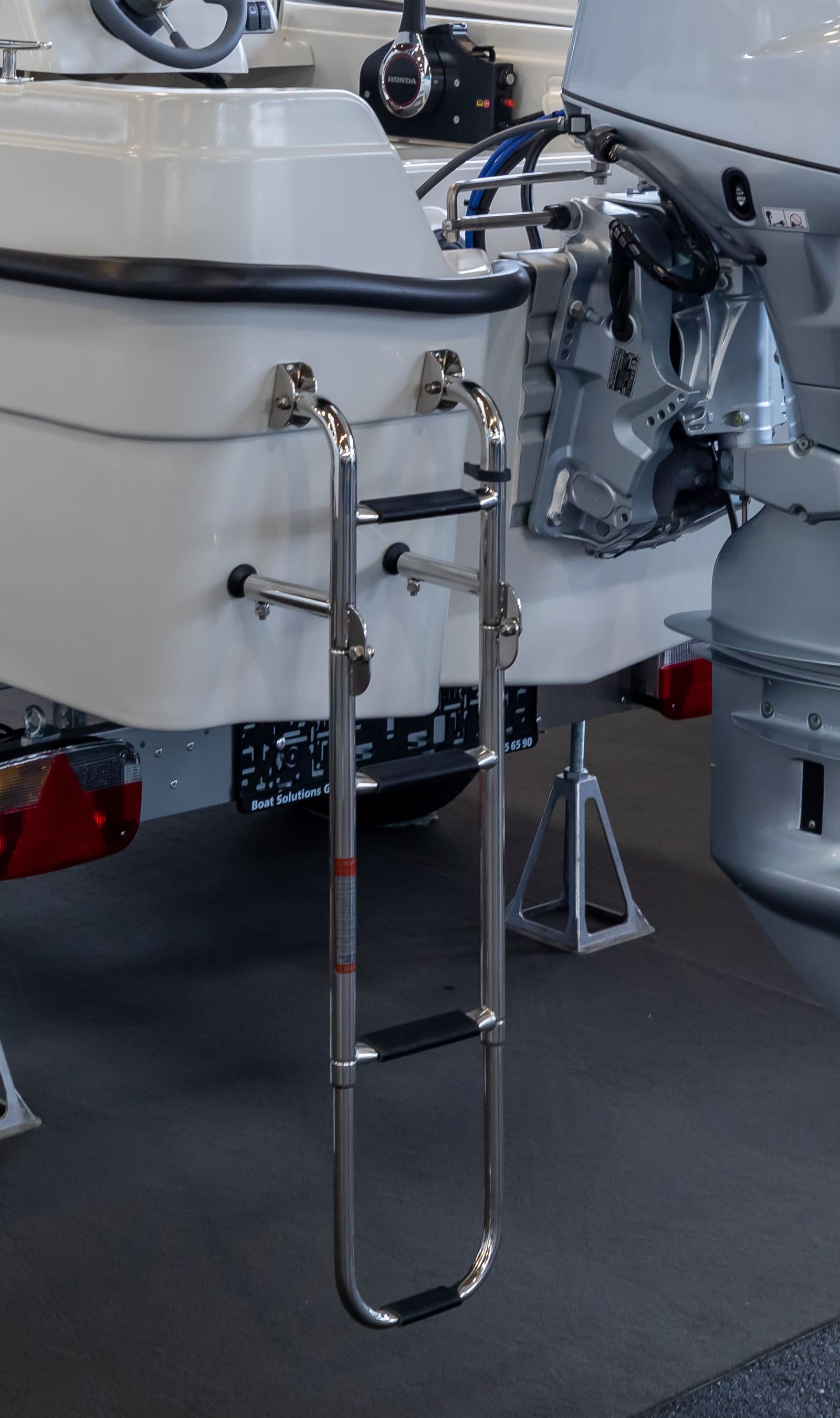
A folding stern ladder with several steps below the waterline is far easier to climb than a short two-step ladder. Photo: Matti Blume / Wikimedia Commons · CC BY-SA 4.0 Practical Sailor's trials found a fixed platform can act like a hammer in waves and ladder legs like spears, so in rough water a hoist or a parbuckle is safer than a ladder. A simple parbuckle, as described by Boating Magazine: tie two corners of a tarp or bed sheet to the rail or cleats, float the rest in the water under the person, and haul on lines tied to the outer corners to roll them up and in. Grabbing a life jacket's shoulder straps gives you a much better grip than a wet arm.
- GPS/chartplotter MOB button: find it now and practice pressing it. It saves the spot so you can steer back even after you lose sight of the person.
- Wireless engine cut-off fobs: many combine the legal kill-switch function with an alarm when someone wearing a fob goes in.
- AIS MOB beacons: worn on or inside the life jacket, they send the person's position to AIS receivers and chartplotters nearby, including your own boat. In Yachting World's tests, units in the water were picked up a few miles away on open water but only about half a mile in a harbor. They don't use the satellite system, so for solo sailing a 406 MHz PLB is still the better choice.
- Follow each device's setup and test instructions exactly (some need your boat's MMSI programmed, and you must not send real distress signals as a test).
Falling into cold water causes a gasping reflex and uncontrolled breathing in the first moments, then a steady loss of strength in the hands and arms. The National Center for Cold Water Safety warns that in near-freezing water a person can be incapacitated within minutes, even a strong swimmer. That's why recovery gear has to be fast to deploy and why the person may not be able to hold a line or climb. Once aboard, treat for hypothermia (see the first-aid kit guide) and get medical help.
Everyone aboard should know these, including guests:
- Shout "Man overboard!" and which side.
- Throw the throwable (and anything that floats) toward them.
- One person points at them and never looks away. US Sailing stresses the spotter should never take their eyes off the person.
- Press the MOB button.
- Driver turns the boat back and slows down.
Powerboats: Turn toward the side the person fell from (this swings the stern and propeller away from them), then come back slowly. In BoatUS Foundation trials, a fast, wide turn back at cruising speed threw up so much wake and foam that the crew lost sight of the target; slowing right away and returning at low speed took no longer and was calmer. Approach heading into the wind or current so you can stop easily, put them on the driver's side where you can see them, go to neutral before you reach them, and shut the engine off once they're alongside. Never back down toward a person in the water.
Small boats: Discover Boating warns that a small boat can turn unstable if everyone rushes to one side to help. Have the passengers stay seated and spread out while the driver makes a slow, steady approach, and let one person handle the pickup. In rough water, get flotation to the person first and worry about bringing them aboard second.
Sailboats: Learn the quick-stop maneuver as taught by US Sailing (turn into the wind right away and stay close), and slow to almost nothing on the final approach. Practical Sailor saw many crews sail past the person at three knots or more, which makes a pickup dangerous and unlikely.
Use your fender-and-bucket "victim" on a calm day. Practical Sailor recommends rotating everyone through each job (driver, spotter, gear) and practicing in different conditions, including at night once you're comfortable. Time how long it takes to get a line to the target and to rig the hoist. If it's slow, move the gear closer to where you'll need it.
Common mistakes
- Throwable locked in a seat locker or buried under fenders when it's needed in seconds.
- Using the throwable cushion as a seat or kneeling pad until the foam is flat.
- A ladder that only deploys from the boat, so a person alone in the water can't get back aboard.
- Driving straight at the person with the engine in gear, or reversing toward them.
- Losing sight of the person because no one was assigned to point.
- Never having opened the Lifesling bag or rigged the hoisting tackle until the real emergency.
- Assuming a strong swimmer will be fine in cold water without a life jacket.
When to call a pro
- Anytime the person isn't back aboard quickly, is out of sight, injured, unresponsive or very cold: call the Coast Guard on VHF 16 (MAYDAY) or 911 right away
- Installing a new boarding ladder, davit-style hoist or lifting point: the mount must be through-bolted with backing plates into solid structure
- Programming AIS or DSC MOB devices with your boat's MMSI if the instructions aren't clear: ask a marine electronics installer
- Taking a hands-on safety course: many Coast Guard Auxiliary, US Power Squadrons and sailing schools include overboard drills
Tips
- Keep a waterproof card at the helm with the first-10-seconds list and how to send a MAYDAY.
- Clip a whistle and a light to every life jacket aboard.
- On a swim day, practice climbing the ladder from the water: it shows you quickly whether it's too short.
- Wear your life jacket when you're alone aboard, especially when moving around the deck or relieving yourself over the side, a classic way people fall in.
Official references
We read these to write this guide. Your engine's own manual always wins.
- BoatUS Foundation – Life Jackets (throwable devices)
- USCG Boating Safety – Life Jacket Wear / Wearing your Life Jacket
- USCG Boating Safety – Engine/Propulsion Cut-Off Devices
- US Sailing – Quick-Stop Rescue
- Practical Sailor – Person-Overboard Retrieval Techniques
- Practical Sailor – COB Recovery, Making Contact
- Practical Sailor – Slings, Scoops & Ladders
- Boating Magazine – Getting a Man Overboard Back Aboard
- Yachting World – Tested, AIS MOB devices
- National Center for Cold Water Safety – The 1-10-1 Myth
- BoatUS Foundation – Boarding Ladder Tests
- BoatUS Foundation – Crew Overboard Maneuvers Tests
- Discover Boating – Man Overboard Procedures
Safety: BoatMend is for information only and does not replace a certified marine technician. You are responsible for your safety and your boat. Read the full disclaimer.
Last updated 2026-10-24
Related guides
Engine Cut-Off Switch (Kill Switch) and Lanyard: The Law, Testing and Daily Use
How the engine cut-off switch (ECOS) and its lanyard or wireless fob work, when federal law requires you to wear it (boats under 26 feet, 3 hp or more, on plane), how to test it before every trip, and why a spare clip aboard matters.
Inflatable Life Jacket Care: Inspect, Test and Rearm
An inflatable life jacket only saves a life if the cylinder is full, the inflator is armed and the bladder holds air. Learn the quick check before every trip, the overnight leak test, how to read replacement dates and how to rearm it after it fires.
USCG Required Safety Equipment Check by Boat Length
Walk through your boat and confirm you carry every piece of safety gear the US Coast Guard requires for your boat's length and type, and that none of it is expired or worn out. Missing or expired gear is one of the most common tickets on the water, and it is the gear you need when things go wrong.
Set Up Your VHF Radio: MMSI, DSC, GPS Hookup and Radio Checks
Get a free or low-cost MMSI number, program it into your DSC radio, connect your GPS so a distress alert sends your exact position, check the antenna, and learn the Channel 16 rules and the right way to do a radio check.
EPIRB and PLB Care: Registration, Batteries, Self-Test and Mounting
Keep your 406 MHz emergency beacon ready to work on the worst day of your life. Register it free with NOAA and renew every two years, track the battery and hydrostatic release dates, run the self-test without triggering a false alert, and know what happens after you press the button.
How to Prepare for a Free Vessel Safety Check
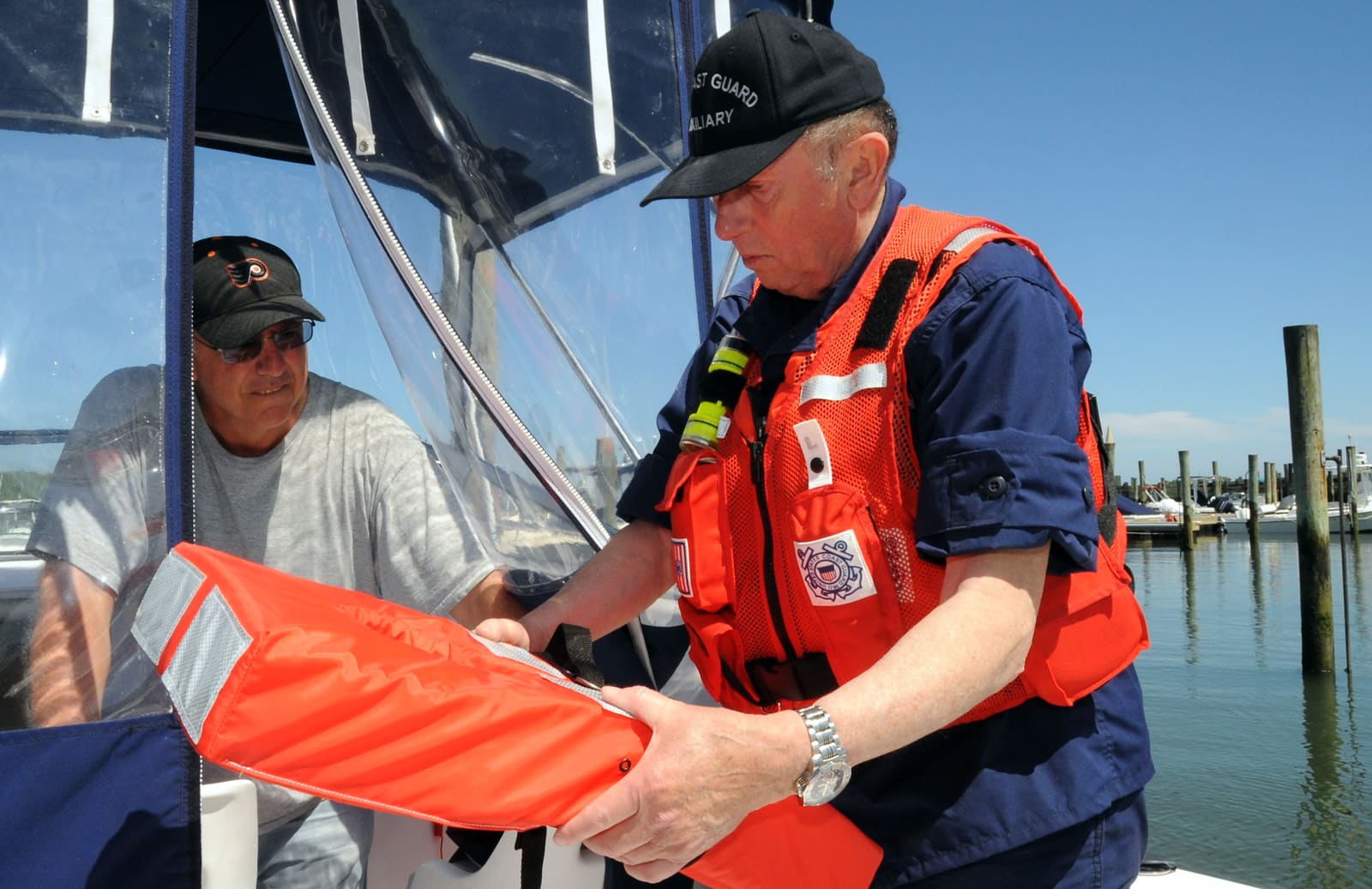
Volunteers from the Coast Guard Auxiliary and America's Boating Club will inspect your boat's safety gear for free, with no ticket if something is missing. Learn how to request a Vessel Safety Check, what the examiner looks at, how to get your boat ready and what to do with the fix list.
Boat First-Aid Kit and Medical Prep: What to Carry, Day Trips to Offshore
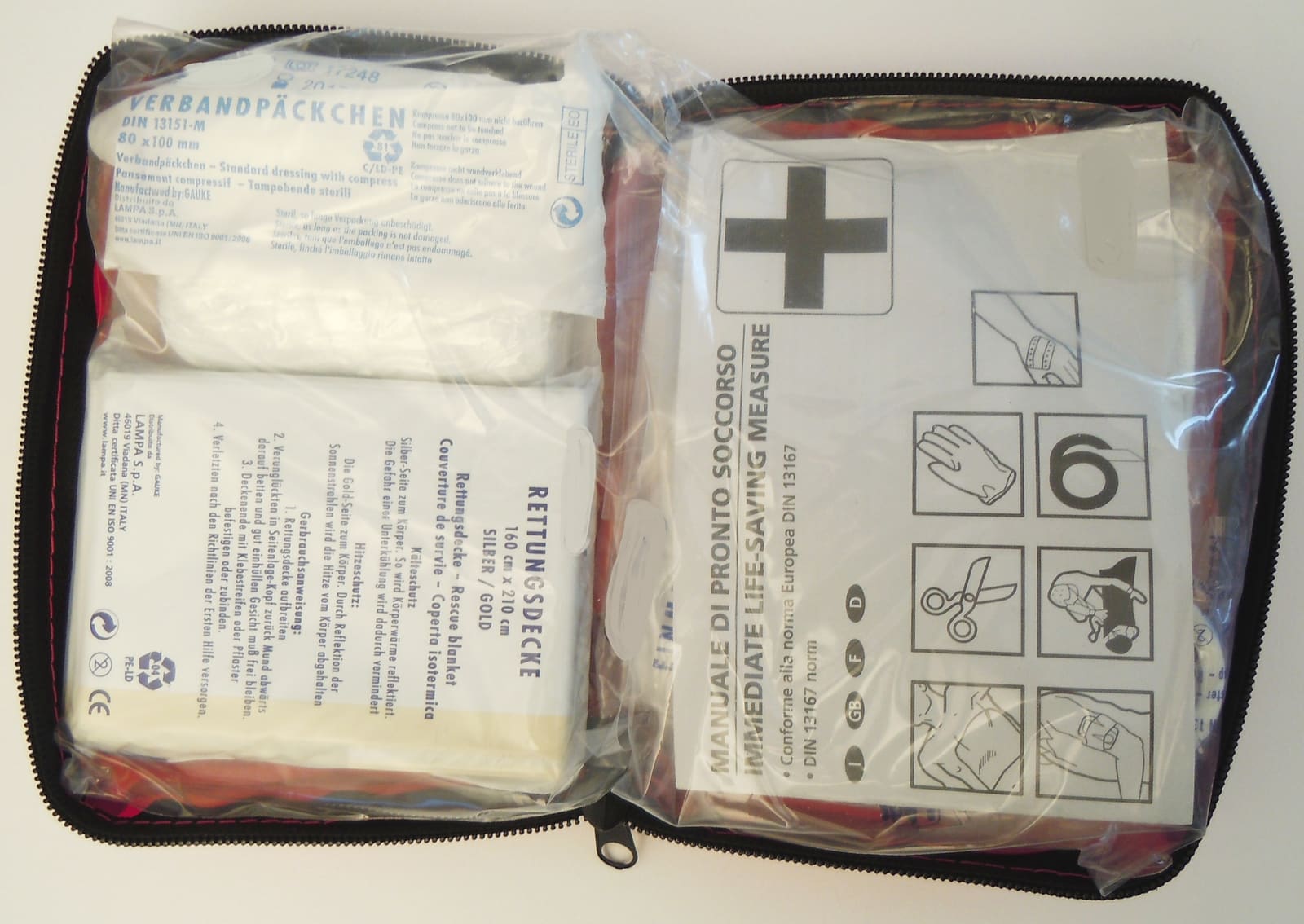
Build and maintain a boat first-aid kit that fits how far from help you go, with the extras boaters actually need for seasickness, fish hooks, cuts, burns, sun, heat and cold, plus a crew briefing, expiration-date checks and training. General preparation only, not medical advice.