Boat First-Aid Kit and Medical Prep: What to Carry, Day Trips to Offshore
Build and maintain a boat first-aid kit that fits how far from help you go, with the extras boaters actually need for seasickness, fish hooks, cuts, burns, sun, heat and cold, plus a crew briefing, expiration-date checks and training. General preparation only, not medical advice.
Time
1 h
Applies to
All engines
Safety first: This guide is about being prepared, not medical advice. For any serious injury or illness (heavy bleeding, trouble breathing, chest pain, a head or spine injury, a major burn, someone confused or unresponsive), call 911 near shore or the Coast Guard on VHF channel 16 and head for help. Treat sudden "seasickness" (headache, dizziness, nausea, sleepiness) as possible carbon monoxide poisoning until proven otherwise: get the person into fresh air first. Ask your doctor or pharmacist before adding any medication to the kit, and follow the label.
Owners often ask
- What should be in a first-aid kit for a day boat versus going offshore?
- How do I deal with a fish hook stuck in someone's hand on the boat?
This guide walks you through it. Still stuck? Ask the AI Mechanic about your engine.
Tools
- Waterproof box or bag for the kit
- Permanent marker and a waterproof label or card
- Red cross sticker or tape for the locker door
Parts & supplies
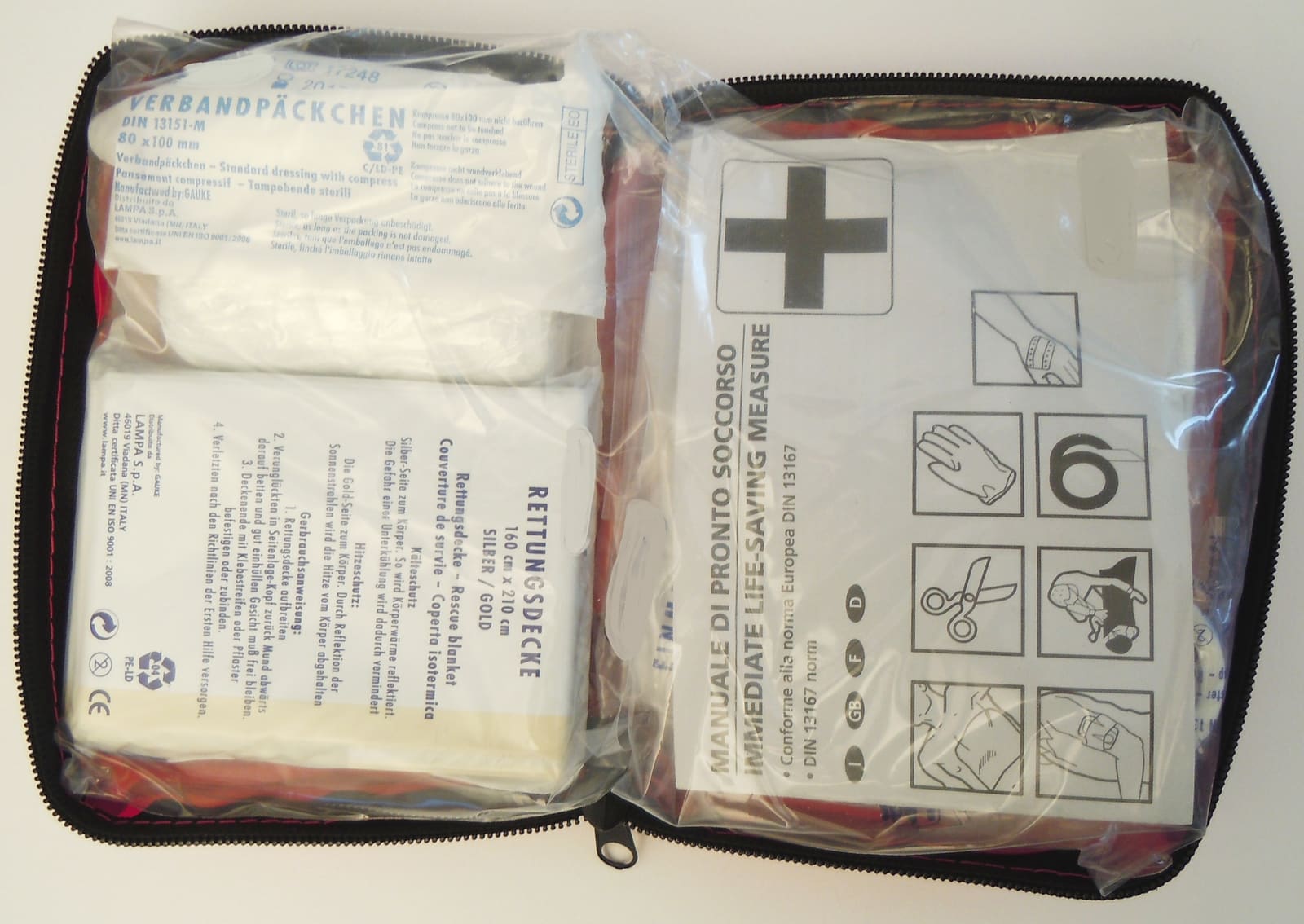
- Marine first-aid kit (a larger store-bought kit is a good base)
- Extra nitrile gloves, gauze, adhesive and butterfly bandages
- Foil emergency blanket
- Hook cutter or a multitool that cuts fish hooks
- Seasickness medication, antacids, pain relievers, antihistamine, sunscreen (as your doctor or pharmacist advises)
- A first-aid manual
Before you start
First-aid kits aren't on the USCG's required equipment list, but Mercury Marine's guide calls a stocked kit an absolute must, and BoatUS points out that out on the water there's no pharmacy nearby and help can be a long way off. Most problems are small (cuts, burns, stings, sprains, splinters) and a decent kit keeps them from ending the day.
How much to carry depends on how you boat. BoatUS's rule is simple: the farther from shore you go, the more self-sufficient you need to be. Think about how long it would take to get someone to a hospital from the farthest place you usually go.
Steps
- Day boating on lakes, rivers and near the coast (help is under an hour away): a good store-bought marine kit plus the boat-specific extras in steps 4 and 5.
- Coastal cruising and overnight trips: a larger kit with more dressings and medications, and at least one person with first-aid training.
- Offshore and remote cruising (help could be many hours or days away): a much larger kit put together with advice from a doctor or a marine medical service, and real training. Mercury's pro captain packs extra bandages and some advanced supplies for offshore runs, but those are only useful if you're trained to use them.
Use a watertight or at least water-resistant box or bag. BoatUS advises keeping all first-aid supplies together, not scattered around the boat, so you can carry the whole kit to the injured person. Mark the outside of the locker with a red cross so anyone can find it, including when you're the one who's hurt. Keep the first-aid manual inside the kit.
BoatUS's list (built with a Johns Hopkins physician who sails) and the American Red Cross's recommended contents overlap on these:
- Nitrile gloves (some people react to latex)
- Adhesive bandages in several sizes, including butterfly closures for deeper cuts
- Sterile gauze pads, rolled gauze, elastic bandages and a triangular bandage (to make a sling)
- Adhesive tape, scissors and tweezers
- A needle-free syringe to flush wounds or eyes with clean water
- Alcohol wipes, antiseptic wipes and antibiotic ointment
- Eye wash
- Instant cold packs
- Burn gel or cream
- Hydrocortisone cream
- A foil emergency blanket
- A breathing barrier for CPR
- A thermometer
- A first-aid guide (read it before you need it)
These cover the problems that happen most on boats:
- Seasickness medication (several types exist; some cause drowsiness)
- Antacids, pain relievers, an antihistamine, and something for diarrhea
- Jellyfish sting treatment if you boat in salt water, and hand sanitizer: the BoatUS physician adds these to a large retail kit
- Sunscreen, lip balm with SPF, and a spare hat
- A hook cutter or multitool that can cut through a fish hook, as Mercury's captain (a former ER nurse) recommends for anglers
- Splint material (a padded aluminum splint is light and flat)
- Waterproof bags to keep a dressing dry
- Waterproof bandages and a small bottle of soap, for cuts that will see salt or brackish water (see step 7)
Before each trip, ask your crew about allergies (to medications, bandage adhesive or latex) and medical conditions. If anyone carries an epinephrine auto-injector, an inhaler or other critical medication, know where it is and how it's used. The Red Cross suggests keeping personal medications and emergency phone numbers with the kit. Write the boat's name, registration number, and your home port on a card in the kit too, for when you call for help.
- Many seasickness medications work best taken before you leave the dock: check the label or ask your pharmacist about timing and drowsiness.
- Whoever is driving the boat shouldn't take anything that makes them drowsy.
- Fresh air, watching the horizon and staying near the middle of the boat help. BoatUS points out that alcohol dehydrates you and makes seasickness more likely.
- Always rule out CO: the USCG says to treat seasickness symptoms as possible carbon monoxide poisoning, move the person to fresh air, and get medical attention unless you're sure it isn't CO.
For most minor cuts, BoatUS recommends rinsing well with plenty of clean water, removing any debris, and washing around the wound with soap. Hydrogen peroxide isn't recommended for deep cuts, bites or burns. For heavy bleeding, press firmly on the wound with gauze and keep pressing while someone calls for help.
Fish hooks: a hook in the eye, face, a joint or deep in the hand needs a doctor, so cover it, keep it still and head in. For a shallow hook elsewhere, don't dig at it; cut the line, and use the hook cutter to remove the barb or shank only if you know how. Watch any wound that was in sea or lake water for redness, swelling, warmth or fever over the next days and see a doctor if they appear.
Salt and brackish water need extra care. The CDC explains that Vibrio bacteria live naturally in coastal water (salt water, and brackish water where rivers meet the sea) and can infect open wounds, sometimes severely. Its advice: keep fresh cuts, scrapes, piercings or surgical wounds out of coastal water if you can, cover them with a waterproof bandage if they might get wet or touch raw seafood or bait juices, and wash any wound with soap and clean running water as soon as possible after contact. A wound infection after time in coastal water that gets red, swollen or painful fast, or comes with fever, needs a doctor or the emergency room right away; don't wait.
Galley stoves, hot engine parts and sun all burn. The Red Cross says to cool the burn under clean, cool running water (water you could drink) for 5 to 20 minutes, remove jewelry and clothing that isn't stuck, and not try to clean a severe burn. On a boat, use your freshwater tank or bottled water. When cooling a large area, watch for chilling, especially in children. Burns to the face, hands or genitals, and burns larger than the person's palm, need emergency care.
Hypothermia can happen after a fall overboard, a long wet ride or even on a mild, windy day in wet clothes. The Red Cross steps: call 911 if needed, get the person out of the wind and wet, help them into dry clothes including a hat, gloves and socks, wrap them in dry blankets and plastic sheeting (the foil blanket works), and give small sips of a warm, non-caffeinated drink only if they're alert and can swallow. Heating pads or hot water bottles should be wrapped in thin cloth. Never give alcohol: the Red Cross notes it increases heat loss.
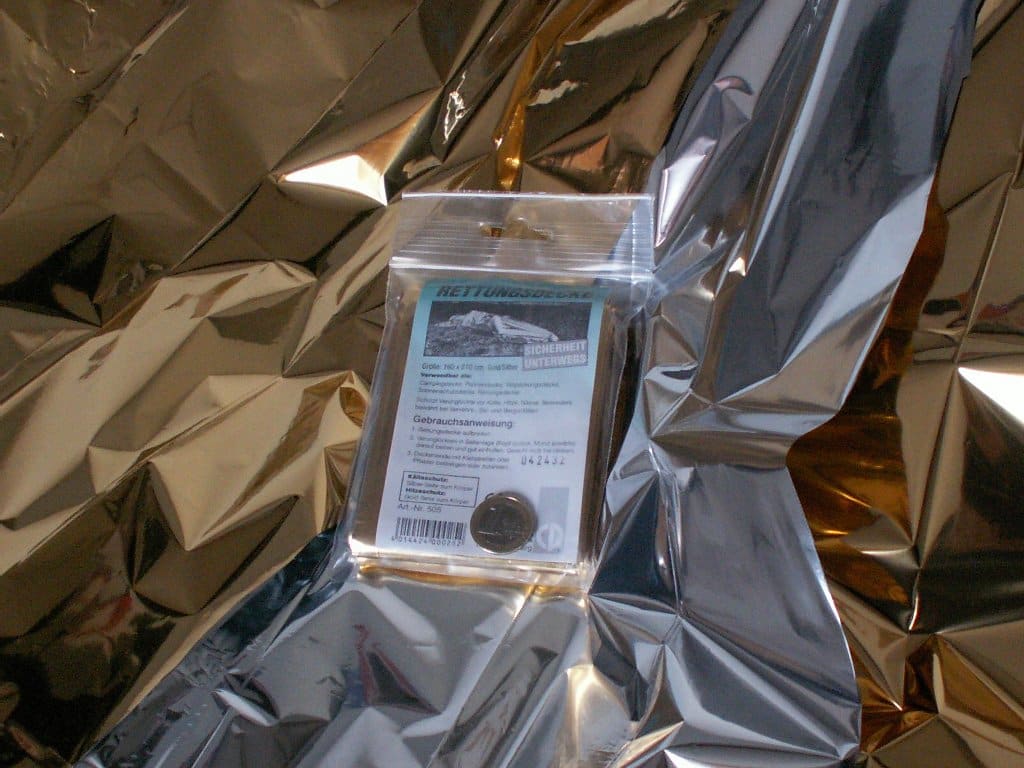
A foil emergency blanket folds to pocket size and helps keep a cold, wet person warm. Photo: Firetwister / Wikimedia Commons · CC BY-SA 3.0 Hot days on the water, with sun reflecting off the surface, are a common setup for heat exhaustion and heat stroke. Keep everyone drinking water, in the shade when possible, and covered up. Heat stroke (very high body temperature with confusion) is life-threatening: call for help right away and start cooling. The Red Cross's preferred method is cold-water immersion up to the neck; when that isn't possible, use ice packs, cold wet towels, misting and fanning, and keep cooling until the person improves or help arrives. On a boat, never put a confused person in the water unless they're supported and wearing a life jacket.
Make sure more than one person aboard knows how to use the VHF radio, as BoatUS advises. Near shore, 911 on a phone works. On the water, call the Coast Guard on VHF channel 16: "PAN-PAN" for an urgent medical problem, "MAYDAY" if a life is in immediate danger. Give your position, the number of people aboard and what happened. Keep your phone in a waterproof pouch.
- Start of every season: the Red Cross advises checking expiration dates and replacing anything used or out of date. Medications, ointments, eye wash and sunscreen all expire.
- After every use: replace what you used before the next trip.
- Look for damage: salt air and heat ruin adhesive bandages and packaging; replace anything that's damp, rusty or sticky. Replace thermometer batteries.
- Write the check date on the kit's label.
- Several times a season, open it and make sure everything is still dry. Mercury's Boating Basics suggests double-bagging items in zip-close bags inside a dry box.
- Over the winter layup, take the kit home. Mercury points out that temperature swings and condensation aboard can make medications go bad before their printed date; store it indoors with the lid cracked open so moisture can escape.
A kit is only as good as the person using it. The American Red Cross offers first aid and CPR classes online and in person, and BoatUS recommends taking one. If you go offshore or far from help, look into a longer wilderness or marine first-aid course.
Common mistakes
- A cheap car kit left in a damp locker for years, with dissolved bandages and expired creams.
- Supplies scattered around the boat so nobody can find the gauze in an emergency.
- No gloves, no trauma dressing, only small adhesive bandages.
- Assuming a sick passenger is just seasick and leaving them near the stern where exhaust collects.
- Pulling a deeply embedded hook out by force instead of heading in.
- Only the skipper knows how to use the radio or where the kit is.
When to call a pro
- Any serious injury or illness, or one you're unsure about: call 911 or the Coast Guard on VHF 16 and get the person to medical care
- A CO alarm goes off or several people feel sick at once: get everyone into fresh air and call for help
- Before an offshore trip: ask your doctor or a marine medical service to help put together the kit and prescriptions for your crew and route
- To learn the skills: take a Red Cross first aid and CPR course
Tips
- Keep a small "grab pouch" (gloves, gauze, tape, bandages) at the helm for quick fixes, and the full kit below.
- Tape a list of contents to the inside of the lid so restocking is easy.
- Keep a big bottle of fresh water aboard just for flushing wounds, eyes and burns.
- Add the kit check to your start-of-season safety checklist, next to flares and fire extinguishers.
Official references
We read these to write this guide. Your engine's own manual always wins.
- BoatUS – Your Essential On-Board First-Aid Kit for Any Boat
- BoatUS – First-Aid Kits (Don Casey)
- Mercury Marine – A Basic Boat First-Aid Kit
- Mercury Marine – Boating Basics, First Aid
- American Red Cross – Anatomy of a First Aid Kit
- American Red Cross Training Services – Burns
- American Red Cross Training Services – Hypothermia
- American Red Cross Training Services – Exertional Hyperthermia/Heat Stroke
- USCG Boating Safety – Carbon Monoxide, Protect Yourself
- CDC – About Vibrio Infection
- CDC – Preventing Vibrio Infection
Safety: BoatMend is for information only and does not replace a certified marine technician. You are responsible for your safety and your boat. Read the full disclaimer.
Last updated 2026-10-24
Related guides
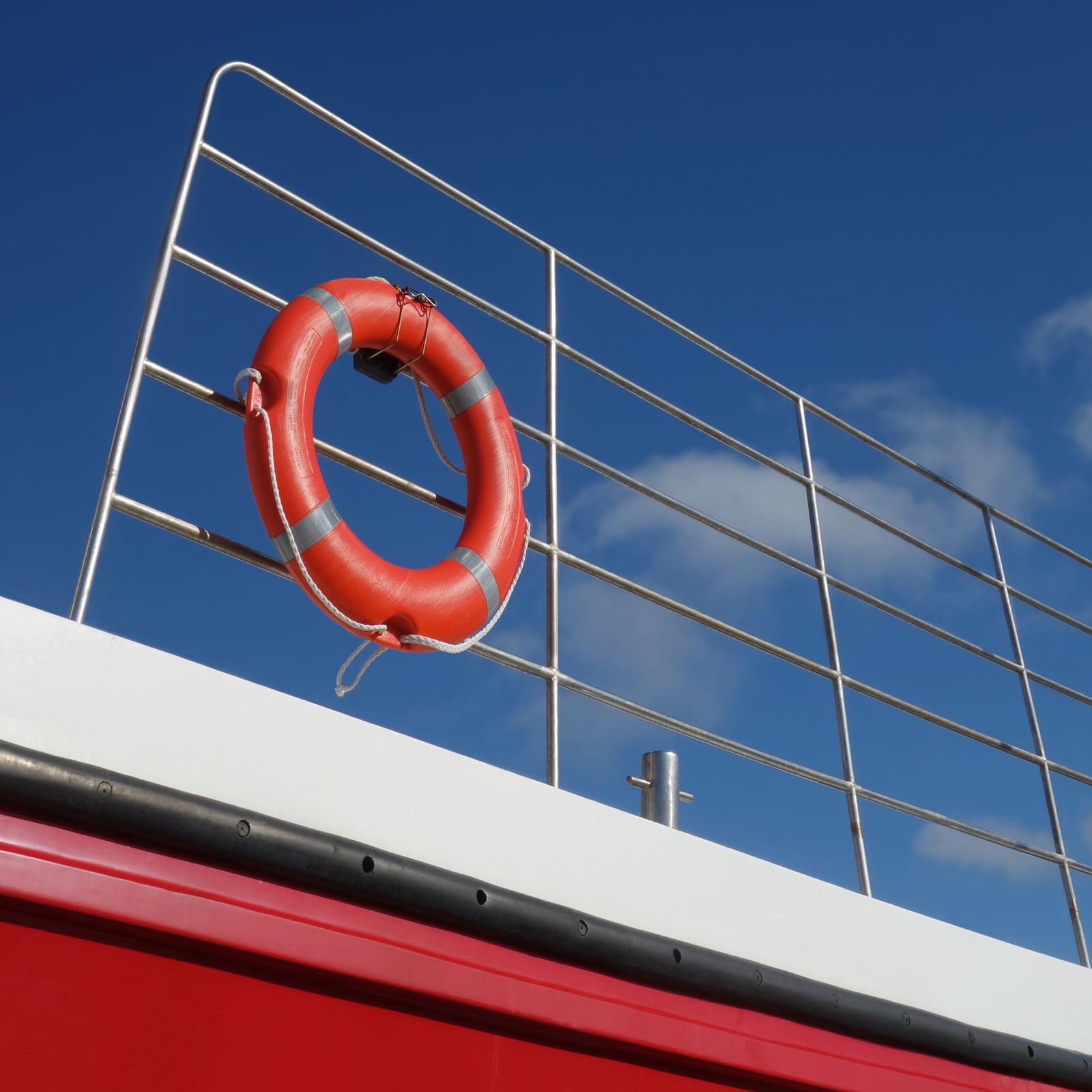
Man-Overboard Recovery Gear: Throwables, Lifesling, Ladders and MOB Alarms
Set up and check the gear that gets a person in the water back aboard - a throwable within reach, a floating rescue line or Lifesling-style sling, a boarding ladder someone in the water can pull down, and MOB alarms or AIS beacons - and practice the drill so it works when it counts.
Carbon Monoxide on Boats: Where It Comes From, CO Alarms and Warning Signs
Carbon monoxide can build up in cabins, under canvas and around the swim platform, and its first symptoms look like seasickness. Learn the danger zones, where to mount marine CO alarms, how to test and replace them, and exactly what to do if an alarm sounds or someone feels sick.
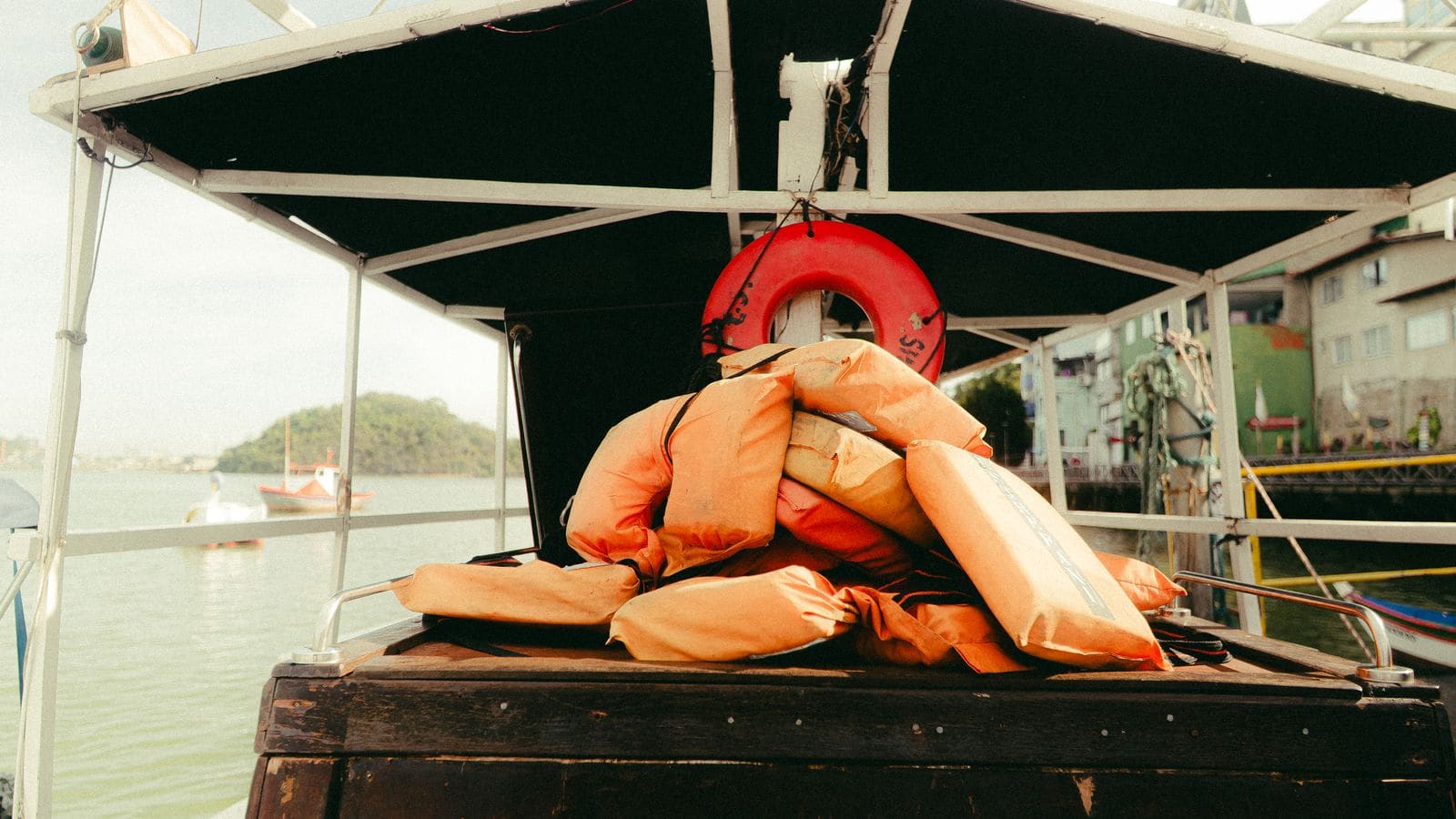
USCG Required Safety Equipment Check by Boat Length
Walk through your boat and confirm you carry every piece of safety gear the US Coast Guard requires for your boat's length and type, and that none of it is expired or worn out. Missing or expired gear is one of the most common tickets on the water, and it is the gear you need when things go wrong.
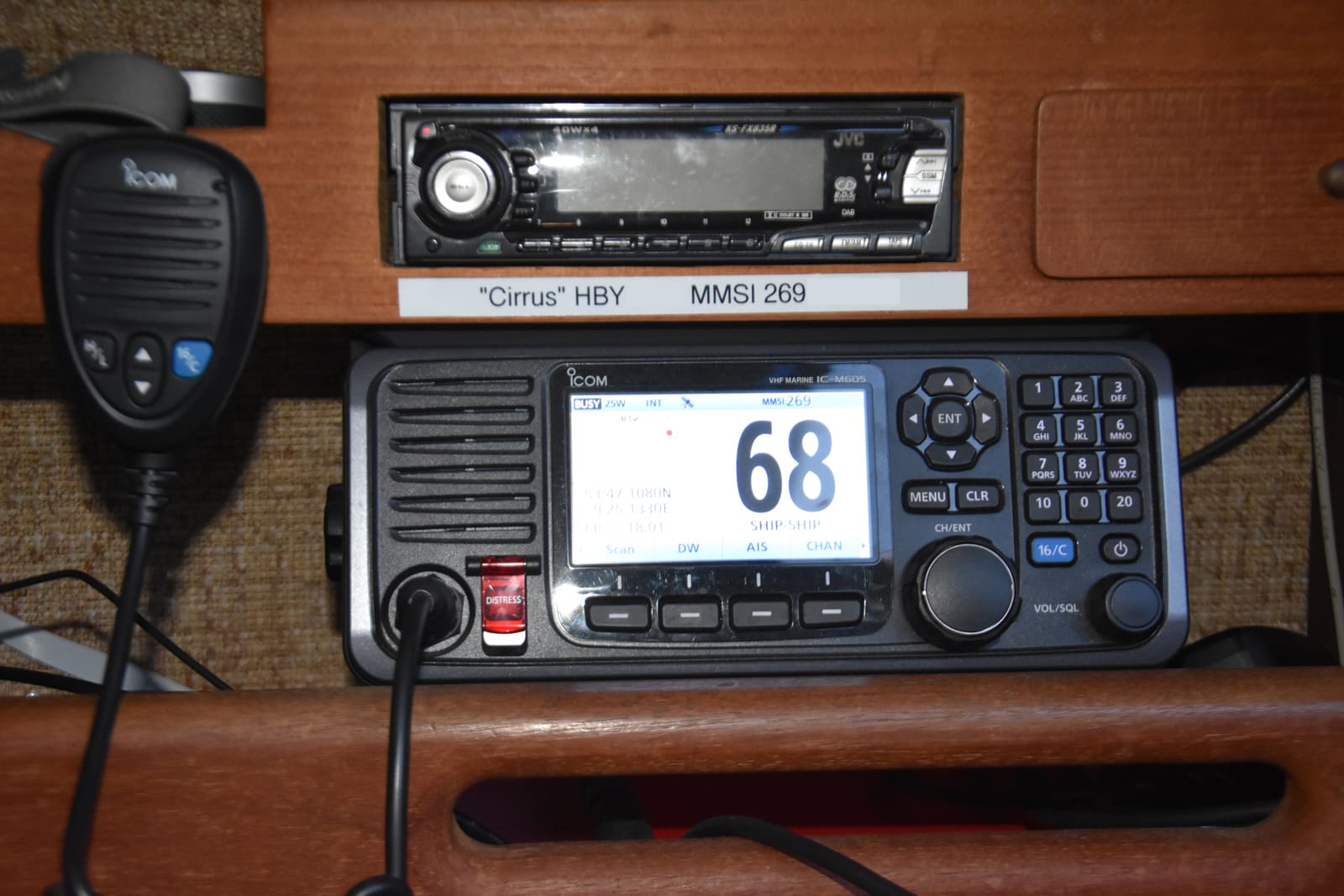
Set Up Your VHF Radio: MMSI, DSC, GPS Hookup and Radio Checks
Get a free or low-cost MMSI number, program it into your DSC radio, connect your GPS so a distress alert sends your exact position, check the antenna, and learn the Channel 16 rules and the right way to do a radio check.
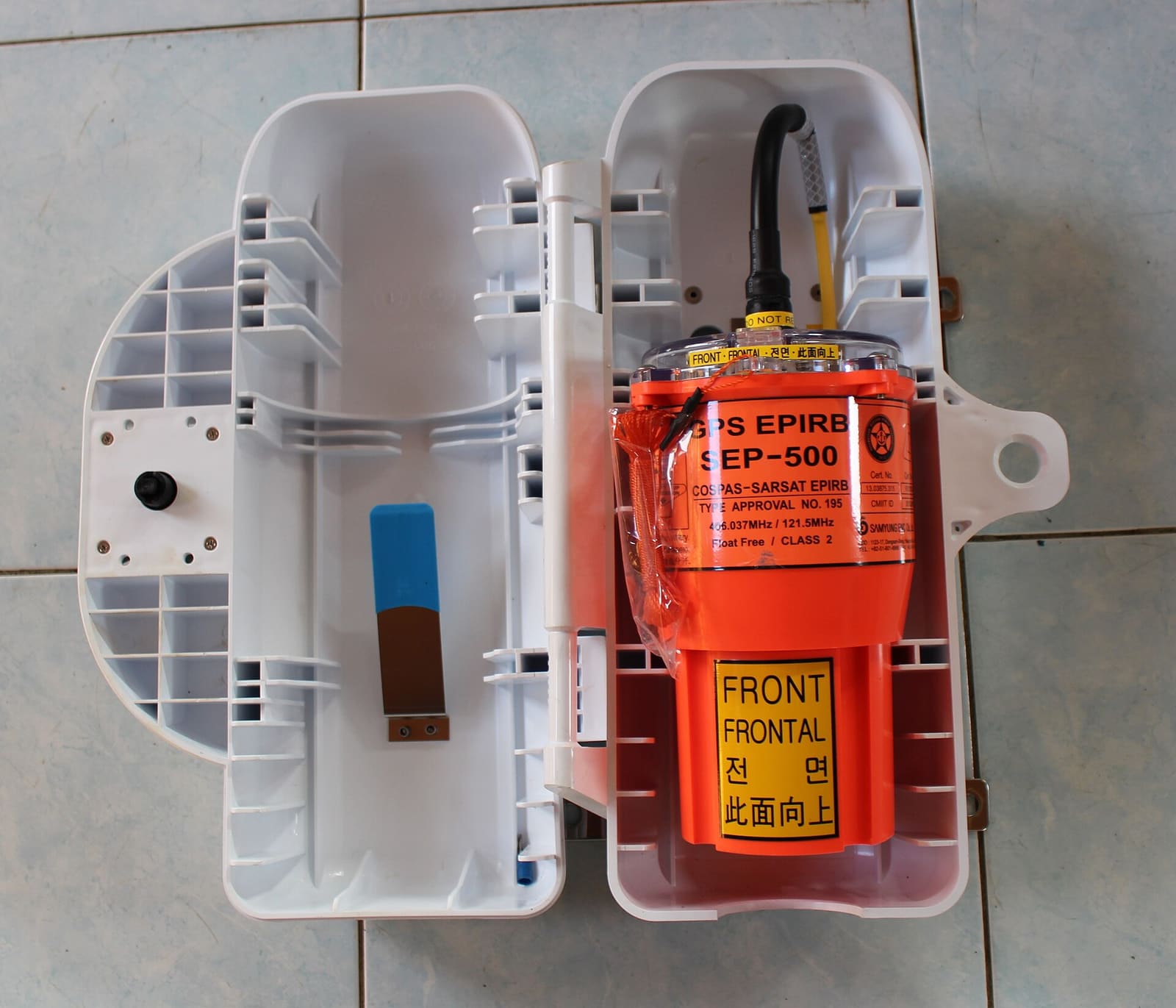
EPIRB and PLB Care: Registration, Batteries, Self-Test and Mounting
Keep your 406 MHz emergency beacon ready to work on the worst day of your life. Register it free with NOAA and renew every two years, track the battery and hydrostatic release dates, run the self-test without triggering a false alert, and know what happens after you press the button.
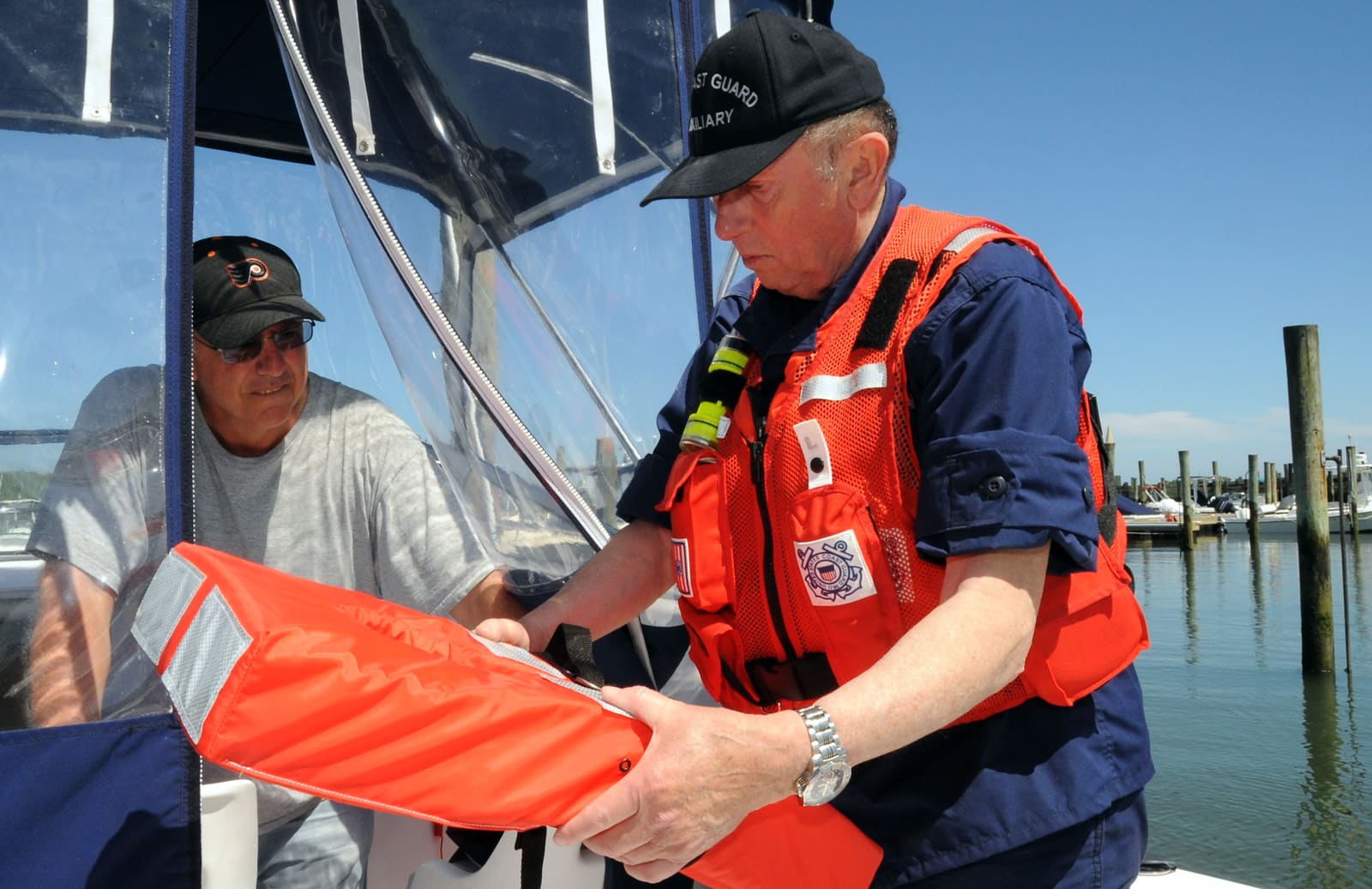
How to Prepare for a Free Vessel Safety Check
Volunteers from the Coast Guard Auxiliary and America's Boating Club will inspect your boat's safety gear for free, with no ticket if something is missing. Learn how to request a Vessel Safety Check, what the examiner looks at, how to get your boat ready and what to do with the fix list.