Boat Damaged While Trailering: What to Do on the Road or at the Ramp, Insurance, and Hidden Damage Checks
Step-by-step help after a crash, blowout, sway accident or ramp mishap with your boat on the trailer: making the scene safe, police reports, photos, which insurance usually pays (your auto policy, your boat policy's trailer coverage, or the other driver's insurer), and how to inspect the trailer, hull, drive and bunks for damage you can't see at first. Policies and state rules vary, so your own policy wording and state law win.
Time
1 h 30 min
Shop would charge
$150-600
Applies to
All engines
Safety first: People first, boat last. If anyone is hurt, fuel is leaking or you smell gasoline, call 911 and keep everyone well away from the rig; don't try to move a loaded trailer that is blocking traffic. Never stand between the tow vehicle and the trailer, or downhill of a boat that may slide. A boat that comes off its trailer is extremely heavy and can shift without warning; let tow and recovery crews lift it. If a boat is sinking or adrift at a ramp, call 911, the marine patrol, or the Coast Guard on VHF channel 16.
Fuel smell, water coming in, CO alarm or smoke? Stop, get everyone in life jackets and call USCG on VHF 16 or 911. For a tow: Sea Tow or TowBoatUS.
Owners often ask
- Someone hit my boat trailer on the highway. Does my car insurance or boat insurance pay?
- My boat bounced hard on the trailer over a pothole. What should I check before launching?
This guide walks you through it. Still stuck? Ask the AI Mechanic about your engine.
Tools
- Reflective triangles or flares and a high-visibility vest
- Phone camera (photos and video with the date shown)
- Flashlight
- Tire pressure gauge and lug wrench
- Notebook (names, plates, insurance, report numbers)
Before you start
Trailering accidents come in a few flavors: a collision with another vehicle, a single-vehicle crash (trailer sway, a blowout, a broken axle or hitch), backing into something, a boat that slides off at the ramp, or damage done while a commercial shipper had the boat. The steps are similar in every case: make it safe, document it, report it to the right insurer, then hunt for hidden damage before the boat goes back in the water.
Know your policies before anything happens. BoatUS points out that trailer coverage is not automatic on every boat policy, and that damage you cause to other people while towing is usually handled by your auto policy, not your boat policy.
Steps
- Pull as far off the road as you safely can, turn on hazard lights and set the parking brake.
- Put on a reflective vest and set out triangles or flares well behind the trailer.
- Check everyone for injuries and call 911 if anyone is hurt, the road is blocked, or there's any fuel leak or smell.
- If a fuel tank, portable tank or battery has broken loose, keep people, cigarettes and flames away and let responders handle it.
Even in a minor crash, a police report helps your claim, especially when another driver is involved. State rules differ on when a crash must be reported (often when someone is hurt or damage passes a set dollar amount), so if in doubt, call. Write down the officer's name, agency and report number. Note that the Coast Guard's boating accident report is for accidents on the water; a road crash goes through the police.
Get the other driver's name, phone, license, plate, vehicle, insurance company and policy number, plus names and numbers of witnesses. BoatUS's claims guidance is to look after anyone injured and not to discuss fault or make promises to anyone; admitting liability can jeopardize your coverage. Stick to facts.
Take wide shots and close-ups, with your phone set to show the date:
- The whole scene, road position, skid marks and traffic signs
- Every side of the tow vehicle, trailer and boat
- The hitch, coupler, safety chains, tires and wheels
- Each spot where the hull touches a bunk or roller, the bow stop, the transom and the motor or drive
- The other vehicle and its plate
A BoatUS claims adjuster's advice for boats moved by truck applies here too: shoot bow to stern and top to bottom, inside and out, and take a quick walk-around video to catch what photos miss.
- If the trailer is damaged (bent tongue, broken axle or spring, flat you can't change, loose boat), don't tow it. Call a tow company that can handle boats, or your trailer roadside service.
- BoatUS notes its trailer roadside service is for breakdowns, not highway accidents, so after a crash expect a commercial tow arranged through police or your insurer.
- If the boat has shifted on the trailer, don't drive with it. Have it secured or loaded onto a flatbed.
Who pays depends on what got damaged and who caused it. Typical patterns, per BoatUS:
- Damage to other people's property or injuries you caused while towing (backing into a wall, your trailer swinging into another car): usually your auto policy's liability coverage, not your boat policy.
- Physical damage to your trailer: your boat policy's trailer coverage, if you bought it. BoatUS says trailers aren't automatically covered on every policy.
- Damage to your boat in a crash: usually your boat policy, subject to its terms and deductible.
- Another driver caused the crash: you can claim against their insurer, or let your own insurer pay you and recover from them; ask your agent which is faster.
- A commercial shipper had the boat: report damage to the shipper before you accept delivery, then to your own insurer; see step 13.
Call your boat insurer and your auto insurer the same day, even if you're unsure which one applies. Late notice is a common reason claims get harder. Our insurance claim guide covers the rest of the process.
BoatUS says the first job after any loss is to protect the boat from more damage. Cover broken windshields or hatches against rain, pump out rainwater, disconnect the battery if wiring was torn, and store the boat securely. Keep receipts for tarps, towing and storage; ask your insurer what it reimburses. Don't start real repairs until the adjuster approves the estimate, as BoatUS advises.
With the boat still on it (or off, if a yard can lift it), check:
- Coupler, tongue and jack: cracks, bends, a coupler that no longer latches, a jack that won't crank.
- Safety chains and wiring: stretched or broken links, torn wires, dead lights.
- Frame: sight down each side rail for bends or twists; look for cracked welds and buckled crossmembers.
- Axles and springs: BoatUS's trailer service data shows U-bolts often rust through first, and axles can be rotting from the inside where you can't see. After a hard hit, look for shifted axles, broken spring leaves and bent hangers.
- Wheels and tires: bent rims, cut sidewalls, and later, uneven tire wear that can mean a bent axle.
- Hubs and bearings: spin each wheel and listen; after the next drive, feel for a hub that runs hot.
- Winch, strap and bow stop: frayed strap, bent winch post, a bow stop pushed back.
Anything bent in the frame or axle is a job for a trailer shop before the rig goes back on the road.
A boat that bounced, slid or shifted on its trailer often shows it where the hull rests.
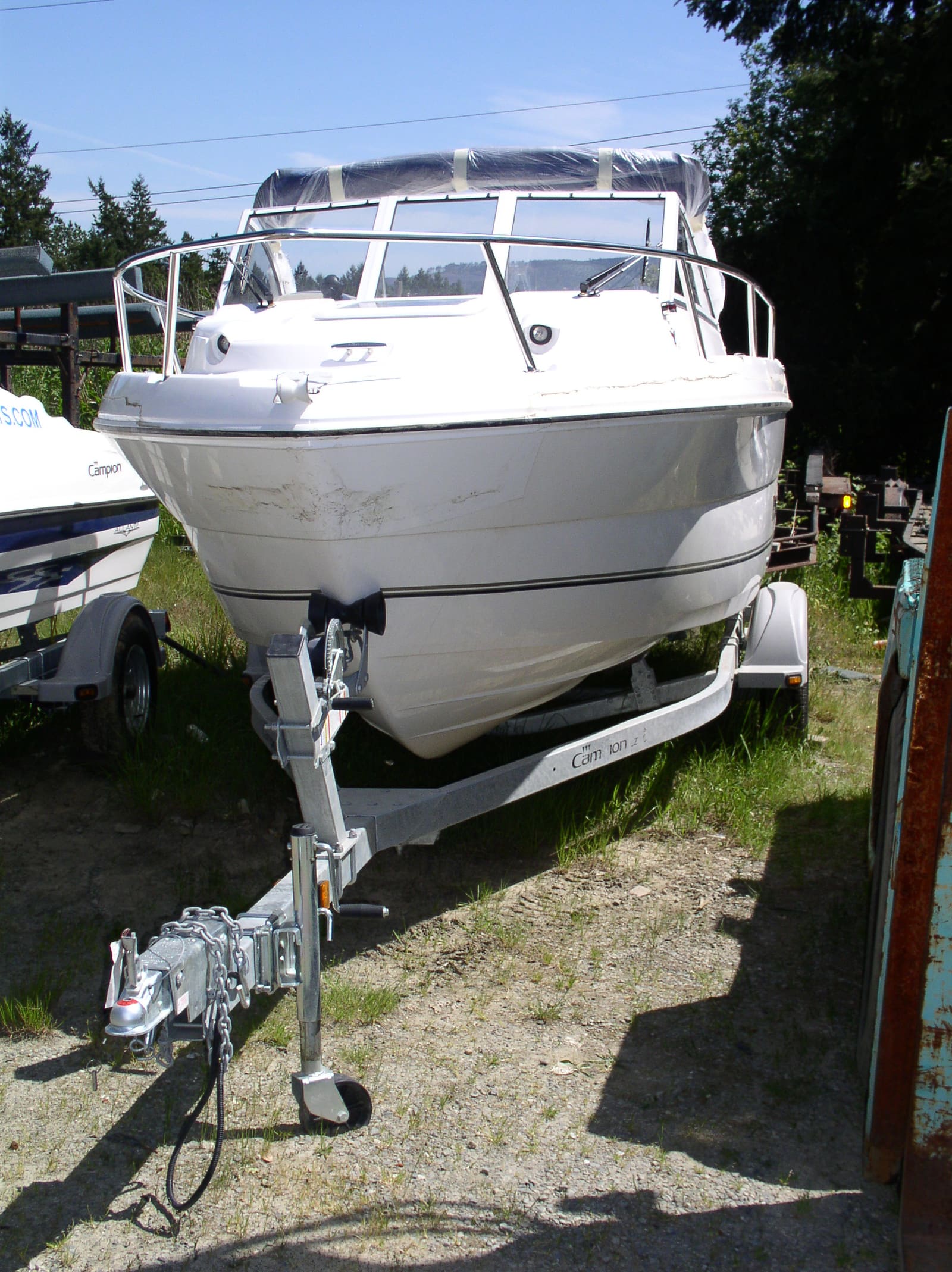
Scuffs like these on the bow and around the bow stop are worth photographing right away, then checking closely for cracks underneath. Photo: Tawker / Wikimedia Commons · CC BY 2.5 - Bunks and rollers: look along each bunk or roller line for gouges, star-shaped or spider cracks, and spots where gelcoat is crushed. Check the bunks themselves for broken boards, torn carpet and bent brackets; a broken bunk can concentrate the whole load on a small patch of hull.
- Bow and keel: the bow stop and keel take the hit in a sudden stop. Look for cracks at the stem and along the keel.
- Transom: look for cracks around the motor mounts, at the corners and around the drain plug.
- Inside: open hatches and look at stringers, bulkheads and the inside of the transom for fresh cracks or separated tabbing.
On an aluminum boat, look for popped rivets, dents and weeping seams.
A bouncing outboard or drive puts huge loads on the transom and the trim system, and a road or ramp strike can bend the lower unit.
- Outboards: check the skeg and lower unit for impact marks, the prop for bent blades, and the trim cylinders, tilt tube and mounting bolts for damage. BoatUS's surveyor notes a hard hit on an outboard can damage the trim and tilt system and even the transom.
- Sterndrives: check the drive housing, the bellows and the gimbal area. A damaged drive or bellows can let water in through the transom.
- Inboards: check the prop, shaft, strut and rudder for bends; a bent strut can loosen where it's bolted through the hull.
- Spin the prop by hand (engine off, key out, kill switch lanyard off) and watch for wobble.
- Was the outboard resting on its tilt support lever? Yamaha says that lever is for storage only and isn't built to take trailering loads; it can break and damage the bracket. If yours was trailered that way, have the lever and the clamp brackets checked.
Hidden damage is common after a hard crash: cracked stringers, a loosened transom, an internally damaged gearcase. Ask your insurer to send an inspector or approve a marine surveyor. BoatUS says that after significant damage its insurer assigns inspectors, and its claims adjusters recommend a surveyor to document damage and estimate repairs. A mechanic can pressure-test the gearcase and check the drive's alignment.
Once repairs are done (or you've been told none are needed):
- Launch with the plug in, then stay at the ramp or dock for several minutes and open every hatch to look for water coming in.
- Run at idle first, then slowly increase speed while someone watches the bilge and listens for vibration.
- Check the bilge again after the run. A boat that takes on water after a trailer accident goes straight back on the trailer.
BoatUS describes members who discovered damage only at delivery. Its advice:
- Photograph the boat before it leaves and again before it's unloaded.
- Note any damage on the delivery paperwork before signing; don't let a driver talk you into signing a clean receipt.
- Get the driver's name and license, the truck's DOT number and photos of the truck.
- Report the damage to the shipper right away, then to your insurer, and consider a surveyor to estimate repairs.
Many trailer accidents start with something preventable. BoatUS's trailer service data puts tire problems first and bearings and hubs second among breakdown calls. Before the next trip, use our trailering prep guide to check tire pressure and age, bearings, lights, the hitch and coupler, safety chains, and how the boat is loaded and strapped.
BoatUS's "Take The Hassles Out Of Trailering" collects real insurance claims that read like a checklist: a truck pushed into a ditch on a rain-slick road by the trailer's weight, a rusted axle that broke and dropped the boat on the road, an overloaded tire that blew out, and a trailer that fishtailed and broke away. Its fixes: slow down (lower speed also means cooler tires), use trailer-rated (ST) tires, keep the load at no more than about 85 percent of the trailer's GVWR, set tongue weight at roughly 5 to 10 percent of the total load (too little invites sway), match the ball to the coupler, cross the safety chains, and always use tie-downs, even on a heavy boat. It also notes that switching to radial tires, with their softer sidewalls, made one trailer sway more than its owner expected, until the boat was thrown off. If you change tire types, drive gently at first and recheck the load and tongue weight.
If the motor or transom took a beating, look at how the outboard rides on the road. Mercury explains that bumps, hard stops and vibration stress the transom and the tilt and trim system, that trailering with the engine vertical is easiest on them when ground clearance allows, and that otherwise an outboard support device (a rod between the lower unit and the trailer) takes the load; ask your dealer which one fits your rig.
Common mistakes
- Moving the boat or trailer before taking photos.
- Telling the other driver or the police "it was my fault" before the facts are known.
- Calling only the boat insurer when the auto policy handles damage to others, or the reverse.
- Assuming trailer coverage was included in the boat policy.
- Towing home on a bent axle or frame "just to get it off the road."
- Launching without a leak check after a hard hit to the hull or drive.
- Signing for a shipped boat with a clean delivery receipt despite visible damage.
When to call a pro
- Anyone is hurt, fuel is leaking, or the boat has come off the trailer: 911 and professional recovery
- The trailer frame, tongue, axle or springs are bent or cracked: a trailer shop before it's towed again
- Any crack in the hull, transom or stringers, or a sterndrive or strut that took a hit: a marine surveyor and a qualified repair yard
- The outboard or drive was struck: a dealer technician to check the gearcase, trim system and mounts
- Your claim is denied or the settlement seems low: ask the insurer for the reason in writing; see our insurance claim guide
Tips
- Keep your auto and boat insurance cards and claim phone numbers in the tow vehicle, not on the boat.
- Ask your boat insurer now whether trailer coverage is on your policy and whether there are geographic limits on trailering.
- Take a dated set of photos of the boat and trailer at the start of each season; they prove what was already there.
- Keep a spare tire, jack and lug wrench that actually fit the trailer.
Official references
We read these to write this guide. Your engine's own manual always wins.
- BoatUS – 5 Things to Know About Boat Insurance (2013, trailer coverage versus auto policy)
- BoatUS – Claims Information (GEICO | BoatUS Marine Insurance)
- BoatUS – Boat Insurance FAQ (inspectors, trailer roadside assistance)
- BoatUS – Causes For On-The-Road Boat Trailer Breakdowns (2018)
- BoatUS – Take The Hassles Out Of Trailering
- BoatUS – Navigating The Asphalt Ocean (2013, documenting transport damage)
- BoatUS – What To Do If Your Vessel Strikes A Submerged Object (2017, where impact damage hides on outboards, sterndrives and inboards)
- Mercury Marine – Quick Tip, Protect Your Boat and Outboard from the Stress and Strain of Trailering
- Yamaha Outboards – Owner FAQs (tilt support lever is for storage, not transport)
Safety: BoatMend is for information only and does not replace a certified marine technician. You are responsible for your safety and your boat. Read the full disclaimer.
Last updated 2026-10-25
Related guides
How to File a Boat Insurance Claim: Safety, Mitigation, Documentation and Settlement
What to do from the moment something goes wrong until the check arrives: make everyone safe, stop further damage, report right away, document with photos and your maintenance log, handle towing versus salvage, work with the adjuster or surveyor, and understand agreed value, actual cash value and the common exclusions. Policies differ, so your own policy wording always wins.
Get Your Boat Ready for the Road: Pre-Trailering Checklist
Most trailering trouble starts in the driveway: an engine left without support, a loose strap, a cover that balloons at 60 mph, gear that blows out or tongue weight that makes the rig sway. Work through this checklist before every trip and do a quick walkaround at each stop.
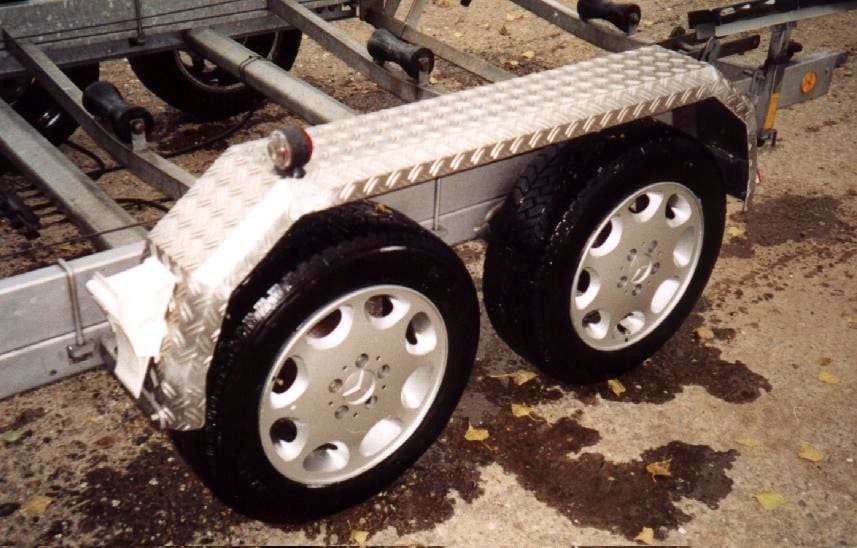
How to Inspect Boat Trailer Axles, Leaf Springs and Hangers
Check the parts that actually hold your boat off the road: the axle tube, leaf springs, hangers, shackles, bushings and U-bolts (or the rubber torsion axle on newer trailers). Learn what rust-through, broken leaves and worn shackles look like, how uneven tire wear points to a bent axle, and when it's time to replace instead of patch.
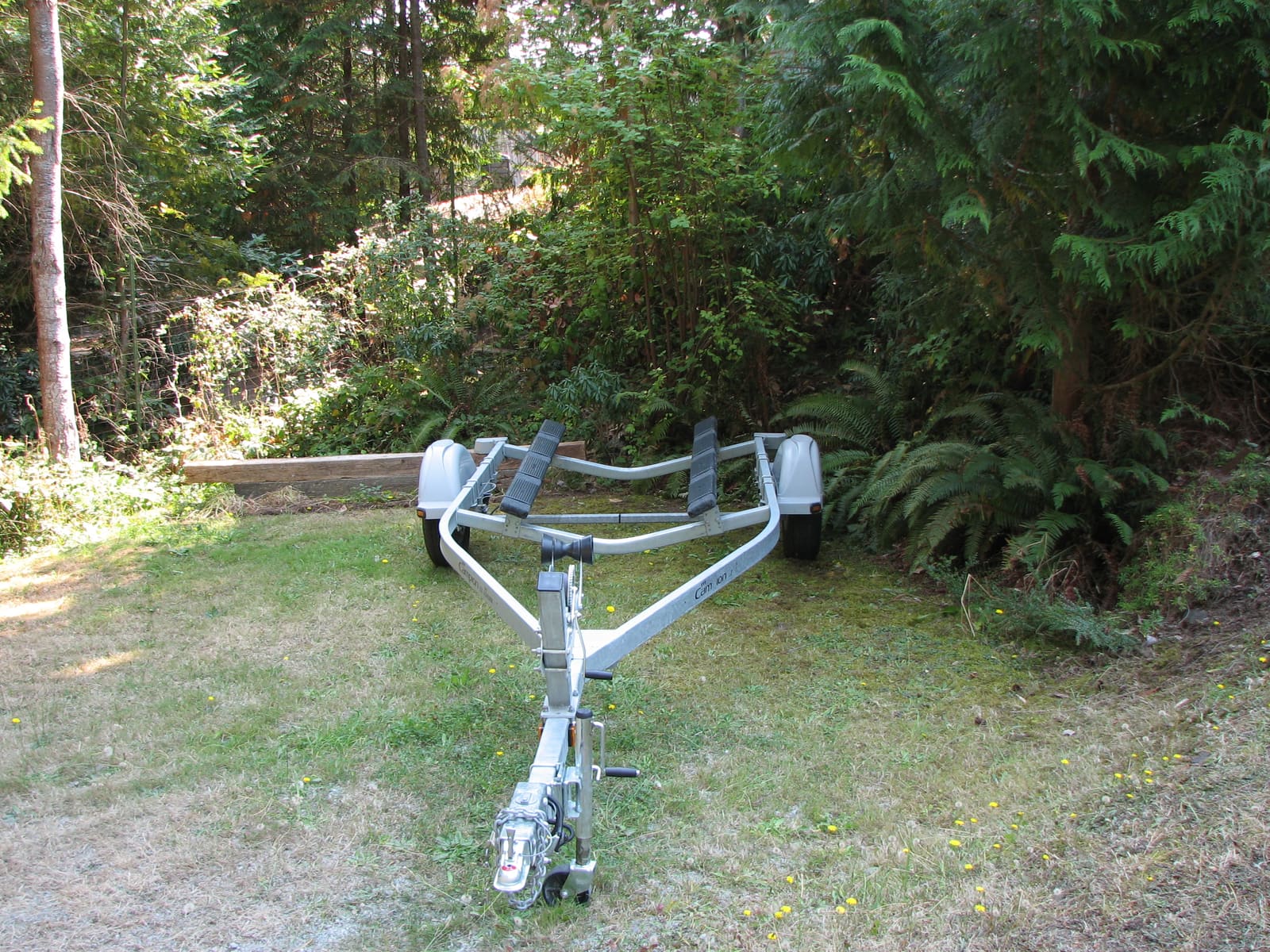
How to Adjust and Replace Trailer Bunks and Rollers So Your Boat Sits Right
Set up your boat trailer so the hull is supported in the right places: bunks and rollers clear of the strakes, the transom fully supported, the bow snug against the winch stop and the weight balanced on the tongue. Also covers replacing rotten bunk boards and worn carpet or rollers.
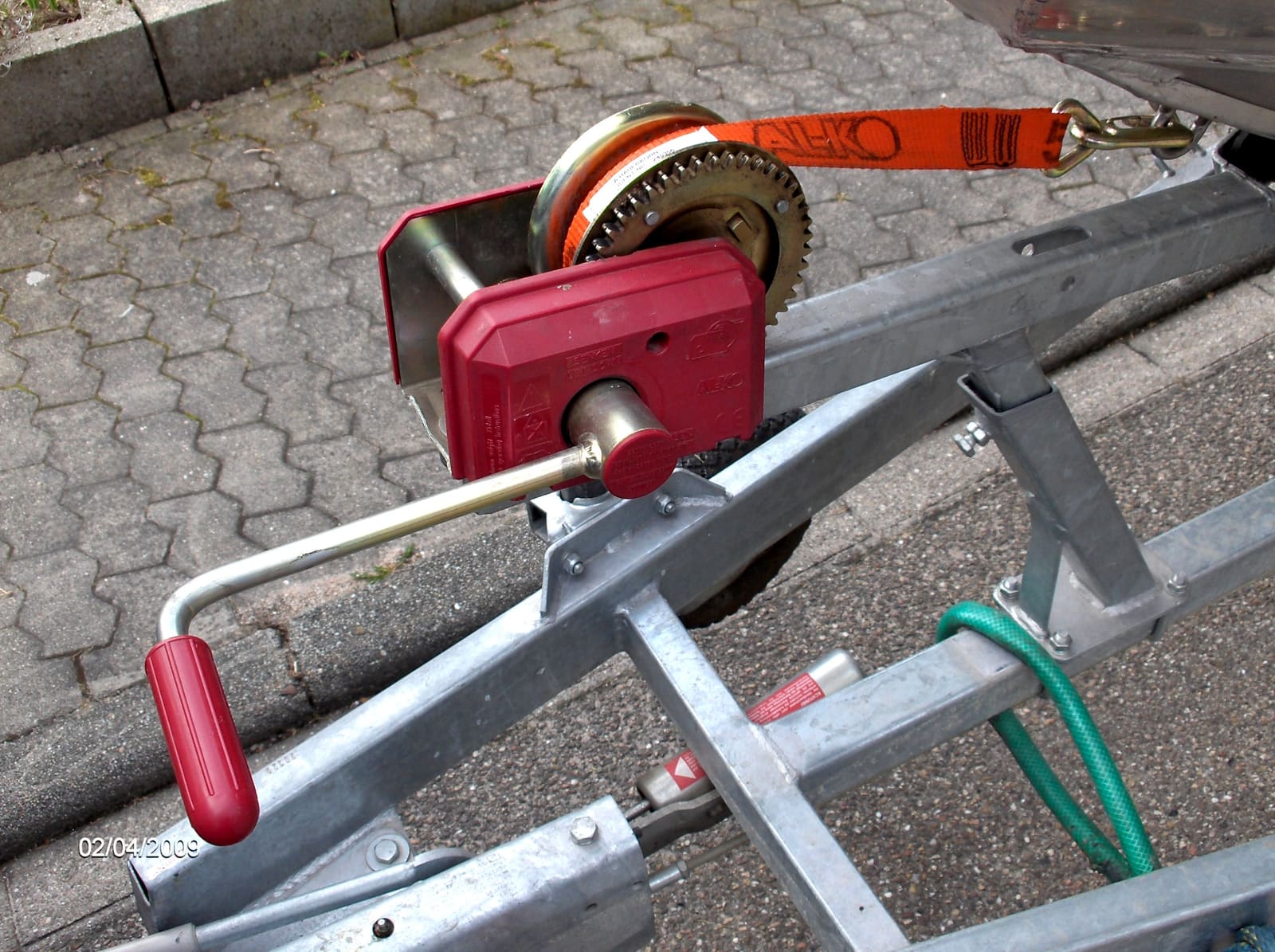
How to Inspect and Use the Trailer Winch, Strap, Tie-Downs and Safety Chains
Check the winch, strap or cable, bow safety chain, transom tie-downs and the safety chains to your vehicle, and learn how each one is meant to be used. These parts keep the boat on the trailer and the trailer behind your truck.
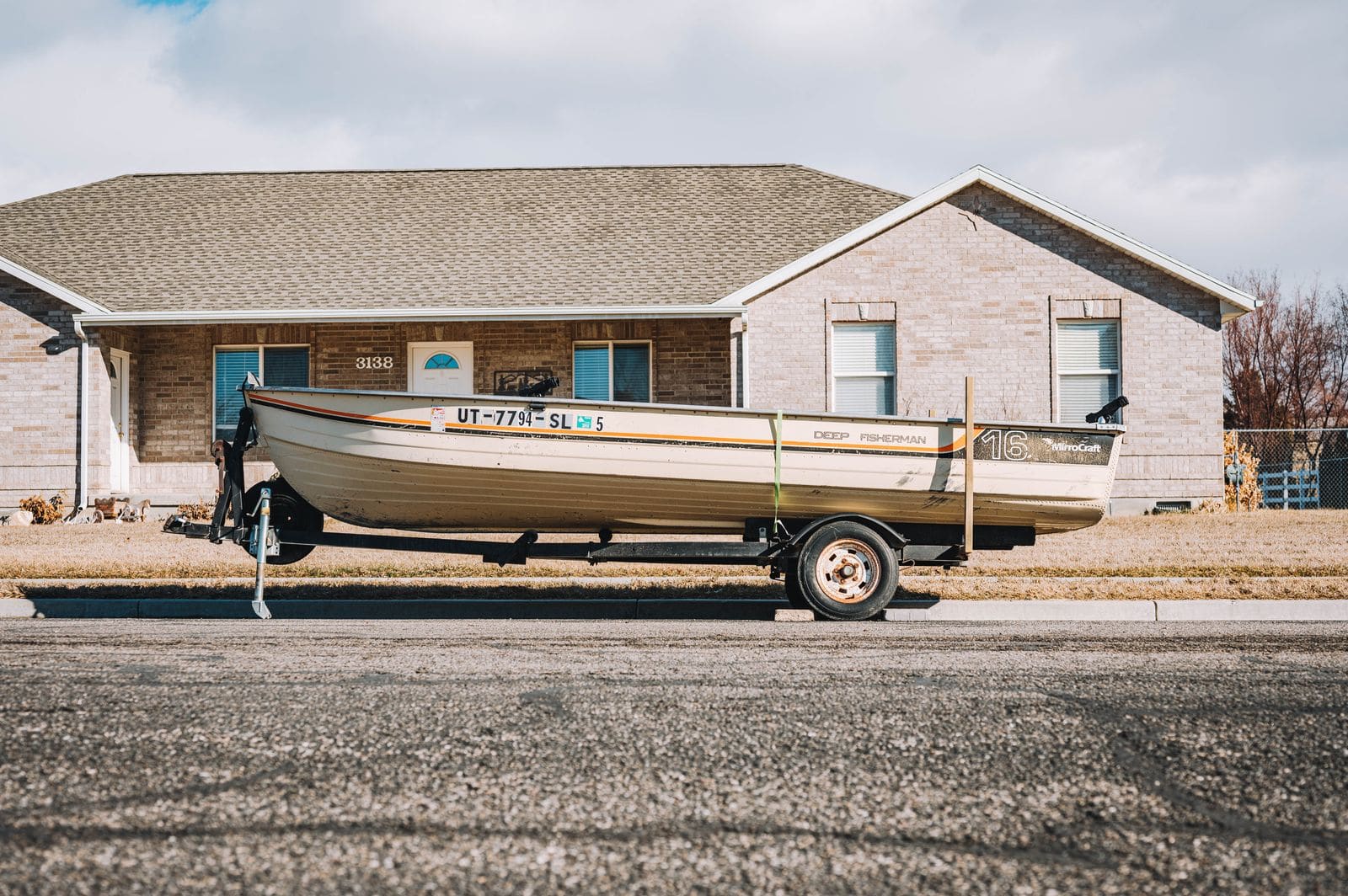
How to Inspect and Repack Boat Trailer Wheel Bearings
Check, clean and repack your trailer's wheel bearings so a seized hub does not leave you stranded on the highway. Boat trailers get dunked in water every launch, which makes their bearings fail far more often than those on dry utility trailers.
How to Inspect, Inflate and Replace Boat Trailer Tires
Check your trailer tires the way the pros do: the right type (ST), the right load range, the right cold pressure, and an honest look at their age. Tires are the number one reason boat trailers end up on the side of the highway.
How to Repair Small Gelcoat Chips and Scratches
Fill and blend small chips, dings and scratches in your boat's gelcoat with a repair kit so they stop letting water into the fiberglass and look close to new. Also learn to spot damage that is structural and needs a pro.
Propeller Care: Inspect, Remove, Replace and Choose the Right Pitch
Check your prop for damage, pull it to clear fishing line and grease the shaft, reinstall it correctly, and learn how pitch affects your engine's wide-open-throttle RPM. The right prop in good shape protects your engine and often makes the boat run better and use less fuel.