Where Is the Water in My Bilge Coming From? A Step-by-Step Leak Finder
Track down the source of water in your bilge, from the cheapest clues (when it appears, salt or fresh) to the usual suspects: rain and deck drains, the freshwater system, AC condensate, the shaft seal, raw-water hoses and through-hulls. Fix the leak instead of relying on the bilge pump.
Time
2 h
Shop would charge
$100-500
Applies to
All engines
Safety first: If water is rising faster than the pumps can remove it, stop troubleshooting: put on life jackets, call USCG on VHF 16 or 911, and call Sea Tow or TowBoatUS (see boat taking on water). If you smell fuel or see a fuel sheen in the bilge, don't run pumps or switches; ventilate, get off the boat and call a mechanic. Keep hands, hair and clothing well away from belts, pulleys and spinning shafts whenever the engine is running.
Owners often ask
- How do I find where the water in my bilge is coming from?
- Why does my bilge only fill up when the engine is running?
This guide walks you through it. Still stuck? Ask the AI Mechanic about your engine.
Tools
- Flashlight or headlamp and a small inspection mirror
- Large sponges, old towels or a small wet/dry vacuum
- Paper towels (white, for spotting drips)
- Garden hose with a spray nozzle
- Small cup or clear jar
- Optional low-cost salinity tester or TDS meter (sold for aquariums and pools)
- Screwdrivers and nut drivers (for hose clamps and access panels)
- Notepad or BoatMend notes
Parts & supplies
- Stainless steel hose clamps (spares)
- Oil-absorbent bilge pads
- Replacement hatch gaskets or sealant, depending on what you find
Before you start
Some water in a bilge is normal on many boats, but a bilge that keeps filling is telling you something. BoatUS's review of a year of sinking claims found boats sink at the dock more than twice as often as underway, and about a third of all sinkings came from a small part below the waterline slowly failing. Many of those boats had been "living on the bilge pump" for weeks. Their advice is blunt: well-designed boats don't sink because a pump fails; they sink because water got in and nobody stopped it.
This guide goes from the free clues to the harder checks. Each step says what a finding means. Work with the boat at rest first, then under way if you need to. As a BoatUS repair manager puts it, finding a leak usually takes longer than fixing it, which is why many yards are happy to say "you find it, we'll fix it." Doing the detective work yourself saves real money.
Know your normal first. A healthy stuffing box dripping every 15 seconds while the shaft turns adds up to roughly a quart every few days in BoatUS's example. Knowing your boat's usual amount is what lets you notice when it changes.
What you'll need to know about your boat: where every through-hull fitting is, whether you have a shaft (inboard) or a sterndrive or outboard, and whether you have a freshwater tank, air conditioning or a shower sump.
Steps
This is the cheapest clue and often the most useful. Over a week or two, write down:
- After rain only? Points to hatches, deck fittings, windows, scuppers and drains (step 5).
- Only after running the boat? Points to things that leak under way or only when the engine runs: shaft seal, raw-water cooling, exhaust, spray getting in (steps 8, 9 and 12).
- Steadily, even in dry weather at the dock? Points to something below the waterline: through-hulls, hoses, the shaft seal, the hull (steps 8 to 11).
- Only when you use the water system or AC? Points to the freshwater system or condensate (steps 6 and 7).
A bilge pump counter or a "pump running" light makes this easy. See backup bilge pump and alarm. While you hunt, a high-water alarm is cheap protection: Don Casey (BoatUS) describes a simple float switch mounted in the low point but higher than the automatic pump's switch, wired through a fuse to a loud buzzer at the helm, so it only sounds if water outruns the pump or the pump fails. Test it now and then by lifting the float.
If you boat in salt water, find out whether the bilge water is salty. Fresh water means rain, the freshwater tank and plumbing, AC condensate or melted ice. Salt water means the sea is getting in: through-hulls, the shaft seal, raw-water hoses, the hull itself.
Ways to tell, safest first:
- Salinity tester or TDS meter: dip it in a cupful of bilge water and compare with a cup of water from over the side and one from the boat's tap.
- Dry test: let a few drops dry on a dark, clean surface. Seawater leaves a white, crusty salt ring.
- Taste test: many owners touch a fingertip to the water and then to the tongue. Only do this if the water is clean, with no fuel or oil smell and no chance it's from the head or holding tank, and spit and rinse afterward.
On freshwater lakes this test can't separate rain from lake water, so lean on the other clues.
You can't trace a drip in a puddle. Pump down, then sponge or wet-vac out the last of the water (a dry bilge also stops odors; see dry bilge system). Wipe the hull dry along the keel and under the engine.
Then lay white paper towels in the lowest spots of each compartment, and wrap them loosely around suspect fittings and hose ends. Check after a few hours. The wet towel furthest "upstream" (forward or higher) shows you where to look.
Water runs downhill and aft to the lowest point. With the bilge dry, start at the pump and work forward and upward with a flashlight and mirror:
- Look for wet trails on the hull, stringers and hoses.
- Check the limber holes (the drain holes through the stringers) and see which side water is coming from. PassageMaker suggests a coat hanger to clear any that are blocked.
- Look outboard of the engine and stringers. PassageMaker notes that puddles there often come from spray leaking through hullside air boxes or from clogged drains.
- Look for rust trails on clamps and engine mounts, a sign of a long-term drip from above.
On a dry day, with someone below watching with a flashlight, spray one area at a time: hatches, hatch gutters, windows and portlights, deck hardware, rod holders, the hull-to-deck joint, cockpit drains. Start low and work up so you know which area caused the leak.
BoatUS investigators who examined boats sunk at the dock by a heavy rainstorm found the same problems again and again: cockpit scuppers that couldn't keep up, hatches without gaskets or not dogged down, and gutters and drains spilling into the bilge. PassageMaker adds: check that hatch gutter drains are clear and lead overboard, not into the bilge, and that the anchor locker drain isn't clogged.
On a trailer, rain pools wherever the boat sits lowest. Keep the bow raised so water runs aft and out of the open drain plug. See cockpit scupper drains, hatch and portlight leaks and deck hardware rebedding.
If the bilge water tests fresh and it hasn't rained:
- Turn off the freshwater pump at the panel for a day. If the bilge stays dry, the leak is in the pressure side (faucets, fittings, the water heater, the pump itself).
- Listen for the pump cycling when no tap is open. That's a pressure-side leak. See freshwater pump troubleshooting.
- Check the tank fill, vent and overflow, the water heater relief valve, and the shower drain. PassageMaker warns that a shower draining into the bilge instead of a sump, or an overflowing shower sump, is a common source of both water and smell.
Air conditioners and some refrigerators make a lot of fresh water on humid days. PassageMaker lists condensate drips from AC and refrigeration units among the usual sources of bilge water. Find the drip pan under each AC unit and follow its drain hose: is it disconnected, clogged, or simply routed into the bilge? If the water only appears on hot, muggy days with the AC running, this is your answer. Route it to a sump or overboard, not into the bilge (see dry bilge system).
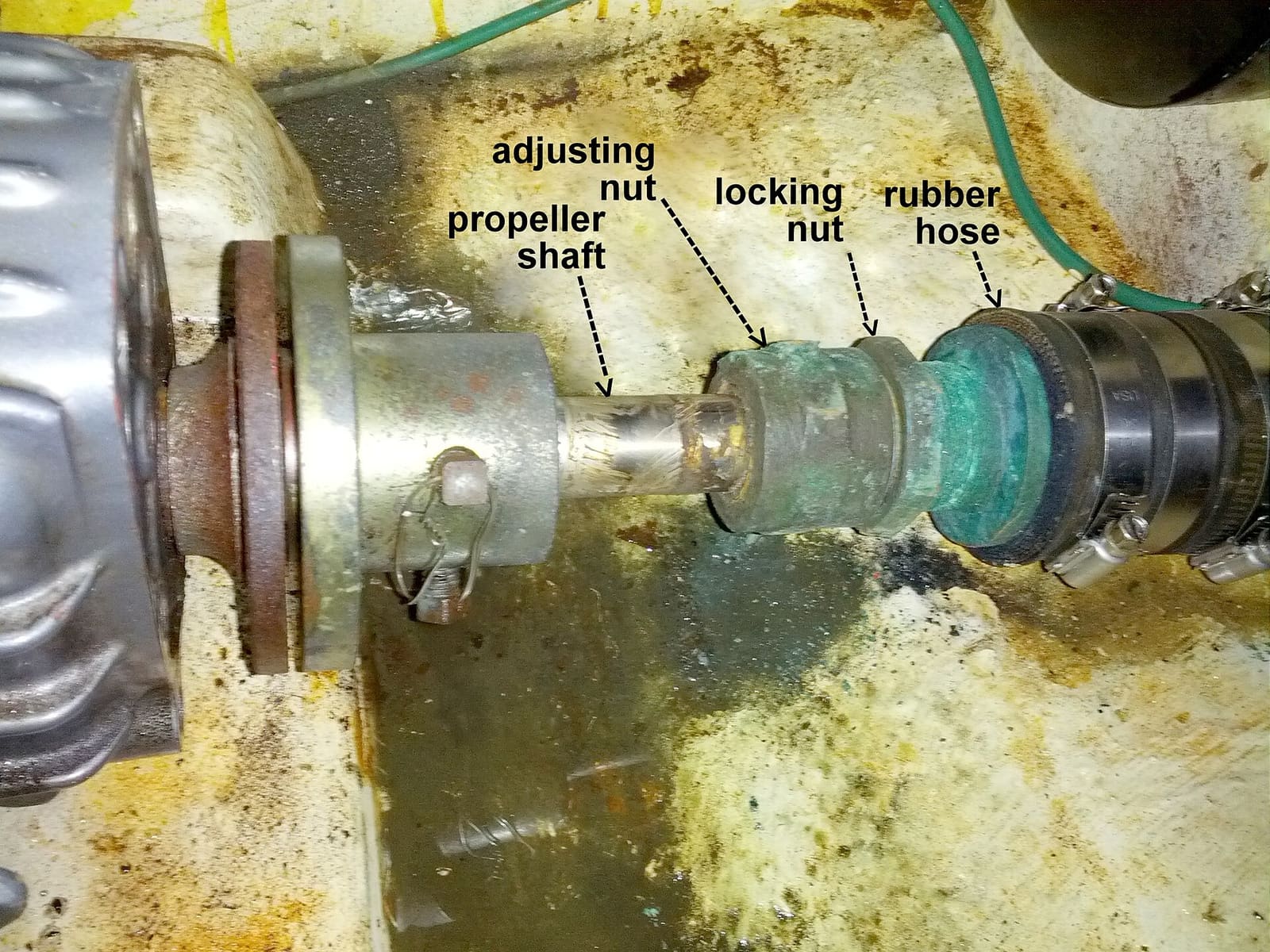
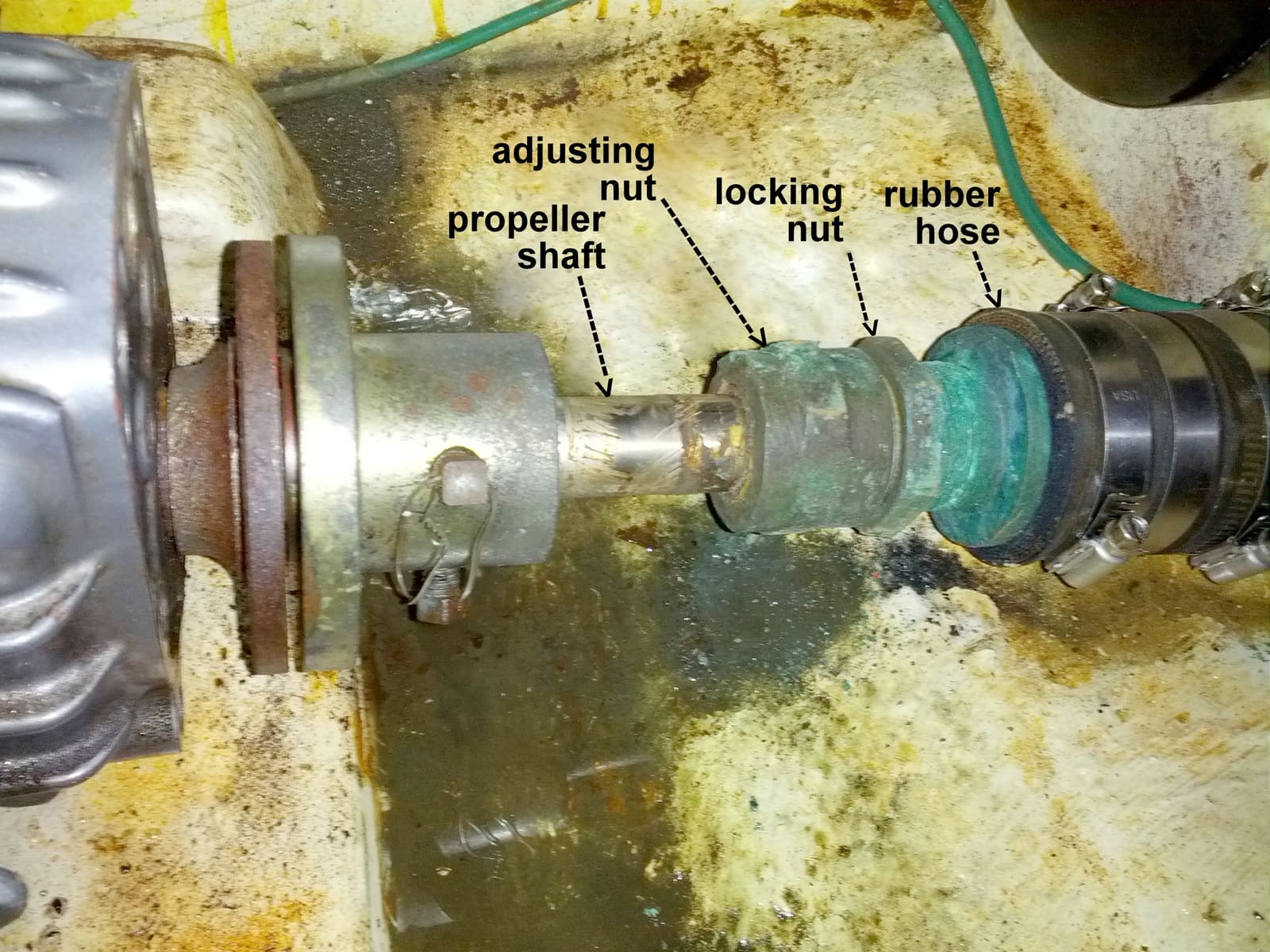
On inboard boats, look at where the propeller shaft leaves the hull.
- A traditional stuffing box (packing gland) is designed to drip a little while the shaft turns, so the packing stays cool. It should drip much less, or not at all, when the shaft is still.
- A dripless shaft seal shouldn't leak at all.
- Check the rubber hose (the shaft log hose) and its clamps for cracks and rust too.
PassageMaker notes that an old-style stuffing box admits water that must be removed. Also grab the shaft log itself (the tube the hose fits onto) and make sure it is solid. BoatUS points out that a steady leak there can come from a cracked shaft log tube rather than the packing, and owners have found older boats with a separate metal shaft tube that had worked loose. A steady drip with the boat at rest, or water spraying while under way, means adjustment or repacking: see stuffing box and dripless seal. Do the same check where the rudder post goes through the hull.
These leaks often appear only with the engine running, which makes them easy to miss. With the boat secured and someone at the helm ready to shut down, look (don't reach) at:
- The raw-water strainer lid and its gasket (see raw-water strainer).
- The raw-water pump and its seal; on some engines the pump is belt-driven and only leaks while it's turning.
- Every hose and clamp from the intake through-hull to the exhaust.
- The exhaust hoses, risers and elbows.
- On sterndrives, the engine block drain plugs and the exhaust Y-pipe.
Shut down before touching anything. Replace any rusty clamp and any hose that feels soft, cracked or swollen.
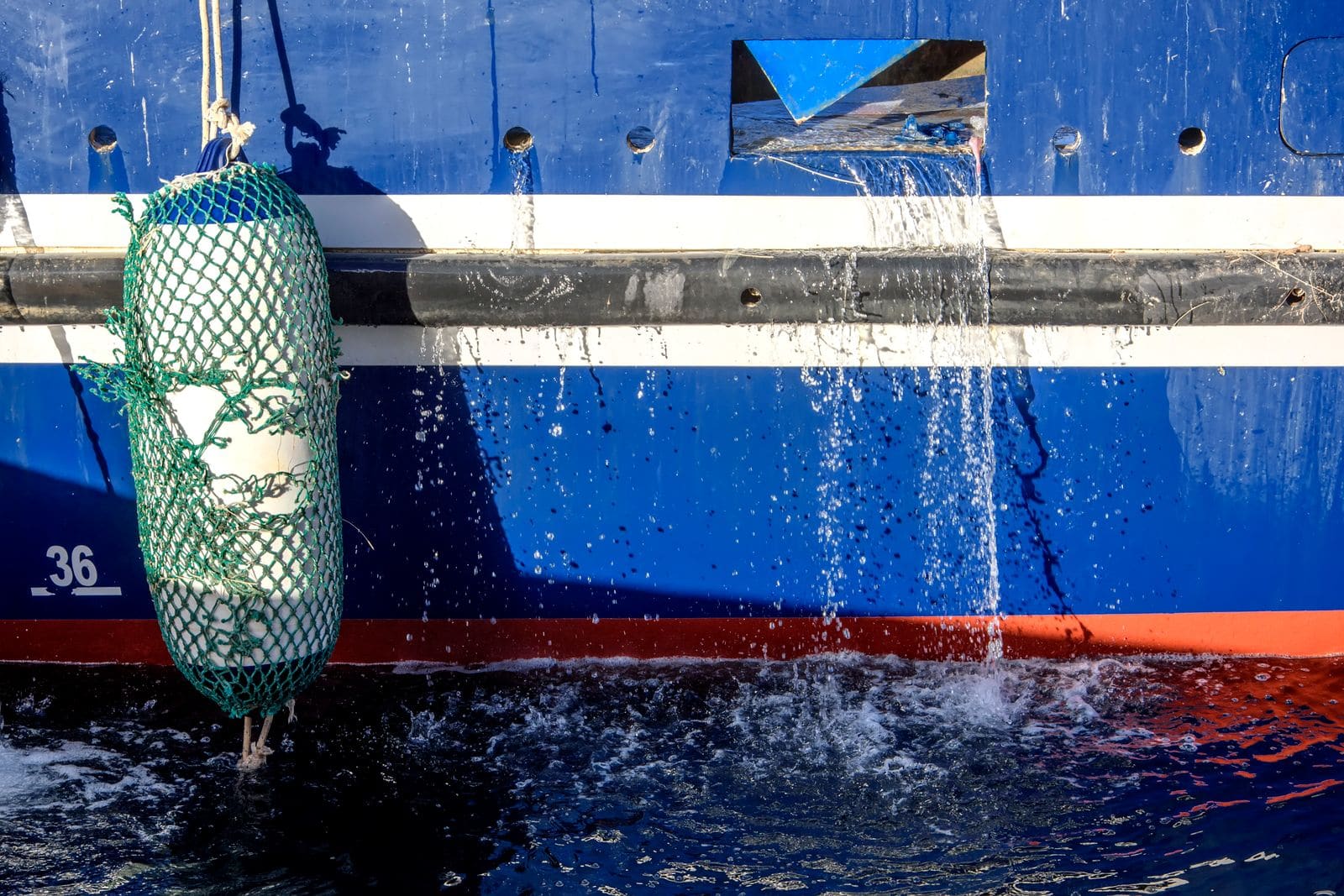
A strong stream out of the discharge proves the pump works, but how often it runs is the real clue. Count the cycles before and after each fix. Photo: Ana Hidalgo Burgos Burgos / Pexels · Pexels License Go through each through-hull fitting: engine intake, generator, AC, head, livewell, washdown, transducers and speed sensors, cockpit drains. At each one:
- Wipe it dry and wrap it with a paper towel.
- Look for weeping where the fitting meets the hull and where the hose meets the fitting.
- Work each seacock handle; it should move.
- Look for cracked plastic, green or pink corrosion on bronze, and double clamps where they're needed.
This is where BoatUS's "small part below the waterline" sinkings start. See seacocks and through-hulls.
On boats without inboard shafts, the usual suspects are at the stern:
- The drain plug and its tube or fitting.
- Screws and bolts through the transom below the waterline (transducer, trim tabs, swim ladder, motor mounting bolts).
- Livewell and washdown plumbing.
- Hatches in the splashwell or motor well; BoatUS found unsealed hatches there sank several boats in a rainstorm.
- On sterndrives, the rubber bellows and the transom assembly (see sterndrive bellows and gimbal).
- On aluminum boats, loose or weeping rivets (see aluminum rivet leaks).
BoatUS's claim files point to the same three culprits again and again for boats that sink at the dock: sterndrive bellows (it suggests looking at them every couple of months and replacing them every three to six years), leaking cockpit and livewell plumbing, and leaking stuffing boxes. Check those first.
On a trailer, fill the bilge partway with a hose (plug in) and look for drips outside; then raise and lower the bow with the tongue jack to see whether the leak changes with the water level.
If the bilge only fills when running:
- Spray: water forced in through vents, air boxes, a leaky hull-to-deck joint, or the anchor locker.
- Bilge pump discharge: if the hose doesn't loop high above the waterline, water can siphon back in as the boat heels or squats. BoatUS suggests the loop be at least 18 inches above the waterline (see bilge pump).
- Scuppers and drains that sit near the waterline when the boat is loaded or squats at speed.
- The shaft seal, which may only spray when the shaft spins.
- Fittings that go under at speed. BoatUS explains that at displacement speeds the waterline rises at the bow wave and the stern quarter-wave, which can submerge through-hulls that sit dry at the dock. Note at what speed the leak starts.
- Sailboats that leak only when heeled: change tacks and see if it stops. A leeward fitting siphoning, or a keel bolt or keel sump working under load, are the usual suspects.
Have a helper drive in calm water while you watch the bilge (wearing a life jacket, away from moving parts).
Water can enter through the hull itself: cracks, a damaged keel joint, loose keel bolts on a sailboat, or a soaked core around fittings. Mast steps and chainplates let rain in on sailboats. If none of the above explains the water, have the boat hauled and the bottom and keel inspected. BoatUS's tip for that haul-out: leave the bilge full of water and look outside for the telltale trickle. And when a through-hull or other bedded fitting is the culprit, smearing sealant around its edge rarely works; the lasting fix is removing the fitting and rebedding it, which usually means a haul-out.
Fix one source at a time, dry the bilge, and watch the pump counter or paper towels for a few days. Record what you found and fixed in BoatMend. Keep oil-absorbent pads in the bilge; BoatUS Foundation reminds boaters that pumping oily water overboard can bring hefty fines.
Common mistakes
- Treating the bilge pump as the fix. It only buys time; the water source still needs fixing.
- Not drying the bilge first, so you can't tell new water from old.
- Checking only with the engine off, and missing leaks from the raw-water pump, exhaust or shaft that only happen while running.
- Taste-testing water that could contain fuel, oil or sewage. Use a meter or the dry test instead.
- Assuming a small drip "has always been there." BoatUS found slow failures below the waterline are the most common reason boats sink at the dock.
- Letting the shower or AC drain into the bilge, then wondering why it smells.
- Reaching near belts or a spinning shaft to feel for a leak while the engine runs.
When to call a pro
- Water is coming in faster than a slow drip, or you can't find the source in a day or two.
- The leak is at a through-hull, seacock, transducer or the shaft log hose (anything below the waterline you can't easily isolate).
- You find cracks in the hull, around the keel or at the transom, or the transom feels soft.
- The water is salty and you've ruled out everything you can reach.
- You smell fuel or see fuel in the bilge.
Tips
- Write the date on a strip of masking tape at the waterline inside the bilge each time you dry it; it's an easy way to see how fast water returns.
- A cheap stick-on bilge pump counter turns a vague worry into a number you can track.
- After rain, check the bilge before the pump does; a dry towel in the low spot tells you more than an empty bilge.
- Ask your marina to call you if the pump runs often while you're away.
- If the engine also starts stumbling, check the fuel for water. The same weak spots that leak into the bilge (a deck fill that sits under water on a side deck, a hull vent pushed under when the boat heels or in a following sea) can let water into the tank, as Don Casey notes for BoatUS. See fuel fill and vent hoses.
Official references
We read these to write this guide. Your engine's own manual always wins.
- BoatUS – Keeping Your Boat Afloat (analysis of a year of sinking claims)
- BoatUS – When It Rains, Boats Sink
- PassageMaker – Basics of the Bilge
- PassageMaker – How to Tame a Smelly Bilge
- BoatUS Foundation – Bilge Care
- BoatUS – Everything You Need To Know About Your Boat's Bilge Pump
- BoatUS – How To Find And Fix A Boat Leak
- BoatUS – Three Alarms That Can Save Your Boat (dock sinking causes, high-water alarms)
- BoatUS – Install A High-Water Alarm (Don Casey)
- BoatUS – Fuel System Maintenance (water entering fuel through fills and vents)
Safety: BoatMend is for information only and does not replace a certified marine technician. You are responsible for your safety and your boat. Read the full disclaimer.
Last updated 2026-10-25
Related guides
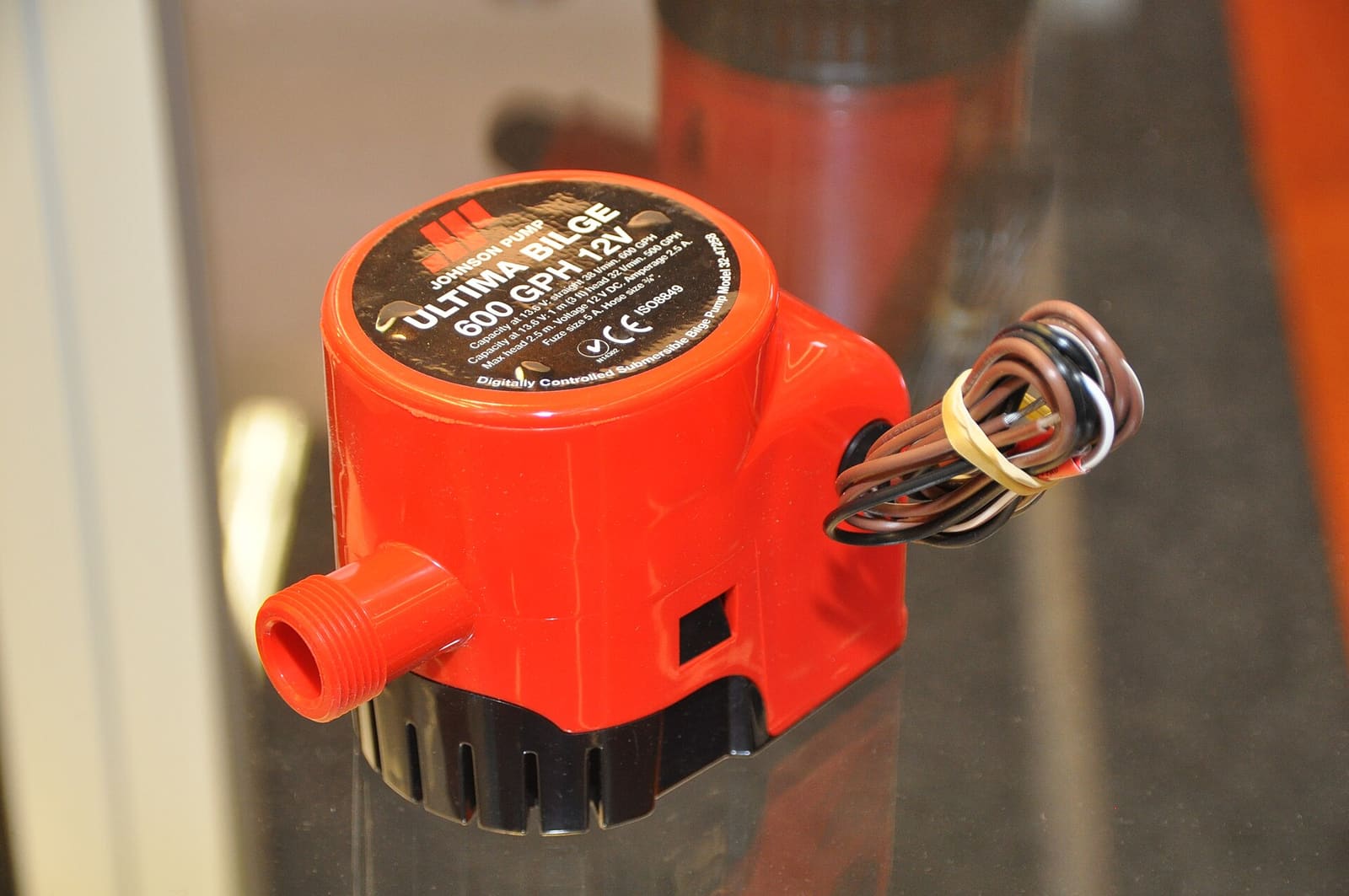
How to Test and Clean Your Bilge Pump and Float Switch
Make sure your bilge pump actually moves water overboard, both on the manual switch and automatically through the float switch. A working bilge pump is one of the most important safety systems on any boat that stays in the water.
What to Do When Your Boat Is Taking On Water: Emergency Steps and Prevention
A step-by-step emergency plan for water coming into the boat - life jackets on, call for help early on VHF 16, find and slow the leak, pump, and head for shallow water if needed - plus the maintenance checklist that prevents most sinkings.
How to Check, Adjust and Repack a Stuffing Box (and Care for a Dripless Shaft Seal)
Learn the right drip rate for a traditional packing gland, how to adjust it safely, when to repack it, and how to inspect and service a dripless shaft seal. The shaft seal is one of the few holes in an inboard boat that moves, and a neglected one can sink a boat at the dock.
How to Inspect and Exercise Seacocks, Through-Hulls and Hose Clamps
Check every hole in your hull below the waterline, work each seacock open and closed, and inspect the hoses and clamps attached to them. A single failed fitting or hose is one of the most common reasons boats sink at the dock.
How to Inspect and Clean a Raw-Water (Sea) Strainer
The sea strainer is the cheap screen that keeps weeds, shells and plastic out of your engine, generator and A/C pumps. Learn how to clean it safely with the seacock closed, reseal the lid so it can't suck air, spot a cracked bowl before it floods the boat, and winterize it.
How to Fix Leaking Hatches and Portlights
Find out whether a leaking deck hatch or portlight is failing at the gasket, the lens or the frame, then fix it with the right seal or sealant. Learn when crazed or cracked acrylic needs a new lens and what never to put on plastic windows.
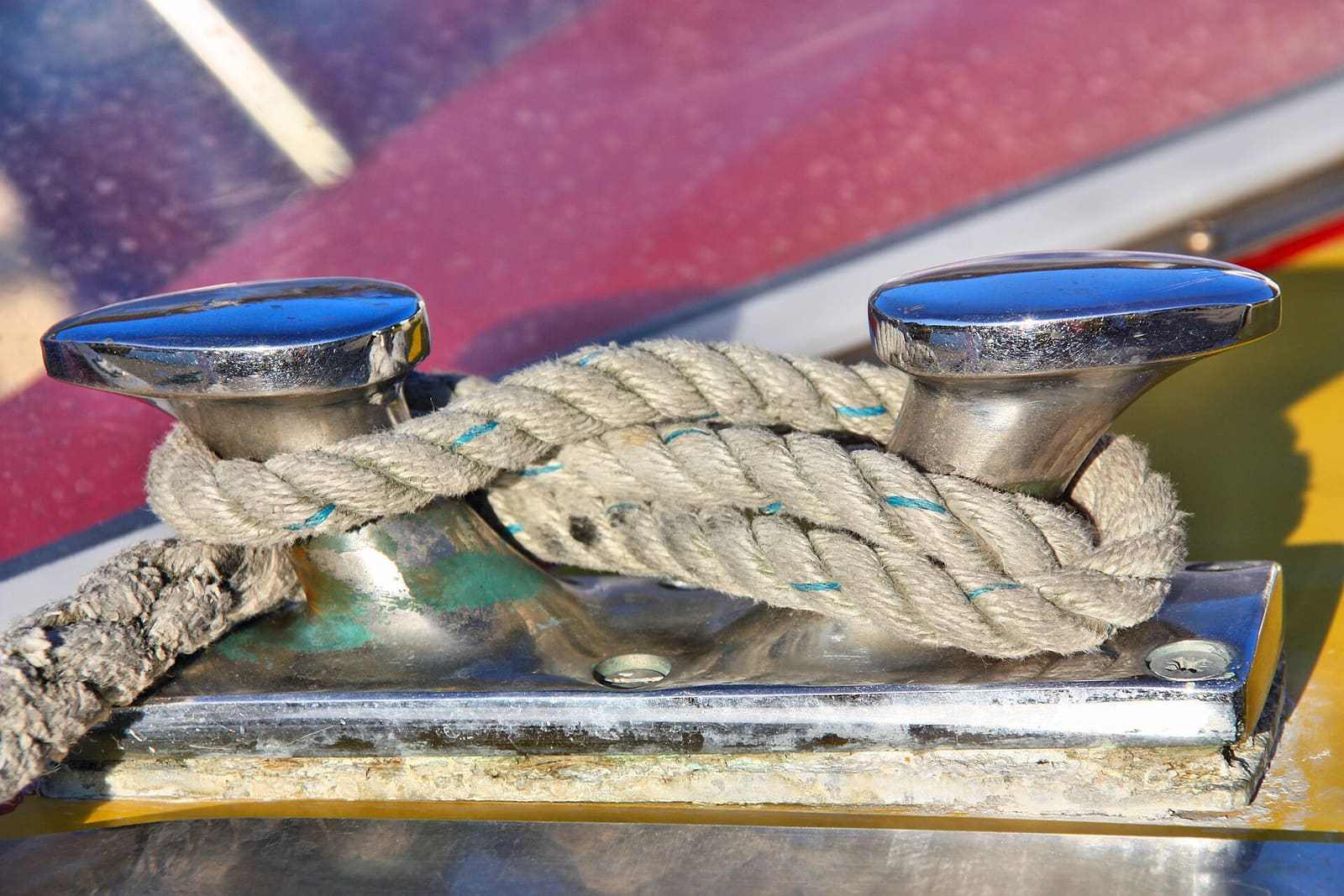
How to Find and Fix Leaking Deck Hardware (Rebedding Cleats, Stanchions and Tracks)
Track down the cleat, stanchion base or track that is dripping into the cabin, then remove it, seal the deck core and bed it again with the right sealant so the leak stops for years instead of weeks. Catching it early protects the deck core from rot.
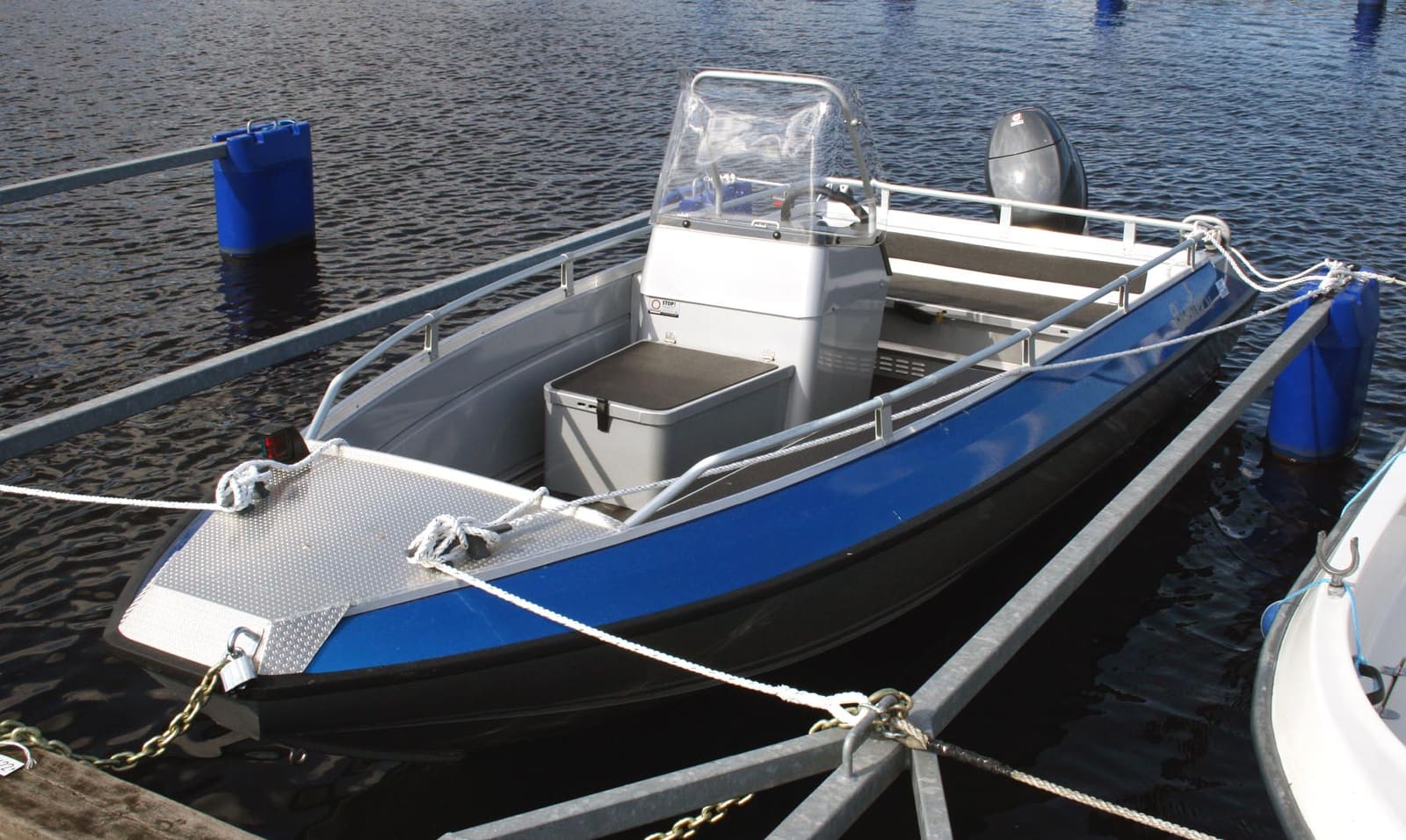
How to Inspect and Clear Cockpit Scuppers and Deck Drains
Most boats that sink at the dock fill up from the top, through clogged scuppers, cracked drain hoses and leaky hatches during a heavy rain. Learn how to trace every drain, clear clogs, check flappers, hoses and clamps, flood-test the cockpit and keep drains working in freezing weather.
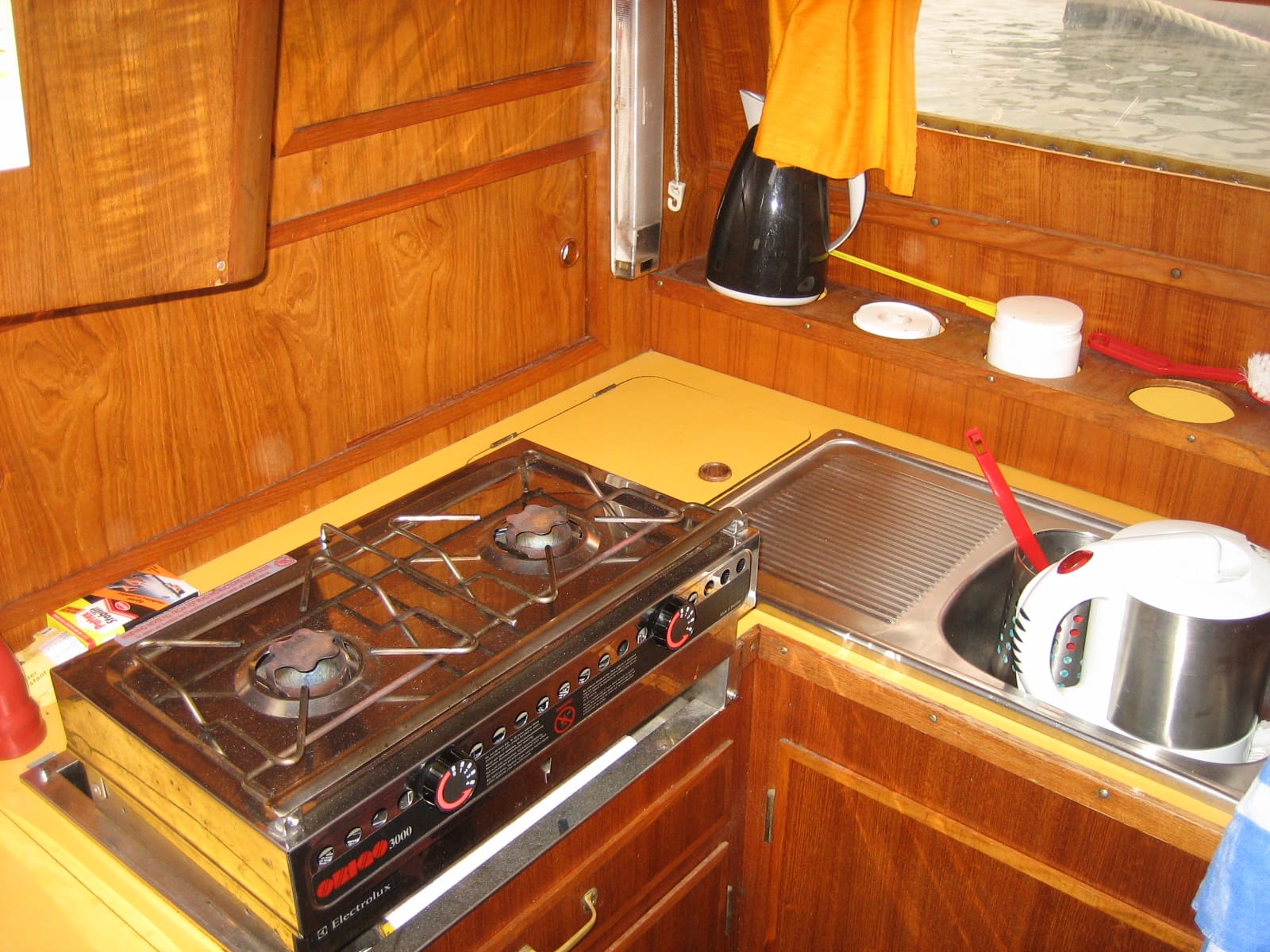
Freshwater Pump Troubleshooting: Cycling, Won't Shut Off or No Water
When the pressure water pump keeps cycling at night, runs nonstop or sputters air, the cause is usually simple: an empty tank, a dripping fixture, a clogged strainer, air in the lines or a tired accumulator. Work from the cheapest checks to the pressure switch and pump, and learn the basics of replacing a pump.
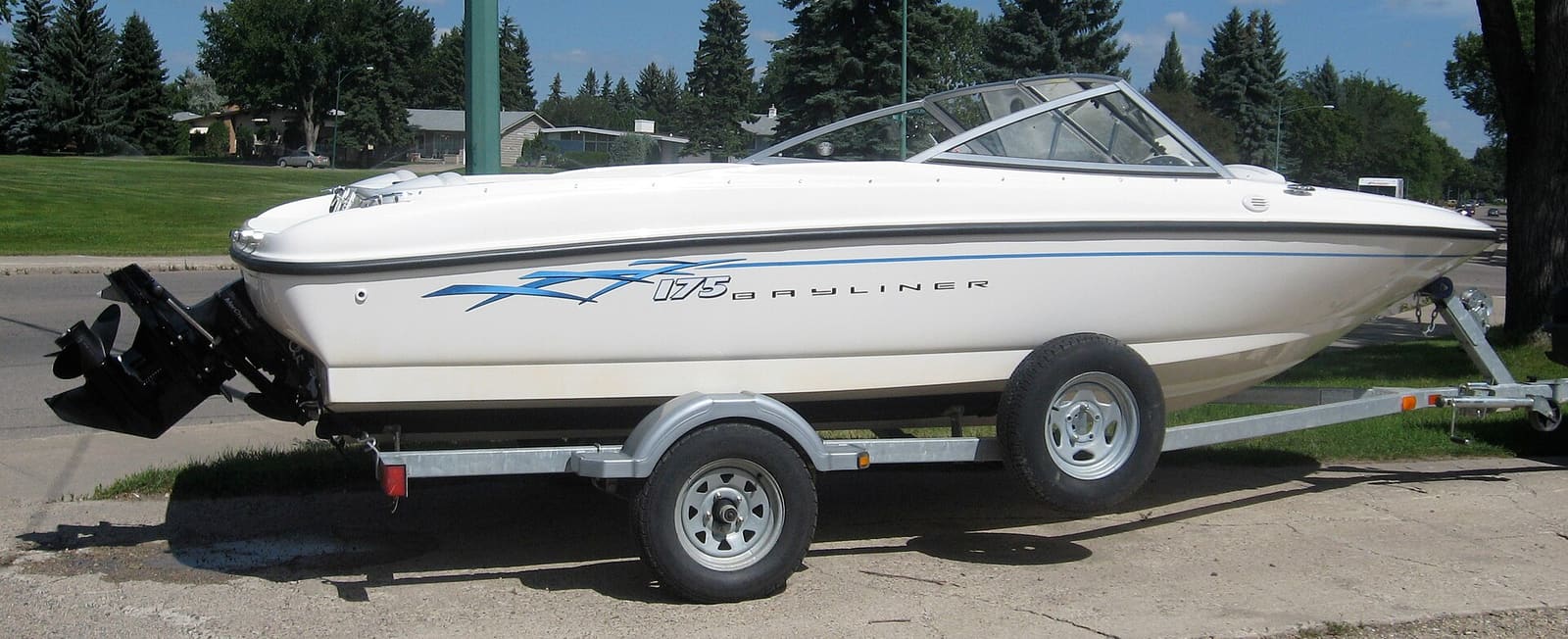
How to Inspect Sterndrive Bellows, Gimbal Bearing, U-Joints and Shift Cable
Learn to spot a cracked sterndrive bellows before it lets water into the boat, and to recognize the warning signs of a worn gimbal bearing, U-joints and shift cable. A failed bellows is one of the top reasons boats sink at the dock, and a 20-minute inspection can catch it.
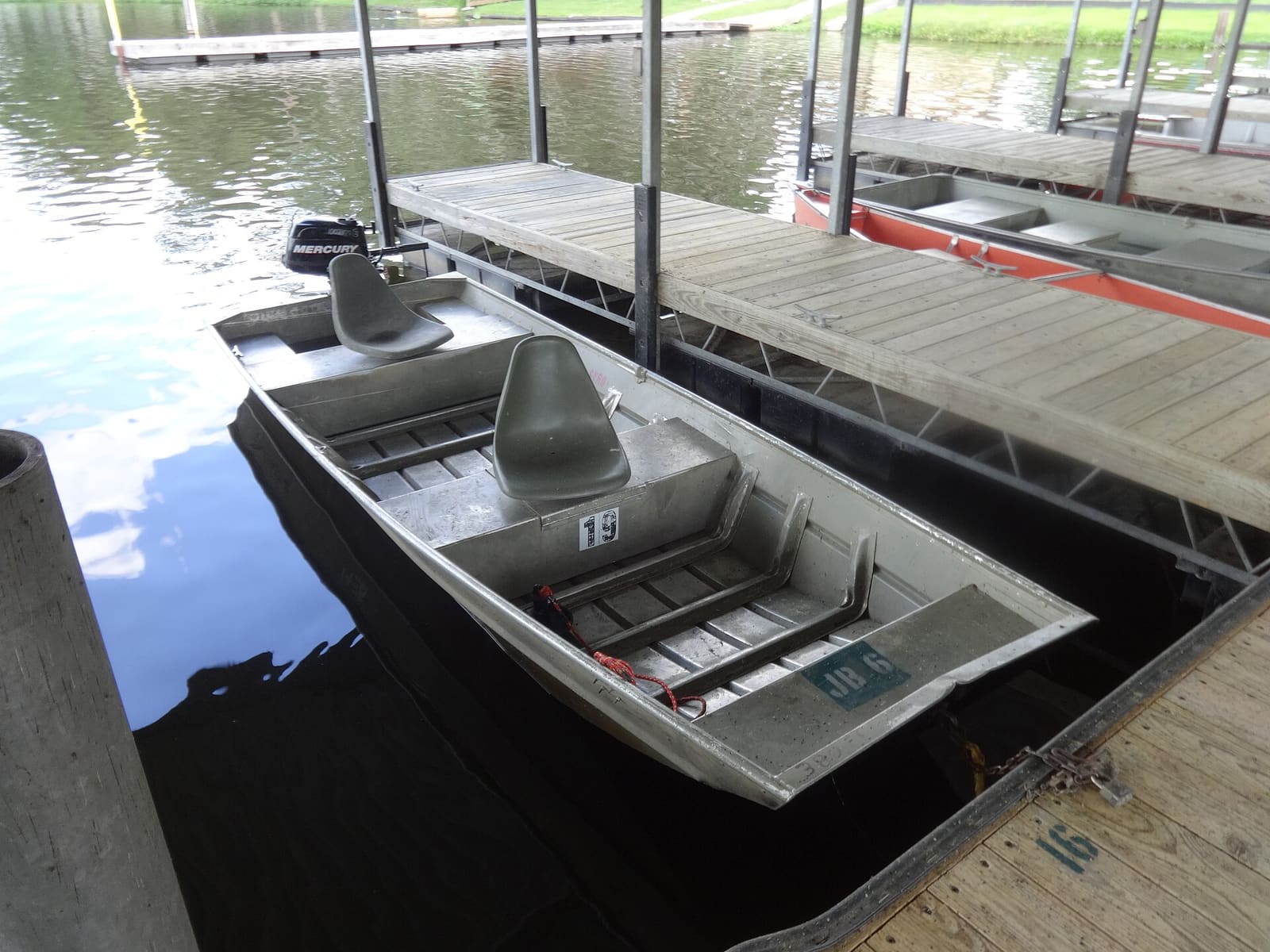
How to Find and Fix Leaking Rivets on an Aluminum Boat
Almost every older riveted aluminum boat weeps a little water. Learn how to find the leaking rivets, tighten the ones that are loose, seal the rest with a flexible epoxy, replace the bad ones the right way, and know when a crack or corrosion needs a welder.
How to Install a Backup Bilge Pump and High-Water Alarm
Add a second, larger automatic bilge pump mounted above the primary, with its own overboard discharge and a loud high-water alarm wired so it works even with the battery switch off, then test it every month so it buys you real time if the boat starts taking on water.
How to Keep a Dry Bilge, Including Dry Bilge Pump Systems
Standing water in the bilge causes odors, mildew and corrosion, and hides new leaks. Learn why your main pump leaves water behind and how to get rid of the last inch: cut the sources, clear limber holes, route AC condensate and showers to a sump, and add a small self-priming diaphragm pump if needed.