How to Inspect and Clear Cockpit Scuppers and Deck Drains
Most boats that sink at the dock fill up from the top, through clogged scuppers, cracked drain hoses and leaky hatches during a heavy rain. Learn how to trace every drain, clear clogs, check flappers, hoses and clamps, flood-test the cockpit and keep drains working in freezing weather.
Time
1 h
Shop would charge
$100-400
Applies to
All engines
Safety first: Some cockpit drain hoses end at through-hulls below the waterline. Never loosen a clamp or pull a hose off a fitting below the waterline unless its seacock is closed (or the boat is out of the water). If water is coming in faster than the bilge pump can handle, get everyone safe and call VHF channel 16, TowBoatUS, Sea Tow or 911.
Owners often ask
- My cockpit fills with rain and drains really slowly. How do I clear the scuppers?
- Are flapper scuppers enough to keep water from coming back into my cockpit?
This guide walks you through it. Still stuck? Ask the AI Mechanic about your engine.
Tools
- Flashlight or headlamp
- Garden hose and a bucket
- Flexible plastic drain snake or a length of stiff plastic tubing (no sharp metal tools)
- Screwdrivers or nut driver for hose clamps
- Inspection mirror
- Rubber gloves
Parts & supplies
- Stainless steel hose clamps in the right sizes
- Replacement scupper flappers or check valves (if worn)
- Reinforced hose of the type and size your builder used (if a hose is cracked)
- Hatch gaskets (if missing or flattened)
Before you start
A self-bailing cockpit is supposed to shed rain and spray overboard on its own. When drains clog, hoses crack or hatches leak, that water goes into the bilge instead, and the boat sits lower. BoatUS found that in its claim files most boats sink at the dock or on a mooring, and after one Jersey Shore downpour every sunken boat it examined had overwhelmed scuppers or deck drains, gutters and hatches that let water into the bilge. Its advice is blunt: bilge pumps are for nuisance water; the job is to keep the water out.
Know the parts:
- Scuppers are the openings that let deck water out, often right through the transom or hull side near deck level. Many have a rubber flapper or a check ball on the outside so seawater can't flow back in; Perko's scuppers, for example, come with soft flappers or a rubber check ball.
- Cockpit and deck drains are grated holes in the sole or gutters that feed hoses running to through-hulls. On many sailboats and some powerboats these exit below the waterline and have seacocks.
- Gutters and hatch drains catch water around hatches, lids and the engine well and route it to a drain.
Do a full check every spring and before hurricane season or a long absence, plus a quick look after every heavy storm. You'll need to see the outside of the hull at the transom, so a dock, a dinghy or the trailer helps.
Steps
Start in the cockpit and on deck. Find each drain grate, gutter and scupper, then go below or open the hatches and follow its hose to where it leaves the boat. Write down which ones exit above the waterline and which exit below, and which have seacocks. If any drain hose ends in the bilge instead of going overboard, note it: BoatUS calls deck drains that empty into the bilge a recipe for disaster, because the boat then depends on the bilge pump and battery to stay afloat.
With the boat floating at its normal load, look at the transom. How far above the waterline are the scupper openings? BoatUS says cockpit decks are meant to sit a minimum of four inches above the waterline but many don't, and that a repower with a heavier four-stroke, a loaded fish box, an anchor and chain in the stern or a few coolers can push scuppers to or below the waterline. A boat with floating-ball scuppers added to stop back-flooding is a warning sign that its scuppers are too low. If yours are close to the water, keep heavy gear forward and talk to a surveyor.
Lift or unscrew the grates and pull out leaves, sand, fishing line, bait scraps and bottle caps. Flush each drain with a garden hose. If water backs up, push a flexible plastic snake or stiff tubing down the hose gently. Skip screwdrivers and coat hangers: they can puncture a hose you can't see.
From outside the hull, look at each scupper outlet. A flapper should be soft, lie flat and swing open easily. Replace it if it's torn, hard, curled or crusted with growth that holds it open. Pour water into the drain and make sure it opens and lets the water out. Aftermarket one-way scuppers come in three main styles, BoatUS notes: duckbill, flapper and ball. Many ball-style units twist or unscrew from their base so you can clear leaves trapped behind the ball; whatever the style, check it regularly for debris that holds it open. If you swap a worn scupper valve for a new one, bed it with marine sealant and use the maker's fasteners and instructions. Remember what BoatUS points out: ball-style and flapper scuppers help with back-splash, but they are not designed to keep a boat afloat.
Follow each hose with a flashlight and squeeze it along its length. Look for cracks, a brittle or chalky feel, soft spots, kinks and low sags that hold water and dirt. BoatUS says thin corrugated plastic hose is a poor choice for scupper drains and has no place below the waterline, and that many hoses on aging boats are well past their design life. Replace bad hose with reinforced hose of the type and size your builder specifies.
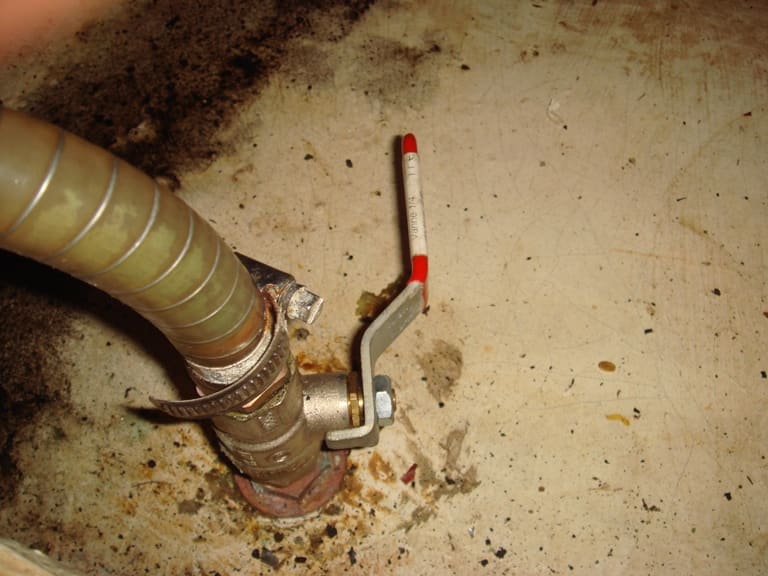
A below-waterline fitting with its hose and clamp. A hose is only as good as its clamps: look for rust like this and replace it with all-stainless clamps. Photo: PHGCOM / Wikimedia Commons · CC BY-SA 3.0 In BoatUS's sinking files, the cockpit-drain problems were missing hose clamps, broken drain fittings, broken through-hulls and loose hoses, and on some small powerboats a hose was never connected to the drain at the factory. Make sure every hose is pushed fully onto its fitting and held with tight, all-stainless clamps with no rust. Where the hose barb is long enough, BoatUS recommends two clamps with the screws on opposite sides; if it's too short for two, use one good clamp rather than a second one that cuts the hose.
If a drain exits below the waterline, its seacock should open and close smoothly through its full travel; BoatUS suggests exercising seacocks monthly. Look for weeping, green or pink corrosion and a handle blocked by gear. Many cockpit drain seacocks are meant to stay open so rain can drain; follow your builder's guidance, and make sure the hose and clamps are sound so leaving it open is safe.
Close any hatches, then flood the cockpit with a garden hose or a few buckets of water. BoatUS recommends exactly this: inundate the suspect areas and see where the water goes. Time how long the cockpit takes to drain, then go below with a flashlight and look at every drain hose, fitting and the bilge for new water. Do the same for the deck gutters, the anchor locker and the engine well. If the bilge still fills after rain and the drains test fine, keep hosing one area at a time: rub rail joints, deck hardware and rail bases, windshield seals, engine-bay vents and the anchor locker drain hose all let rain in on older boats. A slow drain usually means a partial clog; water in the bilge means a leak you need to find.
BoatUS blamed most of those dockside rain sinkings on hatches that weren't gasketed, weren't sealed or weren't dogged down, often hatches right in front of the outboard well. Check that every deck hatch and inspection port has a gasket that isn't flattened or torn, that its gutter drain is clear, and that it latches tight. Dog them down every time you leave the boat. Screw-in inspection ports count too: the BoatUS Foundation describes a boat whose motor-well access port had been opened and never resealed, so rain trickled into the bilge until it overwhelmed the pump.
If you can't see a drain hose or its through-hull, you can't know it's failing. BoatUS suggests creating access where needed and covering the opening with a watertight deck hatch or inspection port. Get help with this if it means cutting into a deck or liner.
Before you leave the boat, clear the drains, dog the hatches, and make sure the bilge pump works and its battery is charged. If you use a cover, make sure it can't sag and hold a pool of rain: BoatUS describes a boat whose cover filled with rainwater until it sank. Keep weight out of the stern: move heavy gear forward and pump out livewells and fish boxes, which BoatUS also lists as contributors.
Ice and snow can block scuppers and drains just like leaves, and a frozen flapper can stick shut. Water trapped in a sagging drain hose can freeze and crack it, and you won't see the leak until it thaws. On a boat with a cabin, BoatUS warns that a cockpit drain clogged with leaves or ice can back water up and into the cabin, which is how winter mold problems start; and fittings that never leak can drip for days while heavy snow slowly melts, so look below after a big snowfall. If the boat stays in the water over winter, clear snow and ice from the cockpit and drains after every storm. If it's stored ashore, BoatUS suggests leaving the cockpit drain seacock open so rain and meltwater can drain, and visiting every few weeks to be sure drains haven't clogged. A well-supported winter cover keeps most of the snow out of the cockpit to begin with.
Common mistakes
- Assuming a "self-bailing" cockpit drains overboard without ever tracing the hoses.
- Leaving deck hatches undogged or without gaskets when the boat sits at the dock.
- Poking out a clog with a metal tool and puncturing a hidden hose.
- Trusting float-ball scuppers or flappers to keep a low-sitting boat afloat.
- Loading the stern with a heavier engine, gear, ice and anchor chain until the scuppers sit in the water.
- Replacing a cracked drain hose with thin corrugated hose.
- Counting on the bilge pump to handle rain for days while the boat sits unattended.
When to call a pro
- Water is coming in through a drain fitting, hose or through-hull and you can't stop it (close the seacock if there is one; call VHF 16, TowBoatUS, Sea Tow or 911)
- A drain hose runs below the waterline and needs replacing, but you can't reach it or close its seacock
- Your scuppers sit at or below the waterline at normal load, or a drain empties into the bilge
- A through-hull or drain fitting is cracked, corroded or loose in the hull
- You need to cut an access hatch into a deck or liner
Tips
- Keep a small plastic snake and a few spare clamps aboard; most drain problems are a five-minute fix if you catch them early.
- Rinse the cockpit with fresh water after fishing so scales, bait and line don't settle in the drains.
- A high-water bilge alarm tells you when water is getting in faster than it should, before it becomes a sinking.
- If the bilge pump runs after every rain, don't just be glad it works. The BoatUS Foundation's point is that a pump emptying the bilge can hide a problem until it clogs or the battery dies; ask where the water is coming from and trace it with the flood test (step 8).
- After a repower or adding heavy gear aft, look at the scuppers with the boat loaded the way you normally use it.
Official references
We read these to write this guide. Your engine's own manual always wins.
- BoatUS – When It Rains, Boats Sink
- BoatUS – Keeping Your Boat Afloat (sinking claims analysis)
- BoatUS – Seacocks (2025)
- BoatUS – Choosing the Correct Boat Hose
- BoatUS – How to Winterize Boat Plumbing
- BoatUS Foundation – Preventative Maintenance (scuppers and drains, motor wells)
- Perko – Scuppers (underwater hardware catalog)
- BoatUS – How To Install A One-Way Scupper Valve
- BoatUS – Preventing Mold And Mildew (clogged scuppers and snow melt)
Safety: BoatMend is for information only and does not replace a certified marine technician. You are responsible for your safety and your boat. Read the full disclaimer.
Last updated 2026-10-24
Related guides
How to Inspect and Exercise Seacocks, Through-Hulls and Hose Clamps
Check every hole in your hull below the waterline, work each seacock open and closed, and inspect the hoses and clamps attached to them. A single failed fitting or hose is one of the most common reasons boats sink at the dock.
How to Test and Clean Your Bilge Pump and Float Switch
Make sure your bilge pump actually moves water overboard, both on the manual switch and automatically through the float switch. A working bilge pump is one of the most important safety systems on any boat that stays in the water.
How to Install a Backup Bilge Pump and High-Water Alarm
Add a second, larger automatic bilge pump mounted above the primary, with its own overboard discharge and a loud high-water alarm wired so it works even with the battery switch off, then test it every month so it buys you real time if the boat starts taking on water.
What to Do When Your Boat Is Taking On Water: Emergency Steps and Prevention
A step-by-step emergency plan for water coming into the boat - life jackets on, call for help early on VHF 16, find and slow the leak, pump, and head for shallow water if needed - plus the maintenance checklist that prevents most sinkings.
How to Fix Leaking Hatches and Portlights
Find out whether a leaking deck hatch or portlight is failing at the gasket, the lens or the frame, then fix it with the right seal or sealant. Learn when crazed or cracked acrylic needs a new lens and what never to put on plastic windows.

Winter Boat Cover vs Shrink Wrap: Support, Ventilation, Safety and Spring Removal
Choose between a reusable winter cover and shrink wrap, build a support frame that sheds snow, vent it so the boat doesn't mildew, and know the fire risks before you try DIY shrink wrap. Includes spring removal and recycling.
How to Keep Your Boat in the Water Over Winter (De-Icers, Covers and Checks)
Wintering afloat can be safe if you still winterize every water system, keep the bilge pump and batteries working, use a de-icer correctly on a GFCI-protected circuit, respect the shock and thin-ice risks, and visit the boat regularly.

How to Prepare Your Boat for a Hurricane or Tropical Storm
Make a written storm plan before the season, then haul out or secure the boat with doubled lines and chafe gear, strip off everything that catches wind, and check it safely after the storm. Never ride out a hurricane aboard.
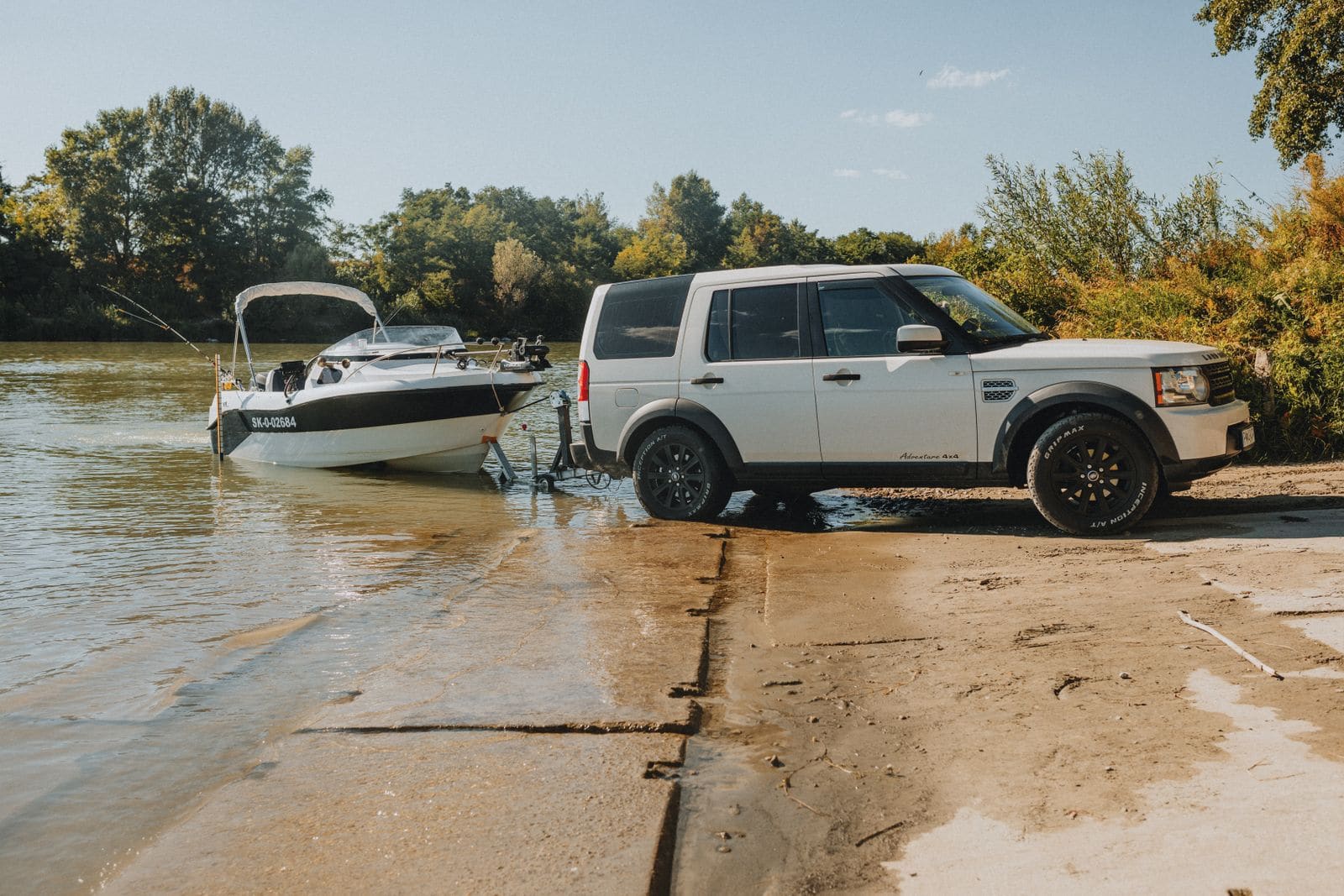
Launch Day and Haul-Out Checklist for Trailer Boats
A step-by-step checklist for getting your boat off the trailer and back on again safely and quickly, from the drain plug and tie-downs to the blower and ramp etiquette. Following it in order prevents the classic mistakes that sink boats and back up the ramp.