Converting an Outboard from Prop to Jet: Hull Fit, Mounting Height, Power Loss and Cost
Swapping your outboard's gearcase for a jet pump lets you run rocky, ankle-deep rivers, but it costs power and only works on the right hull. Learn which boats suit a jet, why the motor has to go higher on the transom, how much thrust you give up, and when buying a factory jet outboard makes more sense than converting.
Time
4 h
Shop would charge
$1500-5000
Applies to
Outboard, Jet boat · Fishing boat, Jet boat
Safety first: A conversion changes how the boat steers and stops. A jet only steers while it is pushing water, so if you chop the throttle in a tight spot, the boat keeps sliding where it was pointed. Practice in open, deep water before you run a river, and everyone aboard should wear a life jacket in fast or shallow water. Removing a gearcase and raising a motor on the transom is heavy work: support the motor properly and never put any part of your body under a motor held up only by its trim. If a rock strike lets water into the boat, head for shore and call 911 or the Coast Guard on VHF 16.
Owners often ask
- Can I convert my prop outboard to a jet, and how much power will I lose?
- Will a jet outboard work on my deep-V fiberglass boat?
This guide walks you through it. Still stuck? Ask the AI Mechanic about your engine.
Tools
- Tape measure and a straightedge long enough to span the hull bottom at the transom
- Notebook or the BoatMend log for your current rpm, speed and load
- Camera or phone to photograph the transom, hull bottom and motor tags
- Socket set and the outboard's service manual (if you will remove the gearcase yourself)
Parts & supplies
- Jet drive kit made for your exact motor make, model, year and shaft length
- Transom riser block or manual jackplate, if your kit maker calls for one
- Shift cable or shift rod parts for the reverse gate, as the kit instructions list
- Grease and grease gun specified for the jet pump bearing
Before you start
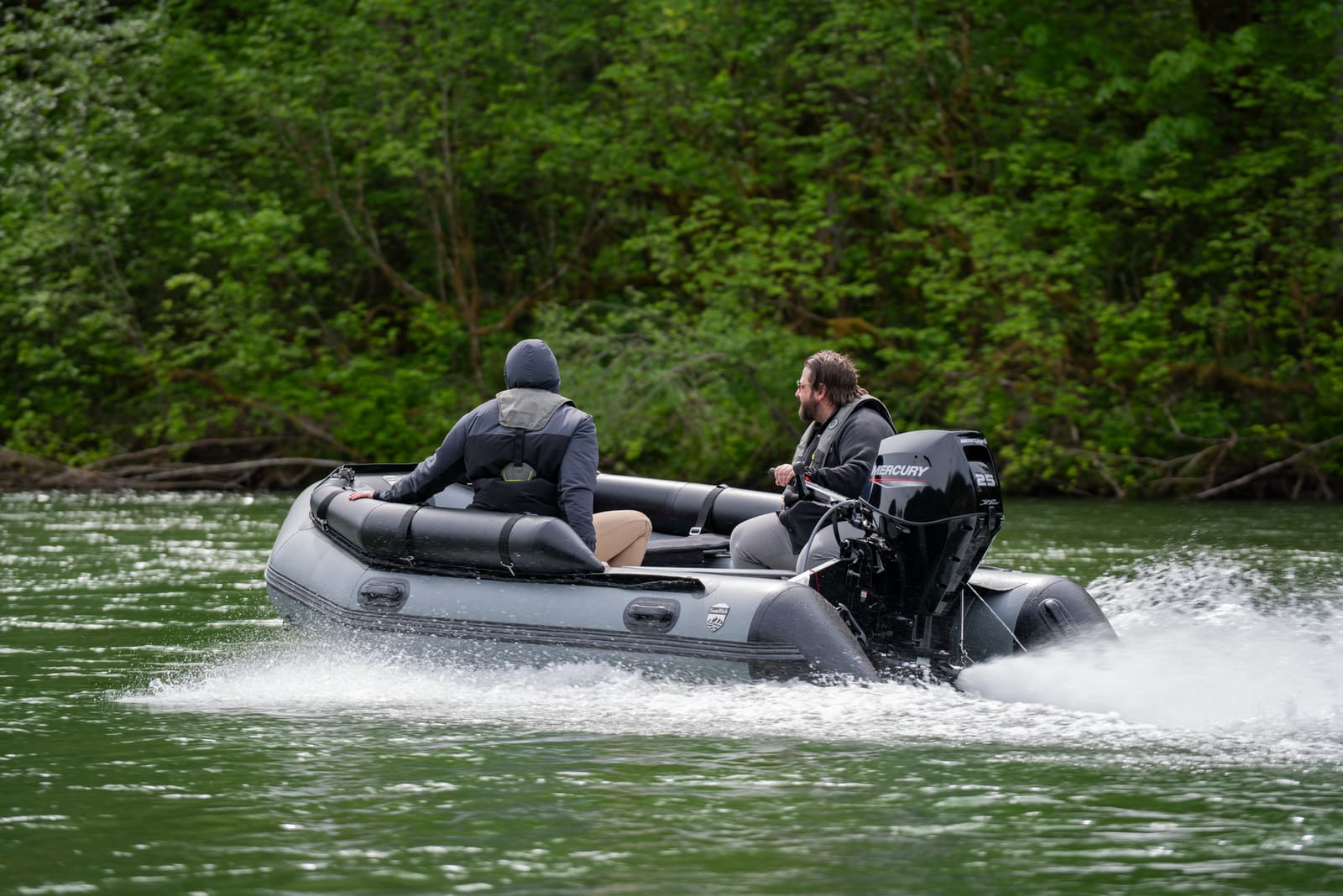
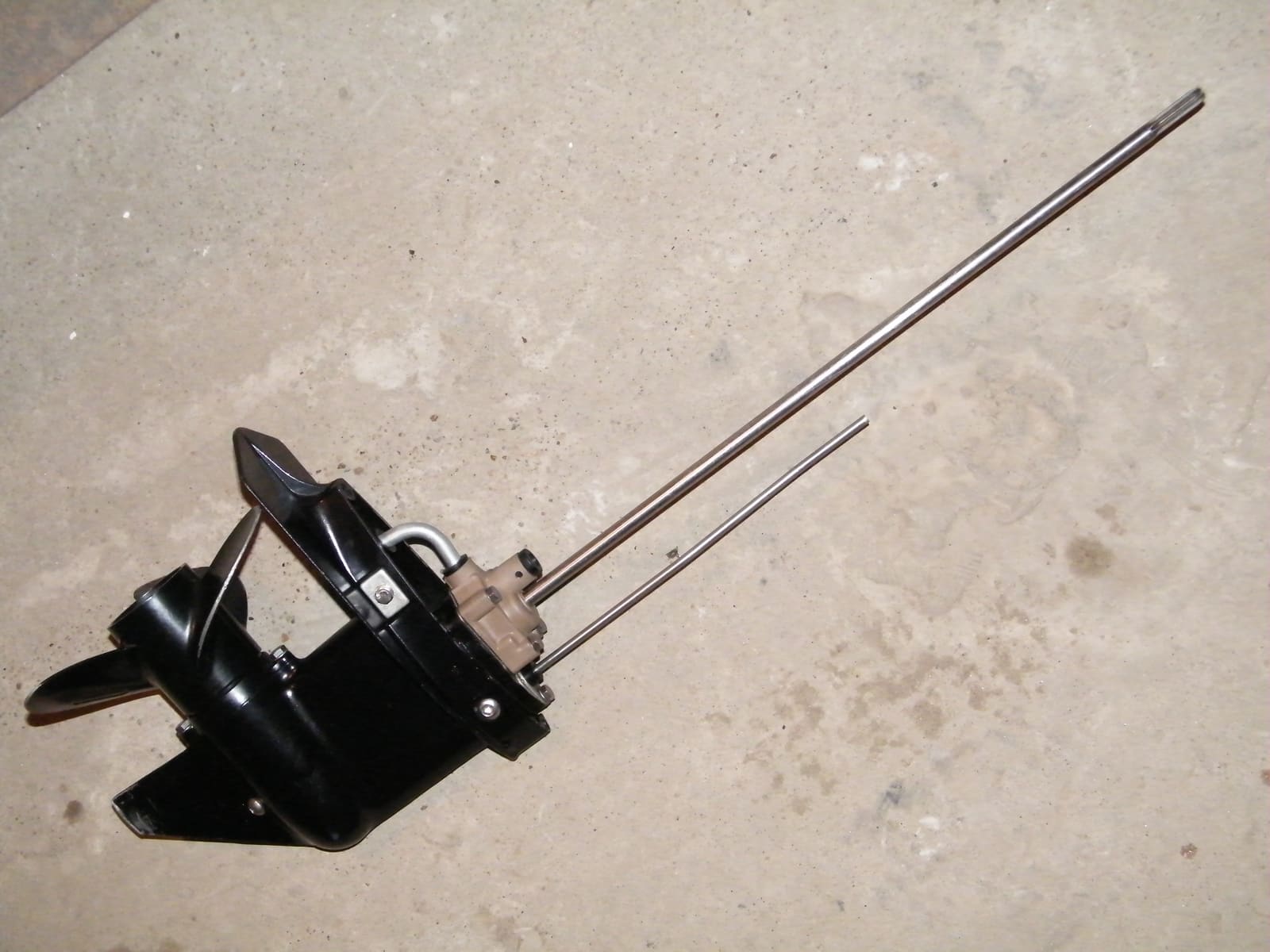
What a conversion is. Your powerhead and midsection stay the same. The gearcase (lower unit), with its gears, propeller and skeg, comes off, and a jet pump bolts on in its place. Water comes up through a grate under the pump, an impeller on the driveshaft spins it fast, and it leaves through a nozzle at the back. A gate swings down over the nozzle for neutral and reverse. Bass Pro's guide to shallow-draft boats notes that most jet outboards on rivers are converted by a local dealer this way rather than bought as jets.
Why people do it. Bass Pro notes the intake hangs only an inch or two below the hull, so a jet boat can run shallow riffles where a prop would hit bottom. There is no prop to break on rocks, and no prop to injure a swimmer, which is why Honda pointed to first responders in Boating magazine.
What you give up. A pump is less efficient than a prop, so a lot of the engine's power never reaches the water. The factory numbers show how much:
- Yamaha rates its jets by "power at the pump": the 150 hp jet makes 105 hp at the pump, the 115 makes 80, the 90 makes 65, the 60 makes 40 and the 40 makes 30.
- Honda labels its jets by expected performance. Boating magazine reported that the Honda 40 jet uses the 60 hp powerhead, the 65 jet the 90 hp and the 105 jet the 150 hp.
So expect roughly two-thirds to three-quarters of your engine's rating to show up as thrust. Your converted 60 will feel like a 40-something, with less top speed and more fuel per mile. That is normal, not a fault.
This is a dealer-level job. This guide helps you decide whether a conversion makes sense and what to ask for. The jet kit maker's instructions give every height, clearance and setup figure, and a dealer who rigs jets should do or check the install.
Steps
Be honest about where you boat. A jet shines on rocky, shallow, clear rivers. If you mostly run lakes or deep water and only touch bottom now and then, a prop with a jackplate, a shallow-water anchor or simply learning the river may serve you better. Jets also don't troll well, because they are designed to run on plane; most river anglers who troll use a separate electric trolling motor.
A jet needs a steady supply of solid, air-free water flowing into the intake. That depends on the hull more than anything else.
- Best: a flat bottom or a modified V with a small deadrise. Bass Pro singles out welded aluminum jon boats with about 6 to 10 degrees of deadrise as ideal.
- Poor: a true deep-V. Honda's field service manager told Boating magazine that jets work on flat bottoms or boats with a little V, but not on a true deep-V.
- Watch for: a center keel, strakes or a big dent right ahead of the motor, all of which can feed air to the intake.
Yamaha markets its larger jets for some deck boats and V-hulls, so makers don't all say the same thing. If your boat is anything other than a flat or mild-V aluminum hull, ask a dealer who rigs jets before you buy a kit.
Because a jet delivers less push, weight matters more than with a prop. Add up the boat, motor, fuel, battery, gear and the people you normally carry. A heavy boat that barely planes with a prop may never plane properly with a jet. Planing quickly matters, because a jet running slowly off plane pulls gravel up into the pump. Bass Pro also notes hull thickness: a heavier-gauge welded hull is less likely to open up on a rock strike, but it also adds weight.
Before anything changes, record wide-open-throttle rpm, top speed by GPS and how long it takes to plane with a typical load. These numbers help the dealer pick the right impeller and let you judge the result honestly afterward.
Jet pumps are not universal. The kit has to match your motor's make, model, year, shaft length, driveshaft and shift linkage. Write down the motor's model and serial tags (see the engine serial number guide) before you shop. Ask the kit maker or dealer about:
- Shaft length: the jet must match your motor's existing shaft length. You can't fit a short-shaft jet to a long-shaft motor to avoid raising it.
- Shift system: the reverse gate is worked by your shift cable or a shift rod. Motors with digital (drive-by-wire) shift may not be compatible with aftermarket jets.
- Cooling water pump: most kits reuse the motor's own water pump, but some models need a different pump housing.
This is the part owners most often underestimate. A jet pump hangs lower than a gearcase's water intake needs to be, so the whole motor has to go up on the transom until the front edge of the intake is roughly level with the bottom of the hull, as your kit instructions describe. That usually means a riser block or a jackplate. Two things follow:
- If the motor moves aft on a jackplate, the hull bottom may need a short extension plate so the intake still gets clean water.
- The transom has to carry the motor at a new height. Check that the transom is solid and that the mounting bolts land in sound, backed structure (see the transom stringer rot check guide).
The exact height is set during setup and fine-tuned on the water. Leave that to the installer, using the kit maker's figures.
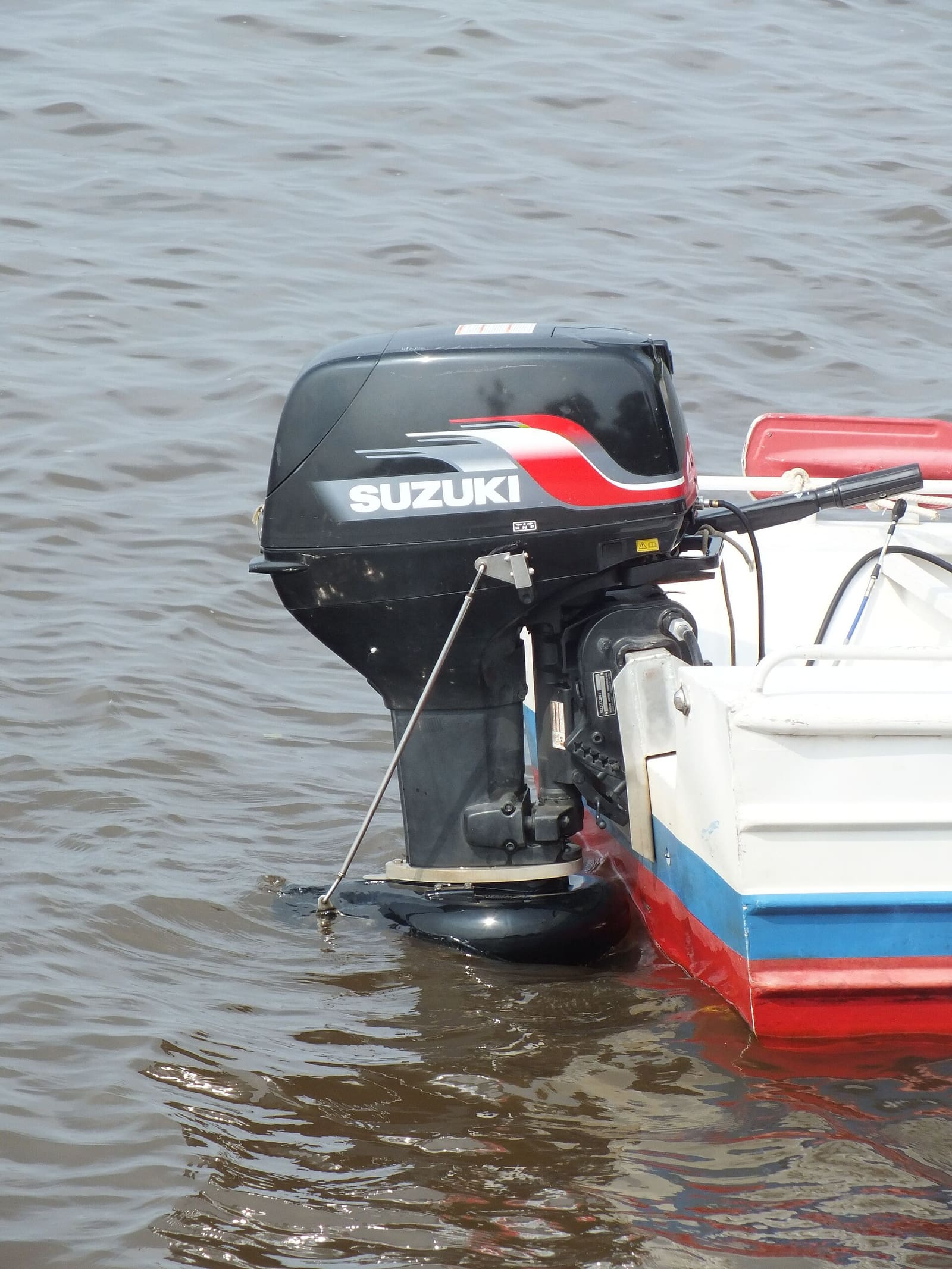
A converted tiller motor: the jet pump replaces the gearcase and sits just below the hull bottom. Photo: Andshel / Wikimedia Commons · CC BY-SA 3.0 Price both paths before you decide:
- Converting: the kit, a riser or jackplate, shift parts, dealer labor and possibly transom work. Your existing motor must be in good health; a tired powerhead is a poor place to spend jet money.
- Buying a factory jet: Mercury, Yamaha, Honda and others sell jet outboards ready to bolt on. In 2018 Boating listed Honda's 40 jet at $11,360. A factory jet comes with the right pump, setup data and, often, warranty that covers the pump; Honda's covered both powerhead and pump.
When you compare, read the factory spec sheets for the details a kit won't change on your old motor. Mercury, for example, lists a stainless impeller on its 25 to 40 hp jets (it says stainless stands up better to abrasive debris) and a charging output of 17 to 18 amps on those models. Yamaha lists which transom height each of its jets fits: 25-inch transoms for its 60 to 150 hp jets and 20-inch for the 40. Check that against your boat before you price anything.
Ask the dealer how a conversion affects your engine's warranty before you do it on a newer motor.
Store the removed gearcase clean, drained or filled per the service manual, and protected from freezing. Some owners switch between prop and jet with the seasons; others sell the motor later as a prop outboard. Either way, a kept gearcase is worth money.
A good installer will:
- mount the motor at the starting height in the kit instructions
- connect and adjust the shift linkage so the gate locks fully in forward and works through neutral and reverse
- set the impeller clearance (see the jet impeller shimming guide)
- grease the pump bearing
- sea trial the boat and adjust height until it runs cleanly without sucking air
Practice in open water. You need some throttle to steer, and docking takes a different touch. Practice your stopping: shift to neutral or reverse with the gate, not by just letting off the throttle. Get used to how the boat slides in turns, especially on a flat bottom.
After the first few trips, check:
- Rpm jumps and the boat slows, especially in turns or chop: the pump is getting air. The motor may be too high, or the hull ahead of the intake is feeding bubbles.
- Lots of spray up the transom and extra drag: the motor may be too low.
- Wide-open rpm well below the kit maker's range: the gate may not be locking fully in forward, or the impeller doesn't suit the load.
Take these notes back to the installer. Small height changes make a big difference.
Once converted, your maintenance changes. There is no gearcase oil, but the pump bearing needs frequent grease, the grate and impeller need regular checks, and the impeller clearance grows as gravel wears it. Follow the jet outboard care guide and your kit's manual. Outlaw Eagle, a river jet boat builder, lists greasing the bearings every 10 to 20 hours, more in harsh conditions; follow your own kit's schedule.
Common mistakes
- Converting a deep-V or heavy fiberglass boat and expecting it to plane like a jon boat
- Bolting the jet on at the old prop height, so the intake sucks air
- Forgetting the 30-or-so percent power loss and being disappointed by top speed
- Buying a kit by horsepower alone instead of the exact motor model, year and shaft length
- Converting a tired motor that should have been replaced
- Assuming a jet can troll or idle across gravel bars like a prop boat drifts
- Ignoring the transom: raising the motor puts new loads on old wood and bolts
When to call a pro
- Choosing the kit and impeller, and any jackplate, riser or hull extension work
- Setting mounting height and shift linkage (the gate must lock fully in forward)
- Any doubt about transom strength or soft spots
- Motors with digital shift or under warranty
- Repeated air sucking, overheating or low rpm after setup
Tips
- Ride in a friend's jet boat on your own river before you spend money.
- Ask the dealer what impeller they recommend for your weight and elevation; altitude and load both change the ideal choice.
- Keep a log of rpm, speed and load after the conversion. It is your baseline for spotting impeller wear later.
- A bow-mounted electric trolling motor is the usual answer for slow fishing with a jet boat.
Official references
We read these to write this guide. Your engine's own manual always wins.
- Yamaha Outboards – Jet Drive Outboards (power at the pump, transom fit)
- Boating Magazine – Honda Jet Outboards (deep-V hulls, rated by pump output, 2018)
- Bass Pro Shops 1Source – Shallow-Draft Boats & Jet Units
- Mercury Marine – Jet Outboards (25-105hp)
- Outlaw Eagle – Jet Pump Maintenance (river jet boat builder, 2025)
- Mercury Marine – Jet 25-40hp (stainless impeller, alternator output)
Safety: BoatMend is for information only and does not replace a certified marine technician. You are responsible for your safety and your boat. Read the full disclaimer.
Last updated 2026-11-06
Related guides

Jet Outboard Care: Grease, Intake Grate, Impeller Clearance and Shallow-River Habits
A jet outboard trades the propeller and gearcase for a pump, so it needs different care. Learn how mounting height works, why the pump bearing needs frequent grease, how gravel and a worn impeller steal thrust, how to clear the intake safely, and when an adjustment is a shop job.
Jet Outboard Impeller Shimming and Sharpening: Win Back Lost Thrust
Gravel and sand slowly round off a jet impeller's edges and open the gap to its liner, and the boat loses push. Learn the signs, how to make the motor completely safe to work on, how moving thin shims closes the gap, and how a light touch-up on dull blade edges can restore performance.
How to Choose the Right Outboard Shaft Length
Measure your transom, match it to a 15, 20, 25 or 30-inch shaft and check where the anti-ventilation plate ends up. The right length keeps the prop biting clean water and the cooling intakes fed; the wrong one means ventilation, overheating, drag or spray.

How to Care for a Hydraulic Jack Plate (Fluid, Pump, Leaks, Grease and Height)
Keep a hydraulic jack plate (Bob's Machine Shop, T-H Marine Atlas, CMC, SeaStar style) lifting smoothly: check and top up the right fluid, keep the pump and relays dry, find leaks and slow drift, lubricate only the way your model calls for, set running height safely and prepare it for winter. Mounting and setback changes are dealer work.
How to Mount or Re-Tighten an Outboard on the Transom
A loose outboard can steer badly, crack the transom or fall off the boat. Learn how to center the motor, check engine height, tighten clamp screws, seal and bolt through the transom with backing plates, add a safety cable on small motors and spot transom flex before it becomes a costly repair.
Planning a Repower: Horsepower Limits, Transom, Rigging, Prop and Costs
Putting a new engine on a boat you love can cost far less than a new boat, but only if the plan is right. Learn how to read the capacity plate for maximum horsepower and weight, check the transom, sort out controls, gauges and rigging, budget for the prop and the extras, and decide between a dealer installation and doing it yourself.
How to Remove and Reinstall an Outboard Gearcase (Lower Unit) Without Losing Shift
Dropping the lower unit is the first step of every outboard water pump job, and the reinstall is where most DIY trouble starts: no forward gear, no cooling water or a driveshaft that will not seat. Learn how to set the shift position, protect the water tube, line up the splines and test everything before the boat goes back in the water.
How to Replace Cleats, Eyes and Brackets on a Riveted Aluminum Boat
Swap or add cleats, tie-down eyes, rod holders and accessory brackets on an aluminum boat without starting corrosion or new leaks. The keys are isolating stainless from aluminum, picking the right rivet or bolt, and spreading the load.
Prop Ventilation vs. Cavitation - Why Your Engine Revs Up and the Boat Loses Grip
Sudden RPM spikes, blowouts in turns, or a prop that slips when you accelerate are usually ventilation, not cavitation. Learn to tell them apart, then work through the fixes in order: trim, load, prop damage, the hull ahead of the prop, engine height, and finally a different prop.
Engine Cut-Off Switch (Kill Switch) and Lanyard: The Law, Testing and Daily Use
How the engine cut-off switch (ECOS) and its lanyard or wireless fob work, when federal law requires you to wear it (boats under 26 feet, 3 hp or more, on plane), how to test it before every trip, and why a spare clip aboard matters.
How to Find Your Engine's Serial Number, Model and Year (and Get the Official Manual)
Find the ID label on your outboard, sterndrive, inboard diesel or PWC, read the model and serial number correctly, tell it apart from the boat's HIN, and use it to open the free official owner's manual. It's the first step for ordering the right parts and following the right maintenance plan.
How to Check a Boat for Transom and Stringer Rot
Many older fiberglass boats have wood inside the transom, stringers and deck, and water that gets in slowly rots it. Learn the tap test, the flex test, how to read a moisture meter and the other warning signs, and why a rotten transom or stringer is a structural job for a pro, not a weekend patch.