How to Choose the Right Outboard Shaft Length
Measure your transom, match it to a 15, 20, 25 or 30-inch shaft and check where the anti-ventilation plate ends up. The right length keeps the prop biting clean water and the cooling intakes fed; the wrong one means ventilation, overheating, drag or spray.
Time
45 min
Shop would charge
$0-150
Applies to
Outboard
Safety first: Measuring is harmless, but changing mounting height isn't. The motor must be through-bolted to a sound transom, within the horsepower on your capacity plate, and properly secured before you run the boat. If the transom is soft or cracked, or you're moving a heavy motor, stop and get a dealer or marine tech involved.
Owners often ask
- How do I know if I need a 15-inch or 20-inch shaft outboard for my boat?
- My new outboard keeps blowing out in turns. Could it be mounted too high?
This guide walks you through it. Still stuck? Ask the AI Mechanic about your engine.
Tools
- Tape measure
- Long straightedge or a straight board (4 to 6 feet)
- Carpenter's square or level
- Pencil or tape for marking
- Notepad or phone for photos and numbers
Parts & supplies
- None to measure; a new outboard, bracket or jack plate only if the numbers say so
Before you start
Why shaft length matters. An outboard's shaft has to put the propeller deep enough to grip solid water and the cooling intakes low enough to stay submerged, without dragging extra gearcase through the water. The reference point on every outboard is the anti-ventilation plate (often called the cavitation plate): the flat fin just above the prop.
Boating Magazine sums up the target: for most boats, with the motor straight up and down, that plate should sit even with the bottom of the hull. Too low adds drag; too high can starve the cooling intakes and let the prop suck air (ventilate).
The common sizes. Shafts are sold in nominal lengths (typical; confirm on the maker's spec sheet for the exact model):
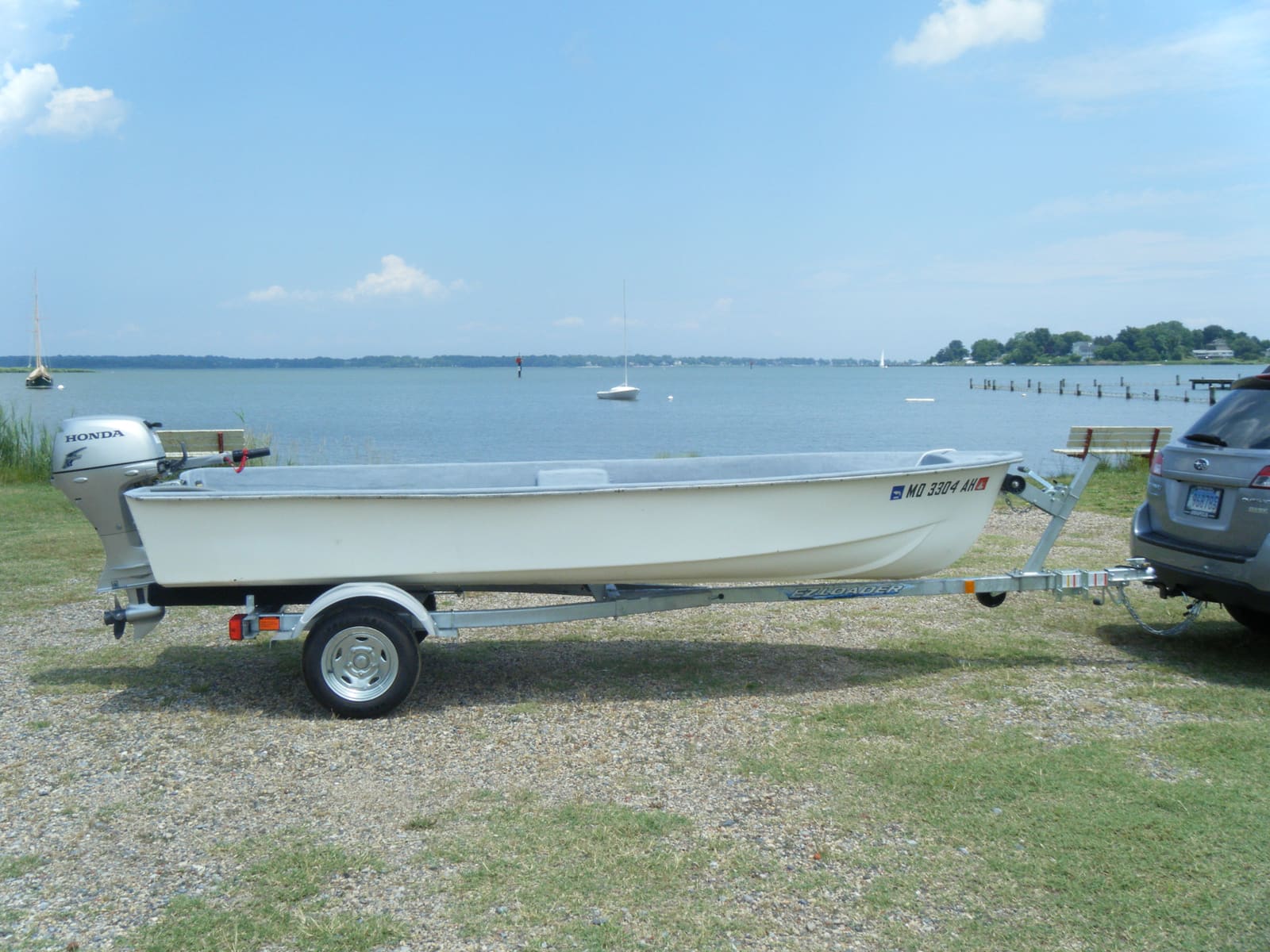
- 15 inches: "short." Small boats, jon boats, dinghies, many tillers.
- 20 inches: "long." The most common size on runabouts, bass boats and small center consoles.
- 25 inches: "extra long" (XL). Bigger offshore boats, sailboat auxiliaries and some pontoons.
- 30 inches: "extra-extra long" (XXL). Mostly larger offshore boats and the center motor on triple or quad rigs.
Boating Magazine explains why a triple or quad often mixes sizes: on a deep-V, the center motor sits lower on the transom, so it gets a 30-inch shaft while the outer motors use 25-inch shafts, keeping all the props clear of the hull. Some big outboards are also offered in even longer shafts; that's a dealer conversation.
Nominal isn't exact. Tohatsu notes that, depending on the model, its "15-inch" shaft may really be about 17 inches and its "20-inch" about 22. Other brands vary too. Always compare your measurement to the specific model's numbers.
Jet-drive outboards are a different case. A jet outboard has no gearcase or prop below the hull; a pump housing sits where the lower unit would be. Yamaha, for example, lists its jet models by the transom they suit ("fits 20-inch transom boats" or 25-inch) rather than as a short or long shaft, and quotes their power "at the pump," which is noticeably less than the same powerhead makes with a prop. A jet also has to be set at its own height relative to the hull bottom, which is not the prop-motor rule above. If you're repowering a river boat with a jet, size and mount it with the jet maker's instructions or a dealer who rigs jets.
Steps
Put the boat on its trailer or stands with the hull as close to level, side to side, as you can. A tilted boat throws off every measurement. Make sure it's secure and can't roll.
Measure where the motor will actually clamp or bolt: usually the center of the transom notch or motor well. On some boats the motor mounts in a cutout that's lower than the rest of the transom. Measure there, not at the highest point.
Tohatsu's method: measure from the top of the transom (where the motor bracket sits) straight down to the bottom of the keel (the lowest point of the hull at that spot). Hold the tape square to the hull bottom, not slanted along the angled transom face. A straightedge laid along the hull bottom and sticking out past the transom gives you something to measure to.
Typical match-ups from Tohatsu: about 15 to 17 inches needs a short shaft; about 20 to 22 inches needs a long shaft; some boats need a 25-inch shaft. Treat these as a starting point, not the final word.
Tohatsu measures its shafts from the bottom of the engine mounting bracket (where it rests on the transom) to the anti-ventilation plate. For a kicker, Boating Magazine's install steps measure from the plate to the upper inside edge of the clamp. Mercury describes its kicker shaft length a bit differently, from the top inside of the mounting bracket to the center of the prop. The lesson: brands measure from slightly different points, so compare like with like and ask the dealer which reference their number uses.
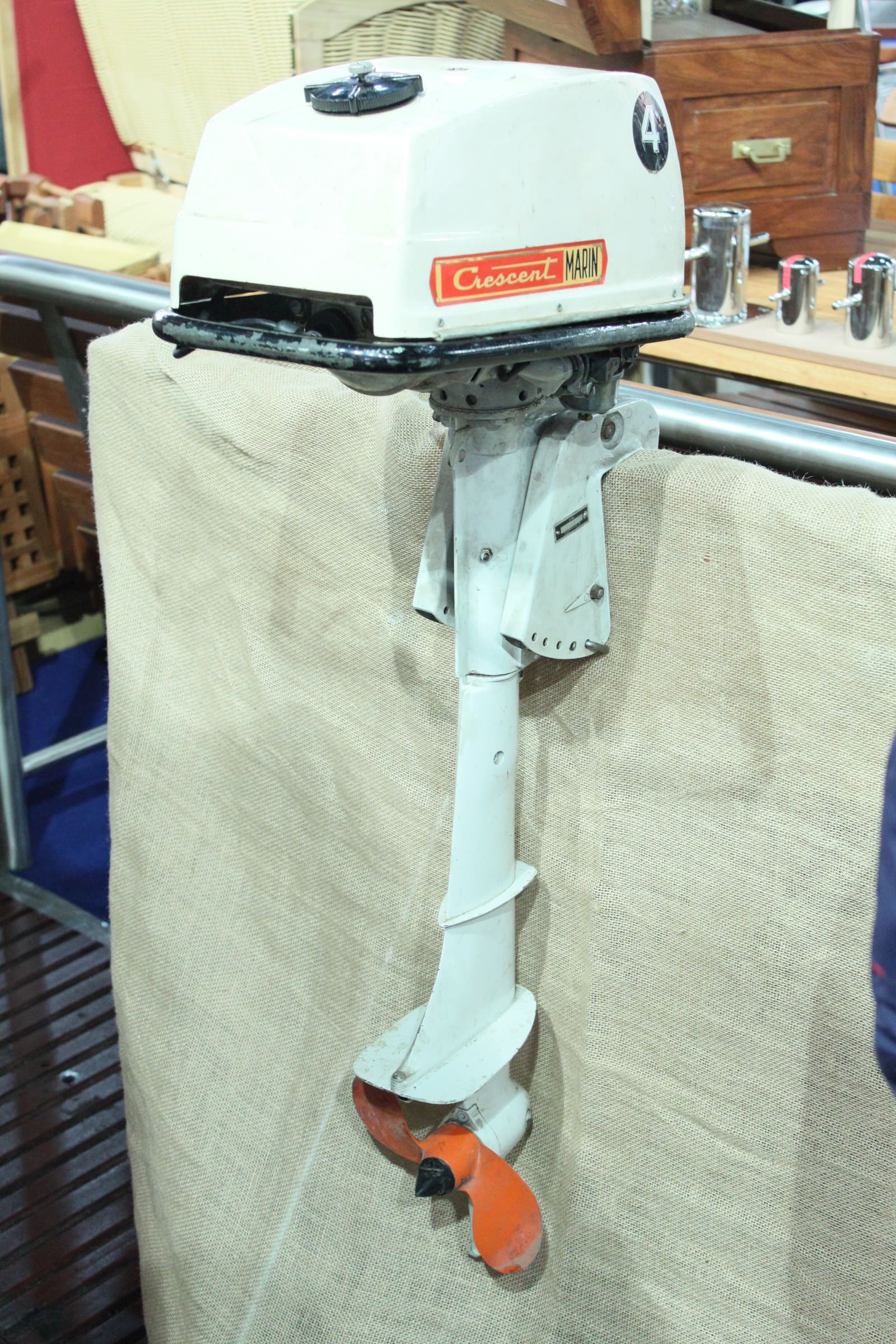
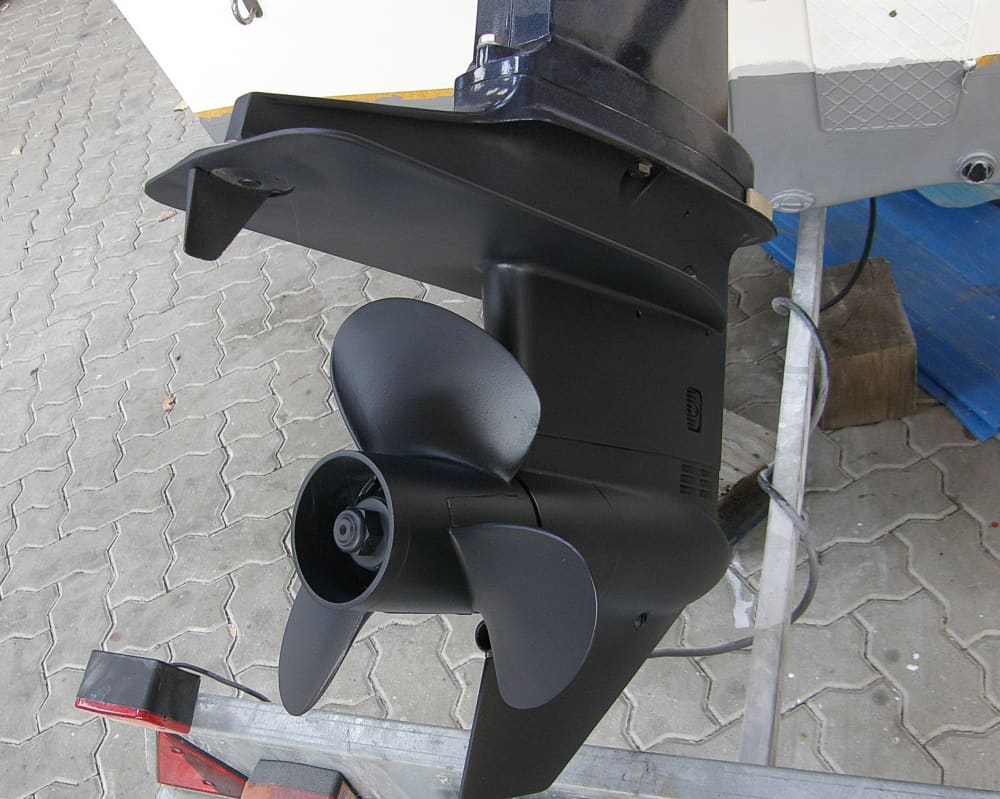
The anti-ventilation plate (the flat fin above the prop) is the reference point for shaft length and mounting height. Photo: Bin im Garten / Wikimedia Commons · CC BY-SA 3.0 If a motor is already on the boat, put it straight up and down (shaft vertical, not trimmed in or out). Hold a straightedge flat against the hull bottom, near the keel, extending back over the gearcase. Boating Magazine describes technicians using exactly this check during a repower:
- Plate even with the straightedge: the usual target.
- Plate well below it: the motor is mounted low (or the shaft is too long). Expect extra drag and spray.
- Plate well above it: the motor is high (or the shaft too short). Watch for ventilation and weak water pressure.
Mercury's kicker advice gives a useful limit: choose a shaft that puts the plate no more than 1 inch below the hull bottom.
A V-hull's bottom rises as you move away from the keel. Boating Magazine points out that a kicker mounted off to one side needs a shaft that matches the transom height at that spot, not the maximum height at the center. Mercury says the same for its kickers. The same logic explains different shafts on twin and triple rigs.
If you already own the motor, the boat will tell you:
- Too short or mounted too high: prop blows out or "slips" in turns and when trimmed up, RPM jumps without more speed, weak telltale or overheating alarms (intakes sucking air), poor bite in chop.
- Too long or mounted too low: sluggish top speed and higher fuel burn from drag, a rooster tail or sheet of spray off the gearcase, the boat feels like it's plowing, the lower unit hits bottom in shallow water sooner, and spray can come up over the transom.
Our prop ventilation and cavitation guide covers other causes of blowouts (damaged prop, hull hooks, through-hull fittings in the water flow) so you don't blame shaft length for everything.
Most outboard brackets have several vertical bolt-hole positions, letting a tech raise or lower the motor in steps. Boating Magazine's repower crew used the straightedge result to pick which hole to use. Raising a motor one hole at a time is a common way to trade a little drag for speed on a performance boat; going too far brings back ventilation and cooling problems. Moving the motor means unbolting and re-sealing through-bolts in the transom, so it's usually a shop job.
A jack plate (manual or hydraulic) mounts between the transom and the motor and lets you change height without re-drilling. Owners of bass boats, flats boats and shallow-water skiffs use them to run higher for speed or to get through skinny water. A plate that sets the motor back also moves the prop into cleaner water, which can allow a higher mount. See our hydraulic jack plate guide for care and limits. A jack plate can't fix a shaft that's far too short.
At the chosen height, tilt the motor fully up and steer lock to lock. Make sure the cowl, cables, hoses and the gearcase clear the transom, splashwell, swim platform and any kicker. On a trailer, confirm the skeg clears the road at full trailer tilt (or use a transom support as the maker recommends).
Run the boat with a typical load. Note wide-open-throttle RPM (it should land in the range in your owner's manual), top speed, how the boat handles in turns and whether the telltale and water pressure stay strong. If the motor ventilates at normal trim, it's probably too high; if it's slow, wet and draggy, it may be too low.
Log the transom height, the motor's shaft length, which bracket holes are used (or jack plate setting) and your sea trial numbers in BoatMend. It saves time when you change props, sell the motor or repower.
Common mistakes
- Buying a used motor because the price is right, then finding it's a 15-inch shaft for a 20-inch transom (or the reverse). Measure before you shop and ask the seller to measure the motor.
- Measuring along the slanted transom face instead of straight down to the keel line.
- Measuring at the top of the transom instead of at the lower motor-well cutout where the motor actually mounts.
- Assuming every "20-inch" motor is exactly 20 inches. Check the model's spec.
- Using a center-transom measurement for a kicker mounted off to one side of a V-hull.
- Trying to "fix" a too-short shaft by trimming the motor in hard or adding a hydrofoil; you'll still starve the water intakes.
- Mounting a long-shaft motor on a short transom and wondering why the boat throws spray and won't reach its old top speed.
When to call a pro
- The transom is soft, cracked or wet, or the bolt holes show water or rot
- You need to drill new mounting holes, move the motor up or down, or install a jack plate on a mid-size or large outboard
- Motor height changes are combined with a repower, a new prop or a different horsepower
- You can't get WOT RPM into the manual's range or the motor keeps overheating after a height change
- Multi-engine boats, where each motor's height and shaft length interact
Tips
- Sailboats and pontoons often need longer shafts than you'd guess: a 25-inch sail auxiliary keeps the prop in the water when the stern lifts in a swell. Ask the motor maker or dealer.
- Take a photo of the straightedge check with the motor vertical. It's an easy before-and-after record if you or a tech ever change the height.
- When you shop, the shaft length is usually in the model code. A dealer can decode it for you in seconds.
- Tohatsu recommends asking your local distributor to confirm the shaft length for your particular boat, because keel shape can change the answer. That's good advice for any brand: bring your transom measurement and a photo of the stern to the dealer.
- If someone offers to "extend" a short-shaft motor, ask the dealer first. Changing shaft length involves the driveshaft, shift linkage and water tube, and only some motors have factory parts for it; often the right-length motor is the simpler answer.
Official references
We read these to write this guide. Your engine's own manual always wins.
- Tohatsu – FAQ (how to measure transom height and shaft length)
- Mercury Marine Dockline – How to Install a Kicker Motor on Your Boat (shaft length and anti-ventilation plate)
- Boating Magazine – Engine Repower 2020, Part 5 (mounting height and the straightedge check)
- Boating Magazine – Choosing an Auxiliary Outboard Motor
- Boating Magazine – How to Install an Auxiliary Outboard Engine
- Boating Magazine – Propping Outboards (XL and XXL shafts on multi-engine boats)
- Yamaha Outboards – Jet Drive Outboards (transom fit and power at the pump)
Safety: BoatMend is for information only and does not replace a certified marine technician. You are responsible for your safety and your boat. Read the full disclaimer.
Last updated 2026-10-25
Related guides

How to Mount or Re-Tighten an Outboard on the Transom
A loose outboard can steer badly, crack the transom or fall off the boat. Learn how to center the motor, check engine height, tighten clamp screws, seal and bolt through the transom with backing plates, add a safety cable on small motors and spot transom flex before it becomes a costly repair.

How to Care for a Hydraulic Jack Plate (Fluid, Pump, Leaks, Grease and Height)
Keep a hydraulic jack plate (Bob's Machine Shop, T-H Marine Atlas, CMC, SeaStar style) lifting smoothly: check and top up the right fluid, keep the pump and relays dry, find leaks and slow drift, lubricate only the way your model calls for, set running height safely and prepare it for winter. Mounting and setback changes are dealer work.
Prop Ventilation vs. Cavitation - Why Your Engine Revs Up and the Boat Loses Grip
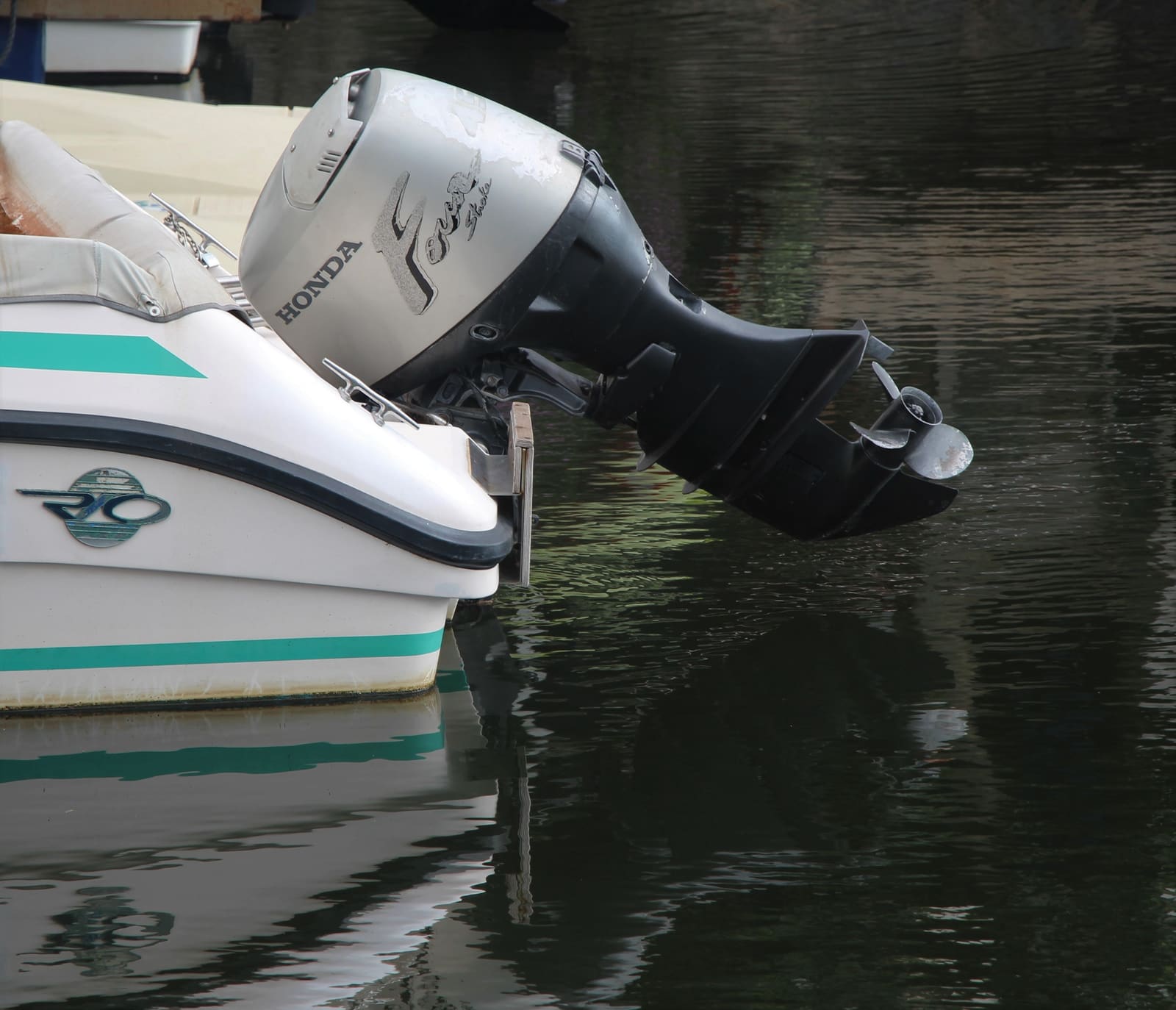
Sudden RPM spikes, blowouts in turns, or a prop that slips when you accelerate are usually ventilation, not cavitation. Learn to tell them apart, then work through the fixes in order: trim, load, prop damage, the hull ahead of the prop, engine height, and finally a different prop.
Planning a Repower: Horsepower Limits, Transom, Rigging, Prop and Costs
Putting a new engine on a boat you love can cost far less than a new boat, but only if the plan is right. Learn how to read the capacity plate for maximum horsepower and weight, check the transom, sort out controls, gauges and rigging, budget for the prop and the extras, and decide between a dealer installation and doing it yourself.
How to Mount and Maintain a Kicker Motor Bracket
Set up a small auxiliary outboard (a kicker) the right way: choose a manual or spring-assisted bracket, through-bolt it to a sound transom with a backing plate, add a safety cable, sort out steering and fuel, and keep the bracket working season after season.
Small Portable Outboard Care (2.5 to 20 hp Kickers and Dinghy Motors)
Keep your dinghy motor or kicker starting on the first few pulls. Use fresh fuel, flush it, run the carburetor dry before you put it away, carry and lay it down on the correct side so oil doesn't flood the cylinders, and check the shear pin or prop, gear oil and engine oil on schedule.

Propeller Care: Inspect, Remove, Replace and Choose the Right Pitch
Check your prop for damage, pull it to clear fishing line and grease the shaft, reinstall it correctly, and learn how pitch affects your engine's wide-open-throttle RPM. The right prop in good shape protects your engine and often makes the boat run better and use less fuel.

Engine Overheating - Troubleshooting Guide
Work through the most likely causes of a hot engine or overheat alarm, from a blocked water intake to a worn impeller or stuck thermostat. Acting fast and in the right order can save your engine and often gets you home without a tow.
Outboard Hydrofoil Fins: Do They Help, and How to Install One Safely
Learn when a bolt-on hydrofoil (the fin that mounts on the anti-ventilation plate) can help a boat plane sooner or stop porpoising, what it can cost you in top speed and handling, and how to mount one without drilling into an anode, trim tab or speed pickup.
How to Check a Boat for Transom and Stringer Rot
Many older fiberglass boats have wood inside the transom, stringers and deck, and water that gets in slowly rots it. Learn the tap test, the flex test, how to read a moisture meter and the other warning signs, and why a rotten transom or stringer is a structural job for a pro, not a weekend patch.