How to Troubleshoot Dash Gauges, a Dead Tachometer or a Wrong Fuel Gauge
Work through dead or wrong dash gauges from the cheapest check to the most involved: fuses and breakers, power and ground, the gauge-versus-sender test, the tachometer's pulse setting and the extra checks for digital network gauges. Most gauge problems turn out to be a bad connection, not a bad gauge.
Time
1 h
Shop would charge
$150-450
Applies to
Outboard, Sterndrive (I/O), Gas inboard, Marine diesel
Safety first: Work with the engine off and the key out unless a step says to turn the key on. Never test a fuel sender by touching wires together at the fuel tank: a spark near fuel vapor can start a fire. Do all jumper tests at the back of the gauge, behind the dash. If you smell fuel, see melted insulation, or a fuse blows again right after you replace it, stop and call a marine electrician. On the water with no engine instruments and a problem you can't solve, head in slowly or call TowBoatUS or Sea Tow (VHF 16 or 911 in an emergency).
Owners often ask
- My tachometer or fuel gauge stopped working. Where do I start?
This guide walks you through it. Still stuck? Ask the AI Mechanic about your engine.
Tools
- Digital multimeter
- Jumper wire with small alligator clips
- Flashlight or headlamp
- Screwdrivers and a small socket set
- Fine sandpaper or a small wire brush for terminals
- Phone camera (to photograph wiring before you touch it)
Parts & supplies
- Replacement fuses of the exact rating marked on the panel or holder
- Marine heat-shrink crimp terminals and dielectric grease (as needed)
- Replacement gauge or fuel sender only after testing proves it bad
Before you start
Gauges come in two families, and the checks are different:
- Analog gauges (a needle on a dial) each have a power wire, a ground wire and a signal wire. The tachometer reads pulses from the engine's charging coil (stator) or alternator, or from the ignition on older gas engines. The fuel gauge reads a variable resistor (the sender) inside the tank: in the US the standard range is about 240 ohms at empty and 33 ohms at full, as Moeller Marine notes.
- Digital gauges and displays (Mercury SmartCraft, Yamaha Command Link, many multifunction screens) get their numbers from the engine computer over a network cable, often NMEA 2000 or the engine maker's own system. A blank or "no data" screen is usually a network or power problem, not a bad sensor.
Notice the pattern before you start. All gauges dead at once points to power or ground. One gauge dead points to that gauge, its wire or its sender. Wrong readings point to a sender, a setting or a corroded connection. Photograph the back of the dash before you unplug anything.
Steps
Turn the battery switch on and the key to ON (engine off). Most gauges only get power with the key on. Check the battery: if it reads below about 12.2 volts at rest, charge it first, because low voltage makes gauges read low or flicker. Note whether the gauge lights and other helm accessories work.
Look for fuses or breakers at the helm panel, behind the dash, near the battery and on the engine harness (many outboards have fuses under the cowling; your engine manual shows where). Pull each fuse and look at it, or test it with the multimeter on continuity. Replace a blown fuse only with the same rating. If the new fuse blows again, there is a short: stop and have it traced.
With the key on, set the multimeter to DC volts. Put the black probe on the gauge's ground terminal and the red probe on its power (often marked IGN or +) terminal. You should see close to battery voltage. Then move the black probe to a known good ground, like the battery negative: if the reading jumps up, the gauge's ground is bad.
A loose or corroded ground is the most common reason several gauges die or act strangely at once. BoatUS points out that bad connections cause many boat electrical gremlins, so clean and tighten every ring terminal on the gauge ground chain, which is often jumpered from gauge to gauge.
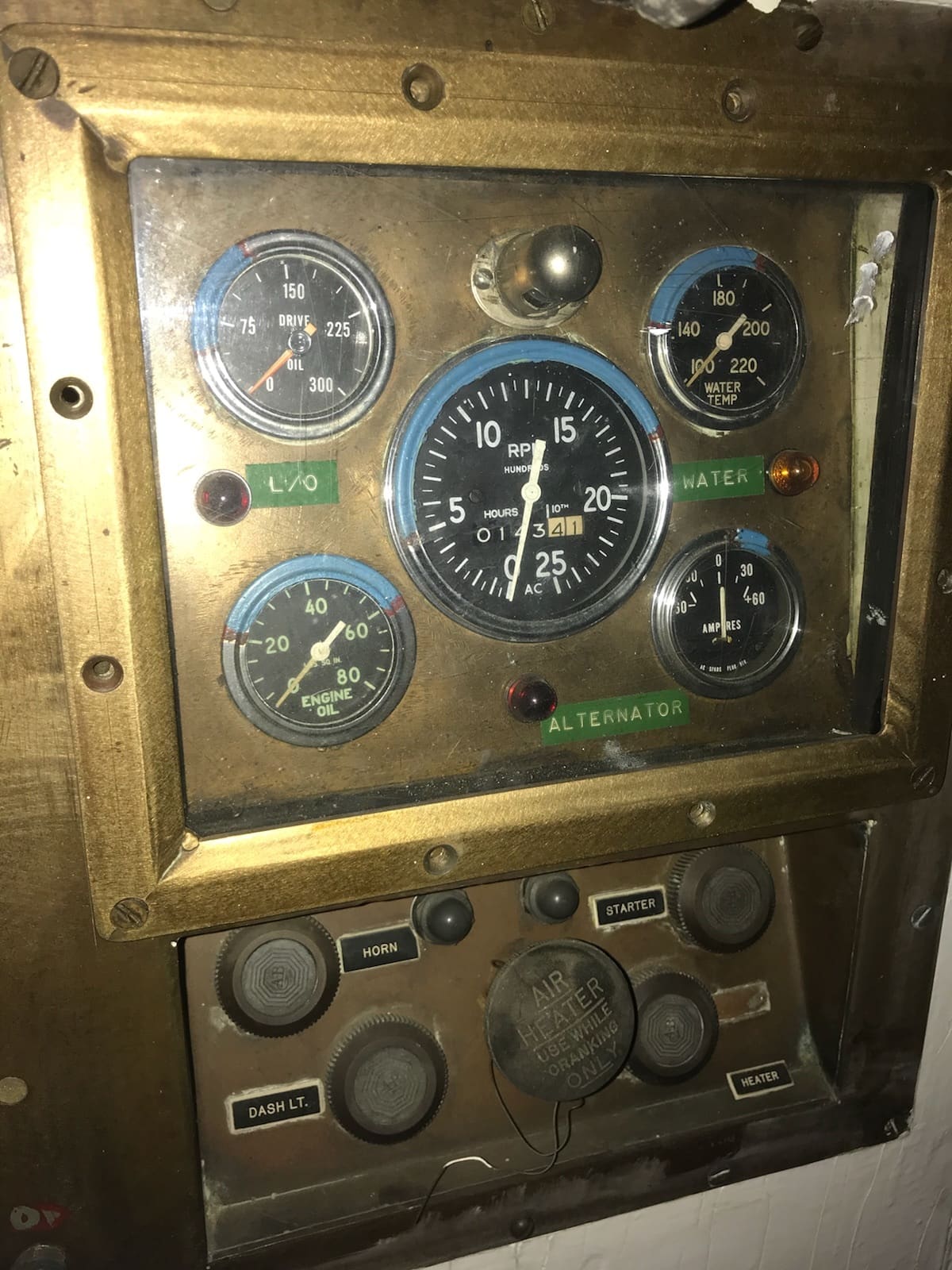
Photo: NPS / Wikimedia Commons · Public domain Follow the gauge harness from the dash toward the engine. Unplug, inspect and reseat the main engine harness plug (often under the console or near the control box) and look for green corrosion, bent pins or a chafed wire. A little dielectric grease on clean pins helps keep moisture out. Many "all gauges dead" problems end here.
Behind the dash, find the fuel gauge's sender terminal (often marked S or SEND; the ABYC color for the sender wire is pink, per Boating Magazine). Then, with the key on:
- Disconnect the sender wire from the gauge. The needle should sit at or below empty.
- Briefly touch a jumper from the sender terminal to the gauge's ground terminal. The needle should swing to full or past it. This is the quick test Moeller Marine describes.
If the gauge does both, the gauge is good and the problem is the sender or the wire to it. If it does not move, check its power and ground again; if those are good, the gauge is bad.
With the key off, disconnect the sender wire at the gauge again and set the meter to ohms. Measure between the sender wire and ground. On a standard US system you should see a value somewhere between about 33 ohms (full) and 240 ohms (empty) that matches the fuel level. Readings that tell you something:
- OL or a very high number: open circuit: a broken wire, a corroded connection at the tank, or a failed sender.
- Close to zero: a short to ground, often a pinched wire. The gauge will read full all the time.
- Reading jumps around as the boat rocks: a worn sender.
- Reads backward (full when empty): the gauge and sender are mismatched, or wired wrong. Moeller suggests checking the wiring first, then ohm-testing the sender.
- Reads empty on a tank you know is full: besides a broken wire, the float itself may have soaked up fuel and sunk. Moeller lists a defective float, or a fuel additive reacting with the float material, as causes. That means a new sender (see our fuel gauge sender guide).
Access to the sender is usually through a plate in the deck over the tank. Removing a sender opens the fuel tank, so if you are not comfortable with that, this is the point to call a pro.
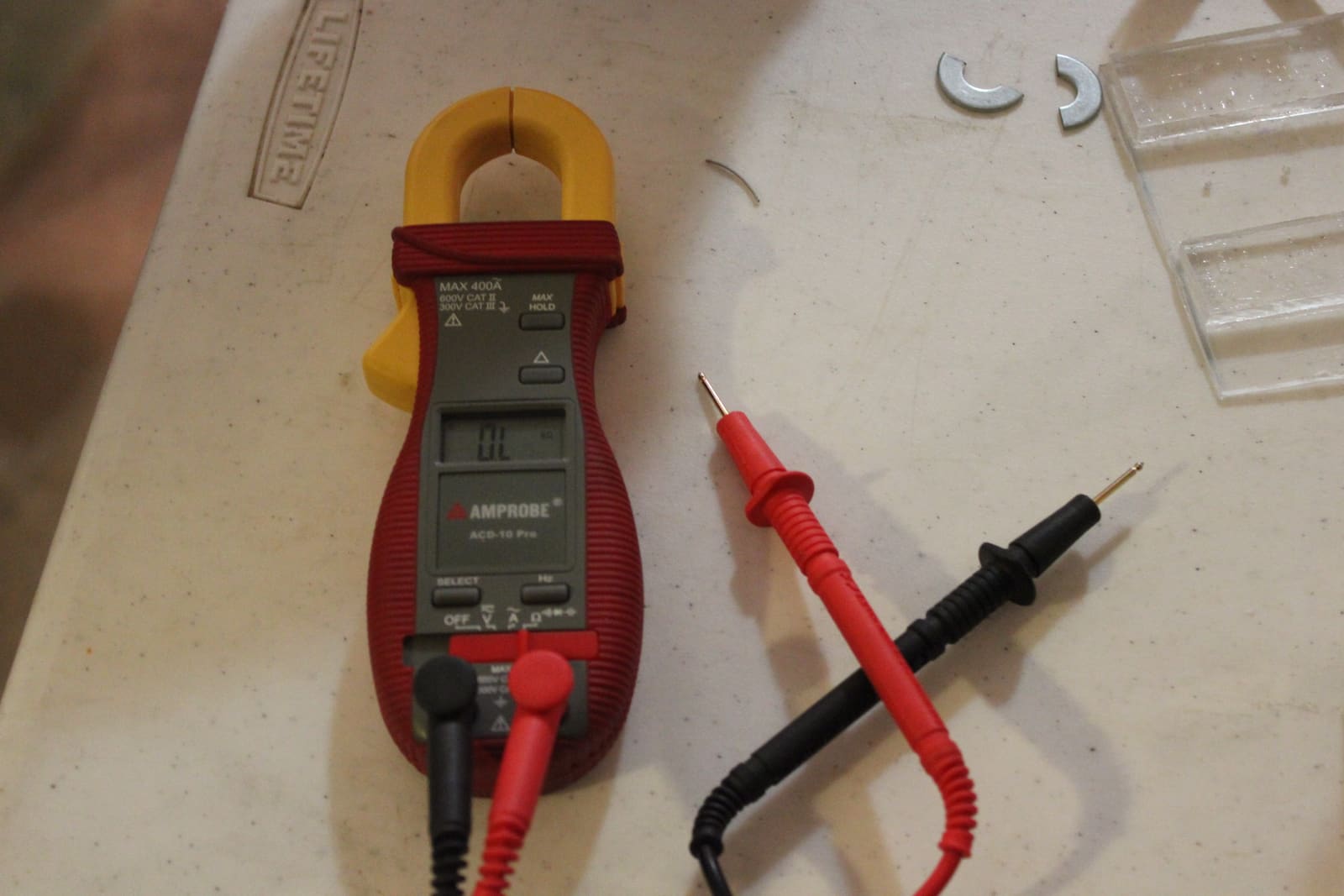
Photo: Connor.delaney6 / Wikimedia Commons · CC BY-SA 3.0 A dead tach needles at zero; a tach that reads way off but moves smoothly is usually set wrong (next step). With the engine idling (in the water, or on flush muffs or in a test tank for an outboard; not on the built-in flush port unless your manual allows running on it), a typical aftermarket stator-signal tach needs battery voltage between its power and ground terminals and an AC signal on its SEND terminal. If the signal wire shows nothing, the problem is the wire or the engine's tach output, not the gauge. If power and signal are both present and the needle still won't move, the tach is likely bad.
Check that the signal wire is connected at both ends: many outboards bring the tach lead out at the remote control box or a plug under the dash, not at the engine. Those plugs only fit one way; if one won't line up, compare the shapes of both halves instead of forcing it and bending the pins.
Dead tach and a battery that stops charging at the same time? On many outboards the tach signal comes from the same stator and rectifier/regulator that charge the battery, so one failed part can kill both. Test the charging system (see the charging system guide) before you buy a new tach. A battery that was recently hooked up backward is another suspect: Mercury lists tachometers, rectifiers, regulators and the engine computer among the parts reversed connections can damage.
Analog tachs have to know how many pulses the engine sends per revolution. On the back you'll find a small dial or switch marked with settings like 4P, 6P (pulses) or 4C, 6C, 8C (cylinders on older ignition-signal engines). On outboards the right setting depends on the number of magnetic poles on the stator; many aftermarket tach instructions have you divide the pole count by two to get the pulse setting. Your engine manual or the tach's own instructions give the correct number for your combination.
A tach that reads about half, double or a third of the real RPM after a gauge swap or engine change is almost always on the wrong setting. Some tachs also have a small calibration screw for fine-tuning; turn it gently and not past its stops.
A tach that suddenly reads far too high (or jumps around) now and then, and settles down after a tap, often has corroded contacts in that little selector switch or at its terminals. A trick owners use: note the correct setting, move the selector from one end to the other a couple of times to wipe the contacts, set it back, and loosen and retighten the ring terminals on the back.
Many outboard speedometers read water pressure from a tiny hole (a pitot pickup) on the front of the lower unit or on a transom pickup. Mercury notes that weeds, sand or gravel often block it; Mercury suggests clearing the hole carefully with a small drill bit turned by hand. A speedo that drops to zero while the boat is clearly moving is usually this. GPS-based speed readings don't have this problem.
If a SmartCraft, Command Link or other digital display is blank or says "no engine data":
- Check its fuse and that the display itself powers up.
- Look for a loose or corroded plug in the network cable, especially at T-connectors under the console.
- On an NMEA 2000 network, Garmin's technical reference says the backbone must have power and a terminator at both ends. A missing, extra or damaged terminator causes intermittent or missing data.
- Read any fault message on the screen and look it up in the gauge or engine manual.
Do not run a "factory reset" on a digital gauge unless you have recorded its settings: it can erase engine setup and calibration (such as fuel tank size or engine position on twin-engine boats), which a dealer may have to redo.
Buy a replacement that matches your system: the same signal type for a tach, the same ohm range (240-33 ohms is the US standard) for a fuel gauge and sender. Mixing an older European gauge with a US sender, for example, gives wrong readings. Fit new marine heat-shrink terminals, keep the ground chain intact, and test with the key on before you close up the dash.
Run the boat and compare: tach against a known reading (some digital engine displays and phone apps show RPM), fuel gauge against a fill-up, temperature and oil gauges against your normal readings. Write down your normal readings so you notice changes early.
Common mistakes
- Replacing a gauge when the real problem was a loose ground or a corroded harness plug.
- Jumping the fuel sender wires at the tank, where vapor can ignite. Do it at the gauge.
- Forgetting to set the pulse/pole switch on a new tachometer, then thinking the engine has lost power because the tach reads low.
- Fitting a fuel gauge and sender with different ohm ranges.
- Replacing a blown fuse with a bigger one so it stops blowing.
- Wiring a new gauge's power to the battery directly instead of through the key and a fuse, which drains the battery.
- Resetting a digital gauge to factory settings and losing the engine setup.
When to call a pro
- A fuse or breaker that blows again, any melted wire or burning smell
- Removing or replacing a fuel sender if you're not comfortable opening the fuel tank, or any fuel smell around the tank or sender
- No tach signal coming from the engine (stator, alternator or engine harness fault)
- Digital network faults that remain after checking power, plugs and terminators, and setting engine positions on twin or triple engines
- Warning alarms or a gauge showing overheating or low oil pressure: treat it as real until proven otherwise (see the engine warning alarms guide)
Tips
- Label each wire behind the dash with tape when everything works; future you will thank you.
- Keep a spare fuse of each rating on board.
- A gauge that works again when you tap it often has a corroded contact or terminal, not a dead movement.
- If your engine computer shows RPM on a digital display, use it to check an analog tach after setting the pulses.
- A warning buzzer and light that won't stop is not always a fault. Suzuki, for example, explains that its monitor gauge (DF40 to DF300) also gives an oil change reminder that keeps beeping until it is reset, and unlike an oil or overheat warning it does not reduce engine RPM. Check your manual for how to reset it, and treat any warning that does cut power as real.
Official references
We read these to write this guide. Your engine's own manual always wins.
- Moeller Marine – Frequently Asked Questions (Sending Units & Gauges)
- Boating Magazine – Testing Boat Analog Fuel Gauge and Boat Fuel Sending Unit
- Mercury Marine – How to Fix Speedometer Reading Issues
- Yamaha Outboards – Command Link Digital Gauges Keep You Informed
- Garmin – Technical Reference for NMEA 2000 Products, Network Planning and Construction
- BoatUS – 12 Volt Electrical Systems
- Mercury Marine – Owner FAQs (reversed battery connections)
- Suzuki Marine – FAQs (monitor gauge warnings and oil change reminder)
Safety: BoatMend is for information only and does not replace a certified marine technician. You are responsible for your safety and your boat. Read the full disclaimer.
Last updated 2026-10-24
Related guides
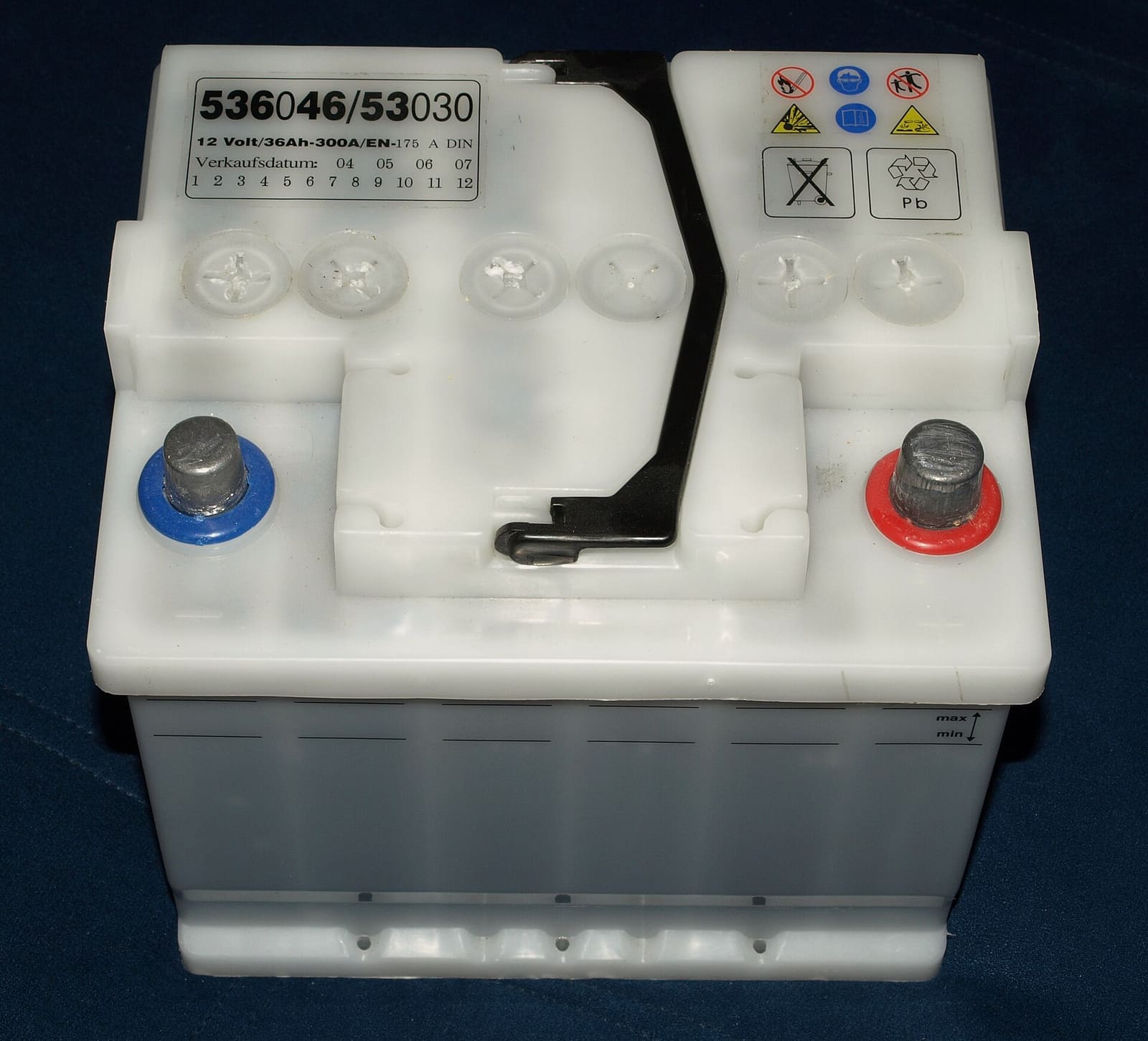
Marine Battery Care: Test, Charge and Store for Winter
Check your boat battery's health, charge it the right way for its type (flooded, AGM or lithium), and store it so it is ready in spring. Most "boat won't start" calls start with a neglected battery.
How to Use a 1-2-Both Battery Switch and Run Two Batteries
Learn what the 1, 2, Both and Off positions really do, a simple routine that keeps one battery ready to start the engine, how to check that both batteries are charging, and when an automatic charging relay makes life easier. Rewiring high-current cables is a job for a marine electrician.
Engine Warning Horn and Dash Lights: What They Usually Mean and What to Do
Learn what a warning horn, beeps or a dash light usually mean on a boat engine, from overheating and low oil pressure to water in the fuel and reduced-power (limp) mode. Find out what to do right away and when to stop the engine. Patterns differ by brand, so match what you hear and see to your owner's manual.
Engine Won't Start or Won't Crank - Troubleshooting Guide
Find out why your boat engine will not turn over or will not fire, starting with the simple things owners miss most, like the kill switch lanyard and battery switch. Many no-starts are fixed at the ramp in minutes without a tow.
How to Inspect a Used Boat Before You Buy
A step-by-step checklist for looking over a used boat, from paperwork and the hull ID number to the transom, engine, compression test, sea trial and trailer. Know what to check yourself, what the red flags mean, and when to pay a marine surveyor.
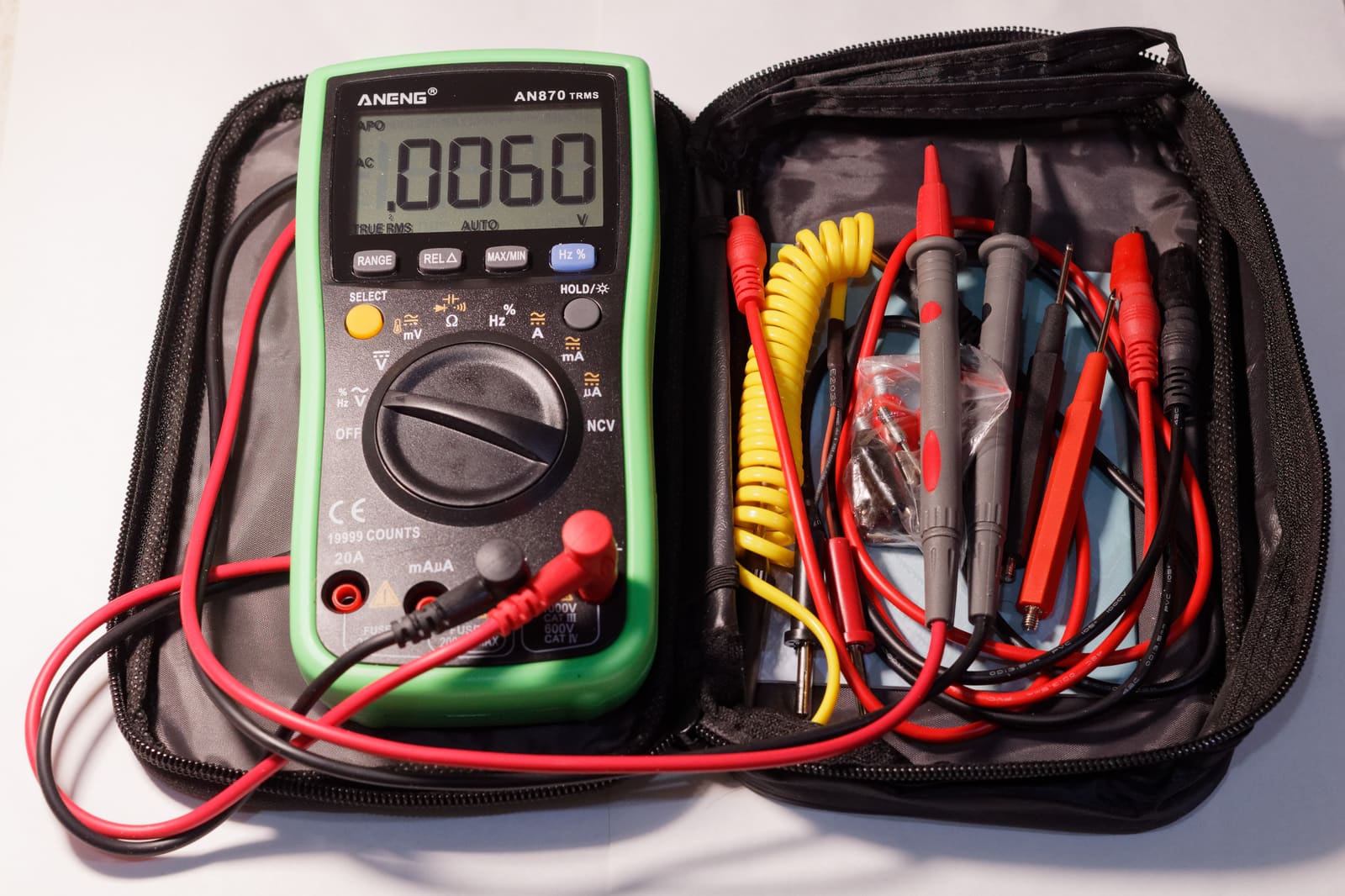
Is My Engine Charging the Battery? Test the Charging System With a Multimeter
A step-by-step way to find out whether your outboard's stator and rectifier/regulator or your inboard's alternator is really charging the battery, what the voltage readings usually mean, and when the problem is just a dirty connection. Exact test specs come from your engine's service manual.
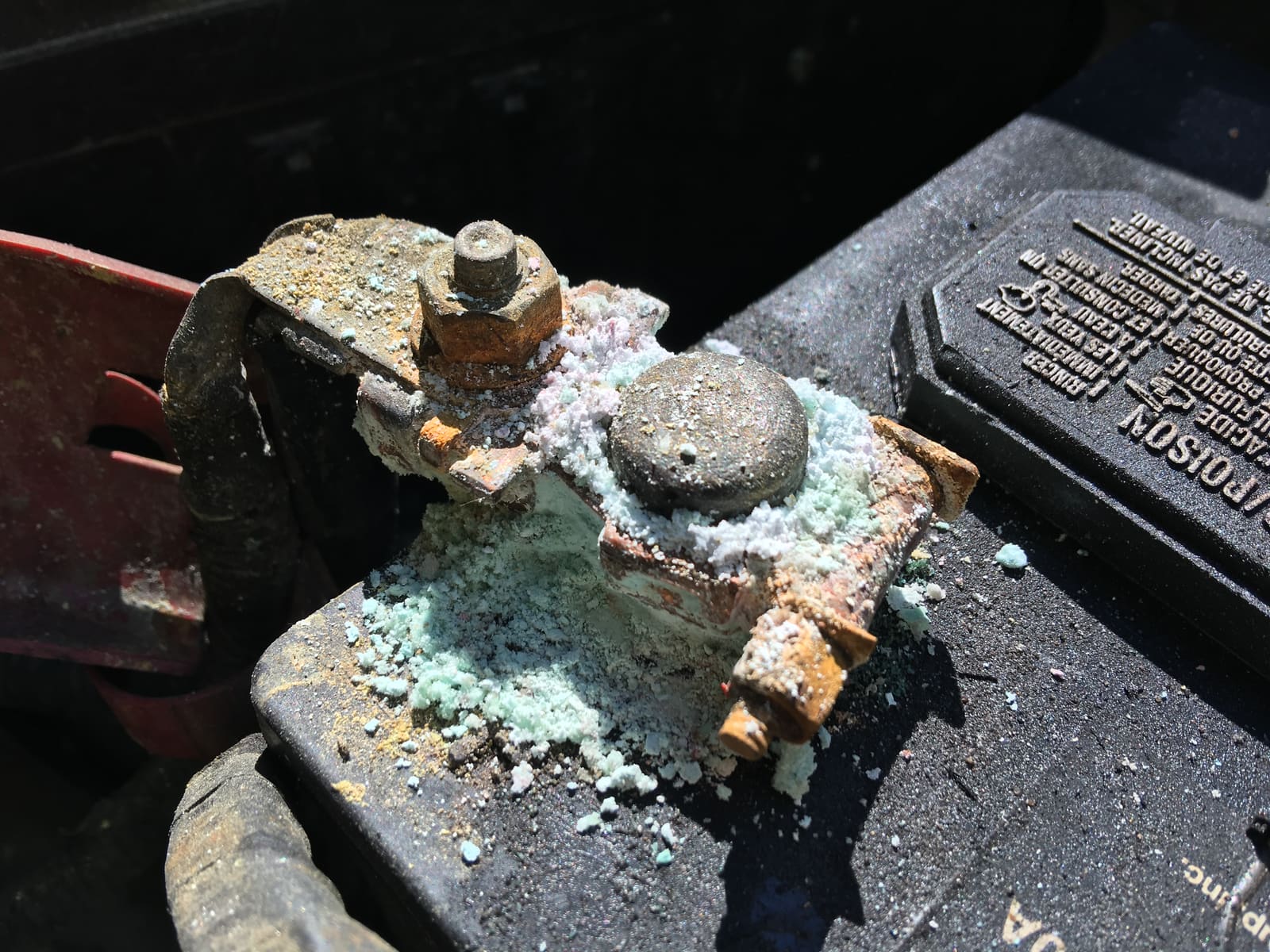
How to Find and Fix Corroded Electrical Connections on a Boat
Track down the green crust and loose terminals behind flickering lights, dead gauges and slow cranking with a simple voltage-drop test, then remake the connection the marine way: tinned wire, a proper crimp, adhesive-lined heat shrink and a protective coating.
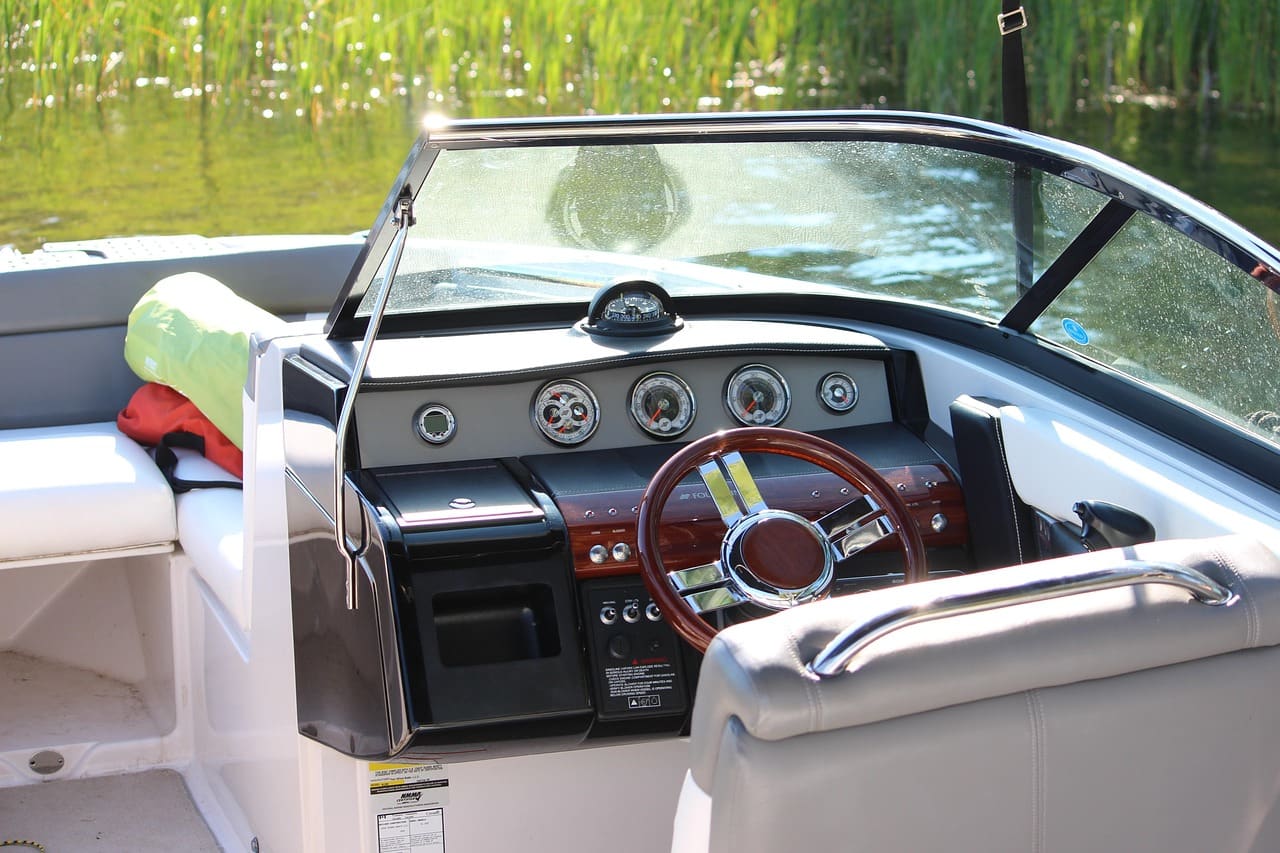
Fuel Gauge Reads Wrong or Empty? How to Test the Gauge, Sender and Wiring
Find out why your boat's fuel gauge reads empty, full, backward or jumps around, working from the free checks at the dash to testing the tank sender and replacing it safely. Most problems are a stuck float, a bad ground or a sender that doesn't match the gauge.
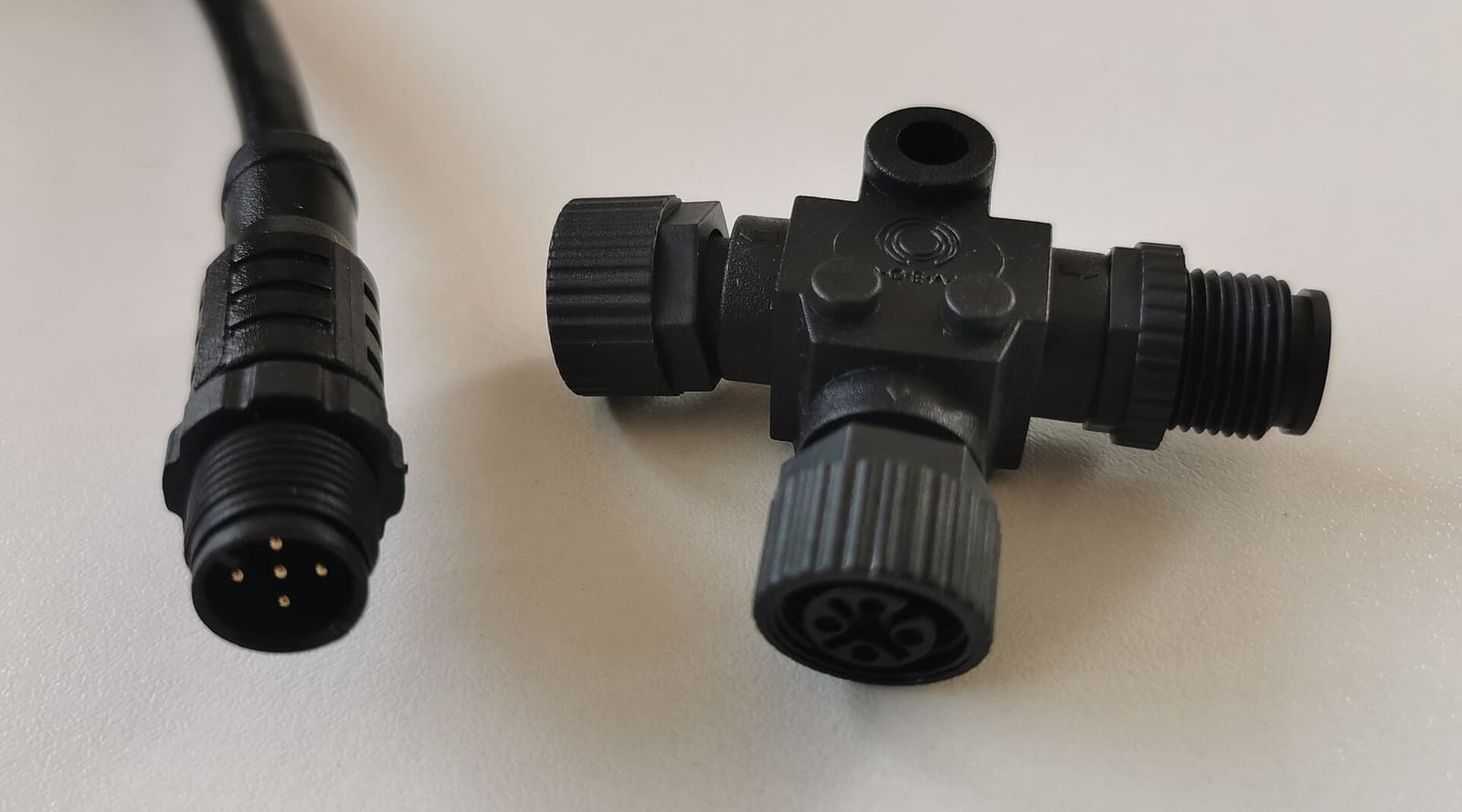
NMEA 2000 Network Basics and Troubleshooting (Plus Chartplotter Updates)
Understand the backbone, terminators, power tap and drop cables that tie your chartplotter, engine data, GPS, depth and autopilot together, then track down why a device keeps dropping off. Finish by updating chartplotter and device software the safe way.