How to Identify Your Boat Trailer Axle and Order the Right Parts
Find your trailer's VIN plate and axle lot number, take the key measurements (hub face, spring centers), read the numbers on your bearings and seals, and figure out the brake and hub type, so the parts store sells you parts that actually fit.
Time
1 h
Shop would charge
$0-100
Applies to
All engines
Safety first: Never crawl under a trailer held up only by a jack. Chock the wheels, use jack stands under the frame, and work on level, firm ground. Dexter recommends jacking only on the trailer frame, not on the springs, hangers or axle tube, because bent suspension parts throw the alignment off. If you find a cracked spring, a bent axle or a brake that's seized, don't tow until it's fixed.
Owners often ask
- There is no tag on my trailer axle. How do I figure out which bearings and hubs to buy?
- My trailer axle bends up in the middle. Is it bent?
This guide walks you through it. Still stuck? Ask the AI Mechanic about your engine.
Tools
- Tape measure (25 ft) and a helper
- Flashlight and a piece of chalk
- Wire brush and rags
- Phone camera
- Floor jack and jack stands rated for the trailer (to pull a hub, optional)
- Wheel chocks
- Brake cleaner or degreaser (for reading bearing numbers, optional)
Parts & supplies
- None to identify the axle; replacement parts only once you've matched them
Before you start
"I need bearings for my boat trailer" is the start of a lot of wrong orders. Trailer axles come in many capacities, widths and spindle sizes, with different hubs, brakes and lube systems. Dexter says it builds every axle to order because there are tens of thousands of combinations. So the parts counter needs facts, not the boat's name.
Collect these before you shop:
- The trailer's VIN/capacity plate (photo)
- The axle maker and lot number, if there is one
- Hub face and spring center measurements
- The numbers on your bearings and seal
- Brake type (none, surge drum, surge disc, electric) and size
- Wheel bolt pattern, tire size and lube system (standard cap, grease cap with a fitting, or oil bath)
Do this when the trailer is already off the road for service, ideally with one hub apart for its yearly bearing check.
Steps
Look on the tongue or the front of the frame for a sticker or plate. BoatUS explains that it should list the max capacity, GVWR (gross vehicle weight rating) and GAWR (gross axle weight rating) for a given tire size and inflation. GAWR times the number of axles equals GVWR. That GAWR is the capacity you need to match or beat with any replacement axle or hub. Photograph the plate and the trailer maker's name; the maker's customer service can often tell you exactly what axle they installed from the VIN.
Clean the axle tube with a wire brush and look for a stamp or sticker. Dexter says that on its axles made after April 2001 there's a nine-digit lot (serial) number near the middle on the rear side of the axle beam, right under the words DEXTER AXLE, and that rubbing chalk over it makes it easier to read. Other makers use their own tags or stickers. Lippert, for example, puts its label in the same general spot (center of the axle tube, back side of the beam) and its description string starts with the model designation, followed by the hub face, track and spring center dimensions and codes for the spring mounting, lubrication and hub or drum. Lippert's advice if the label is gone matches Dexter's: measure hub face, spring centers and brake size. With a lot number, the maker or a dealer can usually pull the original build sheet. Write the number down and photograph it.
Look at how the axle hangs from the frame:
- Leaf spring: a round or square tube on stacked steel springs, held by U-bolts. Note whether the axle sits under the springs (underslung) or on top (overslung). Dexter notes that switching between them changes the trailer's height and towing behavior.
- Torsion (rubber) axle, such as Torflex: a square tube bolted straight to the frame with short arms at each end and no springs. Dexter says you must not weld on a Torflex axle or move its brackets, because heat damages the rubber inside, and its start angle (ride height) can't be changed after it's built.
Dexter's measuring guide starts with the hub face: the distance from one wheel mounting surface to the other. Pull a wheel or measure across the outside faces of the hub flanges where the wheels sit. This sets how wide the axle is and where the tires sit under the fenders. Have a helper hold the other end of the tape, and measure twice.
Next is the distance between the centers of the suspension mounting points. On a leaf-spring axle, measure from the center of one spring seat to the center of the other. On a torsion axle, measure between the mounting brackets. This must match the trailer frame. Dexter also lists the distance from the spring center to the hub face as a key number for load and stress, and track width for setups with dual wheels.
Sight along the axle tube from the side. Dexter explains that the slight upward bend in the middle of many axles is "camber," built in on purpose so the axle straightens under load. That's normal. What's not normal: a bend near one end, a tube that sags in the middle with no load, or tires worn on one edge. Those are signs of a bent axle (see "When to call a pro").
With the hub off (see our trailer wheel bearings guide), wipe the grease off the inner and outer bearing cones and the races (cups) pressed into the hub. BoatUS's bearing article says each bearing and race has a stamped part number, so you don't have to guess the size. Write down all four numbers (inner cone, inner race, outer cone, outer race) and the numbers on the grease seal. Take the old parts with you to the store and match them side by side.
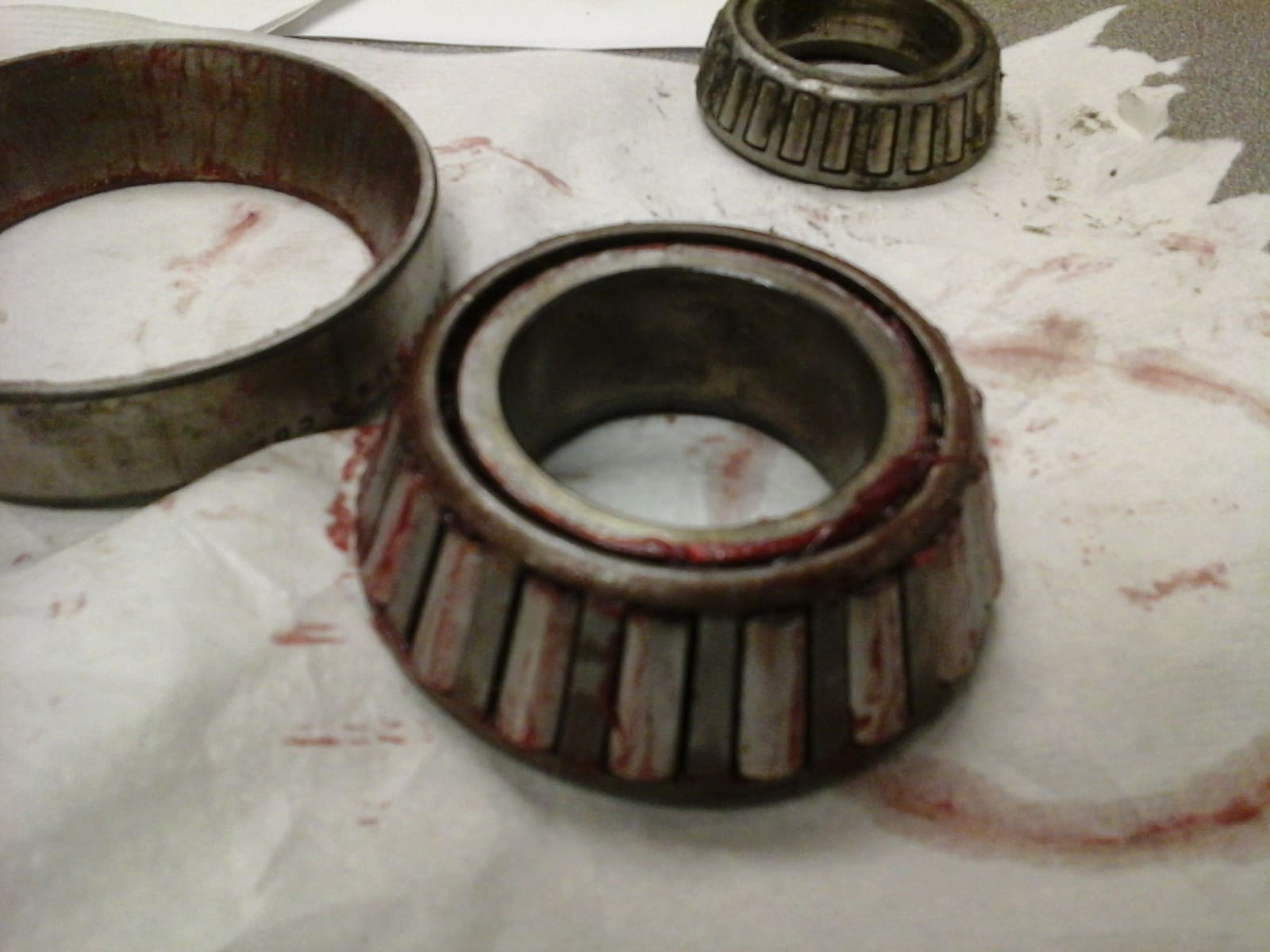
Photo: SkyMWard / Wikimedia Commons · CC BY-SA 3.0 Look at the hub cap:
- Plain dust cap: standard grease-packed bearings.
- Cap with a grease fitting, or a spring-loaded cap: a "grease-through" spindle or a bearing protector. Dexter's version, E-Z Lube, has a drilled spindle that carries grease to the inner bearing; Dexter says it can't be added to an axle that wasn't built with it.
- Clear cap with oil: an oil-bath hub.
- Sealed cartridge (Dexter Nev-R-Lube): pre-adjusted, permanently lubricated bearings. Dexter's glossary says this system can't be used on axles that go under water, so you shouldn't see it on a boat trailer.
Look behind the wheel:
- No brakes: just a hub and spindle.
- Surge brakes: there's a master cylinder at the coupler and brake lines running to each wheel. Look for drums (a closed drum behind the wheel) or discs (a rotor with a caliper).
- Electric brakes: wires, not brake lines, go to each wheel, and the tow vehicle needs a brake controller. Electric brakes are less common on boat trailers because they get dunked. For trailers that go in the water, Dexter offers marine hydraulic brakes with E-coated, stainless or zinc-plated parts to slow down rust.
Measure the drum or rotor diameter, and note the brake maker if there's a sticker or stamp on the backing plate or caliper. BoatUS's brake article lists corroded lines, rusty master cylinder fluid and rust around the backing plate as things to look for while you're down there.
Count the lug studs and measure the bolt circle (or note it from the hub's part number). Copy the tire size from the sidewall and the rim size and load info from the wheel label. Dexter warns that wheels and tires must be matched and approved for each other, and that hub-piloted and stud-piloted wheels use different lug nuts; mixing them can let a wheel come off. If you switch to aluminum wheels, Dexter says to check stud length, since the thicker mounting area can leave too little thread for the nuts.
Write everything on one sheet (or a phone note) and keep it in the tow vehicle:
- Trailer maker, VIN, GVWR, GAWR
- Axle maker, lot number, suspension type
- Hub face, spring centers
- Bearing, race and seal numbers
- Brake type and size, hub type, bolt pattern
- Tire size and pressure from the plate
Now when a bearing fails on a trip, any parts store can match it.
Call the axle maker or an authorized distributor with your numbers. Dexter says small orders are usually cheaper through its distributors than direct. When the new parts arrive, compare them to the old ones before you install anything: bearing numbers, seal size, hub bolt pattern and brake size should all match. If anything doesn't, stop and call the seller before you start.
Common mistakes
- Ordering by trailer length or boat size instead of GAWR, hub face and spring centers.
- Measuring hub face from the tire sidewalls or from the outside of the fenders.
- Replacing a bearing cone without its matching race (BoatUS says replace both if either is worn).
- Mixing grease types: Dexter warns not to mix grease thickener types because some combinations harden or separate.
- Welding a bracket onto a torsion axle or "fixing" the ride height on it.
- Mistaking normal camber for a bent axle, or the other way around.
- Jacking the trailer on the axle or springs instead of the frame.
When to call a pro
- The axle is bent, a spindle is damaged or scored, or tires wear unevenly on one edge
- You can't find any tag and the measurements don't match standard parts
- You're changing axle capacity, adding brakes, or moving to a torsion axle
- Brake lines are corroded, a brake drags or locks, or the surge master cylinder leaks
- The frame or spring hangers are cracked or badly rusted
Tips
- Take photos of every part as you take it apart; they're the best "manual" when you put it back together.
- Some owners carry a complete spare hub, pre-greased and with bearings installed, sized from their card. Swapping a hub at the roadside is faster than repacking.
- Dexter recommends lubricating standard bearings every 12 months or 12,000 miles. Do your identification at that service so you only pull the hub once.
- A trailer sold with a boat may not have the original axle anymore. Measure even if you have paperwork.
- If the bearing and seal numbers are worn off, the spindle can still be identified by measuring where the inner bearing, outer bearing and seal sit, but that takes a caliper, not a tape measure. If you don't have one, take the hub and old parts to a trailer shop and let them match it.
Official references
We read these to write this guide. Your engine's own manual always wins.
- Dexter – Axles Frequently Asked Questions
- Dexter – How to Measure an Axle for Proper Trailer Fit
- Dexter – General Frequently Asked Questions
- Dexter – Bearings Frequently Asked Questions
- Dexter – Bearings Glossary
- Dexter – Brakes Frequently Asked Questions
- Lippert – How to ID Your Trailer Axle
- BoatUS – Reading A Trailer Capacity Plate
- BoatUS – Repacking Or Replacing Your Trailer Tire Bearings
- BoatUS – Brakes 101 Trailering Maintenance
Safety: BoatMend is for information only and does not replace a certified marine technician. You are responsible for your safety and your boat. Read the full disclaimer.
Last updated 2026-10-25
Related guides
How to Inspect and Repack Boat Trailer Wheel Bearings
Check, clean and repack your trailer's wheel bearings so a seized hub does not leave you stranded on the highway. Boat trailers get dunked in water every launch, which makes their bearings fail far more often than those on dry utility trailers.
Upgrading Boat Trailer Hubs: Grease-Through Spindles, Oil Bath, Protectors and Pre-Packed Kits
Choose the right hub setup for how you use your trailer, swap in a pre-packed hub kit, adjust it correctly and know when the axle itself is the real problem. Better hubs mean fewer roadside bearing failures and less time with greasy hands.
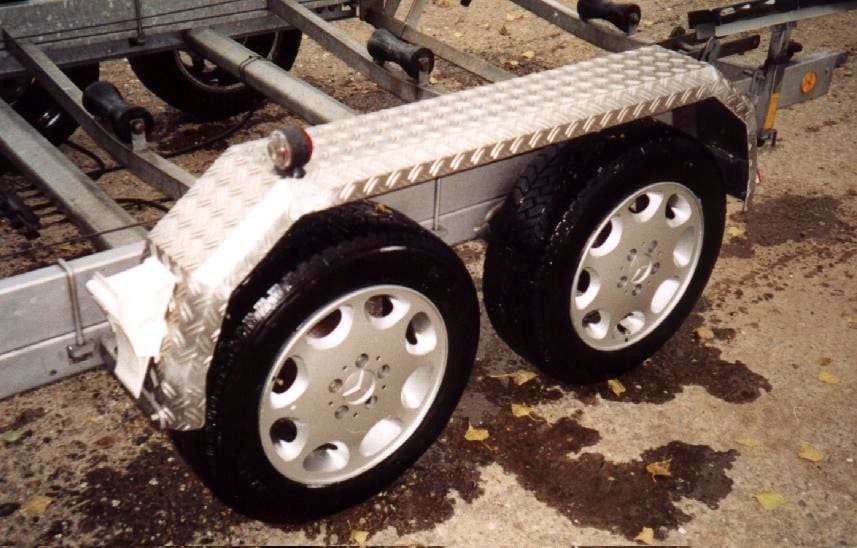
How to Inspect Boat Trailer Axles, Leaf Springs and Hangers
Check the parts that actually hold your boat off the road: the axle tube, leaf springs, hangers, shackles, bushings and U-bolts (or the rubber torsion axle on newer trailers). Learn what rust-through, broken leaves and worn shackles look like, how uneven tire wear points to a bent axle, and when it's time to replace instead of patch.
Replacing a Boat Trailer Axle: When You Need One and How to Order the Right Size
A bent, rusted-through or undersized axle can't be fixed with new bearings. Learn the signs, the difference between straight, drop and torsion axles, the measurements a supplier needs (hub face, spring centers), what to specify for saltwater, and why this is usually a trailer-shop job.
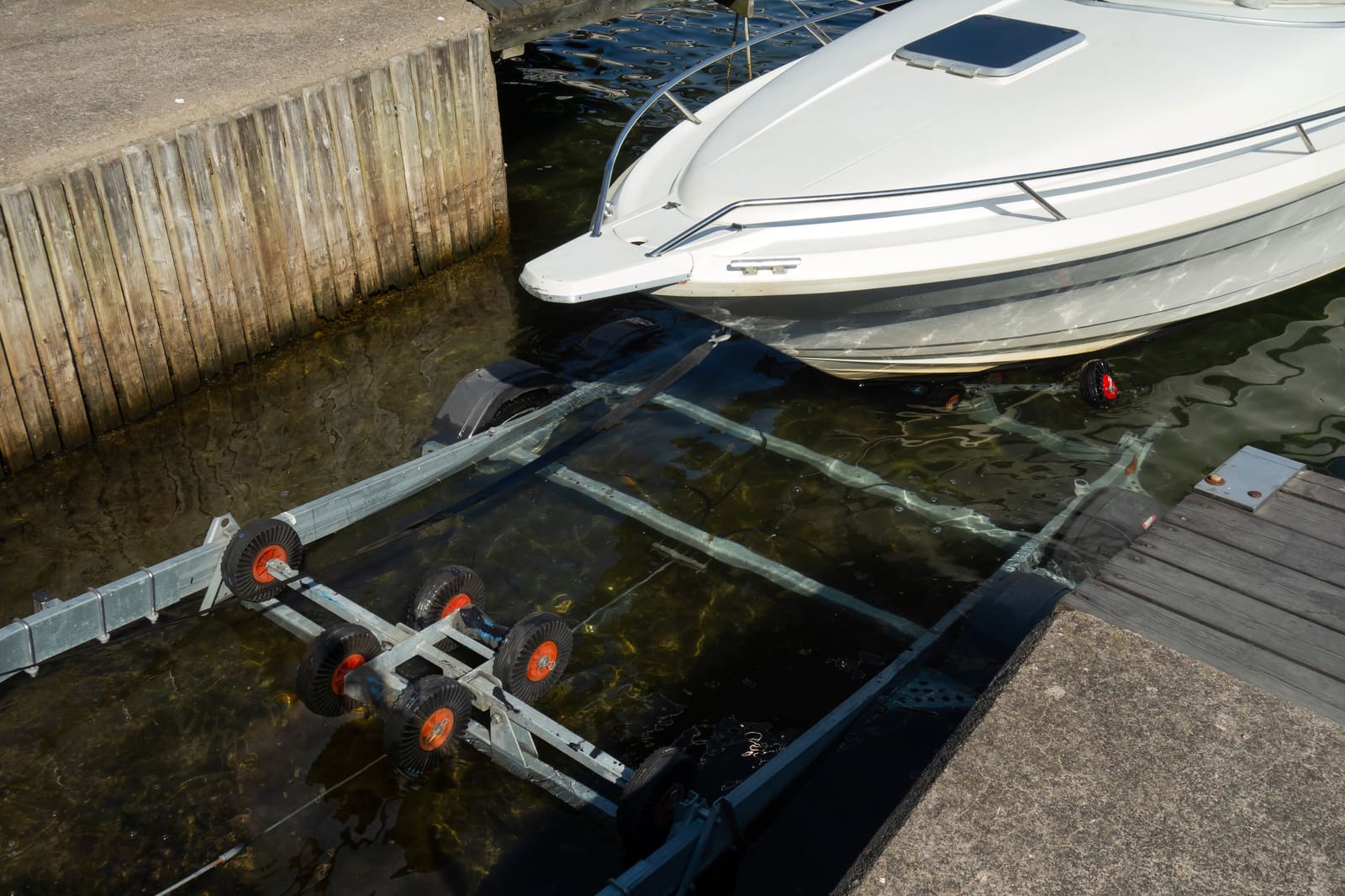
How to Check and Care for Boat Trailer Surge Brakes
Understand how the hydraulic surge brakes on your boat trailer work, check the fluid, use the reverse lockout correctly and rinse salt out of them after every dunk. Simple habits that keep the brakes from seizing, dragging or failing when you need them.

Electric-Over-Hydraulic and Electric Trailer Brakes: Controller Setup, Breakaway and Care
Why most boat trailers use surge or electric-over-hydraulic (EOH) brakes instead of plain electric drums, how to pick a compatible in-cab brake controller and set its gain, how to test the breakaway switch and battery, and how to keep the system working around saltwater.
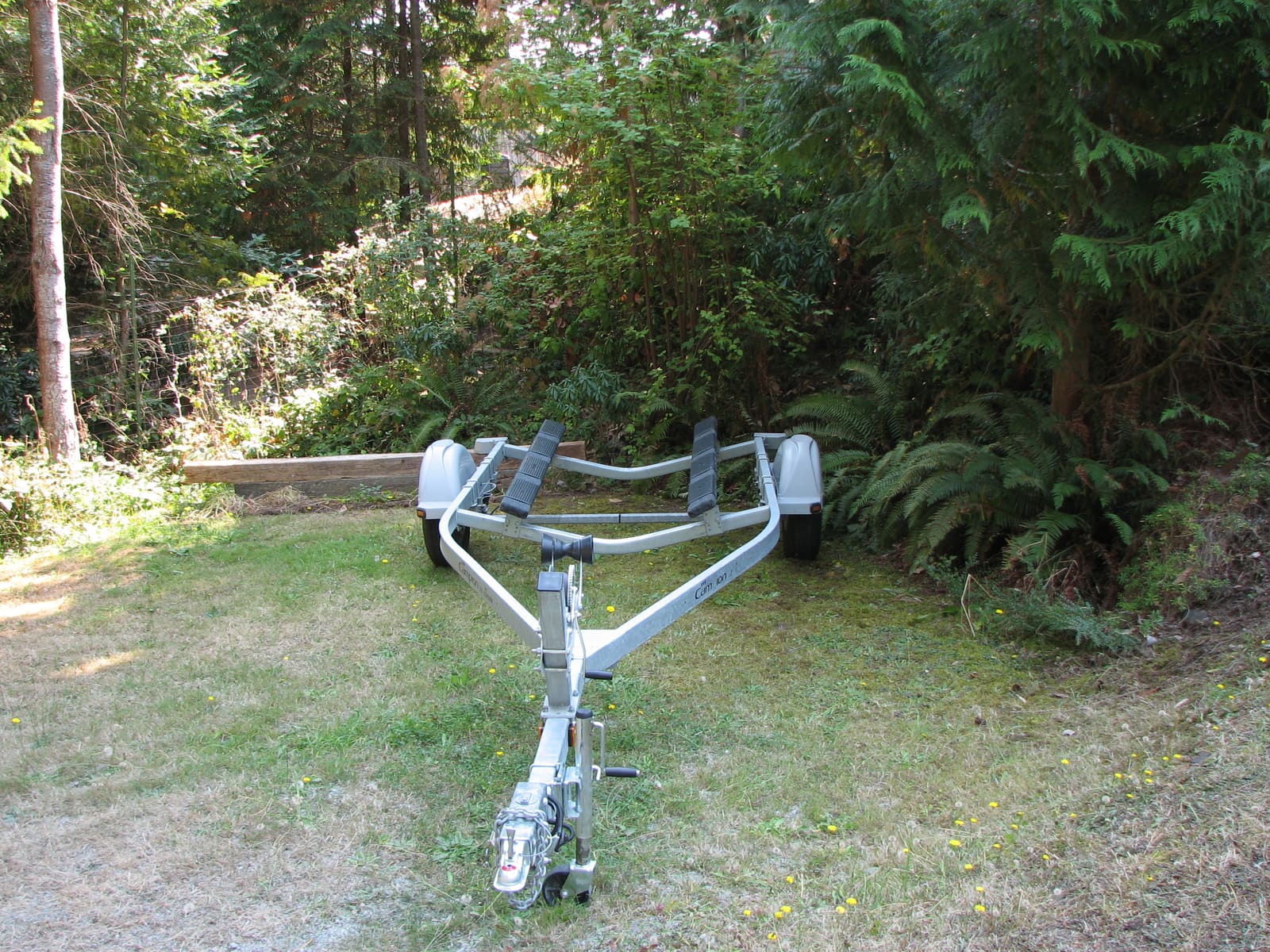
How to Inspect a Used Boat Trailer Before You Buy
A worn-out trailer can turn a good boat deal into hundreds or thousands in repairs, or a breakdown on the way home. Walk through the capacity plate and VIN, frame, axle and springs, hubs, brakes, tires, lights, coupler, winch and bunks, and the title paperwork before you hand over the money.
How to Inspect, Inflate and Replace Boat Trailer Tires
Check your trailer tires the way the pros do: the right type (ST), the right load range, the right cold pressure, and an honest look at their age. Tires are the number one reason boat trailers end up on the side of the highway.