Synthetic Teak Decking: Choosing, Installing and Caring for PVC Teak
PVC "teak" such as Flexiteek, PlasDECK and Permateek gives you the teak look without oiling or recaulking, but it is glued down for good and it gets hot in the sun. Learn how it compares with real teak and foam, what a pro or DIY install involves, and how to clean, repair and keep the warranty valid.
Time
5 h
Shop would charge
$1000-15000
Applies to
All engines
Safety first: Synthetic teak is glued down permanently, so fix any soft deck core, leaking fittings or rot before it goes down; it will hide those problems for years while they get worse. Adhesives and clean-up solvents are flammable and give off fumes: work in open air, away from flames, with gloves and eye protection. Like any dark deck, PVC teak can get hot enough in strong sun to hurt bare feet, especially children's and pets'. Never cover cockpit drains, scuppers, fuel fills or vents.
Owners often ask
- Is synthetic teak too hot to walk on barefoot in summer?
- Can I put PlasDECK or Flexiteek right over my old teak deck or SeaDek pads?
This guide walks you through it. Still stuck? Ask the AI Mechanic about your engine.
Tools
- Clear template film (from the decking maker) and a fine permanent marker
- Masking tape, tape measure and straightedge
- Screwdrivers and wrenches to remove deck hardware
- Random-orbit sander or sanding block (for prepping the old deck only)
- Notched trowel and roller of the type the decking maker supplies or specifies
- Utility knife with fresh blades
- Shop vacuum, rags and nitrile gloves
- Safety glasses and a dust mask or respirator
- Soft deck brush and a hose (for care)
Parts & supplies
- Synthetic teak panels or strips cut to your templates
- The adhesive the decking maker specifies (often a one-part polyether or polymer adhesive)
- Cleaning solvent the maker specifies for squeeze-out (PlasDECK names denatured alcohol)
- Solid packers or spacers for hardware that bolts through the decking
- Marine sealant for rebedding deck hardware
- pH-neutral deck cleaner or mild boat soap
- 40 to 80 grit sandpaper, for hand-sanding scuffs later
Before you start
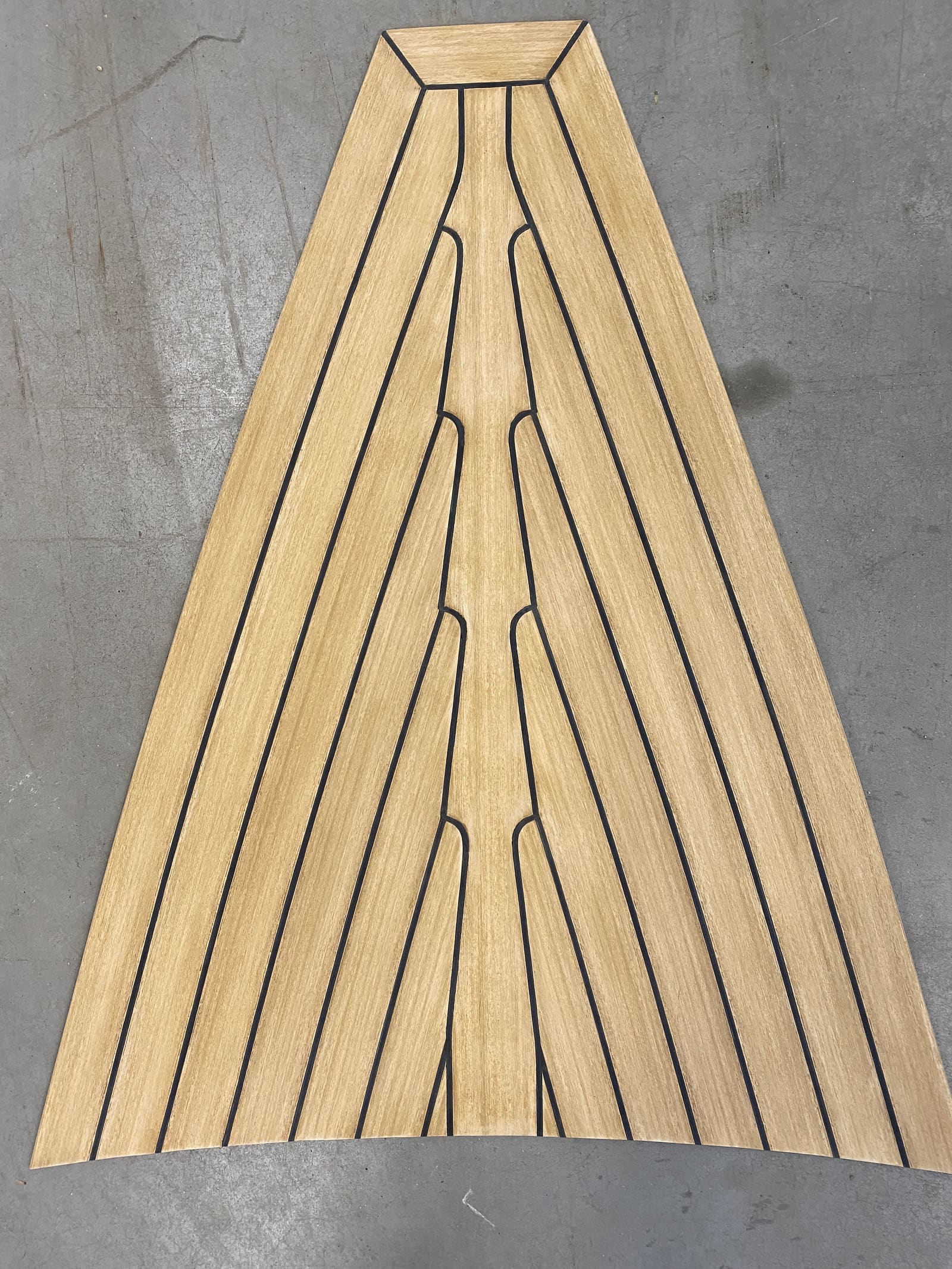
What it is. BoatUS describes synthetic teak as flexible PVC made to look like teak, usually sold as long strips that lock together (tongue-and-groove or shiplap edges) with the black or white "caulk" lines built in. Strips are joined into panels, often with a border around the edge, and glued to the deck. Brands include Flexiteek, PlasDECK, Permateek, NuTeak and Dek-King, and many builders now use it at the factory on swim platforms and cockpits.
How it compares:
- Real teak: looks and feels like the real thing and stays cooler than most dark surfaces, but needs regular cleaning, eventually recaulking and, as it wears thin, replacement (see the teak care guide). PVC never needs oil or varnish; PlasDECK says flatly never to put either on it.
- EVA foam (SeaDek-style pads): softer underfoot, cheaper and DIY-friendly, and it peels off later. BoatUS puts foam's life at about five to seven years. PVC teak lasts longer and looks more like wood but, in BoatUS's words, is meant to be permanent; the president of PlasDECK's parent company told BoatUS it is easier to buy a new boat than to remove PVC decking.
- Molded nonskid or nonskid paint: cheapest and lightest, and white surfaces stay coolest in the sun, but it is harder to keep looking clean.
Weight. PlasDECK lists its material at about 1.2 pounds per square foot, lighter than teak but not nothing on a small boat; add it to your load if you are covering a big area.
Who installs it. Most private owners use a dealer or installer. Flexiteek, for example, offers boat owners a full service (templating, building the deck in a shop and fitting it) and says a typical yacht takes from a few days to a couple of weeks. PlasDECK and Permateek also sell do-it-yourself options, which make most sense for small, simple areas such as a swim platform or cockpit sole.
Cost. Prices vary by brand, design and installer. PlasDECK's own FAQ gives rough figures of about $20 per square foot for DIY material and glue and about $40 per square foot for a premade custom panel, with borders, hatches and curves adding more. Installation labor is on top of that. Get written quotes from more than one installer.
Steps
Think about how you use the deck. If people go barefoot in hot sun, a dark synthetic may be a poor choice (see step 11). If you want something you can remove in a few years, foam is the better fit. If you want the teak look with almost no upkeep and plan to keep the boat, PVC teak makes sense. Because removal is so hard, decide before you buy, not after.
A common reason owners look at it is a swim platform that's slippery when wet. PlasDECK says its surface stays non-slip when wet; owners in forums often add that foam pads stay cooler and cost less on a sunny platform. Try both samples wet and in the sun before you choose.
Walk every area and tap it with a plastic mallet or screwdriver handle, listening for dull or soft spots. Look for cracks, stress crazing and stains around deck fittings, which point to water in the core. Fix all of it first (the gelcoat repair and deck hardware rebedding guides cover the basics). Flexiteek also says its decking cannot go directly over old teak or foam pads: those have to come off, down to the fiberglass or another solid surface, before installation. Ask your installer what they need underneath.
When comparing brands, BoatUS suggests looking for material that is the same color all the way through, with the caulk lines molded in, so that scratches can be sanded out instead of showing a different color underneath. Choose plank color, caulk color (black, white, gray and others) and whether you want borders. Many brands now offer lighter or "cool" versions; BoatUS reported some are up to about 30 percent cooler than earlier products, and PlasDECK sells a line it calls CoolTEAK. Ask for physical samples and leave them in the sun on your deck for an afternoon. Treat makers' comparisons as sales claims until you've tested them: Flexiteek, for example, says its decking is 35 percent lighter and cools 30 percent faster than other PVC decking, and that it now uses a bio-attributed PVC with phthalate-free plasticizers. A side-by-side sample test on your own boat tells you more than any brochure.
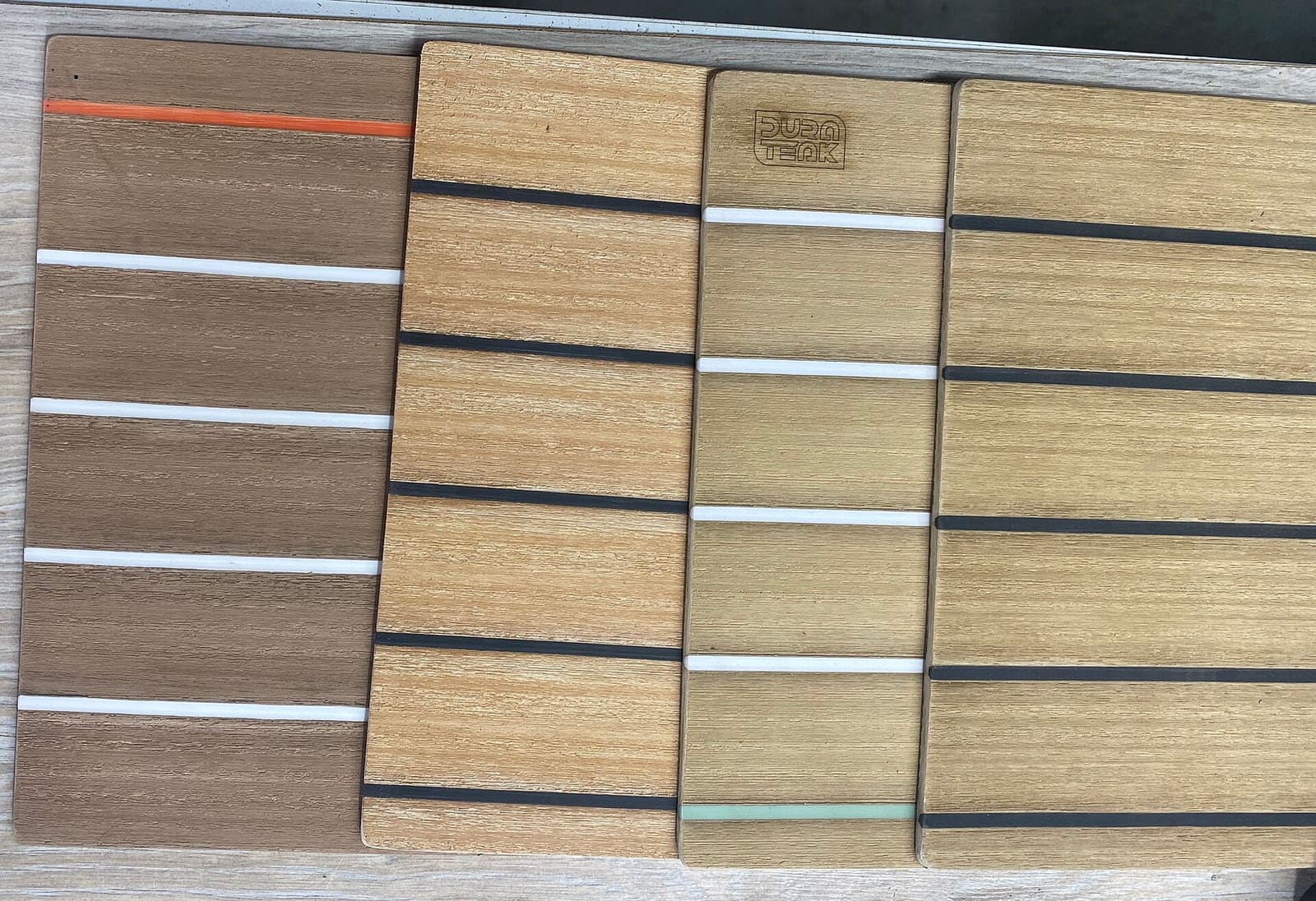
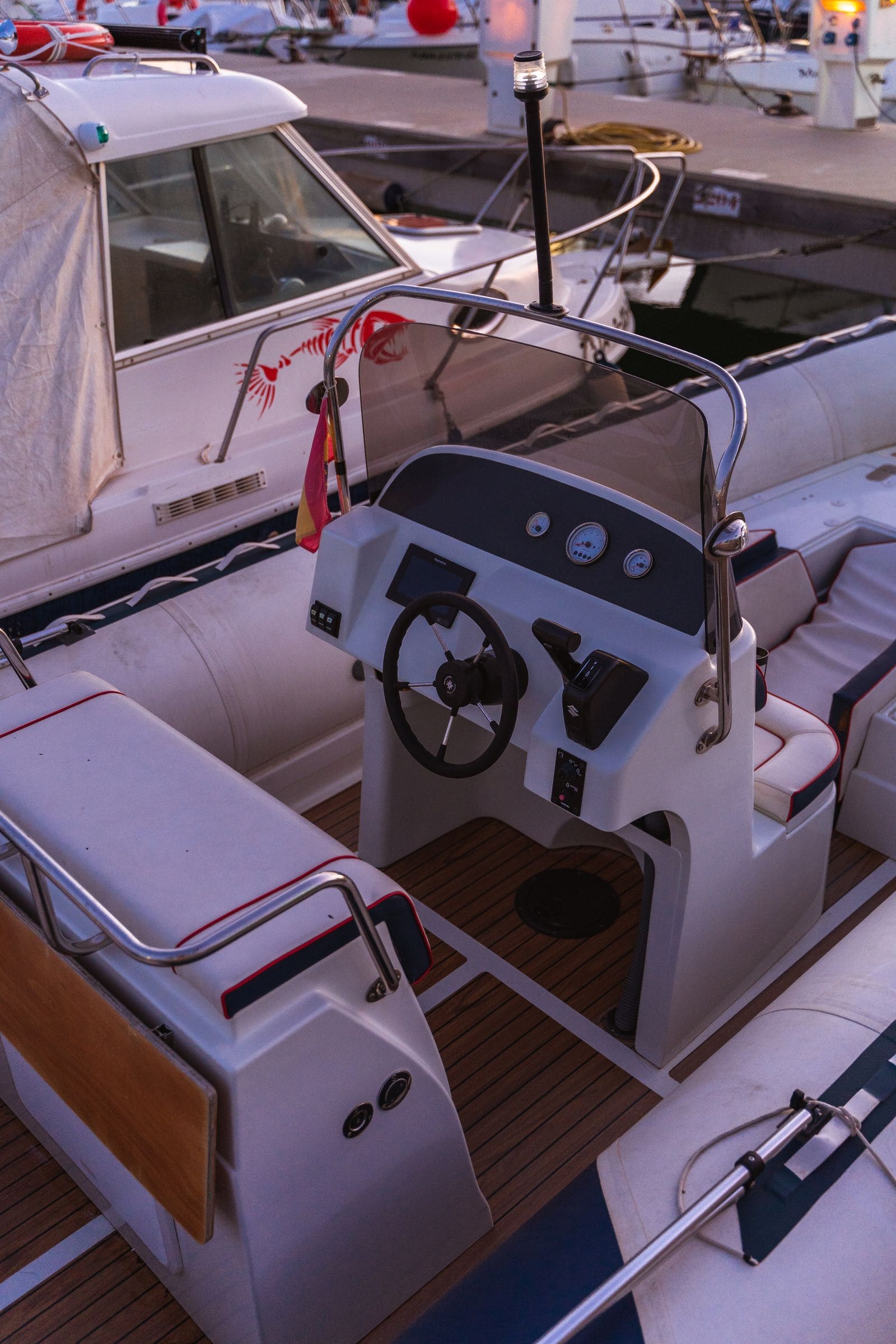
Ask for real samples: plank and caulk colors look different in bright sun. Photo: Durateakpeter / Wikimedia Commons · CC BY-SA 4.0 Warranties differ a lot. BoatUS found material warranties ranging from five to twenty years, and some installers warrant their work longer than the material itself. PlasDECK's limited warranty, for example, runs five years from purchase, covers defects in the material, excludes splitting or cracking caused by improper installation, and requires a written claim with proof of purchase and return of the defective material. Read the actual terms, ask what the installer covers, and keep every receipt and the installer's details with the boat's records.
There are three common routes:
- Full service: the dealer templates the boat, builds the panels in a shop and fits them. Permateek says its distributors need only about two days on the boat for this, one to pattern and one to fit, with the rest done off-site.
- Custom panels, you fit them: you send templates, the maker builds panels to fit, and you glue them down. Fewer cuts on the boat, but you still do the adhesive work.
- Pure DIY: you buy strips or rectangular panels and cut and fit them yourself. Permateek limits its self-cut option to simple shapes with no margin boards; PlasDECK publishes installation guides and videos and offers phone support.
If the area has curves, several hatches or a border design, a pro or custom panels will usually look much better.
Whoever builds the panels works from your template, so this is where most of the final look is decided. PlasDECK recommends its wide, clear template film so you can see hatches and fittings through it while you trace. Tape the film down flat with no ripples, trace the outline of the area, every hatch, drain and fitting, and mark which side is up and where it goes. Flexiteek notes installers use either traditional sheet templates or digital measuring; both work if done carefully. In a Practical Boat Owner project with custom panels, the owners used a template material that doesn't stretch, held it down with strips of double-sided tape, traced edges with a straightedge, used a jar lid for neat rounded corners, and wrote on the template how they wanted the planks, borders and edge rounding laid out. If you want planks to line up across two panels, say so on the template.
Keep decking off scuppers, drains, fuel fills and vents. Hatch lids get their own pieces so they still open. Decide which deck hardware will sit on top of the decking. Flexiteek recommends a solid packer under any through-bolted fitting so the bolts don't crush the flexible decking when tightened; ask your maker what they supply.
Remove the deck hardware in the area, label it, and keep the fasteners together. Prep the surface exactly as the maker's installation guide says; requirements differ. PlasDECK says its material can go right over molded nonskid, but you may want to sand down the raised ridge where nonskid meets smooth gelcoat so the panel sits flat. PlasDECK lists wood, fiberglass, steel, aluminum and epoxy as surfaces its adhesive bonds to; on any other surface, or an aluminum boat with paint or coatings, ask the maker first. Vacuum up all dust and clean off wax and grease as instructed. Let everything dry completely.
Dry-fit every panel first. PlasDECK's method is to spread its one-part polyether adhesive on the deck with a notched trowel, lay the decking in place, then roll it smooth so it beds fully; when laying strips, each one is pushed gently against the last so glue fills the seam, and any squeeze-out is wiped off with denatured alcohol. Permateek likewise uses a single-part polymer adhesive. Follow your maker's open time, temperature range and cure time to the letter, and keep weight and foot traffic off until the adhesive has cured.
A few tricks from the Practical Boat Owner install: trace around each dry-fitted panel and mask just outside the line (and mask the panel's top edge) so the black adhesive stays where it belongs; roll every panel from the middle out to push out trapped air; then weigh it down evenly, especially the exposed edges, so nothing can lift while the glue sets. Warm panels bend more easily over a curved or angled edge. Keep acetone and other solvents you use to clean the deck off the face of the decking, because they can mark it.
Fit the packers, then rebed each fitting with a suitable marine sealant (see the marine sealants and deck hardware rebedding guides). Tighten evenly and stop when snug; overtightening dents the decking and cracks gelcoat. Check that drains and hatches still work and that water runs off where it should.
PlasDECK is candid that, like teak or anything dark, its decking gets warm in the sun. Its suggestions: hose the deck down to cool it, and wear deck shoes on hot days. Rig shade over the cockpit when you can, keep a bucket handy for cooling the swim platform before kids use it, and test the surface with your hand before letting a pet out on it.
Rinse after every trip, and wash with mild boat soap or a pH-neutral cleaner and a soft brush, scrubbing along the grain. Permateek says normal boat wash or a drop of dish soap is fine, and hot soapy water handles sunscreen and food. Clean spills soon: Permateek lists diesel, acetone, concentrated bleach and paint as things to wash off right away. Flexiteek adds that its built-in anti-mold additives work best when dirt, sunscreen and standing water are rinsed away, and it suggests blotting spills, then a diluted pH-neutral detergent left on for only a few minutes before rinsing. Squeegee off standing water.
Makers' deep-clean methods differ, so use the one for your brand:
- PlasDECK: a degreaser applied full strength, left five to ten minutes, then scrubbed along the grain with a stainless or brass grill brush (with any plate and strap removed), followed by a pressure washer of about 1,700 to 2,000 psi if needed.
- Flexiteek: a Scotch-Brite pad along the grain (never on the soft caulking around the edges), and a domestic pressure washer at no more than 135 bar (roughly 1,950 psi), held about 20 cm (8 inches) from the surface. For marks that won't lift, methylated spirit or a baby wipe.
- Permateek: a scouring pad and hot soapy water, or a pressure washer, along the grain.
If you don't know the brand, start with the gentlest method and test in a hidden spot.
All three makers say surface marks, small burns and worn-smooth areas can be hand-sanded along the grain: 40 grit for PlasDECK and Permateek, 40 to 80 grit for Flexiteek. Never use a power sander or belt sander: PlasDECK says a belt sander heats and melts the surface, and Permateek says power sanders distort the grain (PlasDECK allows a sanding drum in a drill). Sanded spots may look lighter at first; Permateek says sun or a heat gun blends them back. Deep gouges, holes and burns can usually be patched: PlasDECK has repair videos, and Flexiteek says its distributors repair damage by vinyl welding or by cutting out and replacing a plank. Avoid the causes too: no hot pans, grills or cigarettes on the deck, felt pads under furniture legs, no high heels, and no dragging heavy gear.
Common mistakes
- Covering a deck that has wet core or leaks. Once the decking is glued down, finding and fixing the problem means cutting it up.
- Choosing a dark color for a barefoot boat in a hot climate, then finding the swim platform too hot to stand on.
- Treating it like real teak: oils, teak cleaners, sealers and varnish are not needed and can harm the finish.
- Using a power sander to "refresh" the surface. It melts or distorts PVC.
- Black-soled shoes. PlasDECK and Permateek both say they can scuff the surface.
- Overtightening hardware without packers, crushing the decking around the bolts.
- Losing the paperwork, then being unable to make a warranty claim.
When to call a pro
- The area has curves, multiple hatches, borders or a pattern you want to look factory-made
- The deck shows soft spots, cracks or water around fittings that need structural repair first
- Old teak or foam has to come off the deck before installation
- A section is lifting, bubbling or cracking (call the original installer while it is under warranty)
- Deep gouges, burns or a damaged plank need welding or replacement
Tips
- Keep a few offcuts from your install. They are perfect for testing cleaners and practicing a sanding repair, and they match the color.
- Lighter colors and the makers' "cool" lines are worth the extra money on boats used in strong sun.
- Put a note in your BoatMend boat record with the brand, color code, installer and install date; you will need all four for repairs or a warranty claim.
- Shopping for a used boat with synthetic teak? Look closely at edges and seams for lifting, and press near fittings for soft deck underneath.
- Want the boat's name or a logo in the deck? PlasDECK and Flexiteek both say they can cut lettering and logos into custom panels from your design; decide before the panels are made.
Official references
We read these to write this guide. Your engine's own manual always wins.
- BoatUS – Boat Deck Alternatives (PVC teak and EVA foam)
- PlasDECK – FAQs
- PlasDECK – Cleaning Your PlasDECK Synthetic Teak Boat Decking
- PlasDECK – Synthetic Teak Repair and Maintenance
- PlasDECK – 5 Year Warranty
- Flexiteek – FAQs
- Flexiteek – Deck Care
- Permateek – Products, Fitting Options and Maintenance
- Flexiteek – Environmental Commitment
- Practical Boat Owner – Fitting synthetic teak to a cockpit
Safety: BoatMend is for information only and does not replace a certified marine technician. You are responsible for your safety and your boat. Read the full disclaimer.
Last updated 2026-10-25
Related guides
Teak Deck and Trim Care: Clean, Oil, Seal or Leave It Natural
Keep teak decks, rails and trim looking good without wearing them away. Choose between a natural gray look, oil, sealer or varnish, and learn how to clean teak gently so you don't destroy it with harsh cleaners or a pressure washer.
How to Install EVA Foam Decking (SeaDek-Style Pads) on Your Boat
Closed-cell foam decking makes a hard fiberglass deck grippy and comfortable underfoot. Learn when a peel-and-stick DIY job makes sense, how to template, cut and prep, the temperature and gap rules, how to lay pads without trapped air, and how to clean, repair and eventually remove them.
How to Clean, Protect and Restore Non-Skid Decks
Get dirt, fish blood, rust and mildew out of textured non-skid without wearing it away, learn why ordinary wax makes it dangerously slick, and decide when worn non-skid needs a deck paint with grip additive or traction pads instead.
How to Find and Fix Leaking Deck Hardware (Rebedding Cleats, Stanchions and Tracks)
Track down the cleat, stanchion base or track that is dripping into the cabin, then remove it, seal the deck core and bed it again with the right sealant so the leak stops for years instead of weeks. Catching it early protects the deck core from rot.
Marine Sealants Explained: 5200, 4200, 4000UV, Polysulfide, Silicone and Butyl Tape
Pick the right sealant before you bed a cleat, a through-hull, a window or a transducer. The wrong goo either leaks in a year or glues a part on so hard you damage the boat getting it off.
How to Repair Small Gelcoat Chips and Scratches
Fill and blend small chips, dings and scratches in your boat's gelcoat with a repair kit so they stop letting water into the fiberglass and look close to new. Also learn to spot damage that is structural and needs a pro.

How to Re-Caulk Teak Deck Seams (and When the Deck Is Beyond Saving)
Spot failing teak deck seams, reef out the old caulk, prep and bond-break the seams, lay in a teak-specific caulk and sand it flush. Done right, fresh seams stop deck leaks and add years to the deck; this guide also shows the signs that a deck is too worn to recaulk.
How to Install an Inspection Port (Deck Plate) in a Deck or Bulkhead
Add a screw-out or pry-out deck plate so you can reach hidden nuts, wiring, hoses and through-hulls, or check a deck core for rot. Learn where it is safe to cut, how to pick and size the port, how to seal a cored deck with epoxy, and how to bed the ring so it never leaks.