Teak Deck and Trim Care: Clean, Oil, Seal or Leave It Natural
Keep teak decks, rails and trim looking good without wearing them away. Choose between a natural gray look, oil, sealer or varnish, and learn how to clean teak gently so you don't destroy it with harsh cleaners or a pressure washer.
Time
4 h
Shop would charge
$300-2000
Applies to
All engines
Safety first: Many teak cleaners contain strong acids or caustics. They can burn skin and eyes, give off irritating fumes, and damage gelcoat, paint, varnish, anodized aluminum and chrome. Wear gloves and eye protection, keep a running hose handy, and rinse everything thoroughly. Oily rags can catch fire on their own as they dry: lay them flat outdoors to dry or keep them in a sealed metal can of water until disposal.
Owners often ask
- My teak deck turned black and gray. What's the safest way to clean it?
- Should I oil my teak or just leave it to go gray?
This guide walks you through it. Still stuck? Ask the AI Mechanic about your engine.
Tools
- Garden hose with a shower or gentle spray nozzle (no pressure washer)
- Soft or medium nylon scrub brush and a sponge
- Non-scratch nylon scrub pads or bronze wool (never steel wool)
- Buckets
- Disposable paint brushes and lint-free rags
- Painter's tape and plastic sheeting to protect gelcoat and paint
- Rubber gloves, safety glasses or goggles
Parts & supplies
- Mild boat soap or a gentle teak cleaner
- One-part or two-part teak cleaner (only if gentle cleaning fails)
- Your chosen finish - teak oil, teak sealer or spar varnish - or none
- Mineral spirits or the cleanup solvent on your finish's label
Before you start
Good news: teak is naturally oily and very rot resistant. Most teak care is about looks, not about keeping the wood alive. Every hard scrub, sanding or strong cleaner removes a little wood, and modern teak decks are often thin. The gentlest care that gives you the look you want is the right care.
Pick your look first. Each has a different workload:
- Natural silver-gray: leave it bare. Only gentle washing with soap and a soft brush. Lowest effort, and the wood lasts longest.
- Oiled (golden): looks great, but the effect is short-lived outdoors. Oil darkens in the sun, can grow mildew, and needs frequent recoats and cleanups. Many teak deck builders advise against oiling walking surfaces because it can make them slippery and hold dirt; check your boat builder's advice for your deck.
- Sealed: a sealer locks in color and keeps out dirt and water. It usually needs a fresh coat every few months (typical; check the product label).
- Varnished (brightwork): a glossy, protective finish for rails and trim, not decks. It takes many coats and regular touch-ups; it is a project of its own.
Real teak or not? Many newer boats have synthetic teak decking or teak-look vinyl. Those need the maker's own care products: teak cleaners and oils can damage them. As an example, Flexiteek's care page for its current deck calls for fresh water or a diluted pH-neutral cleaner, wiping along the grain, and no harsh chemicals. It also warns that hot pans, grills, high heels and narrow furniture legs can mark the surface for good. Some synthetic brands allow gentle pressure washing within limits; real teak never does. Follow the care guide for your exact product and generation.
Steps
Wet the teak and the surrounding gelcoat. Wash with a mild boat soap and a soft brush or sponge. On decks, work across the grain or in small circles with light pressure; scrubbing hard along the grain digs out the softer wood between the grain lines and leaves the seams sticking up. Rinse well. For a natural gray look, this is all you need, every few weeks or after a dirty trip.
A pressure washer rips out the soft wood between the hard grain lines, leaving a rough, grooved surface that holds dirt and water. It can also blow out deck seams. Use a hose on a gentle shower setting.
If the teak is still stained, black or blotchy after washing, step up one level at a time:
- A gentle teak soap or cleaner made for teak.
- A one-part teak cleaner (often oxalic acid based).
- A two-part cleaner (a caustic part one, then an acid part two) only for neglected, very dark teak. It works dramatically, but it removes the most wood. Don't make it a routine.
Always test on a small hidden spot first.
Wet down gelcoat, paint and metal next to the teak so the cleaner can't dry on them, and keep rinsing them while you work. Tape plastic over anodized aluminum frames, painted areas and chrome. Never let cleaner sit on the hull or drip into the water; collect runoff where you can and follow your marina's rules.
Wet the wood, apply the cleaner as the label says, and spread it evenly with a nylon pad or bronze wool. Let it work a few minutes without drying, then scrub lightly while still wet. Never use steel wool on a boat: the tiny steel bits rust and leave brown spots everywhere. Rinse thoroughly, brushing the grain clean.
Wet the wood. Brush part one onto a small area with a nylon brush (it dissolves natural bristles), wait the time on the label, and scrub gently. Then apply part two, which neutralizes part one and brightens the wood, until the color is even. Flush everything with lots of water. Mix exactly as the label says: too strong a mix can damage the wood and soften the black seam compound.
Before any oil or sealer, the wood must be completely dry, usually at least a full day of dry weather. Finishes put on damp teak peel, turn blotchy or trap mildew.

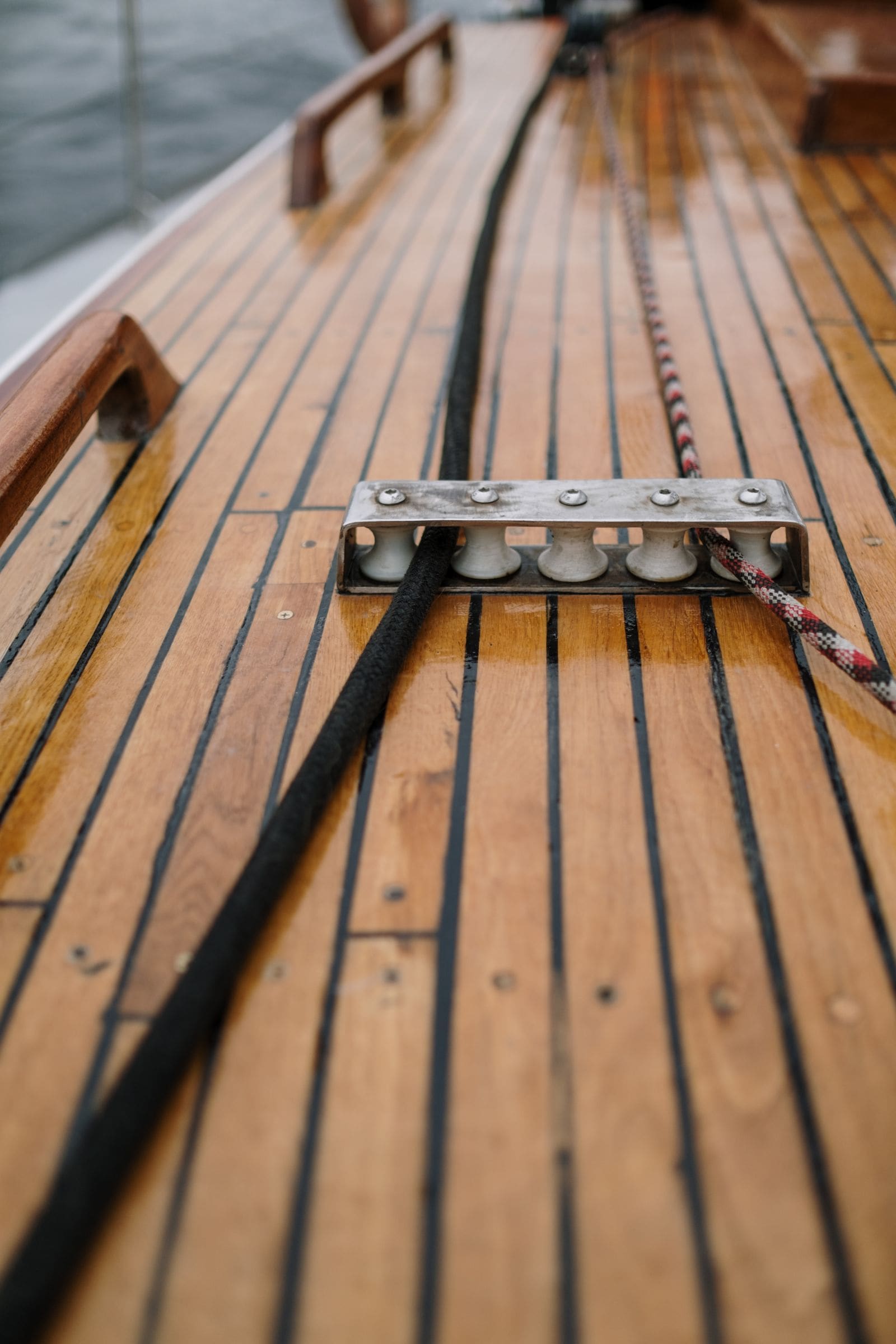
Bare teak left to weather turns light and then silver-gray; it only needs gentle washing. Photo: Çisel Bozar / Pexels Light hand sanding with the grain can smooth raised, fuzzy grain on trim. Go easy: teak decks and veneers are thin, and screw plugs pop out once the wood around them is worn down. Never power sand a teak deck unless you have checked there is enough thickness left; that is a job to discuss with a teak specialist.
Tape off gelcoat and paint. Brush teak oil on with the grain. Wipe any drips or runs on fiberglass immediately with a rag dampened with mineral spirits; oil left on gelcoat leaves dark stains that are very hard to remove. Apply more coats as the wood soaks them up, wiping off any excess that pools, until the wood looks evenly saturated with a matte finish. Follow the can for thinning and drying times.
Follow the sealer maker's prep exactly. Some systems want bare, clean, dry wood; others want the teak oiled first, left to cure, and then wiped with a solvent before the sealer goes on. Apply thin coats, wipe off excess, and stop when you get an even matte finish.
Use a marine spar varnish with UV inhibitors, not a household polyurethane. Work in warm, dry, calm weather on wood that is clean, dry and smooth. Plan on many thin coats with light sanding in between, following the varnish label. Repair nicks quickly so water doesn't creep under the finish.
While the deck is clean, look at the black seam compound between planks. Lifting, cracked or missing seams, loose plugs, and planks that move or feel spongy can let water into the deck core below. Note them and plan repairs.
Rinse teak with fresh water after trips, especially in salt water. Wash gently every few weeks. Recoat oil or sealer when the color starts to fade or water stops beading. Log your cleaning and recoat dates in BoatMend.
Common mistakes
- Pressure washing teak. Fast way to a grooved, worn deck and leaking seams.
- Scrubbing hard with a stiff brush along the grain. It wears the soft wood away and leaves the seams proud.
- Using two-part cleaner every time. Each round takes wood with it. Use the mildest cleaner that works.
- Steel wool. Rust spots everywhere.
- Grabbing whatever cleaner is under the sink. Use a mild boat soap or a product made for teak, follow the label, and test it on a hidden spot first.
- Oil drips on gelcoat. Wipe them right away; dried oil stains are stubborn.
- Oiling a deck you walk on without checking with the builder; it can get slippery and dirty fast.
- Leaving oily rags in a pile. They can self-heat and start a fire.
When to call a pro
- Deck seams are lifting, cracked or missing over large areas (re-seaming is specialist work)
- Planks are loose, worn thin, show exposed screw heads, or feel soft or spongy underfoot
- There are leaks below decks under teak areas or signs of a wet deck core; ongoing water entry into the boat should be found and stopped quickly
- You want a full varnish restoration and don't have the time or space to do many coats
- Your boat has synthetic teak and you are not sure which products are safe
Tips
- If you like the silver-gray look, you will save a lot of time and money by leaving teak bare and just washing it gently.
- Clean teak on a cool, overcast day so cleaners don't dry on the wood or the gelcoat.
- Keep a spare rag dampened with mineral spirits nearby whenever you oil.
- A cover over rails and trim when the boat is not in use greatly slows weathering of any finish.
Official references
We read these to write this guide. Your engine's own manual always wins.
Safety: BoatMend is for information only and does not replace a certified marine technician. You are responsible for your safety and your boat. Read the full disclaimer.
Last updated 2026-10-23
Related guides

How to Clean, Remove Oxidation and Wax Your Boat's Gelcoat (Plus Pontoon Tubes)
Wash your hull the right way, bring back chalky, faded gelcoat with compound, and seal it with wax so it stays glossy and protected from the sun. Includes how to clean and protect the aluminum tubes on a pontoon boat.

How to Repair Small Gelcoat Chips and Scratches
Fill and blend small chips, dings and scratches in your boat's gelcoat with a repair kit so they stop letting water into the fiberglass and look close to new. Also learn to spot damage that is structural and needs a pro.

How to Prevent and Remove Mold and Mildew on Your Boat
Stop the musty smell and black spots before they start. Find and fix the water source, keep air moving, control humidity safely, and clean mold off gelcoat, vinyl and cabin surfaces with products that won't damage them.

How to Clean and Protect Boat Canvas, Bimini Tops and Vinyl Seats
Wash your bimini, covers and enclosure the right way, beat mildew without wrecking the stitching, keep vinyl seats soft and stain-free, look after zippers and snaps, and store everything so it comes out clean next spring.