How to Clean, Protect and Restore Non-Skid Decks
Get dirt, fish blood, rust and mildew out of textured non-skid without wearing it away, learn why ordinary wax makes it dangerously slick, and decide when worn non-skid needs a deck paint with grip additive or traction pads instead.
Time
1 h 30 min
Shop would charge
$150-600
Applies to
All engines
Safety first: A wet, soapy deck is slippery. Wear non-slip shoes, work from the cockpit or dock, and rinse soap off before walking on it. Never mix bleach with ammonia, acids or other cleaners: the fumes are toxic. Keep bleach and acid cleaners off canvas, vinyl and the water, and rinse anything that splashes. Don't use ordinary paste wax or polish on non-skid; it can make the deck slick enough to cause a fall overboard.
Owners often ask
- What is the best way to clean non-skid on a boat deck?
- Can I wax my non-skid deck?
This guide walks you through it. Still stuck? Ask the AI Mechanic about your engine.
Tools
- Garden hose with spray nozzle
- Deck brush on a pole (medium bristles for molded non-skid; stiffer for grit-type)
- Soft-bristle brush for foam traction pads
- Buckets and a pump sprayer
- Non-scratch nylon scrub pads (white or other light-duty grade)
- Rubber gloves, safety glasses and non-slip shoes
Parts & supplies
- Non-skid deck cleaner made for marine use, or mild boat soap
- Mildew stain remover safe for gelcoat
- Rust-stain remover for gelcoat (oxalic acid type), used sparingly
- Cleaner made for foam traction pads, if you have them
- Non-skid protectant labeled as safe for non-skid (optional)
Before you start
What kind of non-skid do you have?
- Molded non-skid: the textured pattern (diamonds, dots, sand-like) molded into the gelcoat when the boat was built. Most fiberglass boats have this.
- Grit-type or painted non-skid: deck paint with grit or plastic beads in it, often on older or refinished boats. Painted surfaces are more delicate.
- Foam traction pads: closed-cell foam pads (SeaDek and similar) glued to the deck. They need their own gentler routine (step 9).
Why it's hard to clean: the same peaks and valleys that give you grip hold dirt, fish blood and mildew. The answer is the right brush and a cleaner that lifts the dirt out of the valleys, not more muscle.
How often: rinse the deck with fresh water after every trip (especially salt water and fishing trips), scrub with a non-skid cleaner every few weeks in season, and do a deeper stain treatment as needed. Typical; adjust for use.
Steps
Take off cushions, mats, coolers and gear. Sweep or rinse off loose dirt, leaves and sand. Then wet the whole deck with fresh water. Starting wet keeps cleaners from drying in the texture.
Use a medium-bristle deck brush for molded non-skid. Boating Magazine suggests a stiffer brush for grit-type non-skid. Discover Boating also recommends firmer bristles on non-skid than on smooth gelcoat or paint. Avoid wire brushes and harsh scouring pads; they wear the texture down.
For everyday dirt, mild boat soap and a medium brush usually do the job. For grimier decks, use a cleaner made for non-skid. Star brite's directions, for example, are to wet the deck, spread the cleaner with a deck brush, let it sit 2–3 minutes, scrub, then rinse well. Work in sections small enough that the cleaner doesn't dry. In Practical Sailor's test of non-skid cleaners, Meguiar's and 3M did best. Cheaper Star brite, West Marine and Nautical Ease products were nearly as good. Grease and fish blood were the hardest stains in that test.
Rinse until no suds are left, working from the highest point down to the scuppers. A spray nozzle or pump sprayer pushes water into the texture better than a bucket. Leftover cleaner attracts dirt and can leave a slick or streaky film.
- Fish blood, food, sunscreen: clean them up quickly. Re-apply non-skid cleaner, let it dwell, and scrub with a nylon pad in the valleys. For blood that already dried, BoatUS editors suggest sprinkling a mild cleanser powder such as Bar Keepers Friend on the wet non-skid, scrubbing and rinsing, or trying hydrogen peroxide or an oxygen cleaner (OxiClean or a generic) on really stubborn spots. Their general rules: ask the boat or deck maker before using a new cleaner, read the label for your surface, and test on a hidden spot first. To keep runoff down, use the weakest dilution that works.
- Grime and heavy staining: Boating Magazine's writer uses a mild abrasive cleanser with bleach (Soft Scrub with Bleach) on tough non-skid stains. He warns it leaves a residue that's hard to rinse, can streak the topsides, spots canvas and clothing, and dulls smooth gelcoat. Use it only on non-skid on gelcoat, and rinse, then rinse again.
- Rust spots: use a rust-stain remover made for gelcoat, following its label, and rinse well. Find and fix the source (often a rusty fastener or a tool left on deck).
- Mildew: use a mildew stain remover labeled safe for gelcoat. Then improve drainage and air flow (see
mold-mildew-prevention).
Keep bleach and acid cleaners off painted non-skid unless the paint maker approves them, because they can fade or weaken the paint. Use mild soap there instead.
Harsh abrasive powders used week after week wear through the gelcoat. Practical Sailor tells of an owner who scrubbed his non-skid with a scouring powder until pink spots appeared: he'd worn through the gelcoat into the laminate underneath. Save abrasive cleansers and nylon pads for spot work, not routine washing.
Paste wax, cleaner-wax and polish fill the valleys and smooth the peaks. That makes a deck slick, especially when wet, and the wax holds dirt in the texture too. When waxing the hull and smooth gelcoat, mask the edges of the non-skid or wipe off any wax that lands on it right away. Some makers sell protectants made specifically for non-skid that claim not to reduce grip. Practical Sailor has tested a few of them. If you use one, choose a product labeled for non-skid, apply it thinly as directed, and test the traction wet and dry before anyone walks on it.
Let the deck air dry or squeegee standing water toward the drains. Walk it carefully in wet shoes. If some areas feel slick even when clean, the texture may be worn (step 10) or there may be wax or residue left (re-wash with a non-skid cleaner).
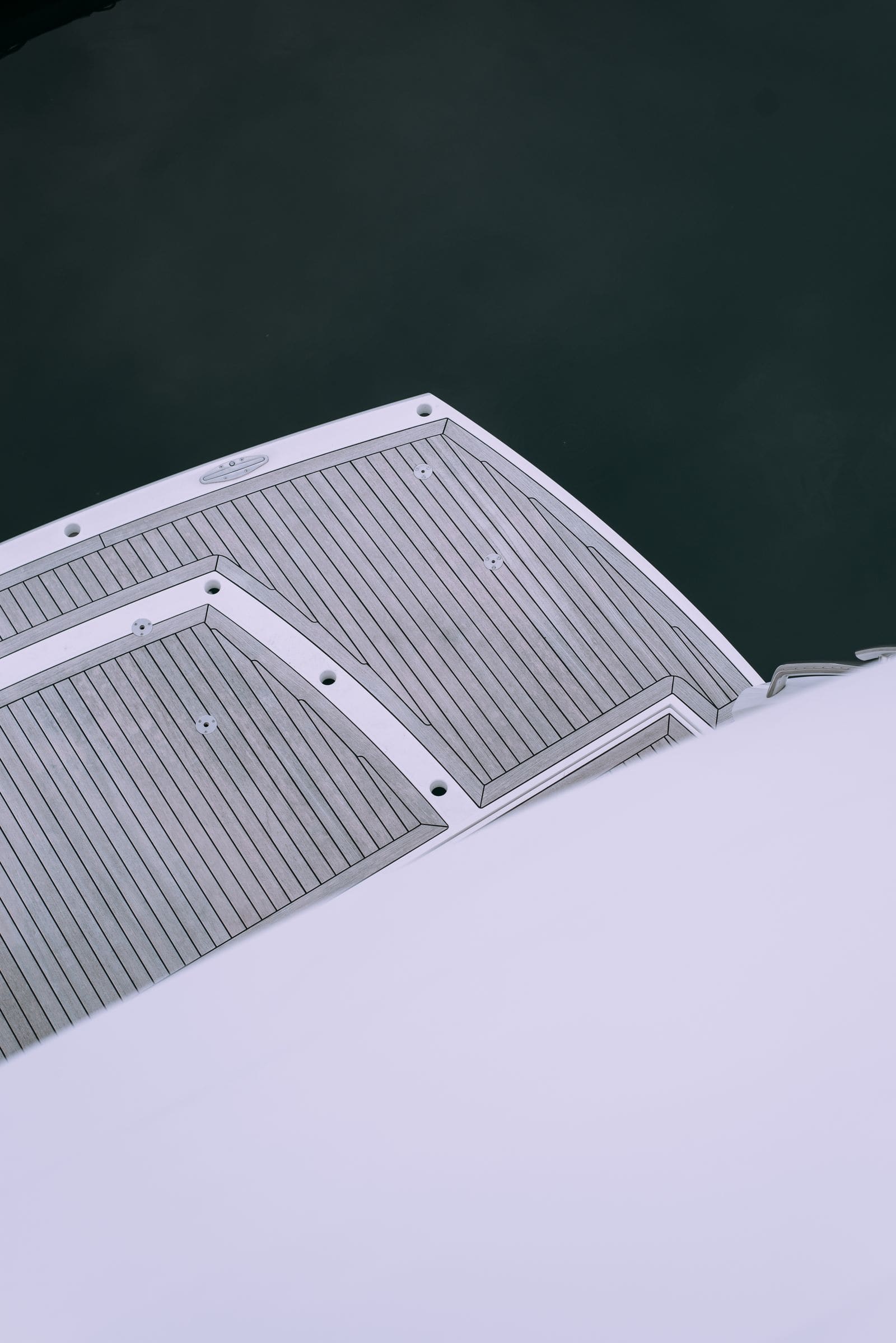
Traction pads on a swim platform. Foam pads need a softer brush and their maker's cleaners, not acidic hull cleaners. Photo: Roman Odintsov / Pexels For foam pads such as SeaDek, follow the pad maker's directions. SeaDek's own advice is:
- Use its foam pad cleaner, or a mild all-purpose cleaner or dish soap in warm water with a medium-bristle brush.
- For stubborn stains, use a diluted bleach solution with a soft brush, then rinse thoroughly.
- For rust, use a small amount of vinegar or oxalic acid, kept away from the pad edges where it can attack the glue.
- If you use a pressure washer, use only a light-duty, low-pressure unit with a wide tip, held well back.
SeaDek also lists several common boat and car cleaners it says not to use on its pads. Check the maker's list before using any product.
After years of sun, foot traffic and scrubbing, molded non-skid wears smooth. If the deck stays slippery even when clean, your options are:
- Deck paint with grip additive: Interlux, for example, makes a ready-mixed non-skid deck paint. It also sells a polymer additive that you mix into its topside paints or sprinkle onto the first wet coat, then brush off the excess and topcoat. Prep is everything: cleaning, de-waxing, sanding and masking per the paint maker's instructions.
- Glue-down traction pads or mats: foam pads cut to fit, or rubberized non-skid mats. Practical Sailor's tests found good mats very grippy. Pads are comfortable and look sharp but need gentle care (step 9).
- Textured deck paint: some deck paints get their grip from a raised pattern made with a special roller rather than from grit, so there's no grit to wear out and shed, as a surveyor explains for BoatUS.
- Re-gelcoating with a new molded pattern: expensive and specialized. Practical Sailor notes the original molded pattern can't easily be recreated, so new material is usually applied on top.
Choosing grit and color: the same BoatUS article notes that larger, sharper grit grips best but is rough on bare feet and knees, while fine grit is kinder to skin and grips less. Light colors stay cooler underfoot but glare more and show dirt. Mats and pads usually cost more than paint but come in more colors and patterns.
If you choose to paint, follow the paint maker's system exactly, including primer, thinner, recoat times and temperature limits. Mask the smooth areas and hardware first. Old failing grit coatings or pads have to come off completely before anything new goes on. BoatUS's prep outline for worn molded non-skid: wash with boat soap, let it dry, sand to scuff and level (coarse paper first, then a finer grit), vacuum, and wipe down with a fiberglass solvent wash, changing rags often; use the grits and solvent your paint maker names. Pull the masking tape while the paint is still soft (BoatUS suggests about half an hour after painting) so it doesn't tear the edge. Test the texture on a scrap panel before doing the deck. Repairing cracks or soft spots comes first (see
gelcoat-repair). Paint over a wet core just traps the problem.Rinse after every outing, clean up fish blood and spills right away, and keep the scuppers clear so water drains instead of sitting (see
clean-drain-dry). A cover keeps leaves, bird droppings and UV off the deck. Log deep cleanings in BoatMend.
Common mistakes
- Waxing or polishing non-skid. It turns a safe deck into a slick one.
- Abrasive powder every week. It wears through the gelcoat.
- Letting cleaner dry in the texture. It leaves residue that holds dirt and can be slippery.
- Bleach or acid on painted non-skid or foam pad edges. It fades paint and loosens pad glue.
- Pressure washing up close. It can damage gelcoat edges, paint and foam pads.
- Mixing cleaners. Bleach plus ammonia or acid makes toxic gas.
- Ignoring rust spots. They come from a rusty fastener or tool that will keep staining.
When to call a pro
- Cracks, soft or spongy spots, or crazing in the non-skid (possible core damage)
- Non-skid worn smooth over large areas and you want it painted or re-textured properly
- Stains that won't come out of painted non-skid, where the wrong product could ruin the finish
- Foam pads lifting, or a full pad installation you want measured and fitted
- Rust stains that come back from under deck hardware (see
stainless-steel-care)
Tips
- Wash the deck on an overcast day so cleaner doesn't dry too fast.
- Keep a bucket, brush and bottle of non-skid cleaner on board for fishing days.
- Mask the non-skid with tape when you wax the smooth gelcoat beside it.
- Test any new cleaner on a small hidden area first.
Official references
We read these to write this guide. Your engine's own manual always wins.
- Boating Magazine – Choosing the Right Cleaner for Nonskid Surfaces
- Practical Sailor – Battle of the Nonskid Cleaners
- Practical Sailor – Nonskid Waxes
- Practical Sailor – Restoring Decks, Nonskid Options
- Star brite – Non-Skid Deck Cleaner
- SeaDek – Best Way to Clean SeaDek
- Interlux – How Do I Paint a Non-Skid Deck?
- Discover Boating – What Cleaning Supplies Do You Need for Your Boat?
- BoatUS – How To Choose The Right Nonskid Replacement For Your Boat
- BoatUS – Boat Cleaning Tips (editors' solutions for tough stains)
Safety: BoatMend is for information only and does not replace a certified marine technician. You are responsible for your safety and your boat. Read the full disclaimer.
Last updated 2026-10-25
Related guides

How to Clean, Remove Oxidation and Wax Your Boat's Gelcoat (Plus Pontoon Tubes)
Wash your hull the right way, bring back chalky, faded gelcoat with compound, and seal it with wax so it stays glossy and protected from the sun. Includes how to clean and protect the aluminum tubes on a pontoon boat.
How to Repair Small Gelcoat Chips and Scratches
Fill and blend small chips, dings and scratches in your boat's gelcoat with a repair kit so they stop letting water into the fiberglass and look close to new. Also learn to spot damage that is structural and needs a pro.

How to Prevent and Remove Mold and Mildew on Your Boat
Stop the musty smell and black spots before they start. Find and fix the water source, keep air moving, control humidity safely, and clean mold off gelcoat, vinyl and cabin surfaces with products that won't damage them.
How to Detail Your Boat's Interior (Vinyl Seats, Carpet, Storage and Drains)
Give your cockpit and cabin a proper detail. Clean marine vinyl without stripping its UV protection, wash snap-in and glued-down carpet, clear out cup holders, storage boxes and their drains, beat mildew and pink stains, and know which household cleaners to keep off your boat.
How to Clean, Protect and Inspect Stainless Steel Boat Hardware
Remove tea stains and rust from rails, cleats and fittings without scratching them, passivate stainless so it stays clean longer, understand why 304 and 316 behave differently, and spot the hidden crevice corrosion that weakens fittings from underneath.
Clean, Drain, Dry: Stopping Zebra and Quagga Mussels and Other Invasive Species
What Clean, Drain, Dry means in practice for your boat, trailer and motor, what to drain before you leave the ramp, what happens at a watercraft inspection or decontamination station, and examples of state rules you may run into when you trailer between lakes.