Sterndrive Corrosion: Paint Blisters, Anodes, MerCathode and Galvanic Isolators
Learn to spot the early signs of corrosion on an aluminum sterndrive, check the anodes and the MerCathode or Volvo Penta ACP system, and understand when a galvanic isolator or a hull potential test is needed. Caught early, corrosion costs a few anodes; caught late, it can cost the whole drive.
Time
1 h
Shop would charge
$150-600
Applies to
Sterndrive (I/O) · Bowrider / runabout, Cabin cruiser, Fishing boat, Yacht
Safety first: Never cut, remove or bypass the green shore power grounding wire to "stop corrosion." BoatUS warns this can leave the boat's AC system ungrounded and put deadly current in the water, and even a few milliamps can paralyze a swimmer. Shore power wiring, galvanic isolators and stray current hunting are jobs for an ABYC-certified marine electrician. If you ever feel a tingle in the water near a dock, get out, keep others out and have the power shut off. Work on the drive only with the engine off and the key out.
Owners often ask
- The paint on my sterndrive is blistering and there's white powder underneath. What's going on?
- My outdrive anodes disappear in a few weeks at the marina. Do I need a galvanic isolator?
This guide walks you through it. Still stuck? Ask the AI Mechanic about your engine.
Tools
- Flashlight and a small mirror
- Socket set and screwdrivers for anode bolts
- Stiff nylon brush and fine sandpaper (no wire brush on anodes)
- Mild soap, fresh water and rags
- Phone camera to photograph the drive each season
- Multimeter (only to read a MerCathode or isolator status light/monitor if your boat has one)
Parts & supplies
- Anode kit for your exact drive model and water type (aluminum, zinc or magnesium as your manual specifies)
- Touch-up primer and paint made for your drive (from the engine maker)
- Marine grease or anti-seize for anode bolts only if your manual allows it
Before you start
Why sterndrives corrode: the drive leg is aluminum, one of the least noble metals. When it's connected to stainless steel or bronze (a stainless prop, trim tabs, a neighbor's bronze running gear through the shore power ground) and they sit in water, they form a weak battery and the aluminum dissolves. Mercury and BoatUS both explain this as galvanic corrosion. Salt and brackish water make it worse, and Mercury notes warm water conducts better, which is one reason Florida boats corrode faster than boats in Maine.
Stray current corrosion is different: current from a wiring fault on your boat, a neighbor or the dock flows through your drive. BoatUS says it is less common but fast, damaging metal in days or even hours. One BoatUS insurance claim describes a prop destroyed within days after the owner connected the battery backwards. BoatUS's practical advice: keep all wiring supported above bilge water (only the bilge pump wires should be down there), and check that the bilge pump wire's insulation is intact, because a nicked wire sitting in salt water can feed current straight to underwater metal.
What protects the drive:
- Sacrificial anodes. Mercury says all MerCruiser sterndrives come with aluminum anodes, and magnesium anodes are for fresh water only. BoatUS adds that zinc suits salt water, magnesium is for fresh water only, and aluminum anodes work in fresh, brackish and salt water. Don't mix anode metals on one boat: BoatUS explains one type ends up protecting the other.
- MerCathode (Mercury). Mercury describes it as a solid-state system powered by the boat's 12-volt battery that sends a small reverse current to stop galvanic corrosion, adjusting itself for water temperature, salt content and paint condition. Mercury says Bravo drives come with one and it is optional on Alpha drives.
- Volvo Penta Active Corrosion Protection (ACP). A similar impressed-current system for Volvo Penta sterndrives with EVC electronic controls. Volvo says it includes a control unit, a transom unit and one backup sacrificial anode per drive, shows its status on the helm display, and runs on the auxiliary battery with shore power backup.
- A galvanic isolator on boats with shore power (more in step 10).
How often to look: Mercury says to inspect anodes and drives regularly, test the MerCathode yearly, and flush after every saltwater trip. BoatUS says outdrive anodes are typically replaced every year and sometimes twice a year. Typical; confirm in your manual.
Steps
Trim the drive up (on the trailer or hauled out) and rinse it with fresh water, including the trim rams. Mercury's corrosion page says to rinse sterndrives with fresh water after saltwater use and flush the engine. A clean drive is the only way to see early corrosion.
Mercury describes the classic early sign: paint blistering below the waterline, usually starting on sharp edges, with a white powder forming on the bare metal. Check the leading edge of the skeg, the edges of the anti-ventilation plate, around the prop shaft, the trim tab and the bottom of the gimbal housing. If it goes on, the metal gets deeply pitted.
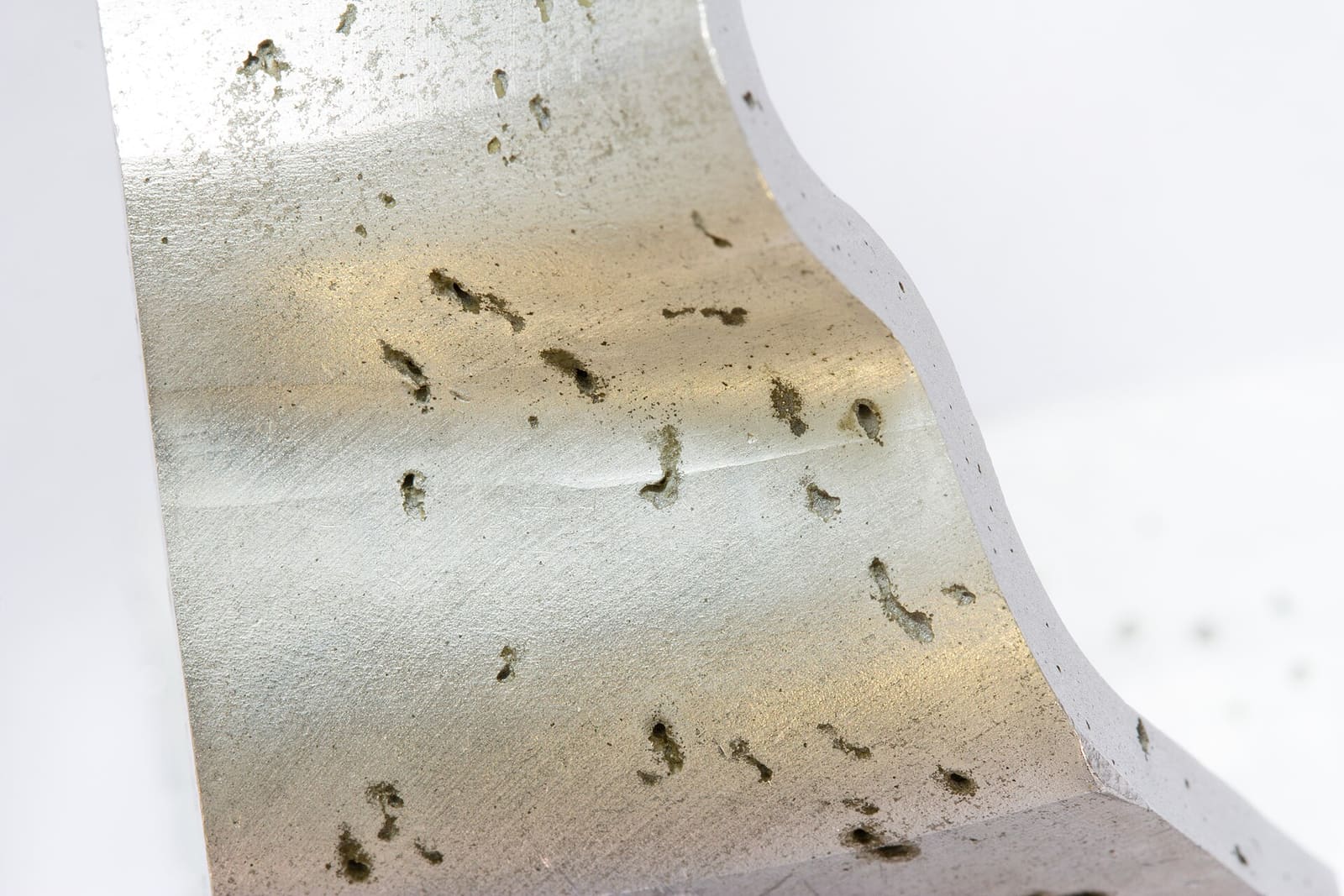
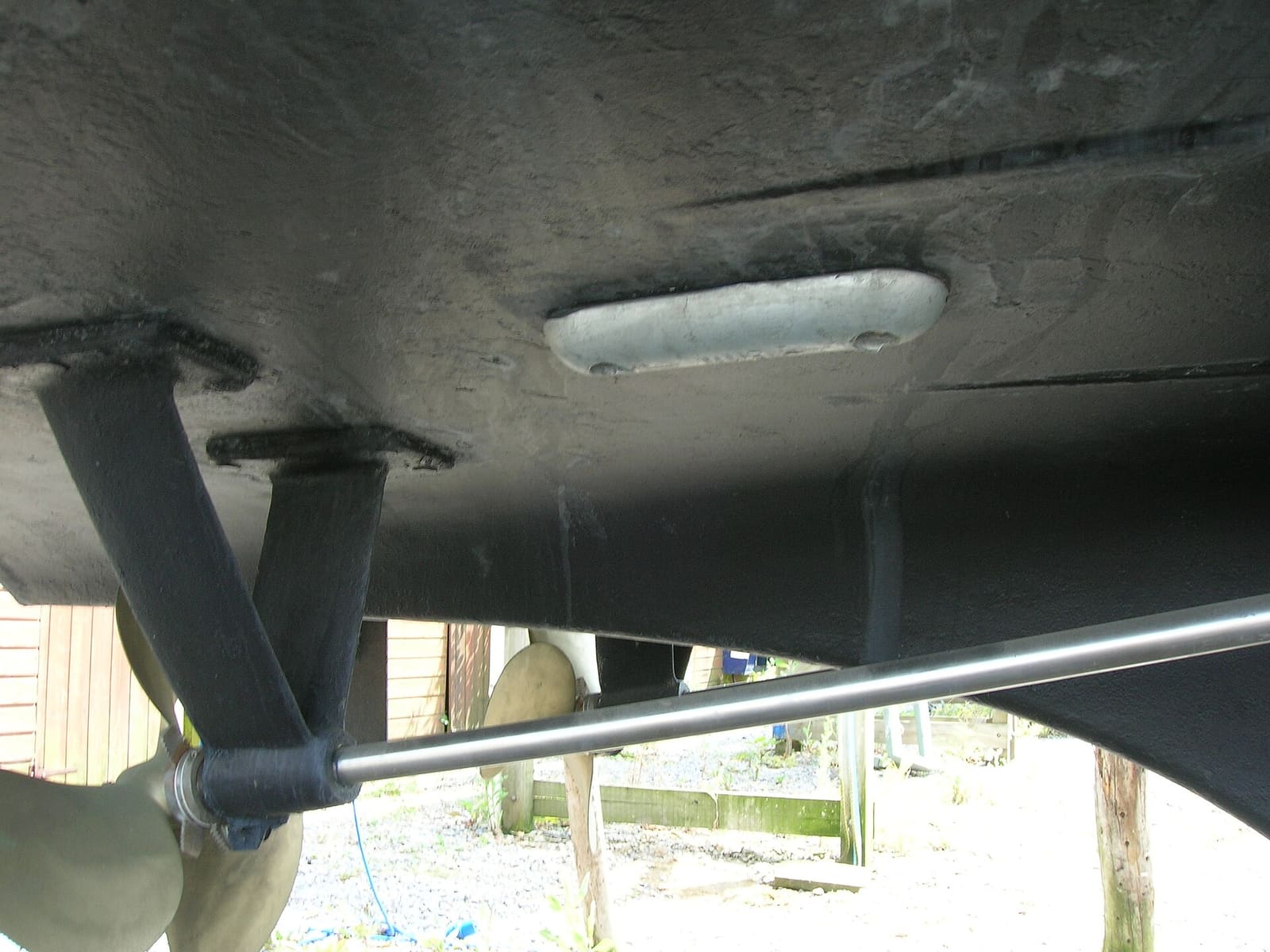
Photo: Carlos Delgado / Wikimedia Commons · CC BY-SA 4.0 Your manual shows the anode locations. On many drives you'll find them on the trim tab, the anti-ventilation plate, the bearing carrier behind the prop, the trim cylinders and the gimbal housing or transom assembly. Mercury says to replace them when about half is gone. Missing or loose anodes are an emergency for the drive.
- Wearing evenly, under half gone: doing their job.
- More than half gone, crumbling or missing bolts: replace now. BoatUS warns a crumbling anode may no longer protect anything.
- Gone in a few weeks: something is eating them, often shore power (step 10). BoatUS describes anodes that "disappear" midseason on boats plugged in at a crowded pier.
- Not worn at all after a season: Mercury and BoatUS both say this is bad news, not good. It may mean the anode is the wrong alloy, coated, not electrically connected, or that the drive itself is corroding instead.
Anodes can get a white chalky coating or growth that stops them working. Mercury's FAQ says to clean it off with sandpaper and not a wire brush; its corrosion page suggests a stiff brush. Never paint or coat an anode: Mercury, BoatUS and Volvo all agree it must touch the water.
Use the anode material your manual specifies for your water (Mercury says magnesium only in fresh water), and avoid cheap aftermarket anodes: Mercury says poor-quality anodes don't protect as well. Clean the mounting surface to bare metal so the anode makes good electrical contact; BoatUS notes that even a slightly loose anode doesn't work. Tighten the bolts to the torque in your manual.
The MerCathode reference electrode and anode are usually mounted on the gimbal housing under the drive. Make sure they aren't painted, damaged or covered in growth. Mercury says don't paint or pressure-wash the MerCathode, and to have it tested every year by a dealer. The MerCathode needs battery power to work, so a dead or switched-off battery means no protection; check with your dealer how yours is wired. BoatUS notes that these powered systems most often fail because of poor or corroded electrical connections, and many have no light or gauge to show they're working, which is exactly why the yearly test matters. Mercury's free Sterndrive and Inboard Care page has a short MerCathode video for newer MerCruisers if you want to see where the parts are. On Volvo Penta ACP, check the status on the helm display; Volvo says the backup anode protects the drive if the battery runs low.
Mercury warns that stainless steel props, powered trim tabs connected to engine ground and aftermarket steering systems speed up corrosion of an aluminum drive. Any time you add stainless hardware, Mercury suggests having the corrosion protection rechecked. If you switched to a stainless prop and the anodes now wear much faster, that's why. On an Alpha drive without a MerCathode, Mercury's FAQ says it strongly recommends adding one, particularly with a stainless prop; ask your dealer whether it suits your boat.
Mercury lists the wrong type or improper application of antifouling paint among the causes of corrosion that aren't covered by warranty. Copper-based bottom paint on or touching an aluminum drive is a common culprit. Use only paint that is approved for aluminum drives, and keep hull bottom paint off the drive and transom assembly unless the label says it's safe.
BoatUS explains that the shore power green ground wire connects your boat to every other boat on the dock, so your aluminum drive can end up protecting your neighbors' bronze and stainless gear. Mercury says boats on shore power should have an approved galvanic isolator. BoatUS describes it as a device in the green ground wire that blocks small galvanic DC currents (below about 1.2 volts) while still letting dangerous AC fault current flow to shore. Choose a UL marine-rated, fail-safe unit sized to your shore power service, ideally with a remote status monitor. Installation is shore power wiring: have a qualified marine electrician do it. Larger boats sometimes use an isolation transformer instead.
Until it's installed, the only safe stopgap BoatUS mentions is unplugging the shore power cord when you don't need it (you lose the battery charger and fridge while it's unplugged). Never cut the green ground wire instead.
Mercury says a sterndrive stored in the water should be left in the down position so the anodes stay submerged and keep protecting it. Trimmed up, the anodes are out of the water.
Mercury recommends an annual touch-up. The outline: remove the prop, clean off salt, wax and grease, sand blistered or pitted spots, prime with the drive maker's primer, then apply several thin coats of matching paint. Never paint over anodes or the MerCathode. Deep pits or large bare areas need a pro.
Mercury suggests asking a dealer for an in-the-water hull potential test where the boat is normally kept, ideally before you see corrosion. A technician uses a reference electrode (Practical Sailor mentions a silver/silver-chloride reference cell) and a meter to measure whether the drive is under-protected, protected or over-protected. It's the only way to know for sure, and it's the first step if anodes vanish quickly or the drive is pitting despite new anodes. Practical Sailor notes that neither anodes nor a galvanic isolator will fix a serious stray current problem; that needs an ABYC-certified technician to find the fault.
Take photos of the drive from both sides each time you inspect, and note anode condition in your BoatMend log. Comparing photos is the easiest way to spot a slow change.
Common mistakes
- Painting over blistered paint and white powder instead of finding the cause. BoatUS tells of an outdrive that stopped going into gear a year after the owner did exactly that.
- Thinking unworn anodes mean all is well.
- Using magnesium anodes in salt or brackish water, or mixing anode metals.
- Painting or pressure-washing anodes or the MerCathode.
- Cutting the shore power ground wire to stop corrosion.
- Leaving the drive trimmed up while the boat sits in the water for weeks.
- Adding a stainless prop or trim tabs without rechecking protection.
- Letting a battery go flat on a boat that relies on a MerCathode.
When to call a pro
- Anodes disappearing in weeks, or corrosion getting worse with new anodes
- Deep pitting, bubbling paint over a large area, or any corrosion around the gimbal housing, prop shaft seals or bellows flanges
- A MerCathode or ACP fault, or one that hasn't been tested in a year
- Any shore power work: galvanic isolator, isolation transformer, ground faults or tingles in the water
- A hull potential (reference electrode) test or a stray current survey
- Corrosion on a drive still under warranty (Mercury's FAQ says keeping the MerCathode, isolator and anodes working is the owner's responsibility, and damage from stray current, wrong bottom paint or a damaged MerCathode isn't covered, so keep your inspection photos and dealer test receipts): Mercury lists a 3-year corrosion warranty on 1988 and newer MerCruiser packages (4 years on SeaCore), with conditions, so talk to a dealer before repairing it yourself
Tips
- Carry a spare anode set aboard in salt water; they're cheap compared to a drive.
- After any new dock, neighbor or shore power change, check your anodes a few weeks later.
- Flush after every saltwater trip and rinse the drive; Mercury says it's one of the most important corrosion steps.
- If you keep the boat on a lift or trailer between trips, corrosion slows dramatically.
- Record the anode type you use (aluminum, zinc or magnesium) in your BoatMend boat profile so you always reorder the same metal.
Official references
We read these to write this guide. Your engine's own manual always wins.
- Mercury Marine – Service and Support FAQs (MerCruiser Corrosion)
- Mercury Marine – Maintenance Made Easy, Preventing Corrosion
- Volvo Penta – Active Corrosion Protection
- Volvo Penta – Volvo Penta introduces Active Corrosion Protection for sterndrives
- BoatUS – The Current Scoop On Galvanic Corrosion
- BoatUS – Install A Galvanic Isolator
- Mercury Marine – Sterndrive and Inboard Care (MerCathode system video)
- Practical Sailor – PS Advisor (saildrive corrosion and reference electrode testing)
- BoatUS – Outdrive Corrosion Mysteries (insurance claim cases)
Safety: BoatMend is for information only and does not replace a certified marine technician. You are responsible for your safety and your boat. Read the full disclaimer.
Last updated 2026-10-24
Related guides
How to Inspect and Replace Sacrificial Anodes (Zincs)
Check the anodes on your outboard, sterndrive or inboard running gear, replace them when they are half gone, and choose the right metal for the water you boat in. Fresh anodes are cheap insurance against expensive corrosion damage to your lower unit, drive and prop.
How to Inspect Sterndrive Bellows, Gimbal Bearing, U-Joints and Shift Cable
Learn to spot a cracked sterndrive bellows before it lets water into the boat, and to recognize the warning signs of a worn gimbal bearing, U-joints and shift cable. A failed bellows is one of the top reasons boats sink at the dock, and a 20-minute inspection can catch it.
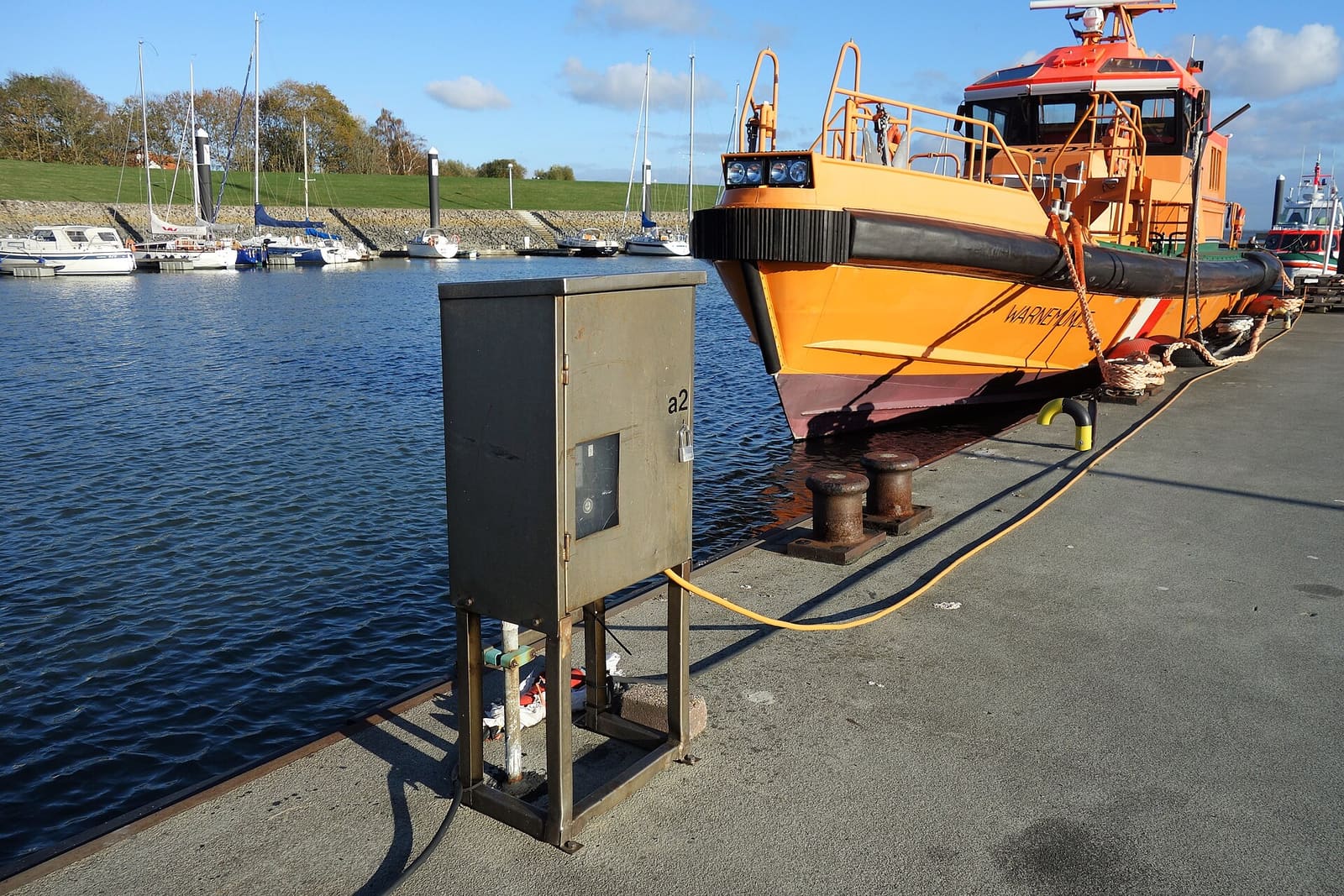
Shore Power Safety: Cords, Inlets, Burned Plugs and Electric Shock Drowning
An owner's inspection routine for your shore power cord, plugs, boat inlet, galvanic isolator and ground-fault protection, plus the right way to plug in and the facts about Electric Shock Drowning. This guide is for looking and testing only; any electrical repair belongs to an ABYC-certified marine electrician.
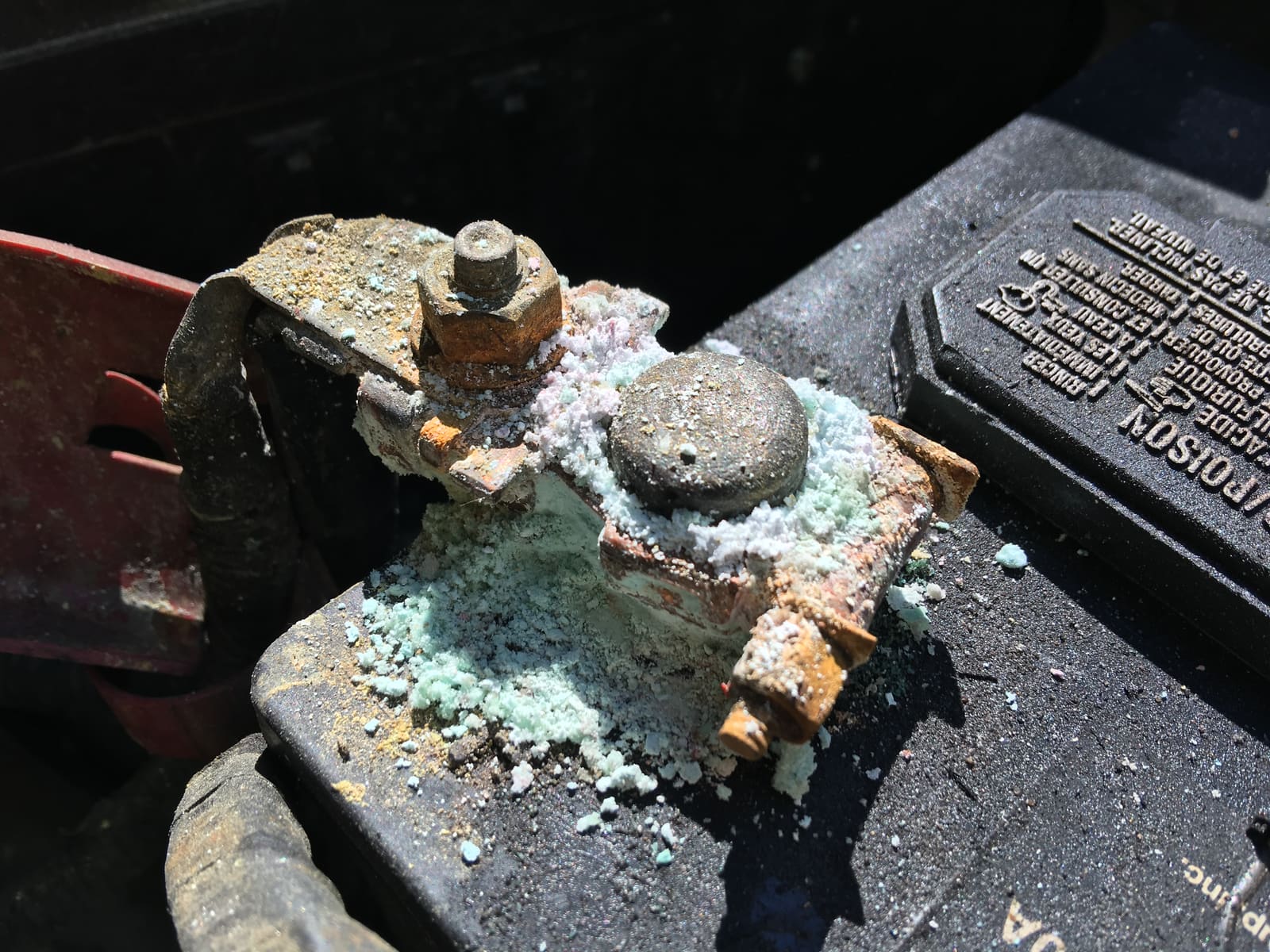
How to Find and Fix Corroded Electrical Connections on a Boat
Track down the green crust and loose terminals behind flickering lights, dead gauges and slow cranking with a simple voltage-drop test, then remake the connection the marine way: tinned wire, a proper crimp, adhesive-lined heat shrink and a protective coating.
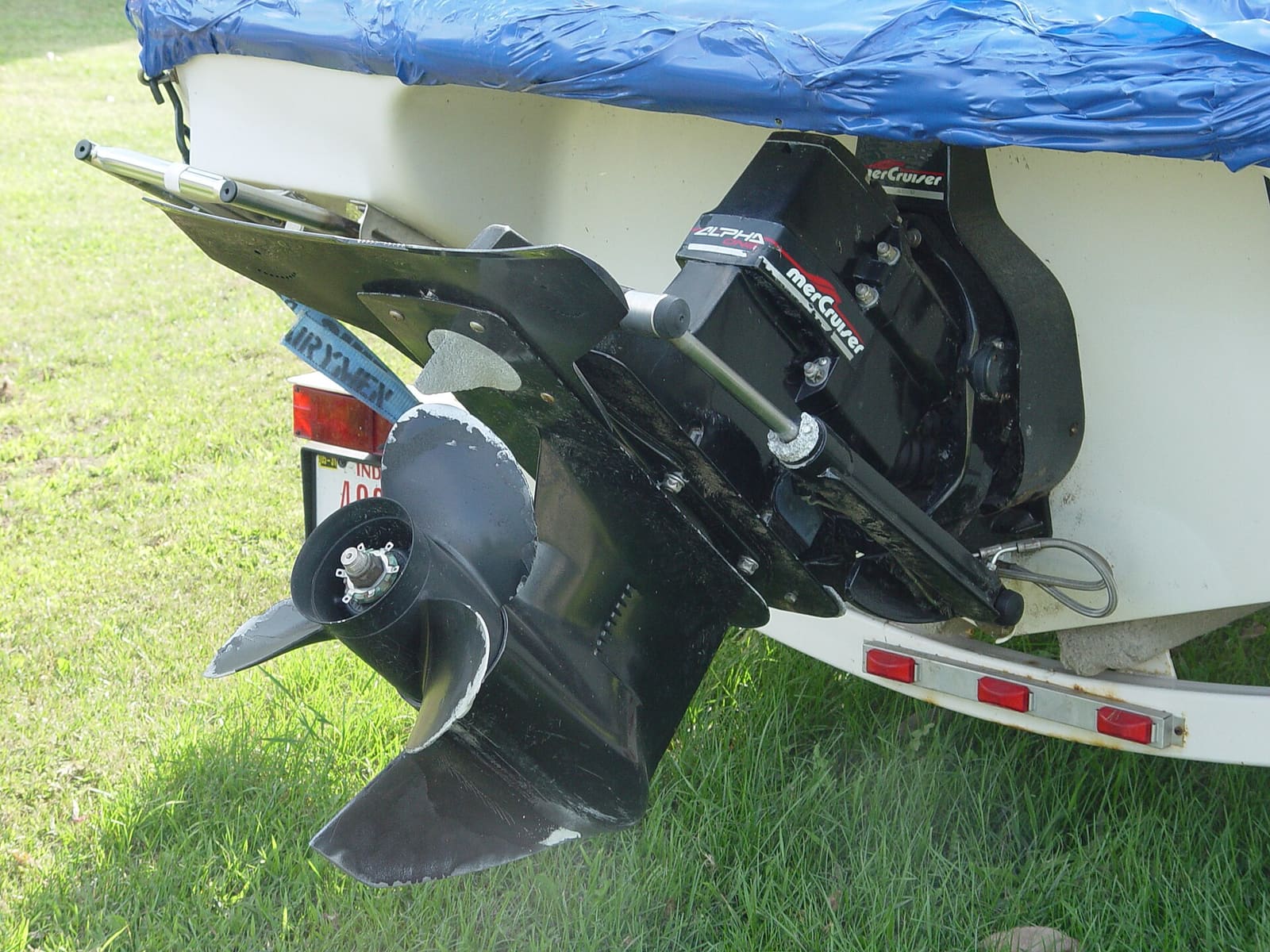
How to Winterize a Sterndrive (MerCruiser, Volvo Penta and Similar)
Get the water out of your sterndrive engine, protect it with antifreeze, and service the drive before storage. A cracked block or manifold from one missed drain plug can cost thousands, and doing it yourself saves a shop bill of several hundred dollars.
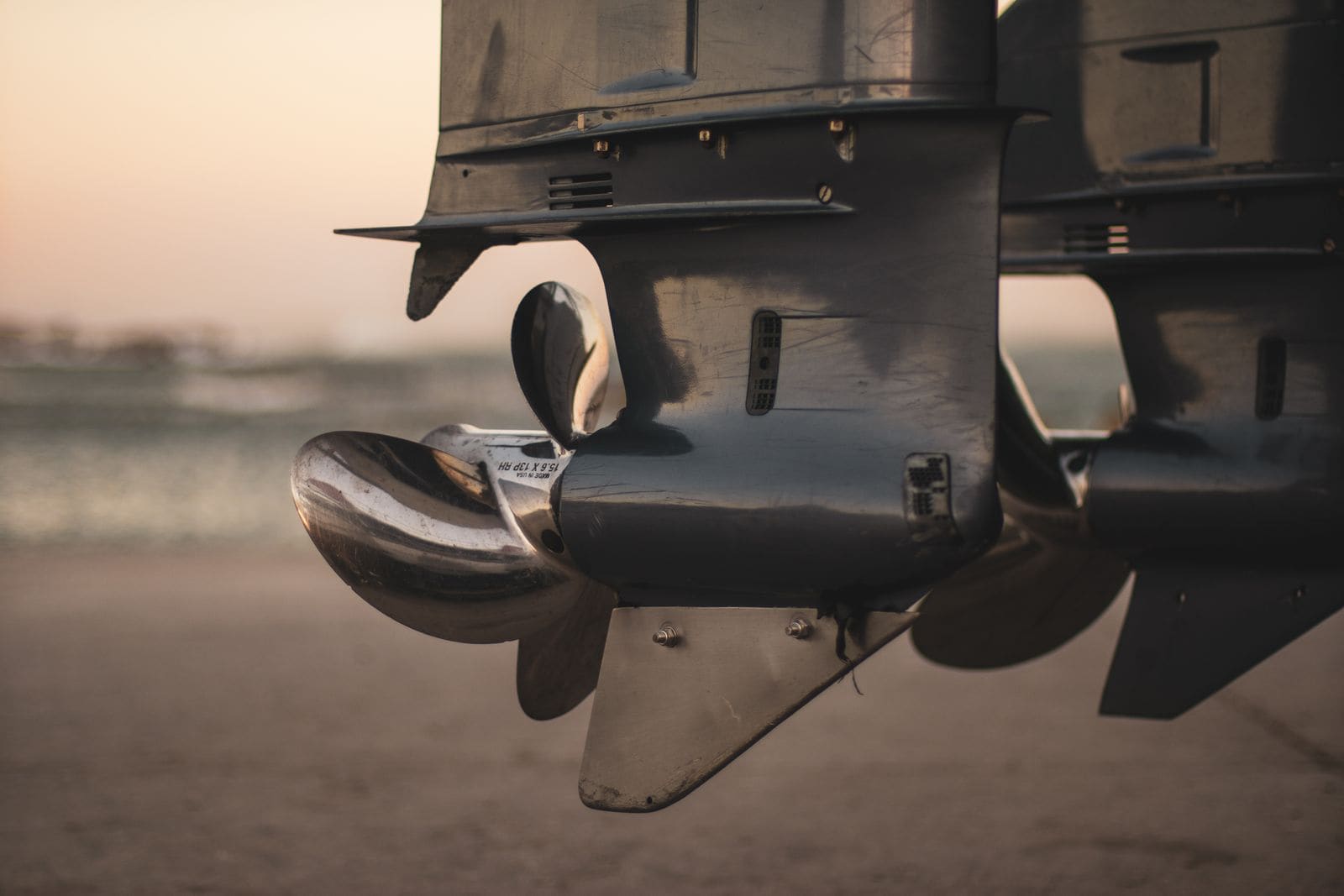
Propeller Care: Inspect, Remove, Replace and Choose the Right Pitch
Check your prop for damage, pull it to clear fishing line and grease the shaft, reinstall it correctly, and learn how pitch affects your engine's wide-open-throttle RPM. The right prop in good shape protects your engine and often makes the boat run better and use less fuel.
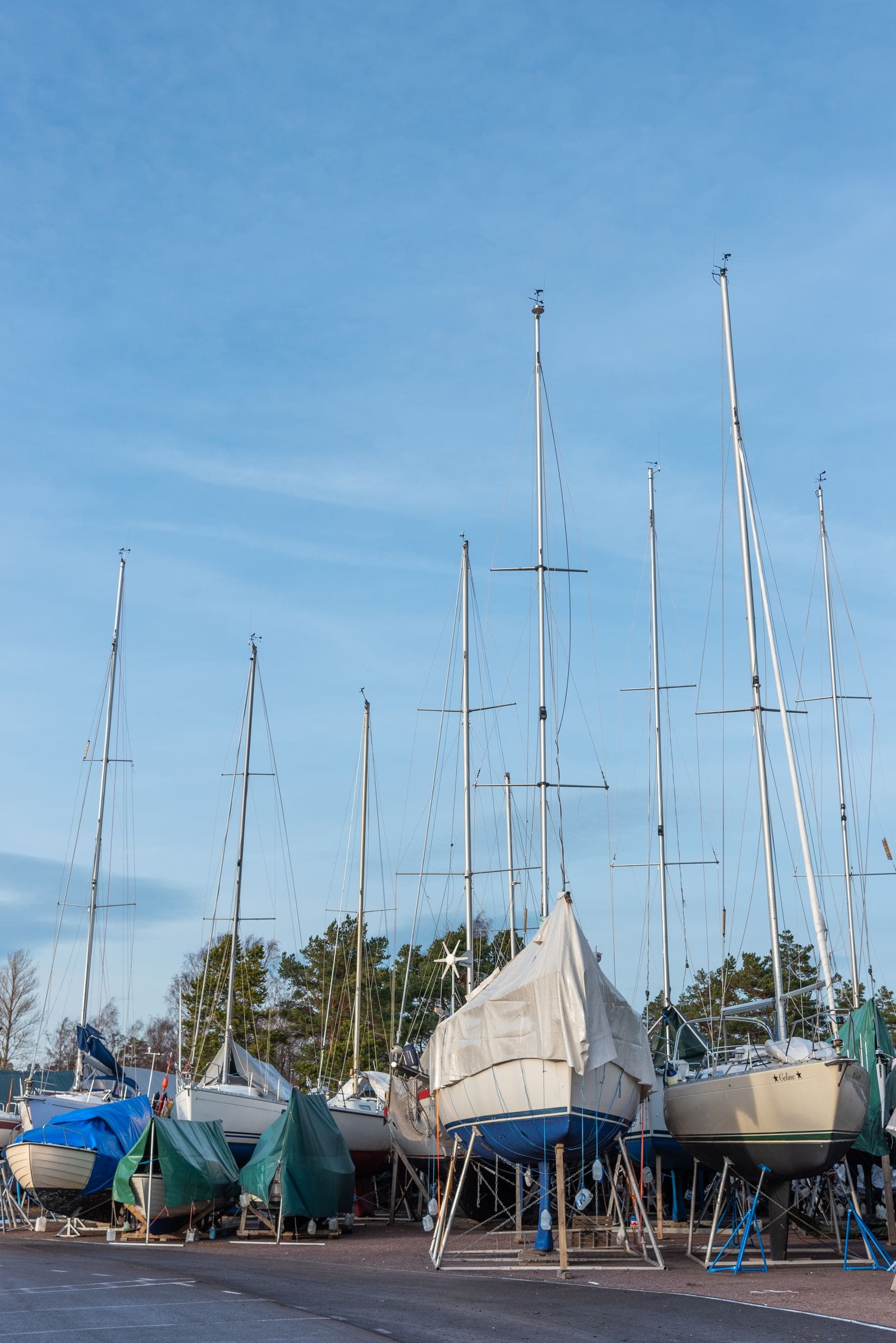
Bottom Paint (Antifouling): Do You Need It, Which Type, and How to Repaint
Learn whether your boat needs antifouling bottom paint, how ablative and hard paints differ, and how to prep and roll on a fresh coat safely, without poisoning yourself or the water and without ruining an aluminum hull.
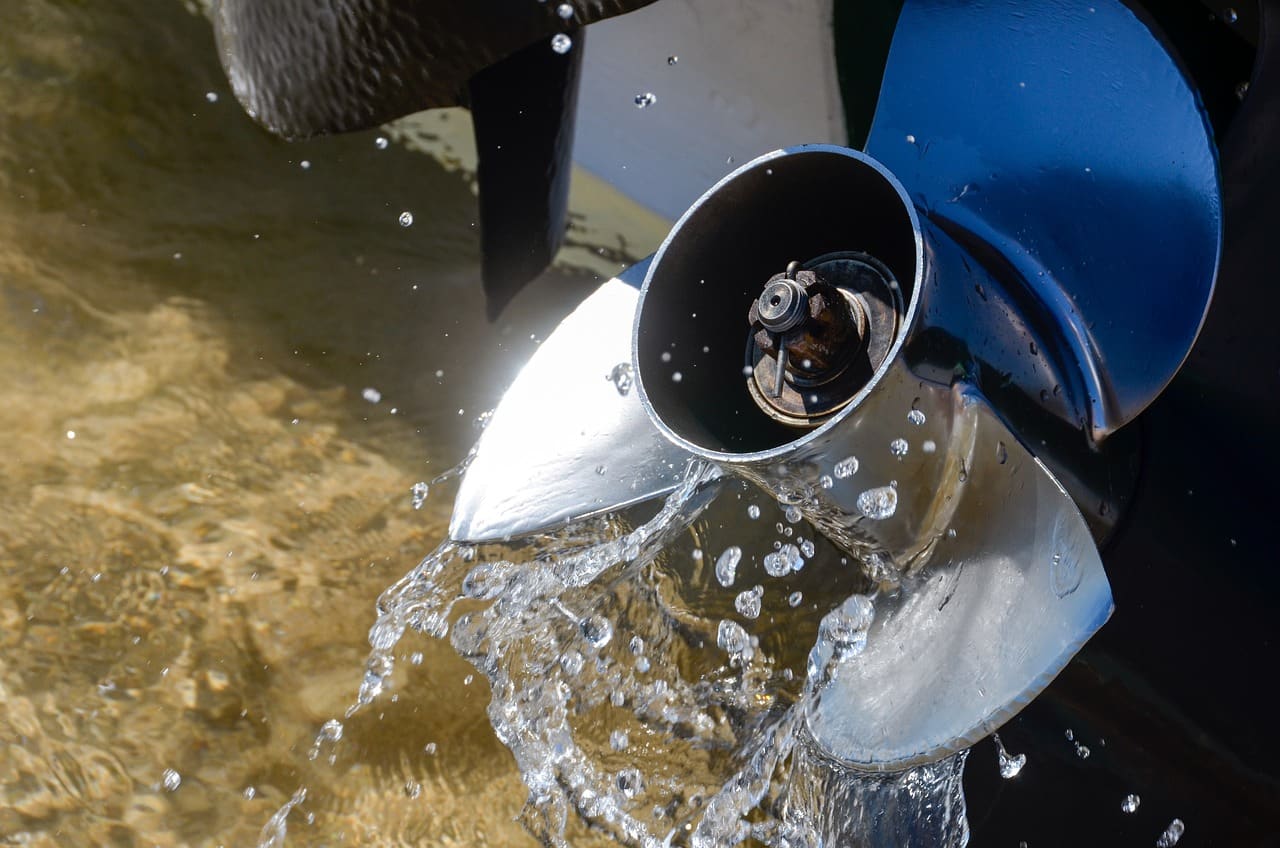
How to Flush Your Engine With Fresh Water
Rinse salt, silt and sand out of your outboard or sterndrive cooling system using the built-in flush port, flush muffs or a flush bag. Flushing after every saltwater trip is one of the easiest ways to prevent corrosion and overheating.