How to Clean, Brighten and Protect Aluminum Pontoon Tubes
Get scum lines, algae, mineral stains and dull oxidation off your pontoon tubes without hurting the metal, the finish, you or the lake. Learn when mild soap is enough, when an acid brightener makes sense (and how dangerous some are), why painted and anodized tubes need different care, and how to polish and seal bare aluminum so it stays clean longer.
Time
4 h
Shop would charge
$300-1200
Applies to
All engines · Pontoon
Safety first: Many "pontoon brighteners" and aluminum acid cleaners are strong acids, and some contain hydrofluoric acid. The CDC warns that hydrofluoric acid on skin may not hurt or show damage at first: severe pain can be the only sign for hours, and visible damage can take 12 to 24 hours to appear, while the injury keeps getting worse. Read the product's safety data sheet (SDS) before you buy, wear the full protection it lists, and keep kids and pets away. If any gets on your skin or in your eyes, rinse with lots of water right away, remove contaminated clothing and get medical care immediately, even if it doesn't hurt (call 911 or Poison Help at 1-800-222-1222, free and open 24/7). The CDC also notes that hydrofluoric acid burns on the fingertips can cause lasting pain, bone loss and nail-bed injury. Never work under a pontoon that's only held up by a jack or a lift you haven't secured (see pontoon-lifting-jacking).
Fuel smell, water coming in, CO alarm or smoke? Stop, get everyone in life jackets and call USCG on VHF 16 or 911. For a tow: Sea Tow or TowBoatUS.
Owners often ask
- Is it safe to use an acid brightener on my pontoon tubes?
- How do I get the brown scum line off my pontoon tubes?
- My pontoon brightener says it contains hydrofluoric acid. What do I do if I splash some on my hand?
This guide walks you through it. Still stuck? Ask the AI Mechanic about your engine.
Tools
- Garden hose with spray nozzle (a pressure washer on a moderate setting is optional)
- Soft-bristle brushes, including one on a long or bent handle for the tube bottoms
- Non-scratch nylon scrub pads (no steel wool or carbon-steel wire brushes)
- Plastic pump sprayer clearly labeled for the cleaner you use
- Microfiber towels and polishing cloths; an orbital polisher is optional
- For any acid product: splash goggles plus face shield, chemical-resistant gloves and apron as the SDS lists, long sleeves, rubber boots
- Plastic sheeting or tarps to protect the trailer, decals, carpet and lawn
Parts & supplies
- Mild, biodegradable, phosphate-free boat soap
- A non-acid aluminum or pontoon cleaner (for routine stains)
- An aluminum brightener/acid cleaner only if needed for bare tubes (read its SDS first)
- Marine aluminum polish and an aluminum sealant or protectant
Before you start
Know what finish your tubes have. This decides everything:
- Bare (mill-finish) aluminum: the classic dull silver tube. Turns chalky and dark with oxidation and gets brown scum lines. This is the only type where acid brighteners are even an option.
- Painted, powder-coated or clear-coated tubes: common on newer and premium pontoons. Acid can etch, stain or strip the coating. Treat them like a painted hull: mild soap and the builder's recommended products.
- Anodized or polished tubes: acid can leave permanent blotches and can strip anodizing. Use only products the builder approves.
- Bottom-painted tubes (on boats kept in the water): treat the painted part as bottom paint; see bottom-paint-antifouling and pontoon-saltwater-use.
If you aren't sure, check your owner's manual or ask the builder or dealer. A wrong guess with acid is expensive.
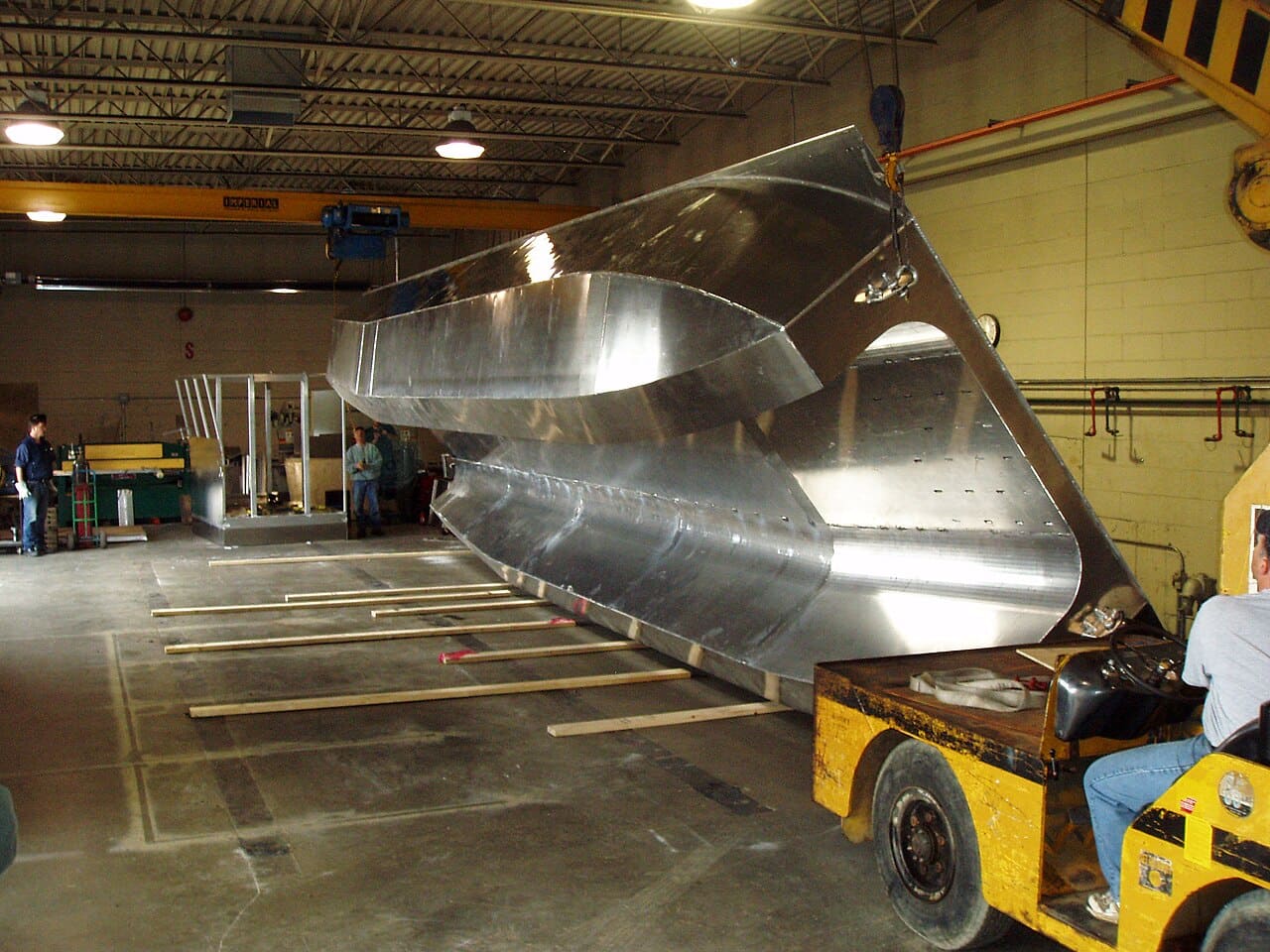
Why tubes get dirty: Discover Boating explains that pontoons sit on the water rather than cutting through it, so the tubes are constantly exposed to algae, minerals and debris, with the worst buildup at the waterline and on the tube bottoms. Aluminum also oxidizes into a dull, chalky layer that ordinary boat soap won't remove.
Where to do the job. Do any heavy cleaning on land, on the trailer or on blocks, away from the water. Acid runoff and cleaner residue are harmful to lakes and rivers. Some lakes, marinas and local governments restrict hull scrubbing or chemical use on boats in the water; ask before you start. Pierce County, Washington, for example, recommends phosphate-free, biodegradable soaps and taking unused cleaning products and chemicals to a hazardous waste collection site.
Steps
Pull the boat out on its trailer or have the marina lift it. Park on a level spot away from storm drains if you can. If you need to raise the boat to reach the tube bottoms, follow pontoon-lifting-jacking and use solid stands, never just a jack. Cover carpet, decals and the trailer if you'll use anything stronger than soap.
Growth and scum come off far more easily before they dry. Rinse each tube top to bottom, including the weld seams and the bottoms, where Discover Boating notes algae and scum build up most. A pressure washer on a moderate setting helps on bare tubes; keep the nozzle moving and well back from decals, seams and the motor pod.
Use a boat soap and a soft brush. Boating Magazine quotes builders saying a rinse goes a long way and mild soap does the rest for routine washdowns; rinse coastal boats more often to remove salt. Rinse thoroughly. For many boats, especially painted or coated tubes, this is all you should do. Avalon recommends purpose-made aluminum cleaners for aluminum parts and warns against household cleaners, which can react with aluminum.
Before you brighten or polish anything, walk around each tube and look for:
- Pitting, white powdery spots or bubbling paint (corrosion; see aluminum-hull-corrosion)
- Cracked welds, dents, loose brackets and missing or worn anodes
- Weeping or rust-colored stains at seams and drain plugs (see pontoon-tube-leak)
- Stainless fasteners touching bare aluminum without isolation
Mark anything you find with tape and photograph it. Cleaning can hide or worsen corrosion if you scrub over it.
For waterline stains and light oxidation, start with a non-acid pontoon or aluminum cleaner made for marine use. Test it on a small spot on the inside of a tube first. Apply, let it work for the time on the label without letting it dry, brush gently and rinse thoroughly. Repeat rather than scrubbing hard.
Only consider an acid brightener for bare aluminum tubes with stains or oxidation that mild cleaners won't touch. Before buying:
- Read the SDS (section 2 for hazards, section 3 for ingredients). Look for hydrofluoric acid (also listed as hydrogen fluoride, CAS 7664-39-3). If you can, choose a product without it.
- Read the label's surface warnings: many say not for painted, anodized or polished aluminum.
- Check your builder's care instructions; some warn against acids entirely.
- Avoid muriatic acid and other hardware-store acids. Discover Boating warns harsh acids like muriatic can streak and weaken aluminum.
If you have any doubt, hire a pontoon detailer who does acid brightening routinely, on a proper wash pad.
- Wear splash goggles and a face shield, chemical-resistant gloves and the clothing the SDS lists. Long sleeves, long pants, rubber boots.
- Work outdoors, in the shade, with the wind at your back, on a cool tube. Hot metal makes acid work too fast and streak.
- Wet the tube with water first. Then apply the brightener with a plastic pump sprayer, working one small section at a time, bottom to top so it doesn't run down over dry metal in streaks.
- Don't let it dry. Brush lightly if the label says to, then rinse thoroughly within the time on the label, top to bottom, with lots of water.
- Keep the spray off decals, carpet, vinyl, the outboard, stainless steel, the trailer and galvanized parts; rinse those immediately if hit.
- Keep a hose running nearby the whole time so you can rinse skin or eyes instantly.
Acid trapped in seams, brackets and the trailer bunks keeps working. Rinse every seam, bracket and the trailer twice. Don't let the runoff go into the lake, a storm drain or your garden. Follow the label for neutralizing and disposal, and take leftover product to your local household hazardous waste program.
For a shine on bare tubes, use a marine aluminum polish on a clean, dry surface, one small section at a time, with a microfiber cloth or an orbital polisher. Polish until the black residue stops coming off, then buff clean. Never use steel wool or carbon-steel wire brushes: steel particles left in the aluminum cause rust spots and corrosion. Don't polish painted or anodized tubes with metal polish; use the product the builder recommends.
Finish with a marine aluminum sealant or protectant. Discover Boating says a sealant helps repel water spots and grime, slows oxidation and makes later cleaning easier. Avalon recommends waxing the aluminum tubes and side panels every three to six months during the season. Follow the product's coverage and cure time before relaunching.
- Rinse after every outing, more often in salt or brackish water (see pontoon-saltwater-use).
- Wipe off scum lines with a damp cloth or mild cleaner before they set.
- Store on a lift or trailer out of the water when you can (see boat-lift-care).
- Clean the tubes before winter storage (see winterize-pontoon).
Note the cleaner, brightener, polish and sealant brands and the date in your BoatMend boat profile, plus any spots you marked in step 4. Next season you'll know what worked and whether any corrosion is spreading.
Common mistakes
- Using acid on painted, clear-coated or anodized tubes. The finish can etch, blotch or peel and can't be fixed with polish.
- Not checking whether a brightener contains hydrofluoric acid. It can cause serious injury that doesn't hurt at first.
- Spraying acid on a hot tube in the sun and letting it dry. Streaks and stains are often permanent.
- Washing with chemicals while the boat is in the water. Runoff goes straight into the lake, and some places prohibit it.
- Muriatic acid, bleach or household cleaners on aluminum.
- Steel wool or steel wire brushes that leave particles behind and start corrosion.
- Skipping the rinse of the trailer and brackets after using acid.
- Scrubbing over corrosion or cracked welds without inspecting them first.
When to call a pro
- Your tubes are painted, coated or anodized and show stains or fading you can't remove with soap
- The tubes need acid brightening and you can't meet the SDS safety requirements or don't have a proper wash area
- You find pitting, cracked welds, leaking seams or bubbling paint (aluminum repair or welding shop)
- You need to lift a heavy tritoon and don't have proper stands or a lift
- Anyone was splashed with an acid cleaner: get medical care right away
Tips
- Clean in spring and fall at minimum; boats kept in the water need more frequent rinsing.
- A long, bent-handle brush reaches under the tubes without lying on the ground.
- Work on one tube at a time from start to finish: wash, clean, rinse, then move on.
- Keep a dedicated, labeled sprayer for each product so you never mix chemicals.
- Photograph the tubes after cleaning each season; it makes changes in corrosion easy to spot.
Official references
We read these to write this guide. Your engine's own manual always wins.
Safety: BoatMend is for information only and does not replace a certified marine technician. You are responsible for your safety and your boat. Read the full disclaimer.
Last updated 2026-11-06
Related guides
Using a Pontoon Boat in Salt Water: Tubes, Anodes, Flushing, Rinsing and Copper-Free Bottom Paint
Keep an aluminum pontoon alive in salt or brackish water: protect the tubes and hardware from corrosion, use the right anodes, flush the outboard the correct way, rinse the deck, furniture and trailer, cover only when dry, and never let anyone put copper-based (cuprous oxide) bottom paint on aluminum tubes.
How to Find a Leak When Water Gets Into a Pontoon Tube
A pontoon that sits low on one side, lists or sloshes when you rock it probably has water in a tube. Learn how to confirm it, drain it, track down the pinhole or cracked weld, and choose between a temporary patch and a proper weld repair.
How to Spot and Prevent Corrosion on an Aluminum Boat
Aluminum hulls and pontoon tubes are tough, but they lose almost every fight with other metals. Learn the warning signs of galvanic and stray current corrosion, keep copper and loose metal away from the hull, choose the right anodes, touch up paint with the proper primer and know when a repair needs a welder.
How to Clean, Remove Oxidation and Wax Your Boat's Gelcoat (Plus Pontoon Tubes)
Wash your hull the right way, bring back chalky, faded gelcoat with compound, and seal it with wax so it stays glossy and protected from the sun. Includes how to clean and protect the aluminum tubes on a pontoon boat.
How to Lift or Jack a Pontoon Safely on the Trailer or the Ground
Raise a pontoon a few inches to rinse and inspect the tubes, drain them, adjust bunks or set it on storage blocks without bending a tube or getting hurt: where it can and can't take a jack, how to spread the load, why you block as you lift and never go under it, and when a dealer's forklift or lift is the right tool.
How to Winterize a Pontoon Boat: Engine, Tubes, Furniture, Cover and Storage
Put a pontoon away for winter the way pontoon builders describe it, covering the outboard, the tubes and their drain plugs, furniture, vinyl and flooring, rodents, a cover that won't collapse under snow, and trailer or lift storage. Engine and water jobs link to the detailed BoatMend guides.
How to Inspect and Maintain a Boat Lift (Cables, Pulleys, Motor, Bunks and Storm Prep)
Inspect the cables, pulleys, motor, wiring and bunks on your boat lift, center the boat correctly, and prepare the lift and boat for storms and winter. Cable failures and overloading from rainwater or snow are the most common ways lifts drop boats.
How to Inspect a Pontoon Motor Pod and Transom Bracket for Cracks and Loose Bolts
The aluminum pod or bracket that carries a pontoon's outboard takes every bit of thrust, steering load and trailer bounce. Learn how to find hairline weld cracks, loose or worn bolts, corrosion and flex early, spot the signs of too much motor, and know when the boat needs an aluminum welder or the dealer before it goes back out.