How to Lift or Jack a Pontoon Safely on the Trailer or the Ground
Raise a pontoon a few inches to rinse and inspect the tubes, drain them, adjust bunks or set it on storage blocks without bending a tube or getting hurt: where it can and can't take a jack, how to spread the load, why you block as you lift and never go under it, and when a dealer's forklift or lift is the right tool.
Time
1 h 30 min
Shop would charge
$100-300
Applies to
All engines · Pontoon
Safety first: Even one side of a pontoon can weigh well over half a ton, and a boat that slips off a jack can crush you in an instant. Never put any part of your body under a pontoon that is held up only by a jack. Block it as you lift, lift only as high as the job needs, work on hard level ground and keep kids and pets away. Boating Magazine notes that improperly blocked boats have caused injuries and deaths, and that blocking a boat is often best left to pros. If the boat shifts, tilts or a support starts to sink, get clear and do not try to catch it.
Owners often ask
- Where can I put a jack under my pontoon on the trailer without denting a tube?
- How do I store my pontoon on blocks off the trailer for winter?
This guide walks you through it. Still stuck? Ask the AI Mechanic about your engine.
Tools
- Hydraulic bottle or floor jack rated well above the load it will lift
- Wide, sturdy hardwood boards or planks (to spread the jack's load)
- Cribbing blocks or rated boat stands or pontoon storage blocks
- Plywood pads for soft ground
- Wheel chocks
- Carpet scraps or rubber pads
- Level
- Flashlight
- Work gloves and safety glasses
Before you start
Why lift a pontoon? Owners usually need just a few inches: to rinse and clean the tube bottoms (Discover Boating suggests lifting slightly to rinse underneath, where scum builds up), to reach drain plugs in the bottom of each tube (Avalon notes these usually sit below the waterline, which means lifting the boat to drain it), to check where tubes rest on bunks, to adjust bunks, or to set the boat on storage blocks for the season.
Know the structure. A pontoon's deck sits on aluminum cross-members (channels) bolted or welded to brackets on top of the tubes. Each tube is divided into sealed chambers by bulkheads, and those bulkheads line up with the seams you can see between tube sections. The thin aluminum skin between bulkheads is not built to carry a point load. The motor pod, nose cones, lifting strakes and transducer brackets are not lift points either.
Ask first. Lift points depend on the builder and model. Your owner's manual or dealer is the best source; tritoons with a center tube or a motor pod may have different rules. If the manual doesn't say, call the builder or dealer before you jack anything.
Know your trailer. Avalon explains the two common types: bunk trailers carry the boat on carpeted bunks under each tube, while scissor (fold-down) trailers lift the boat by the deck structure between the tubes and can lower it right onto the ground. The scissor type makes ground storage easy; on a bunk trailer, lifting the boat clear of the bunks is a bigger job.
Steps
Work on concrete or asphalt that is level and solid. On gravel or soil, put thick plywood pads under every jack and support so nothing sinks; Canadian Boating notes this matters most where ground softens in the spring thaw. Avoid slopes, even gentle ones, and windy days if the boat has its canopy up (fold the bimini down).
Take out heavy loose gear (coolers, batteries if easy to remove, anchors, water toys) and drain any water from the deck and livewell. If the boat is on a trailer, leave the trailer hitched to the tow vehicle with the parking brake set, chock the trailer wheels front and back, and make sure the boat is strapped to the trailer so it can't slide. Tilt the outboard down or support it as your engine manual says; don't let it hang in a way that shifts weight aft.
You need: a jack rated for far more than the load, wide hardwood boards to spread the jack's force, and enough cribbing or rated stands to hold the boat without the jack. Boating Magazine's stand advice applies here too: use enough supports, put plywood under them on soft ground, never tie covers or tarps to stands, and check supports after storms and freeze-thaw cycles. If you will store the boat on pontoon storage blocks, follow the block maker's instructions and get spacing from your pontoon builder.
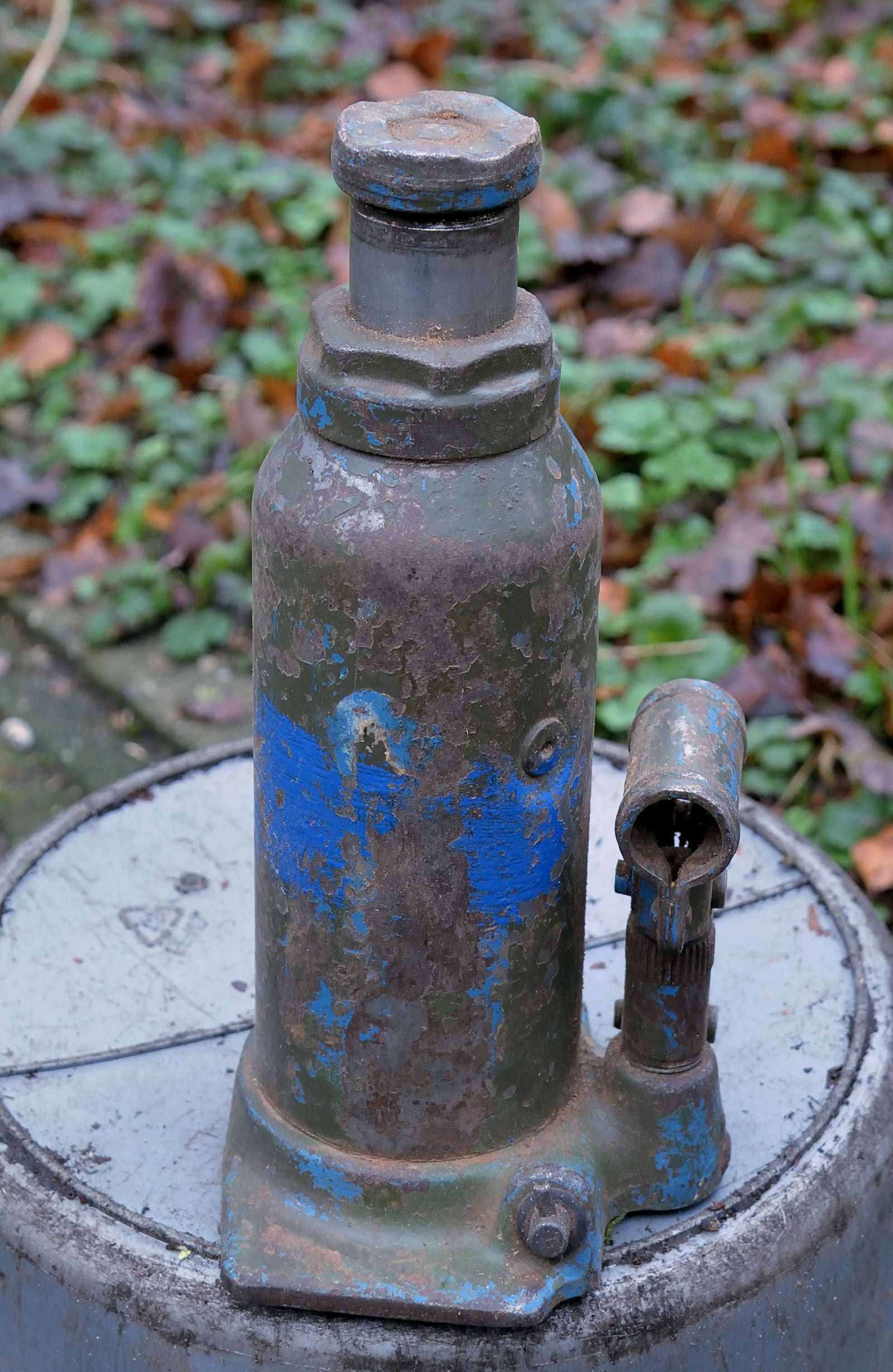
A bottle jack lifts; it doesn't hold. Set it on a wide, solid board, lift a little at a time and let cribbing or stands carry the boat. Photo: Rasbak / Wikimedia Commons · CC BY-SA 3.0 Common safe choices (confirm with your manual or dealer):
- Under the cross-members, with a wide board spanning two or more of them, so the deck structure carries the load instead of a single channel.
- Under a tube at a bulkhead seam, using a wide padded block that matches the tube's curve, as close to the seam as possible.
Never put a jack or stand:
- under the middle of a tube section between seams,
- under the motor pod, transom bracket or nose cone,
- under a transducer, strake edge, drain plug or wiring,
- directly on the deck surface from below without a board, which can punch through rotted plywood.
Raise one corner or one side slowly, only an inch or two at a time. After each lift, slide cribbing or a stand under the nearby lift point so the boat is always resting on a support, with the jack just backing it up. Watch and listen: creaking, a tube flexing, a board bending or the trailer shifting means stop and lower it.
Lift only as high as the job needs. A few inches is enough to rinse, check a bunk or pull a drain plug. Lifting one side high puts the whole boat at an angle and makes it easier to slide.
Keep your hands, arms and head out from under the boat while it is on the jack alone. Reach under only when it is resting on solid cribbing or stands at every corner you have lifted, and even then keep your body out of the crush zone as much as you can. Use a long-handled brush and a hose to reach the tube bottoms rather than crawling under.
With the boat safely supported:
- Rinse the tube bottoms and weld seams. Discover Boating warns against harsh acids like muriatic acid on aluminum.
- Look for dents, creases, cracks along seams, worn spots where bunks rub, and white corrosion.
- In saltwater, Avalon says to flush salt from between the bunks and tubes, and notes that without a barrier coating, corrosion can form where trailer bunks meet the tubes.
- Check that drain plugs are present and tight. If a tube holds water, our pontoon tube leak guide covers finding the leak.
Bunk work means taking the boat's weight off them. Do it only with the boat on solid supports, never with the bunk itself or the jack as the only thing holding a side up. Our trailer bunks and rollers guide covers bunk height and carpet.
Moving a pontoon fully off a bunk trailer onto blocks or stands is a big, risky job: owners do it in stages, lifting and supporting one end at a time while easing the trailer out. Most owners are better served by a marina with a forklift or a lift, or by a scissor trailer that lowers the boat straight down. If you do store on blocks:
- Place them where the builder recommends, on level ground with pads.
- Make sure each tube is evenly supported so no tube sags or twists.
- Don't stack storage blocks unless their maker allows it.
- Check the supports and level after heavy rain, wind and freeze-thaw.
Raise the boat just enough to remove one support, then lower a little, remove the next, and so on, keeping a support under the boat at all times. Lower slowly so it settles evenly onto the bunks or blocks. Recheck the boat's position on the trailer and the strap before moving it.
To change a trailer tire or service a hub, you jack the trailer, not the boat, at the point the trailer maker specifies, with the trailer still hitched and chocked. Don't jack under the tubes to unload a wheel. See our trailer tires guide and trailer bearings guide.
Common mistakes
- Jacking under the thin middle of a tube and leaving a dent or crease.
- Lifting under the motor pod or transom bracket because it looks strong.
- Raising a side high with a jack and then reaching under "just for a second."
- Using a car scissor jack or concrete blocks stacked on soil.
- Unhitching the trailer before lifting, so the trailer rolls or tips.
- Tying the cover to stands or blocks, so wind pulls the boat off them.
- Forgetting to recheck blocks after a storm or a thaw.
- Jacking a pontoon that was winched up on a sloping shoreline so it can be rolled back into the lake on logs or pipe. On a slope, a boat on rollers can get away from you, and a jack on sloped ground can tip. Owners asking about this are usually better off waiting for a marina, a lift or a trailer, or at least keeping the boat on a winch line the whole time.
When to call a pro
- Removing the boat from a bunk trailer for ground storage, or any lift higher than a few inches
- The boat is very heavy, a tritoon, or your manual gives no lift points
- You see soft or rotted deck, cracked cross-members or bent brackets near where you'd lift
- A tube is dented, creased, cracked or holds water
- Moving the boat with a forklift, hoist or lift
- Anything shifts, flexes or sinks while you are lifting
Tips
- Paint a small mark on the tubes or note in your BoatMend boat profile where your dealer says the lift points are.
- Keep a pair of wide hardwood boards cut to span two cross-members just for this job.
- Mercury's article on re-decking notes that some plywood treatments cause corrosion problems on aluminum boats. If you cut boards or cribbing that will sit against the tubes or cross-members for weeks, use untreated hardwood or put a plastic or rubber layer between treated wood and the aluminum.
- If you only need to rinse the tube bottoms, a scissor trailer or a boat lift makes it a ten-minute job.
- Cover the boat for storage with a well-supported cover or shrink-wrap that sheds snow and rain, as Avalon recommends.
Official references
We read these to write this guide. Your engine's own manual always wins.
- Avalon Pontoons – Pontoon Boat Maintenance Tips
- Avalon Pontoons – FAQ (trailer types, saltwater and bunks)
- Avalon Pontoons – Pontoon Boat Trailering
- Avalon Pontoons – How to Winterize a Pontoon Boat
- Discover Boating – How to Clean a Pontoon Boat
- Boating Magazine – Boat Stand Safety
- Canadian Boating – Fall Means Haul Out and Boat Storage
- Mercury Marine – Options for Re-Decking Your Boat (plywood treatments and aluminum)
Safety: BoatMend is for information only and does not replace a certified marine technician. You are responsible for your safety and your boat. Read the full disclaimer.
Last updated 2026-10-24
Related guides
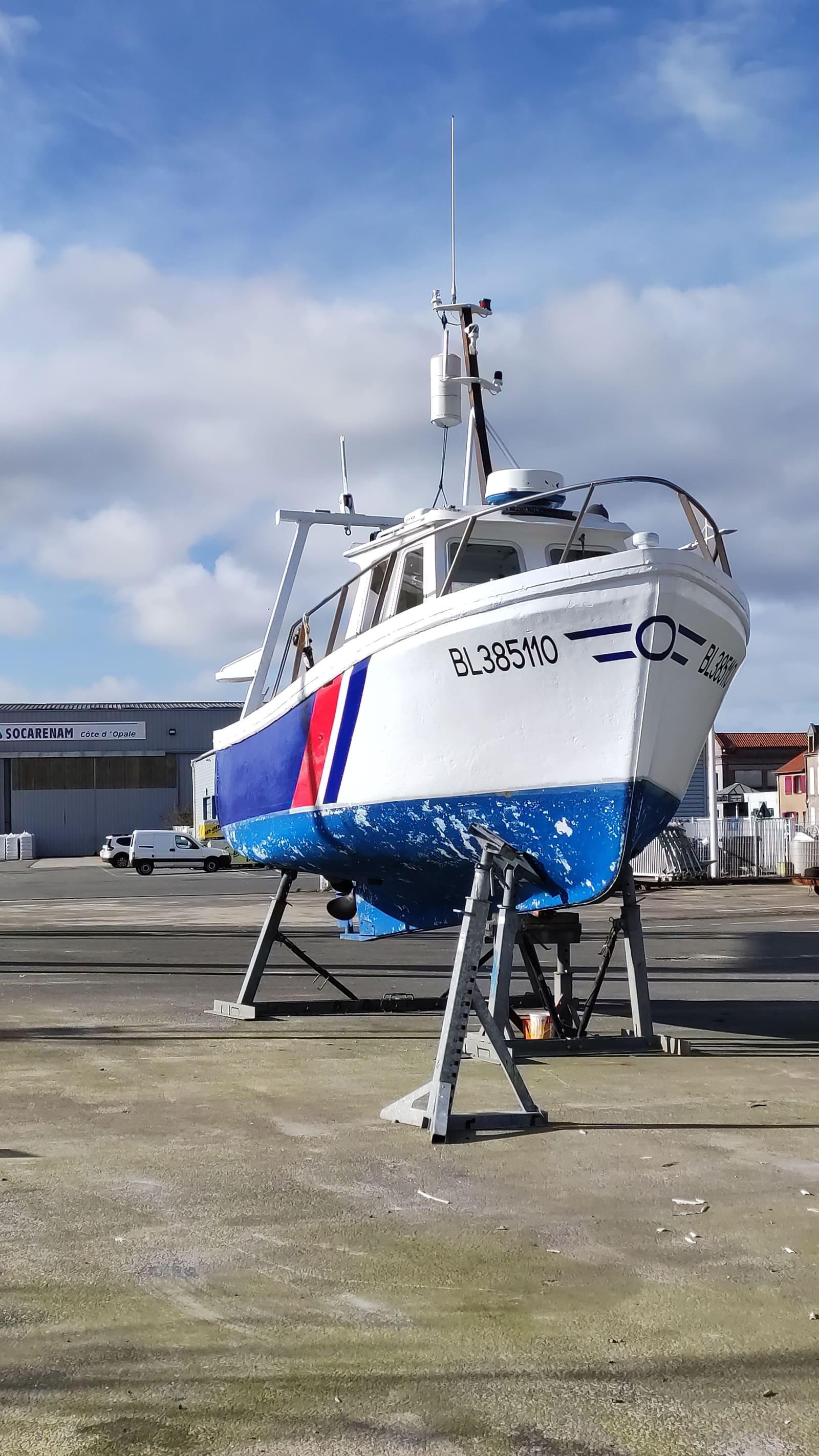
Storing a Boat on Stands and Blocks: Keel Blocking, Stand Placement and Safety Chains
Learn how a boat should sit on keel blocks and boat stands for winter or a haul-out, so you can check the yard's work, spot dangerous setups, and keep your boat from settling, distorting or falling over in wind, rain or a storm.
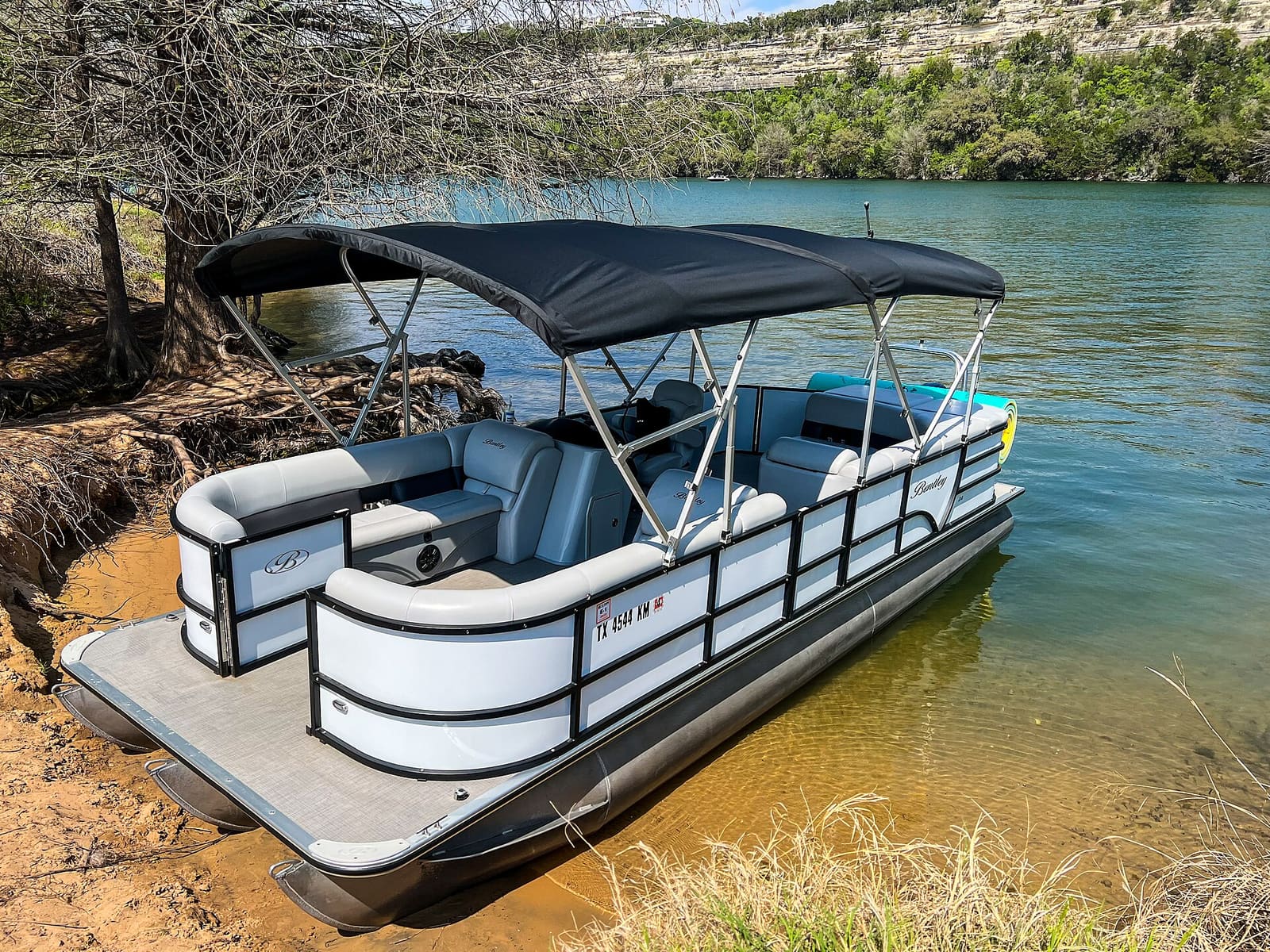
How to Find a Leak When Water Gets Into a Pontoon Tube
A pontoon that sits low on one side, lists or sloshes when you rock it probably has water in a tube. Learn how to confirm it, drain it, track down the pinhole or cracked weld, and choose between a temporary patch and a proper weld repair.
How to Adjust and Replace Trailer Bunks and Rollers So Your Boat Sits Right
Set up your boat trailer so the hull is supported in the right places: bunks and rollers clear of the strakes, the transom fully supported, the bow snug against the winch stop and the weight balanced on the tongue. Also covers replacing rotten bunk boards and worn carpet or rollers.
How to Inspect, Inflate and Replace Boat Trailer Tires
Check your trailer tires the way the pros do: the right type (ST), the right load range, the right cold pressure, and an honest look at their age. Tires are the number one reason boat trailers end up on the side of the highway.
How to Inspect and Repack Boat Trailer Wheel Bearings
Check, clean and repack your trailer's wheel bearings so a seized hub does not leave you stranded on the highway. Boat trailers get dunked in water every launch, which makes their bearings fail far more often than those on dry utility trailers.
How to Spot and Prevent Corrosion on an Aluminum Boat
Aluminum hulls and pontoon tubes are tough, but they lose almost every fight with other metals. Learn the warning signs of galvanic and stray current corrosion, keep copper and loose metal away from the hull, choose the right anodes, touch up paint with the proper primer and know when a repair needs a welder.
How to Inspect and Maintain a Boat Lift (Cables, Pulleys, Motor, Bunks and Storm Prep)
Inspect the cables, pulleys, motor, wiring and bunks on your boat lift, center the boat correctly, and prepare the lift and boat for storms and winter. Cable failures and overloading from rainwater or snow are the most common ways lifts drop boats.
Winter Layup Master Checklist (Step-by-Step, With Links to Each Job)
One ordered checklist for putting any boat away for winter, from booking storage and treating the fuel to winterizing the engine, water systems, head and batteries, then blocking, covering and securing the boat. Each step links to the detailed BoatMend guide for that job.

Winter Boat Cover vs Shrink Wrap: Support, Ventilation, Safety and Spring Removal
Choose between a reusable winter cover and shrink wrap, build a support frame that sheds snow, vent it so the boat doesn't mildew, and know the fire risks before you try DIY shrink wrap. Includes spring removal and recycling.
Trailer Tongue Jack and Coupler Care: Grease, Adjust and Know When to Replace
The tongue jack and coupler take a beating from weight, road grit and launch-ramp dunking. A few minutes of cleaning and grease a couple of times a season keeps the jack cranking smoothly and the coupler locking tight on the ball, and tells you when either part is worn out.