Engine Overheating - Troubleshooting Guide
Work through the most likely causes of a hot engine or overheat alarm, from a blocked water intake to a worn impeller or stuck thermostat. Acting fast and in the right order can save your engine and often gets you home without a tow.
Time
1 h
Applies to
Outboard, Sterndrive (I/O), Gas inboard
Safety first: A hot engine and its coolant can scald you. Never open a closed cooling system's pressure cap on a hot engine. If water is coming into the boat from a burst hose, or you smell fuel or burning wiring, stop the engine, put on life jackets and call TowBoatUS or Sea Tow; in an emergency call the Coast Guard on VHF channel 16 or dial 911.
Owners often ask
- Why is my outboard telltale stream weak or not coming out at all?
- My overheat alarm goes off at higher RPM but it's fine at idle. What should I check first?
This guide walks you through it. Still stuck? Ask the AI Mechanic about your engine.
Tools
- Flashlight
- Short piece of stiff wire or a small zip tie (for the telltale outlet)
- Screwdrivers and basic socket set
- Infrared thermometer (optional)
- Spare impeller, belt and hose clamps (if you carry them)
Parts & supplies
- Water pump impeller kit (if worn)
- Thermostat and gasket (if faulty)
Before you start
Most marine engines are cooled by lake or sea water pumped by a rubber impeller. When that water flow drops, the engine heats up fast and an alarm or warning horn sounds. Many modern engines also cut power to protect themselves (often called guardian or limp mode).
Work through these checks in order. The first ones are free and solve most cases. If you are on the water, your first job is safety: get out of traffic, anchor if needed, and keep the boat under control.
Steps
Throttle back to idle as soon as the alarm sounds. If the gauge keeps climbing or you see steam, shut the engine off once the boat is safe (anchored or clear of danger). Do not restart a very hot engine until it has cooled; restarting at high temperature can cause serious damage.
- Outboard: look at the small telltale stream from the side of the cowling. It should be strong and steady (on some engines it only shows above idle).
- Sterndrive/inboard: look for water coming out with the exhaust.
- Strong flow and a normal sound point to a gauge or sensor issue (go to step 9).
- Weak, spitting, steamy or no flow means a water supply problem. Keep going.
A weak or missing telltale with a normal gauge is often just a blocked outlet. Push a piece of wire or a small zip tie into the telltale hole while the engine idles. If a strong stream returns and the temperature is normal, that was it. Insects and debris often block it during storage.
Tilt the outboard or drive up and look at the water intake grates on the gearcase. Plastic bags, weeds and mud are common. Clear them by hand with the engine off. On the water, briefly shifting into reverse can sometimes blow a bag off the intake.
If you ran in shallow water or stirred up sand or mud, the intakes or pump may be packed with sediment.
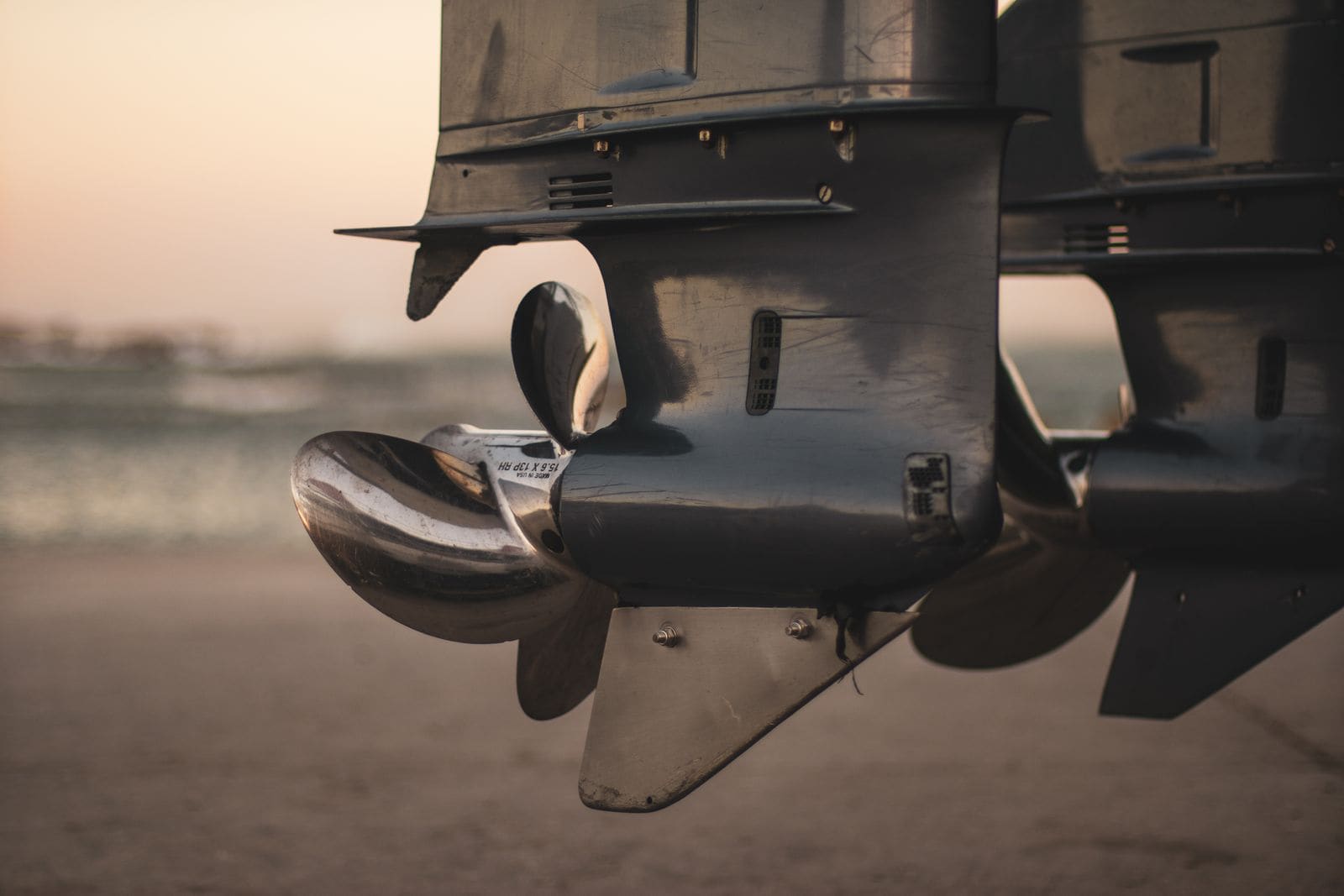
The slotted grate on the side of each gearcase is the cooling water intake. Weeds, bags or mud here starve the water pump. Photo: Stuart Reece / Pexels · Pexels License If your boat has a raw-water seacock and strainer, make sure the seacock is fully open. With the engine off, close the seacock, open the strainer, clean out weeds, shells and debris, and reassemble with the gasket seated. Reopen the seacock.
Open the engine hatch (after the engine is off and the bilge is sniffed). A broken or slipping belt can stop the seawater pump or the coolant circulating pump on some engines. Look for hoses that have popped off, split or are leaking. If water is pouring into the bilge, see the safety line above.
Only after the engine has cooled: open the expansion tank cap slowly and check the level. Low coolant with no obvious leak can point to a leak inside the heat exchanger or engine; that is a shop job.
If the intakes are clear and flow is still weak, the water pump impeller is the most likely cause, especially if it has not been replaced in two or more years or the engine ever ran without water. A slow rise in temperature over weeks is a classic sign of a worn impeller.
Alarm only at high rpm? If the engine stays cool at idle but the alarm sounds at cruise or wide open throttle, the pump is moving enough water for idle but not for full load. A tired impeller, a partly blocked intake or sediment in the passages are the usual causes. Replacing it on an outboard means dropping the lower unit, which is not an on-water job. See the impeller guide.
If water flow looks good but the gauge reads high, the problem may be electrical: a bad sender, a loose ground or a voltage change at the dash. Some gauges also shift when you turn on lights. Feel (carefully) or use an infrared thermometer to compare the engine's actual temperature with what the gauge shows.
Water pressure gauge reads zero at idle? That alone is not proof of a problem. Yamaha explains that its outboards use a high-volume, low-pressure cooling design, so the pressure reading can be zero at idle (most sensors only start reading at a few psi), and the meaningful pressure check is at wide open throttle. Your manual or dealer has the minimum figure for your engine.
A thermostat that sticks closed blocks water flow and causes overheating; one stuck open makes the engine run too cool. In salt water, corrosion and deposits make thermostats and pressure relief (poppet) valves stick. If water flow looks normal at idle but the engine runs hot, have the thermostat checked or replaced.
If temperatures have slowly crept up over seasons, salt, scale or corrosion may be restricting cooling passages, especially in engines used in salt water without flushing. Flushing with fresh water after every saltwater trip helps prevent this. Yamaha notes that salt water left inside can crystallize on the hottest surfaces (above roughly 170°F) and form deposits that restrict flow, and that combustion by-products of ethanol fuel can concentrate on hot spots in the exhaust and eat into the metal. Clearing heavy buildup is a shop job.
A heavily fouled bottom, a wrong prop, or something wrapped around the prop makes the engine work harder and run hotter. If you are also losing speed, check the prop for line or weeds with the engine off and the key removed.
If water flow is partly restored and the temperature is normal, return slowly at low rpm and watch the gauge. If there is little or no water coming out, do not run the engine: call for a tow. Have the cause fixed before the next trip, and check the impeller even if you found a blockage, because overheating often damages it.
Common mistakes
- Buying a new sensor or thermostat before checking the real engine temperature with an infrared thermometer. Sometimes only the gauge is wrong.
- Replacing just the impeller and never finding the missing vane pieces from the old one, which then block a passage.
- Ignoring a telltale stream that has been getting weaker for weeks until the alarm finally sounds.
- Running the engine on muffs with low water pressure, or revving it on muffs. There is not enough water for high rpm.
- Restarting or cranking a very hot engine right away instead of letting it cool.
- Opening the coolant cap on a hot closed-cooling engine.
- Skipping the freshwater flush after salt water, so scale slowly narrows the cooling passages.
When to call a pro
- Little or no water flow and you cannot find a blocked intake
- Steam, a burning smell, or the engine lost power or stalled from heat
- Water pouring into the bilge from a hose or fitting (call TowBoatUS/Sea Tow; in an emergency VHF 16 or 911)
- Coolant loss on a closed-cooling engine
- Overheating comes back after you replaced the impeller and thermostat
- Milky engine oil after an overheat (possible head gasket damage)
Tips
- Glance at the telltale or exhaust water every time you start the engine and every so often while running.
- Flush the engine with fresh water after every saltwater trip.
- Carry a spare impeller and belt if your pump is engine-mounted.
- Note your engine's normal running temperature so you notice a change early.
Official references
We read these to write this guide. Your engine's own manual always wins.
- BoatUS – What If Your Temperature Gauge Spikes?
- BoatUS – 4 Steps to Take if Your Outboard Quits
- Yamaha Outboards – Maintenance Matters, Additional Tasks
- Mercury Marine – Service and Support FAQs
- Yamaha Outboards – Freshwater Flushing Adds Years to the Life of an Outboard
- Yamaha Outboards – Owner FAQs (water pressure)
- Yamaha Outboards – Maintenance Matters, Corrosion Prevention
Safety: BoatMend is for information only and does not replace a certified marine technician. You are responsible for your safety and your boat. Read the full disclaimer.
Last updated 2026-10-23
Related guides
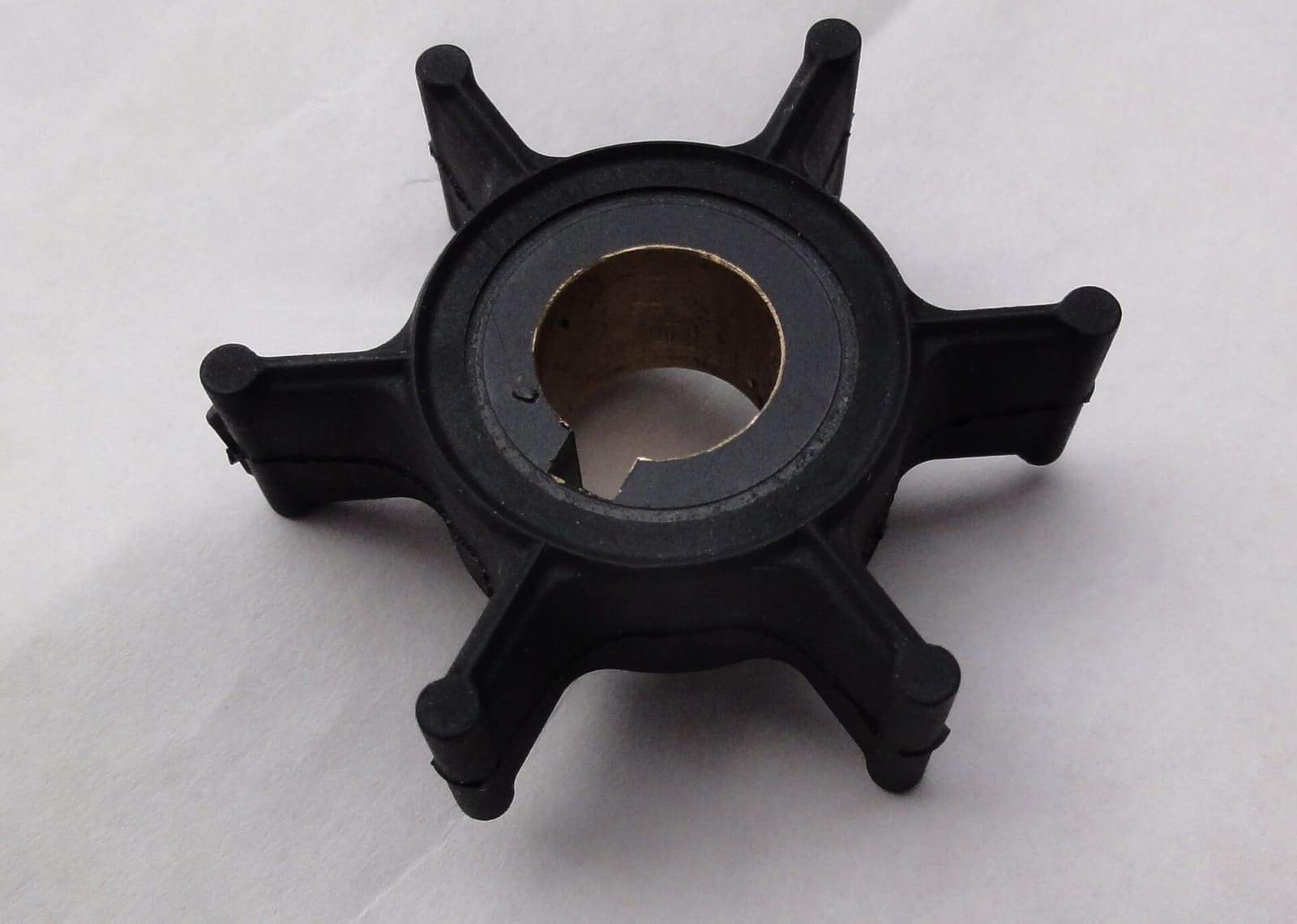
How to Replace the Water Pump Impeller
Replace the rubber impeller that pumps cooling water through your engine, the part most often behind overheating. On many outboards it is a two-hour driveway job that saves a shop bill of several hundred dollars and prevents far costlier heat damage.
Engine Won't Start or Won't Crank - Troubleshooting Guide
Find out why your boat engine will not turn over or will not fire, starting with the simple things owners miss most, like the kill switch lanyard and battery switch. Many no-starts are fixed at the ramp in minutes without a tow.
Loss of Power, Hesitation or Misfire - Troubleshooting Guide
Figure out why your engine bogs down, stumbles, will not reach full rpm or runs rough. Work from simple checks like trim, prop and fuel filter to ignition and engine protection modes before paying for diagnostics.
How to Winterize an Outboard Engine
Protect your outboard from freeze damage, stale fuel and internal corrosion over the off-season. Most owners can do it in an afternoon with basic tools, compared with a shop bill that often runs several hundred dollars.