Four-Stroke Outboard Oil Level Rising or Smelling Like Gas: What It Means and What to Do
If the oil on your four-stroke outboard's dipstick keeps going up or smells like gasoline, fuel is probably getting into the crankcase. Learn how to check the level the right way, why lots of idling, trolling, short runs and cold water cause it, what you can do yourself, and when a fuel-system fault needs a dealer.
Time
45 min
Shop would charge
$150-600
Applies to
Outboard
Safety first: Gasoline in the oil means fuel is getting where it shouldn't. If you smell raw fuel under the cowling or in the bilge, see fuel dripping, or the engine is flooding, do not start or run it: no sparks, no smoking, ventilate, and get the fuel leak fixed first. Oil thinned by fuel protects the engine poorly, so don't keep running an engine with a high, fuel-smelling oil level. On the water with a fuel leak, shut down, open hatches, and call TowBoatUS, Sea Tow, or VHF 16 / 911 in an emergency.
Owners often ask
- Why is the oil level on my four-stroke going up and smelling like gas?
This guide walks you through it. Still stuck? Ask the AI Mechanic about your engine.
Tools
- Clean white shop towels
- Flashlight
- Notebook or the BoatMend maintenance log (for hours and dipstick readings)
- Oil change tools from the outboard oil change guide (if you change the oil)
Parts & supplies
- Engine oil and oil filter specified in your owner's manual
- Drain plug gasket specified in your manual
Before you start
Four-stroke outboards keep their oil in a crankcase, like a car. A small amount of fuel and moisture always gets past the piston rings into the oil (this is called blow-by). Normally the engine gets hot enough to evaporate it out through the crankcase vent. When it doesn't, the fuel builds up: the oil level rises, the oil gets thinner, and it smells of gas. This is fuel dilution, and owners sometimes say their engine is "making oil."
It's most common on:
- Engines that idle or troll for hours, especially kicker motors used only for trolling.
- Engines run in cold water and cold air, which never get fully warm.
- Many short runs with the engine shut off before it's warm.
- Carbureted engines that are over-choked or flood when starting.
Sometimes it's a fuel-system fault instead (a leaking part sending fuel into the engine), which needs a dealer. This guide helps you tell which.
Steps
A wrong reading causes a lot of false alarms. Yamaha's procedure, in short: make sure the outboard is level side to side and front to back, warm it to normal operating temperature (about 5 to 10 minutes in the water, or on flush muffs or in a test tank; not on the built-in flush port unless your manual allows running on it), shut it off and wait about 5 minutes. Pull the dipstick, wipe it, reinsert it fully, pull it again and read it. Your own manual's routine may differ a little, so follow it. Yamaha warns that both overfilling and underfilling can cause severe internal damage.
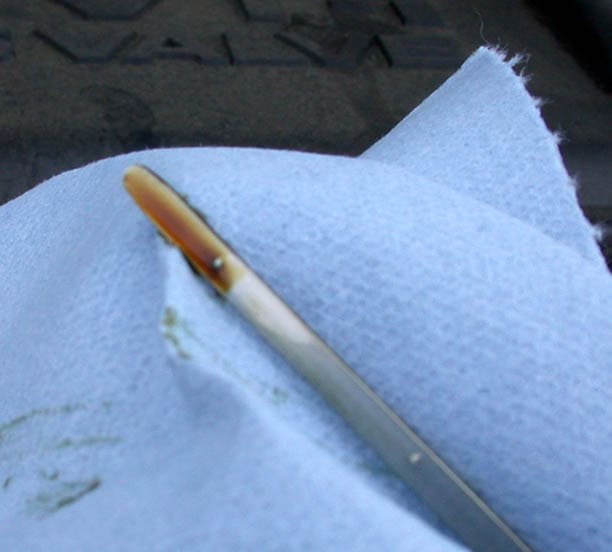
Photo: Dvortygirl / Wikimedia Commons · CC BY-SA 3.0 Wipe the dipstick on a clean white towel. Then judge it:
- Smells clearly of gasoline, or feels thin and watery: fuel dilution is likely. Keep going with this guide.
- Milky, light brown or foamy: water or coolant in the oil. That is a different, more serious problem: stop using the engine and call a dealer.
- Normal smell, level a little high: maybe it was overfilled at the last change, or the reading was taken with the engine tilted. Go to step 3.
Look at your log: how much oil went in at the last change, and did it match the manual's capacity with filter? Re-read the level using step 1 on another day. If the level was high right after an oil change and has not gone up since, it's an overfill. This is common when someone pours in the full capacity printed in the manual: Mercury explains that the listed capacity is approximate and covers the whole lubrication system, and some oil always stays in the engine after draining, so the full amount often won't fit. Fill to the dipstick, not to the number on the bottle. Remove the extra oil (most shops use a small pump through the dipstick tube) until it's within the marks.
Write down the engine hours and where the oil sits on the dipstick (for example "1/4 above the lower mark"). Check it the same way after every trip for a week or two. A level that keeps climbing with a fuel smell confirms dilution. Note how you used the boat each time: hours of trolling, water temperature, number of starts.
If the oil smells of fuel or is above the full mark from dilution, change the oil and filter now, using the oil specified in your manual (see the outboard oil change guide). Don't just drain off the excess: the oil that's left is still thinned by fuel. Note the hours.
Most dilution cases on healthy engines are fixed by how the engine is used:
- After a long idle or trolling session, run the engine at cruising speed for a good stretch, when it's safe and legal to do so, so it gets fully hot and can drive off the fuel.
- Avoid lots of short trips where the engine never warms up.
- On a kicker, run it at higher RPM once in a while instead of only at trolling speed, or run it warm before you put it away.
- On a carbureted engine, use only as much choke or priming as it needs to start, and close the choke as soon as it runs smoothly.
Many outboards use a fairly cool thermostat so they don't build up salt in the cooling passages. A Suzuki Marine USA service manager, quoted by Virginia's Department of Wildlife Resources, says Suzuki offers a higher-temperature thermostat for owners who run at low speed a lot (trolling or working crab pots) because it helps fight carbon buildup and oil dilution. Ask your dealer whether your engine has such an option before you change anything; a non-approved thermostat can cause overheating or warranty problems.
Also make sure the cooling system you already have is working as designed. Yamaha notes that salt deposits or small bits of debris can make the thermostat or pressure-relief (pop-off) valve stick open, so the engine runs too cool and never reaches its normal operating temperature. If your temperature gauge always reads low, or the engine takes ages to warm up, have them checked and cleaned before anything else.
Use the oil grade your manual lists for the temperatures you run in; some manuals give a lower-viscosity option for cold weather. Ask your dealer whether a shorter oil change interval makes sense if you troll a lot in cold water.
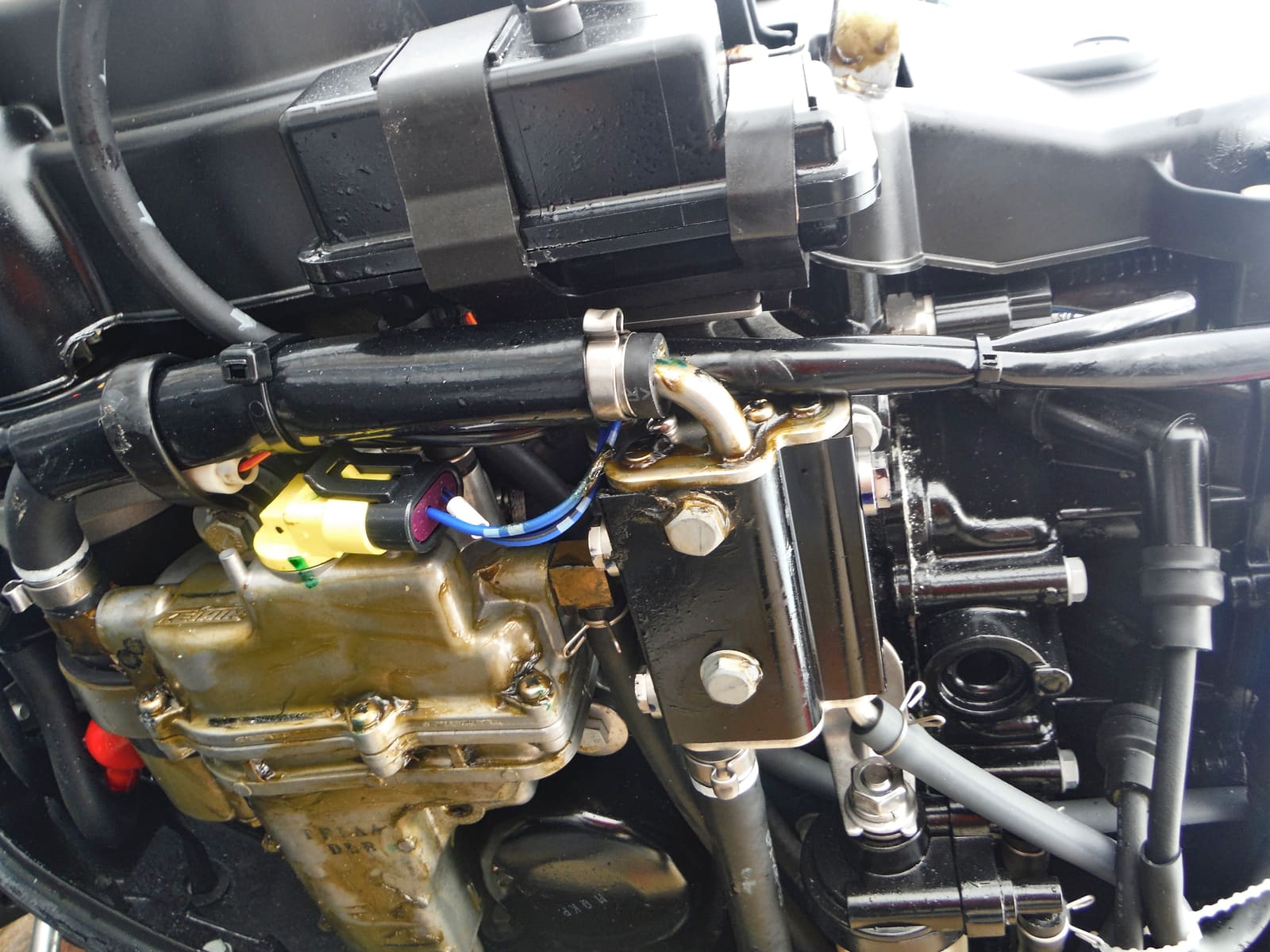
With the engine off and cold, remove the cowling and look at the fuel hoses, the fuel filter, the fuel pump and, on fuel-injected engines, the vapor separator tank (a small fuel reservoir on the side of the engine). Look for wet spots, fuel stains or a strong raw-fuel smell. Check the primer bulb and hose connections too. Any leak or strong smell: stop and have it fixed before running the engine.
If the level keeps rising even though you run the engine warm, a part may be letting fuel into the cylinders or crankcase. Depending on the engine, a technician will check things like:
- A leaking or stuck-open fuel injector.
- A float or needle valve in the vapor separator tank (or a carburetor) that sticks and floods the engine.
- A leaking diaphragm in a mechanical fuel pump that sends fuel into the crankcase.
- A fuel pressure regulator fault.
- Worn or stuck piston rings, checked with a compression or leak-down test (Mercury notes that dealers use a compression check to look for carbon buildup or ring problems).
These are dealer jobs: they involve opening the fuel system and, on EFI engines, diagnostic software.
On a brand-new or rebuilt engine, follow the break-in procedure in your owner's manual to the letter. Long periods at idle or a single steady speed during break-in are often discouraged. Check the oil level frequently during break-in, and report a rising level to your dealer while the engine is under warranty. BoatUS notes that the first oil and filter change, which flushes out the normal wear particles from break-in, usually comes somewhere between 20 and 50 hours; your manual gives the exact interval.
After the oil change and any repair, keep logging the dipstick for the next few trips. A stable level with no fuel smell means you've solved it. Yamaha's general schedule calls for an oil change every 100 hours or once a year on its four-strokes (confirm in your manual); if you troll a lot, plan to check the oil before every trip.
Common mistakes
- Reading the dipstick with the engine tilted, on a trailer with the bow high, or right after shutting down.
- Topping off oil before every trip without noticing the level is actually rising.
- Draining a little oil to "fix" the level instead of changing it.
- Pouring in the manual's full oil capacity after a change instead of filling to the dipstick, then mistaking the overfill for fuel dilution.
- Ignoring a fuel smell on the dipstick until bearings are damaged.
- Pumping the primer bulb over and over on a hard start, flooding the engine.
- Trolling all day on a kicker, then tilting it up cold every time.
- Fitting a hotter aftermarket thermostat without asking the dealer.
When to call a pro
- Any fuel leak, raw-fuel smell under the cowling or in the bilge, or an engine that floods
- Milky, foamy or light-brown oil (water or coolant in the oil)
- The oil level keeps rising after an oil change even though you run the engine warm
- Rough running, hard starting, black smoke or a check-engine/warning alarm along with the rising level
- A new engine under warranty with a rising oil level
- Any repair inside the fuel system (injectors, vapor separator tank, carburetor, fuel pump)
Tips
- Keep a simple log: hours, dipstick reading, and how you used the boat. Patterns show up fast.
- Smell the oil every time you check it; it takes two seconds.
- In cold months, plan a stretch of running at cruising speed before you head back to the ramp.
- Use fresh, properly stored fuel. Yamaha says the fuel system is the biggest source of trouble on marine engines.
Official references
We read these to write this guide. Your engine's own manual always wins.
- Yamaha Outboards – Maintenance Matters, Engine Oil & Lube (Check Your Oil Level)
- Yamaha Outboards – Maintenance Matters, Fuel & Fuel System
- Virginia DWR – Prepare Your Outboard for Operation in Cold Weather (advice from Suzuki Marine USA)
- Mercury Marine – FourStroke Maintenance
- Mercury Marine – Owner FAQs (oil capacity and filling by the dipstick)
- Yamaha Outboards – Maintenance Matters, Additional Tasks (thermostat and pop-off valves)
- BoatUS – Basic Outboard Maintenance
Safety: BoatMend is for information only and does not replace a certified marine technician. You are responsible for your safety and your boat. Read the full disclaimer.
Last updated 2026-10-24
Related guides
How to Change the Oil and Filter on a 4-Stroke Outboard
Drain the old oil, swap the filter and refill with the right marine oil on your 4-stroke outboard. It is the most common service job, takes about an hour, and costs a fraction of the dealer price.
Ethanol (E10) Fuel Care: Stabilizer, Phase Separation, Fuel Lines and Tank Vents
Keep E10 gasoline from damaging your boat engine. Learn how to use stabilizer, test for water and phase separation, and inspect the fuel lines, primer bulb, anti-siphon valve and tank vent. Most fuel-related breakdowns start with one of these.
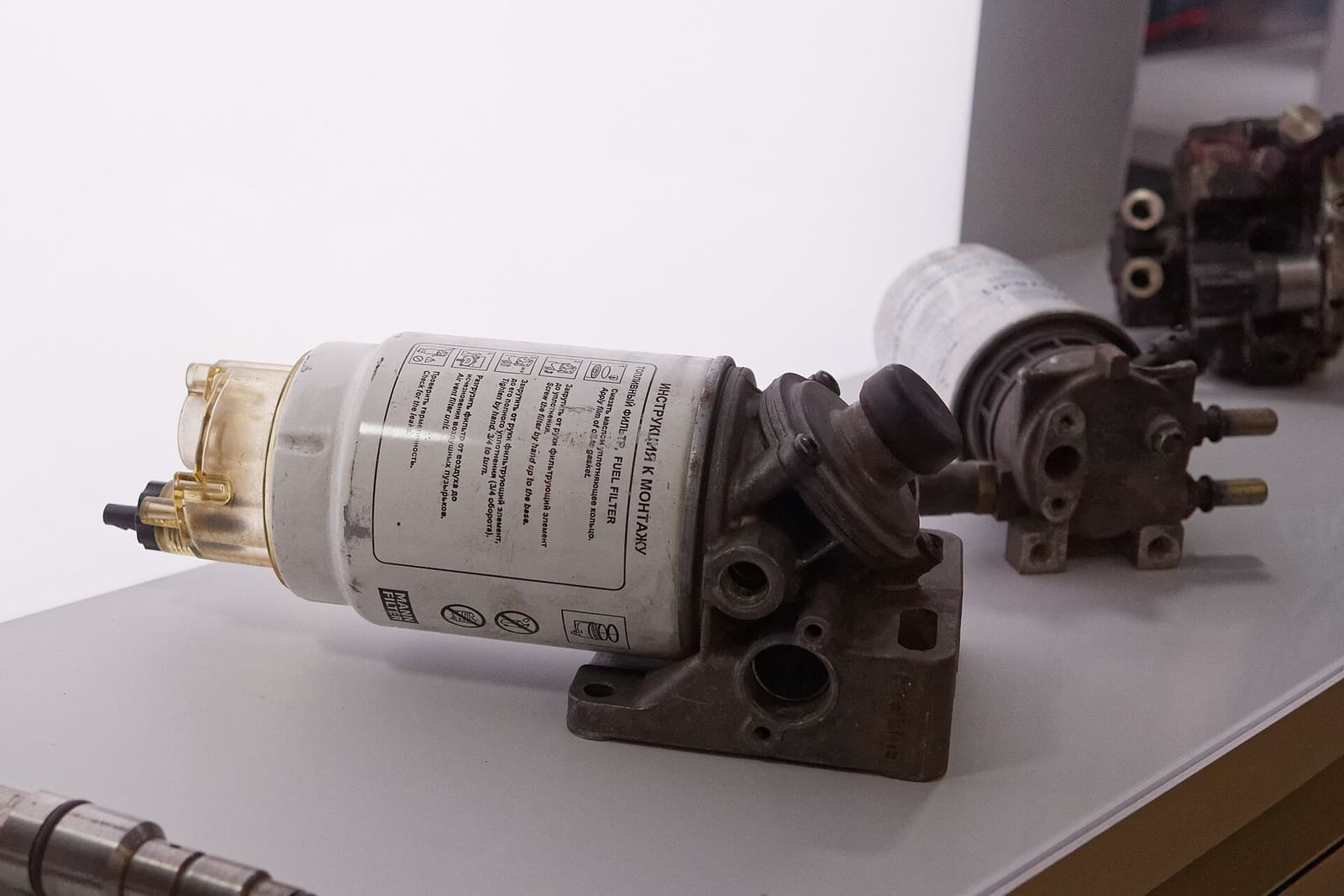
How to Replace a Fuel/Water Separating Filter (and Check for Water in Your Fuel)
Swap the spin-on fuel/water separator on your gas boat and learn to spot water and ethanol phase separation before it stalls the engine. It is one of the cheapest jobs on the boat and one of the best protections for a fuel-injected engine.
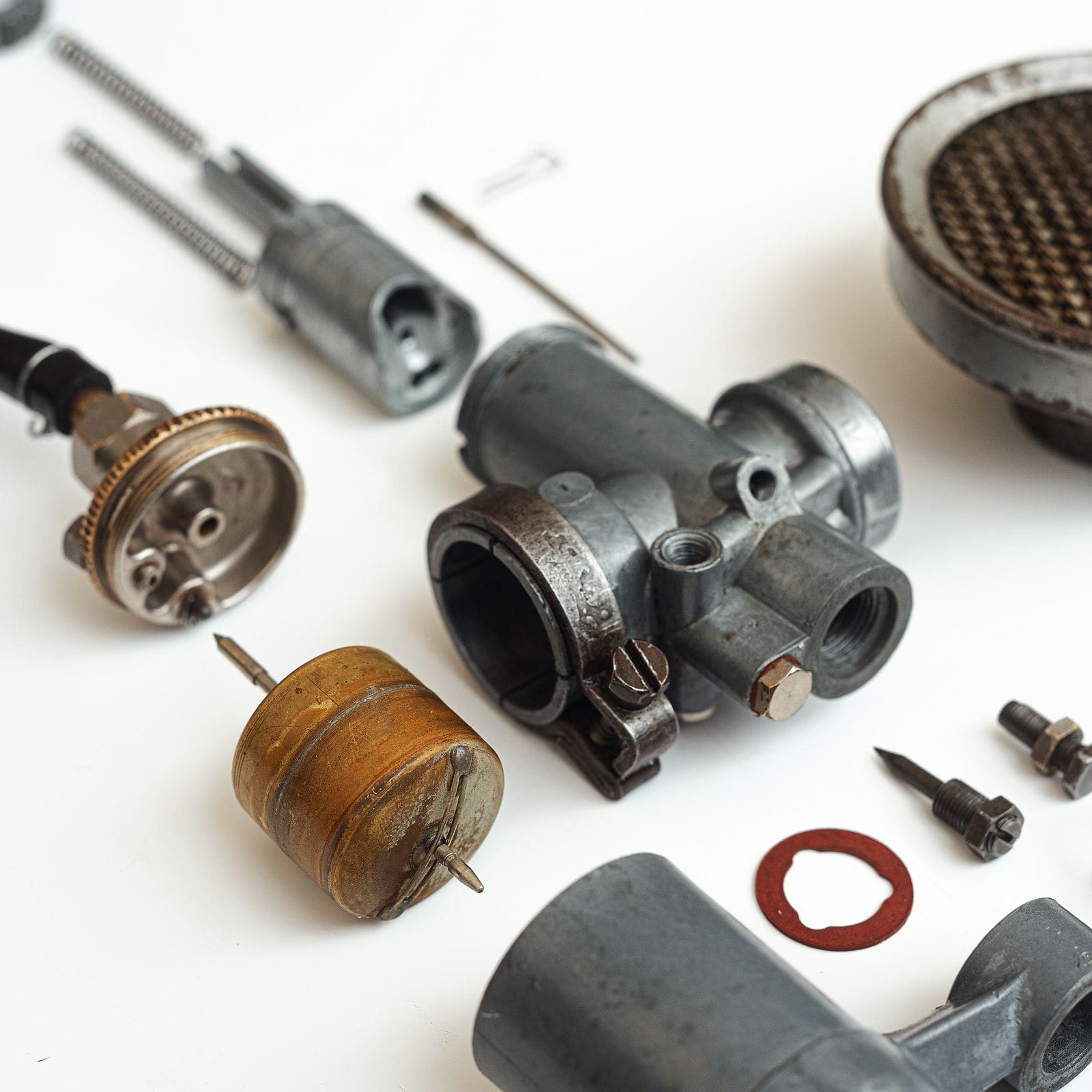
How to Clean the Carburetor on a Small or Older Outboard
Old fuel turns to varnish and plugs the tiny jets in a carburetor, so the engine only runs on choke, surges or will not idle. Learn when the carburetor really is the problem, how to drain and clean it, and when a rebuild kit or a replacement makes more sense.
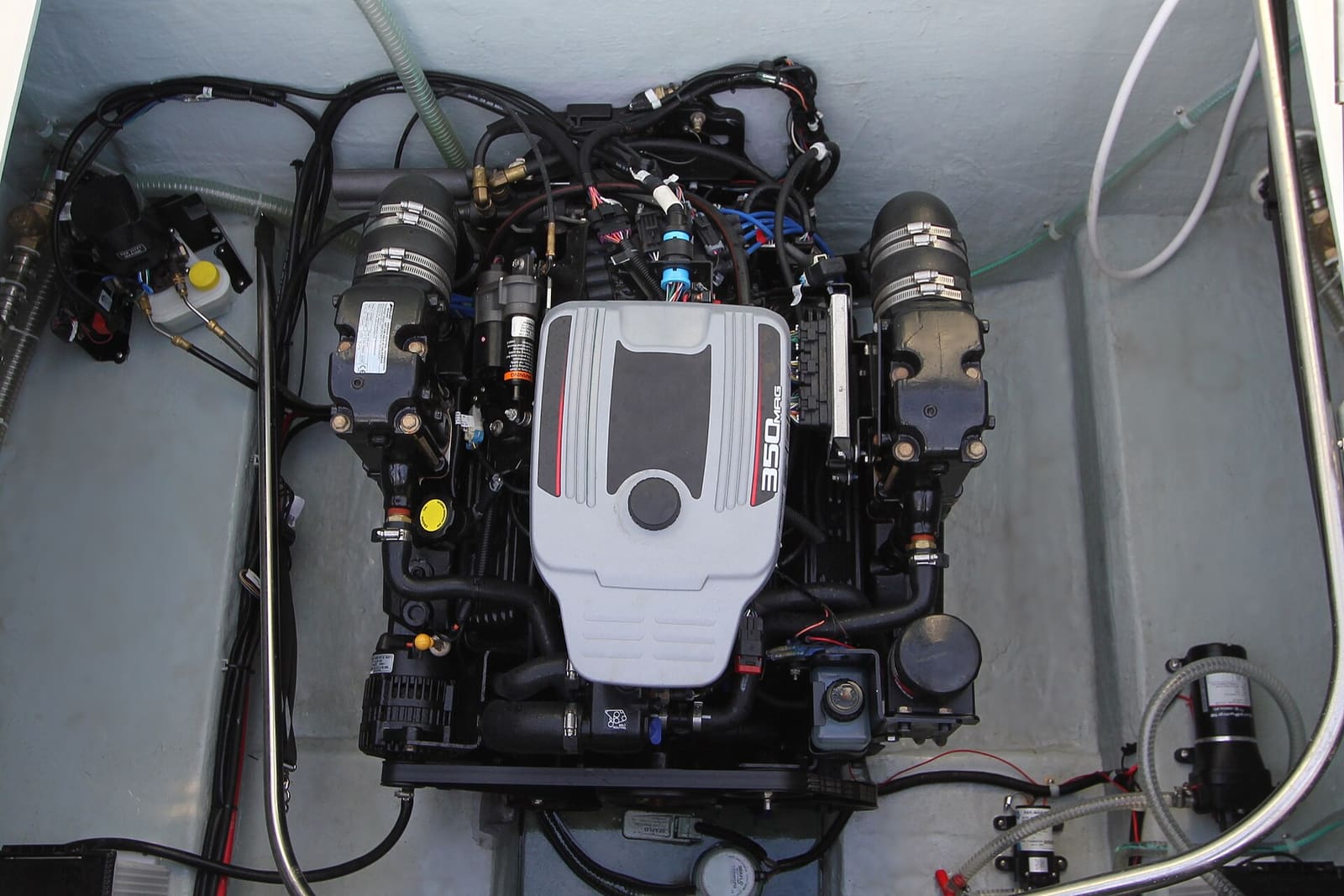
How to Test and Replace the Engine Thermostat
Find, test and replace the thermostat that controls your engine's operating temperature. A stuck thermostat can make an engine overheat or run too cold. On most outboards and many sterndrives it is a one-hour job with basic tools.
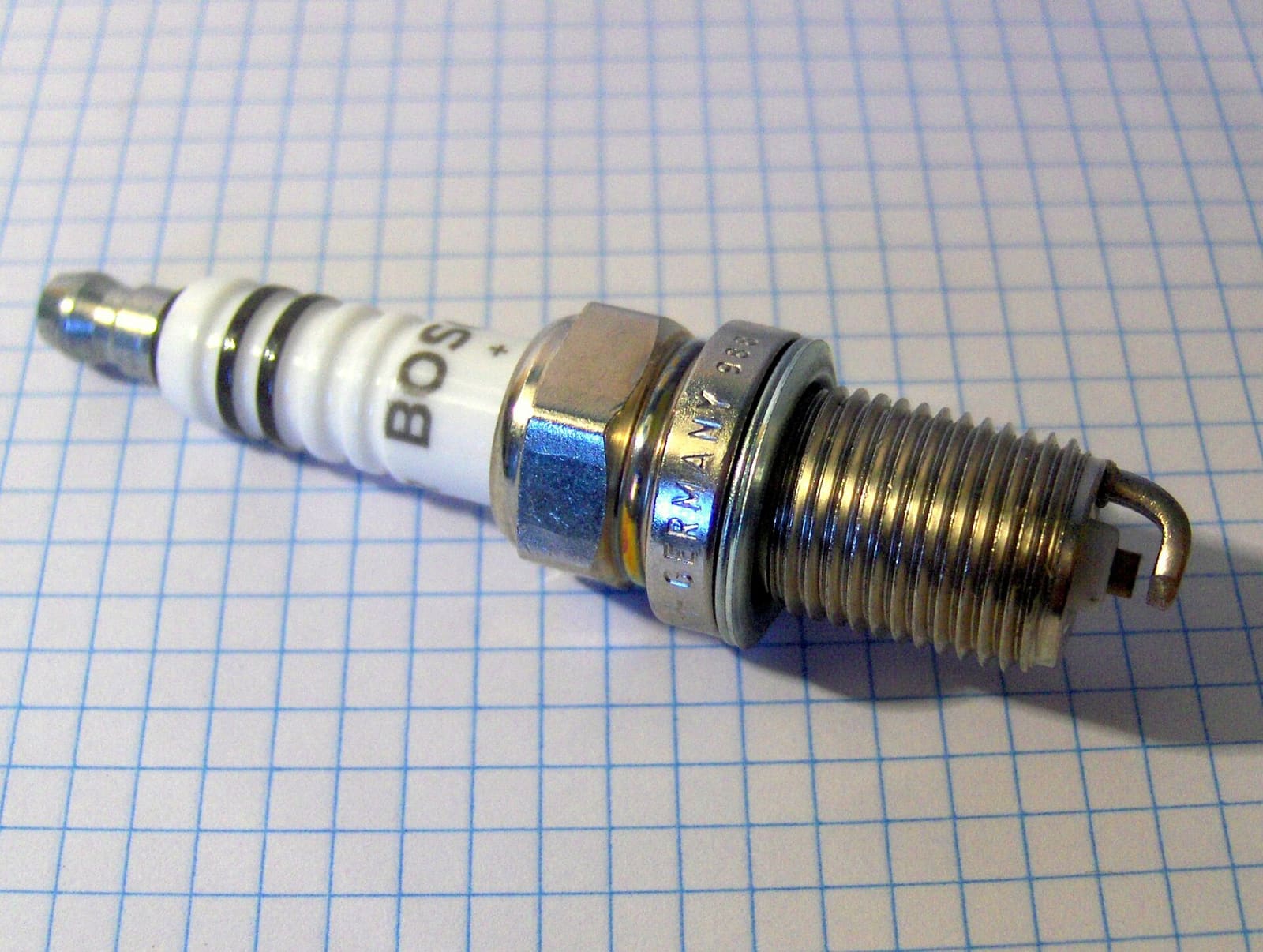
How to Inspect and Replace Spark Plugs
Pull, read and replace the spark plugs on a gas outboard, sterndrive, inboard or PWC. Fresh, correctly gapped plugs help the engine start easily and run smoothly, and the old plugs tell you a lot about the engine's health.
Engine Warning Horn and Dash Lights: What They Usually Mean and What to Do
Learn what a warning horn, beeps or a dash light usually mean on a boat engine, from overheating and low oil pressure to water in the fuel and reduced-power (limp) mode. Find out what to do right away and when to stop the engine. Patterns differ by brand, so match what you hear and see to your owner's manual.
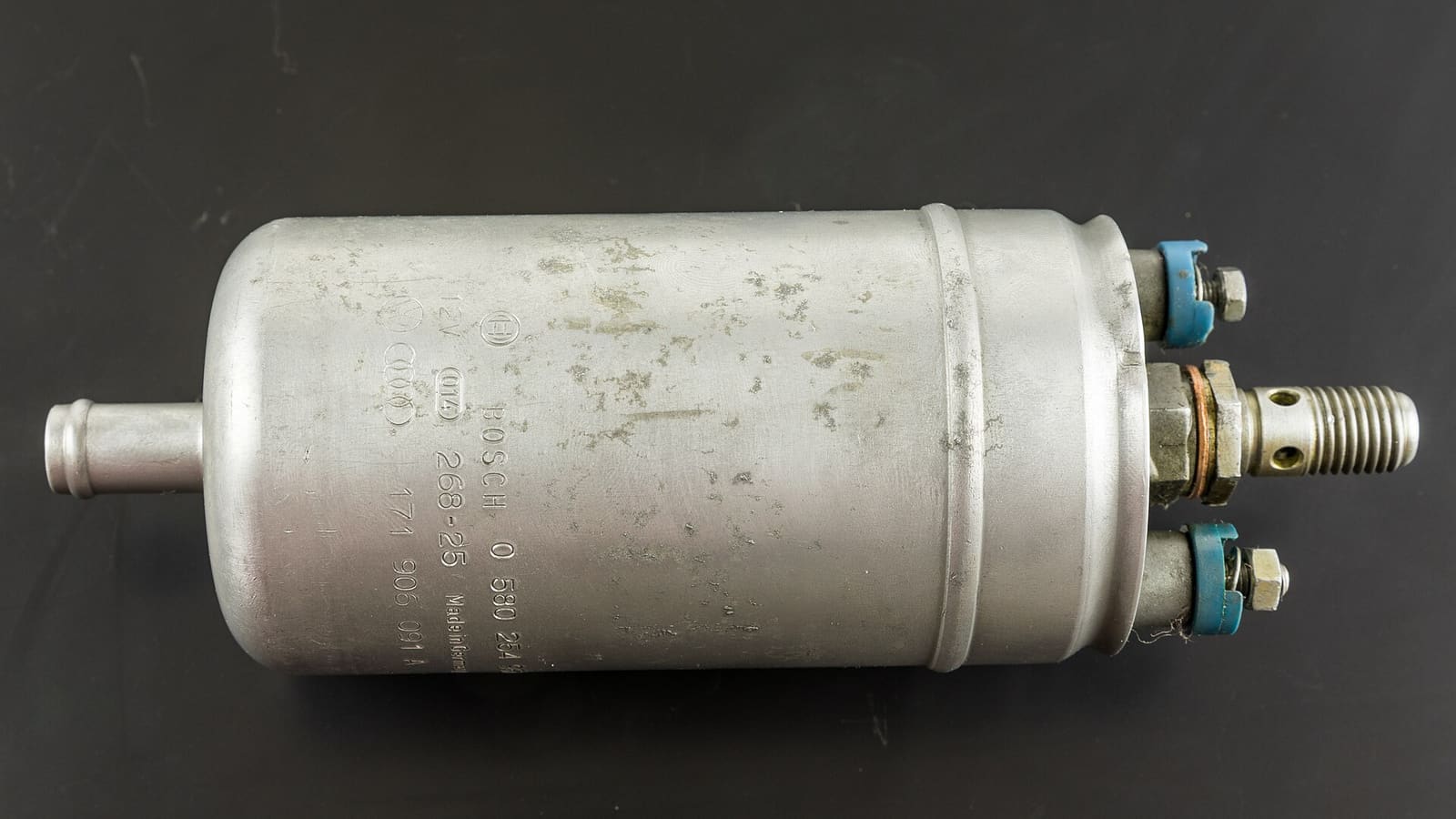
Fuel Pump Checks - Is It the Pump or Something Starving It?
Bogging at speed, surging or dying after a few minutes is often blamed on the fuel pump, but vents, filters, primer bulbs and anti-siphon valves cause the same symptoms. Learn how mechanical, pulse and electric pumps work, the safe checks you can do, what the primer bulb is telling you, and why a real pressure test needs the right gauge and the factory spec.
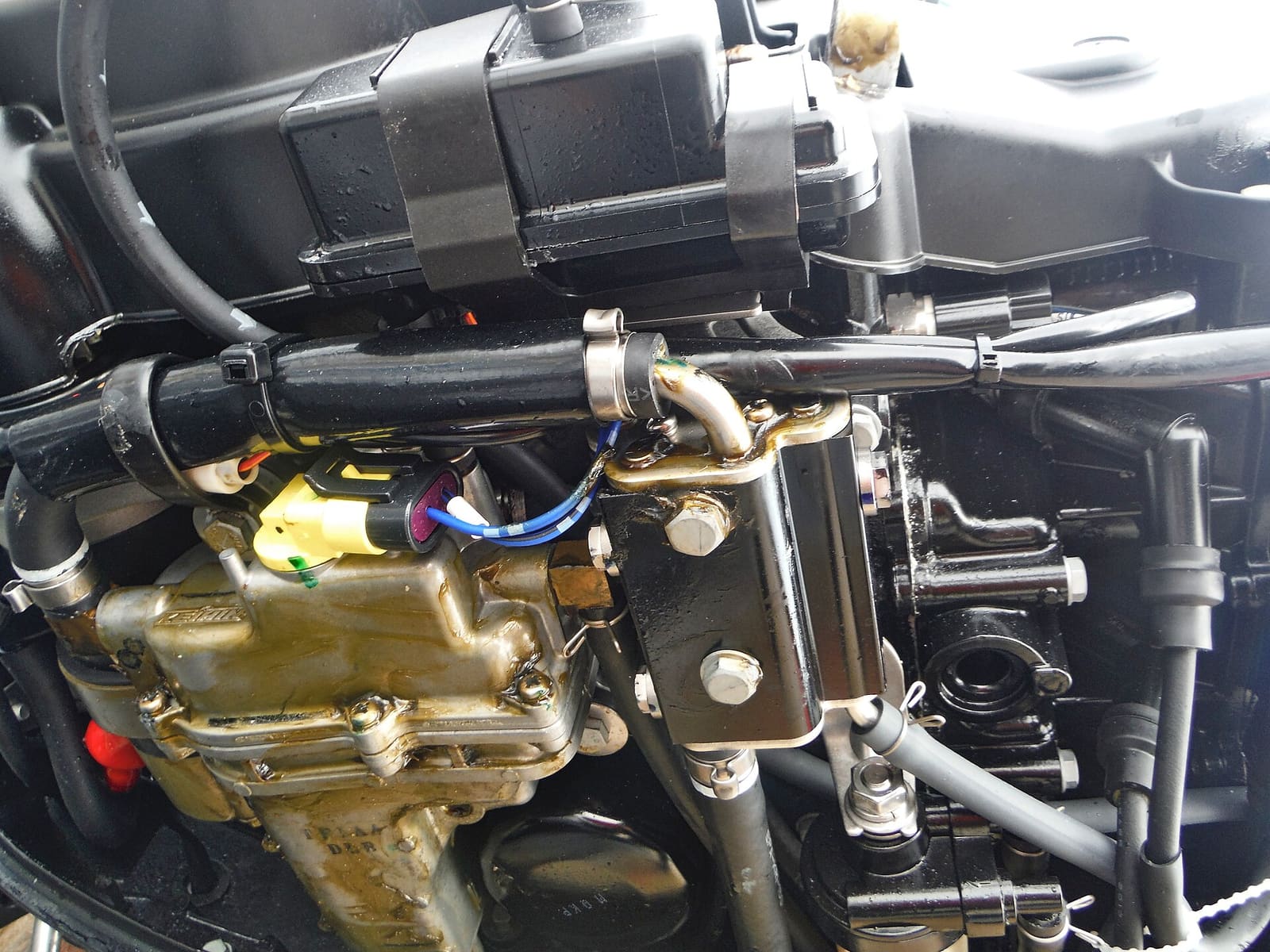
EFI Outboard Vapor Separator Tank (VST) and Injectors - Symptoms, Filters and When It's a Dealer Job
On a fuel-injected outboard, the vapor separator tank holds fuel right at the engine and feeds the high-pressure pump and injectors. Learn why ethanol varnish and debris clog its filter, how a starving VST feels (stalls at speed, won't hold RPM), what you can safely maintain yourself, and when it's time for the dealer.