How to Detail Your Boat's Interior (Vinyl Seats, Carpet, Storage and Drains)
Give your cockpit and cabin a proper detail. Clean marine vinyl without stripping its UV protection, wash snap-in and glued-down carpet, clear out cup holders, storage boxes and their drains, beat mildew and pink stains, and know which household cleaners to keep off your boat.
Time
3 h
Shop would charge
$150-500
Applies to
All engines
Safety first: Never mix cleaners, especially bleach with ammonia or acids: the fumes are toxic. Work with hatches open and good airflow in cabins and lockers. Keep the hose away from the helm electronics, switch panels and battery compartments, and turn off the battery switch before wiping around wiring.
Owners often ask
- How do I get pink stains out of my white vinyl boat seats?
- Can I pressure wash my boat carpet?
This guide walks you through it. Still stuck? Ask the AI Mechanic about your engine.
Tools
- Shop vacuum (wet/dry) with a crevice tool and a soft brush tool
- Soft-bristle brushes and an old toothbrush
- Buckets, a pump sprayer and a garden hose with a gentle nozzle
- Plenty of clean microfiber towels
- Pipe cleaners or a flexible drain brush
- Rubber gloves
Parts & supplies
- Mild soap (such as a gentle dish soap)
- Marine vinyl cleaner for tough stains
- Marine vinyl protectant without silicone
- Mildew remover approved by your vinyl or fabric maker
- Mild carpet cleaner or enzyme cleaner safe for marine carpet
- Screen cleaner made for marine electronics
Before you start
Check your vinyl maker's rules. Most boat upholstery is marine vinyl from a handful of makers, and their approved cleaners differ. Some allow a diluted bleach mix for mildew; Sea Ray and Bayliner say never to use bleach on their vinyl. MasterCraft warns that improper cleaners can void the upholstery warranty. Even one builder can give mixed advice: a second Sea Ray article relays Morbern (the maker of Sea Ray's upholstery vinyl) allowing a weak bleach-and-water mix for persistent stains and an all-purpose spray for problem stains, always spot-tested first. That's why the vinyl maker's current care sheet is the one to follow. Look in your owner's manual or on the boatbuilder's website before using anything stronger than mild soap. When in doubt, stick to soap and water and a marine vinyl cleaner.
How often: rinse off salt, sunscreen and food after each outing, and do a full interior detail at the start and end of the season, plus once mid-season if the boat gets heavy use. Typical; adjust for your climate.
Steps
Take everything out: cushions that come off, life jackets, coolers, gear, trash and snap-in carpet. Open every hatch, locker, cooler and storage box. You'll find wet towels, old bait and food wrappers you forgot about.
Vacuum the floor, seat seams, storage boxes and under cushions while everything is dry. Loose sand and grit scrubbed into carpet or vinyl act like sandpaper.
Mercury advises against hosing or pressure washing permanently installed carpet, common in bass and multispecies boats. Vacuum, then spot-clean with a mild soap solution (Mercury suggests soapy lukewarm water with a little white vinegar for bigger stains) and a wet rag or soft brush. Blot, don't scrub hard, and use the wet/dry vacuum to pull out the dirty water. Soaking the carpet wets the plywood or foam underneath.
Unsnap the carpet and wash it off the boat: vacuum, scrub lightly with mild soap or an enzyme carpet cleaner, rinse, and hang it to dry completely. Mercury says to make sure the deck is completely dry before putting the carpet back. Check the snaps on the deck and carpet for corrosion and replace any that won't hold.
Woven vinyl flooring and foam decking are different. Sea Ray passes on the makers' advice: for woven vinyl flooring (Infinity), blot watery spills right away, scrape solids gently with a dull blade and vacuum, and wash regularly with hot soapy water and a rinse; for SeaDek-style foam traction pads, use the cleaner the foam maker names and a medium brush. Check your flooring maker's list of products to avoid before using anything stronger.
Mix mild soap in water (Bayliner suggests about a quarter cup of mild dish soap per gallon) and wipe the seats with a soft cloth or sponge. Use an old toothbrush on seams, piping and stitching, where sunscreen and dirt collect. Rinse with plenty of fresh water. Don't soak the cushions; MasterCraft warns that water in the foam leads to mildew. BoatUS adds two points: wipe the seats down after every trip even when they look clean, because invisible sweat, dust and sunscreen are what mildew feeds on; and go gently, since hard scrubbing wears away the antimicrobial and UV treatments most marine vinyl comes with, and those don't come back.
Soaked foam: if a cushion stays squishy and wet, the thin plastic film wrapped around the foam inside the cover may be torn. BoatUS describes pulling the foam out and drying it completely (sealing it in a contractor bag with a wet/dry vacuum hose taped into the opening speeds this up, then air-dry), then rewrapping it in new film before it goes back in the cover. It can take days. If the foam smells moldy or is crumbling, replace it.
For tough stains or pink "pinking" stains, use a marine vinyl cleaner and a soft brush. A few spot tricks from builders:
- Ink: Sea Ray and Bayliner say sunscreen can lift ink; wash the area with soap afterward. Some vinyl makers allow rubbing alcohol on stubborn stains, but only if your vinyl maker approves it.
- Spills: blot them as soon as possible with a soft, dry towel.
- Pinking: caused by dyes from microorganisms that grow on dirt and moisture. Regular cleaning and drying are the real prevention. The Sunbrella Horizon manager interviewed by Boating Magazine also suggests avoiding sunscreens containing PABA, which the bacteria can feed on.
Towel the seats dry and then let them air out with cushions propped on edge. Sea Ray points out that moisture hides in piping and thread, where mildew starts. Leave hatches and seat lids open until everything is dry.
Once dry, apply a marine vinyl protectant. Avoid silicone-based automotive protectants: MasterCraft says silicone pulls the plasticizer out of vinyl, leaving it hard and brittle until it cracks. Reapply on the product's schedule. On newer seats, check first: BoatUS notes that many seat makers don't recommend aftermarket protectants until the vinyl starts showing wear, because they can interfere with the factory coatings. Once mildew dots keep coming back or fine surface cracks appear, a regular restorer/protectant can buy a few more seasons.
Wash the insides of storage compartments, livewells (with the pump off), built-in coolers and cup holders with mild soap and a brush, then rinse and dry. Leave lids open to air out. Wipe hinges and gas struts and check that latches work.
Compartments that drain or vent to the bilge never fully dry out, so BoatUS suggests three defenses: a coat of paste wax on the gelcoat inside them at the start of the season (mold then wipes off with a rag), a mesh or grate-style liner so air gets under stowed gear, and a spray-on mold retardant reapplied every few months as its label says.
Many cup holders, storage boxes, coolers and hatch gutters have small drains that clog with sand, leaves and bait. Pour a little water in each and watch it drain. Clear slow ones with a pipe cleaner or flexible drain brush. Find out where each drain goes: if it empties into the bilge rather than overboard, keep it extra clean so food and fish slime don't end up rotting in the bilge.
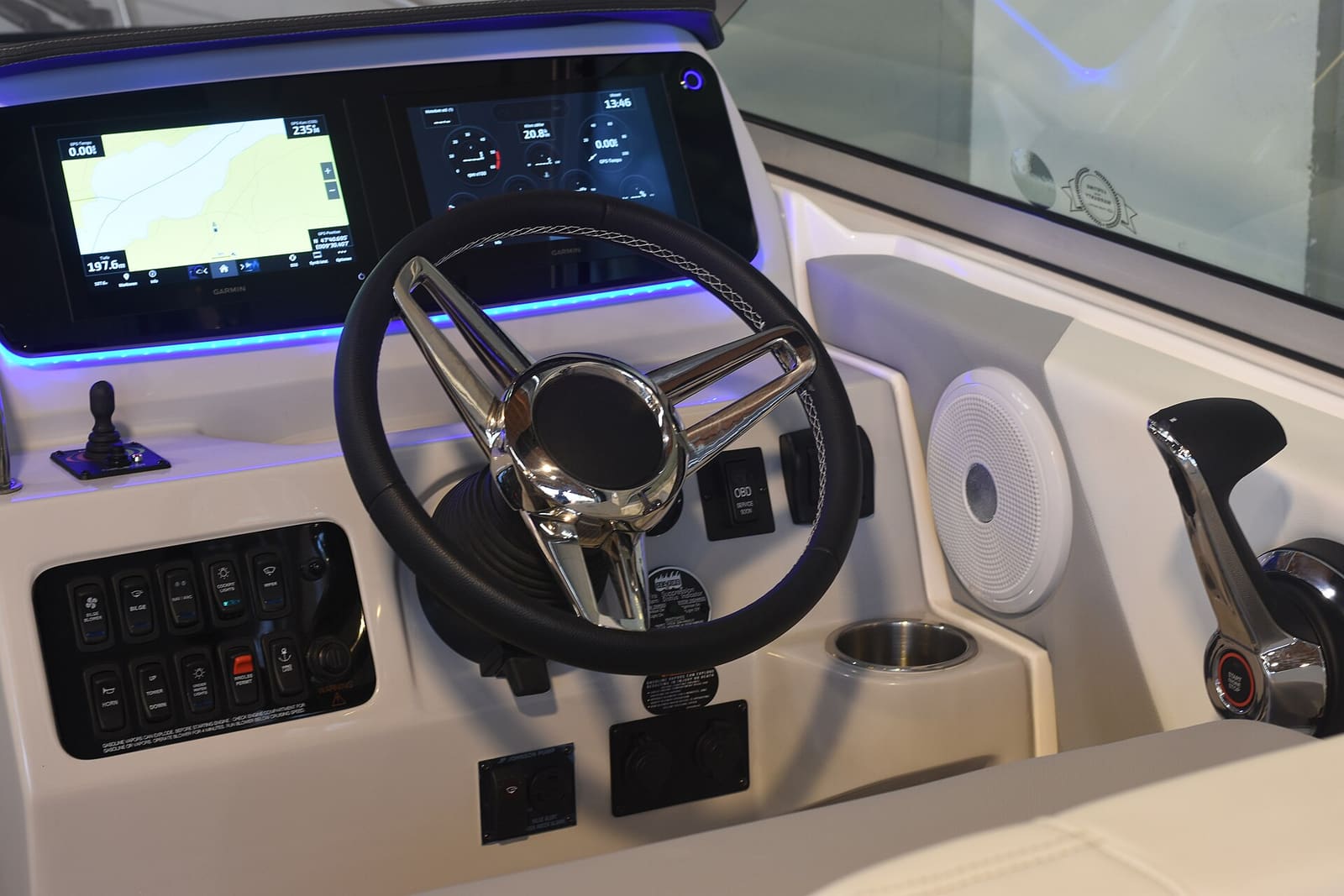
Helm area: wipe screens and switches with a damp cloth, never a hose, and clear the cup holder drain. Photo: PaterMcFly / Wikimedia Commons · CC BY 4.0 Mercury warns against hitting multifunction displays and other electronic panels with a direct hose stream. Wipe them with a damp microfiber cloth, or use a cleaner made for marine screens, and follow your display maker's instructions. Wipe switch panels with a barely damp cloth.
Wipe interior gelcoat, plastic trim and consoles with mild soap or a non-acidic, marine-safe cleaner, then rinse and dry. Mercury suggests letting a marine all-purpose cleaner soak about 30 seconds on tough spots before wiping with a microfiber cloth.
Let the whole interior dry for a few hours with hatches and lockers open before covering the boat. Prop cushions on edge under the cover so air can move, and use a breathable cover with vents. MasterCraft notes pink staining gets much worse when the cover goes on over wet vinyl.
Common mistakes
- Household cleaners on vinyl. Sea Ray and Bayliner name all-purpose sprays, adhesive removers and ammonia window cleaners as products that strip the vinyl's UV protection.
- Bleach "because it works." Several boatbuilders say never; others allow only a weak mix. Follow your vinyl maker.
- Degreasers, gasoline, acetone or kerosene. MasterCraft says these remove the protective top coat; Sea Ray adds that degreasers clog the vinyl's pores.
- Pressure washers on seats or carpet. MasterCraft warns they can damage the surface; on carpet they tear up the tufts.
- Silicone protectants. They leave vinyl brittle over time.
- Covering the boat while the interior is wet. That's how mildew and pinking start.
- Flipping a wet bolster back up. BoatUS warns it traps water between two layers of vinyl; let flip-up bolsters dry down first.
- Leaving bird droppings. They're acidic and eat into vinyl; rinse them off as soon as you see them.
When to call a pro
- Vinyl is cracked through, split at seams, or the foam underneath is soaked or smells moldy
- Carpet is glued down over a floor that feels soft or spongy (the floor may be rotting)
- Mildew or pink stains won't come out with approved products
- Water keeps showing up in storage boxes or under the floor and you can't find where it comes from
- You want seats reupholstered; ask for marine-grade vinyl and UV-resistant thread
Tips
- Keep a small "after trip" kit aboard: microfiber towels, a spray bottle of mild soapy water and a soft brush.
- Lay a towel on seats when people are wearing sunscreen.
- A small tear is easier to fix than a big one; vinyl repair kits matched to your seat color work well for small damage.
- Log your detail dates in BoatMend so the next one doesn't slide.
Official references
We read these to write this guide. Your engine's own manual always wins.
- Sea Ray – Vinyl Maintenance Tips
- Sea Ray – The Proper Way to Keep Your Sea Ray's Interior Components Looking New (Morbern vinyl, woven flooring, SeaDek)
- Bayliner – 3 Tips for Vinyl Maintenance
- MasterCraft – Upholstery Vinyl Care
- Boating Magazine – How to Keep Boat Upholstery Looking New
- Mercury Marine – Next-Level Cleaning Tips for Boats
- BoatUS – Have A Seat (keeping boat seat vinyl in shape)
- BoatUS – Moldy Mayhem (compartments below the waterline)
Safety: BoatMend is for information only and does not replace a certified marine technician. You are responsible for your safety and your boat. Read the full disclaimer.
Last updated 2026-10-24
Related guides
How to Clean and Protect Boat Canvas, Bimini Tops and Vinyl Seats
Wash your bimini, covers and enclosure the right way, beat mildew without wrecking the stitching, keep vinyl seats soft and stain-free, look after zippers and snaps, and store everything so it comes out clean next spring.
How to Prevent and Remove Mold and Mildew on Your Boat
Stop the musty smell and black spots before they start. Find and fix the water source, keep air moving, control humidity safely, and clean mold off gelcoat, vinyl and cabin surfaces with products that won't damage them.

How to Care for a Pontoon Deck, Flooring, Fence and Furniture
Keep a pontoon's carpet or vinyl floor clean and dry, find soft spots in the plywood deck before they spread, check fence rails, gates and seat bases, care for furniture vinyl, and cover and store the boat so mildew and sun do not win.
How to Fit, Support, Clean and Store a Boat Cover
Make your mooring or storage cover last for years by getting the fit right, supporting and venting it so water never pools, using a cover that's rated for the highway, cleaning and re-waterproofing it the right way, and fixing small tears before they grow.
How to Clean and Care for a Boat Windshield (Acrylic, Polycarbonate or Glass)
Clean your windshield without scratching it, tell acrylic, polycarbonate and glass apart, deal with haze, crazing and small cracks, stop frame leaks, and keep wipers and the walk-through door working.
Spiders, Wasps and Insects on Your Boat: Prevention and Safe Cleanup
Why boats attract spiders, mud daubers, wasps and swarming lake insects, how to clean webs and droppings without harming gelcoat or canvas, and how to keep nests out of the vents, telltales and fittings your boat needs to breathe.
How to Clean, Remove Oxidation and Wax Your Boat's Gelcoat (Plus Pontoon Tubes)
Wash your hull the right way, bring back chalky, faded gelcoat with compound, and seal it with wax so it stays glossy and protected from the sun. Includes how to clean and protect the aluminum tubes on a pontoon boat.