Spiders, Wasps and Insects on Your Boat: Prevention and Safe Cleanup
Why boats attract spiders, mud daubers, wasps and swarming lake insects, how to clean webs and droppings without harming gelcoat or canvas, and how to keep nests out of the vents, telltales and fittings your boat needs to breathe.
Time
1 h
Applies to
All engines
Safety first: If anyone aboard is allergic to stings, do not tackle a wasp or hornet nest yourself: call a pest control professional. Stings that cause hives, swelling of the face or throat, or trouble breathing need emergency care: call 911, or VHF 16 if you are on the water. Most insect sprays are toxic to fish and should not drift into the water; read the label before you use any product on a boat or dock.
Owners often ask
- How do I get rid of spiders and their droppings on my boat without damaging the gelcoat?
- Mud daubers keep building nests in my boat vents. Is that a problem?
This guide walks you through it. Still stuck? Ask the AI Mechanic about your engine.
Tools
- Soft-bristle deck brush and a long-handled soft broom or duster
- Plastic scraper or old plastic card (never metal on gelcoat)
- Hose with a gentle spray nozzle
- Bucket, microfiber towels and a soft sponge
- Short piece of stiff wire or a thin zip tie (for an outboard telltale)
- Flashlight
- Gloves, long sleeves and safety glasses
Parts & supplies
- Boat soap (pH-neutral, made for gelcoat)
- Mild soap for canvas (follow your fabric maker's advice)
- Yellow "bug" bulbs, warm-color LEDs or motion-sensor lights for dock and deck
- Fine stainless or plastic mesh for vent screens where the maker allows it
- Wasp spray or insect baits only if needed, labeled for the place you will use them
Before you start
Why boats are bug magnets. Lakes, rivers and marshes hatch huge numbers of midges, mosquitoes and other flying insects. Dock and deck lights pull them in at night. A boat gives spiders and wasps a sheltered, stable place to build, right next to an all-you-can-eat buffet. Texas A&M's urban entomologist describes lakeside homes as "spider heaven" for exactly these reasons, and boats are no different. You will not get rid of every bug, but you can make your boat much less inviting.
Know what you are dealing with:
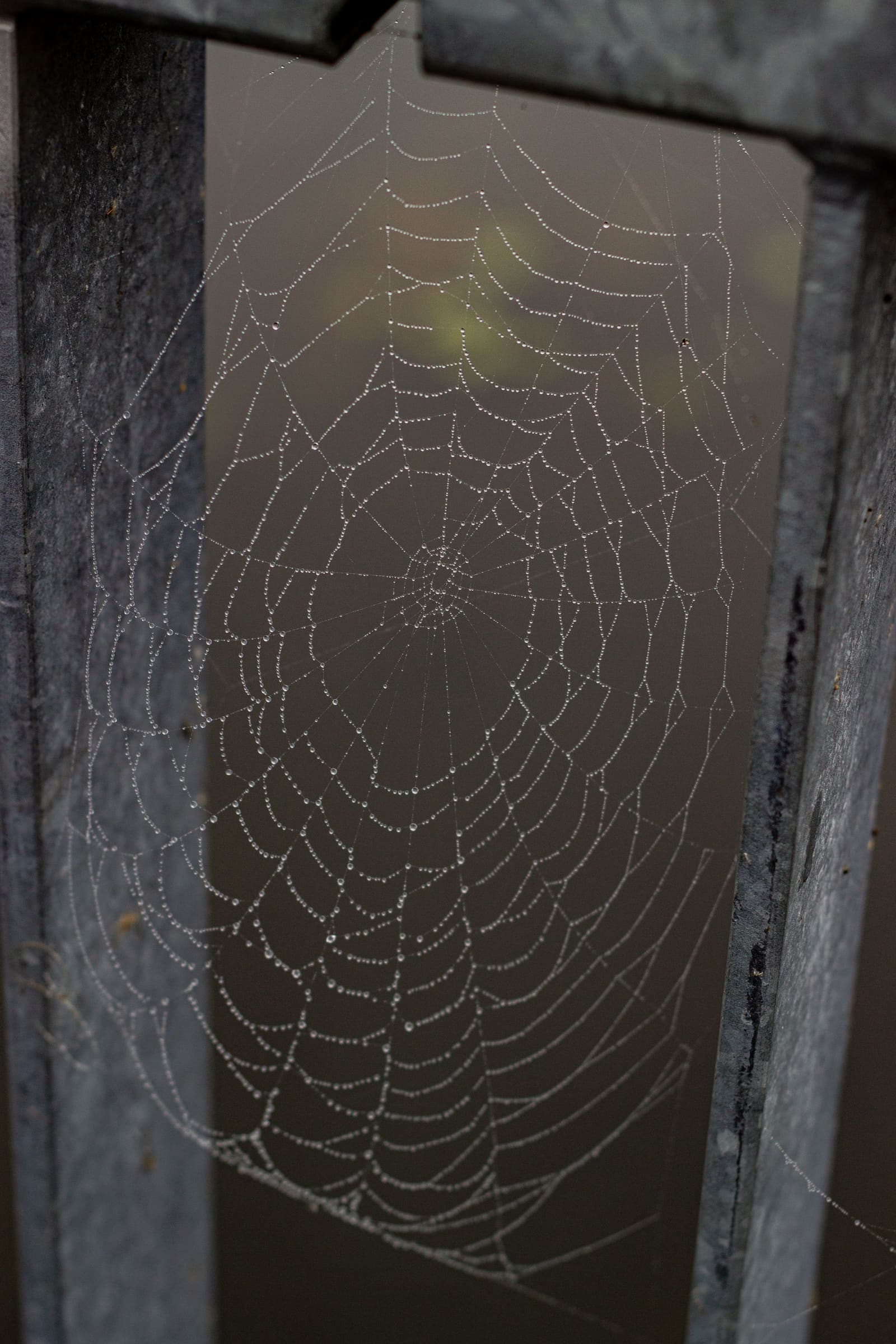
- Spiders: webs on rails, canvas, antennas and under the T-top, plus small dark droppings that stain gelcoat and canvas. Most are harmless, but wear gloves when reaching into dark lockers.
- Mud daubers: slender black or metallic blue wasps that build tube- or lump-shaped mud nests. They are not aggressive, but they love small holes: vents, telltales, fittings and tubes.
- Paper wasps: an open, umbrella-shaped paper comb hanging from a stalk under rails, hatches and cockpit edges. They defend their nest.
- Yellowjackets and hornets: hidden nests in voids, lockers, hollow spaces or the ground near the dock. These are the most defensive.
- Midges and mayflies: swarms after a hatch, leaving droppings, bodies and green or brown spots on everything.
- Ants: usually march aboard along dock lines and power cords, looking for food.
Steps
Know who aboard is allergic. Wear long sleeves and pants, gloves and glasses. Work slowly and stay calm; swatting makes wasps sting, and University of Maryland Extension notes that some wasps release a scent that calls in nestmates. Do not shine a light into a nest entrance. If you cannot see into a crevice, do not reach into it.
Insect nests in the wrong hole can stop an engine or cause a hazard. At the start of the season, and after long storage, check:
- Fuel tank vent on the hull side. Boating Magazine points out that an insect nest or wax partly blocking it can make an outboard hard to start or keep running.
- Holding-tank vent. BoatUS says mud daubers love to nest in vent lines; a blocked vent makes the head smell and can even damage the tank during pump-out.
- Outboard telltale (the "pee hole"). A weak or missing stream with a normal temperature gauge is often a blocked outlet. Clear it gently with a thin wire or zip tie (see the engine overheating guide).
- Bilge blower and engine room vents, and the cowl vents on deck.
- Fire extinguisher nozzle, horn, and any small tubes such as a speed sensor.
Clear nests with a plastic tool, a pipe cleaner or a gentle blast of water. Never push debris deeper into a fuel vent, and do not use compressed air into fuel or holding-tank vents.
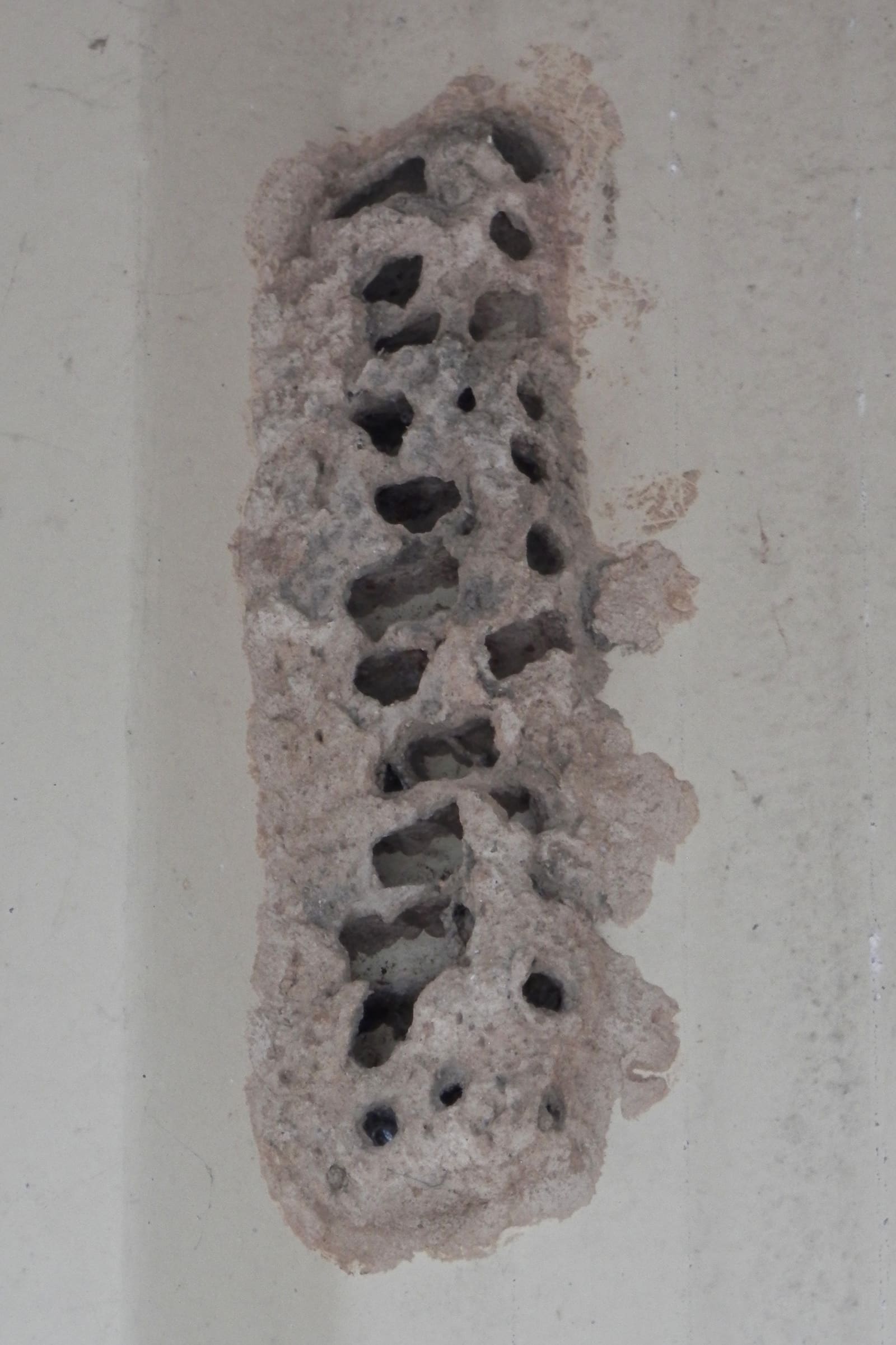
Photo: Ryan Hodnett / Wikimedia Commons · CC BY-SA 4.0 University of Maryland Extension calls knocking the nest down the best way to control mud daubers, and they are not aggressive. Pop the nest off with a plastic scraper held flat, catch the pieces in a bag, then wash the spot with boat soap and water. A dried mud stain usually comes off with soap and a soft brush; do not use abrasive pads on gelcoat. A nest with small round holes is old and empty; one without holes may still have young inside.
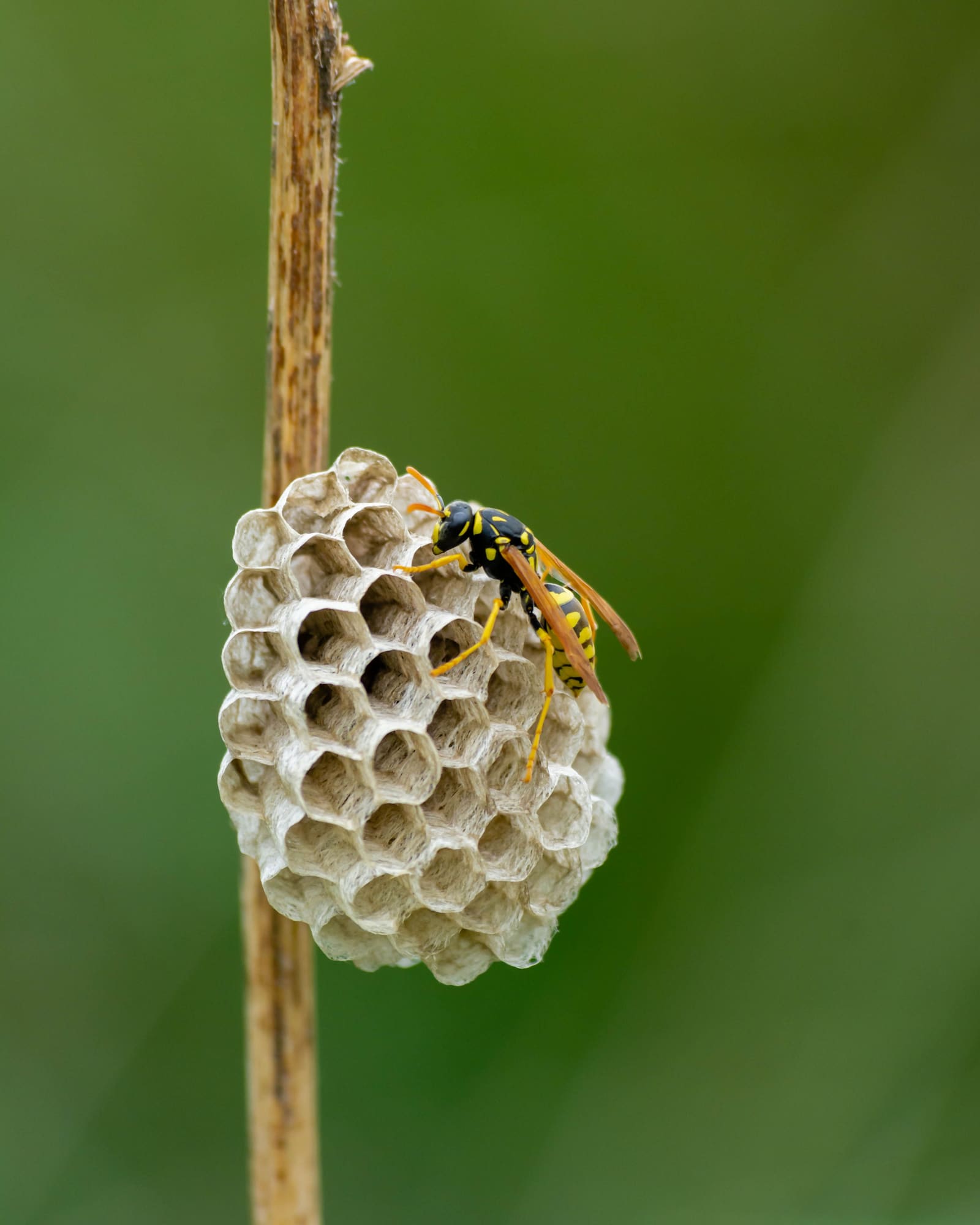
Photo: Erick González González / Pexels - If the nest is out of the way and nobody is at risk, you can leave it. UMD Extension explains that social wasp colonies die off each winter and old nests are not reused, so a nest found in fall will be empty after a hard frost and can then be scraped off.
- If it has to go, UMD suggests that sprays or dusts are a last resort. Use a product labeled for wasps, follow the label exactly, and keep it from drifting into the water. Treat late in the evening or early morning when wasps are less active, from as far away as the product allows, and give the treatment time to work before you remove the nest.
- Call a pro for nests inside lockers, hollow spaces, the boom, or anywhere you would have to reach in, and for any yellowjacket or hornet nest, or if anyone is allergic.
Fresh webs come off easily with a soft broom or duster and a rinse of fresh water. Work from the top down (T-top, radar arch, canvas frames, then rails and deck) so debris falls onto areas you have not cleaned yet. Weekly brushing during bug season is far easier than one big scrub.
Droppings and squashed insects leave dark spots that can stain if left in the sun.
- Rinse with fresh water to soften the spots.
- Wash with a pH-neutral boat soap and a soft sponge or microfiber.
- For stubborn marks, use a cleaner made for gelcoat and test it on a hidden spot first.
- Rinse well and dry. A fresh coat of wax makes the next cleanup much easier.
Skip abrasive pads, scouring powder and strong solvents: they dull gelcoat and can damage striping and decals.
Follow your fabric maker's instructions. For Sunbrella marine canvas, the company recommends brushing off loose dirt, hosing down, washing with water and a mild soap using a soft brush, letting it soak, rinsing until no soap remains and air drying. Sunbrella offers a stronger diluted bleach mix for stubborn stains and mildew, but bleach should not run into the water, so do heavy cleaning off the boat where you can. Clear vinyl (isinglass) scratches very easily: rinse first, then use only a cleaner made for it and a soft cloth.
Lighting is the biggest lever you have. Nocturnal insects are drawn most strongly to UV and blue-white light. Texas A&M suggests yellow "bug" bulbs or low-UV lights, and UMD notes that warmer-colored LEDs attract fewer insects than bluish-white ones. Turn off dock and deck lights when you do not need them, or switch to motion-sensor lights. Fewer insects at night means fewer spiders hunting them.
- Keep food, sugary drinks and trash sealed or take them home. UMD notes foraging wasps are drawn to sweet drinks, fruit and even meat, especially in fall.
- Rinse fish blood, scales and bait off the deck and out of livewells after each trip.
- Close hatches and ports, use screens if you have them, and keep the boat cover snug and in good repair.
- Use the boat. Boats that sit untouched for weeks collect the most webs and nests.
Ants usually walk aboard on dock lines, power cords and fenders touching the dock. Keep lines and cords from resting on bushes or the ground, keep food sealed, and wipe up crumbs and spills. If ants have already moved in, enclosed bait stations used inside the boat are a tidier option than sprays; follow the label and keep them away from children and pets.
Spraying the outside of a boat over water can kill fish and other aquatic life, and many household products are not labeled for use near water. Texas A&M notes that residual insecticides on structures give only temporary relief and should not be used close to water. Peppermint oil, dryer sheets and similar tricks are popular in boating forums, but there is little evidence they do much. If you have a serious, recurring problem, a licensed pest control company can choose products that are legal to use around water.
When you take the boat out of storage, add these to your checklist:
- Look inside the cover and canvas for nests before you fold it.
- Check every vent, the telltale, the extinguisher nozzle and the horn.
- Open lockers carefully and look before reaching in.
- Brush and wash the boat, then wax the gelcoat.
- Note where nests keep appearing so you know where to look first next year.
Common mistakes
- Spraying insecticide over the side, where it drifts into the water.
- Scraping nests or droppings off gelcoat with a metal putty knife or abrasive pad.
- Forgetting the fuel vent and telltale after storage, then blaming the engine for running poorly or overheating.
- Leaving bright white dock lights on all night, then fighting spiders all summer.
- Reaching into a dark locker or under a console without looking first.
- Using a pressure washer at close range on canvas, stitching or clear vinyl.
- Trying to remove a wasp nest from inside the boat during the day without protection.
- Loosening fuel caps or leaving gas cans open "so the fumes drive the spiders away." It is an old dock trick that still gets repeated online. Gasoline vapor in or around a boat is a fire and explosion risk; keep caps tight and fuel vents working as designed.
- Expecting a hand vacuum or a one-time dock spraying to solve it. Vacuuming removes the spiders you see, which helps, but they return as long as lights keep feeding them insects; the lighting and cleaning steps above do more.
When to call a pro
- Anyone aboard is allergic to stings, or someone has a severe reaction (call 911 or VHF 16)
- A yellowjacket or hornet nest is inside a locker, wall, hollow part of the boat, or in the ground near the dock
- Insects keep coming back in large numbers despite cleaning and lighting changes
- A fuel tank or holding-tank vent stays blocked after you clean the outside fitting, or you smell fuel (stop, ventilate and call a marine mechanic)
- The outboard telltale stays weak after clearing it, or the engine runs hot (see the engine overheating guide)
Tips
- A soft broom on a pole, kept aboard, makes a two-minute web sweep part of every visit.
- Wax repels droppings and makes stains easier to remove; waxing in spring pays off all season.
- Midge hatches come in waves. After a big hatch, rinse the boat promptly before the droppings bake on.
- Record nest locations and cleanups in BoatMend so you know which spots to check each spring.
Official references
We read these to write this guide. Your engine's own manual always wins.
- Texas A&M AgriLife Extension (Insects in the City) – Spider woes (lakefront spiders and lighting)
- University of Maryland Extension – Mud Daubers
- University of Maryland Extension – Social Wasps, Yellowjackets, Hornets and Paper Wasps
- BoatUS – Flush The Funk (mud daubers in holding-tank vent lines)
- Boating Magazine – Five Tips for Hard-Starting Outboard Motors (insect nests in fuel vents)
- Sunbrella – How to Clean Sunbrella Marine Canvas
Safety: BoatMend is for information only and does not replace a certified marine technician. You are responsible for your safety and your boat. Read the full disclaimer.
Last updated 2026-10-24
Related guides
How to Keep Mice and Rodents Off Your Stored Boat
Mice love a stored boat: dry, quiet and full of soft nesting material and tasty wire insulation. Learn how to remove what attracts them, close their way in, choose deterrents and traps that actually work, avoid the risks of poison, and check the wiring safely in spring.

How to Clean and Protect Boat Canvas, Bimini Tops and Vinyl Seats
Wash your bimini, covers and enclosure the right way, beat mildew without wrecking the stitching, keep vinyl seats soft and stain-free, look after zippers and snaps, and store everything so it comes out clean next spring.

How to Clean, Remove Oxidation and Wax Your Boat's Gelcoat (Plus Pontoon Tubes)
Wash your hull the right way, bring back chalky, faded gelcoat with compound, and seal it with wax so it stays glossy and protected from the sun. Includes how to clean and protect the aluminum tubes on a pontoon boat.
Engine Overheating - Troubleshooting Guide
Work through the most likely causes of a hot engine or overheat alarm, from a blocked water intake to a worn impeller or stuck thermostat. Acting fast and in the right order can save your engine and often gets you home without a tow.
How to Inspect Your Boat's Fuel Tank, Fill, Vent and Hoses
A leaking gas tank is one of the most dangerous problems a boat can have, and it usually starts out of sight. Learn how to inspect portable and built-in tanks, spot aluminum tanks corroding from below, know the ethanol risk for old fiberglass tanks, and check the fill, vent, hoses, clamps and sender, plus why tank replacement is a job for a pro.

Bilge Blower and Engine Compartment Ventilation on Gas Inboards and Sterndrives
Learn why gas boats have a "run the blower 4 minutes" label, how to check that the blower and vent ducts actually move air out of the engine compartment, and how to replace a blower safely with an ignition-protected marine unit.