How to Clean and Protect Boat Canvas, Bimini Tops and Vinyl Seats
Wash your bimini, covers and enclosure the right way, beat mildew without wrecking the stitching, keep vinyl seats soft and stain-free, look after zippers and snaps, and store everything so it comes out clean next spring.

Time
2 h 30 min
Shop would charge
$100-600
Applies to
All engines
Safety first: Never mix bleach with ammonia, vinegar or other cleaners: the fumes are toxic. Use bleach only where your fabric maker allows it, with gloves and eye protection, and preferably with the canvas off the boat and away from the water. Do not climb on a bimini frame or stand on cushions on a moving deck to reach canvas.
Owners often ask
- How do I get mildew spots off my bimini top without ruining it?
- My white vinyl seats have pink stains. What causes that and how do I clean them?
This guide walks you through it. Still stuck? Ask the AI Mechanic about your engine.
Tools
- Garden hose with a gentle spray nozzle (no pressure washer)
- Soft-bristle brush and an old toothbrush
- Buckets and a pump sprayer
- Clean microfiber towels and soft cotton cloths
- Rubber gloves and safety glasses
Parts & supplies
- Mild soap (such as a gentle dish soap or wool wash)
- Marine vinyl cleaner for tough stains on seats
- Mildew stain remover approved by your fabric maker, or household chlorine bleach (acrylic canvas only, diluted)
- Fabric water-repellent re-treatment approved by your canvas maker
- Marine vinyl protectant without silicone
- Cleaner and polish made for clear vinyl or plastic windows
- Zipper and snap lubricant made for marine use
Before you start
Know what you have:
- Acrylic canvas (Sunbrella and similar): woven fabric used for biminis, covers and enclosures. It breathes and has a factory water-repellent finish.
- Vinyl-coated canvas: a coated fabric that does not breathe; common on some covers and enclosures.
- Marine vinyl: the leather-like material on seats and cushions.
- Clear windows: soft clear vinyl or rigid plastic in enclosures. These scratch very easily.
Check the label or ask your canvas shop if you are unsure; the care products differ.
How often: rinse off salt and dirt after trips, wash canvas and seats with mild soap regularly (often every few weeks in season), and do a deep clean plus re-treatment once or twice a year. Typical; adjust for your climate. For Sunbrella acrylic canvas specifically, Sunbrella suggests hosing it off with clean water about once a month and says that in most environments a thorough cleaning is only needed every two to three years. It also says newer fabric may not need re-treating after every cleaning; re-treat after repeated deep cleanings or years of exposure (Sunbrella names 303 Fabric Guard in the US).
Mildew facts: good marine fabrics don't feed mildew themselves, but mildew grows happily on dirt, sunscreen, bird droppings and moisture sitting on them. Keeping things clean and dry is most of the battle.
Steps
Brush off dry dirt and leaves first. Then hose the canvas or seats with fresh water to remove salt and dust. On a bimini, do both sides if you can reach safely.
Mix a mild soap in lukewarm water. Sunbrella suggests mild soaps such as a gentle dish liquid or wool wash. Spray or sponge it on, let it soak a couple of minutes, then scrub lightly with a soft brush. Hot water and harsh detergents strip the water-repellent finish.
Rinse until no suds are left; soap residue attracts dirt and mildew. Let canvas air dry completely, spread out or on its frame. Do not put boat canvas in a clothes dryer or use heat.
For stubborn mildew spots on acrylic canvas, Sunbrella's own recipe is 1 cup of household bleach and 1/4 cup of mild soap per gallon of water, left on for up to 15 minutes, then rinsed very thoroughly. Do this with the canvas off the boat if possible, away from the water, and protect anything nearby that bleach could stain. Bleach weakens the sewing thread over time, so use it only when needed, not for routine washing. For coated fabrics, only spray and rinse the coated side; don't scrub it. Always follow the care label for your specific fabric. Sunbrella also asks owners not to use bleach where it could reach a lake or the sea. Greasy stains such as roof run-off streaks may need a stronger degreaser; Sunbrella's online cleaning guide lists what is safe for each kind of stain. If you hire a cleaning service, ask whether it knows the fabric maker's cleaning and re-treatment steps.
Deep cleaning (especially with bleach) removes the factory water repellency. Once the canvas is clean and completely dry, spray on the re-treatment product your fabric maker approves, in thin even coats on a calm, dry day. Keep the overspray off clear windows, which it can damage. Then let it cure as the label says.
Rinse windows with plenty of fresh water first to float off grit, then wash with a soft cloth and mild soap or a cleaner made for clear vinyl or marine plastic. Never wipe them dry when dusty, never use paper towels, and never use household glass cleaners with ammonia. Use a protectant made for clear vinyl to keep it supple.
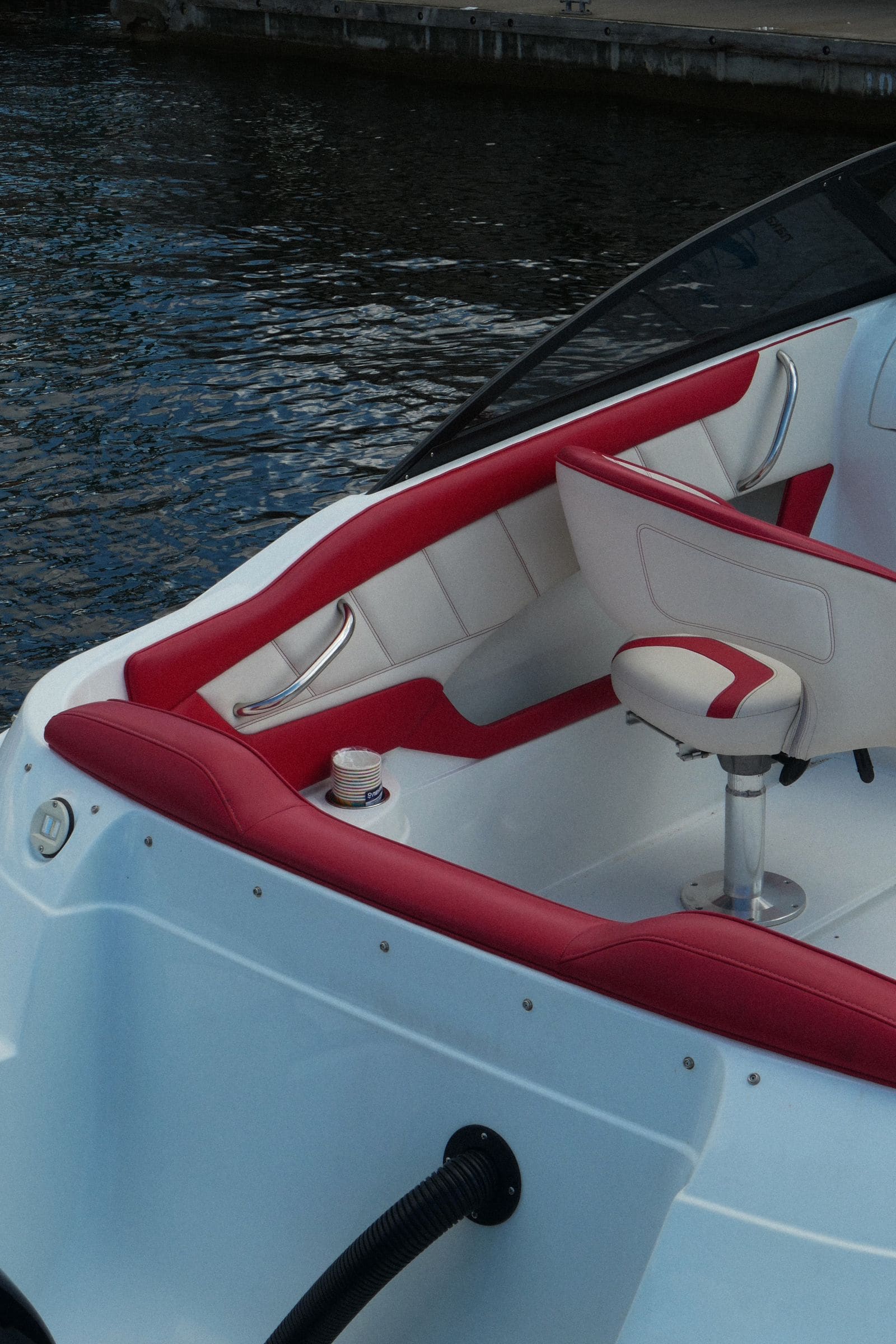
Marine vinyl seats: mild soap, a soft brush for the stitching, then dry every seam. Photo: Nadin Sh / Pexels Use mild soap in water and a soft cloth or soft brush. Use an old toothbrush along seams, piping and stitching, where dirt and sunscreen collect. Rinse off salt and sunscreen after every trip.
For tough stains or pink-staining mildew ("pinking"), use a marine vinyl cleaner and follow its label. Skip bleach, ammonia, household multi-surface sprays, adhesive removers, degreasers, gasoline, solvents, abrasive powders and power washers. They can strip the vinyl's UV protection, dry it out, weaken the stitching and void some warranties.
Towel off seats, then let them air dry with cushions propped on edge. Water hides in piping and thread; trapped moisture is how mildew starts inside cushions.
Once dry, apply a marine vinyl protectant. Avoid automotive or household protectants with silicone unless the vinyl maker approves them. Reapply on a schedule (often every month or two in season; check the product).
Work every zipper and snap every few weeks so salt and dirt can't set up and jam them. Rinse them with fresh water and treat them with a lubricant made for marine zippers and snaps. When unsnapping, pull on the snap itself, not the fabric, or you will tear the canvas around it.
Thread usually fails before the fabric. Look for broken or loose stitches, worn spots where canvas rubs the frame, and scorch marks where clear vinyl touches a hot frame. Have loose seams restitched early; it is cheap compared to new canvas. Ask your canvas shop about UV-resistant thread when restitching.
Never store canvas or cushions dirty or damp. Wash, rinse, and let everything dry completely. Store canvas loosely rolled or folded with soft folds (roll clear windows with a soft cloth between layers rather than creasing them). Keep them in a dry, ventilated place off the floor, in breathable bags, not sealed plastic. Store cushions on edge indoors if you can.
A cover protects vinyl and canvas from UV, which is the main thing that ages them. Make sure covers are vented and propped so water runs off, and air can move underneath. Log cleaning and re-treatment dates in BoatMend.
Common mistakes
- Bleach as the everyday cleaner. It weakens the thread and strips the protective finish. Save it for mildew spots on fabrics that allow it, and never use it on vinyl seats.
- Pressure washing canvas or seats. It damages the coating, stitching and water repellency.
- Household cleaners on vinyl. Multi-surface sprays, adhesive removers and ammonia can strip UV protection and dry the vinyl.
- Wiping dusty clear windows dry or with paper towels. That causes permanent scratches.
- Trailering or running fast with the bimini up when it isn't designed for it. It can tear the canvas or bend the frame. Check the maker's instructions and use the boot when stowed.
- Storing canvas or cushions damp. Spring brings a mildew surprise.
- Skipping the re-treatment after a deep clean. The canvas stops shedding water.
When to call a pro
- Seams are coming apart over long sections, or the canvas is torn near a frame or snap
- Clear windows are cloudy, cracked or badly scratched (they usually need replacing)
- Frame fittings are bent, broken or corroded, or the bimini won't lock in place
- Vinyl seats are cracked through and the foam underneath is soaked or moldy
- You want new canvas made; a canvas shop can also restitch with longer-lasting thread
Tips
- Rinse with fresh water after every saltwater trip; it is the cheapest canvas care there is.
- Keep a small bottle of zipper lubricant on board.
- Wash canvas on an overcast day so the soap doesn't dry on it.
- Take a photo of how the canvas, straps and snaps go together before you take it down for winter.
Official references
We read these to write this guide. Your engine's own manual always wins.
Safety: BoatMend is for information only and does not replace a certified marine technician. You are responsible for your safety and your boat. Read the full disclaimer.
Last updated 2026-10-24
Related guides
How to Prevent and Remove Mold and Mildew on Your Boat
Stop the musty smell and black spots before they start. Find and fix the water source, keep air moving, control humidity safely, and clean mold off gelcoat, vinyl and cabin surfaces with products that won't damage them.

How to Clean, Remove Oxidation and Wax Your Boat's Gelcoat (Plus Pontoon Tubes)
Wash your hull the right way, bring back chalky, faded gelcoat with compound, and seal it with wax so it stays glossy and protected from the sun. Includes how to clean and protect the aluminum tubes on a pontoon boat.
Teak Deck and Trim Care: Clean, Oil, Seal or Leave It Natural
Keep teak decks, rails and trim looking good without wearing them away. Choose between a natural gray look, oil, sealer or varnish, and learn how to clean teak gently so you don't destroy it with harsh cleaners or a pressure washer.