How to Clean and Care for a Boat Windshield (Acrylic, Polycarbonate or Glass)
Clean your windshield without scratching it, tell acrylic, polycarbonate and glass apart, deal with haze, crazing and small cracks, stop frame leaks, and keep wipers and the walk-through door working.
Time
1 h 30 min
Shop would charge
$100-1500
Applies to
All engines
Safety first: Never use a windshield or its frame as a handhold or step; it isn't built for that and can crack or tear loose. Don't drive with a cracked, loose or badly hazed windshield that hides what's ahead. If a glass windshield is cracked, keep people clear of it until it is replaced.
Owners often ask
- What can I clean my plastic boat windshield with without scratching it? Is Windex OK?
- There's a small crack in my acrylic windshield. Can I stop it from spreading?
This guide walks you through it. Still stuck? Ask the AI Mechanic about your engine.
Tools
- Garden hose with a gentle nozzle
- Bucket of clean fresh water
- Soft microfiber or clean cotton cloths (several, kept separate from other cleaning rags)
- Soft sponge (rinse it often)
- Screwdrivers for frame and latch screws
- Masking tape and a marker (for tracing leaks)
Parts & supplies
- Mild soap
- Cleaner and polish made for clear plastic (for acrylic and polycarbonate)
- Glass cleaner without ammonia (for glass windshields only)
- Fine scratch remover made for acrylic, if needed (not for coated polycarbonate)
- Marine sealant labeled safe for acrylic or polycarbonate (for frame leaks)
- Replacement wiper blade, door seal or latch parts for your model
Before you start
Know your material. Check your owner's manual or ask the dealer. In general:
- Acrylic (Plexiglas is the best-known brand): very clear, scratches easily, and can crack or shatter under impact. Common on runabouts and older boats.
- Polycarbonate (Lexan is the best-known brand): extremely impact resistant and hard to break, but its surface scratches easily. Many polycarbonate windshields have a factory hard coating that some polishes and cleaners can ruin.
- Tempered or safety glass: heavier and cold to the touch, resists scratching, and is common on bowriders, cruisers and many newer boats. Cleaning is easier, but cracks can't be repaired.
- Clear vinyl (soft, rolls up): that's an enclosure window, not a windshield. See the enclosure guide instead.
Why plastics scratch: Practical Sailor notes that most scratches on hard plastic windshields come from well-meaning cleaning: paper towels, dry wiping, gritty sponges and household sprays. Rinse first, wipe second, always.
Steps
Hose the windshield gently, top to bottom, inside and out, to float away salt crystals, sand and dust. Never wipe a dry, dusty windshield. Salt is hard enough to scratch plastic.
Use a bucket of mild soapy water and a clean, soft microfiber or cotton cloth. Wipe lightly in straight lines, not circles. Rinse the cloth often and swap it when it picks up grit. Avoid paper towels, scrub pads, stiff brushes and squeegees on plastic. Practical Sailor's cleaner test adds that sponges trap grit too; wash the cloth (or throw it out) after each session so it can't scratch the next time.
Rinse off all soap, then blot or wipe dry with a fresh, clean cloth. Drying stops water spots, especially in hard water areas.
- Acrylic and polycarbonate: use a cleaner and polish made for clear plastic. Practical Sailor warns that ammonia, alcohol and solvents damage acrylic, and the Canadian Conservation Institute warns that some solvents cause crazing (a web of fine cracks). That rules out most household glass cleaners, acetone and fuel. A plastic polish also fills fine pores so dirt sticks less.
- Glass: an ammonia-free glass cleaner is fine. Keep it off nearby plastic trim and rubber seals.
- Hard-water spots on glass: BoatUS editors spray a mix of equal parts white vinegar and water, wait a few minutes and wipe it off. To prevent new spots, wash in the shade and dry right away with a clean chamois or microfiber before droplets dry. Test on a corner first and keep it off plastic panels unless the panel maker says vinegar is safe.
Light haze and fine scratches on acrylic can often be polished out with a plastic scratch-remover system used from coarsest to finest. In Boating Magazine's tests, multi-step kits removed light scratches; heavier scratches needed an aggressive sanding kit that the testers called a last resort before replacement. Test any product on a corner first, work at a right angle to the scratches, and check the result in full sun, because uneven polishing creates distortion. Coated polycarbonate: Boating Magazine notes that some restoration products can damage or destroy the coating. Use only what the windshield maker approves, or have a pro look at it.
Crazing looks like a network of tiny cracks, often near screw holes, edges or where a solvent touched the plastic. It doesn't polish out. Find and stop the cause (a harsh cleaner, an incompatible sealant, or a frame screw that's too tight), then plan to replace the panel if it spreads into your line of sight.
A crack in acrylic tends to keep running with vibration and temperature changes. As a temporary fix until replacement, a pro (or a careful owner) can stop-drill it: drill a small, clean hole just beyond the visible tip of the crack using a bit suited to plastic, at low speed, with the panel supported from behind. The round hole spreads the stress so the crack stops. Mark the tip with tape and watch it; if it keeps growing, replace the panel. A cracked glass windshield can't be repaired this way: replace it.
Close the walk-through door. Have a helper sit inside with a flashlight while you run a gentle hose stream along one short section of the frame at a time, starting low and working up. Mark each drip with tape. Look at whether water is coming between the plastic or glass and its rubber seal, or between the frame and the deck. Then inspect that spot for cracked, shrunken or missing seal and loose screws.
Tighten loose frame screws snugly but not hard (overtightening cracks plastic). Replace hardened or torn rubber seals with parts for your windshield. Where the frame meets the deck, remove the old sealant completely and re-bed with a marine sealant whose label says it is safe for acrylic or polycarbonate; some sealants and their solvents can craze plastic. Big leaks or a frame that has to come off are worth a pro, because the panels can crack while being removed.
Open and close the walk-through panel a few times. Rinse salt out of the hinges and latch, check that hinge and latch screws are tight, and lubricate them with a marine lubricant that is safe on plastics (keep it off the clear panel). Replace a flattened or torn door seal. If the door suddenly won't latch or rubs the frame, look for a loose frame screw or a bent hinge first. A door that no longer lines up for no obvious reason can be a sign of flexing in the dash or deck, which a pro should check.
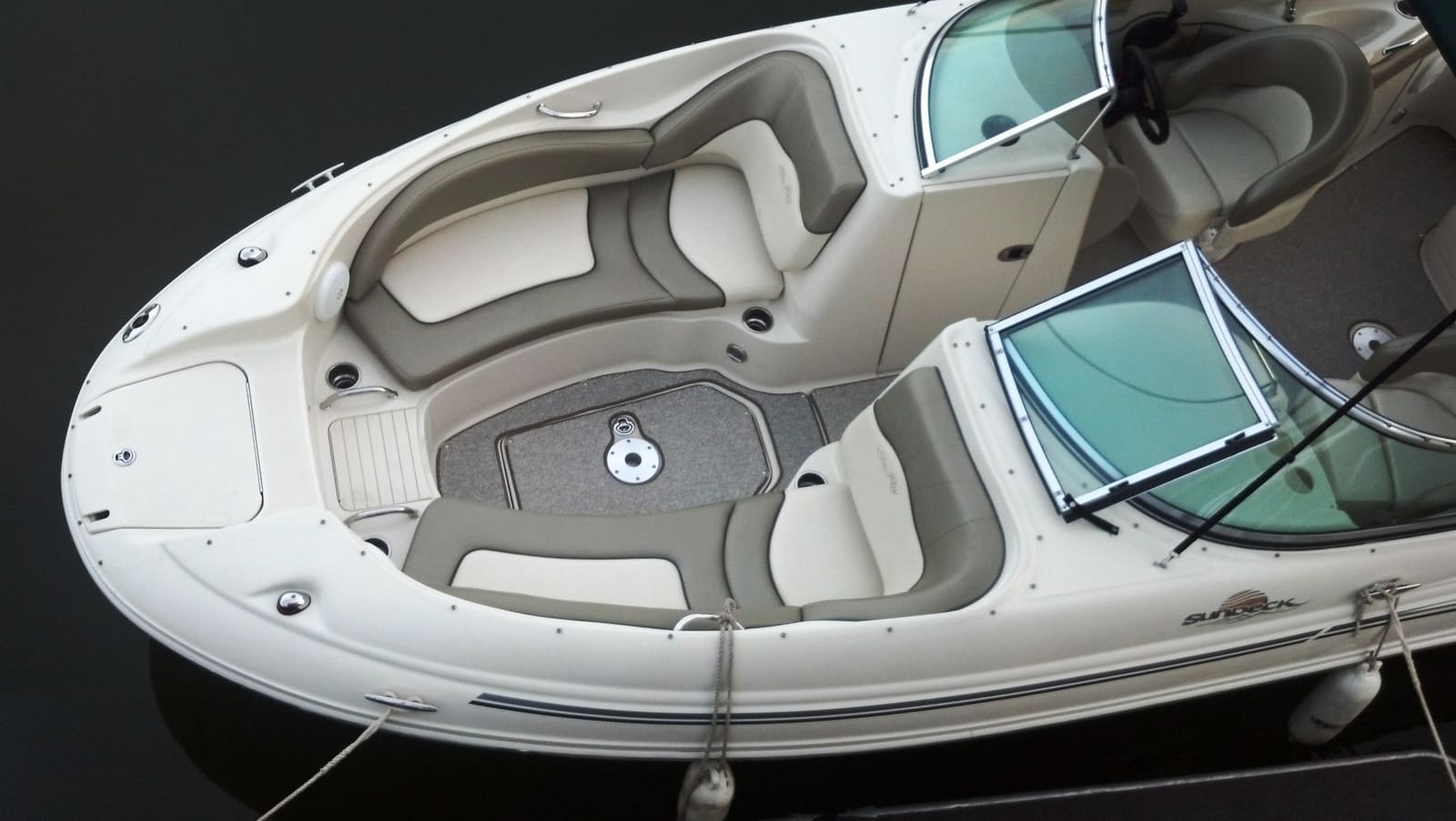
A walk-through windshield with the center panel open. Rinse the hinges and latch, and check the door seal and frame screws where the panel closes. Photo: McChizzle / Wikimedia Commons · Public domain Lift the blade and look for cracked, hardened or chewed-up rubber. Replace it when it streaks or chatters. Never run a wiper on a dry or salty plastic windshield: wet it with fresh water first, or the blade drags grit across the surface. Check that the arm presses evenly, the mounting nut is tight, and the boot or seal where the shaft goes through the windshield or dash isn't cracked (that's a common leak).
Clean and dry the windshield before covering the boat. Pad windshield corners and edges under the cover; the BoatUS Foundation found that covers rub and wear at sharp points as they settle, and specifically says not to forget the windscreen edges. Make sure no cover support pole presses on the windshield or its frame.
Common mistakes
- Paper towels, dry wiping or a dirty rag. These cause most of the fine scratches on plastic windshields.
- Household glass cleaner with ammonia on acrylic. It can haze and craze the plastic.
- Polishing coated polycarbonate with a scratch remover. It can strip the protective coating.
- Using the windshield frame as a grab handle when boarding. Frames bend and panels crack.
- Silicone or a solvent-heavy sealant on plastic. It can craze the edge and may not hold.
- Running the wiper dry. It drags salt and sand across the surface.
When to call a pro
- Any crack in a glass windshield, or a crack in plastic that is in your line of sight or still growing
- Deep scratches, heavy haze or crazing that block your view (replacement is usually the real fix)
- The frame must come off to fix leaks, or the frame is bent or corroded
- The walk-through door no longer lines up and you can't find a loose screw or bent hinge
- The wiper motor is dead or water is getting in around it
Tips
- Keep a dedicated "windshield only" cloth in a zip bag aboard so it never picks up grit.
- Rinse the windshield after every saltwater trip, even if you do nothing else.
- Park or cover the boat out of the sun when you can; UV and heat age plastic panels.
- Photograph the windshield and frame each spring so you can spot new crazing or cracks.
- Hunting for a replacement? Look in a lower corner of the glass or plastic for the windshield maker's name; many boat builders buy windshields from a specialist rather than making their own. Taylor Made, for example, says its name goes in the corner of the glass on many brands, and it sells replacement windshields, frames and hardware for current and older boats. Contact the windshield maker or your boat builder with the make, model, year and HIN, plus photos, before ordering; replacement panels for older boats can take a while.
Official references
We read these to write this guide. Your engine's own manual always wins.
- Practical Sailor – Caring for Clear Plastics on Your Boat
- Boating Magazine – BoatingLAB Tests Windshield Restoration Products
- Canadian Conservation Institute – Cleaning Glass and Acrylic Display Cases
- Taylor Made Products – Windshield Glass Solutions (replacement windshields and parts)
- BoatUS Foundation – Boat Covers for Winter Storage
- BoatUS – Boat Cleaning Tips (water spots and hazy plastic ports)
- Practical Sailor – I Can See Clearly Now: Cleaners for Plastic Windows and Ports
Safety: BoatMend is for information only and does not replace a certified marine technician. You are responsible for your safety and your boat. Read the full disclaimer.
Last updated 2026-10-24
Related guides
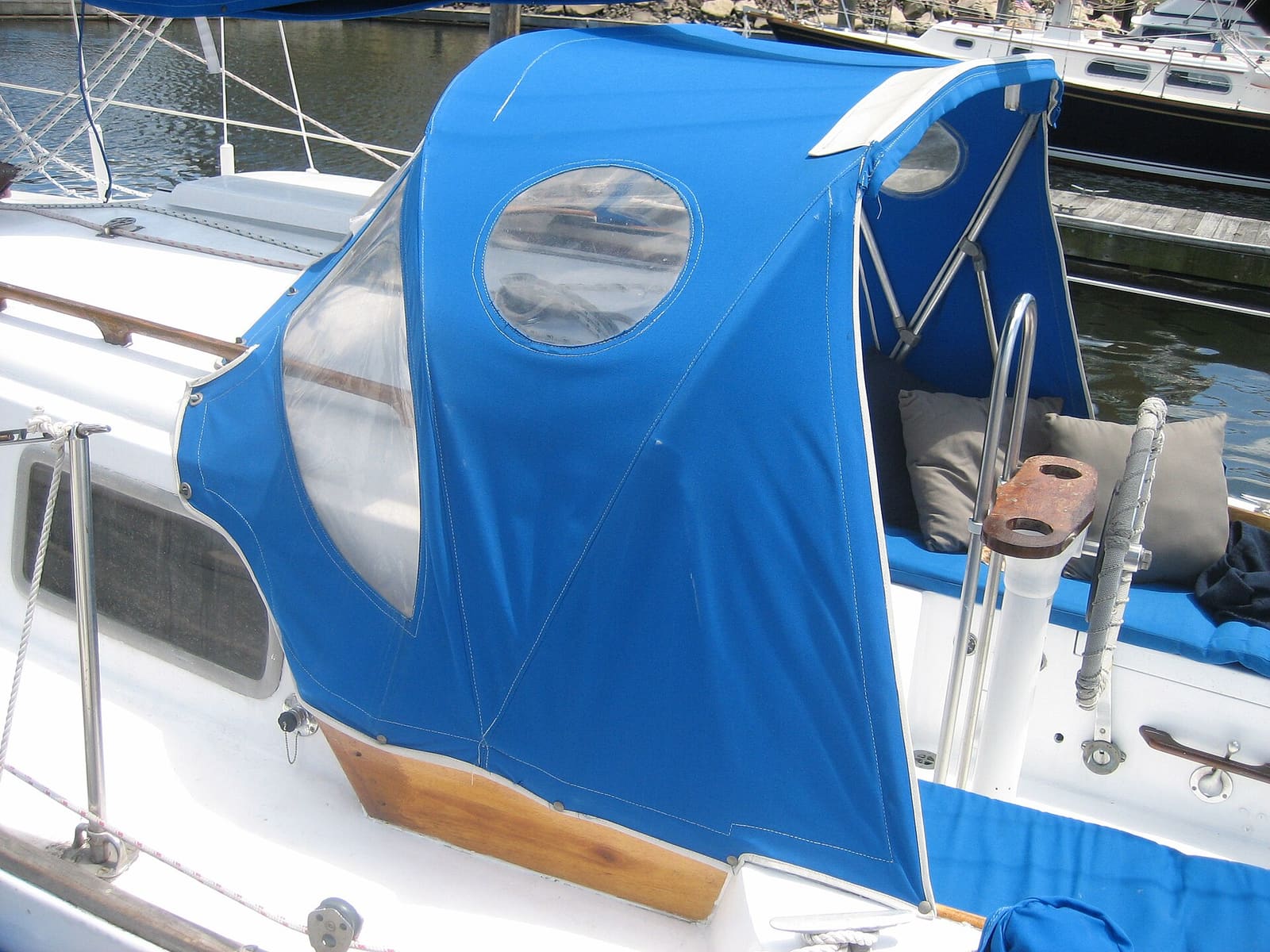
How to Clean and Care for Clear Vinyl (Isinglass) and Polycarbonate Enclosure Panels
Keep the clear windows in your dodger, bimini curtains or full enclosure clear for years by cleaning them the right way, storing them without scratches and avoiding the cold-weather and chemical mistakes that ruin them. Covers soft clear vinyl, coated vinyl like Strataglass, rigid panels and zippers.
How to Clean and Protect Boat Canvas, Bimini Tops and Vinyl Seats
Wash your bimini, covers and enclosure the right way, beat mildew without wrecking the stitching, keep vinyl seats soft and stain-free, look after zippers and snaps, and store everything so it comes out clean next spring.
How to Fix Leaking Hatches and Portlights
Find out whether a leaking deck hatch or portlight is failing at the gasket, the lens or the frame, then fix it with the right seal or sealant. Learn when crazed or cracked acrylic needs a new lens and what never to put on plastic windows.

How to Clean, Remove Oxidation and Wax Your Boat's Gelcoat (Plus Pontoon Tubes)
Wash your hull the right way, bring back chalky, faded gelcoat with compound, and seal it with wax so it stays glossy and protected from the sun. Includes how to clean and protect the aluminum tubes on a pontoon boat.
How to Fit, Support, Clean and Store a Boat Cover
Make your mooring or storage cover last for years by getting the fit right, supporting and venting it so water never pools, using a cover that's rated for the highway, cleaning and re-waterproofing it the right way, and fixing small tears before they grow.
How to Detail Your Boat's Interior (Vinyl Seats, Carpet, Storage and Drains)
Give your cockpit and cabin a proper detail. Clean marine vinyl without stripping its UV protection, wash snap-in and glued-down carpet, clear out cup holders, storage boxes and their drains, beat mildew and pink stains, and know which household cleaners to keep off your boat.