Diesel Fuel Injectors: Symptoms, Checks and When to Send Them Out
Learn the signs of a failing diesel injector (smoke, rough idle, hard starting, knocking), how to rule out the cheaper causes first, why testing and rebuilding injectors is a job for a fuel-injection shop, and how clean, dry, well-filtered fuel keeps them healthy.
Time
1 h
Shop would charge
$300-3000
Applies to
Marine diesel
Safety first: Diesel injection lines carry fuel at very high pressure. Never loosen an injector line, and never touch an injector or line while the engine is running or cranking, on any modern common-rail engine. Fuel escaping from a pinhole leak can cut or inject into skin, which is a medical emergency (go to the ER even if it looks small). Fuel leaks are also the most common cause of diesel engine fires, according to BoatUS claim files. If you see or smell a fuel leak you cannot stop, shut the engine down, ventilate, and call a marine mechanic; in an emergency call the Coast Guard on VHF 16 or 911.
Owners often ask
- My diesel puts out gray smoke under load. Is it the injectors?
This guide walks you through it. Still stuck? Ask the AI Mechanic about your engine.
Tools
- Flashlight or headlamp
- Clear jar for a fuel sample from the separator bowl
- Notebook or the BoatMend log for engine hours, rpm and smoke observations
- Infrared thermometer (optional, for comparing exhaust temperatures with a mechanic's guidance)
- Nitrile gloves and safety glasses
Parts & supplies
- Primary and secondary fuel filter elements specified in your manual
- Air filter element if yours is due
Before you start
What injectors do: each cylinder has an injector that sprays fuel into the combustion chamber as a very fine mist at exactly the right moment. BoatUS calls them delicate instruments: specks of dirt or drops of water too small to see can wear them out, and water turning to steam inside an injector can damage its tip. That is why "clean fuel" is the most important rule for any diesel.
What you can and cannot do yourself: you can watch for symptoms, rule out the cheaper causes, and keep your fuel clean. Testing an injector (spray pattern, opening pressure, leak-down) and rebuilding or replacing it needs special equipment, and on electronic engines new injectors often have to be coded to the engine's computer. Yanmar says electronically controlled engines need dealer equipment and that DIY work on them may affect your warranty. So this guide is about diagnosing well enough to know when to send the injectors out, not about taking them apart.
Service intervals: check the periodic maintenance chart in your engine's operation manual. Yanmar, for example, groups tasks at 50, 250, 500 and 750 hours. Some engines list an injector inspection at a set number of hours; many modern engines have no fixed interval and the injectors are checked only when symptoms or diagnostics point to them. Follow your manual, not a general number.
Work through the steps in order. Most "injector problems" turn out to be air, fuel or load problems that cost far less to fix.
Steps
A healthy, warmed-up diesel should run with almost no visible smoke. A puff of white smoke on a cold start that clears quickly is normal. Write down your normal cruising rpm, the top rpm the engine reaches, how fast it starts, and what the exhaust looks like. Without a baseline, it is hard to tell when something changes.
Note what you see and when:
- Gray or black smoke during startup or under load
- White smoke that does not clear as the engine warms up
- Rough idle, a miss, or a shake that smooths out at higher rpm
- Hard starting, long cranking before it fires
- A sharp knock that was not there before
- Higher fuel use for the same speed
48° North points out that a bad injector usually affects only one cylinder, so a miss or uneven running is a stronger clue than general smoke.
Gray or black smoke means the fuel is not burning completely. The most common cheap cause is a clogged air filter, which starves the engine of air. BoatUS notes a clogged air cleaner causes black smoke, power loss and overheating, and on turbo engines can damage the turbo's seals. Inspect the air filter and replace or clean it as your manual says.
Westerbeke lists overload as a main cause of black smoke and high fuel use. A fouled bottom, a dirty or damaged propeller, or the wrong prop keeps the engine from reaching its full rated rpm and makes it smoke. If the engine cannot reach the top rpm in your manual, clean the hull and prop and check again before blaming injectors.
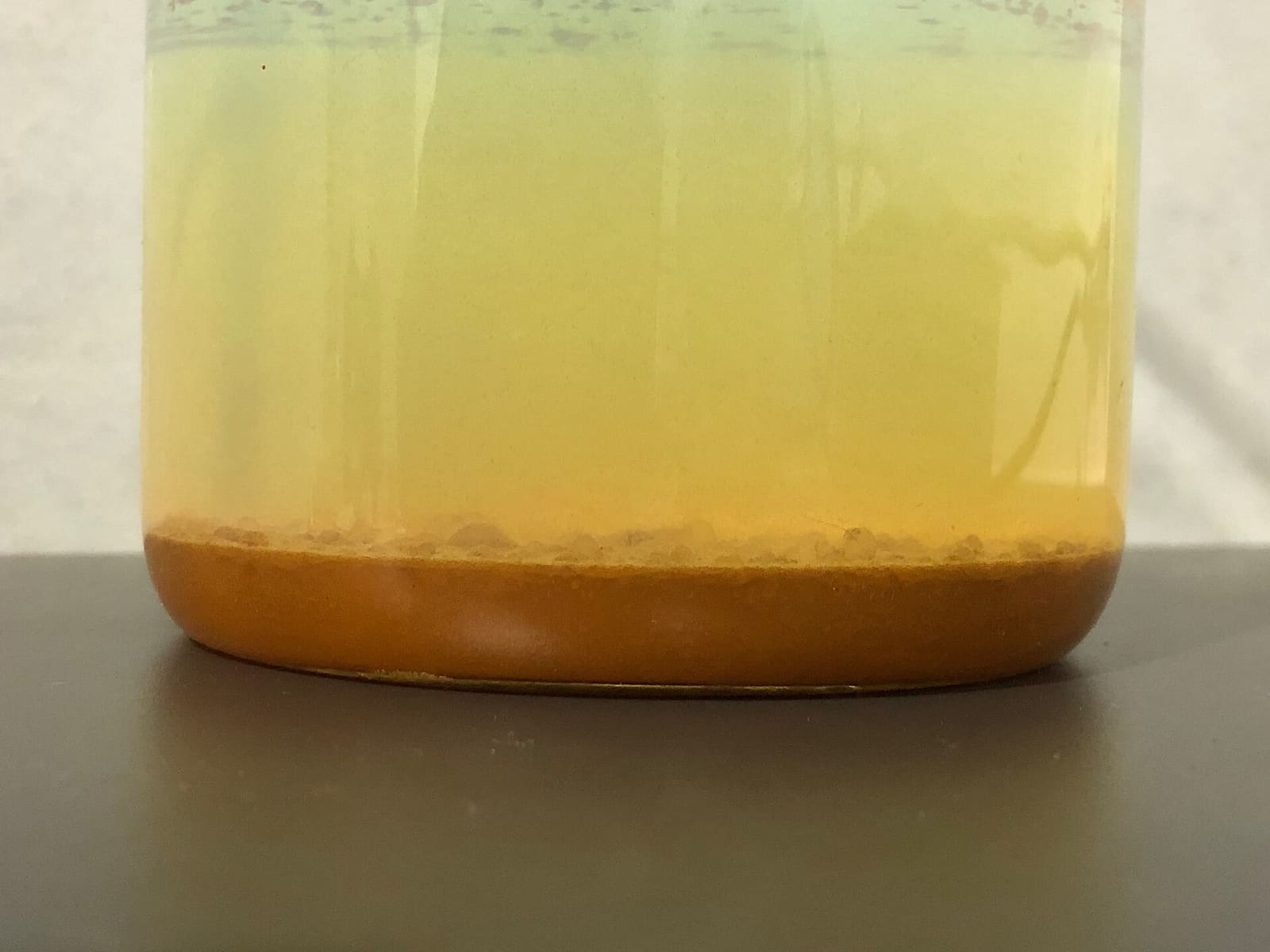
Drain a sample from the primary filter bowl into a clear jar. Water, dark sludge or slime (diesel bug) means the injectors have been at risk. Replace the primary and secondary filters as your manual specifies and bleed the system (see the diesel oil and filters guide). A partly clogged filter or an air leak can cause rough running and hard starting that look a lot like injector trouble.
Westerbeke warns that fuel left sitting for a long time can varnish and make injectors, the fuel rack and the injection pump stick. If the boat sat for a year or more, or you suspect a bad load of fuel, deal with the fuel first: drain or polish it and change filters (see the fuel polishing guide). Do not keep cranking an engine that will not start; it can fill the exhaust with water.
Once air, load and fuel check out, smoke color helps narrow things down:
- Gray or black, at startup or under load: 48° North says a partly blocked or dripping nozzle, or an injector that does not open at the right pressure, causes this. A dripping injector can eventually burn a piston or valve, so do not ignore it.
- White that does not clear: Westerbeke lists an engine running too cold, a faulty injector or injection timing, or coolant leaking into the exhaust. Steam from poor raw-water flow can look like white smoke too, so check that cooling water is coming out with the exhaust. Yachting adds that worn rings, valves or a head gasket can also cause it.
- Blue: usually oil burning, not an injector problem. See the diesel exhaust smoke guide.
Pull the dipstick. If the oil level has gone up, the oil feels thinner than usual, or it smells of diesel, fuel may be leaking into the crankcase. Caterpillar notes that faulty injectors can cause oil dilution and early wear. Do not keep running an engine with fuel-thinned oil; it cannot protect the bearings. Get it checked, and consider an oil analysis (see the oil sample analysis guide).
With the engine stopped and cooled down, look along the steel injection lines, injector bodies and the return (leak-off) lines for wet spots, fuel stains or corrosion. BoatUS warns that steel injection lines can corrode and leak. Do not tighten or loosen anything on the high-pressure side yourself. Report what you find to your mechanic.
Electronic common-rail engines watch each injector. If you have a warning light or fault code at the helm, write it down and have a dealer read the engine with their diagnostic tool. Mechanics can also test cylinder by cylinder to find a weak injector without guessing.
If the evidence points to injectors, a mechanic removes them and sends them to a diesel fuel-injection shop (or replaces them with new or remanufactured units). The shop tests opening pressure, spray pattern and leakage, then rebuilds, recalibrates or replaces them. Ask the mechanic to fit new sealing washers and seals, and to code new injectors to the engine if your model needs it. Caterpillar notes that remanufactured injectors from the engine maker are tested to factory specs.
Scheduled or only when there's a problem? Check your manual. SAIL Magazine points out that many older mechanical engines list injector service at a set number of hours, while some newer engines call for it only when you see symptoms such as black smoke, lost power or unburned fuel in the exhaust.
Can I pull them myself? On an older mechanical diesel, some experienced owners remove the injectors and take them to an injection shop. SAIL's write-up shows why it's fussier than it looks: injectors sit in deep wells where dirt can fall straight into the cylinder, they are often stuck with carbon and corrosion, the copper sealing washers must come out and new ones seat perfectly, and the fuel system must be bled afterward. A hissing sound at an injector after reassembly means it isn't sealing. If any of that sounds unfamiliar, or your engine is common-rail or under warranty, leave removal to a mechanic.
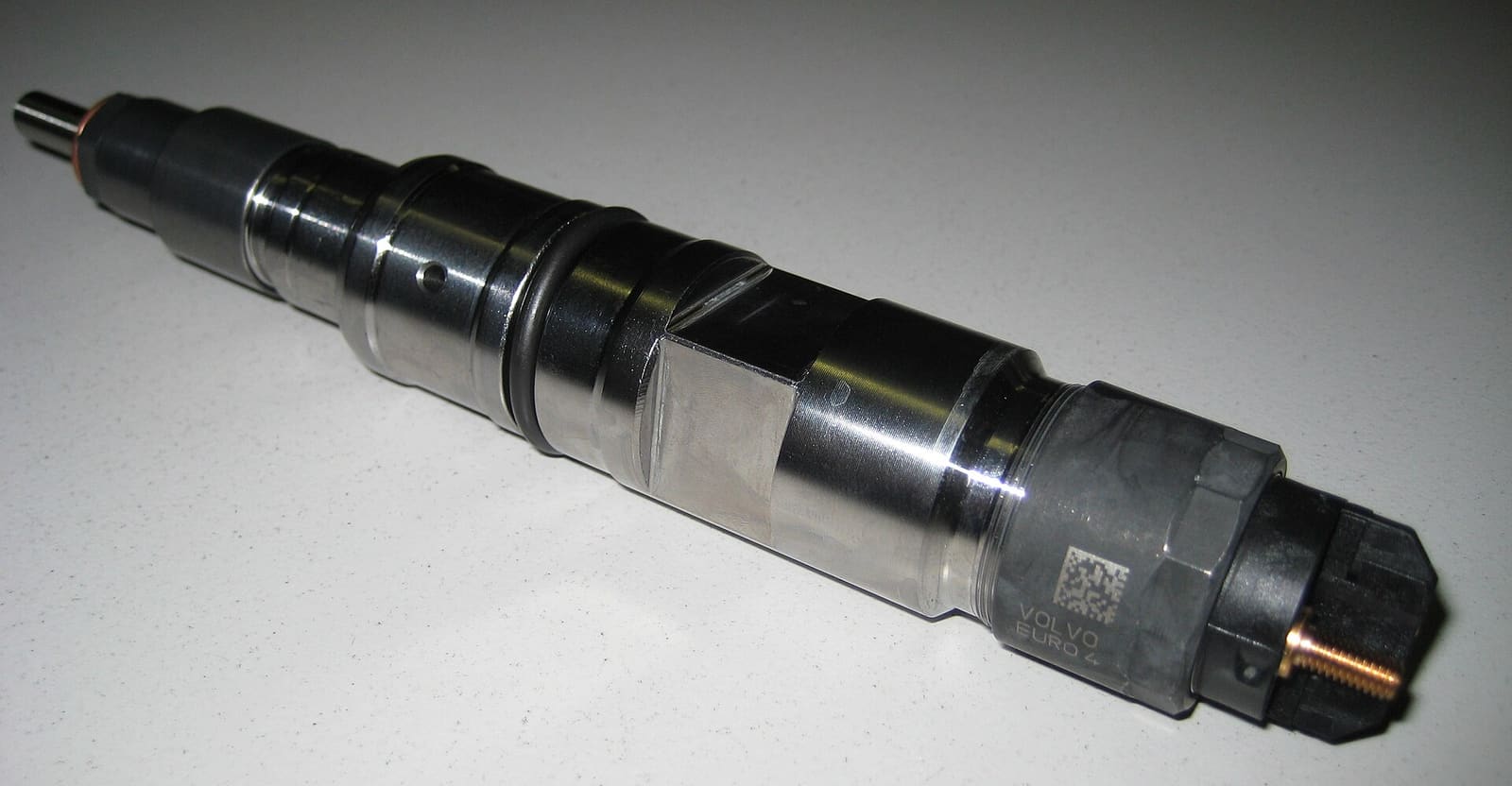
A common-rail injector (this one from a truck diesel). Modern injectors are precision parts that need shop equipment to test. Photo: Panoha / Wikimedia Commons · CC BY-SA 3.0 - Change fuel filters on schedule, and carry spares.
- Drain water from the separator bowl regularly.
- Keep the tank as full as practical, especially in storage, to limit condensation. That is Yanmar's main advice.
- Buy fuel from busy docks and consider filtering it as it goes in.
- Use additives only if your engine maker allows them. Yanmar says it does not advise using any fuel additives; other makers approve certain biocides or conditioners. Check your manual before adding anything.
- Low-sulfur diesel lubricates less than old fuel did. Caterpillar says low-lubricity fuel can scuff injector plungers. Use fuel that meets your engine maker's spec.
Record the symptoms, engine hours, what you checked and what was replaced in BoatMend. Next time, you can see whether the problem is coming back.
Common mistakes
- Blaming the injectors for black smoke before checking the air filter, the bottom and the prop.
- Cracking an injector line open "to see which cylinder is bad" on a common-rail engine. This is dangerous and can damage the system.
- Using a gasoline "injector cleaner" in a diesel tank. Many are not made for diesel; use only products your engine maker approves.
- Ignoring a slowly rising oil level. Fuel in the oil wears the engine fast.
- Replacing one injector on a high-hour engine when the shop recommends testing the full set.
- Reusing old injector sealing washers after removal, which can cause compression or fuel leaks.
- Pumping fuel or oily water from the bilge overboard. It is illegal and harms the water.
When to call a pro
- Smoke, miss or knock that continues after you have checked the air filter, fuel filters and load
- Fuel in the oil or a rising oil level
- Any fuel leak on the high-pressure side, or wet, corroded injection lines
- Fault codes or warning lights on an electronic engine
- The engine needs injectors removed, tested, rebuilt or replaced
- The engine is under warranty
Tips
- Note engine hours, rpm and smoke color every time something seems off. Mechanics diagnose much faster with good notes.
- Watch the exhaust from the dock on a cold start once a season. Smoke patterns often change long before the engine runs badly.
- Clean fuel is cheaper than injectors. Filters and a clean tank are the best injector maintenance you can do.
Official references
We read these to write this guide. Your engine's own manual always wins.
- BoatUS – Maintaining Marine Diesel Engines
- 48° North – Diesel Deep Dive: Is Your Engine Sending Smoke Signals?
- Westerbeke – Troubleshooting FAQ
- Yanmar Marine International – Frequently Asked Questions
- Caterpillar – Injectors
- Yachting – The 10 Most Common Diesel Engine Issues and Fixes: Part 1
- SAIL Magazine – Servicing Fuel Injectors on a Diesel Engine
Safety: BoatMend is for information only and does not replace a certified marine technician. You are responsible for your safety and your boat. Read the full disclaimer.
Last updated 2026-10-25
Related guides

Diesel Exhaust Smoke: What Black, White and Blue Smoke Mean
Learn to read the color of your marine diesel's exhaust and run the simple checks that go with each color, from a dirty air filter or fouled prop to a worn mixing elbow or head gasket. Catching smoke early can save an engine.
Marine Diesel Service: Oil Change, Fuel Filters and Bleeding Air
Change the oil and oil filter, replace the primary and secondary fuel filters, and bleed air from the fuel system on a Yanmar, Volvo Penta, Beta, Cummins or similar marine diesel. These three skills cover most routine diesel care and can get you out of trouble when the engine dies on a passage.
How to Replace a Fuel/Water Separating Filter (and Check for Water in Your Fuel)
Swap the spin-on fuel/water separator on your gas boat and learn to spot water and ethanol phase separation before it stalls the engine. It is one of the cheapest jobs on the boat and one of the best protections for a fuel-injected engine.
How to Deal with Diesel Fuel Contamination, Diesel Bug and Fuel Polishing
Learn the signs of water, sludge and microbial growth ("diesel bug") in your diesel tank, how to check a fuel sample, when a biocide helps, and when the tank needs polishing or cleaning. Clean fuel prevents most diesel breakdowns.
Marine Diesel Won't Start: Troubleshooting From Battery to Fuel
Work through the usual reasons a Yanmar, Volvo Penta, Westerbeke, Beta or similar marine diesel won't crank, or cranks but won't fire, starting with the free and simple checks. Most no-starts come down to the battery, preheat, air in the fuel or a fuel shutoff solenoid.
Loss of Power, Hesitation or Misfire - Troubleshooting Guide
Figure out why your engine bogs down, stumbles, will not reach full rpm or runs rough. Work from simple checks like trim, prop and fuel filter to ignition and engine protection modes before paying for diagnostics.
Engine and Gearbox Oil Analysis: How to Take a Clean Sample and Read the Report
A lab oil analysis is like a blood test for your engine, transmission or lower unit. Learn how to pull a clean sample, what the lab measures, what wear metals, coolant, sea water and fuel in the oil can mean, and why the trend over several samples matters more than any one number.
Boat Fuel Additives Explained: What Stabilizers, Ethanol Treatments and Boosters Really Do
The marine store shelf is full of bottles that promise to fix fuel problems. Learn what stabilizers, ethanol treatments, water removers, octane and cetane boosters, cleaners and diesel biocides actually do, what no additive can do, how to dose them by the label and why you should not stack several products in one tank.