Two-Stroke Oil Injection vs. Premix: How It Works and How to Check It
A two-stroke engine dies quickly without oil in its fuel, so the oil injection system and its alarms deserve regular attention. Learn how injection and premix differ, what the warning horn is telling you, how to check the system, how to premix safely using your manual's ratio, and the real risks of disabling injection.
Time
1 h
Shop would charge
$100-300
Applies to
Outboard, Jet ski / PWC
Safety first: Gasoline and its vapor ignite easily. Mix fuel outdoors, away from sparks and flames, in an approved fuel can, never inside the boat or a closed garage. Wipe up spilled oil and fuel right away. If the oil warning sounds on the water, slow down and check it; if you cannot sort it out, return at low speed or call TowBoatUS or Sea Tow. In an emergency, use VHF channel 16 or dial 911.
Owners often ask
- Should I keep the oil injection on my old two-stroke or switch to premix?
This guide walks you through it. Still stuck? Ask the AI Mechanic about your engine.
Tools
- Owner's or service manual for your engine
- Flashlight
- Clean rags
- Masking tape and a marker (to mark the oil level)
- Approved gasoline can for premixing
- Graduated measuring container for oil
- Safety glasses and nitrile gloves
Parts & supplies
- Two-stroke oil of the type your manual specifies (most outboards call for NMMA TC-W3 certified oil)
- Replacement oil lines, clamps or filter (if cracked, hard or dirty)
- Fresh gasoline and marine fuel stabilizer
Before you start
Why two-strokes need oil in the fuel. A two-stroke engine has no oil sump like a car or a four-stroke outboard. The oil that protects its pistons, rings and bearings travels in with the fuel and is burned along with it. If the oil stops, the engine can scuff its pistons or seize within minutes.
Two ways to get the oil in:
- Premix: you mix oil into the gasoline yourself, at the ratio your manual gives. Common on small and older outboards.
- Oil injection (automatic oiling): the engine has its own oil tank (on the engine, in the boat, or both) and a pump that meters oil into the fuel or intake. On many carbureted systems the pump is driven by the engine and linked to the throttle, so the engine gets less oil at idle and more at high speed. Brands use different names for it, such as Mercury's oil injection, Yamaha's Precision Blend and OMC's VRO on older Johnson and Evinrude engines. Older two-stroke personal watercraft use the same idea.
- Direct-injection two-strokes (such as Mercury OptiMax and Evinrude E-TEC) have a computer-controlled oiling system and may require a specific oil. Follow their manuals closely and do not modify the system.
Which oil. Mercury and Yamaha both point owners to oil carrying the NMMA TC-W3 certification for two-stroke outboards, and some engines (DFI models in particular) call for a specific oil. Never use automotive or air-cooled two-stroke oil in a water-cooled outboard unless the manual allows it. Your manual is the final word. The NMMA certifies the additive package and registers each oil brand every year, and it publishes the list of registered oils on its website, so you can check that a store-brand bottle with the TC-W3 symbol is actually on the list.
Ratios. The correct premix ratio, and any break-in ratio, is set by the engine maker and depends on the model and year. Use the ratio in your owner's manual. Do not copy a number from a can, a friend or a forum.
Steps
Find your engine's model and serial number (on the tag on the clamp bracket or transom bracket) and get the owner's manual. Note whether you have premix, oil injection or direct injection, where every oil tank is, and what the manual says each alarm means. Many systems have a low-oil warning and some also have a no-oil-flow warning, and the same horn may also be used for overheating. Our engine warning alarms guide explains how to tell them apart.
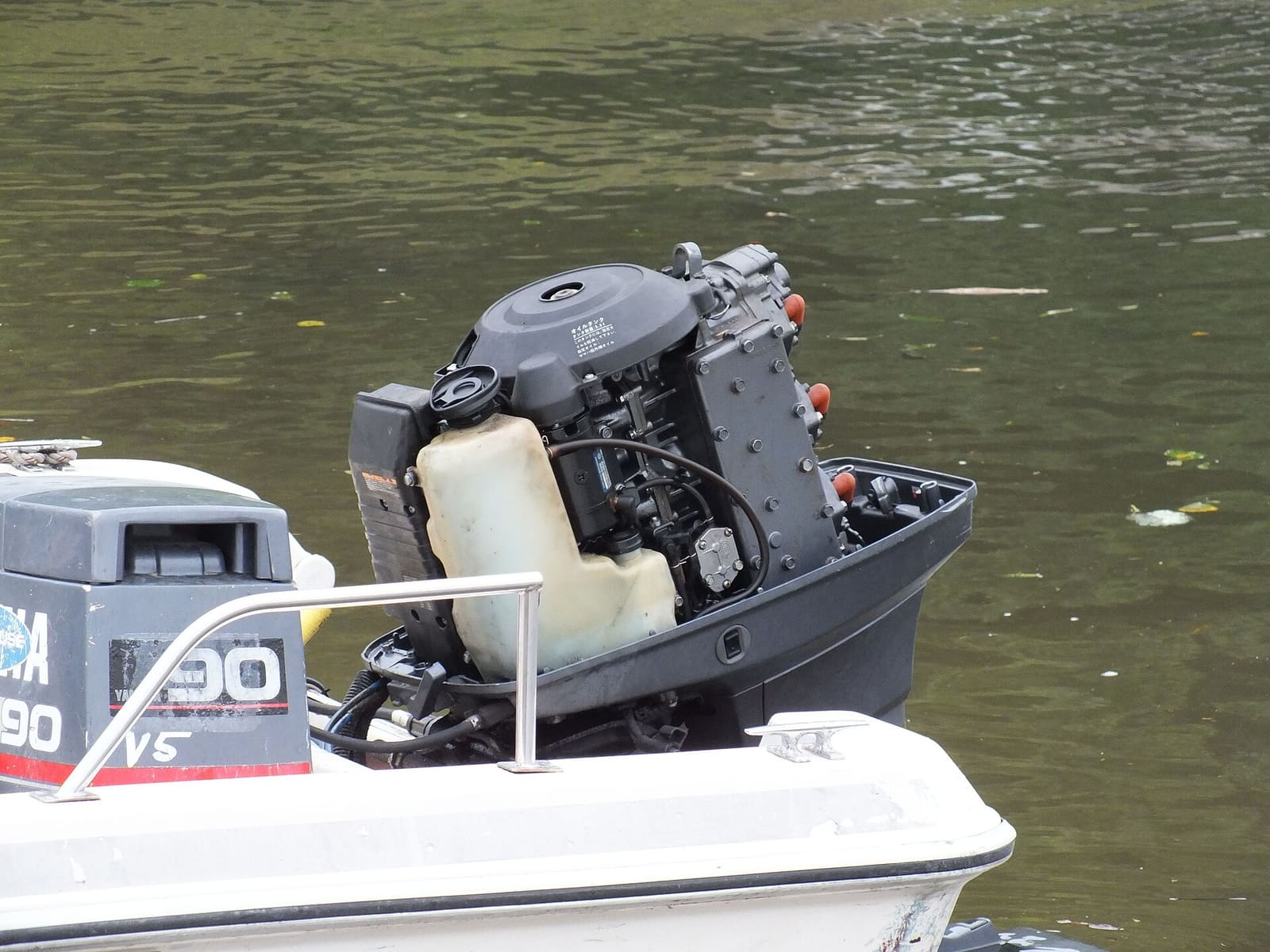
Look at every oil tank: the one under the cowling and, on many larger outboards, a bigger remote tank in the boat that refills it. Top up with the specified oil and close caps tightly so water cannot get in. Never let an injection tank run dry. If air gets into the oil lines, many engines need a bleeding procedure from the manual before they are safe to run.
On many engines the warning horn or lights come on briefly when you turn the key, which shows the alarm works. Learn what is normal for yours. A horn that never sounds at all may mean the alarm itself is broken, which leaves you without protection.
With the cowling off and the engine cold, follow each oil line from the tank to the pump and from the pump to the engine. Look for:
- Cracked, hard, swollen or yellowed lines and loose clamps
- Oil wet spots under the pump or on the bottom cowl
- Dirt or water in the tank, or a clogged filter screen at the tank outlet (on models that have one)
Old injection lines are a top cause of failures. Replace any line that looks doubtful with the correct part.
On systems where the pump is linked to the throttle, check that the link rod is attached and moves freely as the throttle opens. A disconnected rod can leave the engine on its idle oil setting at full throttle. Adjust it only with the marks and method in your service manual; do not bend or reposition it by guesswork.
Older two-stroke personal watercraft often drive the oil pump from the throttle with a small cable or link of their own. Owners regularly find it unhooked, broken or out of adjustment after carburetor or throttle cable work, so check it any time someone has worked on the throttle side of the engine.
Put a piece of masking tape on the tank and mark the level, then note the engine hours. After a few hours of running, the level should have dropped. If it has not moved at all, stop using the boat until a pro checks the system. If oil use suddenly jumps, look for a leak.
- First, throttle back to idle right away.
- Then check the oil level in every tank. Top up if low.
- If oil is full and the warning continues, the pump or its drive may have failed. Some manuals describe an emergency get-home procedure, such as running on premixed fuel at a ratio they specify; use it only exactly as written.
- Otherwise run slowly back or call for a tow, and have the system checked before the next trip.
Do not ignore an oil alarm or unplug it to stop the noise.
If your engine is premix only, or your manual tells you to premix (for example during break-in or in an emergency):
- Use a clean, approved fuel can and fresh fuel with no more than 10% ethanol.
- Measure the oil with a graduated container at your manual's ratio.
- Pour the oil into a partly filled can, close it and shake, then add the rest of the gasoline and shake again.
- Label the can "premix" with the date, so nobody pours it into a four-stroke or forgets it is already mixed.
- Add fuel stabilizer if the fuel will sit more than a few weeks.

Premixed fuel (left) usually takes on the color of the oil dye; plain gasoline (right) does not. Photo: Andshel / Wikimedia Commons · CC BY-SA 4.0 Many manuals call for extra oil during break-in, sometimes by adding premix to the tank on top of the injection system, for a set number of hours or tanks. Follow your engine's break-in section exactly, and switch back to normal when it says.
Some owners of older engines remove or block the injection system and switch to premix because they no longer trust the pump. Know the trade-offs first:
- One forgotten can of oil can seize the engine. With premix there is no alarm to catch a mistake.
- Fixed ratio: premix gives the same oil at idle and at full throttle, unlike a throttle-linked pump. That can mean more smoke, carbon and fouled plugs at low speed.
- It has to be done correctly. A pump that is simply disconnected can leak or suck air, and on some engines the alarm wiring or warning module also covers overheating. A conversion is a job for a dealer using the method for your engine.
- Resale and warranty: buyers and dealers may see a converted engine as one that had oiling problems.
- Never convert a direct-injection (DFI) engine.
In many cases replacing old oil lines and having the pump tested costs less than the risk.
Bought a boat where someone already removed the oil system? This comes up often with older 2-stroke outboards on used pontoons and fishing boats. Don't assume the job was done right. Have a dealer confirm the pump drive is properly blocked or removed, that nothing leaks or sucks air, and that the overheat warning still works; then label the fuel tank "PREMIX ONLY" and mix at the ratio in the owner's manual every time.
- Too little: loss of power, overheating, a knock or squeal, or low compression on a compression test. Stop and have it checked.
- Too much: heavy blue smoke beyond the normal start-up puff, oily spark plugs, and oil on the water. Check whether premix is being added on top of a working injection system.
Common mistakes
- Letting the injection tank run low and air getting into the lines.
- Using automotive oil, air-cooled two-stroke oil, or "whatever was in the garage" instead of the oil your manual specifies.
- Picking a premix ratio from a forum instead of the owner's manual.
- Adding premix to the tank on top of a working injection system for normal use, then fighting fouled plugs.
- Disconnecting the oil pump to "convert to premix" without blocking it correctly or keeping the overheat warning working.
- Ignoring old, yellowed oil lines until one cracks.
- Silencing a warning horn instead of finding out why it sounds.
When to call a pro
- The oil alarm sounds with full tanks, or the oil level never drops
- Any engine that knocked, lost power or overheated after an oil warning
- Bleeding the oil system, adjusting the pump linkage, or testing pump output
- Converting an engine from injection to premix
- Direct-injection (OptiMax, E-TEC and similar) oil system faults
- You are on the water and the engine will not run safely: call TowBoatUS or Sea Tow
Tips
- Keep a spare quart or gallon of the correct oil on board and a funnel that fits the tank.
- Write the premix ratio from your manual on the fuel can in permanent marker so nobody has to guess.
- Before winter storage, follow your manual for fogging and for whether to keep the oil tank full.
Official references
We read these to write this guide. Your engine's own manual always wins.
Safety: BoatMend is for information only and does not replace a certified marine technician. You are responsible for your safety and your boat. Read the full disclaimer.
Last updated 2026-10-24
Related guides
Engine Warning Horn and Dash Lights: What They Usually Mean and What to Do
Learn what a warning horn, beeps or a dash light usually mean on a boat engine, from overheating and low oil pressure to water in the fuel and reduced-power (limp) mode. Find out what to do right away and when to stop the engine. Patterns differ by brand, so match what you hear and see to your owner's manual.
How to Inspect and Replace Spark Plugs
Pull, read and replace the spark plugs on a gas outboard, sterndrive, inboard or PWC. Fresh, correctly gapped plugs help the engine start easily and run smoothly, and the old plugs tell you a lot about the engine's health.
How to Clean the Carburetor on a Small or Older Outboard
Old fuel turns to varnish and plugs the tiny jets in a carburetor, so the engine only runs on choke, surges or will not idle. Learn when the carburetor really is the problem, how to drain and clean it, and when a rebuild kit or a replacement makes more sense.
How to Fog an Engine for Storage
Coat the inside of your engine's cylinders with fogging oil before a long layup so rust does not form over the winter. Learn when fogging applies, how it differs for carbureted, fuel-injected and direct-injection engines, and why your maker's instructions come first.
Ethanol (E10) Fuel Care: Stabilizer, Phase Separation, Fuel Lines and Tank Vents
Keep E10 gasoline from damaging your boat engine. Learn how to use stabilizer, test for water and phase separation, and inspect the fuel lines, primer bulb, anti-siphon valve and tank vent. Most fuel-related breakdowns start with one of these.
Engine Won't Start or Won't Crank - Troubleshooting Guide
Find out why your boat engine will not turn over or will not fire, starting with the simple things owners miss most, like the kill switch lanyard and battery switch. Many no-starts are fixed at the ramp in minutes without a tow.
Loss of Power, Hesitation or Misfire - Troubleshooting Guide
Figure out why your engine bogs down, stumbles, will not reach full rpm or runs rough. Work from simple checks like trim, prop and fuel filter to ignition and engine protection modes before paying for diagnostics.