How to Inspect and Troubleshoot Hydraulic and Electric Trim Tabs
Keep your trim tabs working with a simple seasonal check of the blades, anodes, fluid, lines and wiring, and track down the usual faults when a tab won't move, only one side works, or the tabs stay stuck down.
Time
1 h
Shop would charge
$150-450
Applies to
Outboard, Sterndrive (I/O), Gas inboard, Marine diesel · Fishing boat, Center console, Bowrider / runabout, Cabin cruiser, Yacht
Safety first: Never stand or step on a trim tab; it can break and you can fall. Turn off the trim tab breaker or battery switch before working on wiring or reaching near the actuators. If a tab sticks down underway, slow down: a boat with one tab jammed down can lean, dig in its bow and steer unpredictably at speed. Retract the tabs before backing down hard, in a following sea and when running an inlet.
Owners often ask
- One of my trim tabs works and the other doesn't. How do I tell if it's the pump or the actuator?
- My trim tabs go down but won't come back up. What should I check?
This guide walks you through it. Still stuck? Ask the AI Mechanic about your engine.
Tools
- Multimeter
- Screwdrivers and nut drivers
- Wire brush and stiff plastic scraper
- Flashlight or headlamp
- Rags and a small funnel
- Ladder or stable platform to reach the transom
Parts & supplies
- Trim tab anodes (zincs) that fit your tabs (saltwater)
- Fluid specified by your trim tab maker (hydraulic systems)
- Marine sealant for transom screws (if any are loose)
- Heat-shrink connectors and marine tinned wire (if repairs are needed)
- Correct fuse for the trim tab circuit
Before you start
Trim tabs are stainless steel plates hinged to the bottom of the transom. Pushing a tab down lifts the stern on that side, which brings the bow down and levels the boat. There are two main types:
- Hydraulic (Bennett-style). A small pump with a fluid reservoir (often called the HPU) sits inside the boat. Thin hydraulic tubes run through the transom to a cylinder (actuator) on each tab. The pump runs and valves send fluid to one side or the other.
- Electric (Lenco-style). Each actuator on the transom has its own sealed electric motor driving a screw. Only wires go through the transom. Lenco describes its actuators as fully submersible and maintenance-free; your job is the blades, anodes, connections and wiring.
Some boats also have indicator lights, an auto-trim unit or interceptor-style blades. Check your system's manual for the exact fluid, fill level and wiring colors. The best time for this check is when the boat is on the trailer or hauled out, with the tabs easy to see.
Steps
Look inside the stern lockers or bilge for a pump with a clear reservoir (hydraulic). If you only find wires going to the actuators, it is electric. Note the brand and model from the helm control or the pump label so you can find the right manual and parts.
Look at each tab from behind the boat. Check for bent blades, cracks near the hinge, a worn or missing hinge pin, and loose or missing screws in the transom. Wiggle each tab by hand: a little play is normal, a clunking hinge is not. Loose screws can let water into the transom core, so reseal them with marine sealant.
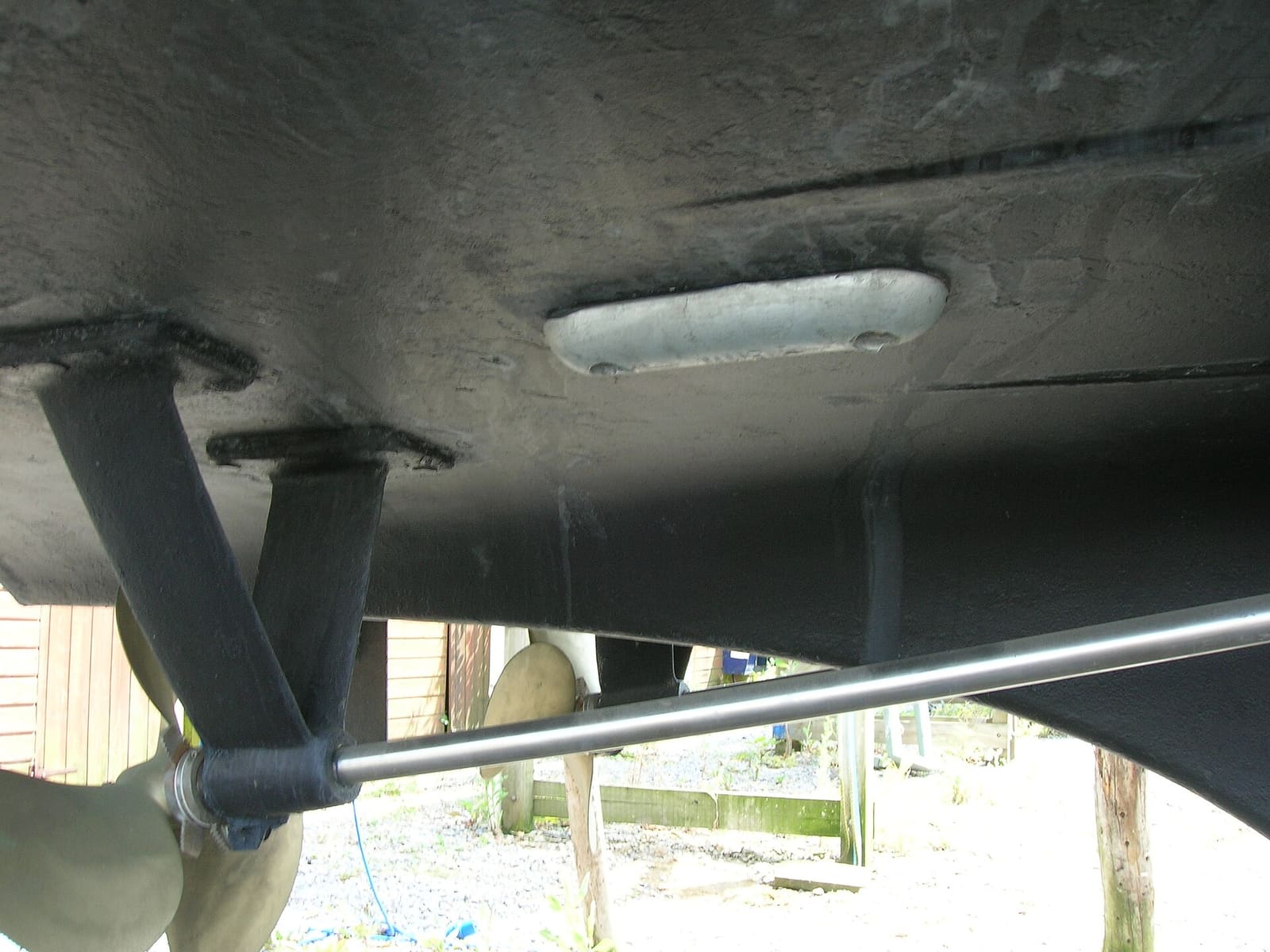
In salt water, each tab normally carries its own zinc anode on top of the blade. Bennett says the zinc must make direct contact with the stainless steel, must never be painted, and the tabs should not be bonded to other underwater metal. Replace anodes when they are about half worn away (typical; confirm with your tab maker), cleaning the contact spot with a wire brush first.
Scrape barnacles and slime off the blades, hinges and the exposed actuator rams. BoatTEST notes that growth on the ram can wear the seals over time. If you keep the boat in the water, Bennett's guidance allows its tabs and actuators to be primed and painted with antifouling; keep the anodes bare. For electric actuators, check your maker's instructions before painting anything. An orange tint on unpainted stainless is normal surface staining, not corrosion; pitting is the warning sign.
Run both tabs fully up first. Then check the reservoir level against the mark or height given in your manual. Bennett's guide uses automatic transmission fluid and says brands can be mixed; other makers may specify a different fluid, so use what your manual lists. Top up slowly with a funnel and refit the cap.
Check the pump fittings, the tubes where they pass through the transom, and the actuator fittings for wet spots or dripping fluid. An oily film around one actuator usually means a leaking seal or fitting. Low fluid that keeps dropping means a leak you need to find before it gets worse.
At the helm, check the back of the control for loose or green, corroded terminals. Check the fuse in the power wire. On hydraulic systems, check the pump's ground wire and its plug connector. On electric systems, check each actuator's plug and the cable where it passes through the transom for chafe or cracks. Bennett asks that its pump be mounted in a dry spot; one that gets soaked will fail early.
With the boat on the trailer, run each tab fully down and up from the helm while a helper watches. Both should move smoothly and at about the same speed, and an indicator (if you have one) should match. Listen for the pump or motors: a strained or grinding sound is worth noting.
Check that the battery switch is on and the battery is charged. Then check the fuse in the helm control's power wire, the ground connection and any plug connectors for looseness or corrosion. With a multimeter, confirm battery voltage reaches the pump or actuators while you press the switch. No voltage points to the switch, fuse or wiring; voltage with no movement points to the pump or actuator.
Start with the wiring for the dead side: plugs, connectors and the switch. On a hydraulic system, Bennett's troubleshooting guide suggests swapping the two hydraulic lines at the pump. If the problem moves to the other tab, the pump or its valve is at fault; if it stays on the same side, suspect that actuator or its line. On an electric system, check for voltage at the dead actuator's plug while pressing the switch: power there with no movement means the actuator has failed.
On hydraulic systems, Bennett lists low battery voltage as a main cause: check the voltage while the pump runs, because the valves may not open if it drops too low. Clean and tighten the helm and pump connections next. On electric systems, a failed actuator or water in a connector is the usual cause. If a tab stays down on the water, run slowly back to the dock, keep the load centered and avoid sharp turns.
Retract the tabs at the dock and before trailering so they are less likely to be hit. BoatTEST also recommends retracting them after use so growth does not build up on the rams. Bennett states that leaving its actuators extended will not damage the seals and that its hydraulic system needs no winterizing; for electric or other systems, follow the maker's storage advice.
Common mistakes
- Painting over the trim tab anodes, or forgetting they exist when changing the engine anodes.
- Topping up a hydraulic reservoir with the tabs down, then overfilling when they retract.
- Replacing an actuator or pump before checking the fuse, ground and battery voltage.
- Backing down hard with the tabs down and bending or tearing a tab off the transom.
- Leaving loose transom screws unsealed until the core gets wet.
- Running hard with one tab much lower than the other and fighting a constant lean.
When to call a pro
- Fluid keeps leaking from a hydraulic line, fitting or actuator
- Transom screws are loose and the wood or core around them feels soft or wet
- A tab is bent, cracked or torn at the hinge
- You need to replace actuators, run new hydraulic lines or wiring through the transom, or install auto-trim
- The wiring or the pump connector shows heat damage, or the fuse keeps blowing
Tips
- Take a photo of the reservoir level and the wiring at the pump when everything works. It helps when something stops working.
- Check the trim tab anodes every time you check the engine anodes.
- Use small taps of the switch while you learn your boat; too much tab at speed makes the bow dig in.
- Know what tabs can't do. Boating Magazine notes that tabs cannot lift the bow (that is the engine or drive trim's job), and that porpoising caused by the hull, an engine mounted too high or the propeller is something tabs can only tame, not cure. A "tab problem" that is really a setup problem won't be fixed by a new pump.
- No indicator? Run both tabs to where they sit flush with the bottom of the hull, note how many seconds of switch that takes from fully up, and use it as your "zero."
- Older systems from brands that are no longer sold can still often be serviced; take photos of the pump label and actuators to a marine shop before you assume the whole system must be replaced.
- Keep dock lines and fenders away from the pump and tubing in the stern locker so they do not get pulled loose.
Official references
We read these to write this guide. Your engine's own manual always wins.
Safety: BoatMend is for information only and does not replace a certified marine technician. You are responsible for your safety and your boat. Read the full disclaimer.
Last updated 2026-10-23
Related guides
How to Inspect and Replace Sacrificial Anodes (Zincs)
Check the anodes on your outboard, sterndrive or inboard running gear, replace them when they are half gone, and choose the right metal for the water you boat in. Fresh anodes are cheap insurance against expensive corrosion damage to your lower unit, drive and prop.
How to Check and Top Up Power Trim and Tilt Fluid
Check and top up the hydraulic fluid in your power trim and tilt unit, then work through the simple checks when the motor won't go up, won't go down or slowly sinks. Most trim problems are a dead battery, a bad relay, low fluid or a release valve left open, and you can find those yourself.
Marine Battery Care: Test, Charge and Store for Winter
Check your boat battery's health, charge it the right way for its type (flooded, AGM or lithium), and store it so it is ready in spring. Most "boat won't start" calls start with a neglected battery.

How to Clean, Remove Oxidation and Wax Your Boat's Gelcoat (Plus Pontoon Tubes)
Wash your hull the right way, bring back chalky, faded gelcoat with compound, and seal it with wax so it stays glossy and protected from the sun. Includes how to clean and protect the aluminum tubes on a pontoon boat.
Launch Day and Haul-Out Checklist for Trailer Boats
A step-by-step checklist for getting your boat off the trailer and back on again safely and quickly, from the drain plug and tie-downs to the blower and ramp etiquette. Following it in order prevents the classic mistakes that sink boats and back up the ramp.
How to Check a Boat for Transom and Stringer Rot
Many older fiberglass boats have wood inside the transom, stringers and deck, and water that gets in slowly rots it. Learn the tap test, the flex test, how to read a moisture meter and the other warning signs, and why a rotten transom or stringer is a structural job for a pro, not a weekend patch.