Shore Power Adapters and Y-Splitters: When a 30A or 50A Adapter Is Safe, and When It Isn't
Pigtail adapters and Y-splitters let a boat plug into a pedestal that doesn't match its inlet, but the wrong one, or the right one used carelessly, can overheat, trip the marina's ground-fault protection or start a fire. Learn the difference between 30A 125V, 50A 125V and 50A 125/250V, which adapters are reasonable, how to keep loads safe, and how to check connections for heat.
Safety first: Shore power is 120/240-volt AC and can kill. It also causes many boat fires when plugs and adapters overheat. Always switch off the pedestal breaker and the boat's main shore power breaker before you connect or disconnect any cord or adapter, then turn the pedestal on last. Never use a household extension cord, a homemade adapter or a "cheater" that drops the ground pin, and never stack adapters. If a plug, adapter or cord is melted, smoking, discolored or too hot to hold, don't pull it: switch off the pedestal breaker, keep people back and call the marina; if there is fire, get everyone off the boat and call 911. If someone may have been shocked in the water, don't jump in: cut the power, throw a flotation device and call 911.
Fuel smell, water coming in, CO alarm or smoke? Stop, get everyone in life jackets and call USCG on VHF 16 or 911. For a tow: Sea Tow or TowBoatUS.
Owners often ask
? Is it safe to plug my 50 amp boat into a 30 amp pedestal with an adapter?
? Why does the marina pedestal trip every time I use my reverse Y adapter?
? Will a reverse Y adapter work on my 50 amp 125 volt boat?
This guide walks you through it. Still stuck? Ask the AI Mechanic about your engine.
Tools
Your boat's AC panel ammeter or a clamp-on AC meter (for checking load)
Infrared thermometer, or the back of your hand on the plug body (never the pins)
Clean rag, and the contact grease or corrosion inhibitor your cord maker recommends
Flashlight
Parts & supplies
Listed marine shore power adapter with locking, grounding connectors of the correct rating
Weatherproof sealing collars or covers for the adapter connections (if your adapter doesn't have them)
Before you start
What your boat has: look at the shore power inlet on the boat and the label near it, and at your AC panel. Most recreational boats in the US use one of these:
30A 125V: a three-prong twist-lock connector. One hot, one neutral and one ground. This is the most common service on small and mid-size cruising boats.
50A 125/250V: a larger four-prong connector with two hots (two "legs"), a neutral and a ground. It can run 240-volt appliances and gives each 125-volt leg up to 50 amps. Common on larger boats and yachts.
50A 125V: a large three-prong connector with one hot, a neutral and a ground. Less common, and easy to confuse with the 125/250V type because both are 50A.
The voltage marking on the connector and the boat's AC label settle it. If you're not sure, check before you buy any adapter, because a 50A adapter for the wrong type won't fit, or worse, won't give your boat what it expects.
Why adapters cause trouble:
Heat at every joint: each connection is one more place where a little corrosion, a loose fit or a worn contact creates resistance, and resistance makes heat. A long cord, a hot day and a big load such as air conditioning, water heater and charger running for hours turn a weak joint into a melted one.
Wrong protection: the pedestal breaker is sized for the pedestal outlet, not for a smaller cord. Practical Sailor's Drew Frye explains that stepping down (a bigger outlet feeding a smaller cord or boat) is the riskier direction, because the dock breaker won't protect the smaller cord, and the boat's breaker protects the boat's wiring, not the cord.
Weather: Practical Sailor notes that adapters with weatherproof connections at both ends are rare. Rain and spray get into the joint and start corrosion.
What the codes say: Practical Sailor points to ABYC E-11 and NEC Article 555 as the main shore power standards and notes that ABYC and the NEC allow step-down adapters only for temporary use with tools and accessories. They are not meant as a permanent way to power a boat.
Steps
0/11
When you book a slip, give the marina your inlet type (for example, "50A 125/250V") and ask what the pedestal at that slip actually has. A matching pedestal and the right cord is always better than any adapter. The Practical Sailor letter writer notes that transient 50A slips can be scarce and may be 125V or 125/250V, so confirm, don't assume.
Step-up pigtail (a 30A boat on a 50A outlet, or a 15A or 20A plug feeding a 30A cord): the boat gets less than the outlet could supply, so you're limited by your own cord and boat breaker. Frye calls this the lower-risk direction; the main nuisance is that you can't run everything at once.
Step-down pigtail (a 50A boat on a 30A outlet, or a 30A cord on a 15A household outlet): the boat could ask for more than the outlet's wiring is meant to carry. This is the direction to treat with care (steps 4 and 5).
Y-splitter (one 50A 125/250V outlet feeding two 30A 125V cords): common on boats with two 30A inlets. Each 30A side is fed from one of the two legs of the 50A outlet.
Reverse Y (two 30A 125V outlets feeding one 50A 125/250V boat): combines two pedestal outlets to make 125/250V. The two outlets must be on opposite legs (phases) to make 250 volts; the Practical Sailor letter writer notes that many marinas wire a whole dock on the same phase, so finding a pair that works can take trial and error. Listed reverse Y adapters include circuitry meant to check this and protect the boat. The product description for Marinco's reverse Y, for example, says it has power isolation circuitry so that when only one plug is connected, the second plug is isolated and carries no power (no live pins hanging loose), and that it will not work with 50A 125V three-wire inlets; it's only for 50A 125/250V boats. Even then, the boat gets only what the two 30A outlets can supply. Read the instruction sheet that comes with yours: some have an indicator light, and what it means if it stays on or off differs by model.
Choose an adapter from a recognized marine maker, listed by a testing lab, with locking and grounding connectors on both ends, sealing collars and the same or heavier wire than your cord. Frye notes that code calls for locking and grounding type connectors, and that the locking rings on many cords are broken or missing; replacements are inexpensive. Check whether the adapter has its own overcurrent protection; Practical Sailor's comparison found that some step-down pigtails have none.
With any adapter, the smallest connector in the chain sets your limit. Frye suggests that a 50A boat running on a 30A outlet should stay below about 20 amps for continuous loads. In practice:
watch the boat's AC ammeter if you have one
run one big load at a time (air conditioning, water heater, battery charger, electric cooking or a space heater)
turn the water heater off when the air conditioning is running
on a 125/250V boat fed from 125V, 240-volt appliances won't run at all
See the generator load management guide for a simple way to plan loads.
Use a step-down pigtail to get through a night or a weekend at a slip that doesn't match, not as a permanent setup. If you stay at a slip long term, ask the marina for a matching pedestal outlet, or have a marine electrician look at your options.
Switch off the pedestal breaker and the boat's main shore power breaker.
Connect the cord to the boat first, with the adapter at the dock end, and twist the locking rings fully.
Plug the adapter into the pedestal and tighten its locking ring and sealing collar.
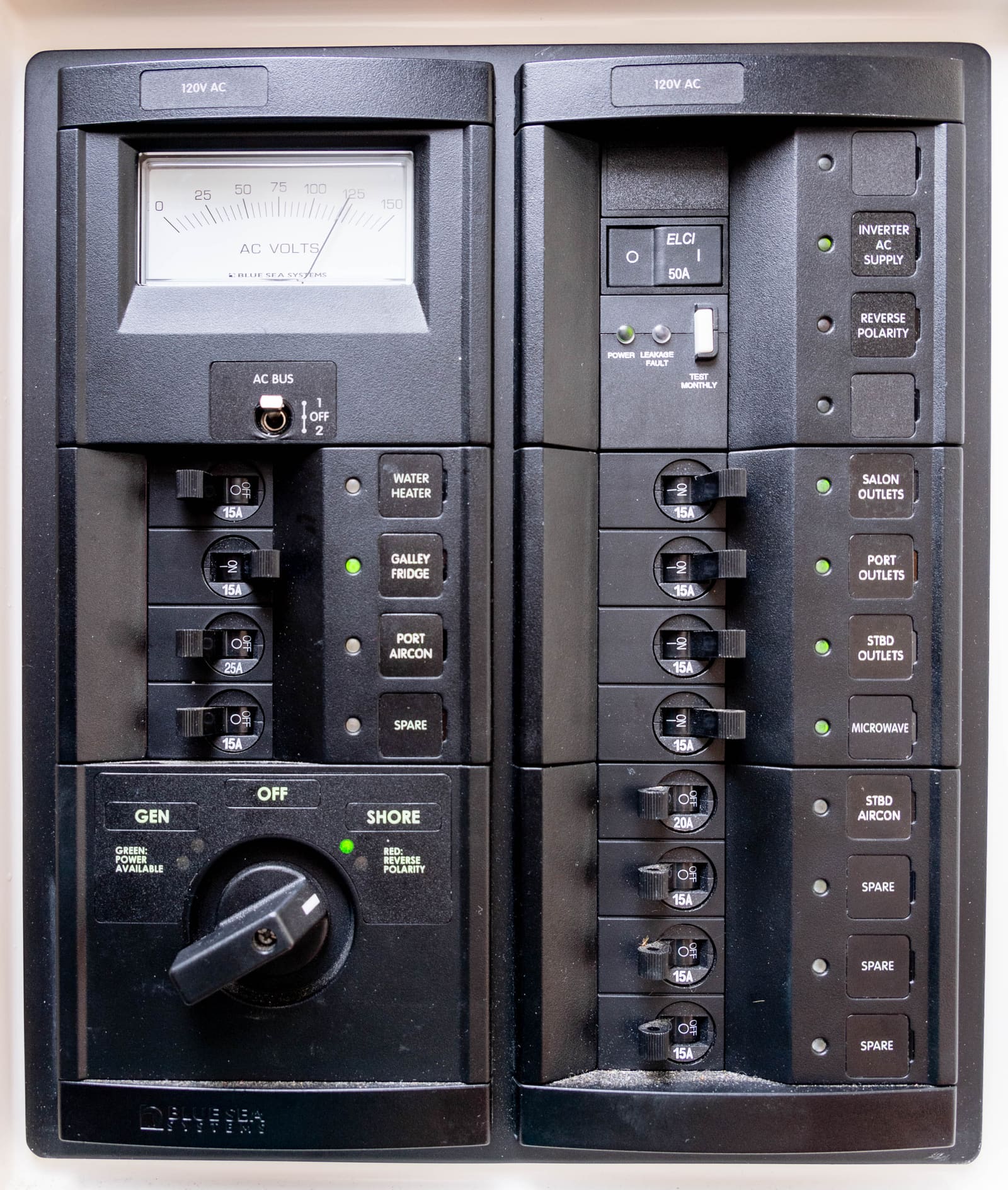
Switch on the pedestal breaker. Before you switch on the boat's main breaker, look at the reverse polarity light on your AC panel if you have one. Good Old Boat's Don Launer checks polarity at every new marina (with a plug-in tester at the pedestal if the boat has no indicator) and once found a pedestal with hot and ground swapped. If the light says reverse polarity, switch the pedestal off, unplug and tell the marina.
Switch on the boat's main breaker, then individual circuits.
Disconnect in the reverse order. Frye explains that pulling or pushing a plug under load causes arcing that pits the contacts and makes them run hotter from then on.
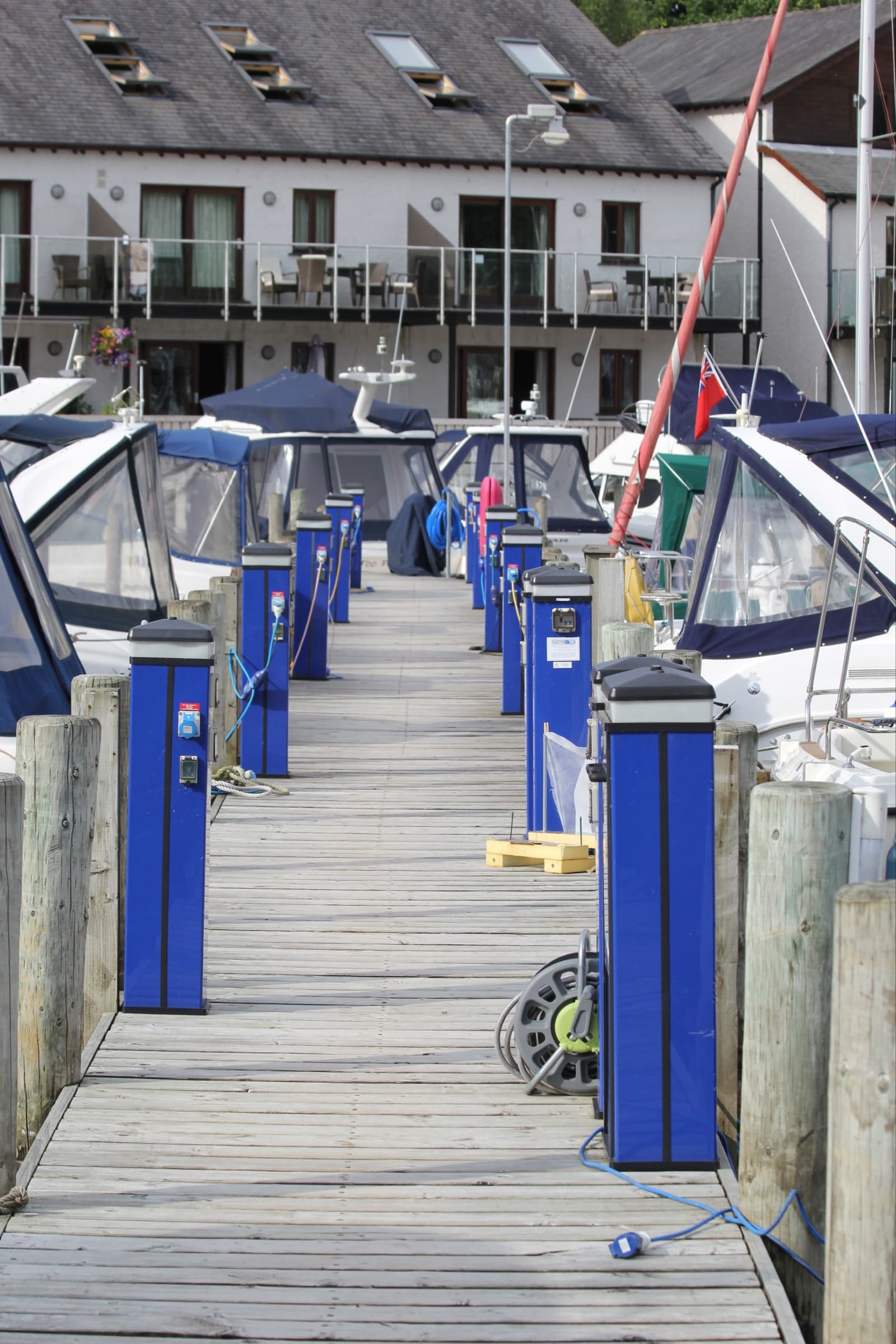
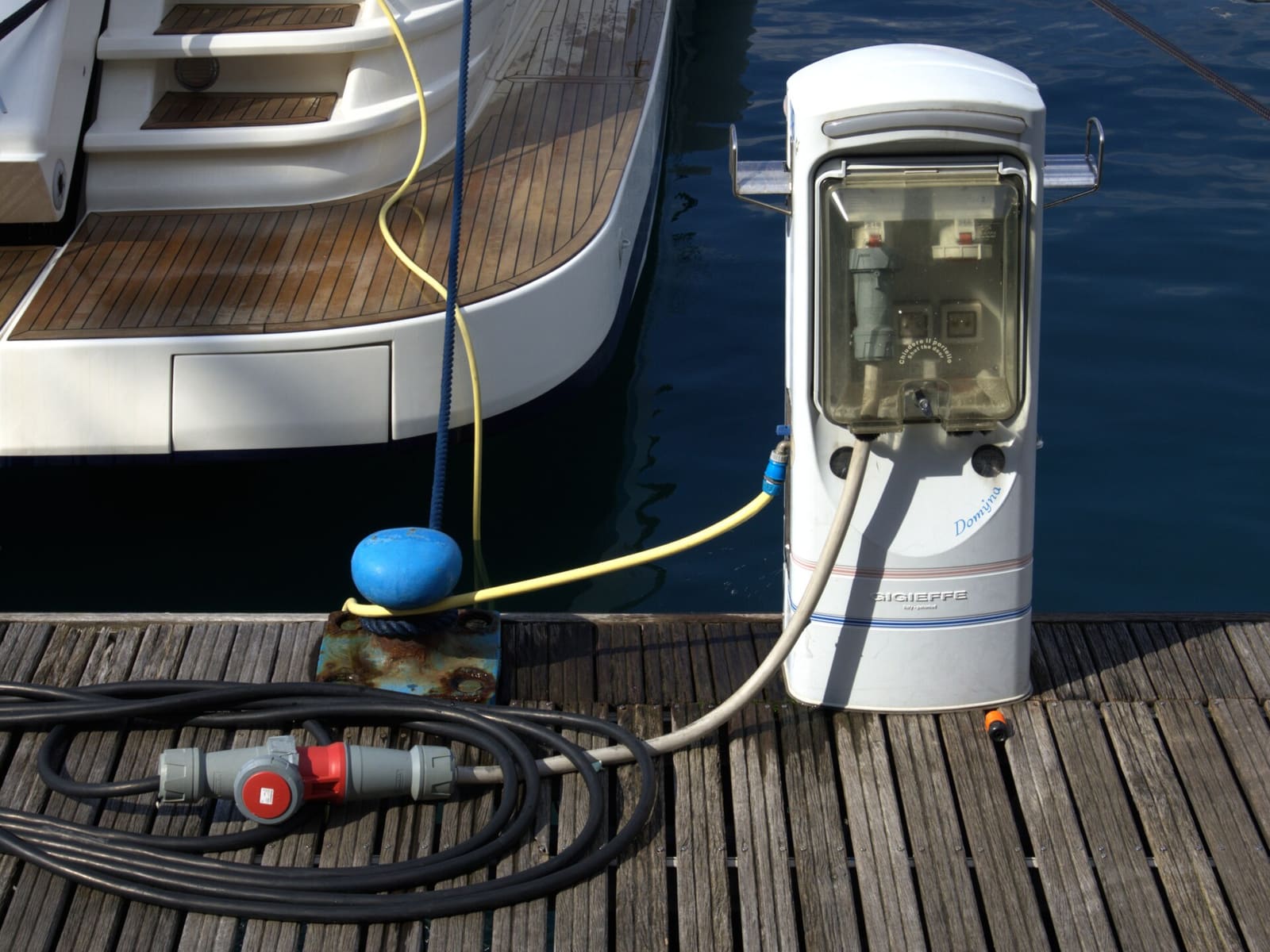
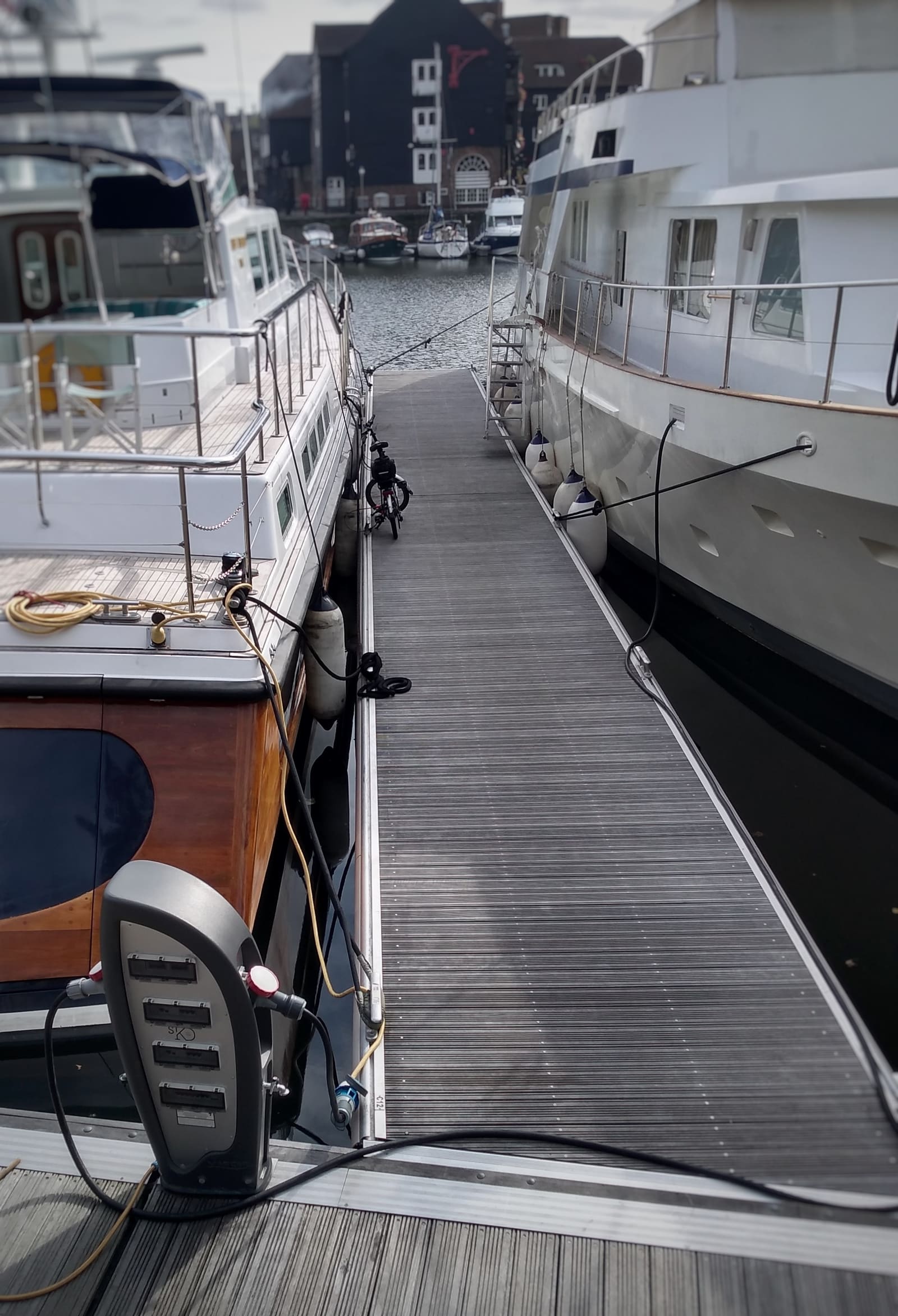
Don't let the adapter lie on the dock or hang in the water. Support it so its weight doesn't pull on the pedestal outlet, keep the sealing collars in place, and use a weatherproof hood over the dock outlet if the marina allows it. Leave a drip loop so water runs off the cord before it reaches a connector. If a plug or adapter falls in salt water, Frye's advice is to rinse it with fresh water and dry it thoroughly before using it again.
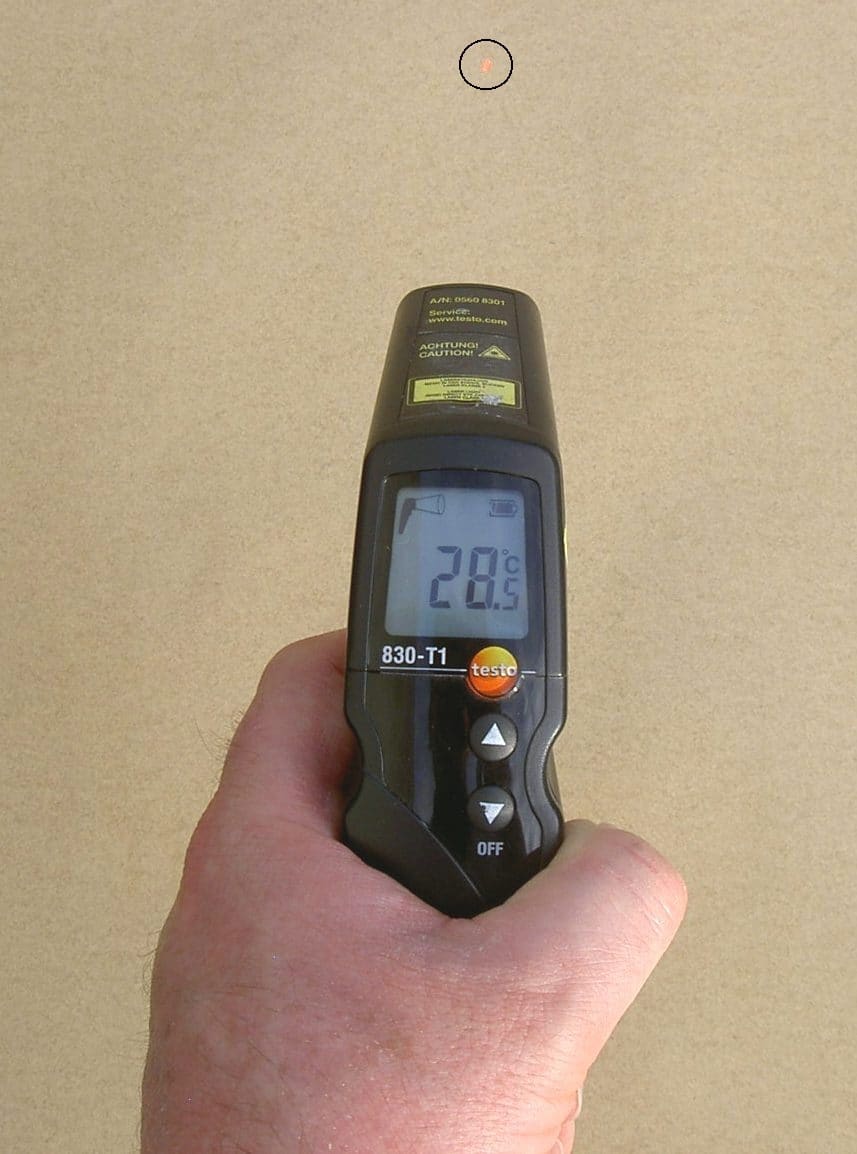
After the boat has been running its normal loads for an hour or so, check each connection: the pedestal end, the adapter joints and the boat inlet. Use an infrared thermometer or the back of your hand on the plastic body, never the pins. Slightly warm is normal under load.
An inexpensive infrared thermometer reads a plug's surface temperature without touching it. Compare each joint with the others; one that runs much hotter is the bad one. Photo: Cjp24 / Wikimedia Commons · CC BY-SA 3.0 Hot to the touch, a burning or "electrical" smell, brown or melted plastic, or a hum or crackle mean a bad connection: switch off the pedestal breaker and do not use that adapter or outlet until it's checked or replaced. Check again on hot days and whenever you add a big load.
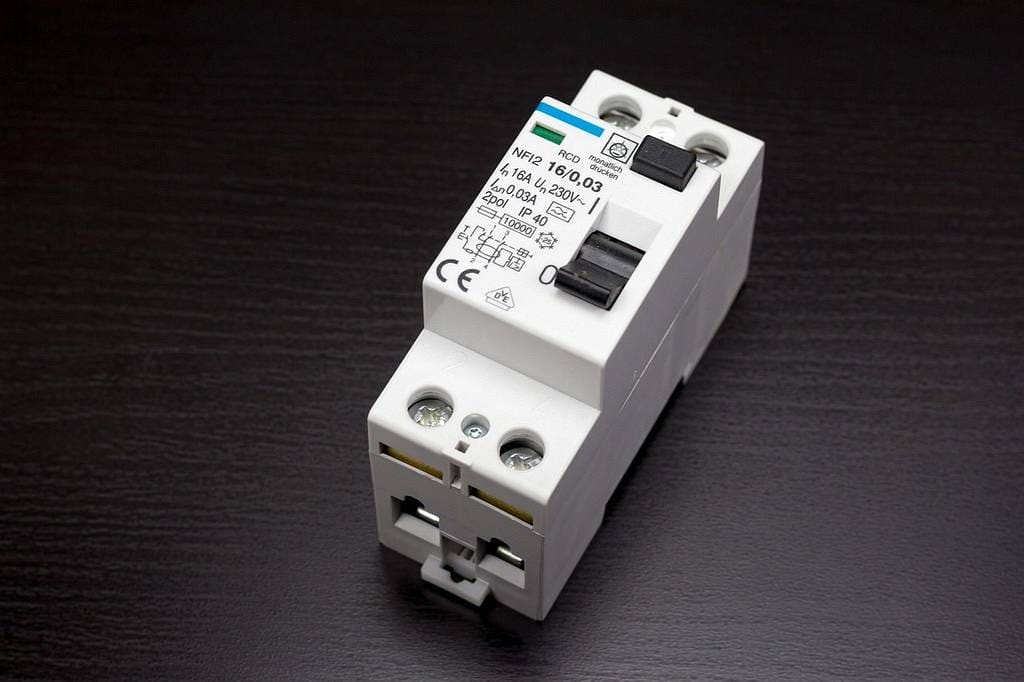
Many marinas now have ground-fault protection on their pedestals, and many boats have an ELCI main breaker. These compare the current going out on the hot wires with what comes back on the neutral and trip if some is leaking elsewhere, such as into the water. Panbo's Ben Stein writes that inverters and reverse Y adapters are among the most frequent causes of ELCI nuisance trips; a reader there explains that with a reverse Y, the currents in each outlet no longer balance. If your boat trips only when you use an adapter, the adapter arrangement may be the cause. But don't assume every trip is a "nuisance": a trip can mean a real fault on the boat. See the ELCI retrofit guide for how to work through it, and never bypass or swap out ground-fault protection to make it stop.
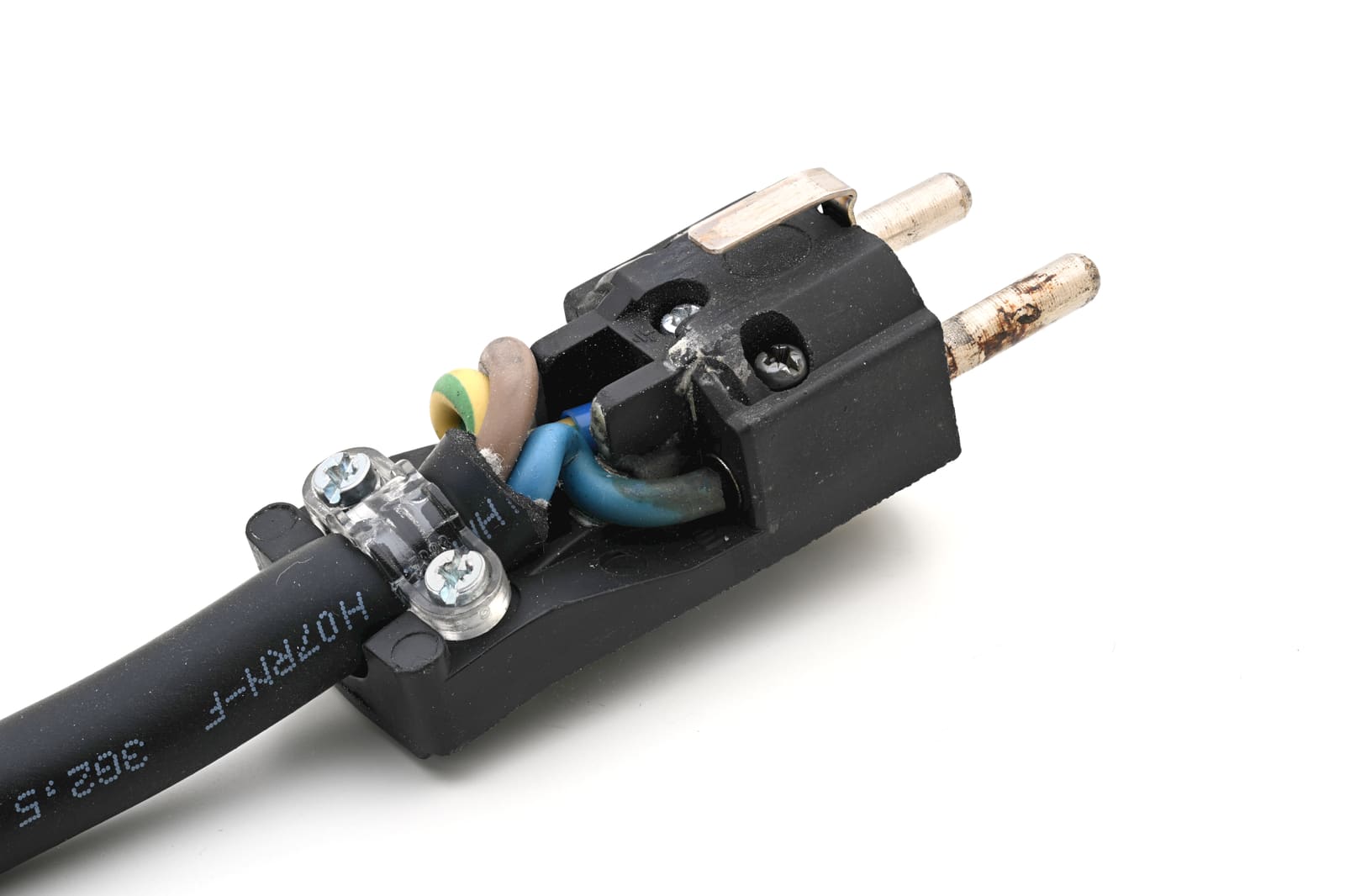
Look at every pin and socket. Discoloration, pitting, green or white corrosion, a loose or wobbly fit, a cracked body or a missing locking ring mean the adapter should be replaced. Wipe pins clean, apply only the contact grease or corrosion inhibitor the maker recommends, and store the adapter dry, with caps on, where it won't be stepped on. See the shore power cord ends guide for cord and plug inspection.
In BoatMend, note your inlet type, cord lengths and each adapter you carry (with its rating and purchase date). When an adapter or cord end shows heat damage, record what you replaced; a pattern of heat at the same spot points to a problem at the boat inlet or the panel.
Common mistakes
Buying a 50A adapter without checking whether the boat or the pedestal is 125V or 125/250V.
Running a 50A boat's full load through a step-down pigtail on a 30A outlet.
Daisy-chaining adapters, or using a household extension cord to reach the pedestal.
Plugging or unplugging with the pedestal breaker on.
Leaving the adapter joint lying on a wet dock without sealing collars.
Assuming a reverse Y will make 250 volts from any two outlets, or blaming the boat for ELCI trips that start only when the reverse Y is used.
Using an adapter with brown or pitted pins "until it gets worse."
Bypassing a tripping ELCI or GFCI.
When to call a pro
Any adapter, plug, cord end or inlet that has melted, burned or discolored
Repeated pedestal or ELCI trips you can't trace to an adapter or a single appliance
Tingling from the boat, a ladder or the water, or anyone feeling a shock: cut the power and call the marina; in an emergency call 911
You need a long-term arrangement for a slip that doesn't match your boat's inlet
Converting the boat's inlet, adding a second inlet, or installing a selector switch or isolation transformer
Burnt smells or heat at the boat's inlet or AC panel, which is where an ABYC-certified marine electrician should look
Tips
Keep a short checklist taped inside the cord locker: breakers off, boat end first, locking rings, collars, breakers on, check heat after an hour.
A short adapter is better than a long one; less length means less voltage drop and less to support.
If you travel often, carry one good step-up adapter and one good Y or reverse Y suited to your boat, not a box of mismatched ones.
Some boats can run at reduced load on 30A by using the generator or an inverter for part of the load; plan this before you need it.
When you replace an adapter, replace any cord end that mates with it if its contacts show heat marks too.
Official references
We read these to write this guide. Your engine's own manual always wins.
Safety: BoatMend is for information only and does not replace a certified marine technician. You are responsible for your safety and your boat. Read the full disclaimer.