ELCI Retrofit: Adding Whole-Boat Shock Protection to an Older Boat
What an ELCI (equipment leakage circuit interrupter) is, why ABYC now requires one on new boats with shore power, what a retrofit involves and costs, and what to do when one trips. You plan, test and troubleshoot; an ABYC-certified marine electrician does the wiring.
Time
1 h
Shop would charge
$300-900
Applies to
All engines
Safety first: Shore power is 120/240-volt AC and can kill you aboard or in the water. Installing an ELCI means working inside the AC panel and on the shore power feed: that is a job for an ABYC-certified marine electrician, not a DIY project and not a house electrician unfamiliar with boats. Never swim near docks or boats that use AC power. If someone in the water near a dock feels tingling or suddenly can't swim, don't jump in: shut off the pedestal or main breaker, reach or throw a flotation device, and call 911 (or the Coast Guard on VHF 16).
Fuel smell, water coming in, CO alarm or smoke? Stop, get everyone in life jackets and call USCG on VHF 16 or 911. For a tow: Sea Tow or TowBoatUS.
Owners often ask
- Since my new marina installed ELCI pedestals, my boat keeps tripping the dock breaker. Is it the marina or my boat?
- My 1990s boat has no ELCI. Is it worth adding one, and what does it cost?
This guide walks you through it. Still stuck? Ask the AI Mechanic about your engine.
Tools
- Flashlight
- Notebook or the BoatMend notes for your boat
- Optional AC leakage clamp meter that reads milliamps
Parts & supplies
- ELCI main breaker sized for your shore power service (30 A or 50 A), chosen with your electrician
- Panel label or placard for the new breaker
Before you start
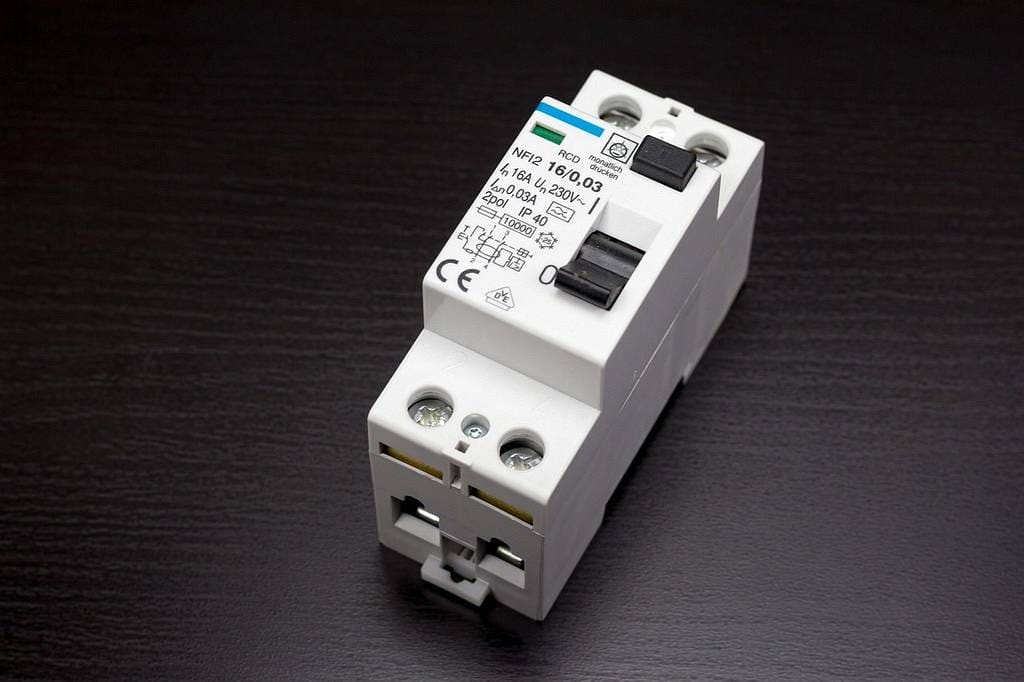
What an ELCI does. An ELCI is a main breaker for your boat's shore power that also watches the current going out on the hot wire(s) and coming back on the neutral. If the two don't match, the difference is leaking somewhere: into the boat's grounding system, and from there possibly into the water. When that leak reaches about 30 milliamps (mA), the ELCI shuts off all shore power to the boat. It is the boat version of the 30 mA residual current devices that Europe and other regions have used on boats and docks for decades.
Why it matters. Electricity leaking into fresh water can paralyze a swimmer, who then drowns. This is called Electric Shock Drowning (ESD). BoatUS explains that in salt water the current tends to flow away to ground, but in fresh water it can concentrate near the surface, which is why ESD is mostly a freshwater problem. The ESDPA notes the leak can come and go, for example only when a water heater or charger cycles on, and that there is no way to see whether water is energized.
The rules, in plain English:
- ABYC (the group that writes US boat-building standards) has required an ELCI on new boats with shore power for roughly the last decade or so; BoatUS dates the requirement to about 2012. Older boats usually don't have one.
- The National Electrical Code (Article 555) now calls for 30 mA ground-fault protection on new or rebuilt marina shore power outlets. More and more marinas also test boats for leakage before letting a transient plug in.
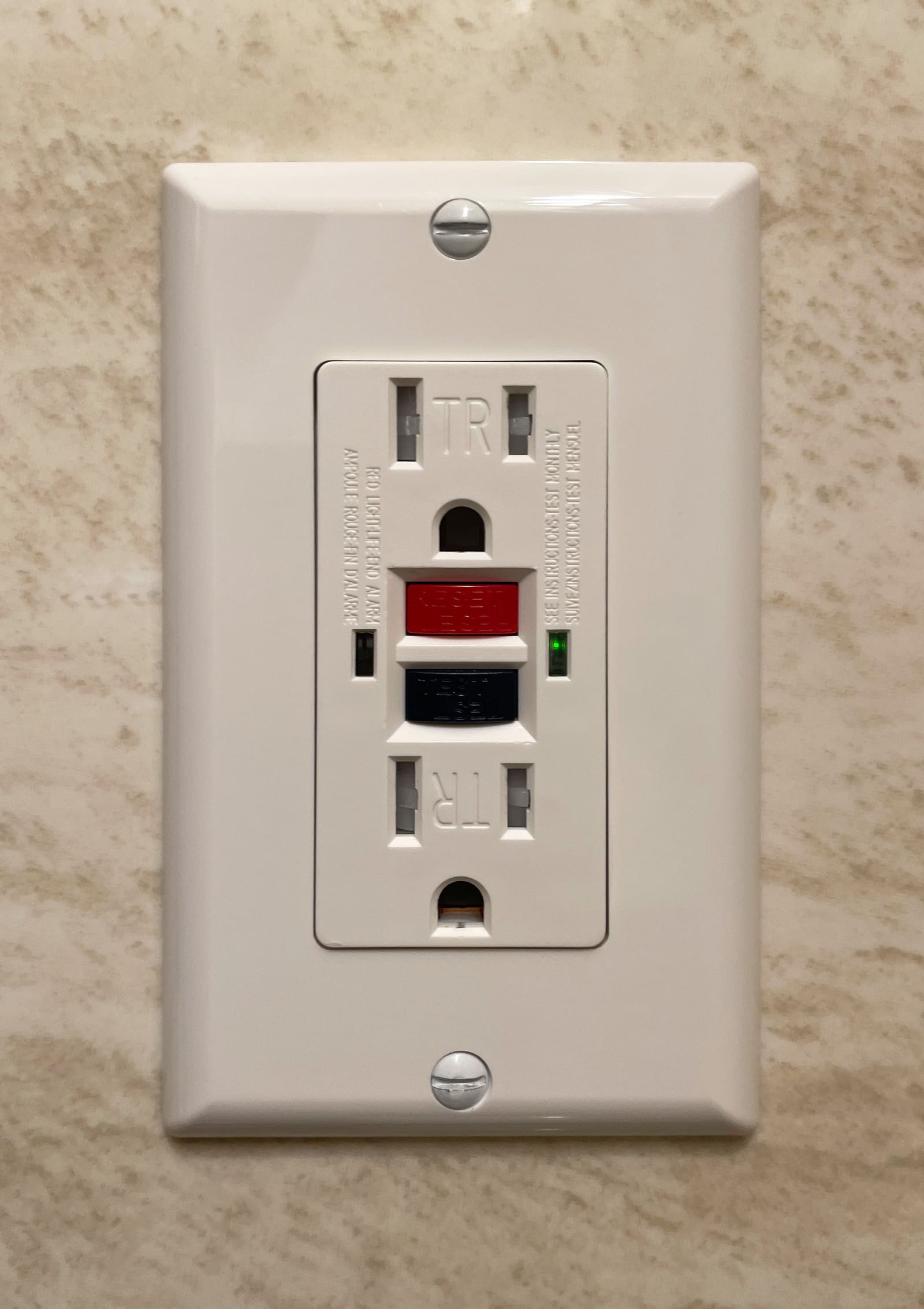
- GFCI outlets are not the same thing. A GFCI protects one outlet or circuit and trips at about 5 mA to protect a person touching an appliance. An ELCI protects the whole boat at 30 mA. You need both: the ELCI doesn't replace the GFCIs in your galley, head and deck outlets. The reverse is also true: West Marine points out that GFCI outlets do nothing for hard-wired appliances such as a water heater, cooktop or air conditioner, which is exactly what the ELCI covers.
- Why 30 mA and not 5? According to West Marine (with technical input from Blue Sea Systems), a healthy boat's AC system normally leaks a few milliamps in total, so a whole-boat device set at GFCI levels would trip constantly. It also notes that a broken ground wire is often invisible to a simple continuity test, and a ground fault plus a broken ground at the same time is what energizes metal parts and the water.
Cost. BoatUS (2022) put the device at about US$200 plus installation, typically a one- to two-hour job for a certified marine electrician on a straightforward boat. Prices change, and a boat with an inverter, generator, two shore inlets or an old, crowded panel will take longer. Get a written quote.
Steps
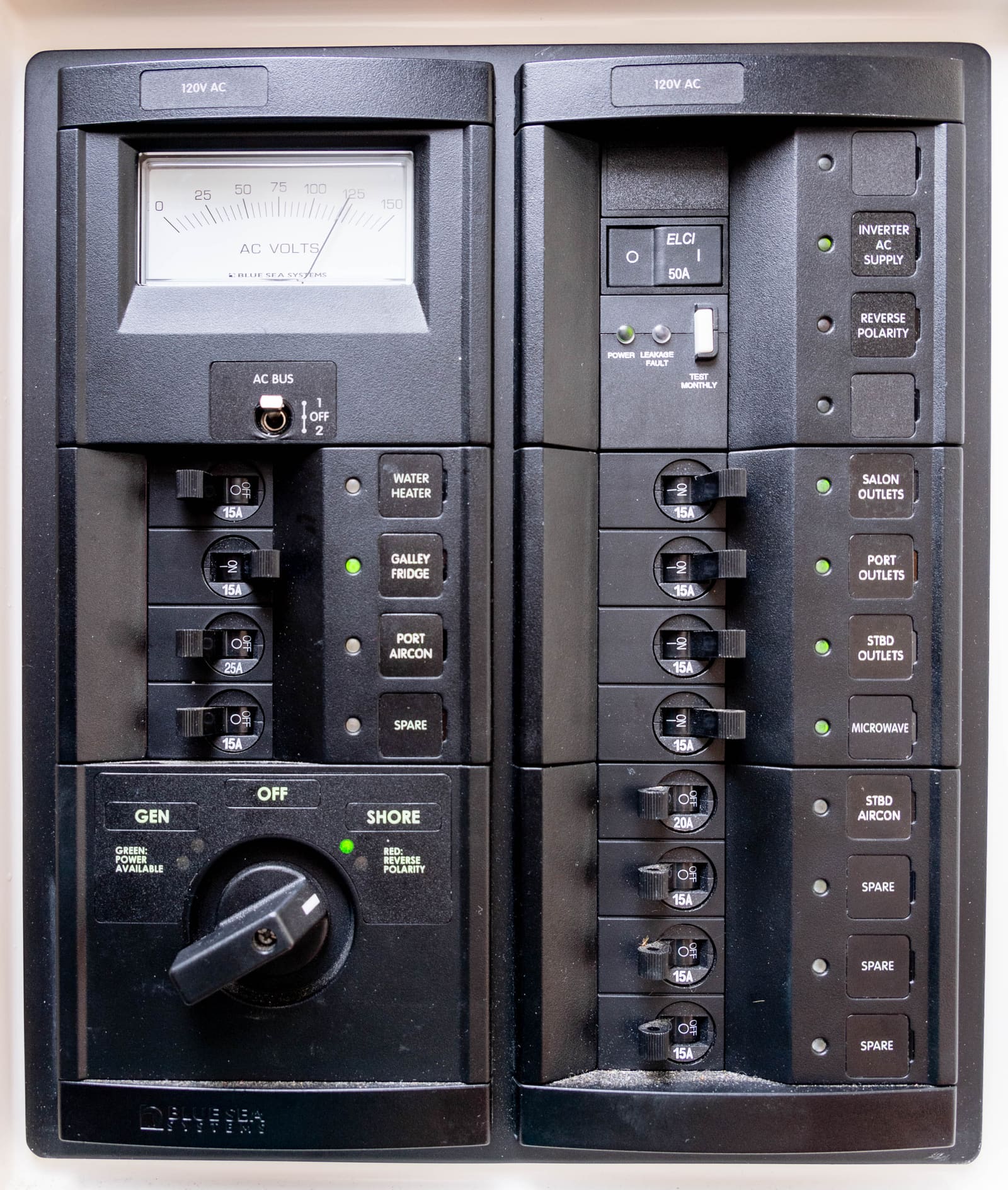
Look at your AC main breaker panel and near the shore power inlet. An ELCI usually looks like a double-pole main breaker with a TEST button and a label mentioning "ELCI", "equipment leakage", "30 mA" or "ground fault". Some boats have an RCD-style unit or an isolation transformer instead. Check the owner's manual or ask the builder. Write down what you find.
Note your shore power service (30 A 120 V, 50 A 120/240 V, or two 30 A inlets), the boat's age, the panel brand, and every AC power source aboard: shore power, generator, inverter or inverter/charger. Photograph the front of the AC panel and the inlet. This shortens the visit and helps get an accurate quote.
Ask your marina whether the pedestals already have 30 mA ground-fault protection and whether they test boats for leakage. BoatUS notes that a pedestal with 30 mA protection already gives the same protection as an onboard ELCI. Many owners add one anyway because the boat travels to docks that don't have it, and because an onboard ELCI tells you about a leak before a marina's breaker does.
If you have an AC leakage clamp meter, have someone familiar with it help. With the boat plugged in, turn on your normal AC loads, then clamp around the whole shore power cord (all conductors together). Current going out and coming back should cancel, so the reading should be close to zero. BoatUS stresses that cycling loads like refrigeration and air conditioning must actually be running when you test, or a leak can hide.
- Near zero: a good sign the ELCI will hold.
- A steady reading of several milliamps or more: tell the electrician before the install, because the new ELCI may trip right away. Do not open the cord or clamp individual wires.
Look for an electrician with current ABYC Electrical certification (ask to see it; the ESDPA recommends exactly this kind of inspection). BoatUS warns that leakage problems are sometimes created by owners' own repairs, and that a 30 mA trip is a job for a certified marine electrician, "not your cousin who does house wiring." Ask whether they have installed ELCIs on boats with your kind of AC setup.
In most retrofits, the electrician replaces the existing shore power main breaker with a combined ELCI main breaker of the right amp rating, near where the shore power enters the boat. They should also check the inlet, the neutral and ground connections, and any inverter or generator transfer switching, because those are the usual sources of trouble. Ask them to label the new breaker and give you a short written note of what was changed for your records.
Two more questions worth asking:
- Which retrofit style? West Marine describes two common approaches: swap the existing main shore power breaker for a combined ELCI/RCBO (leakage plus overcurrent protection in one device), or add a separate ELCI between the inlet and the existing main breaker. Ask which one suits your panel and why.
- Where will it go? ABYC limits how far the main shore power protection can sit from the inlet (West Marine puts it at about 10 feet in practice; your electrician will confirm for your boat), so on some boats the ELCI ends up in an engine room or a locker. Make sure everyone aboard can reach it to reset it and to press TEST.
- Does it show why it tripped? The ABYC standard calls for the ELCI to trip on leakage of about 30 mA within a fraction of a second (SmartPlug, for example, lists its unit at under 30 mA and under 100 milliseconds). Some ELCI packages also have indicator lights that tell a ground-fault trip apart from an overload or short-circuit trip, which saves time when you're troubleshooting later.
A new ELCI sometimes trips the first time you power up. That is not a bad device: it is usually showing a fault that was always there. Common finds include a neutral touching ground somewhere downstream, an appliance with damaged insulation, water in an outlet, a damaged cord, or an inverter or generator wired so its neutral-to-ground connection stays in place on shore power. Let the electrician track it down before you use the boat on shore power.
With the boat on shore power, press the ELCI's TEST button. It should trip and cut all AC power. Switch it back on. Many manufacturers suggest testing monthly; follow the label on yours. Test your GFCI outlets the same way. Note the date in BoatMend.
A trip means about 30 mA is going somewhere it shouldn't. Turn off the boat's AC loads and reset once. If it trips again:
- Switch every AC branch breaker off, reset the ELCI, then turn branches on one at a time. The one that trips it points to the circuit with the problem.
- Note what was running when it tripped (water heater, charger, air conditioner, heater). Intermittent faults often follow one appliance.
- Think about what changed: a new appliance, an inverter, a reverse Y-adapter, rain getting into an outlet or the inlet.
Write it down and give it to the electrician. Opening outlets, the panel or appliances to find the fault is their job.
Panbo's investigation of a boat that kept tripping marina breakers found an add-on inverter wired straight into the AC panel was the culprit, and it named inverters and reverse Y-adapters as the most frequent causes of ELCI nuisance trips. Inverters, inverter/chargers and generators must connect neutral to ground only when they are the power source, and must break that connection on shore power. If that switching is wrong or slow, the ELCI sees leakage. Older, inexpensive appliances with leaky power supplies can also add up: BoatUS points out that a boat with many modern electronic loads can have several milliamps of normal leakage, and it all adds together.
BoatUS advises owners of boats older than about 10 years without an ELCI to call marinas ahead, because some now test transient boats and may refuse power to a boat that leaks. With an ELCI aboard and a clean leakage reading, you can answer that question with confidence.
An ELCI greatly reduces the risk from your own boat, but it doesn't protect you from the boat next to you or from bad dock wiring. The ESDPA position is simple: no swimming around boats, docks or marinas using AC power, and no "green light" detector makes it safe. BoatUS suggests staying at least 150 feet away from any AC equipment or wiring.
Common mistakes
- Assuming the GFCI outlets in the galley mean the boat already has whole-boat protection.
- Resetting a tripping ELCI over and over, or having it bypassed, instead of finding the leak.
- Using a reverse Y-adapter or a "cheater" adapter and blaming the ELCI when it trips.
- Adding an inverter by tying it straight into the AC panel without proper transfer switching.
- Hiring a residential electrician who doesn't know ABYC boat wiring rules.
- Testing for leakage with the air conditioner, fridge or water heater idle, so the fault never shows.
When to call a pro
- To install, replace or relocate an ELCI (always: ABYC-certified marine electrician)
- An ELCI or marina pedestal breaker that trips by itself, especially with one appliance or in rain
- Any steady reading on a whole-cord leakage clamp test
- After adding an inverter, inverter/charger, generator or second shore inlet
- Any burned, discolored or hot plug, inlet or panel connection
- Anyone reports tingling in the water near your boat or dock: shut off power and call 911, then an electrician
Tips
- Ask the electrician to check the shore power inlet while the panel is open. An original inlet on an older boat is a known fire risk, and doing both in one visit saves labor.
- Keep a short "AC system" note in BoatMend: ELCI make and rating, install date, test dates and any trips.
- Tell the electrician about everything on the AC side, including a galvanic isolator or isolator monitor, so they can confirm it all works with the new ELCI.
- When you buy a used boat, ask the surveyor to note whether it has an ELCI and to run a leakage test with loads on.
- Adding an isolation transformer? Owners often assume it replaces the ELCI. Ask your electrician how the current ABYC standard treats your exact setup before you skip either one.
Official references
We read these to write this guide. Your engine's own manual always wins.
- BoatUS – The Electrical Dilemma On The Dock (2022)
- BoatUS – Avoid Electric Shock Drowning
- BoatUS – A Preventable Dockside Tragedy (2019)
- Panbo – GFCI and ELCI breakers can be confounding, but heed their warning
- Electric Shock Drowning Prevention Association – Preventing ESD
- Electric Shock Drowning Prevention Association – ESD and FAQ
- Boating Industry Canada – Installing an ELCI Prevents Electric Shock Drowning (SmartPlug ELCI trip level and indicators)
- West Marine – ELCI and GFCI Electrical Shock Protection for Boats, ABYC Guide
Safety: BoatMend is for information only and does not replace a certified marine technician. You are responsible for your safety and your boat. Read the full disclaimer.
Last updated 2026-10-25
Related guides
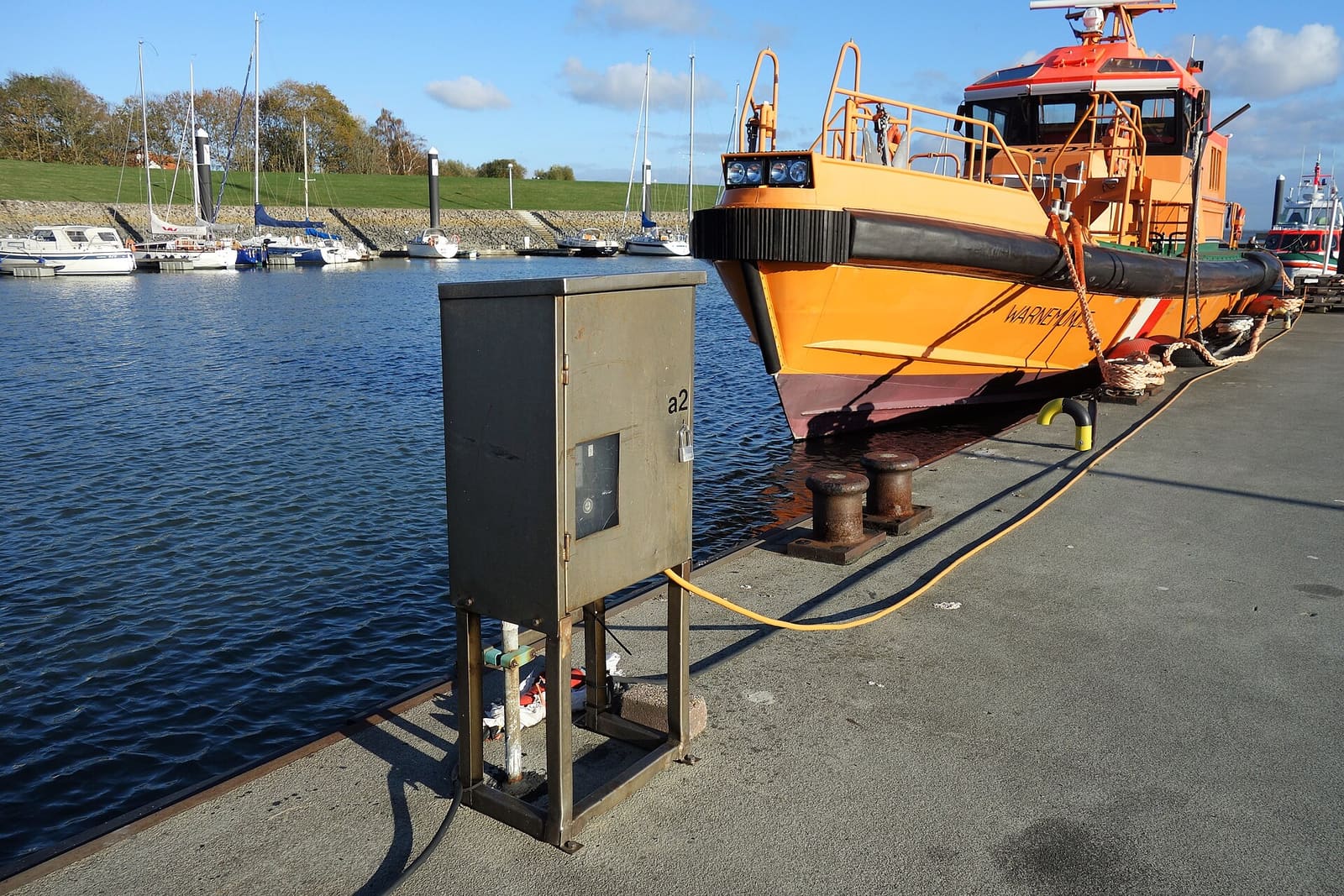
Shore Power Safety: Cords, Inlets, Burned Plugs and Electric Shock Drowning
An owner's inspection routine for your shore power cord, plugs, boat inlet, galvanic isolator and ground-fault protection, plus the right way to plug in and the facts about Electric Shock Drowning. This guide is for looking and testing only; any electrical repair belongs to an ABYC-certified marine electrician.
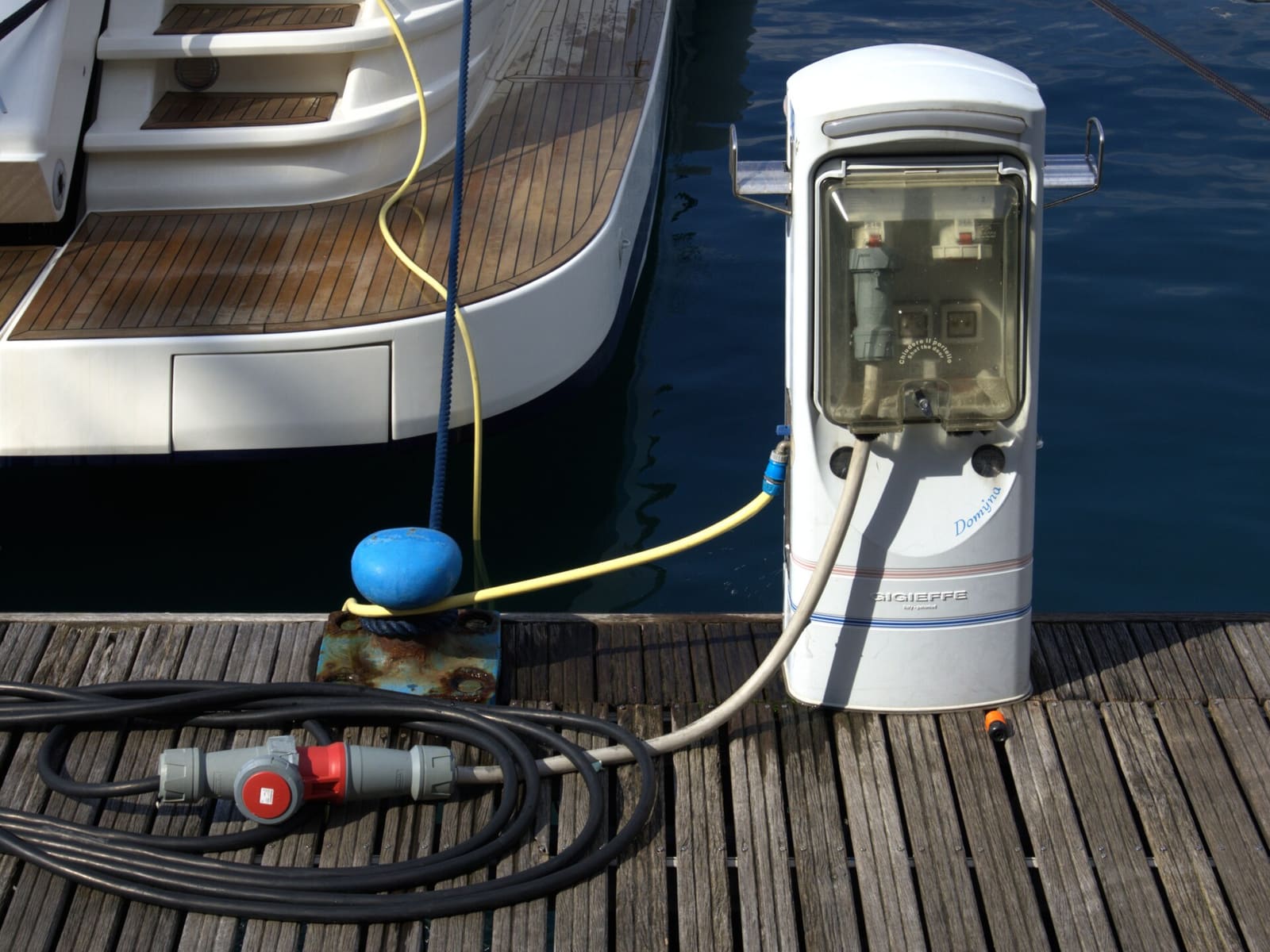
Galvanic Isolator: Why Shore-Powered Boats Need One and How to Tell If It's Working
A galvanic isolator (or an isolation transformer on bigger boats) keeps stray DC current from the marina's ground wire from eating your anodes, drive and running gear, without cutting the safety ground. Learn what it does, the owner-level checks you can do, what failure looks like, and why the actual meter test is usually a job for a marine electrician.

Electrical Safety at Your Private Dock or Boat Lift: GFCI, Shock Drowning and Annual Checks
Lights, outlets, lift motors and de-icers at a home dock put household current right next to the water, and a hidden fault can kill a swimmer without any warning. Learn the owner checks you can do safely, the protection your dock should have, the no-swimming rule, and which jobs must go to a licensed electrician.
Isolation Transformer vs. Galvanic Isolator: Which Does Your Boat Need?
Understand how a galvanic isolator and an isolation transformer each protect a boat on shore power, when the heavier, pricier transformer is worth it (stray-current marinas, aluminum boats, liveaboards), and what to ask the ABYC-certified electrician who installs it.
Boat Inverters and Inverter/Chargers: Sizing, Safe Use and What a Pro Must Install
An inverter turns battery power into 120-volt household current, which makes it as dangerous as shore power and a serious fire risk if it is fused or wired wrong. Learn how to size one realistically, what a safe installation looks like, the owner checks to do, and the mistakes (like backfeeding) that hurt people.
How to Choose, Install and Maintain an Onboard Battery Charger
Pick the right marine charger for your batteries (how many banks, how many amps, flooded, AGM or lithium), mount and fuse it safely, set the charge profile, and use it to keep batteries healthy all season and through the winter. The AC (shore power) side is a job for a marine electrician.
Running a Boat Generator at the Right Load: Switching Sequence, Balancing and Avoiding Wet Stacking
Get more life out of your marine generator by starting and stopping it with the AC loads off, switching sources in the right order, keeping it loaded enough to avoid wet stacking and carbon buildup, and moving small loads to the inverter. Includes a simple monthly exercise routine.

Fuse Keeps Blowing? How to Troubleshoot a Boat Fuse Block or Breaker Panel
Work through a blown fuse or tripping breaker the safe way: confirm it, tell a short from an overload, isolate the device or wire at fault, replace a worn breaker or panel switch with the same rating, and label every circuit, without ever fitting a bigger fuse.