Jet Ski Intake Clogged with Weeds, Rope or Rocks: How to Clear It Safely
Engine revs high but the jet ski barely moves, or an overheat warning comes on? Something is probably stuck in the intake. Learn the symptoms, how to use iDF and similar features, how to clear the grate safely in the water, on the beach or on the trailer, and how to keep it from happening again.
Time
20 min
Shop would charge
$100-400
Applies to
Jet ski / PWC · Jet ski / PWC
Safety first: The impeller sits just behind the intake grate and can spin the instant the engine cranks. Before your hand goes anywhere near the grate or the nozzle, shut the engine off and remove the safety lanyard or key fob and keep it in your pocket. Nobody sits on the craft while you work. In the water, wear your life jacket, stay away from the nozzle, and watch for other boats. Never run the engine on the trailer or beach to "blow out" debris. If the hull is taking on water or you smell fuel, stop and get to shore or call for a tow (Sea Tow / TowBoatUS); in an emergency call the USCG on VHF 16 or 911.
Owners often ask
- My jet ski revs high but barely moves after riding through weeds. How do I clear the intake?
- My Sea-Doo has an iDF button. When should I use it?
This guide walks you through it. Still stuck? Ask the AI Mechanic about your engine.
Tools
- Waterproof flashlight
- Gloves (cut-resistant if you have them)
- Blunt hook or stick (a bent coat hanger with the tip taped works)
- Small knife or line cutter (for rope and fishing line)
- Phone camera (to see up into the grate)
- Your owner's manual
Parts & supplies
- None for clearing debris (grate bolts or an anti-debris grate only if your dealer recommends them)
Before you start
A jet ski moves by sucking water up through the intake grate on the bottom of the hull and blasting it out the nozzle at the back with a spinning impeller. Anything that blocks the grate, wraps the driveshaft or jams the impeller cuts thrust, and on many models it also starves the engine's cooling water pickup.
Classic symptoms of a clogged intake:
- Engine revs high but the craft accelerates slowly or won't get on plane (it feels like a slipping clutch).
- Thrust comes and goes, or the craft "cavitates" with a loud whine.
- Weak or no stream from the cooling telltale (pee hole) on models that have one.
- Overheat warning, beeps or limp mode.
- Steering feels weak or the craft pulls to one side.
- New vibration or a grinding, rattling sound from the back (a rock or stick in the pump).
This guide is about clearing debris. If the grate is clear and the craft still revs high and goes slow, see the jet pump guide for a damaged impeller or worn wear ring.
Steps
As soon as you notice high revs with poor thrust or an overheat warning, come off the throttle and idle away from traffic. Sea-Doo explains that debris pulled into the pump can damage the impeller and clog cooling lines, so riding on with a clog makes things worse. If an overheat warning is on, shut the engine off.
Many newer Sea-Doo models have iDF (Intelligent Debris Free): a push-button system on the handlebars that reverses the pump to push debris back out of the intake, so you can clear a clog without leaving the seat or getting wet. Sea-Doo lists it on models including the GTX, GTX Limited, GTI SE, Wake and Wake Pro, the FishPro line and several Switch pontoons for 2027. Follow the prompts in your owner's manual exactly; the steps are specific to the system.
Other brands and older models don't have a true pump-reversing system. Reverse (a bucket that redirects the jet) does not run the pump backward, but some owners find that easing into reverse at idle for a moment, then shutting down, loosens soft weeds. It does nothing for rocks, rope or sticks, so always check the grate afterward. Another simple trick jet owners trade: shut the engine off and drift for half a minute or so; with no suction, loose weeds often drop off the grate on their own.
What it means: if thrust comes back fully, it was loose weeds. If not, go on to step 3.
Turn the engine off and pull the lanyard or fob. Put it in a zipped pocket or the glovebox. This is the step that keeps fingers attached.
In calm water, slide off the side (not the back), hold the craft, and reach under the hull with a gloved hand to feel the grate. Soft weeds and plastic bags often pull right off from the outside.
- Work from the outside of the grate. Don't push your fingers between the bars toward the impeller.
- Never get behind the nozzle.
- If you can't reach comfortably or the water is rough, don't force it. Go to step 5.
- Climb back on at the stern, using the reboarding step or handles, as Sea-Doo describes. Its reboarding guidance is the same rule as this guide: engine off and lanyard disconnected before you go near the intake or nozzle. Clip the lanyard back on only once you're seated and ready.
What it means: if you pulled off a wad of weeds or a bag and thrust is back on restart, you're done. Restart only in water at least 3 feet deep (Sea-Doo's guidance) and check the telltale stream.
If you need a better look, idle (or paddle, or get a tow) toward a gentle beach. Yamaha says to stop the engines when the water is about 3 feet deep, then walk the craft in and pull the bow up. Driving all the way onto the sand sucks in pebbles, sand and debris, which is exactly what you're trying to get out. Keep the engine off and the lanyard out from here on.
With the craft beached (bow up on the sand, stern in shallow water) or, better, back on its trailer, shine the flashlight up through the grate. A phone camera held under the hull with the flash on often shows more than your eyes can.
- Weeds, leaves, bags: pull them out with the blunt hook from the outside.
- Rope or fishing line: usually wrapped around the driveshaft just in front of the impeller. Cut it carefully and pull the pieces out. Tight wraps can damage the driveshaft seal; if line won't come free, stop (step 10).
- Rocks, shells, sticks: pry gently with the hook. A rock jammed between the impeller and the wear ring may need the grate or pump removed.
From the back, shine the light through the steering nozzle toward the impeller. Pull out anything lodged there. With the engine off and the lanyard out, have a helper turn the handlebars and work the reverse lever so you can confirm the nozzle and reverse gate move freely.
While you have the light in there, look at the impeller edges you can see. Small nicks are common; bent, curled or chipped blades mean the debris did damage, and the craft will vibrate and lose performance even after it's clear. Note what you see for your dealer.
Never start a jet ski on the trailer or dry sand to test it. Sea-Doo says not to run the engine out of the water (the only exception is the brief, engine-specific flushing procedure in your manual) and not to start in water less than 3 feet deep. Push out to deep enough water, reattach the lanyard, start, and check:
- Strong, steady telltale stream on models that have one.
- No overheat warning.
- Normal acceleration and top-end with no new vibration.
What it means: if it revs high and goes slow with a clear grate, or vibrates, suspect impeller or wear ring damage (see the jet pump guide). If it overheats with a clear grate, the cooling passages may still be blocked; stop riding and see a dealer.
On many models the intake grate is bolted on and can be removed with hand tools for stubborn rope or a jammed rock, but it's a job for the trailer or a stand, not the water. Check your owner's or service manual for the procedure and specs, and use the correct tools. Pulling the pump or impeller usually needs special tools and torque specs; most owners leave that to a dealer.
Weed and sand can hide in the pump and cooling system. Yamaha's after-ride routine includes washing the jet pump inside and out and checking for debris in the pump area. Then flush the cooling system exactly as your owner's manual describes. Brands differ on the order of water and engine: Yamaha, for example, says never to turn the hose on unless the engine is running, because water can flow back into the engine, and to keep the dry run short.
Yamaha's post-ride check video adds the order at the end too: with the WaveRunner level, start the engine, then turn on the water; after the flush, turn the water off before you stop the engine. Yamaha warns that doing these steps out of order can damage the engine. While you rinse the jet unit, look for damage (a bent grate bar, a nicked impeller edge, a scraped intake) and then raise the bow so everything drains and dries. Use the exact times and steps in your own manual; Sea-Doo and Kawasaki procedures differ.
- Avoid weed beds and shallow water. Ride around thick vegetation instead of idling through it, and keep to water at least 3 feet deep, as both Sea-Doo and Yamaha advise for starting and stopping.
- Watch for rope. Crab and lobster pot lines, tow ropes, dock lines and lost fishing line are the most common rope clogs. Never ride over a floating tow rope, and keep your own lines stowed. When you tow a tuber or skier, Sea-Doo says the driver and spotter must track the rope and keep it clear of the jet pump intake, where it can tangle and cause damage; reel it in before you idle back to a fallen rider.
- Don't idle onto the beach. Stop in about 3 feet of water and walk it in.
- Start in deep enough water. Sea-Doo's riding tips say to be in 2 to 3 feet of water before pressing Start, so the pump doesn't suck debris off the bottom and damage the intake or impeller.
- Check the grate before every ride. Yamaha's pre-ride check includes a visual inspection of the jet intake grate and hull.
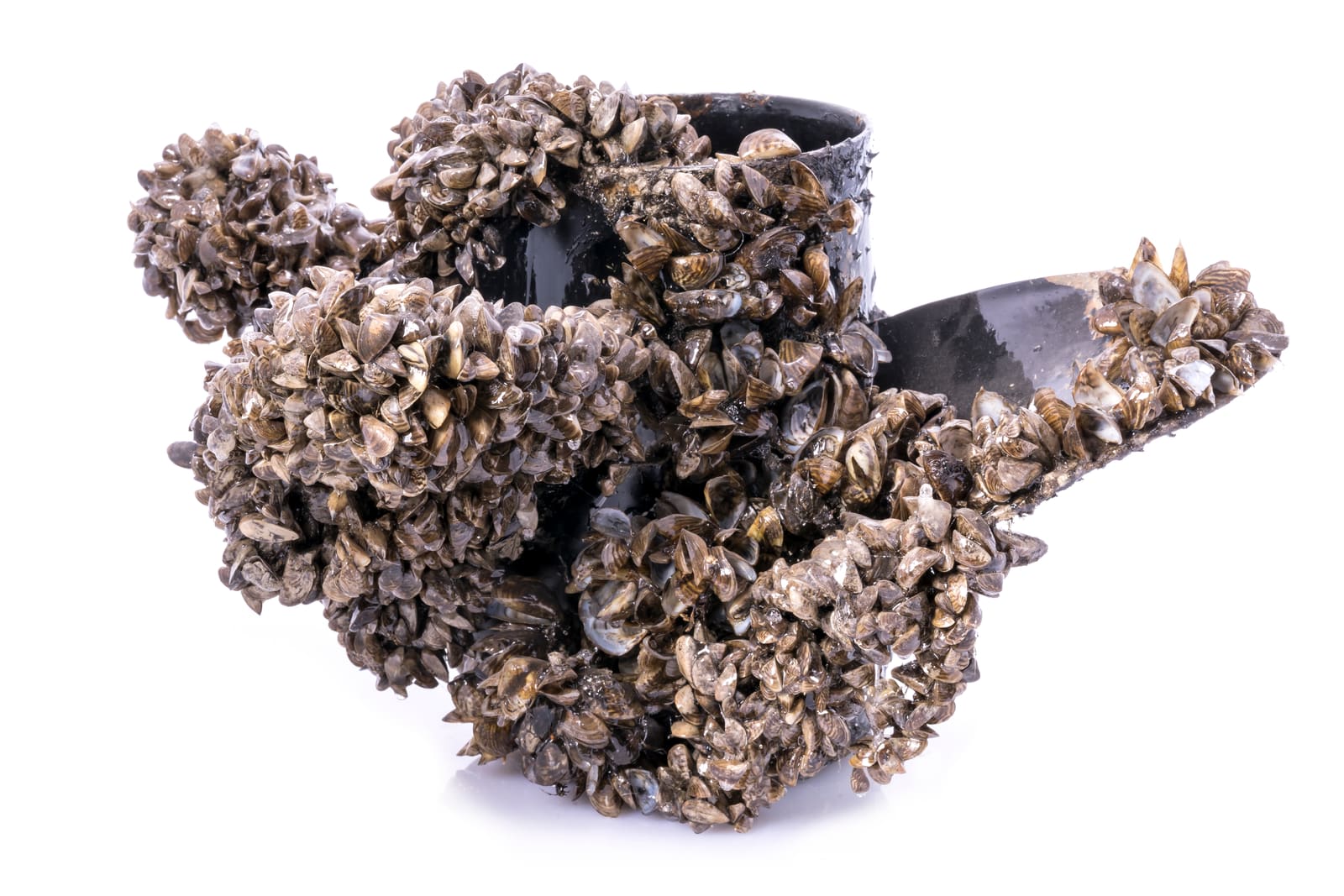
- Clean, drain and dry. Yamaha reminds owners to remove plant "hitchhikers" such as hydrilla and invasive mussels from the craft and trailer before leaving the launch, so you don't carry them to the next lake (see the Clean, Drain, Dry guide).
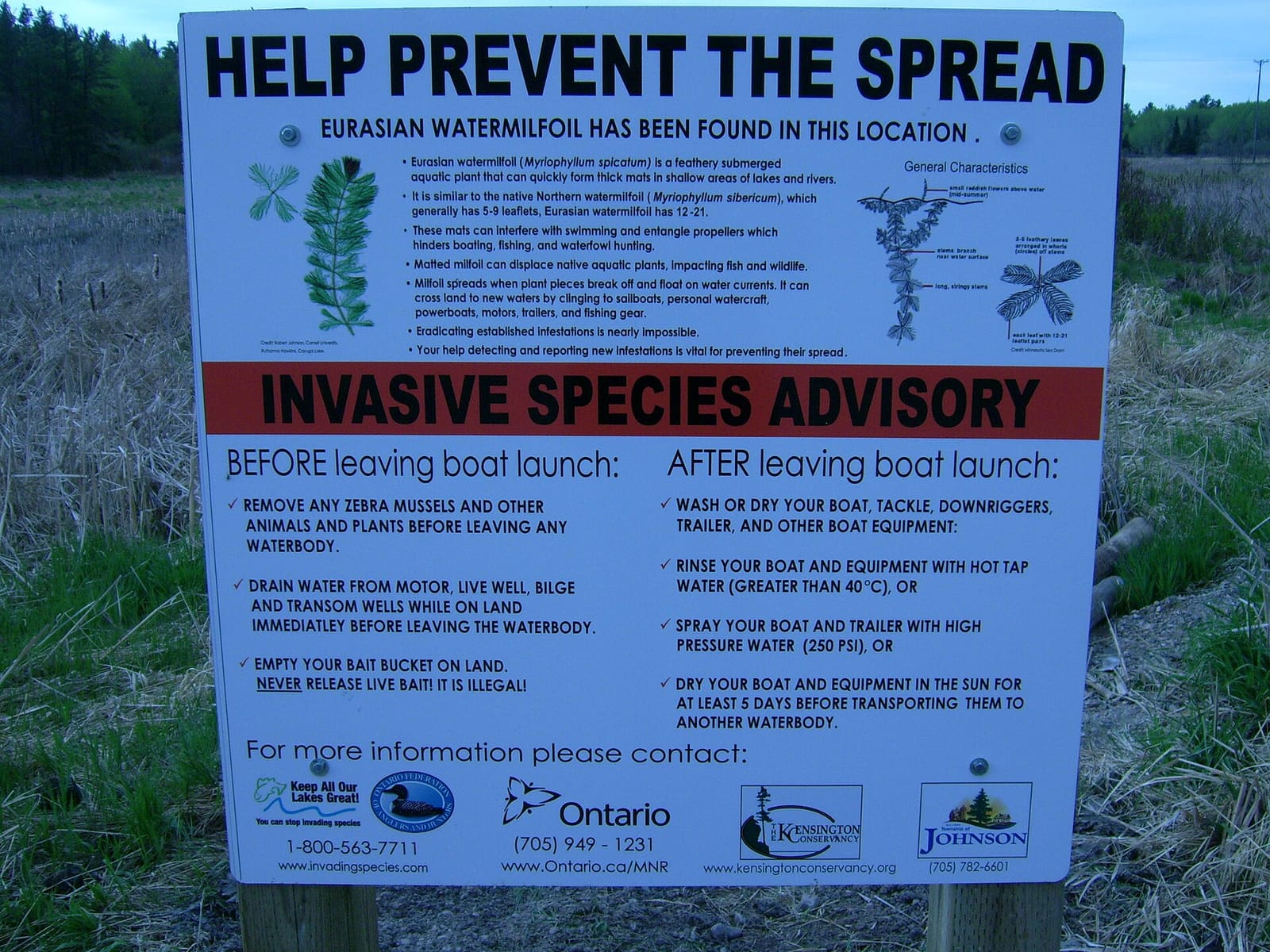
Invasive weeds like Eurasian watermilfoil form thick mats that clog jet intakes. Remove every plant scrap from the grate and trailer before you leave the launch. Photo: Fungus Guy / Wikimedia Commons · CC BY-SA 3.0 - Ask about an anti-debris grate. Some makers sell grates that block larger debris on certain models, usually at a small cost in performance. Your dealer can tell you if one fits your craft and riding area.
Common mistakes
- Reaching into the grate with the lanyard still on the craft, or with someone sitting on the seat.
- Running the engine on the trailer to blow out debris (this can overheat the engine and damage the pump seal).
- Beaching at speed in shallow water and packing the pump with sand and gravel.
- Clearing the grate but missing rope wrapped around the driveshaft.
- Ignoring an overheat warning and riding home on a clog.
- Sticking fingers between the grate bars toward the impeller.
When to call a pro
- Rope or fishing line wrapped tightly around the driveshaft that you can't remove from outside.
- A rock or stick jammed between the impeller and the wear ring.
- Bent or chipped impeller blades, new vibration, or high revs with low speed after the intake is clear.
- Overheating that continues with a clear grate.
- Water in the hull after a rope wrap (possible driveshaft seal damage): stop riding and see a dealer.
- Stranded on the water: call Sea Tow, TowBoatUS, or in an emergency the USCG on VHF 16 or 911.
Tips
- Keep gloves, a small hook and a line cutter in the storage compartment all season.
- Photograph your grate and impeller when they're clean, so you know what "normal" looks like.
- If you ride a weedy lake often, ask your dealer whether your model offers iDF or a clean-out feature, and check it before you buy your next craft.
Official references
We read these to write this guide. Your engine's own manual always wins.
- Sea-Doo – iDF (Intelligent Debris Free) Pump System
- Sea-Doo – Can You Run the Motor of Your Sea-Doo Out of the Water?
- Yamaha WaveRunners – How to Beach Your WaveRunner
- Yamaha WaveRunners – How to Perform a Pre-Ride Check
- Yamaha WaveRunners – Maintenance Matters (debris in the jet pump, invasive species hitchhikers)
- Yamaha WaveRunners – How to Perform a Post-Ride Check of Your WaveRunner
- Sea-Doo – How to Reboard a Personal Watercraft After a Fall (engine off, lanyard off, reboard at the stern)
- Sea-Doo – How to Tow Someone With a Personal Watercraft (keep the rope clear of the intake)
- Sea-Doo – How to Drive a Personal Watercraft (start in 2 to 3 feet of water)
Safety: BoatMend is for information only and does not replace a certified marine technician. You are responsible for your safety and your boat. Read the full disclaimer.
Last updated 2026-10-25
Related guides
Jet Ski and Jet Boat Pump Care: Clearing the Intake Grate and Checking the Impeller and Wear Ring
Clear weeds, rope and rocks from the intake grate of a Sea-Doo, Yamaha WaveRunner, Kawasaki Jet Ski or jet boat, and learn to spot a damaged impeller or worn wear ring. A clogged or worn pump is the usual reason a jet craft revs high but goes slow.
Jet Ski Impeller and Wear Ring Replacement (What's Involved)
Know when your PWC's impeller or wear ring is worn out, how to check it yourself, and what replacing them really involves: pulling the pump, special tools, the right clearance, fresh seals and the correct pump lube. Most owners do the diagnosis and leave the pump work to a dealer or jet-pump shop.
Engine Cut-Off Switch (Kill Switch) and Lanyard: The Law, Testing and Daily Use
How the engine cut-off switch (ECOS) and its lanyard or wireless fob work, when federal law requires you to wear it (boats under 26 feet, 3 hp or more, on plane), how to test it before every trip, and why a spare clip aboard matters.
Jet Ski Won't Start or Won't Beep: A Step-by-Step Check
Most personal watercraft that refuse to start have a simple cause: the key or lanyard, a weak battery, a blown fuse, a security lock or a flooded engine. Work through these checks from the cheapest to the most involved and learn what each result means for Sea-Doo, Yamaha and Kawasaki models.
Engine Overheating - Troubleshooting Guide
Work through the most likely causes of a hot engine or overheat alarm, from a blocked water intake to a worn impeller or stuck thermostat. Acting fast and in the right order can save your engine and often gets you home without a tow.
Clean, Drain, Dry: Stopping Zebra and Quagga Mussels and Other Invasive Species
What Clean, Drain, Dry means in practice for your boat, trailer and motor, what to drain before you leave the ramp, what happens at a watercraft inspection or decontamination station, and examples of state rules you may run into when you trailer between lakes.
Jet Ski Saltwater Care: Flushing, Rinsing, Corrosion Protection and Storage
A simple after-every-ride routine for Sea-Doo, Yamaha WaveRunner and Kawasaki Jet Ski owners who ride in salt or brackish water. Flush in the right order, rinse the pump, hull and engine bay the gentle way, spray anticorrosion only where it belongs, and keep anodes, the battery and the trailer from rotting away.
Jet Ski Taking On Water: Find the Leak and Drain It Safely
A little water in a personal watercraft's hull after a ride is normal; a lot is not. Learn how to tell the difference, drain the hull, and track the leak from the easy causes (drain plugs, seat and hatch seals, loose hose clamps) to the serious ones (driveshaft seal, exhaust, hull cracks), and when to stop riding.