Damaged Propeller: Repair It or Replace It?
Decide whether a bent, chipped or spun prop is worth sending to a prop shop or should be replaced, what a shop can actually fix on aluminum and stainless props, and how to keep the boat running the same afterward.

Time
45 min
Shop would charge
$100-400
Applies to
Outboard, Sterndrive (I/O), Gas inboard
Safety first: Before you touch the prop, shift to neutral, take the key out and pull the kill-switch lanyard; on larger engines also disconnect the battery. Blade edges are sharp, so wear gloves. Inboard props usually need a puller and the boat out of the water; don't attempt that alone in the water. If a hard strike caused a leak, a bent shaft or a cracked lower unit, treat it as a possible water-ingress problem and get the boat checked before running it again.
Owners often ask
- Is it worth fixing a bent stainless steel prop, or should I buy a new one?
This guide walks you through it. Still stuck? Ask the AI Mechanic about your engine.
Tools
- Prop wrench or socket for your prop nut
- Block of wood
- Pliers (for cotter pin or tab washer)
- Mill bastard file (coarse) and a fine file
- Wire brush to clean the files
- Marker or nail polish (to mark the hub)
- Phone camera
- Gloves
Parts & supplies
- New tab washer or cotter pin
- Hub kit (if your prop uses a replaceable hub)
- Marine grease your engine maker specifies
Before you start
Props don't wear out like tires, but they get damaged: nicks from sand and gravel, bent tips from a rock or log, chunks missing, or a spun hub after a hard hit. Even small damage throws a prop out of balance, and Discover Boating and Yamaha both note the vibration can harm the engine, seals and bearings.
The basic rule: Yamaha's rule of thumb is that if a repair costs more than about half the prop's value, a new prop is usually the better buy. Discover Boating adds that a damaged aluminum prop is often cheaper to replace, while repairing a stainless prop often makes sense because a new one commonly costs several hundred dollars. Prices vary a lot by size and region, so get a quote.
What a prop shop can do: Yamaha and Boating Magazine describe the process: the blade is often heated, then hammered back to shape against a pitch block or by hand, missing metal can be welded on and reshaped, and the prop is balanced. Many shops measure the result with a computer and offer different accuracy classes.
Steps
Neutral, key out, lanyard off. Tilt the engine (or haul the boat, for inboards). Turn the prop slowly by hand and inspect each blade for:
- Small nicks and burrs (feel the edges with your thumb)
- Bent or curled tips, or one blade out of line
- Cracks, especially near the hub
- Missing pieces
- Corrosion pitting, or the eaten-away edges cavitation causes
- Blade tips worn to a point or rounded off, and a prop that looks smaller than it should. BoatUS suggests measuring from the hub center to one blade tip and doubling it: if that's well short of the diameter stamped on the prop, worn-away metal is costing you speed and fuel.
- On bronze props, a pink tint and a dull "thud" instead of a ring when you tap a blade. BoatUS says that's galvanic corrosion pulling metal out of the alloy; a prop that far gone usually can't be saved, and the anodes and bonding need checking too.
Mercury adds that even a soft-bottom run through sand or mud can bend blades slightly with no obvious damage. If you notice new vibration or lost performance afterward, have the prop checked. Some bends start right at the blade root and are nearly invisible; BoatUS notes most prop shops will check blade spacing and tracking for little or nothing.
A simple home tracking check from BoatUS's 2023 prop inspection article: hold a ruler or marked straightedge against a fixed point (the lower unit, or a block on the ground) so its end sits just off one blade's edge, then turn the prop slowly by hand and see whether every blade passes at the same distance. A blade that comes closer or farther is out of true. The same article warns that worn or flattened blades can let the engine rev past its recommended range, which can damage it, and that a motor running well but unable to reach its rated RPM is a reason to have the prop checked right away. A prop cover protects it on the trailer and in storage.
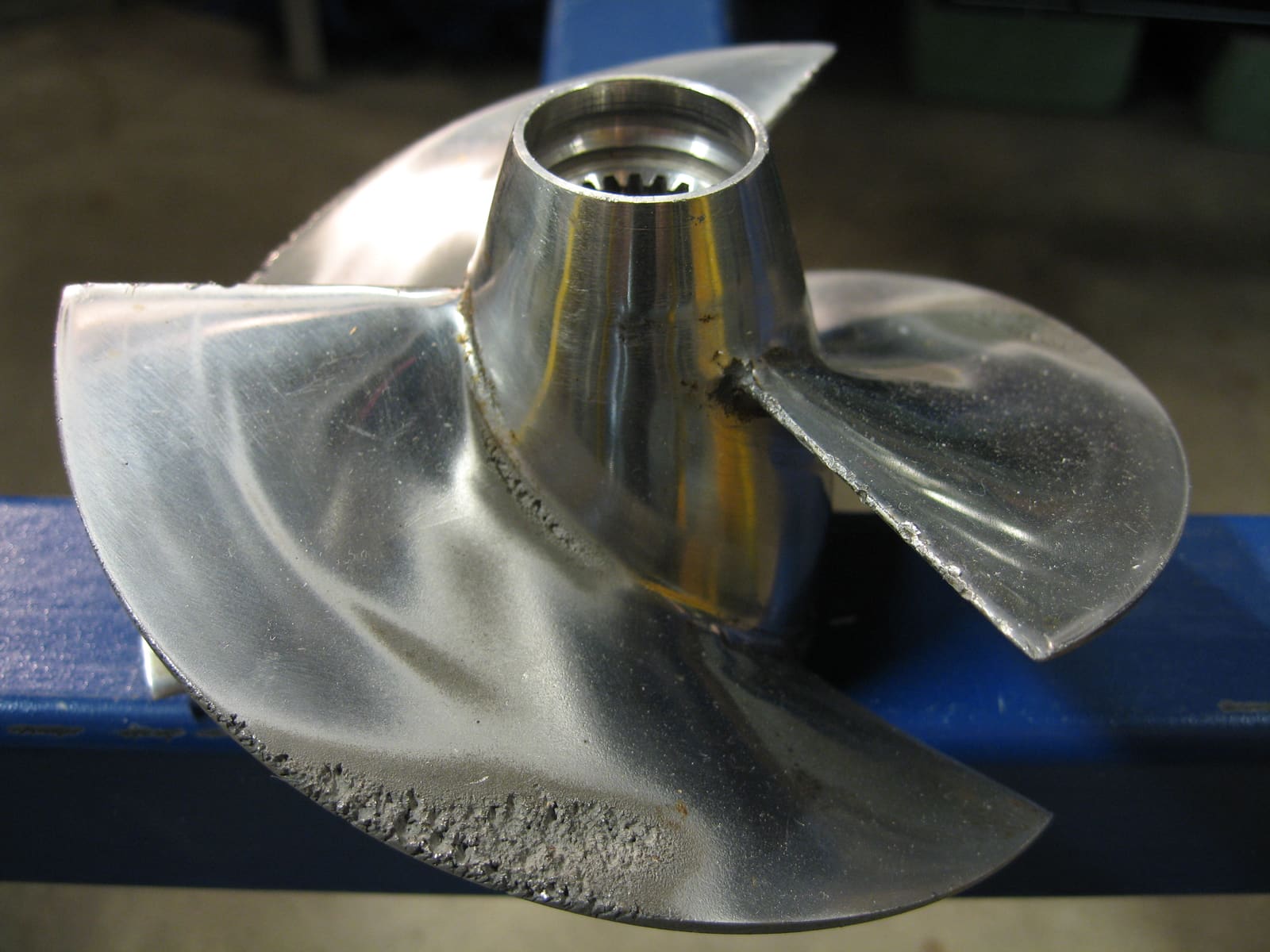
Cavitation erosion on a personal watercraft impeller; boat props show the same rough, pitted edges. Photo: Erik Axdahl / Wikimedia Commons · CC BY-SA 2.5 If the engine revs but the boat won't get on plane, the rubber or plastic hub may have slipped. Boating Magazine suggests drawing a line across the inner and outer hub with a marker or nail polish; if the line is broken after a run, the hub spun. See the spun hub guide for the full test.
Light edge burrs from sand or a ramp are a DIY job. Yamaha's method: a coarse file, then a fine file, with a wire brush to keep the files clean. Boating Magazine suggests a mill bastard file held at a steep angle, working from the back of the blade toward the edge. Remove as little metal as possible and stop as soon as you can't feel the burr.
Small bends can be eased back with two adjustable wrenches (one holding the good part of the blade, one on the bent part). Yamaha says a curled stainless tip can sometimes be tapped out with a brass hammer. Treat these as get-home fixes unless the bend was very small, and get the prop checked by a shop.
Usually worth a repair quote:
- Stainless steel props with bent blades or missing tips
- Expensive or hard-to-find props (high-performance, large inboard, counter-rotating)
- Inboard props, which Boating Magazine notes can take weeks to replace new
Usually replace:
- Aluminum props with heavy damage, especially if the hub also needs work
- Props with cracks at the blade root or large missing sections (ask the shop; some can't be safely repaired)
- Common, inexpensive props where a used or new one costs about what the repair would
Call or visit a prop shop (many dealers send props out). BoatUS suggests looking for a shop that belongs to the National Marine Propeller Association, which trains and certifies prop repair technicians. Ask:
- What will it cost, and is the hub replaced or reused?
- Will the prop be returned to its original pitch and checked on all blades?
- Is it balanced after repair?
- For inboard and high-speed boats: what accuracy class is offered? Boating Magazine explains that shops sell repairs by accuracy class, with tighter tolerances costing more, and that light, fast boats and ski boats are most sensitive to small errors.
- How long will it take?
Many outboard and sterndrive props use a pressed-in rubber hub; others use a replaceable hub kit. Yamaha notes that pressing in a new rubber hub is a shop job that typically costs much less than a new prop. Replaceable hub kits can be swapped by the owner. Discover Boating adds that rubber hubs can age and slip even without a strike.
A new prop must match your engine's shaft, spline and hub system, rotation (right- or left-hand) and the diameter and pitch stamped on the old one. Bring the old prop or its numbers to the dealer. Discover Boating stresses matching size, pitch and hub type to your engine spec.
Yamaha suggests treating a ruined prop as a chance to check whether a different model, pitch or diameter would suit your boat better. Your wide-open-throttle RPM should land in the range in your owner's manual; see the propeller guide for how to test it. BoatUS gives a common outboard rule of thumb: each 2 inches more pitch drops WOT RPM by roughly 400 to 500, and 2 inches less raises it about the same (typical; your dealer can confirm for your engine). A prop shop can often re-pitch a prop by a small amount, which may be cheaper than a new one; bigger changes usually mean a different prop.
Grease the shaft splines with the grease your engine maker specifies, reinstall the washers and spacers in the original order, torque the nut to the spec in your manual, and lock it with a new tab washer or cotter pin (Yamaha recommends a new cotter pin every time).
With a normal load, check for vibration at all speeds and note your WOT RPM. Compare it with your log from before the damage. A repaired prop that vibrates or lost RPM may not be back to spec; take it back to the shop.
Both Yamaha and Discover Boating recommend carrying a spare prop, plus a spare nut, washer and hub hardware. An affordable aluminum prop makes a good backup for a stainless one. Yamaha also suggests running an aluminum prop in unfamiliar shallow water with oyster bars or stumps, since it's cheaper and passes less shock to the gearcase if you hit something.
Common mistakes
- Running a bent prop "until the end of the season" and letting the vibration damage seals or bearings.
- Filing too much metal and changing the blade shape.
- Replacing the prop after a hard hit without having the shaft and gearcase checked.
- Buying a replacement by diameter and pitch only, without checking hub system and rotation.
- Paying for a full repair on a cheap aluminum prop that costs about the same new.
- Assuming a spun hub means a ruined prop; often a rehub fixes it.
- Reusing an old cotter pin or tab washer.
- Trusting a freshly spray-painted prop on a used boat. BoatUS warns that a fresh coat with a visible paint line can hide bends and nicks; look closely or have it checked.
- Never pulling the prop. Mercury says to remove it several times a season to look for fishing line wrapped behind it, which can cut the prop shaft seal and let water into the gearcase.
When to call a pro
- Bent blades, cracks or missing pieces (prop shop)
- The prop is seized on the shaft or the shaft looks bent (Discover Boating says a bent shaft must be repaired or replaced)
- Vibration continues after a new or repaired prop is installed
- Any inboard prop removal that needs a puller or a haul-out
- You hit something hard: have the lower unit or drive, shaft and gear lube checked
Tips
- Log prop model, diameter, pitch, hub type and WOT RPM in BoatMend. It makes ordering a replacement fast.
- Keep the repair invoice with the boat's records; a shop's measurement printout helps on the next repair.
- Ask the prop shop to check your spare at the same time.
- If you run in shallow water a lot, consider an aluminum prop for that boat and keep stainless for open water.
Official references
We read these to write this guide. Your engine's own manual always wins.
- Discover Boating – Boat Propeller Repair and Replacement
- Yamaha Outboards – Damaged Boat Prop 101
- Yamaha Outboards – Propeller Maintenance (Maintenance Matters)
- Boating Magazine – Computer Propeller Repair Basics
- Boating Magazine – DIY Propeller Repairs
- Mercury Marine – Propeller Maintenance
- BoatUS – Fixing Boat Propeller Problems
- BoatUS – How To Inspect Your Prop (2023)
Safety: BoatMend is for information only and does not replace a certified marine technician. You are responsible for your safety and your boat. Read the full disclaimer.
Last updated 2026-10-25
Related guides
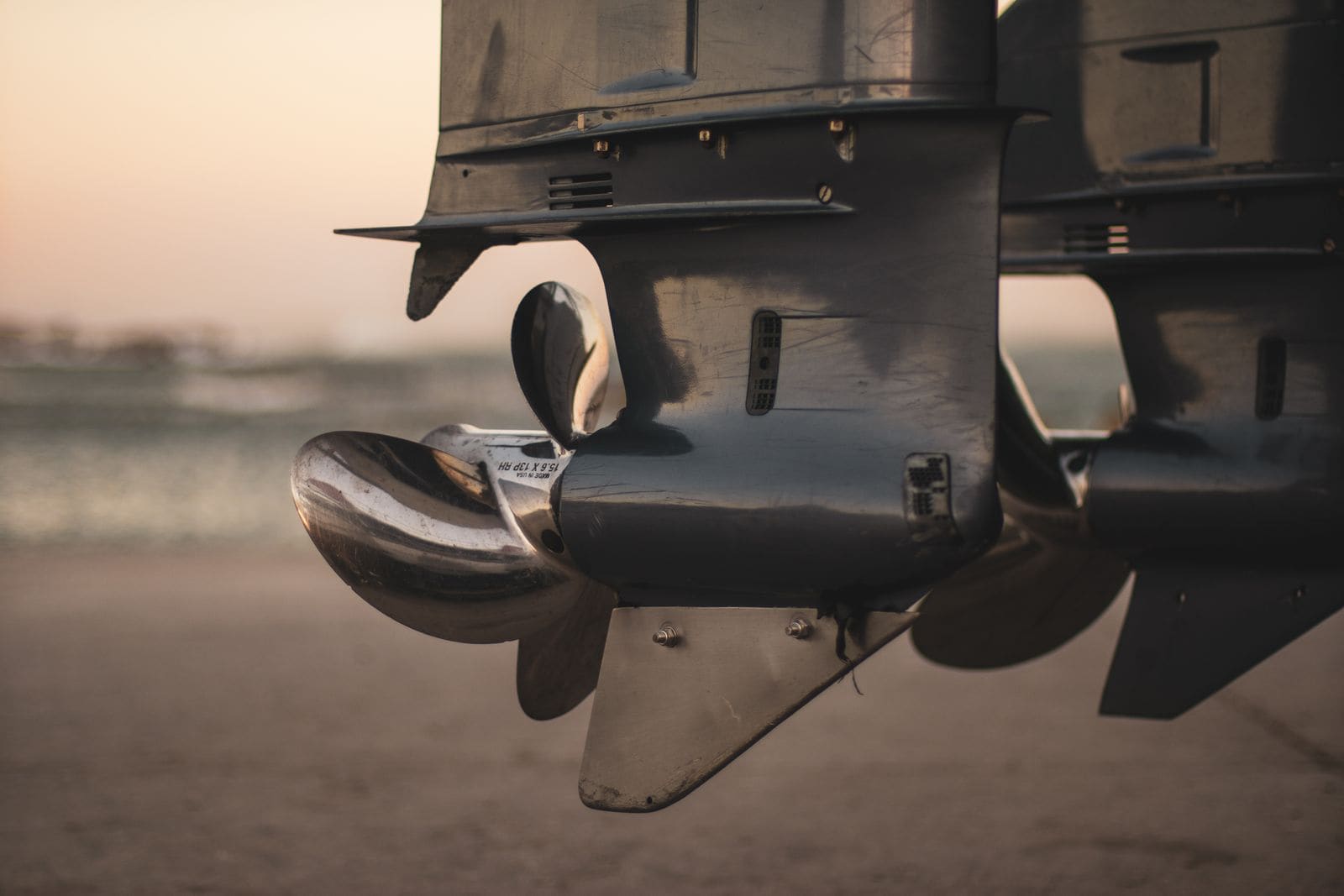
Propeller Care: Inspect, Remove, Replace and Choose the Right Pitch
Check your prop for damage, pull it to clear fishing line and grease the shaft, reinstall it correctly, and learn how pitch affects your engine's wide-open-throttle RPM. The right prop in good shape protects your engine and often makes the boat run better and use less fuel.
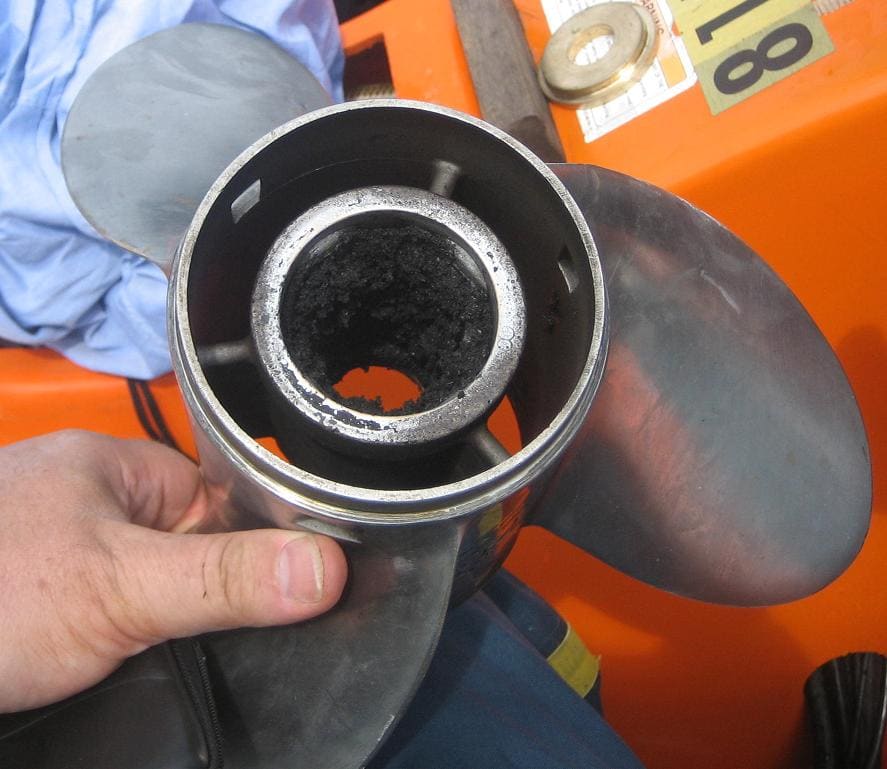
Spun Prop Hub - How to Tell, Quick Marker Test and Repair Options
If the engine revs up but the boat barely accelerates, the rubber or plastic hub inside your propeller may be slipping. Learn how a spun hub feels, how to confirm it with a simple marker test, the difference between pressed rubber hubs and replaceable hub kits, and your repair options.
Prop Ventilation vs. Cavitation - Why Your Engine Revs Up and the Boat Loses Grip
Sudden RPM spikes, blowouts in turns, or a prop that slips when you accelerate are usually ventilation, not cavitation. Learn to tell them apart, then work through the fixes in order: trim, load, prop damage, the hull ahead of the prop, engine height, and finally a different prop.
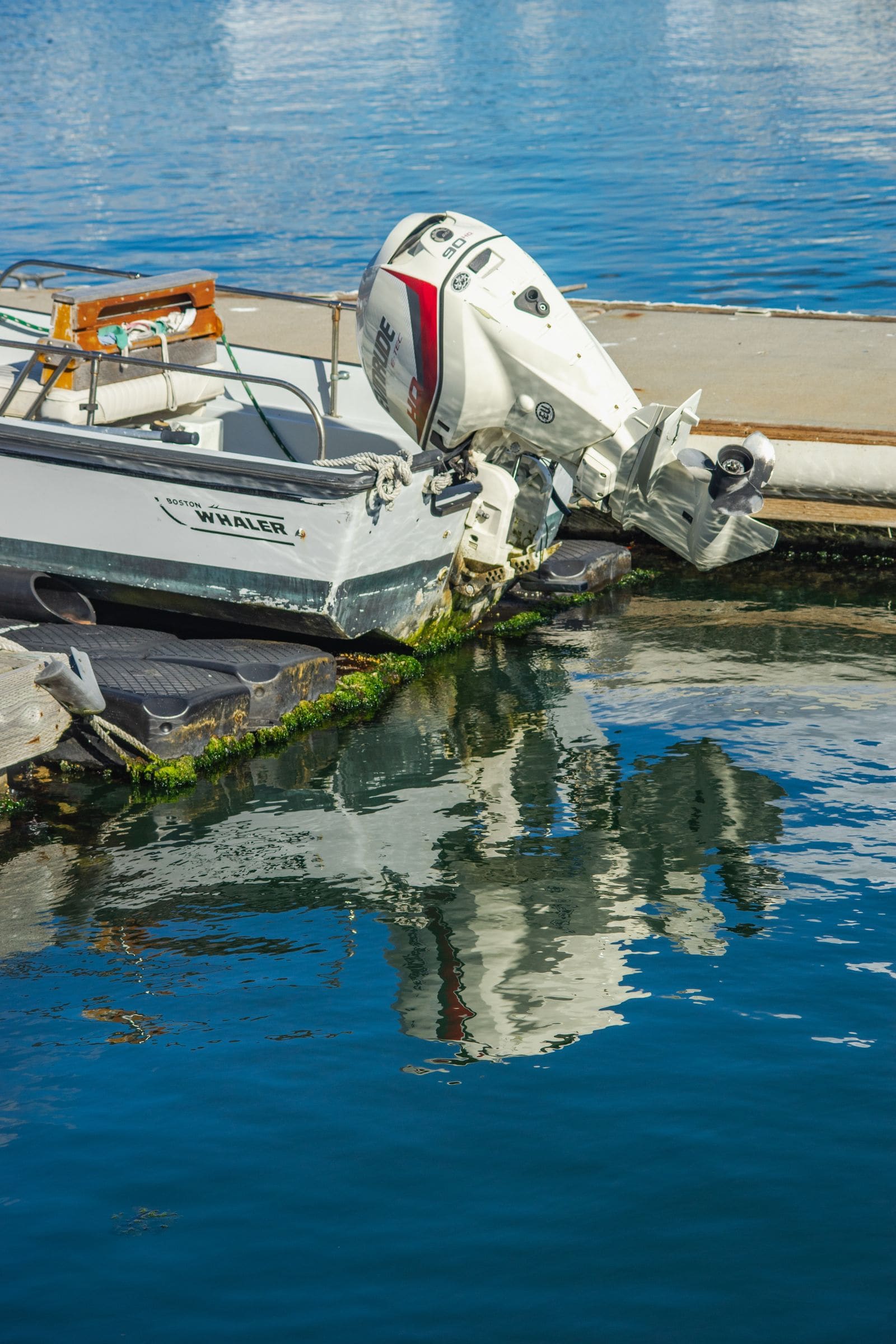
Outboard or Sterndrive Vibration - Troubleshooting Guide
Track down a new shake or buzz by noting when it happens (neutral or in gear, which rpm), then check the prop, hub, shaft, mounting bolts, motor mounts, engine height and misfires in order, from the simplest to the most serious.
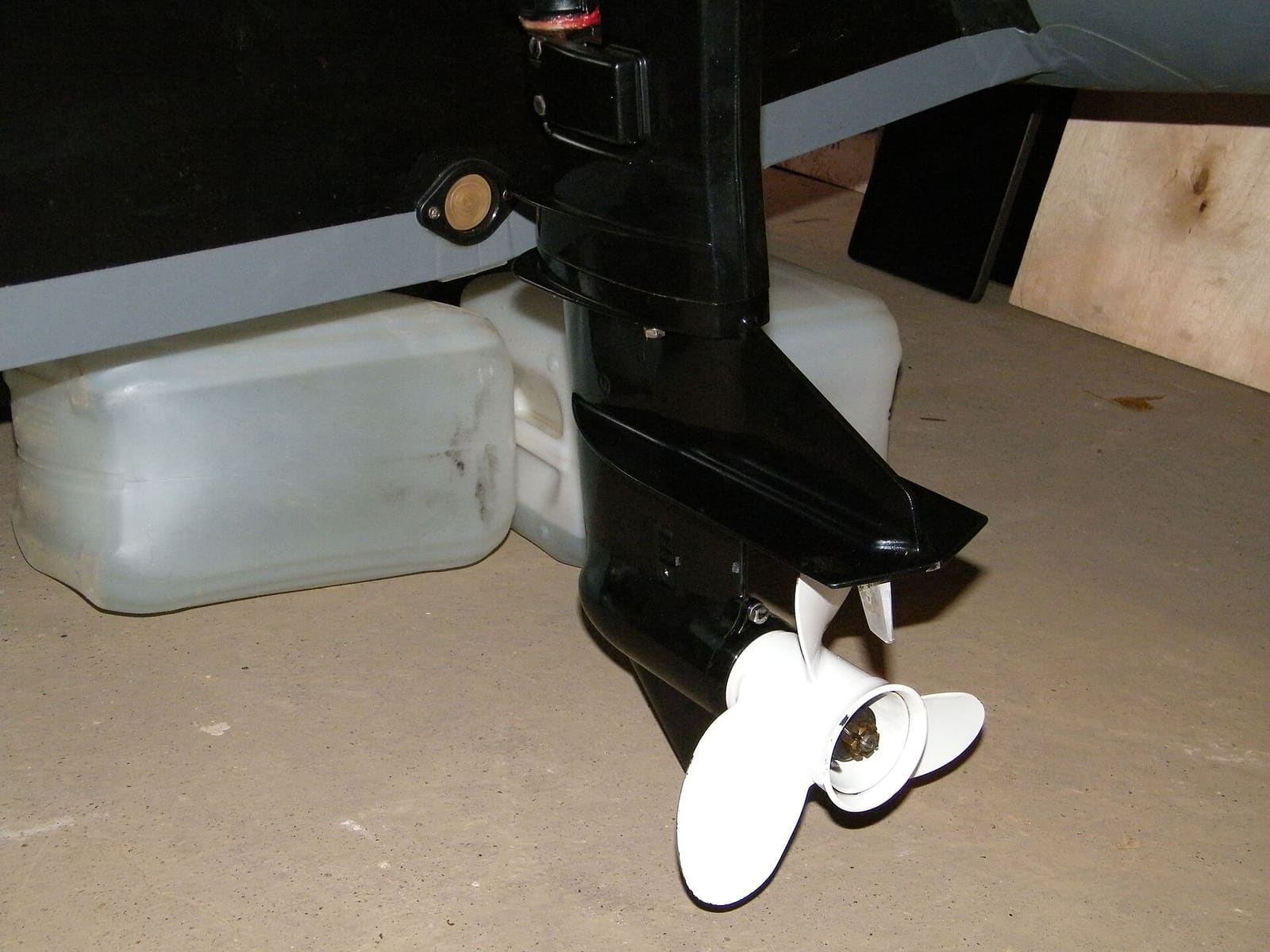
How to Change Lower Unit (Gearcase) and Sterndrive Oil
Drain and refill the gear oil in your outboard lower unit or sterndrive, and learn to spot water intrusion before it destroys the gears. It is a 30-minute job that protects a gearcase costing thousands to replace.

Loss of Power, Hesitation or Misfire - Troubleshooting Guide
Figure out why your engine bogs down, stumbles, will not reach full rpm or runs rough. Work from simple checks like trim, prop and fuel filter to ignition and engine protection modes before paying for diagnostics.
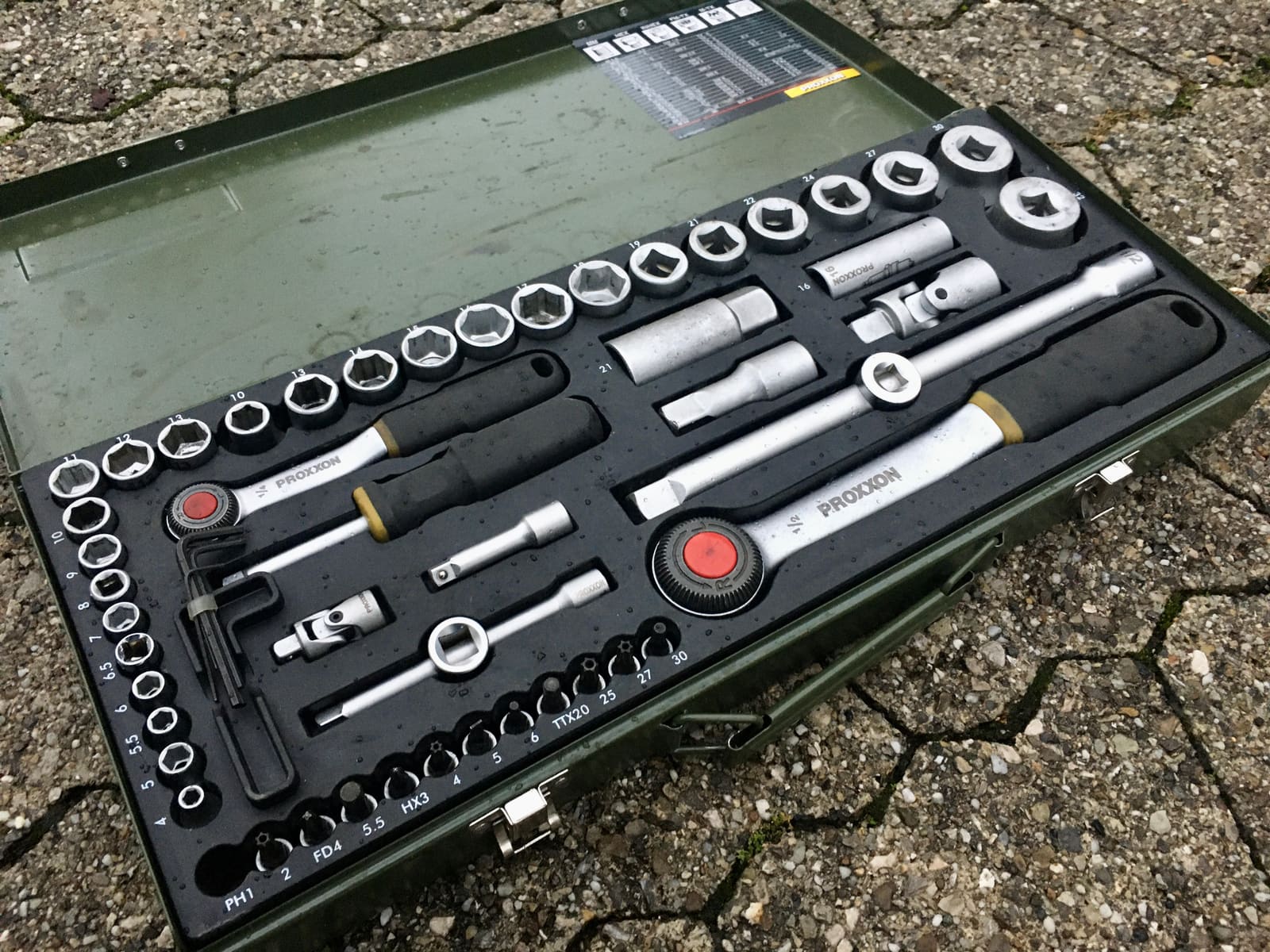
Onboard Tool Kit and Spare Parts: What to Carry on a Day Boat or a Cruiser
Build a tool kit and spares box that fits your boat and how far you go. A blown fuse, a clogged fuel filter or a dinged prop shouldn't end the day or turn into an expensive tow.