Portable Gas Cans and Fuel Storage: Filling, Storing at Home and Aboard, and Getting Rid of Old Gas
Gas cans and portable boat tanks are handy and dangerous in equal measure. Learn what makes a modern can compliant, why you always fill it on the ground, how to store gasoline at home and on the boat, how long ethanol fuel really lasts, and how to dispose of old gas legally.
Time
30 min
Applies to
Outboard, Jet ski / PWC
Safety first: Gasoline vapor is heavier than air, spreads along the floor and can be ignited by a pilot light, a light switch, a cigarette or a static spark several feet from the can. Store and fill gasoline only outdoors or in a well-ventilated detached space, never in your home's living area or basement, and never near a water heater, furnace, dryer or other flame. If a can leaks inside a car, garage or boat, don't touch switches or start anything: get people out, ventilate if you can do it safely, and call 911 if the spill is large or you smell strong fumes. If fuel spills into the water, stop the source, use absorbent pads and report it to the US Coast Guard National Response Center (1-800-424-8802).
Fuel smell, water coming in, CO alarm or smoke? Stop, get everyone in life jackets and call USCG on VHF 16 or 911. For a tow: Sea Tow or TowBoatUS.
Owners often ask
- Is it OK to fill my boat's portable gas tank while it's sitting in the truck bed?
- How long can I keep gas in a can before it goes bad, and how do I get rid of old gas?
This guide walks you through it. Still stuck? Ask the AI Mechanic about your engine.
Tools
- Approved gasoline containers (red for gasoline) in good condition
- Oil-only absorbent pads
- Funnel with a filter screen (optional)
- Waterproof labels or a paint marker
- ABC or B-rated fire extinguisher within reach
- Nitrile gloves and safety glasses
Parts & supplies
- Marine fuel stabilizer
- Replacement spout, cap or gasket made for your can (if worn)
- Tie-down straps or a tank bracket to secure cans aboard
Before you start
What a modern gas can looks like, and why. Three sets of federal rules shape the cans sold in the US today:
- EPA evaporative emission rules (in effect since 2009) require cans that seal in gasoline vapor. EPA says these rules allow vents only if they close automatically when not in use. Because of confusion, many makers dropped vents entirely, which is why some cans pour slowly. In 2025 EPA encouraged manufacturers to add self-closing vents again.
- Child-resistant closures became required under a 2008 law enforced by the Consumer Product Safety Commission. That's why many spouts are spring-loaded and need two motions to open.
- Flame mitigation devices (a screen or similar insert in the opening) were required by a 2020 law, to keep a flame from flashing back into the can.
You don't need to throw away an old can just because it's an older design, but it must be in good shape: no cracks, no swelling, a cap and gasket that seal, and a spout that doesn't leak. Never use milk jugs, water bottles, drink coolers or any container not made for gasoline.
Portable boat tanks (the 3 to 6 gallon tanks with a fuel line fitting) follow similar low-emission rules. Newer ones don't vent freely, so they build pressure in the sun. Older tanks have a manual vent screw that must be open while the engine runs and closed for transport and storage.
Under EPA rules for portable marine tanks made since 2010 (40 CFR 1060.105), the tank and the fuel line connectors must seal themselves when disconnected, and the tank must stay sealed until pressure builds well above normal. A tank may have a one-way valve that lets air in as fuel is used, and a manual relief button or vent for releasing pressure before you refuel or connect the line, but its normal setting has to be sealed. So a tank that hisses when you open it is normal; a tank that collapses inward while the engine runs is not (check that the air inlet valve isn't stuck and the vent, if it has one, is set for running per its instructions).
Color matters. In the US, red containers are used for gasoline, yellow for diesel and blue for kerosene. Stick to that, and add a label if the can holds premix for a two-stroke.
Steps
Look for cracks, soft or swollen plastic, rust on metal cans, a missing flame-mitigation screen, a cracked spout, or a cap gasket that's hard or missing. Squeeze the tank gently and sniff around the seams. Replace anything damaged; replacement spouts and caps should be made for that can. A leaking tank aboard a boat is a fire waiting to happen (see our fuel tank inspection guide).
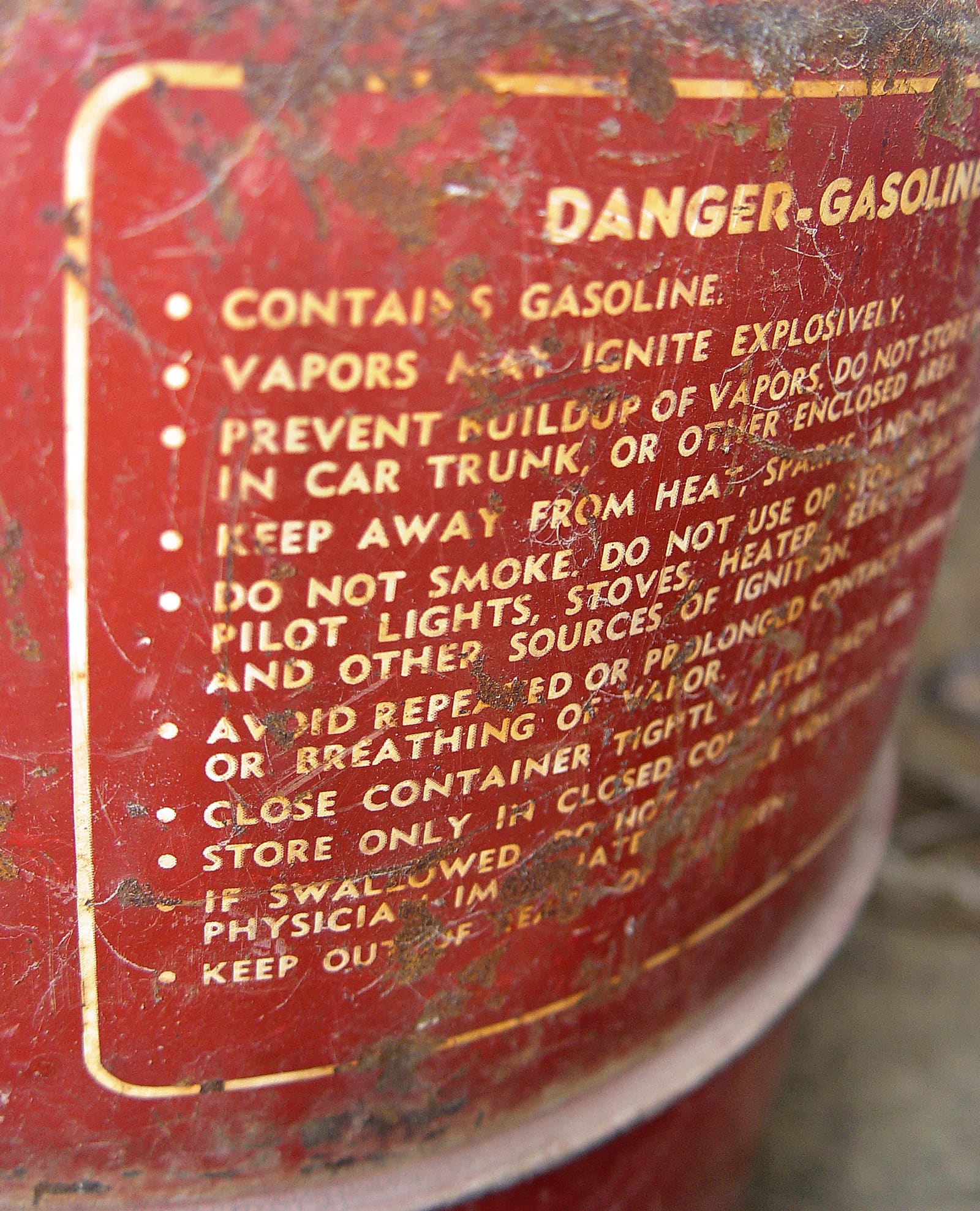
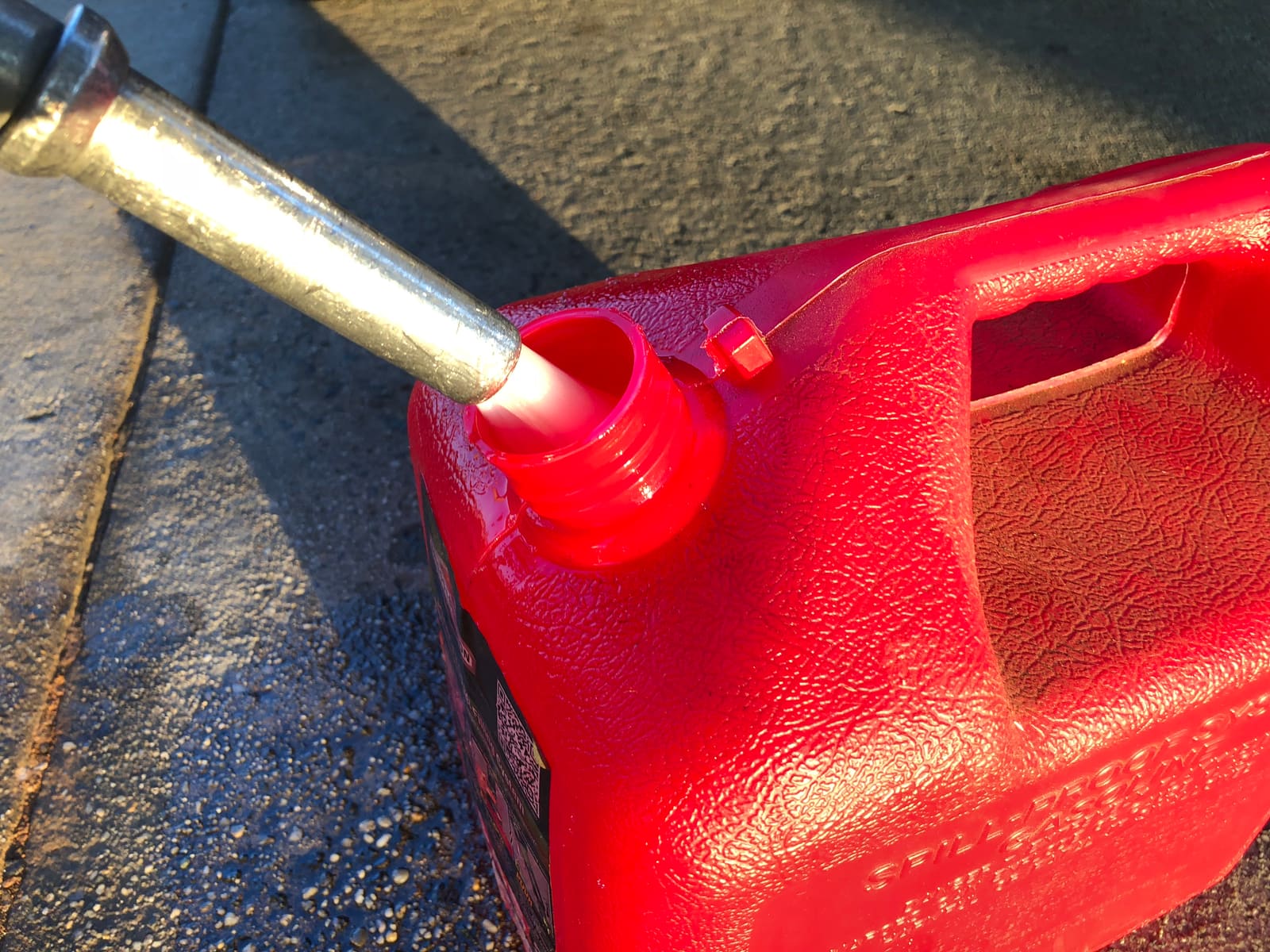
Rust like this means the can is done: take it to a household hazardous waste drop-off and buy a new one. Photo: Scott Robinson / Wikimedia Commons · CC BY 2.0 Always set a gas can or portable tank on the ground to fill it. BoatUS explains that a can in a truck bed, on a plastic bed liner, in a trunk or on the boat deck can build up static electricity while fuel flows, and a spark can ignite the vapor. The BoatUS Foundation adds: fill on pavement or the dock so the can is grounded, and put an absorbent pad under it on the dock. Its boating course says portable tanks of 6 gallons or less should be taken off the boat to fill.
Before you start pumping, touch a metal part of the pump or your vehicle away from the nozzle to discharge static. Don't get back into the car during fueling.
Keep the metal nozzle touching the rim or opening of the can the whole time you fill. This gives static a path to the ground instead of jumping as a spark. Fill slowly and never lock the nozzle open on a can.
Don't fill a can or tank to the very top. BoatUS points out that gas from an underground storage tank is cool, and as it warms in a can sitting in the sun it can expand by as much as 10 percent. A full can then forces fuel out the cap, vent or spout. The BoatUS Foundation suggests filling tanks to about 90 percent; leave a similar air space in cans.
Treat fuel as soon as you buy it, not weeks later. Mercury says fuel can begin to oxidize and form gum in as little as two weeks, and Honda says that depending on your region's blend it can deteriorate in as little as 15 days, faster in heat and humidity. Add marine fuel stabilizer at the dose on the bottle (add it to the can before filling so it mixes as the gas flows in). Write the date and "stabilized" on the can.
In a vehicle, keep cans upright and strapped so they can't tip or slide, ideally in an open truck bed or on a trailer rather than inside the passenger area. If a can must ride inside, keep a window open and take it out as soon as you arrive. Never leave cans in a closed, hot car. Close any manual vent on a portable boat tank for transport.
Taking a small portable outboard home in the car too? Mercury's quick tip has you disconnect the fuel line (or close the fuel valve on a built-in-tank model) and let the engine run until it stops, with the gearcase submerged in the water or in a test tank or barrel, never dry; then fit the protective cap on the fuel connector so nothing drips in the vehicle. Let the water drain with the motor upright, and if you lay it down, put the side marked on the cowl decal facing up; Mercury warns that the wrong side lets oil run into the cylinders.
- Where: a detached shed or garage with ventilation, out of direct sun, and well away from anything with a flame or spark: water heaters, furnaces, dryers, freezers, workbenches with power tools. Never in the house, a basement or an attached space where fumes can reach living areas.
- How: caps tight, vents closed, cans upright on a hard floor and out of children's reach. The BoatUS Foundation recommends storing portable tanks out of direct sunlight in a cool, dry place to limit condensation.
- How much: keep only what you'll use soon. Many local fire codes limit how much gasoline you can store at home and in what containers; check with your local fire department.
- Secure portable tanks with straps or a bracket so they can't slide or tip while underway; the BoatUS Foundation's course says to do this after every fill.
- Keep tanks and spare cans in an open, ventilated part of the boat, never in a closed cabin, cuddy or storage locker that wasn't designed for fuel, and never near a stove, heater or battery.
- Keep them out of standing water in the bottom of the boat, and out of direct sun when you can.
- Open portable tank caps slowly (away from the engine) to release pressure before connecting the line.
- If you smell gasoline in the boat at any time, find out why before starting the engine.
Gasoline doesn't keep forever, and E10 gets worse with time:
- It oxidizes (Mercury: in as little as two weeks; Honda: as little as 15 days depending on blend).
- It evaporates: Practical Sailor cites BoatUS and EPA studies showing 5 to 20 percent of the fuel in a plastic can or tank can be lost in a year through evaporation and permeation, leaving fuel that is harder to start and lower in octane, even if it still looks fine.
- It absorbs water and can phase separate (see our ethanol fuel care guide).
Stabilizer slows this down. Mercury says its storage stabilizer keeps fuel usable for up to a year when fresh fuel is treated. As a practical rule, buy only what you'll use within a few weeks during the season, and plan to use or dispose of stored gas within the time your stabilizer label gives. Ethanol-free gas keeps better and is worth it for equipment that sits.
At the end of the season, run portable tanks down on the boat, or pour fresh, stabilized, non-premix gas into your car or other equipment that takes regular gasoline. Never put two-stroke premix into a car, a four-stroke engine or modern lawn equipment unless its manual allows it.
If fuel is stale (varnish smell, dark color), has water in it, or is premix you can't use:
- Keep it in a sealed, labeled approved container.
- Contact your local solid waste or environmental agency for a household hazardous waste (HHW) collection site or collection day. EPA lists gasoline-type products among HHW and warns never to pour them down a drain, on the ground, into a storm sewer or into the trash.
- Some auto parts stores or marinas accept used oil but not gasoline; call first.
- Never "burn it off," pour it into the boat's main tank to dilute it, or dump it in the water.
Wipe spills on land with an oil-only absorbent pad and let the pad dry outdoors away from ignition sources before bagging it for disposal per local rules. Don't hose gasoline into a storm drain. On the water, the BoatUS Foundation advises stopping the source, notifying your marina, containing the fuel with absorbent pads or booms and reporting it: by law, a spill that leaves a sheen must be reported to the US Coast Guard National Response Center (1-800-424-8802). It also suggests calling your insurer if the spill is substantial. Never use soap or detergent to disperse fuel on the water; it's illegal and pushes the fuel down into the water and sediment.
Gasoline inside the boat is a different emergency. BoatUS Magazine describes a boat refueled from a portable can that was found the next morning with gallons of gasoline in the bilge; while a mechanic mopped it up, something (possibly static or the bilge pump switching on) set off an explosion that burned two people and destroyed several boats. BoatUS's advice: for anything more than a few drips in the bilge, don't run pumps, blowers or switches and don't mop. Get everyone off, keep people away and call the fire department (911), which can blanket the fuel with foam before a salvor removes it.
Common mistakes
- Filling a gas can while it sits in a truck bed, trunk or on the boat.
- Topping cans off to the brim on a cool morning, then leaving them in the sun.
- Keeping gas cans in the basement, utility room or next to the water heater.
- Using an unmarked can for both premix and plain gas.
- Leaving portable tanks loose in the boat, where they slide, tip or get stepped on.
- Storing a half-empty can for a year without stabilizer and expecting the engine to start.
- Siphoning by mouth. BoatUS warns never to do it; use a primer bulb or a siphon pump instead.
- Pouring old gas on the ground or into a drain.
When to call a pro
- A can or tank leaks inside a car, garage, house or boat and the smell won't clear (get out and call 911 if it's strong)
- Fuel has spilled into the water: stop the source, call your marina and report it to the US Coast Guard National Response Center (1-800-424-8802); in an emergency on the water, use VHF channel 16
- You find water or phase-separated fuel in a built-in tank (a dealer or mobile fuel service should pump it out)
- A portable tank's fuel fitting, pickup or gauge is damaged and you can't replace it with the correct part
Tips
- Keep a dedicated, labeled can for each fuel: plain gas, premix, diesel.
- A filtered funnel keeps grit and water out of your tank when pouring from cans.
- Mark each can with the purchase date and "stab" when treated; log it in BoatMend.
- Smaller cans are easier to pour without spilling and easier to use up before fuel ages.
- Keep absorbent pads and a fire extinguisher where you fill and where you store fuel.
Official references
We read these to write this guide. Your engine's own manual always wins.
- US EPA – Make Gas Cans Great Again by Improving Flow (portable fuel container rules)
- eCFR – 40 CFR 1060.105, Diurnal requirements (portable marine fuel tanks self-sealing, pressure relief)
- US EPA – Household Hazardous Waste (HHW)
- BoatUS – The Proper Way To Fill A Fuel Tank
- BoatUS Foundation – Fueling Tips (portable containers)
- BoatUS Foundation – Fuel Spill Prevention Guide
- BoatUS Foundation – Boating Safety Course, Fueling
- Practical Sailor – Reduce Gasoline Evaporation in Boats with These Tips
- Mercury Marine – Fuel Basics (Maintenance Made Easy)
- Honda Marine – Fuel Recommendations
- Discover Boating – Boat Refueling 101
- BoatUS Magazine – How To Handle (And Not Handle) Spilled Gasoline
- Mercury Marine – Quick Tip, Preparing Your Portable Mercury Outboard for Transport
Safety: BoatMend is for information only and does not replace a certified marine technician. You are responsible for your safety and your boat. Read the full disclaimer.
Last updated 2026-10-25
Related guides
How to Refuel a Boat Safely (Gas Dock, Gas Station and Portable Tanks)
A step-by-step fueling routine that keeps gasoline vapor out of your bilge and fuel out of the water: shut everything down, close up, keep the nozzle in contact, stop short of full, ventilate, run the blower and sniff before you start. Includes portable tanks, personal watercraft and what to do about a spill.
Ethanol (E10) Fuel Care: Stabilizer, Phase Separation, Fuel Lines and Tank Vents
Keep E10 gasoline from damaging your boat engine. Learn how to use stabilizer, test for water and phase separation, and inspect the fuel lines, primer bulb, anti-siphon valve and tank vent. Most fuel-related breakdowns start with one of these.
Boat Fuel Additives Explained: What Stabilizers, Ethanol Treatments and Boosters Really Do
The marine store shelf is full of bottles that promise to fix fuel problems. Learn what stabilizers, ethanol treatments, water removers, octane and cetane boosters, cleaners and diesel biocides actually do, what no additive can do, how to dose them by the label and why you should not stack several products in one tank.
How to Inspect Your Boat's Fuel Tank, Fill, Vent and Hoses
A leaking gas tank is one of the most dangerous problems a boat can have, and it usually starts out of sight. Learn how to inspect portable and built-in tanks, spot aluminum tanks corroding from below, know the ethanol risk for old fiberglass tanks, and check the fill, vent, hoses, clamps and sender, plus why tank replacement is a job for a pro.
How to Replace an Outboard Fuel Line and Primer Bulb
A cracked hose or a stiff primer bulb can leak gasoline, starve your engine or shed rubber into the fuel. Learn how to choose Coast Guard-rated fuel hose, the right connectors for your engine brand and good stainless clamps, install the bulb pointing the right way, leak-test the job and get rid of the old parts safely.
Two-Stroke Premix Conversion: Living With an Engine That Had Its Oil Injection Removed
Bought a two-stroke outboard or PWC whose oil injection was removed, or thinking of doing it? Learn how to confirm what was done, mix fuel at the ratio from your manual every single time, label your tanks so nobody forgets, choose NMMA TC-W3 oil and understand the real risks.
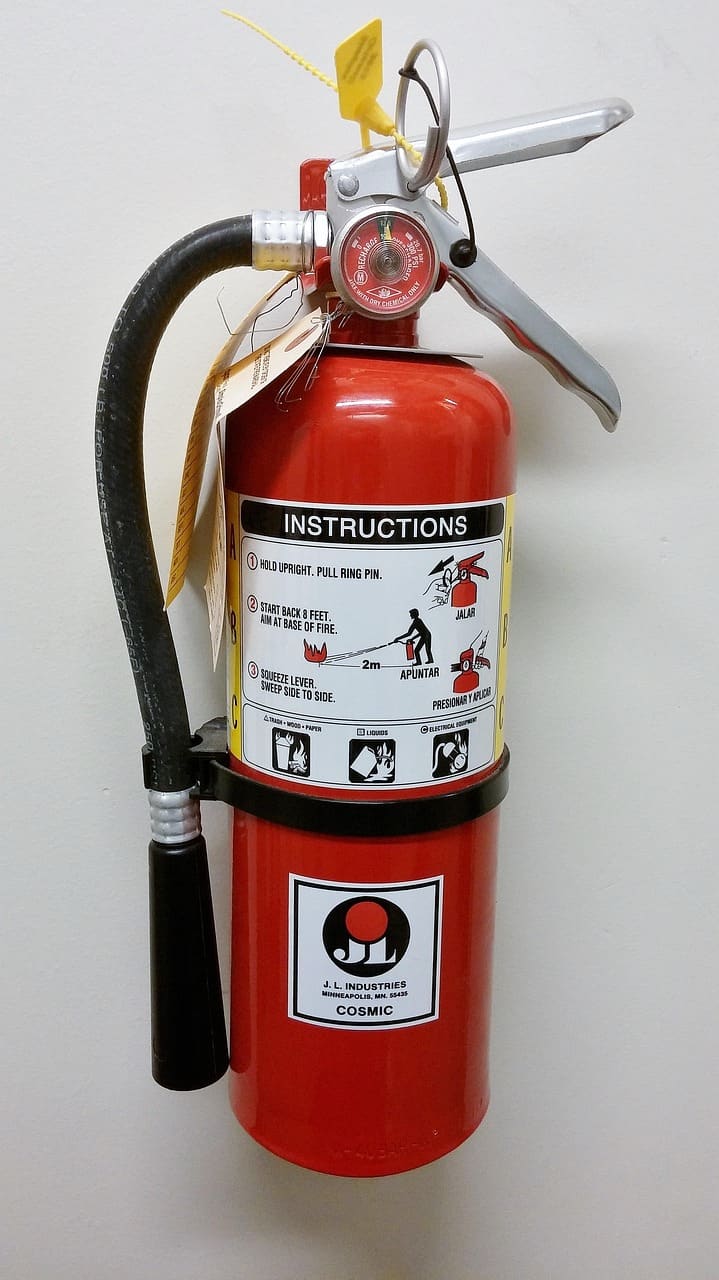
How to Check, Mount and Replace Boat Fire Extinguishers
A monthly five-minute check of every fire extinguisher aboard, plus how the 2022 Coast Guard rule changes affect you, where to mount them, and when to recharge or replace. A boat fire spreads in seconds, and an extinguisher with a dead gauge, missing pin or expired date will not help you or pass a boarding.

Oil or Fuel in the Bilge: Safe, Legal Cleanup
What to do when you find oil, diesel or gasoline in your bilge. Soak it up with oil-only absorbents, keep it from being pumped overboard, dispose of it properly, report any sheen on the water to the National Response Center, and find the leak so it does not happen again.
How to Winterize an Outboard Engine
Protect your outboard from freeze damage, stale fuel and internal corrosion over the off-season. Most owners can do it in an afternoon with basic tools, compared with a shop bill that often runs several hundred dollars.
How to Winterize a Jet Ski or PWC (Sea-Doo, Yamaha WaveRunner, Kawasaki)
Get your personal watercraft ready for the off-season by flushing and draining the cooling and exhaust system, stabilizing fuel, changing oil, fogging, and storing the battery. Doing it yourself takes an afternoon and helps avoid freeze damage, corrosion and spring no-starts.