How to Refuel a Boat Safely (Gas Dock, Gas Station and Portable Tanks)
A step-by-step fueling routine that keeps gasoline vapor out of your bilge and fuel out of the water: shut everything down, close up, keep the nozzle in contact, stop short of full, ventilate, run the blower and sniff before you start. Includes portable tanks, personal watercraft and what to do about a spill.
Time
20 min
Applies to
All engines
Safety first: Gasoline vapor is heavier than air. On a boat it sinks into the bilge and engine compartment and can sit there until a spark sets it off. If you smell gasoline after fueling, do not start the engine and do not flip any switches. Get everyone off the boat and onto the dock, tell the fuel dock attendant, and keep people and flames away. If the smell is strong, fuel is leaking, or there is any fire, call 911 (or the Coast Guard on VHF channel 16 if you are away from the dock). Never fuel with people aboard who don't need to be there.
Fuel smell, water coming in, CO alarm or smoke? Stop, get everyone in life jackets and call USCG on VHF 16 or 911. For a tow: Sea Tow or TowBoatUS.
Owners often ask
- How long should I run the blower after fueling before starting the engine?
- Fuel came out of the vent when I filled up and left a sheen. What do I have to do?
This guide walks you through it. Still stuck? Ask the AI Mechanic about your engine.
Tools
- Oil-only absorbent pads (keep a few aboard)
- Fuel collar or "donut" absorbent for the deck fill (optional)
- Fire extinguisher within reach (required equipment on most boats)
Parts & supplies
- Fuel of the type and ethanol content your engine manual specifies
- Two-stroke oil, if you premix for an older outboard
Before you start
Fueling a boat is not like fueling a car. A car's fuel system is sealed and sits in open air; a boat's tank is vented, and the engine often lives in a closed space where vapor collects. BoatUS calls the sniff test the most effective way to find a fuel leak, and its fueling checklist is the backbone of this guide.
Know these three things about your boat before you pull up to the pump:
- Which fill is fuel. Fuel, water and waste fills can look alike. Discover Boating notes that more than one boater has pumped gas into the wrong opening (even a rod holder). Look for the "GAS" or "DIESEL" marking on the cap.
- How much the tank holds, so you can stop at about 90 percent.
- What fuel the engine wants. Your owner's manual lists the octane and the most ethanol it accepts. Most marine gasoline engines allow up to E10; E15 and E85 are not approved for boat engines. See the ethanol guide for more.
Does your boat need the blower? Boats with gasoline inboard or sterndrive engines (an enclosed engine compartment) have a powered blower and must run it before starting. Discover Boating notes that outboards, with no enclosed engine space, skip that step, but every boat still gets the sniff test.
Steps
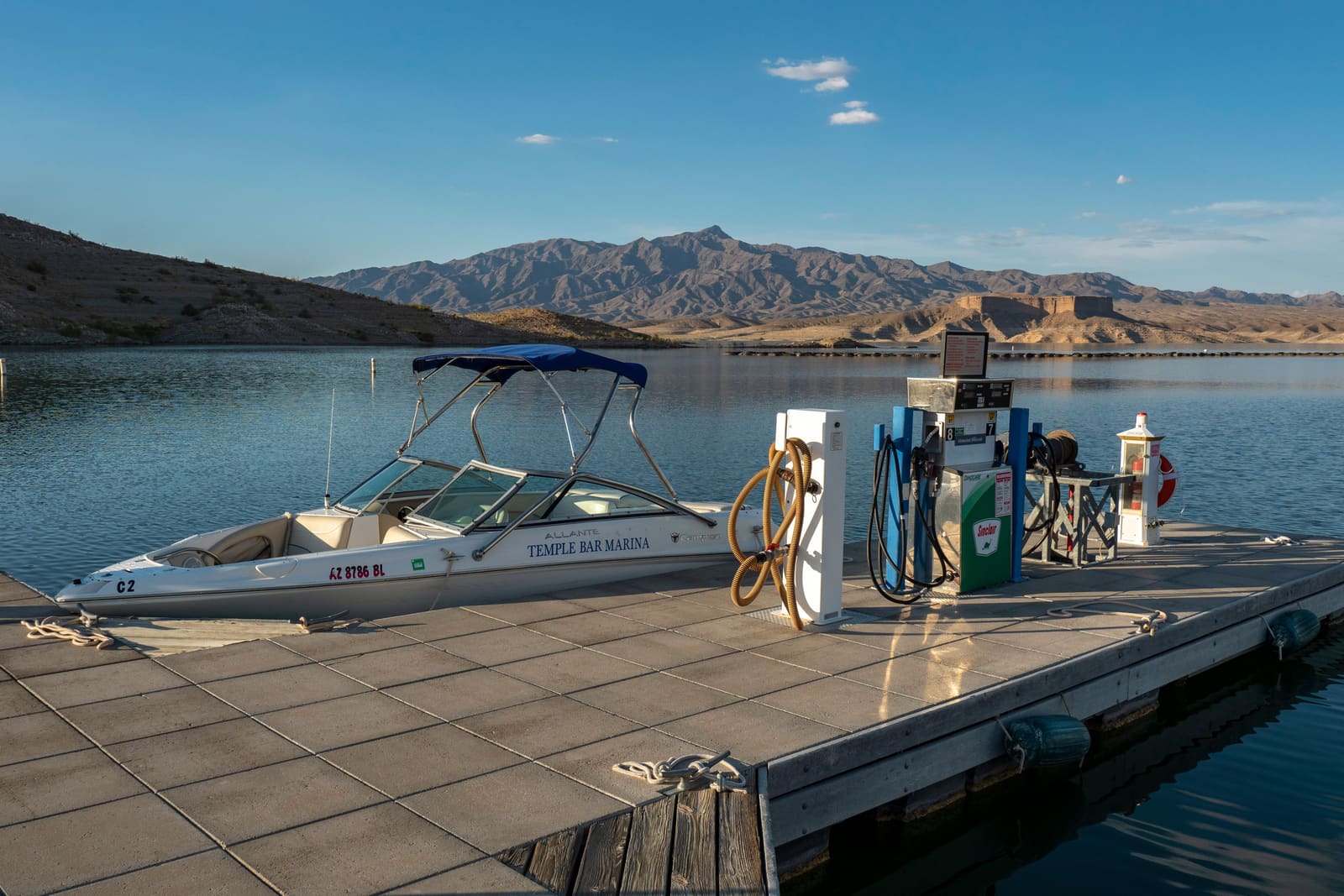
Tie the boat to the fuel dock with bow and stern lines so it can't drift away from the nozzle. Then:
- Shut off all engines.
- Turn off electronics, the stove, heaters and anything else that could make a spark or flame. That includes a running generator.
- No smoking anywhere near the dock.
BoatUS and Discover Boating both suggest having everyone who isn't fueling step onto the dock. It keeps them out of harm's way if something goes wrong, and it means no one is moving around or switching things on while vapor is present.
Close every port, hatch, window and cabin door before fueling. This stops vapor drifting from the fill into the cabin and bilge. (After fueling you will do the opposite.)
Treat fueling as a job that needs both hands and full attention. Put your phone in your pocket, and lay an oil-only absorbent pad (or a fuel collar) around the deck fill to catch drips. Keep the fire extinguisher where you can reach it.
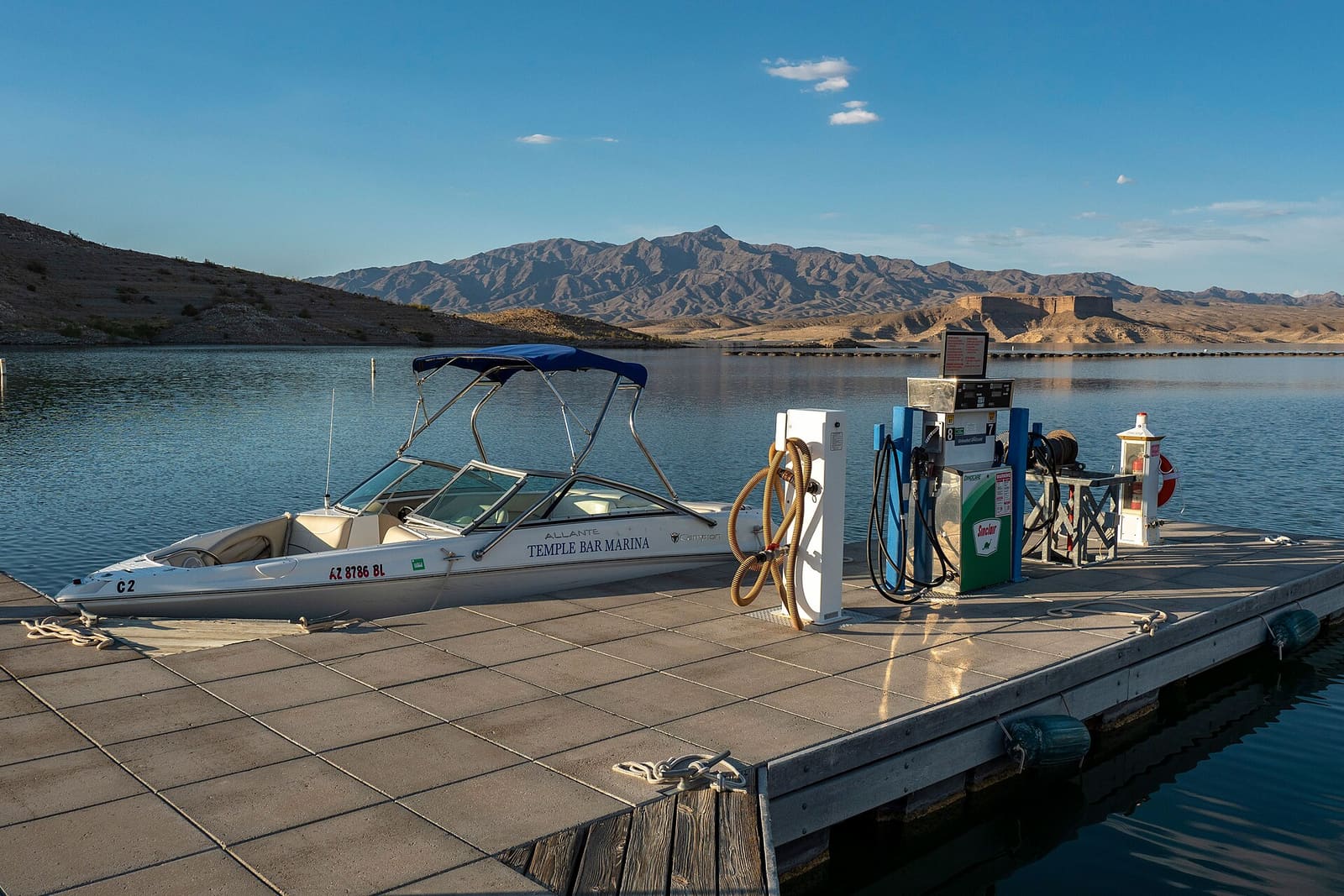
Open the correct fill cap and insert the nozzle. Keep the metal nozzle touching the edge of the fill the whole time. BoatUS explains this keeps static electricity from building up and sparking. Hold the nozzle yourself with a firm grip: BoatUS says never use the hands-free clip on the pump handle.
Boat tanks are vented to the outside of the hull. If you fill to the top, fuel comes out the vent fitting and runs down the hull into the water; BoatUS's spill guide describes exactly this happening at a busy fuel dock. Fuel also expands as it warms, so a tank topped off in the cool morning can push fuel out the vent in the afternoon sun. BoatUS puts a number on it: fuel pumped from a cool underground tank can expand by as much as 10 percent once it heats up in a boat or portable tank.
Marina pumps don't always shut off by themselves the way car-station nozzles do. MasterCraft's fueling advice is simply never to leave the fill unattended, and to make sure a snap-shut fill cap clicks fully closed when you're done.
- Slow the flow as you get close to full.
- Listen and watch: a change in the sound at the fill or a gurgle means you are nearly there.
- Stop at about 90 percent of tank capacity, as BoatUS recommends.
Close the fill cap tightly. Wipe any fuel on deck or around the fill with an absorbent pad. If fuel dribbled out of the vent, wipe the hull too. Put used pads in the fuel dock's container for oily waste, not loose in the trash or the water.
Now open all ports, hatches and doors so fresh air can move through the boat. On boats with an engine compartment, open the engine hatch if you can.
Turn on the bilge blower and let it run at least four minutes before starting the engine, per the BoatUS checklist. The blower pulls vapor from the low spots that natural airflow can't reach. Leave it running while you start the engine.
The four-minute rule isn't just advice: federal boatbuilding rules require gas-inboard and sterndrive boats with a blower to carry a warning label near the ignition switch telling the operator to run the blower for 4 minutes and check the engine compartment bilge for vapor before starting. If that label is missing or faded on your boat, replace it so guests and new operators see it. Listen for the blower and feel for airflow at the vent outlet; a blower that hums but moves no air (crushed hose, clogged intake) is not protecting you.
Before you touch the key, put your nose in the engine compartment, the bilge and near the blower outlet. If you smell gasoline:
- Do not start the engine. Do not operate any switches.
- Keep ventilating, look for the source (a loose fill hose, a leaking fitting, a soaked bilge), and get help from the fuel dock or a marine mechanic.
- A raw-fuel smell that doesn't fade is a leak, not "just fumes."
Only when the boat smells clean do you start the engine, bring passengers back aboard and cast off.
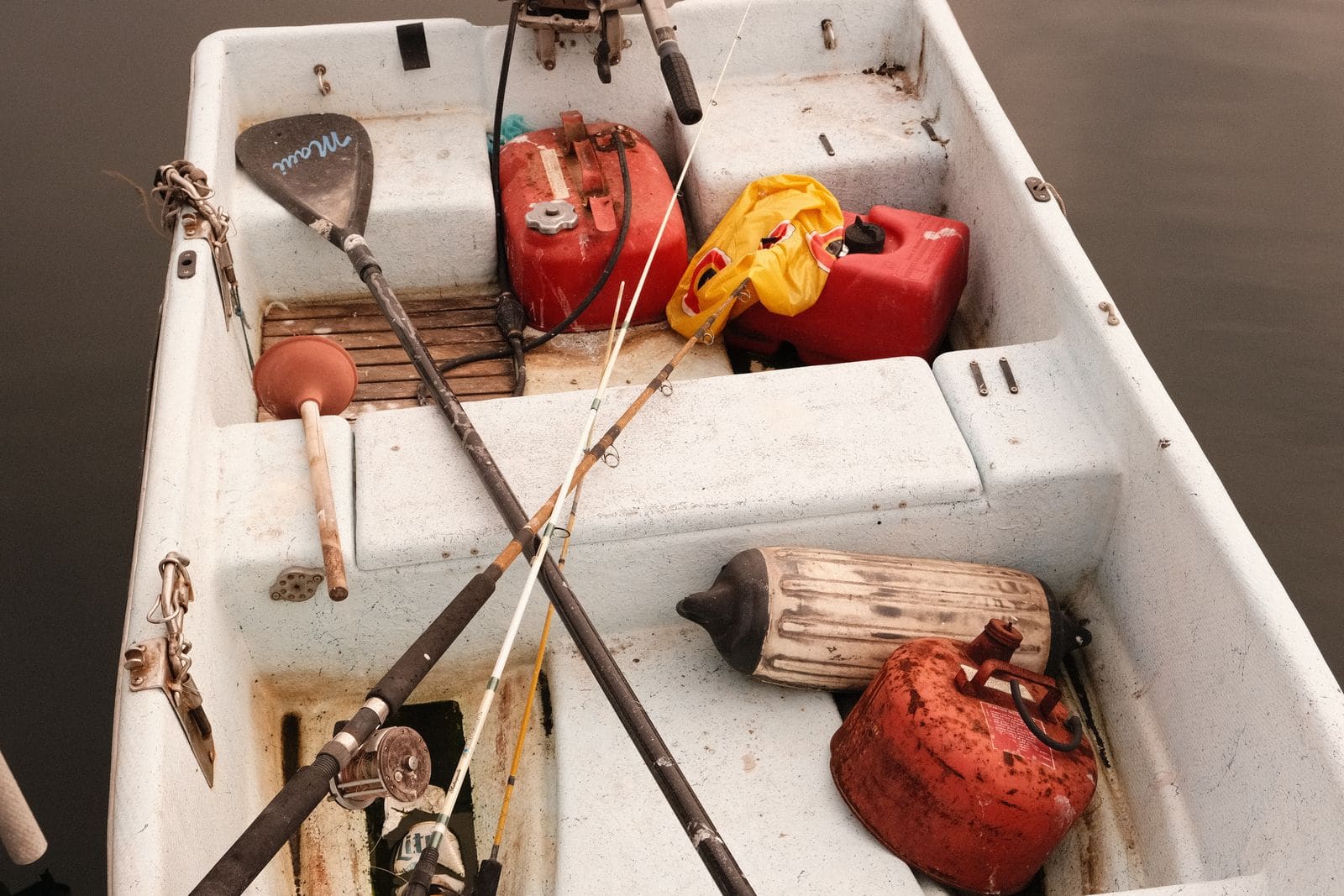
For boats with portable tanks, BoatUS says to take tanks of six gallons or smaller out of the boat to fill them. The same goes for gas cans:
- Set the tank on the dock or the pavement, never in the boat, a truck bed or a car trunk. A tank sitting on a plastic bedliner or a boat deck can build static charge. BoatUS adds a habit worth copying: touch something metal as you get out of the vehicle, before you handle the nozzle, to drain off static you picked up from the seat.
- Put an absorbent pad under it and keep the nozzle in contact with the tank opening.
- If you premix for a two-stroke outboard, add the oil your manual specifies.
- Close the cap and vent, then strap the tank down in the boat so it can't slide around.
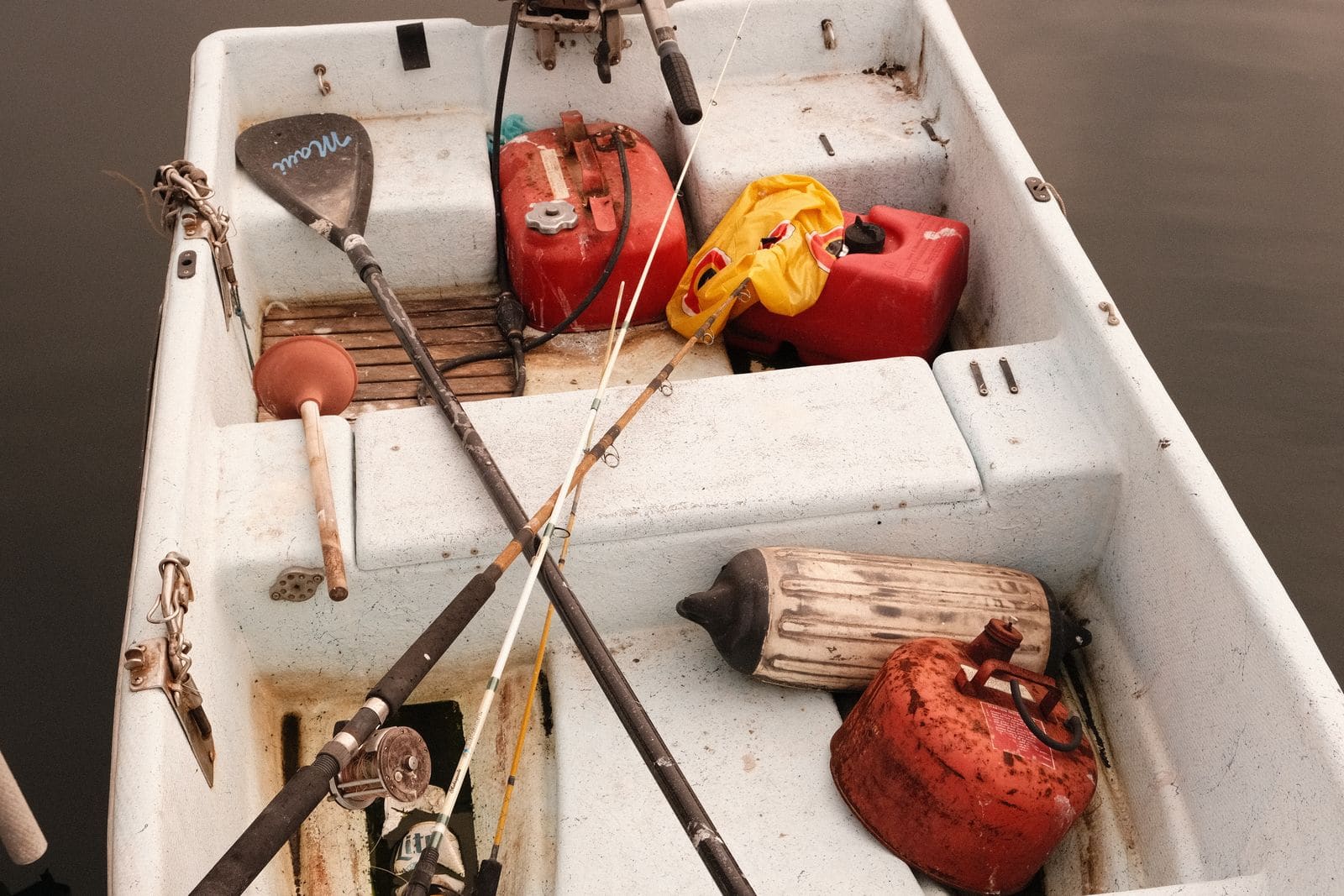
Portable tanks like these come out of the boat to be filled, and should be strapped down when they go back in. Photo: Jake Ryan / Pexels Many trailer boats fill up at a roadside station, where gasoline may be cheaper but ethanol content varies. BoatUS suggests leveling the boat (adjusting the hitch height if needed) so fuel goes in more easily and is less likely to spill, and standing where you can see the deck fill and hold the nozzle comfortably, even if that means a step stool. Check that the pump is not E15 or E85.
PWCs have small fills and short distances to the water, so drips land in the lake quickly. Tie up to a stable dock, fill slowly with a pad around the fill, and stop short of full. Before starting, open up the engine compartment:
- Sea-Doo suggests removing the seat to let any fumes that built up in the engine compartment escape.
- Yamaha's pre-launch checklist says to remove the seats and storage compartments and leave the compartment open for a few minutes, then check the fuel system for leaks by looking and sniffing.
Yamaha also suggests the "thirds" rule: one third of your fuel to go out, one third to come back, one third in reserve.
Spills happen even to careful boaters. BoatUS explains the rules:
- Federal law prohibits discharging fuel or oil into the water. Any spill that leaves a sheen must be reported to the National Response Center at 1-800-424-8802.
- Stop the source, use oil-only absorbent pads or a boom, and tell the marina.
- Never use dish soap or any detergent on a sheen. It is illegal and it makes the fuel sink, where it does more harm.
Common mistakes
- Fueling with the engine running, the stereo on or passengers moving around aboard.
- Leaving the cabin door or engine hatch open while fueling, then closing it and starting right away.
- Skipping the blower "because the engine is already warm" or because the boat was only at the dock for a minute.
- Filling until fuel spits out the vent, then hosing it off the hull into the water.
- Filling a portable tank or gas can while it sits in the boat or a truck bed.
- Clipping the nozzle open and walking away to pay or grab ice.
- Putting fuel in the water or rod-holder fill, or diesel in a gas boat (or the reverse).
- Using dish soap to "clean up" a sheen.
When to call a pro
- You smell gasoline that doesn't clear after ventilating: don't start the engine; get everyone off and have a marine mechanic find the leak
- Fuel visible in the bilge, a wet fill hose, or a fuel stain under the tank
- Fuel spits back out of the fill every time, or the tank won't take fuel (possible blocked vent; see the fuel tank inspection guide)
- Fuel ends up in the wrong tank (water tank, holding tank, or the wrong fuel type in the engine)
- Any fire, or a large spill: call 911 or the Coast Guard on VHF 16, and report sheens to 1-800-424-8802
Tips
- Keep a small "fuel kit" aboard: two or three oil-only pads, a fuel collar and a zip-top bag for used pads.
- Write your tank capacity on a label near the helm so anyone fueling knows where 90 percent is.
- Fuel on your way in rather than first thing in the morning, when the dock is busy and you are in a hurry.
- If your boat has a gasoline generator, shut it down before fueling and give it the same ventilation and sniff check before restarting.
- Teach your regular crew the routine so it gets done the same way every time.
Official references
We read these to write this guide. Your engine's own manual always wins.
- BoatUS Foundation – Study Guide, Fueling
- BoatUS Foundation – Fueling Tips (Preserving Clean Water)
- BoatUS Foundation – Fuel Spill Prevention Guide (Findings
- Discover Boating – Boat Refueling 101, How to Safely Refuel Your Boat
- Sea-Doo – How to Inspect Your Personal Watercraft
- Yamaha WaveRunners – Maintenance Matters (pre-launch checklist)
- eCFR – 33 CFR 183.610, Powered ventilation system (blower warning label)
- BoatUS – The Proper Way To Fill A Fuel Tank
- MasterCraft – Knowledge Center, Using Care When Fueling
Safety: BoatMend is for information only and does not replace a certified marine technician. You are responsible for your safety and your boat. Read the full disclaimer.
Last updated 2026-10-24
Related guides
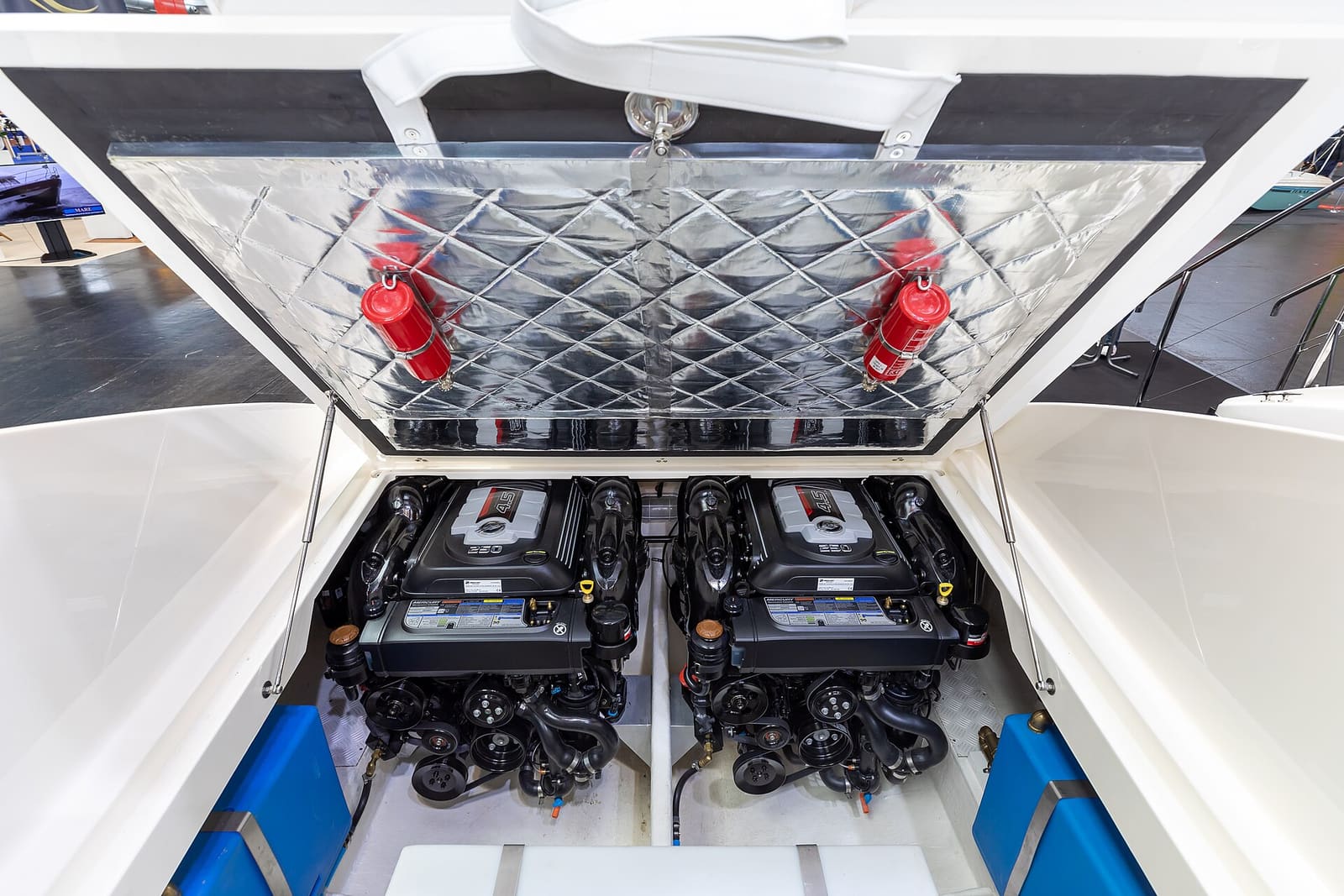
Bilge Blower and Engine Compartment Ventilation on Gas Inboards and Sterndrives
Learn why gas boats have a "run the blower 4 minutes" label, how to check that the blower and vent ducts actually move air out of the engine compartment, and how to replace a blower safely with an ignition-protected marine unit.
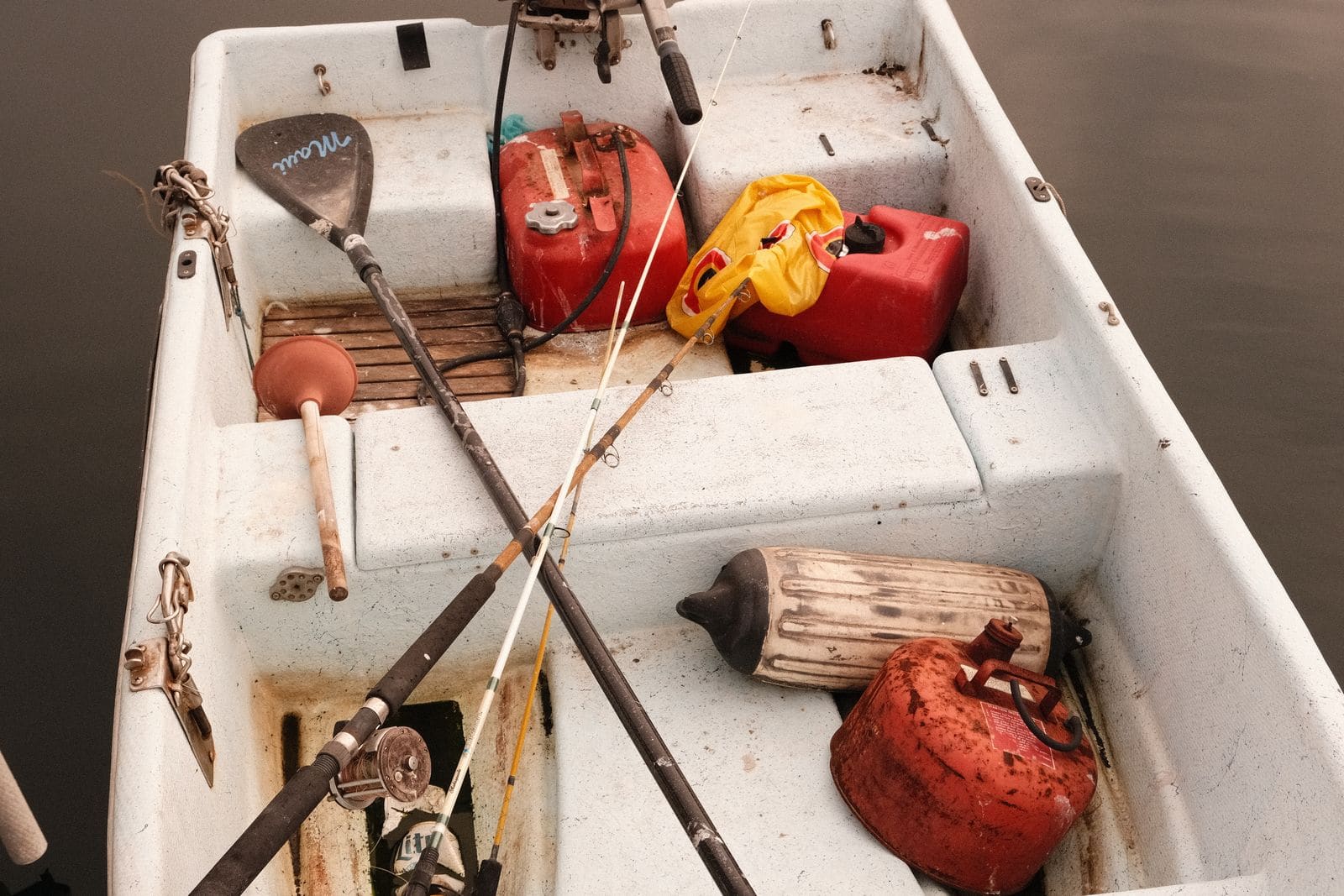
Ethanol (E10) Fuel Care: Stabilizer, Phase Separation, Fuel Lines and Tank Vents
Keep E10 gasoline from damaging your boat engine. Learn how to use stabilizer, test for water and phase separation, and inspect the fuel lines, primer bulb, anti-siphon valve and tank vent. Most fuel-related breakdowns start with one of these.
How to Inspect Your Boat's Fuel Tank, Fill, Vent and Hoses
A leaking gas tank is one of the most dangerous problems a boat can have, and it usually starts out of sight. Learn how to inspect portable and built-in tanks, spot aluminum tanks corroding from below, know the ethanol risk for old fiberglass tanks, and check the fill, vent, hoses, clamps and sender, plus why tank replacement is a job for a pro.
Boat Fuel Additives Explained: What Stabilizers, Ethanol Treatments and Boosters Really Do
The marine store shelf is full of bottles that promise to fix fuel problems. Learn what stabilizers, ethanol treatments, water removers, octane and cetane boosters, cleaners and diesel biocides actually do, what no additive can do, how to dose them by the label and why you should not stack several products in one tank.
USCG Required Safety Equipment Check by Boat Length
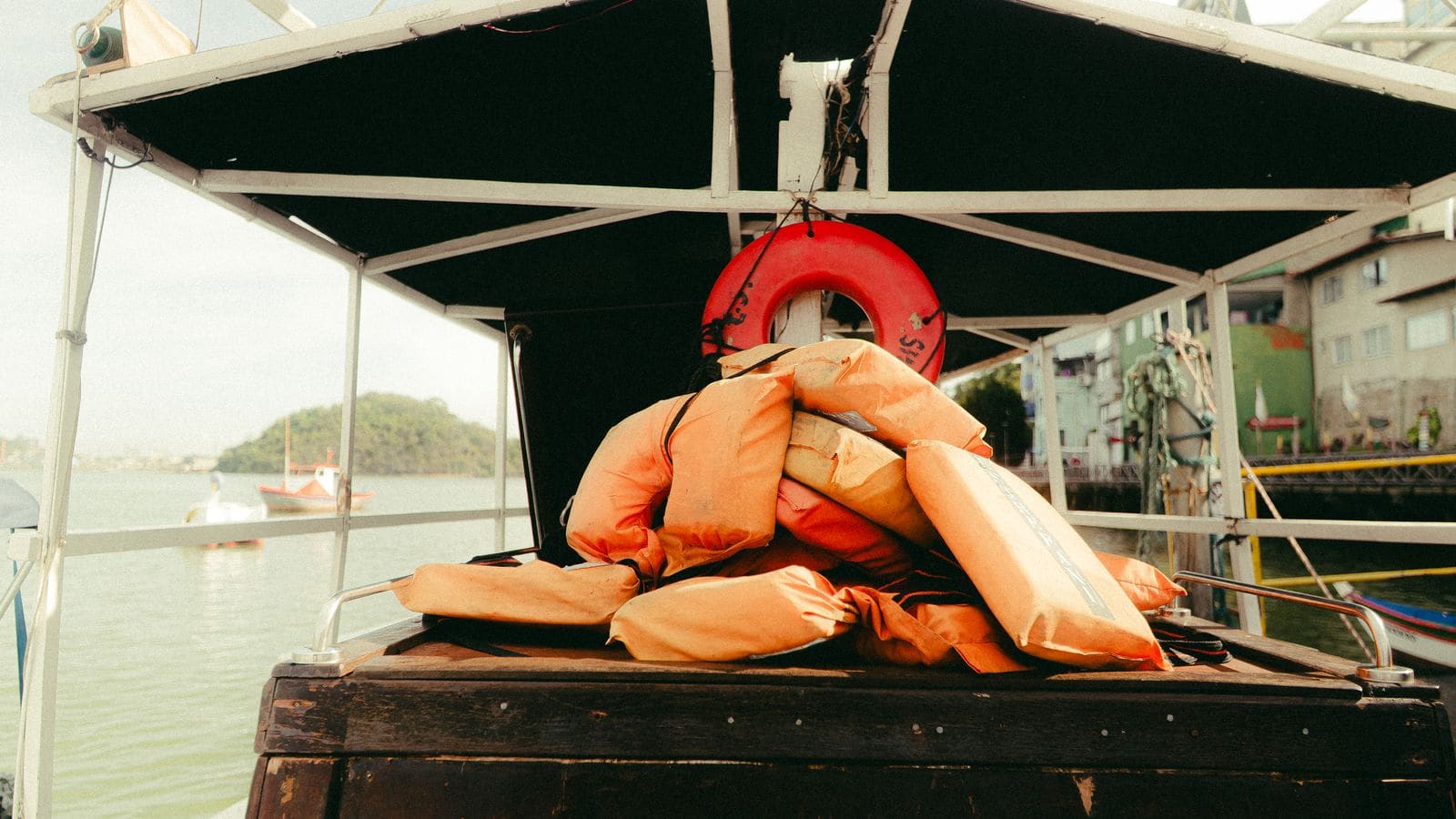
Walk through your boat and confirm you carry every piece of safety gear the US Coast Guard requires for your boat's length and type, and that none of it is expired or worn out. Missing or expired gear is one of the most common tickets on the water, and it is the gear you need when things go wrong.
Carbon Monoxide on Boats: Where It Comes From, CO Alarms and Warning Signs
Carbon monoxide can build up in cabins, under canvas and around the swim platform, and its first symptoms look like seasickness. Learn the danger zones, where to mount marine CO alarms, how to test and replace them, and exactly what to do if an alarm sounds or someone feels sick.
Launch Day and Haul-Out Checklist for Trailer Boats
A step-by-step checklist for getting your boat off the trailer and back on again safely and quickly, from the drain plug and tie-downs to the blower and ramp etiquette. Following it in order prevents the classic mistakes that sink boats and back up the ramp.
Engine Cut-Off Switch (Kill Switch) and Lanyard: The Law, Testing and Daily Use
How the engine cut-off switch (ECOS) and its lanyard or wireless fob work, when federal law requires you to wear it (boats under 26 feet, 3 hp or more, on plane), how to test it before every trip, and why a spare clip aboard matters.