How to Use an Oil Extractor Pump for Boat Oil Changes
Change engine oil cleanly through the dipstick tube with a manual or electric extractor: know which engines it suits, warm the oil first, get as much out as you can, then refill to the dipstick, recycle the old oil and clean the pump so it's ready next time.
Time
1 h
Shop would charge
$150-350
Applies to
Sterndrive (I/O), Gas inboard, Marine diesel, Outboard
Safety first: Warm oil can burn: let the engine sit a few minutes after shutdown, wear gloves and wrap a towel around the pump if it gets hot. An inboard or sterndrive must never run without cooling water, so warm it up in the water or with the cooling water supply your manual allows; an outboard runs only in the water, on external flush muffs or in a test tank. Turn off the automatic bilge pump before you start so a spill can't be pumped overboard. Never use an oil extractor on gasoline or any fuel unless the pump maker says it's rated for it. If oil does reach the bilge or the water, stop and clean it up (see the bilge oil spill guide); a spill into the water must be reported.
Owners often ask
- Can I change the oil in my four-stroke outboard with a vacuum extractor instead of pulling the drain plug?
- My oil extractor only pulled out part of the oil. How do I get the rest out of my sterndrive?
This guide walks you through it. Still stuck? Ask the AI Mechanic about your engine.
Tools
- Oil extractor pump (manual vacuum, manual piston or 12-volt electric) with a container big enough for all the engine's oil
- Suction tube that fits your dipstick tube, or a threaded fitting for threaded dipstick tubes
- Oil filter wrench and a zip-top bag for the old filter
- Oil-absorbent pads and a drip pan
- Funnel (with a short hose for hard-to-reach fills)
- Nitrile gloves, rags and safety glasses
- Sealed jugs for carrying used oil to recycling
Parts & supplies
- Engine oil of the type and amount in your owner's manual
- New oil filter (and O-ring or gasket if separate)
Before you start
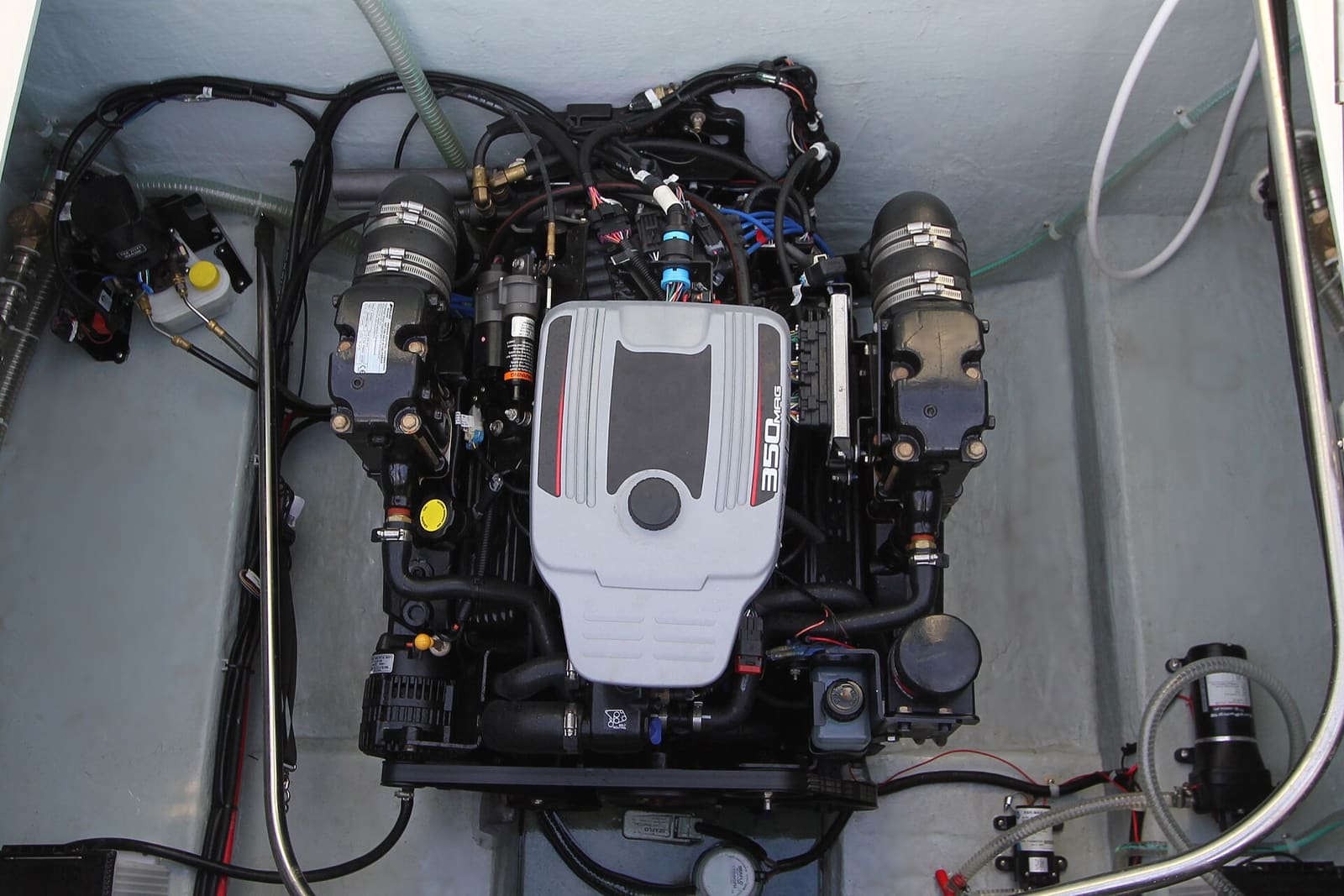
Why use an extractor? BoatUS explains that on most inboard installs the oil pan drain plug is hard to reach or there's no room for a pan under the engine, so oil is usually pumped out instead. Mercury's oil change guidance for MerCruiser sterndrives and inboards lists an oil extraction pump that draws the oil out through the dipstick tube as part of the basic kit.
Which engines it works for:
- Sterndrives and gas inboards: the usual method. Mercury's crankcase oil pump threads onto MerCruiser engines that have a threaded fitting on the dipstick tube. Others use a suction tube pushed down the dipstick tube.
- Diesel inboards and generators: commonly done through the dipstick tube, and some have a built-in pump or a drain hose. BoatUS notes diesels are harder on oil and many experts suggest shorter change intervals than gas engines.
- Four-stroke outboards: depends on the engine. BoatUS says an extractor through the dipstick hole is often the cleaner way on a four-stroke outboard because the drain plug location is messy. But many makers, such as Yamaha, describe draining through the drain plug, and on some engines the dipstick tube doesn't reach the lowest point of the oil pan. Follow your owner's manual; if it calls for the drain plug, use it. A second BoatUS article on four-stroke outboard oil changes sums it up: some newer outboards are designed to be emptied only by extraction, and on those the pump's tube has to reach the very bottom of the crankcase; if your outboard has a drain plug and no such design, the drain plug gets the oil out more completely. Either way, tilt the engine down to its running position first so the oil collects at the low point.
- Two-stroke outboards: no crankcase oil to change, so no extractor needed.
- Gearcase / lower unit oil: not for an extractor. Gear oil is drained from the bottom so you can check it for water and metal (see the lower unit oil guide).
Pick the right pump. Boating Magazine's buying tips: get a self-priming pump, the largest suction tube that fits your dipstick tube, and a container that holds the engine's full oil amount (or plan to empty it partway). Electric pumps used in a sterndrive or inboard engine compartment should be ignition-protected. Manual vacuum pumps need fewer strokes than piston pumps; PELA describes pumping 10 to 20 times to build vacuum, then letting it draw the oil without continuous pumping. Practical Sailor found hand pumps fine for owners who change oil once or twice a year.
Have the right oil and filter. Use the type and amount in your owner's manual. Mercury notes most of its engines need an oil change every 100 hours or yearly, and that changing it before winter storage is best because used oil holds acidic byproducts (typical; confirm in your manual).
Steps
BoatUS says the engine should be warm: warm oil flows through the small tube more easily, and more importantly, running the engine stirs up the dirt so it comes out with the oil instead of settling in the pan. Run it for several minutes (with cooling water, as above), then shut it off. Let it sit just long enough that you won't burn yourself, but don't let it cool completely. PELA's simple test: if you can't comfortably hold the dipstick in your hand, the oil is still too hot, so wait a bit.
Turn off the automatic bilge pump. Lay absorbent pads under the engine and the oil filter, and put the pump's container where it can't tip over. Have rags ready.
Pull the dipstick and wipe it. If your dipstick tube is threaded and you have a matching fitting, screw it on. Otherwise, push the suction tube down the dipstick tube until it stops at the bottom of the pan, then pull it back a tiny bit so the end isn't jammed flat against the pan. Connect the other end to the pump. BoatUS mentions that the thin tubes supplied with some pumps are slow, and a larger tube that still slips into the dipstick tube makes a big difference.
Build vacuum (manual) or switch on the pump (electric) and watch the oil flow. Don't walk away from an electric pump: switch it off when the flow turns to air, since some pumps shouldn't run dry. With a vacuum pump, top up the vacuum with a few strokes if the flow slows.
When the flow stops, move the tube slightly up and down and give it a few minutes for oil to drain back to the low spot, then pump again. Repeat until you get only air. Compare what you removed with the oil amount listed in your manual: a little always stays in the engine, but if you got much less than expected, the tube may not be reaching the lowest point. Never overfill to make up for it; you'll refill to the dipstick mark.
BoatUS suggests checking it before it goes in the jug. Milky or tan oil can mean water, coolant or fuel in the oil, which needs a mechanic (see the water in engine oil guide). A burnt smell or gritty feel can point to wear or overdue changes. This is also a good time to take a sample for oil analysis.
BoatUS recommends a new filter with every oil change. Slip a zip-top bag over the filter before you loosen it so the oil stays in the bag. Wipe the filter base clean, make sure the old gasket came off, wet the new filter's gasket with fresh oil, and tighten it as printed on the filter or in your manual.
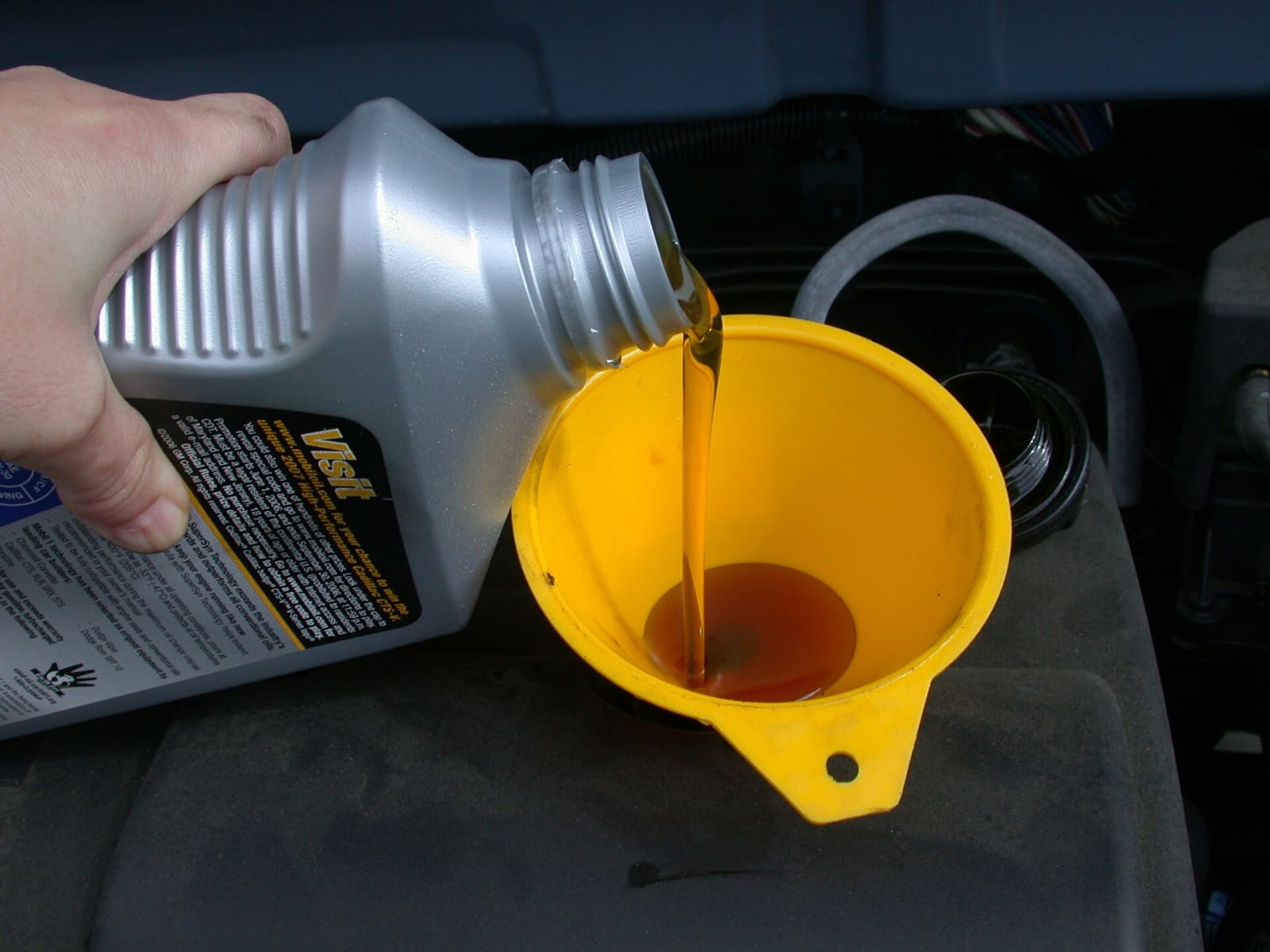
Shown on a car engine; a funnel keeps fresh oil off the engine and out of the bilge. Photo: Dvortygirl / Wikimedia Commons · CC BY-SA 3.0 Pour in fresh oil with a funnel, a little under the listed amount at first. Reinstall the dipstick and check the level, then top up slowly to the mark. Start the engine (with cooling water), let it run a minute or two and look for leaks at the filter. Shut it off, wait a few minutes and recheck the dipstick: BoatUS notes the new filter takes up some oil, so you'll usually need to top up.
Pour the used oil into sealed jugs and keep it separate from other fluids. BoatUS warns that mixing fluids can make oil impossible to recycle. The EPA says used oil from one oil change can contaminate a huge amount of fresh water, and suggests checking with auto service shops, waste collectors or local government for drop-off; drain and recycle the old filter too. Many marinas and auto parts stores accept used oil.
Empty the container completely and wipe it out. PELA's instructions add two practical points for its vacuum extractors: pour the oil out gently without turning the pump upside down (on some models you press a release valve first), and don't use the container to store used oil long term; beyond emptying it, no special cleaning is needed. Drain the suction tube by holding it up so oil runs into the container, then wipe the outside. Cap the tube ends or put them in a bag so they don't drip, and store the pump upright. Clean with rags or a mild degreaser the pump maker allows; strong solvents can damage seals. A pump that's going to sit all winter should be stored clean and dry.
Record the date, engine hours, oil and filter used in BoatMend. BoatUS also suggests writing the date and hours on the new filter.
Common mistakes
- Extracting cold oil. It's slow and leaves the dirt behind in the pan.
- Running a sterndrive or inboard to warm it up without cooling water.
- A suction tube that doesn't reach the bottom, leaving old oil in the engine.
- A container smaller than the engine's oil capacity, which overflows mid-job.
- Refilling to the manual's capacity number instead of the dipstick, overfilling when some old oil stayed behind.
- Forgetting the automatic bilge pump and pumping a spill overboard.
- Using an extractor where the maker says to use the drain plug.
- Pouring used oil into a jug with antifreeze or fuel, so it can't be recycled.
When to call a pro
- The old oil is milky, smells of fuel or has metal flakes
- The oil level rises between changes (see the oil level rising guide)
- You can't get the suction tube down to the bottom of the pan, or very little oil comes out
- A filter is stuck, leaks after installation, or the filter base threads are damaged
- An oil spill reaches the bilge in a way you can't contain, or any oil gets into the water
Tips
- Keep a dedicated extractor for engine oil and label it.
- If you change oil on several engines, a permanently plumbed system can be worth it; BoatUS describes mounting a pump on a bulkhead with a hose to the dipstick tube or drain.
- Do the oil change in fall before storage, while the oil is easy to warm up.
- Keep a spare suction tube; they crack and kink with age.
Official references
We read these to write this guide. Your engine's own manual always wins.
- BoatUS – How To Change Boat Engine Oil
- BoatUS – Changing Engine Oil
- BoatUS – How To Change The Oil In A 4-Stroke Outboard Engine
- Boating Magazine – Buying the Right Oil Change Pump
- Mercury Marine – MerCruiser Oil Change Kits Make Maintenance Easier
- Mercury Marine – Crankcase Oil Pump 802889A1 (fits threaded dipstick tubes)
- Yamaha Outboards – How to Winterize Your 4-Cylinder Outboard (drain plug oil change)
- PELA Products – How vacuum oil extractors work
- PELA Products – How To Use a PELA Oil Extractor
- Practical Sailor – Portable Oil Changers
- US EPA – Managing, Reusing, and Recycling Used Oil
Safety: BoatMend is for information only and does not replace a certified marine technician. You are responsible for your safety and your boat. Read the full disclaimer.
Last updated 2026-10-25
Related guides
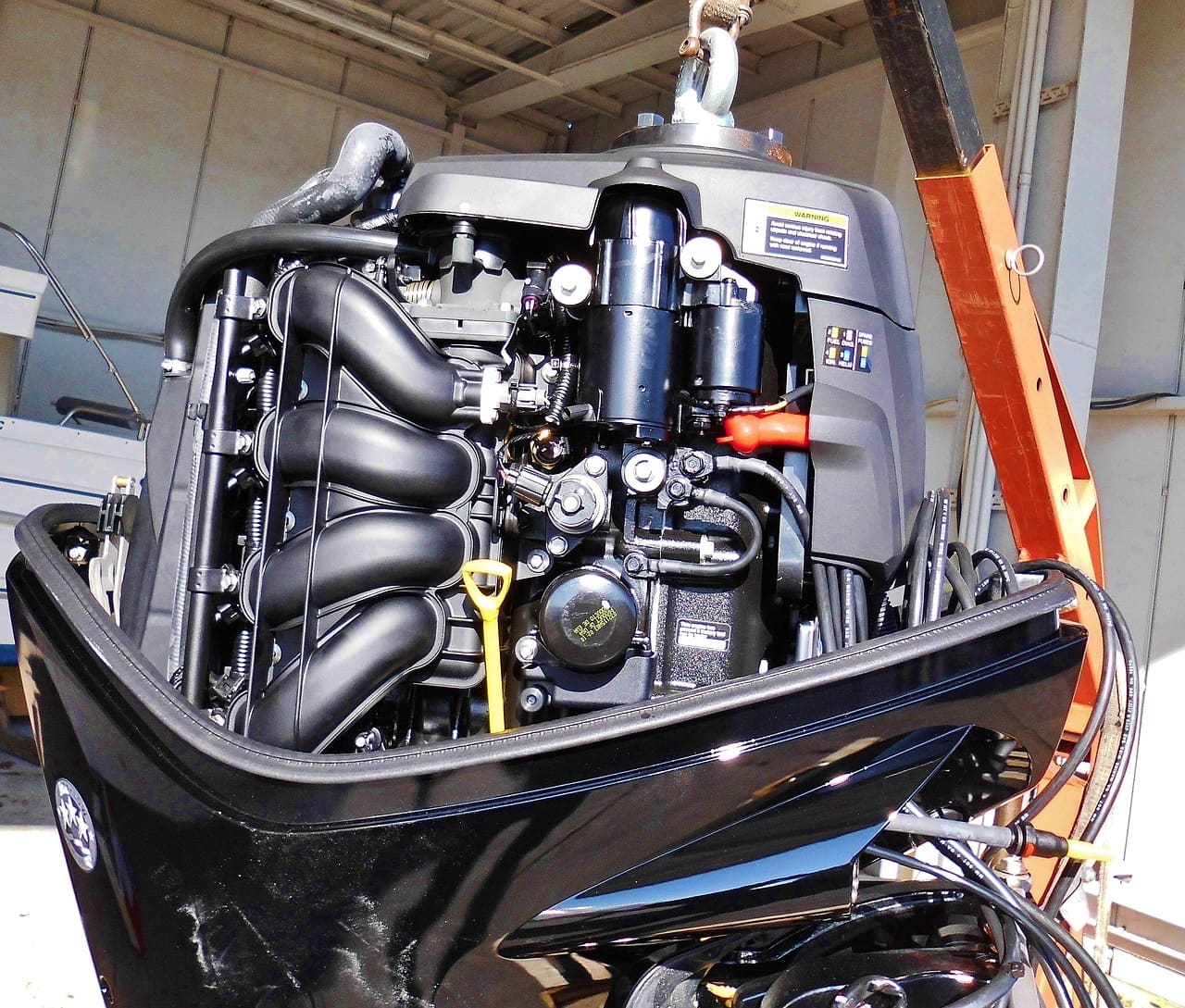
How to Change the Oil and Filter on a 4-Stroke Outboard
Drain the old oil, swap the filter and refill with the right marine oil on your 4-stroke outboard. It is the most common service job, takes about an hour, and costs a fraction of the dealer price.
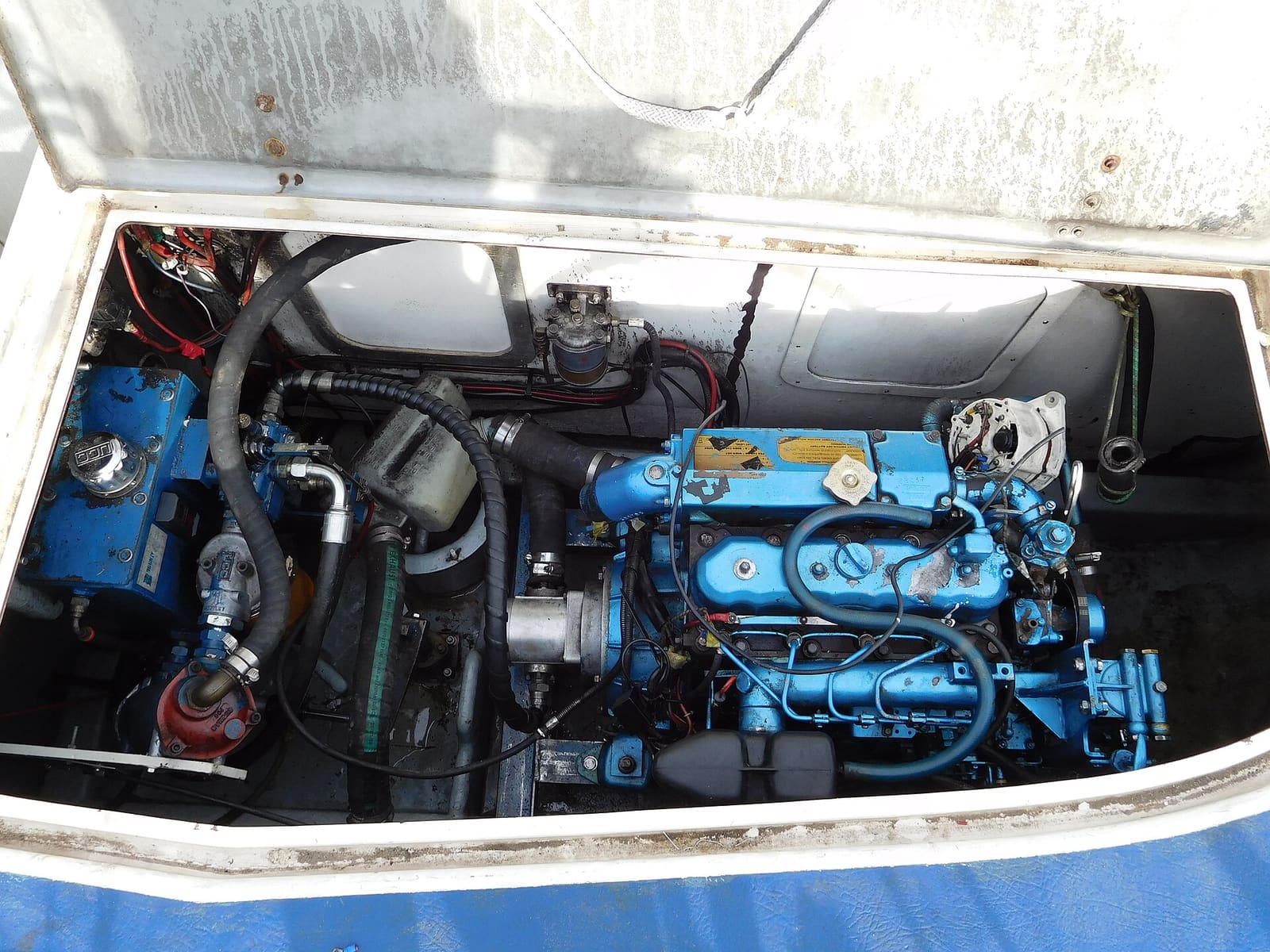
Marine Diesel Service: Oil Change, Fuel Filters and Bleeding Air
Change the oil and oil filter, replace the primary and secondary fuel filters, and bleed air from the fuel system on a Yanmar, Volvo Penta, Beta, Cummins or similar marine diesel. These three skills cover most routine diesel care and can get you out of trouble when the engine dies on a passage.
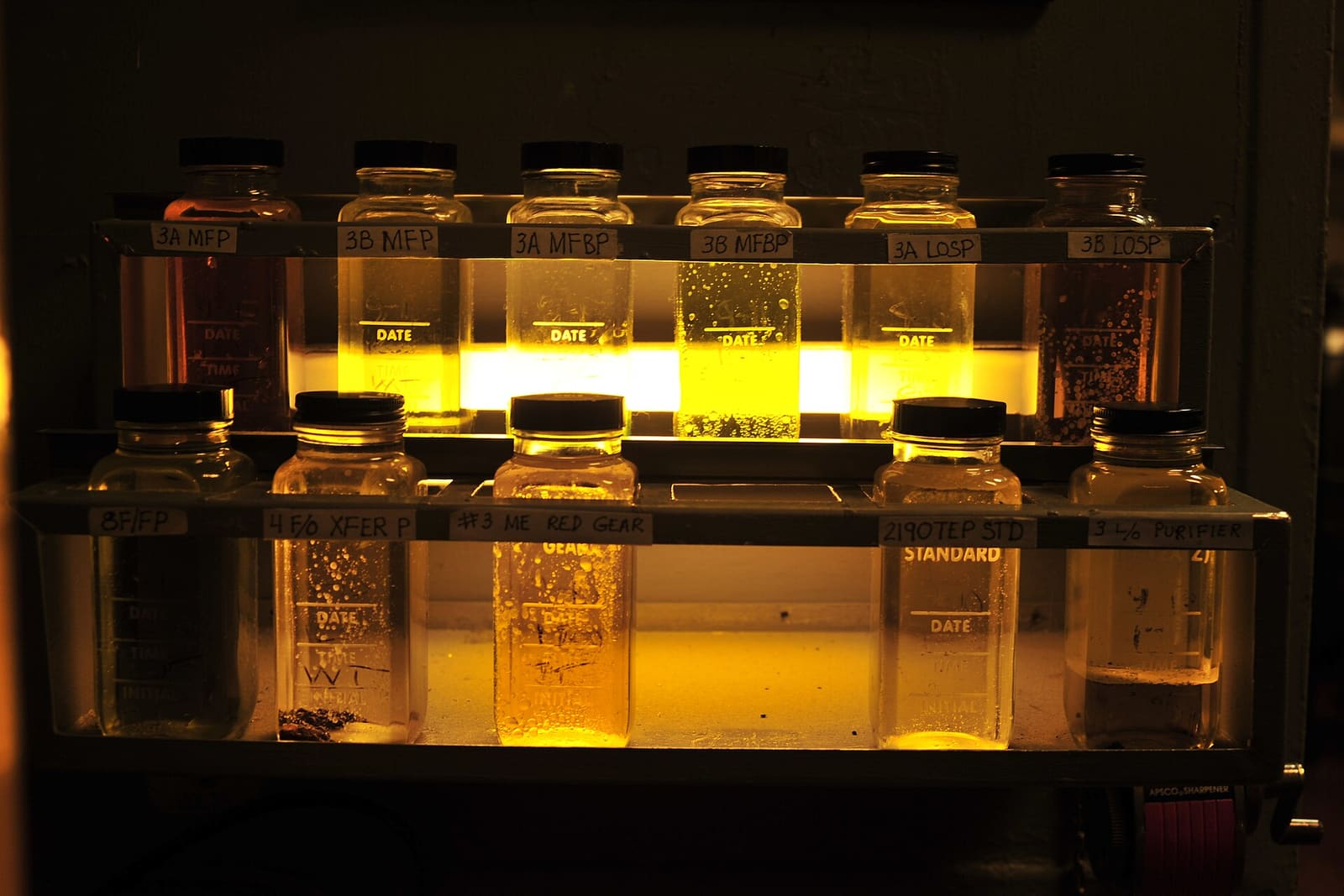
Engine and Gearbox Oil Analysis: How to Take a Clean Sample and Read the Report
A lab oil analysis is like a blood test for your engine, transmission or lower unit. Learn how to pull a clean sample, what the lab measures, what wear metals, coolant, sea water and fuel in the oil can mean, and why the trend over several samples matters more than any one number.
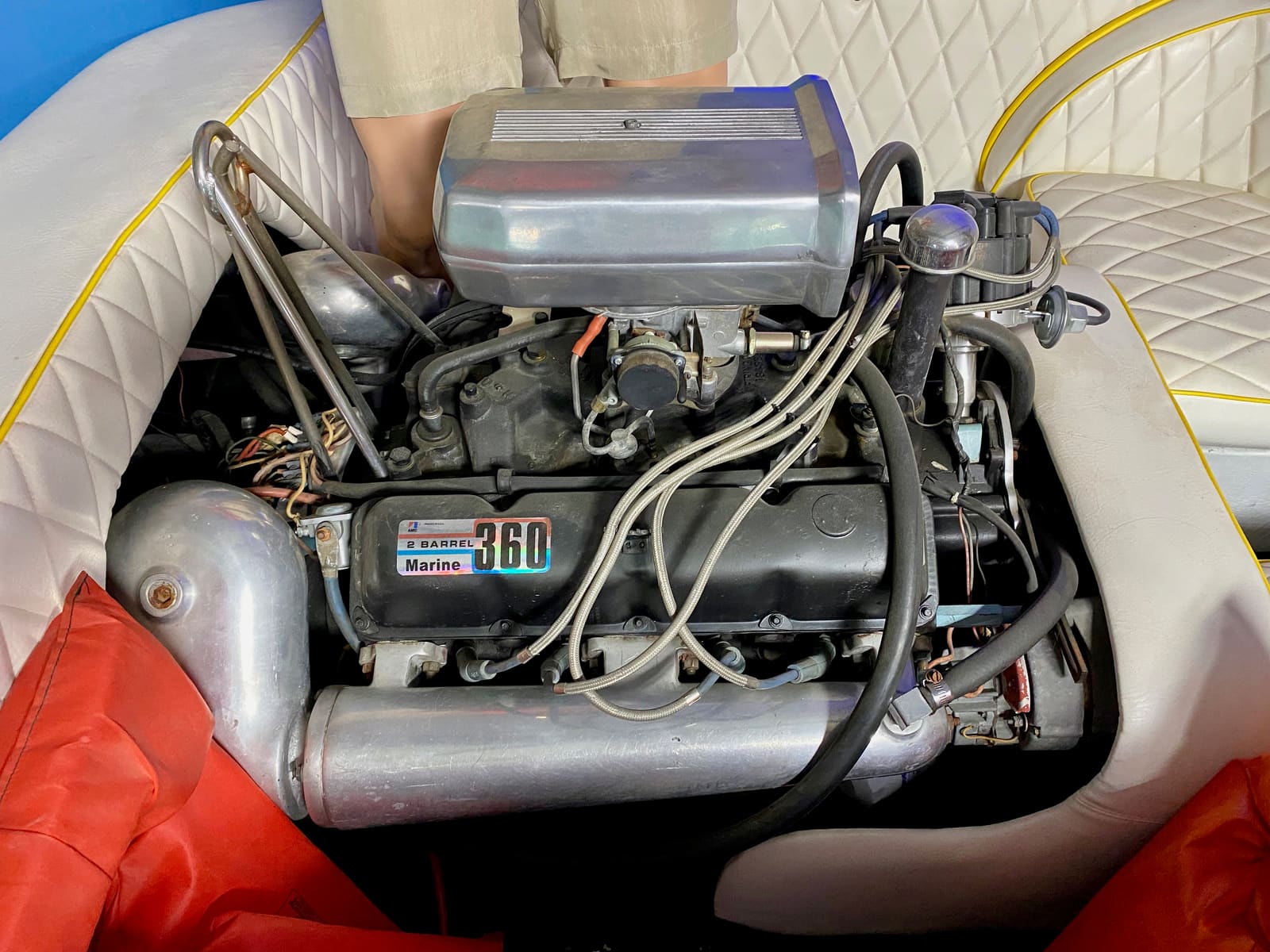
Milky Engine Oil or Water in the Oil - What It Means and What to Do
Milky, creamy or rising engine oil usually means water is getting into the engine. Learn why you should stop running it right away, how to tell harmless condensation from a real leak, and which parts are the usual suspects: head gaskets, exhaust risers and manifolds, intake manifold gaskets, oil coolers and freeze cracks.
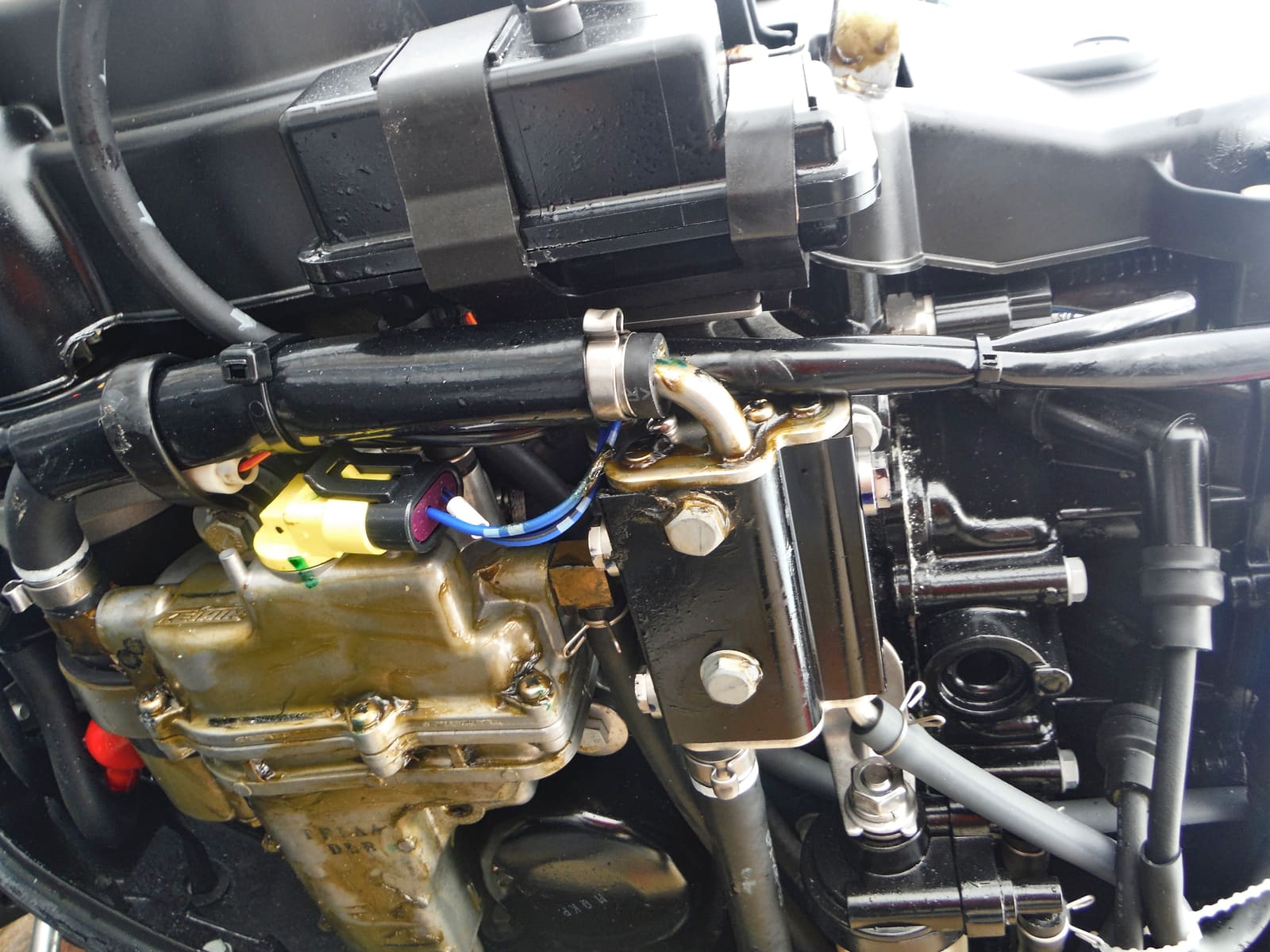
Four-Stroke Outboard Oil Level Rising or Smelling Like Gas: What It Means and What to Do
If the oil on your four-stroke outboard's dipstick keeps going up or smells like gasoline, fuel is probably getting into the crankcase. Learn how to check the level the right way, why lots of idling, trolling, short runs and cold water cause it, what you can do yourself, and when a fuel-system fault needs a dealer.

Oil or Fuel in the Bilge: Safe, Legal Cleanup
What to do when you find oil, diesel or gasoline in your bilge. Soak it up with oil-only absorbents, keep it from being pumped overboard, dispose of it properly, report any sheen on the water to the National Response Center, and find the leak so it does not happen again.
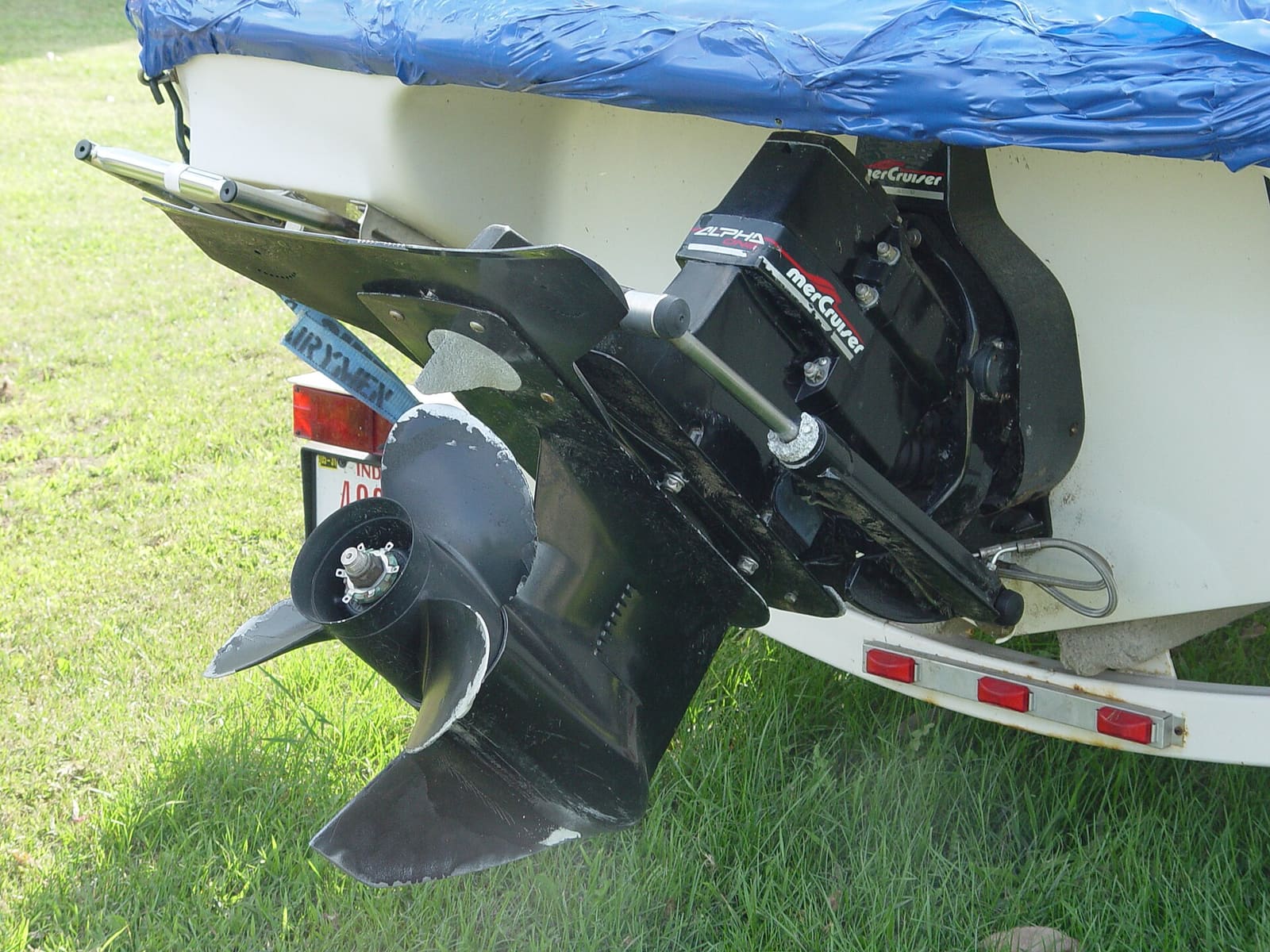
How to Winterize a Sterndrive (MerCruiser, Volvo Penta and Similar)
Get the water out of your sterndrive engine, protect it with antifreeze, and service the drive before storage. A cracked block or manifold from one missed drain plug can cost thousands, and doing it yourself saves a shop bill of several hundred dollars.
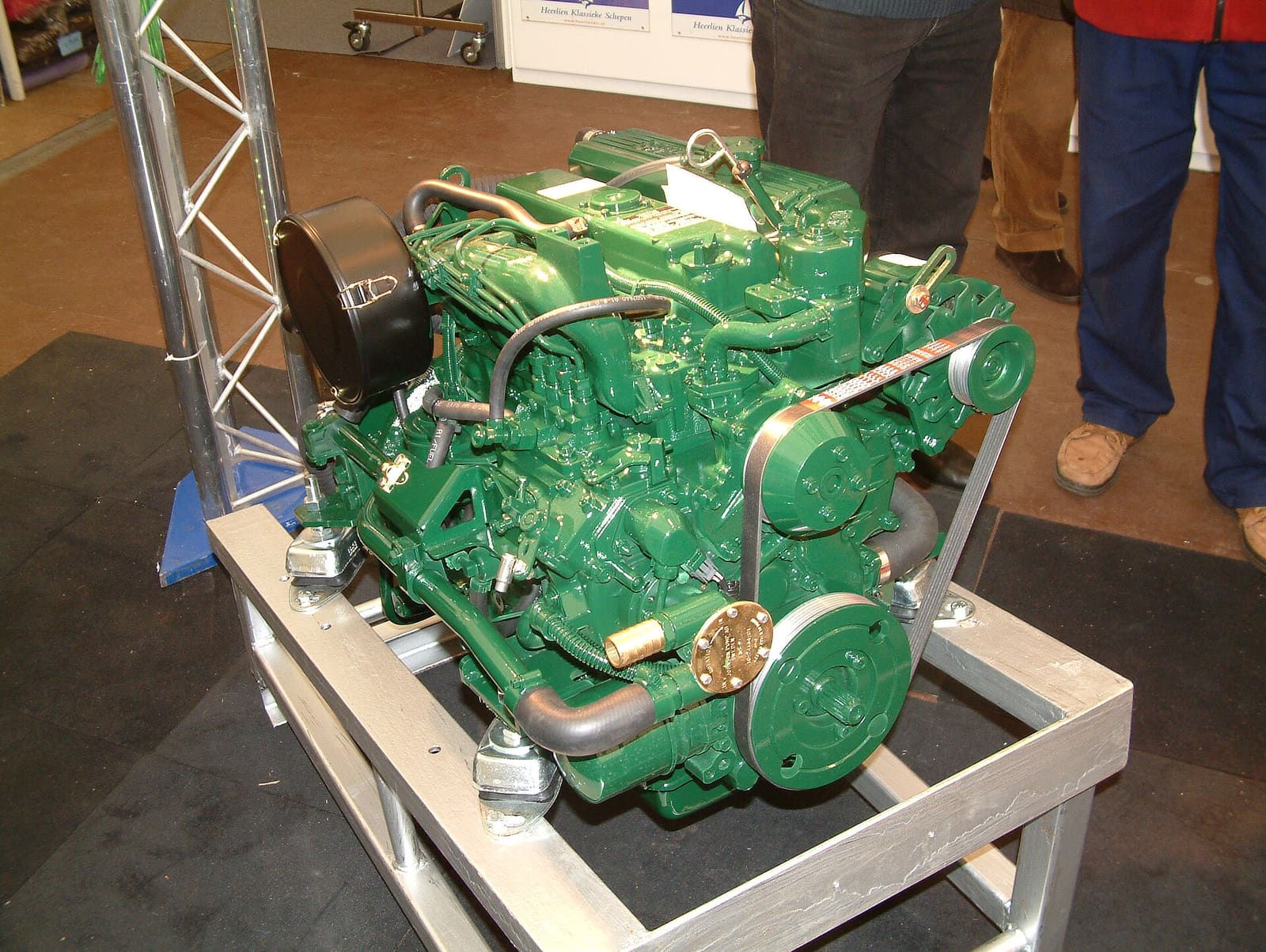
How to Winterize a Marine Diesel Inboard (Sailboat or Trawler)
Lay up a marine diesel for winter the way the engine makers describe it, covering fresh oil, a full and treated fuel tank, antifreeze through the raw-water side, the impeller out, the coolant checked, openings plugged and the battery cared for. Freeze damage to a diesel's raw-water circuit is one of the most expensive and most avoidable winter repairs.
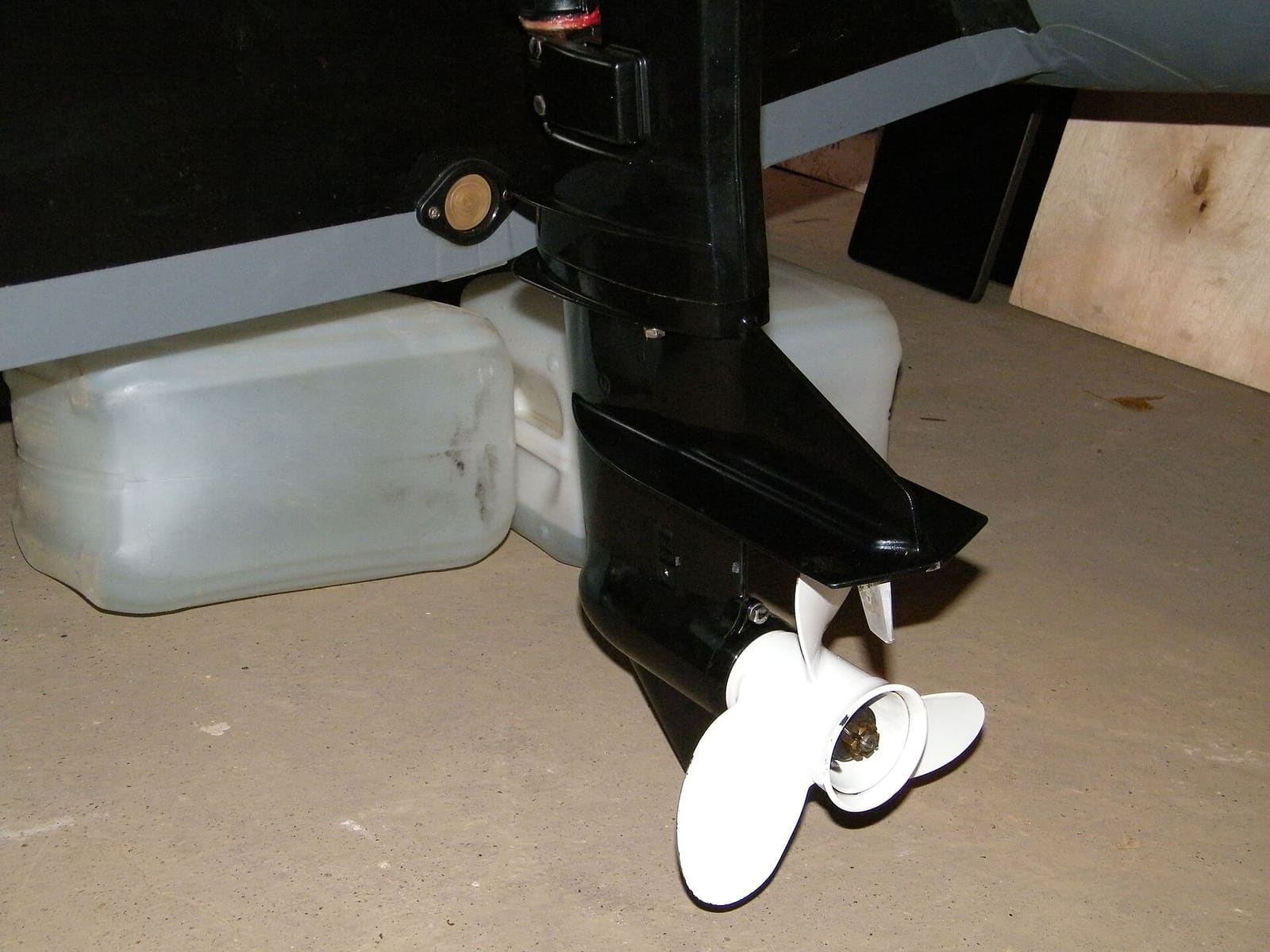
How to Change Lower Unit (Gearcase) and Sterndrive Oil
Drain and refill the gear oil in your outboard lower unit or sterndrive, and learn to spot water intrusion before it destroys the gears. It is a 30-minute job that protects a gearcase costing thousands to replace.
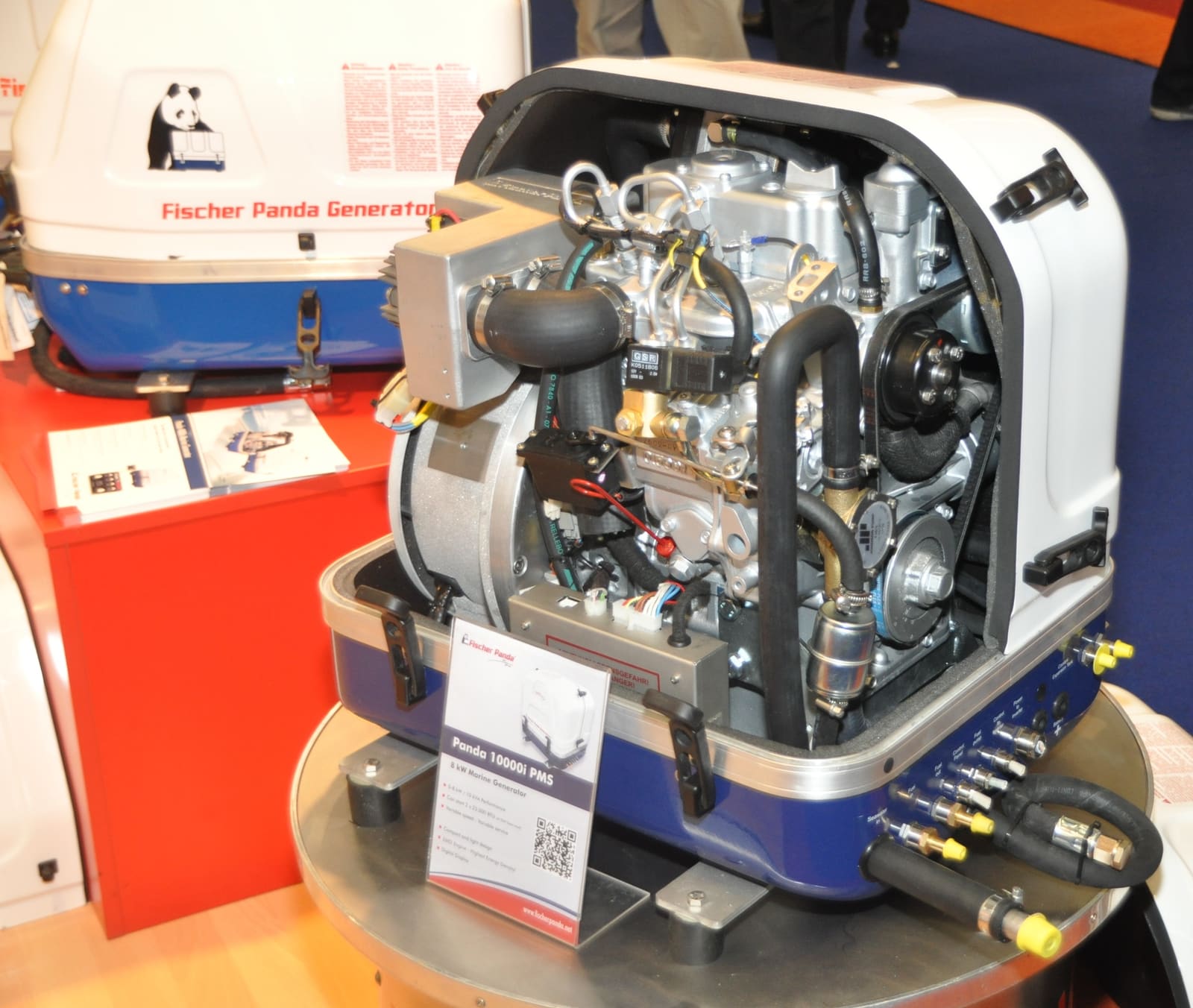
Marine Generator Routine Maintenance and CO Safety
Keep an Onan, Kohler/Rehlko, Northern Lights, Westerbeke or similar marine generator reliable with regular checks of oil, raw-water cooling, fuel, exhaust and the start battery, plus a monthly run under load. Generator exhaust is a leading source of carbon monoxide on boats, so safety checks come first.