Low-Voltage Disconnects: Keep the Stereo and Fridge from Killing Your Battery
A low-voltage disconnect (LVD) automatically cuts non-essential loads like the stereo, fridge and cabin lights before they drain the battery you need to start the engine. Learn how these devices work, which loads belong behind one and which never do, how to pick the cut-off point for lead-acid or lithium, and how to install one safely.
Time
2 h 30 min
Shop would charge
$200-500
Applies to
All engines
Safety first: Never wire bilge pumps, high-water alarms or other safety loads through a low-voltage disconnect: they must keep working when the battery is low. Turn off all chargers and battery switches and disconnect the battery negative before you start. The feed to an LVD is a battery cable that needs its own fuse near the battery. If a cable or device is hot, melted or smells burned, stop and call an ABYC-certified marine electrician.
Owners often ask
- How do I keep the stereo from draining my only battery at the sandbar?
- Should my bilge pump go through the low-voltage cutoff too?
This guide walks you through it. Still stuck? Ask the AI Mechanic about your engine.
Tools
- Digital multimeter
- Wrenches or sockets for battery and device studs
- Ratcheting or hydraulic crimper sized to your cable
- Wire stripper and cutters
- Heat gun and adhesive-lined heat-shrink
- Drill and screwdriver for mounting
- Smartphone with the maker's app (for Bluetooth models)
- Safety glasses
Parts & supplies
- Marine low-voltage disconnect rated above the total current of the loads it will switch
- Fuse and fuse holder for the feed from the battery, sized for that cable
- Tinned marine cable for the feed and load side, sized for the current and run
- Small fused ground wire, if the device needs one (often supplied)
- Remote switch, buzzer or LED, if your model supports them
- Crimp lugs, heat-shrink and cable labels
Before you start
A dead battery is one of the most common reasons boats get towed; Blue Sea Systems makes exactly that point when it sells its LVD. The usual story: the stereo plays all afternoon at the sandbar, the engine's off, and when it's time to leave the starter just clicks.
A low-voltage disconnect is an automatic switch between the battery and your non-essential loads. It watches the battery voltage and, when it falls to a level you choose, it disconnects those loads. When the voltage recovers (you start charging), it reconnects them. Victron describes its version as cutting non-essential loads before the battery is damaged by a deep discharge, or before there isn't enough left to crank the engine.
Where an LVD fits:
- Single-battery boats. Blue Sea calls its m-LVD ideal for a single-battery boat or vehicle: the stereo can drain the battery only to the cut-off, leaving enough to start.
- House bank protection. On boats with separate start and house banks, an LVD keeps the fridge or inverter from running the house bank down so deep that it's damaged.
- Lithium banks. It can disconnect loads before the battery's own protection shuts everything off.
An LVD doesn't replace good charging or a battery switch. It's a safety net for the days someone forgets.
Steps
Make two lists. Loads that can be cut:
- Stereo, amplifiers and subwoofers
- Refrigerator or cooler
- Cabin and courtesy lights
- USB and 12-volt outlets
- Inverter (through its remote switch, see Step 4)
- Washdown and livewell pumps, in most cases
Loads that must never go through an LVD:
- Bilge pumps and high-water alarms. Blue Sea's advice for 24-hour circuits is that they connect directly to a battery, aren't switched, and are hard to turn off by accident.
- VHF radio and navigation lights. Blue Sea's load-shedding article makes the point that the whole goal is to keep enough battery for essential communications and navigation.
- Engine electronics, the ignition circuit and the starter.
- Security systems, CO detectors and fume detectors.
Total the current of everything on the "can wait" list that could run at once. Use the label ratings, or measure each with a clamp meter. The LVD must be rated above that total. For reference, Blue Sea rates its m-LVD at 65 amps continuous (115 amps for 5 minutes), and Victron sells versions from 65 to 220 amps.
Also check the device's own standby draw, since it's always on the battery. Blue Sea lists about 95 milliamps when the m-LVD is connected and 4 milliamps when open; Victron lists 1.4 milliamps for the Smart BatteryProtect. On a boat left for weeks, that difference matters.
- Dedicated LVD with a relay: a sealed switch with an adjustable cut-off, often with a remote switch and override. Blue Sea's m-LVD has a status light, an alarm output and a 10-minute override button so you can finish a job before the cut-off.
- Solid-state (MOSFET) LVD: no moving contacts. Victron calls its BatteryProtect ignition proof for that reason, and it uses very little power, which suits lithium banks.
- An automatic charging relay used for load shedding: some ACRs can do this job. Blue Sea explains how its BatteryLink ACR can disconnect a non-critical load at an adjustable voltage and reconnect it when the voltage rises about 6% above the cut-off.
If any part will sit in a gasoline engine compartment or fuel-tank space, it must be marked ignition protected.
Two rules from Victron's manual apply to most solid-state LVDs:
- Current flows one way only: from the battery (IN) to the loads (OUT). Victron warns that reverse current damages the device, so don't use one for battery-to-battery charging or on a circuit where a charger feeds back through it.
- No inverter DC input: Victron forbids connecting an inverter or inverter/charger's main DC cables through a BatteryProtect; the large input capacitors trip the protection and reverse current can damage it. Instead, the LVD switches the inverter's remote on/off input.
Read your model's manual for its own limits.
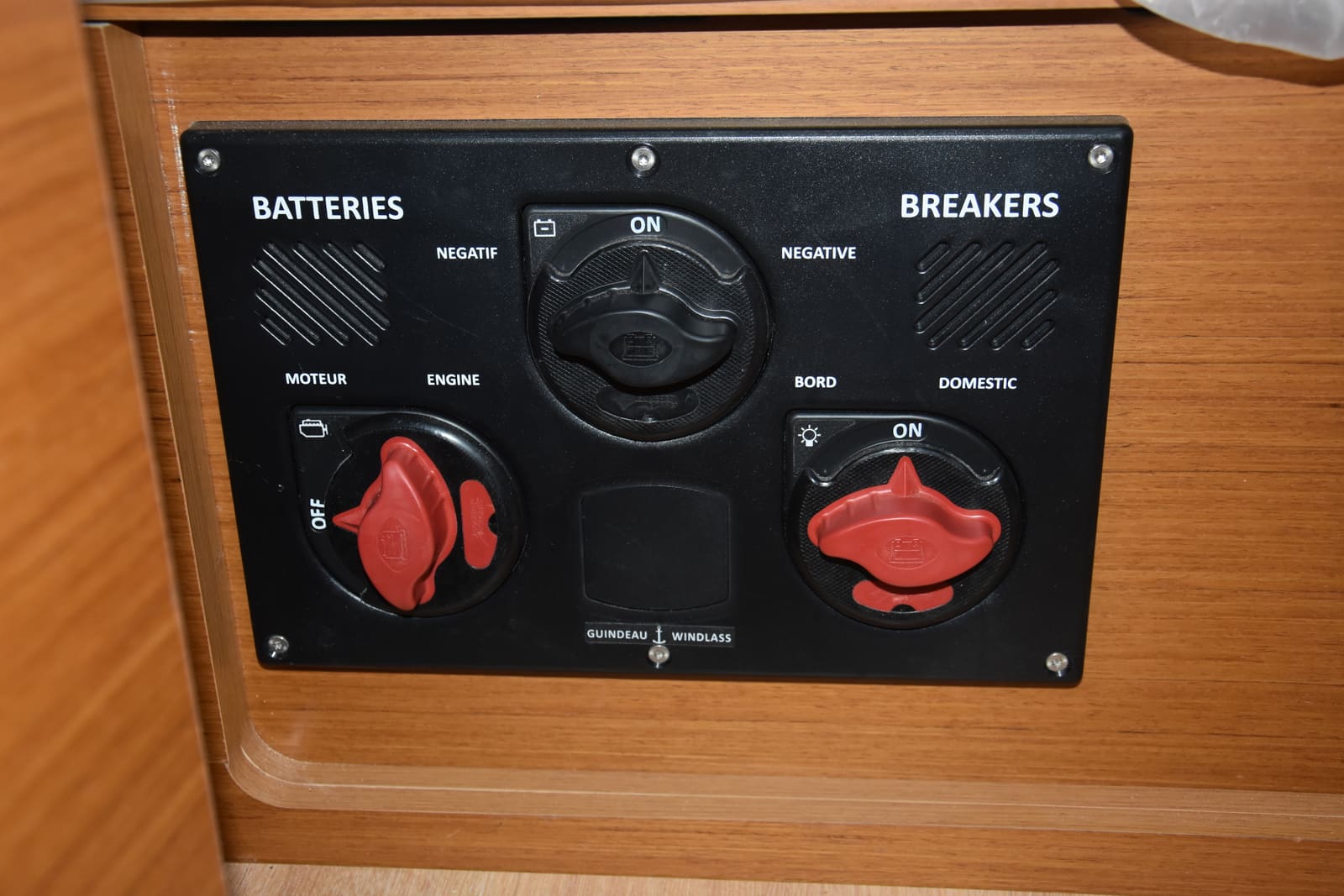
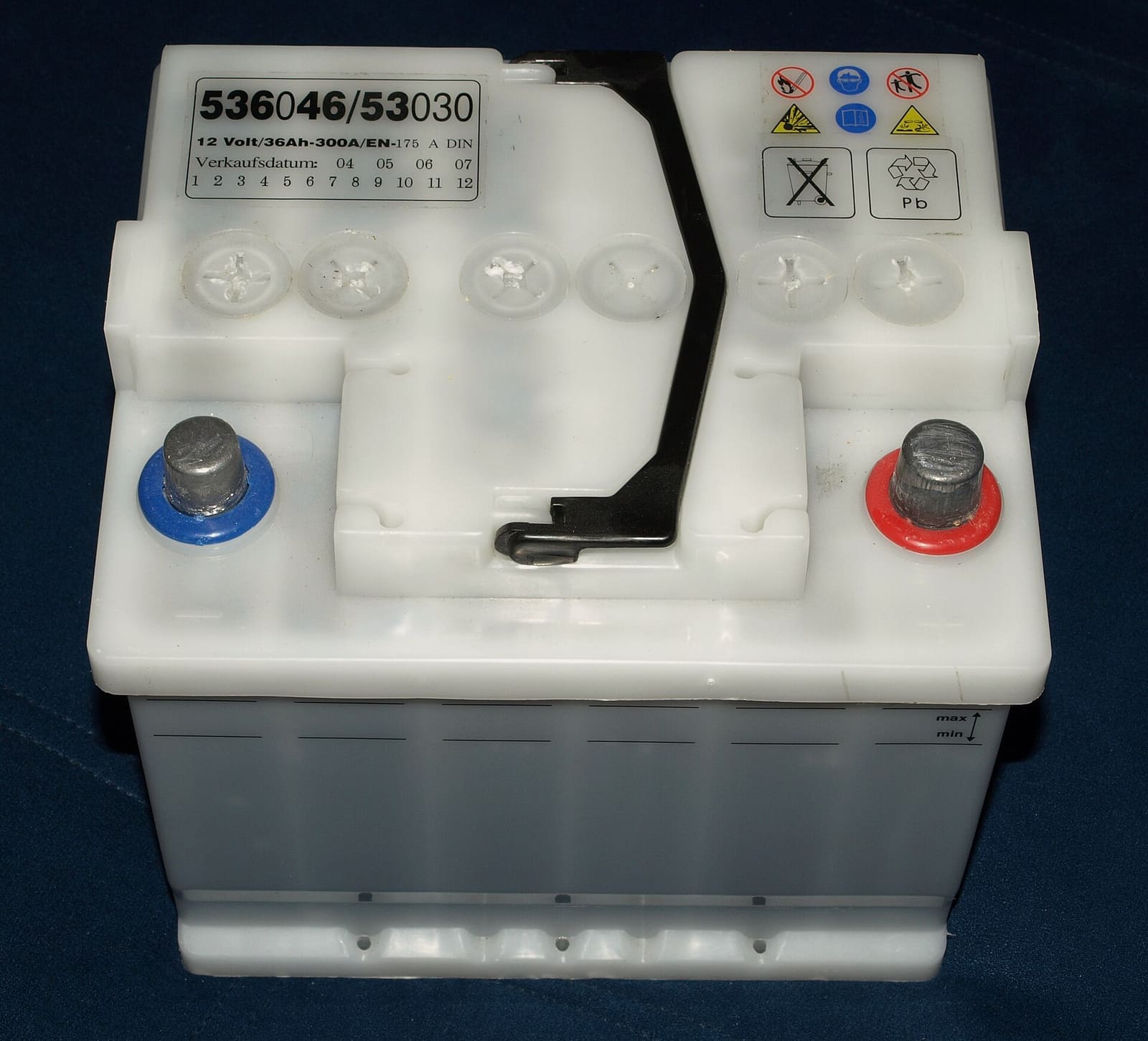
Battery switches are the manual way to separate loads from a battery. An LVD does the same job automatically, but only for the loads you wire through it. Photo: PaterMcFly / Wikimedia Commons · CC BY 4.0 The right number depends on what you're protecting.
- Protecting engine starting (lead-acid): cut off high enough that the battery still cranks the engine. Blue Sea's BatteryLink ACR defaults to 12.7 volts for load shedding and adjusts from 11.5 to 13.3 volts, which shows how high starting protection usually sits.
- Protecting a lead-acid house bank from deep discharge: lower settings save the battery from damage but don't guarantee a start. Victron's factory default disconnects at 10.5 volts and reconnects at 12 volts (12-volt systems), and offers presets up to a 12-volt cut-off with 13-volt restart.
- Lithium (LiFePO4): the voltage stays nearly flat until the battery is almost empty, so small differences matter. Use the setting your battery maker recommends. If your lithium system has a management system (BMS) with a load-disconnect output, a Victron-style LVD can be controlled directly by it (Victron's Li-ion mode); Victron notes most drop-in batteries with an internal BMS don't have that output, and then you use a normal voltage setting.
When in doubt, start with a conservative (higher) cut-off and lower it later if it trips too often.
Voltage dips for a few seconds when the engine cranks or a big motor starts. Good LVDs ignore short dips. Victron's unit sounds an alarm after 12 seconds below the set point (so cranking doesn't set it off), disconnects after 90 seconds, and waits 30 seconds before reconnecting. That gives you a moment to start the engine or turn something off before the loads drop.
Victron asks for a well-ventilated spot close to the battery (within about 50 cm, roughly 20 inches) but not above the battery, where corrosive gases can reach it. Pick a dry, reachable place on a bulkhead. Keep it out of the bilge and away from a gasoline engine unless the unit is rated ignition protected.
Turn off chargers, solar and shore power and every battery switch, and disconnect the battery negative. Then sketch the circuit:
- Battery positive → fuse (close to the battery) → LVD IN terminal.
- LVD OUT terminal → a fuse block or panel that feeds only the "can wait" loads.
- LVD ground or control wire → directly to battery negative (Victron supplies a small wire and says no other equipment should share it; protect it with a small fuse).
The simplest way to move loads is often to feed one existing breaker panel or fuse block (the "entertainment" or "house" panel) from the LVD, rather than rerouting each circuit.
Use cable sized for the total current and length, crimped lugs and adhesive heat-shrink. Size the feed fuse to protect that cable. Victron warns that a long or undersized cable between the battery and its unit can cause a false short-circuit alarm or unexpected shutdowns when a load starts, so don't go skinny on the feed. Double-check that IN goes to the battery and OUT to the loads.
Victron says not to connect the load output until the unit is fully programmed. Reconnect the battery, then set:
- The battery voltage (12 or 24 volts) if it isn't auto-detected. Victron's unit detects it only once, at first power-up.
- The cut-off and restart voltages from Step 5.
- The alarm output and operating mode (Victron offers buzzer/LED, relay, or Li-ion modes).
- A new Bluetooth PIN, if it has one.
On a dial-adjusted LVD, set the dial to the marked voltage and confirm with the instructions. Then connect the load side.
With the engine off and no chargers on, run the "can wait" loads and watch the voltage. You don't need to flatten the battery to test: on many models you can temporarily raise the cut-off just above the present battery voltage, wait for the delay, and confirm the loads drop while the bilge pump, VHF and nav lights still work. Then set it back. Turn on a charger and confirm the loads reconnect once the voltage recovers.
Label the LVD, its fuse and the panel it feeds. Tell everyone aboard that when the stereo cuts out, the fix is to start the engine or plug in, not to bypass the box. If yours has an override button, explain that it only buys a few minutes.
Teach what the warning light means, too. Boating Magazine's install of Blue Sea's m-LVD describes the remote rocker's LED: off means the accessories are connected, a steady light is the low-voltage warning, and a flashing light means the accessories have been cut to save starting power. Other brands use different patterns, so put a small card with your unit's meanings near the switch. The same article notes the m-LVD is not meant to replace the main battery switch, so keep using that switch when you leave the boat.
Common mistakes
- Wiring the bilge pump or high-water alarm through the LVD "so everything's protected," which leaves the boat unguarded when the battery is low.
- Setting a lead-acid cut-off so low that the battery is protected from damage but still won't crank the engine.
- Using lead-acid voltage settings on a lithium bank.
- Running an inverter's main DC cables through a solid-state LVD instead of using its remote switch.
- Installing a one-way LVD backward, or letting a charger feed back through it.
- Forgetting the fuse at the battery end of the LVD feed.
- Mounting it directly above the battery or down in the bilge.
- Ignoring the device's own standby draw on a boat that sits for weeks.
When to call a pro
- Moving several circuits or an entire panel onto an LVD
- Any inverter, inverter/charger or lithium installation
- Boats with several battery banks, an ACR, isolator or DC-DC charger
- Loads larger than the LVD's rating, or cables that run warm
- Not sure which circuits are bilge pumps, alarms or other 24-hour loads
- An LVD that cycles on and off repeatedly or trips the moment a load starts
Tips
- Write the cut-off and restart voltages, the fuse size and which loads are behind the LVD in your boat profile.
- Pair an LVD with a battery monitor: the monitor tells you how much you've used, the LVD steps in if nobody's watching.
- A remote LED or buzzer at the helm turns a surprise shutdown into a warning.
- If the LVD trips often, the real problem is usually charging (not enough engine time, a weak charger, an old battery), not the setting.
Official references
We read these to write this guide. Your engine's own manual always wins.
- Blue Sea Systems – m-LVD Low Voltage Disconnect (product page and specifications)
- Blue Sea Systems – Load Shedding Using the CL-Series BatteryLink ACR
- Blue Sea Systems – 24 Hour Circuit Solutions
- Victron Energy – Smart BatteryProtect Manual, Introduction
- Victron Energy – Smart BatteryProtect Manual, Features
- Victron Energy – Smart BatteryProtect Manual, Installation and Wiring Examples
- Victron Energy – Smart BatteryProtect Manual, Operation and Programming
- Victron Energy – Smart BatteryProtect Manual, Technical Specifications (default thresholds and delays)
- Victron Energy – BatteryProtect Gets Smart
- Boating Magazine – How to Install a Low-Voltage Protection System
Safety: BoatMend is for information only and does not replace a certified marine technician. You are responsible for your safety and your boat. Read the full disclaimer.
Last updated 2026-10-25
Related guides
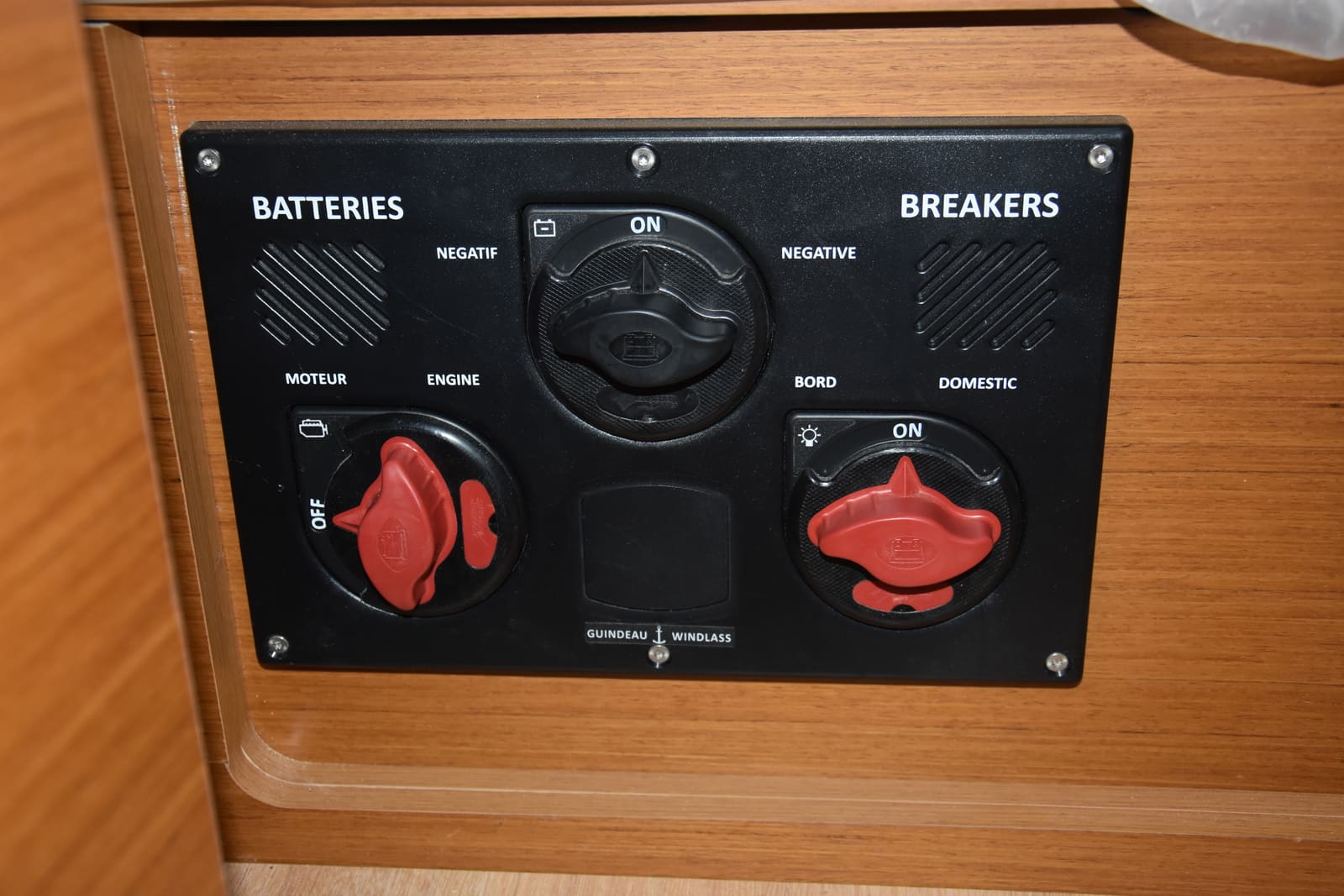
How to Use a 1-2-Both Battery Switch and Run Two Batteries
Learn what the 1, 2, Both and Off positions really do, a simple routine that keeps one battery ready to start the engine, how to check that both batteries are charging, and when an automatic charging relay makes life easier. Rewiring high-current cables is a job for a marine electrician.
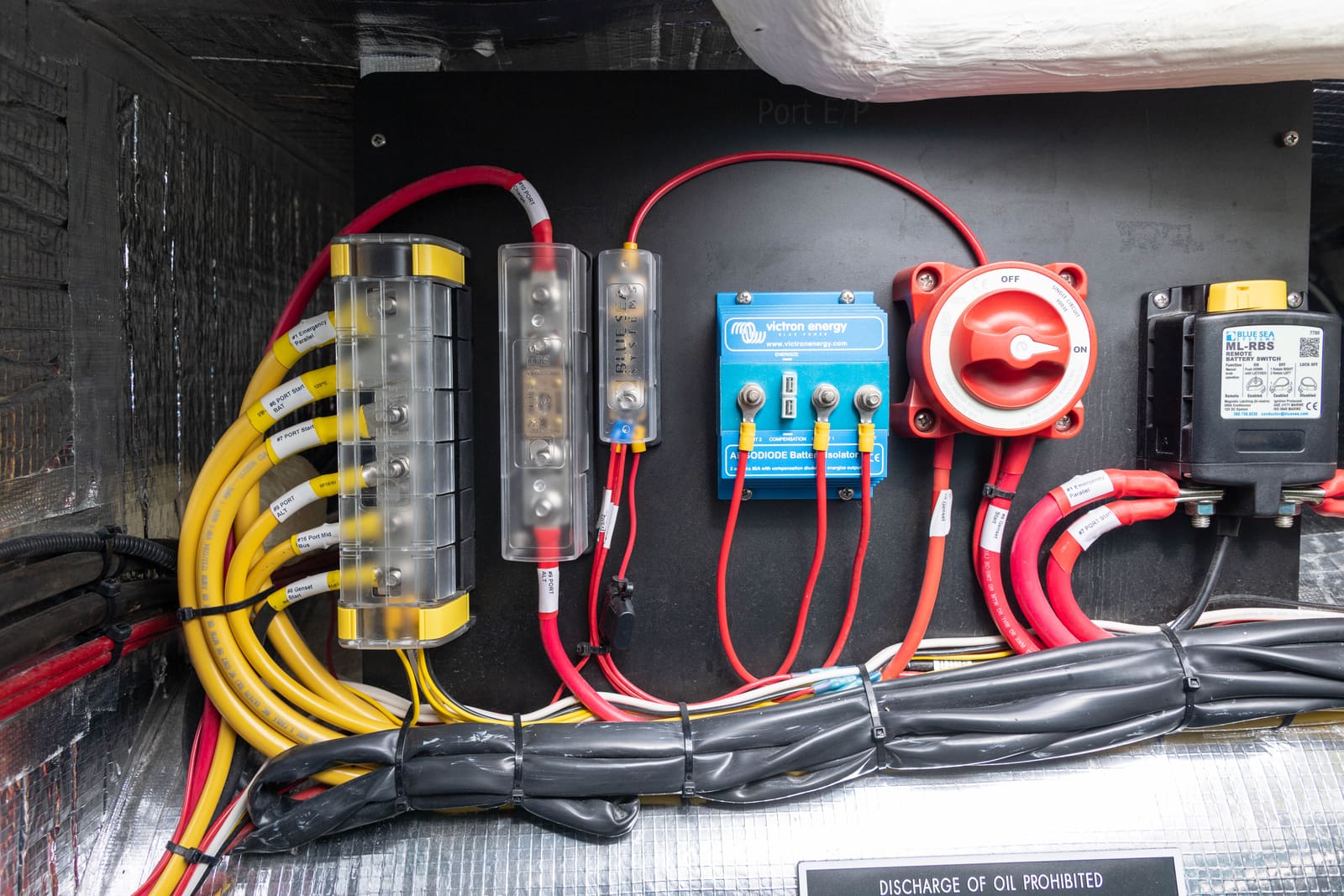
Battery Isolators Compared: Diode, ACR, Combiner and DC-DC Charger
Learn what the box between your engine and your batteries actually does, why an old diode isolator can leave batteries never quite full, and which charging setup suits an outboard, an inboard or a lithium house bank, plus a simple meter check of the one you have.
Marine Battery Care: Test, Charge and Store for Winter
Check your boat battery's health, charge it the right way for its type (flooded, AGM or lithium), and store it so it is ready in spring. Most "boat won't start" calls start with a neglected battery.
Switching to Lithium (LiFePO4) Boat Batteries: What Changes and When It's Worth It
What really changes when you swap lead-acid for lithium iron phosphate (LiFePO4) batteries on a boat: the battery management system, charger settings, protecting the alternator with a DC-DC charger, not mixing chemistries, cold-weather charging, and which jobs (trolling, house, starting) suit lithium. House-bank conversions should be designed and installed by a qualified marine electrician.
Battery Goes Dead While the Boat Sits - How to Find a Parasitic Drain
If your boat battery is flat every time you come back, something may be quietly drawing power while you are away. Learn how to tell a bad battery from a drain, find the circuit with a multimeter and the fuse panel, and fix the usual culprits without disabling your bilge pump.

Powering a Big Boat Sound System: Amplifier Draw, an Audio Battery and Charging
Work out how much current your amplifiers really pull, size a dedicated audio battery, keep it charged with an automatic charging relay or isolator, and fuse and wire it so a long day of music never leaves you unable to start the engine.

How to Keep Your Boat Fridge, Freezer or Icebox Cold (and Off Your Batteries' Back)
Most boat fridge problems are not a dead compressor: they are trapped heat, low voltage, leaky seals or too much frost. Learn the owner checks for air-cooled, water-cooled and keel-cooled units, how to estimate power draw, and how to store the system for winter.

How to Wire a Bilge Pump Correctly (Automatic Float, Panel Switch and Fuse)
Wire your bilge pump so the automatic float works even with the battery switch off, the helm switch gives you a manual override, and every circuit has the right fuse, wire size and connections kept above the bilge water. A pump that is wired wrong can leave the boat unprotected exactly when nobody is aboard.
Boat Inverters and Inverter/Chargers: Sizing, Safe Use and What a Pro Must Install
An inverter turns battery power into 120-volt household current, which makes it as dangerous as shore power and a serious fire risk if it is fused or wired wrong. Learn how to size one realistically, what a safe installation looks like, the owner checks to do, and the mistakes (like backfeeding) that hurt people.
Battery Monitors with a Shunt: Installing, Setting Up and Reading State of Charge
A voltmeter can't tell you how full your house battery really is. Learn how a shunt-based battery monitor counts every amp going in and out, where the shunt goes on the negative side, which settings to change for lead-acid or lithium, and how to read the percentage without being fooled.