Impressed Current Corrosion Protection on Yachts: How It Works and How to Keep an Eye on It
Larger aluminum and steel yachts often use an impressed current system instead of, or alongside, sacrificial anodes. Learn what the control panel, anodes and reference electrodes do, how to log and double-check the readings with a portable reference cell, why over-protection can strip paint and attack aluminum, what to do at haul-out, and when to call a corrosion specialist.
Time
1 h
Shop would charge
$400-2500
Applies to
All engines · Yacht, Cabin cruiser, Sailboat
Safety first: Never swim, dive or put your hands in the water near a boat or dock where AC shore power is connected; stray AC current in the water can cause electric shock drowning. Take readings from the deck or dock with a reference electrode on a lead. Don't open the impressed current control panel or its wiring: it is a powered system tied to the hull, and a wrong connection can damage the hull quickly. Switch the system off only the way its manual describes, typically before haul-out and before hull work, and tell the yard it's there. If you see a fast change in readings, smell burning at the panel, or anyone feels a tingle from a ladder, rail or the water, unplug shore power, keep people out of the water and call an ABYC-certified marine electrician or corrosion specialist; in an emergency, call 911.
Owners often ask
- How do I know my yacht's impressed current corrosion system is actually working?
This guide walks you through it. Still stuck? Ask the AI Mechanic about your engine.
Tools
- Silver/silver-chloride (Ag/AgCl) marine reference electrode with a long lead
- Digital multimeter that reads DC millivolts
- Notebook or the BoatMend log
- Flashlight and a soft brush (for inspection at haul-out)
Parts & supplies
- Nothing for routine checks; replacement anodes, shields and reference electrodes only as specified by the system maker
Before you start
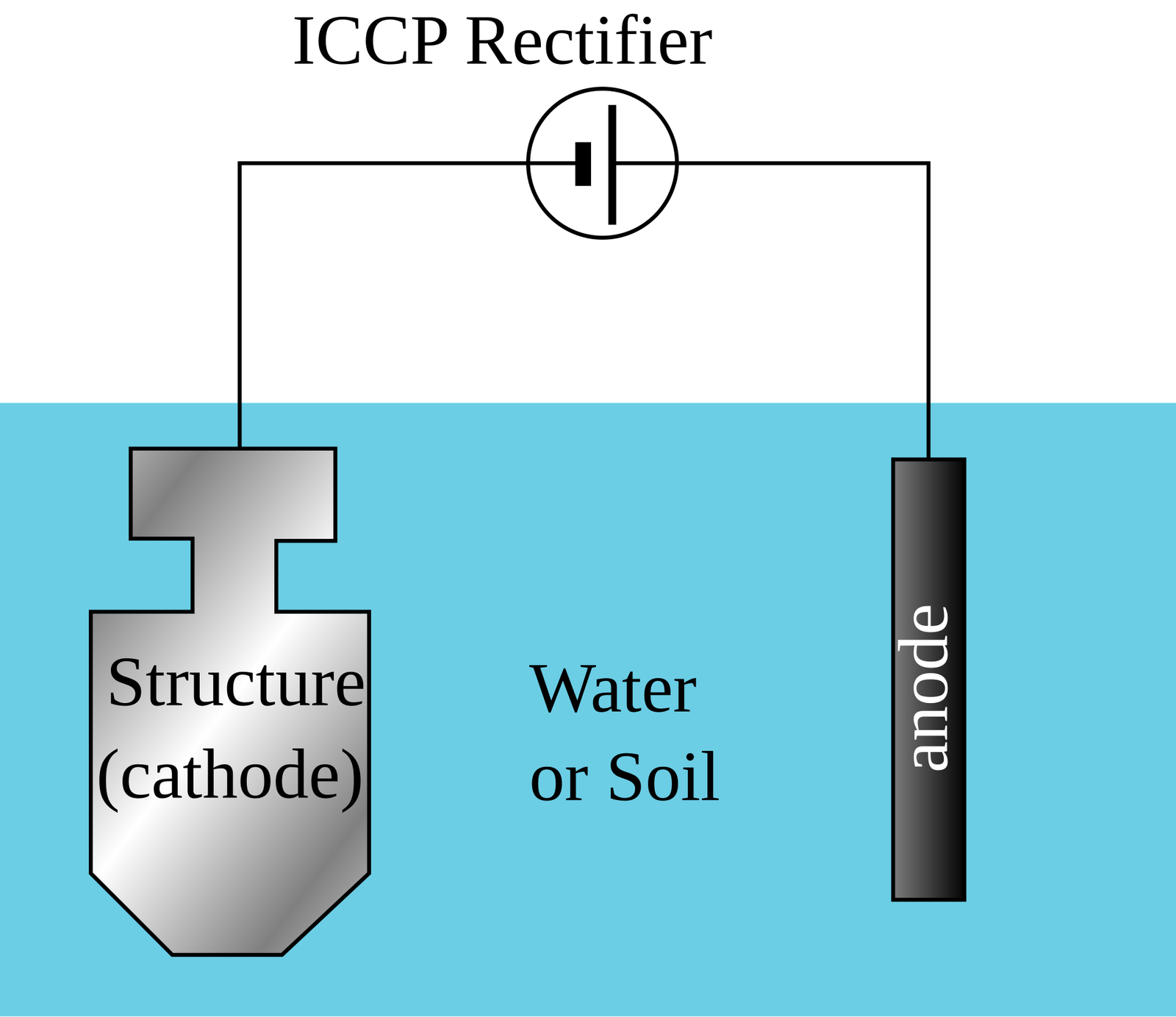
What it is: sacrificial anodes protect underwater metal by corroding instead of it. An impressed current cathodic protection system (often called ICCP) does the same job with electricity. A control panel takes DC power from the boat's batteries and pushes a small, controlled current from special long-life anodes on the hull into the water and back into the hull. Reference electrodes, mounted through the hull and isolated from it, measure the hull's voltage, and the panel adjusts the current to hold it in a protected band. Evac, which makes the Cathelco systems, describes its controllers as continuously measuring hull potential and automatically adjusting anode output.
Where you'll find it:
- Aluminum and steel yachts, where corrosion can attack the hull itself. Evac offers separate designs for aluminum hulls (Alutek) and steel hulls (Minitek).
- Some large fiberglass yachts with a lot of underwater metal.
- Sterndrives and pods from engine makers, such as Mercury's MerCathode and Volvo Penta's ACP. Those are covered in the sterndrive corrosion and MerCathode guide; this guide is about hull systems.
Why it's used: Evac argues that sacrificial anodes lose output when seawater resistivity changes (for example in brackish or cold water), and that their protection level is hard to know or control, while an impressed current system can hold steady across normal seawater conditions. The trade-off is that it needs power, working sensors and correct settings. When it goes wrong, it can do more harm than a bag of zincs.
The big risk is over-protection: Practical Sailor notes that over-protection is uncommon with ordinary anodes but can happen with a miscalibrated impressed current system. Too much current makes the water at the hull surface alkaline and can produce hydrogen gas. Steve D'Antonio explains that aluminum is "amphoteric," meaning it is attacked by strong alkali as well as acid, and gives about -1,100 mV (against a silver/silver-chloride electrode) as the limit aluminum should never go beyond. Evac says too much current on an aluminum hull can cause cathodic disbondment, meaning the paint lets go, and that aluminum needs only a fraction of the current steel does, so control has to be precise. Practical Sailor adds that on steel hulls, gas under the paint lifts it off. In Cruising World, D'Antonio describes the visible sign he sees regularly on fiberglass boats: a "halo" of bare, peeling bottom paint around over-protected underwater metal, called cathodic disbondment. He notes that the same alkaline film dissolves the soft material between the grain of wood (delignification), so wooden hulls and wooden parts near protected metal are at risk too, while bronze and stainless steel themselves aren't harmed by overprotection. He recommends having any unusual anode or underwater-metal problem looked at by an ABYC-certified corrosion technician.
What you can do: owners don't set up these systems; a corrosion specialist does. Your job is to know what normal looks like on your panel, log it, cross-check it once in a while with your own reference electrode, keep the power on, and spot trouble early. Find the system's manual and the commissioning report (the setup readings) before you start.
Steps
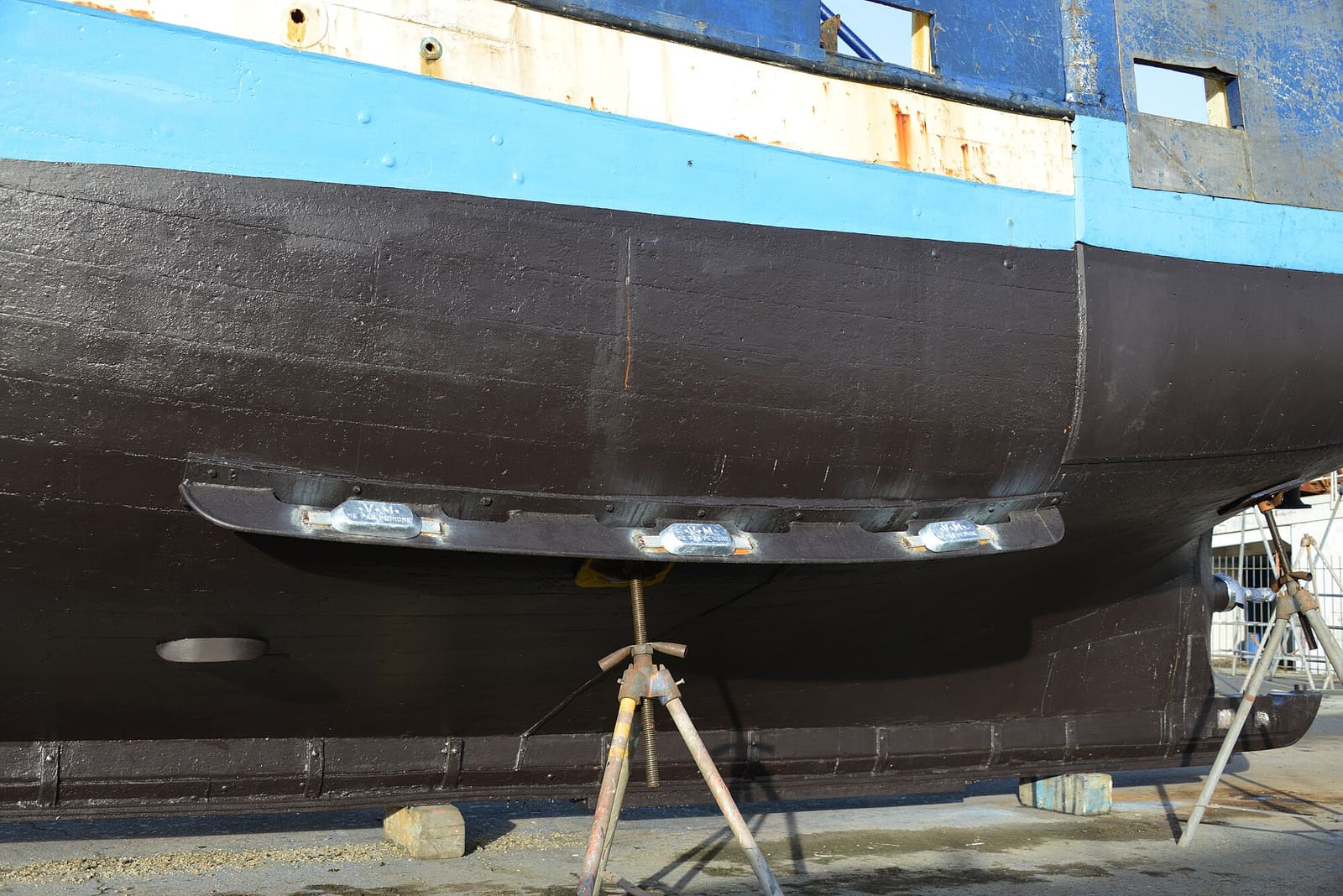
Locate the control panel (usually in the engine room or a technical space), its display or meter, and the circuit breaker or fuse that powers it. Ask your yard or the commissioning report where the hull anodes and reference electrodes are; on a haul-out you'll see them as flush-mounted disks or plates, often with a shield of special coating around each anode. Write it all down in BoatMend with a photo.
Most panels show at least the hull potential measured by the reference electrode (in millivolts) and the current going to the anodes (in amps), and many have alarm lights. Compare today's readings with the target and the readings in the commissioning report. Your system's manual explains what each light means; keep a copy aboard.
Write down hull potential, anode current, any alarm, the date, and whether shore power was connected, on a regular schedule (weekly while you're aboard is a good habit) and after any event like a haul-out or new equipment. Over time the log shows the normal pattern. Two changes are worth a call:
- Current climbing steadily while potential stays the same can mean more bare metal is exposed (paint damage) or something else is draining protection, such as a stray current or a neighbor's boat through the shore power ground.
- Current at zero or an alarm means the system isn't protecting the hull.
The system protects only while it has power. Check that its breaker stays on and that batteries stay charged while the boat sits in the water, especially in winter storage afloat or when you're away for weeks. If the boat's batteries are regularly allowed to go flat, the hull loses protection. Ask your installer how it is wired and whether a battery charger on shore power backs it up.
The system trusts its own reference electrodes. If one drifts or fails, the panel can show "normal" while the hull is under- or over-protected. Do an independent check a few times a year:
- Unplug shore power at the boat (not just switched off), as in the hull potential survey guide.
- Connect your portable silver/silver-chloride reference electrode and multimeter the same way as in that guide, with the positive lead on a clean point of the hull or bonding system your specialist recommends.
- Lower the electrode over the side, away from the system's anodes, and take readings at several places along the hull, including near and away from each anode.
Compare your readings with the panel's and with the target range for your hull. Readings close to the anodes are usually more negative; that is one reason Evac uses a second reference electrode near the anode, to watch for local over-protection.
On an aluminum hull, D'Antonio's guidance is that readings should never be more negative than about -1,100 mV (Ag/AgCl). Watch for:
- portable readings more negative than the target range, anywhere on the hull
- paint blistering, lifting or peeling, especially around the anode shields, or bare "halos" in the bottom paint around fittings, shafts and props
- white, powdery or etched aluminum under failing paint
- bubbles or a fizzing look around the anodes in calm water
Any of these means call the specialist (step 12). Don't adjust the control settings yourself.
- readings less negative than the target range (closer to zero)
- pitting on the hull, the shaft, the propeller or around fittings
- sacrificial backup anodes wearing much faster than before
Under-protection often follows a power failure, a failed reference electrode, damaged anodes or a new stray current source.
The system was set up for the metal on the boat and the anodes it has. Adding sacrificial anodes, changing a propeller from bronze to stainless (or the reverse), adding a bow thruster or new through-hulls changes the balance. Ask your specialist before adding or removing anodes. Practical Sailor's rule on anodes applies here too: more is not always better.
A boat plugged into shore power is electrically connected to every other boat on the dock through the green ground wire. A galvanic isolator or isolation transformer keeps those currents off your hull (see the galvanic isolator test and isolation transformer basics guides). If the system's current jumps when you plug in, or when a new boat moves in next to you, the isolation may not be working.
When the boat is out of the water:
- switch the system off as its manual describes; out of the water it cannot work and may raise an alarm
- tell the yard about the system before any hull work, sanding, welding or painting
- inspect each anode, its shield and each reference electrode with a flashlight; look for cracks, missing coating, impact damage or growth, and clean growth off only as the manual describes (usually gently, with no scraper or pressure washer on the faces)
- check the paint around each anode shield for lifting or blistering, a sign of local over-protection
- make sure the painters keep paint off the anode and reference electrode faces, unless the maker says otherwise
- inspect any backup sacrificial anodes and replace them as needed
After launch, switch the system on as the manual describes and let it settle; readings change for a while as the hull polarizes. Log the readings for the first few days, then do a portable check (step 5). If anything doesn't return to the old normal, have the specialist look before the boat sits for weeks.
Have a marine electrician or corrosion specialist with experience in impressed current systems check the whole system on a regular schedule (the maker or installer can suggest how often), and always after hull repairs, new underwater metal, a lightning strike or a long power outage. They test each reference electrode, check anode output and shields, review your log and adjust the settings if needed.
Store the commissioning report, the manual, your reading log, haul-out photos of anodes and electrodes, and every professional survey in BoatMend. A future buyer's surveyor will ask for them, and a specialist can diagnose a problem much faster with a history to compare.
Common mistakes
- Switching the system off to "save the batteries" while the boat stays in the water.
- Trusting the panel display forever without ever checking with an independent reference electrode.
- Painting over anodes or reference electrodes at haul-out, or pressure-washing them.
- Adding sacrificial anodes to an aluminum hull with an impressed current system "for extra protection" without asking a specialist.
- Ignoring paint lifting around an anode shield as a cosmetic problem.
- Adjusting the controller's settings without the commissioning report or the specialist's advice.
- Forgetting to tell the yard the system exists before welding or hull work.
When to call a pro
- Any reading on an aluminum hull more negative than about -1,100 mV (Ag/AgCl), or outside the range in your commissioning report
- Paint lifting or blistering around anodes, or white corrosion on an aluminum or steel hull
- An alarm on the panel, a current reading of zero, or current that keeps climbing
- A damaged anode, shield or reference electrode
- After hull repairs, new underwater metal, a lightning strike or an electrical fire
- Anyone feeling a shock or tingle from the boat or the water: unplug, keep everyone out of the water and call 911 in an emergency
- Any change to the system's settings; look for an ABYC-certified marine electrician or corrosion technician, or the system maker's service network
Tips
- Tape a small card next to the panel with the normal readings and the specialist's phone number.
- Take the same portable readings at the same spots each time so they're comparable.
- Ask your specialist which point on the boat to connect your meter to, and mark it.
- If your boat also has a shaft or sterndrive with its own active system, keep separate logs for each.
- Before buying a used aluminum or steel yacht with an impressed current system, ask for the reading log and the last survey.
Official references
We read these to write this guide. Your engine's own manual always wins.
- Evac (Cathelco) – Alutek ICCP System for aluminium hulls
- Evac (Cathelco) – Minitek ICCP System for steel hulls
- Evac – Protect your vessel from hull corrosion
- Practical Sailor – Can You Have Too Many Zincs? (Darrell Nicholson)
- BoatTEST (Steve D'Antonio) – Reference Cell Testing: Know Thy Corrosion Protection Level
- Cruising World – How Can You Prevent Halos In Bottom Paint Around Underwater Hardware? (Steve D'Antonio, 2022)
Safety: BoatMend is for information only and does not replace a certified marine technician. You are responsible for your safety and your boat. Read the full disclaimer.
Last updated 2026-11-06
Related guides
Hull Potential Survey: Checking Corrosion Protection with a Reference Electrode
A silver/silver-chloride reference electrode and an ordinary multimeter show whether your underwater metals are really protected by their anodes, whether every fitting is bonded, and whether shore power or the slip is upsetting things. Learn how to take the readings, what under- and over-protection mean in plain terms, and when to call a marine electrician or corrosion specialist.
How to Inspect and Replace Sacrificial Anodes (Zincs)
Check the anodes on your outboard, sterndrive or inboard running gear, replace them when they are half gone, and choose the right metal for the water you boat in. Fresh anodes are cheap insurance against expensive corrosion damage to your lower unit, drive and prop.
Galvanic Isolator: Why Shore-Powered Boats Need One and How to Tell If It's Working
A galvanic isolator (or an isolation transformer on bigger boats) keeps stray DC current from the marina's ground wire from eating your anodes, drive and running gear, without cutting the safety ground. Learn what it does, the owner-level checks you can do, what failure looks like, and why the actual meter test is usually a job for a marine electrician.
Sterndrive Corrosion: Paint Blisters, Anodes, MerCathode and Galvanic Isolators
Learn to spot the early signs of corrosion on an aluminum sterndrive, check the anodes and the MerCathode or Volvo Penta ACP system, and understand when a galvanic isolator or a hull potential test is needed. Caught early, corrosion costs a few anodes; caught late, it can cost the whole drive.
Boat Bonding System Explained: How to Inspect Bonding Wires, Through-Hulls and Anodes
Understand what the green bonding wires on your boat do, how they tie through-hulls, running gear, tanks and engines to your anodes and DC negative, how to inspect and test the connections yourself, and which corrosion warning signs mean it's time for an ABYC-certified technician.
How to Spot and Prevent Corrosion on an Aluminum Boat
Aluminum hulls and pontoon tubes are tough, but they lose almost every fight with other metals. Learn the warning signs of galvanic and stray current corrosion, keep copper and loose metal away from the hull, choose the right anodes, touch up paint with the proper primer and know when a repair needs a welder.
Isolation Transformer vs. Galvanic Isolator: Which Does Your Boat Need?
Understand how a galvanic isolator and an isolation transformer each protect a boat on shore power, when the heavier, pricier transformer is worth it (stray-current marinas, aluminum boats, liveaboards), and what to ask the ABYC-certified electrician who installs it.
Bottom Paint (Antifouling): Do You Need It, Which Type, and How to Repaint
Learn whether your boat needs antifouling bottom paint, how ablative and hard paints differ, and how to prep and roll on a fresh coat safely, without poisoning yourself or the water and without ruining an aluminum hull.
Shore Power Safety: Cords, Inlets, Burned Plugs and Electric Shock Drowning
An owner's inspection routine for your shore power cord, plugs, boat inlet, galvanic isolator and ground-fault protection, plus the right way to plug in and the facts about Electric Shock Drowning. This guide is for looking and testing only; any electrical repair belongs to an ABYC-certified marine electrician.
Launch Day and Haul-Out Checklist for Trailer Boats
A step-by-step checklist for getting your boat off the trailer and back on again safely and quickly, from the drain plug and tie-downs to the blower and ramp etiquette. Following it in order prevents the classic mistakes that sink boats and back up the ramp.